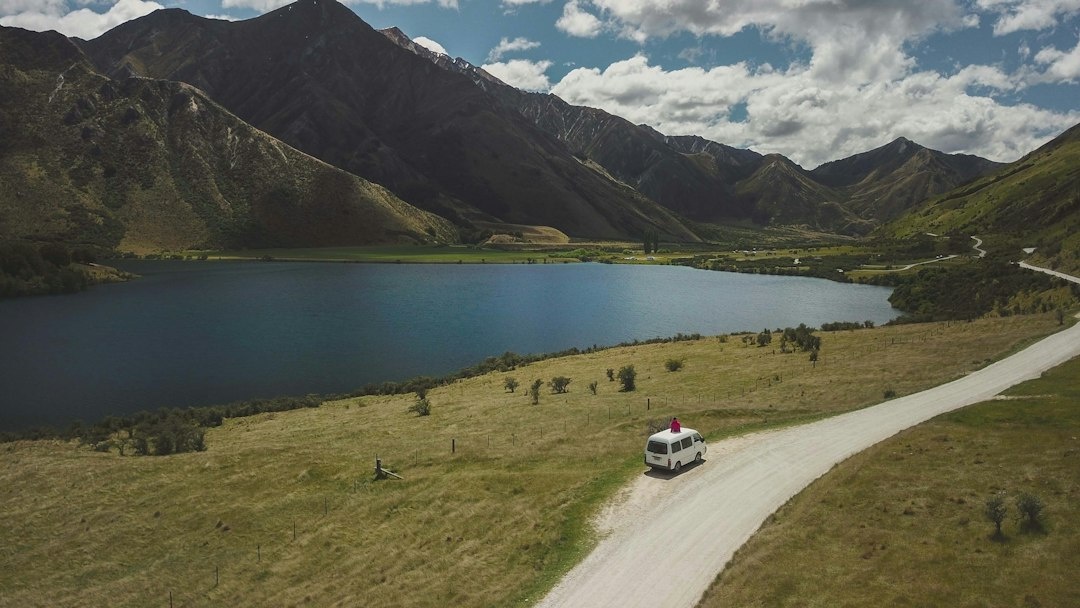
September is arguably New Zealand’s South Island sweet spot: campervan rates remain below summer peaks, daylight is increasing, and famous stops such as Milford Sound and Aoraki/Mount Cook are noticeably quieter. The trade-off is real spring weather—expect everything from 17°C sunshine to snow-covered alpine roads during the same 10-day trip.
Key Takeaways
- The Queenstown loop is the easiest first trip: approximately 1,290 km, no one-way fee, and about €207 in petrol.
- Christchurch-to-Queenstown delivers the best scenery-per-kilometre at roughly 940 km, but one-way campervan fees commonly add €100–€200.
- Picton-to-Dunedin costs the most because a campervan crossing of Cook Strait can add approximately €215–€260.
- Budget €935–€1,125 per person for two backpackers sharing a self-contained campervan for 10 days in September 2026.
- Carry snow chains, check alpine-road alerts daily, and never assume “freedom camping” means you can sleep anywhere.
Key Numbers at a Glance
All costs below are September 2026 planning prices. Conversions use NZ$1 = €0.508 = US$0.588; card exchange rates and dynamic rental pricing will vary.
| 10-day route | Driving distance | Wheel time | Estimated petrol | Major extra cost | Best for |
|---|---|---|---|---|---|
| Queenstown loop | 1,290 km | 18–20 hours | NZ$407 / €207 / US$239 | Milford parking or tour | Easiest logistics |
| Christchurch to Queenstown | 940 km | 14–16 hours | NZ$297 / €151 / US$175 | NZ$200–$400 one-way fee | West Coast scenery |
| Picton to Dunedin | 1,020 km | 15–17 hours | NZ$322 / €164 / US$189 | Cook Strait ferry plus one-way fee | Maximum variety |
The fuel figures assume an unleaded campervan consuming 11.5 litres per 100 km and petrol averaging NZ$2.75 per litre. A compact car may use 7 litres per 100 km, but the accommodation savings of a van usually outweigh its additional €60–€90 fuel bill over 10 days.
Which South Island Campervan Route Should You Choose?
Choose the Queenstown loop if this is your first time driving on the left, you want simple pickup and return logistics, or your flights already connect through Queenstown. Returning to the same depot can save NZ$200–$400 (€102–€203) compared with a one-way hire.
Choose Christchurch-to-Queenstown if glaciers, rainforest and the West Coast matter more than Milford Sound. It is roughly 350 km shorter than the Queenstown loop, yet it includes Arthur’s Pass, Hokitika, Franz Josef and Wānaka.
Choose Picton-to-Dunedin if you are arriving from Wellington and want coastal wildlife, wine country and alpine scenery in one trip. It has the most complicated rental logistics and can cost €300–€450 more than the Queenstown loop after ferry and one-way charges.
| Decision factor | Queenstown loop | Christchurch–Queenstown | Picton–Dunedin |
|---|---|---|---|
| First-time driving difficulty | Easy to moderate | Moderate | Moderate |
| September snow exposure | High around Milford and Lindis Pass | High at Arthur’s and Haast passes | Moderate to high near Tekapo |
| Rental availability | Excellent | Excellent | Limited from Picton |
| Typical campsite availability | Good, except Queenstown | Very good | Very good |
| Route flexibility | Excellent | Limited by one-way booking | Lowest |
| My verdict | Best first trip | Best landscapes | Best for North-to-South travel |
Route One: The 10-Day Queenstown Campervan Loop
This loop combines Wānaka, Aoraki/Mount Cook, Lake Tekapo, Te Anau and Milford Sound before returning to Queenstown. It requires around 18–20 hours behind the wheel, versus 14–16 hours for Christchurch-to-Queenstown, but there is no relocation fee or Cook Strait crossing.
Recommended 10-Day Itinerary
- Day 1: Queenstown. Collect the campervan, buy groceries and stay outside the congested centre.
- Day 2: Queenstown to Wānaka — 68 km, 1 hour 15 minutes. Take the Crown Range only if the road is open and your rental agreement permits it.
- Day 3: Wānaka to Aoraki/Mount Cook — 205 km, 2 hours 40 minutes. Stop at Lindis Pass and Omarama.
- Day 4: Aoraki/Mount Cook. Walk the Hooker Valley Track if open; allow three hours for the 10-km return route.
- Day 5: Mount Cook to Lake Tekapo — 105 km, 1 hour 25 minutes. Visit the Church of the Good Shepherd after tour buses leave.
- Day 6: Tekapo to Te Anau — 420 km, 5 hours 15 minutes. This is the loop’s longest driving day.
- Day 7: Te Anau to Milford Sound and back — 236 km, 4 hours driving. Add a two-hour cruise or coach-cruise package.
- Day 8: Te Anau. Use this as a weather buffer rather than forcing Milford Road during snow or avalanche closures.
- Day 9: Te Anau to Queenstown — 171 km, 2 hours 10 minutes. Refuel in Te Anau, where pricing is often lower than Milford.
- Day 10: Queenstown. Empty waste tanks, refill LPG and return the van.
Do not squeeze Tekapo, Mount Cook and Milford into consecutive one-night stops. The 420-km Tekapo–Te Anau leg already takes more than five hours without photo, food or roadwork stops.
Where to Camp
Glendhu Bay Motor Camp near Wānaka offers powered sites typically from NZ$55–$70 (€28–€36) for two. Reception is generally open around 8:00–20:00, but September hours can shorten; book at glendhubaymotorcamp.co.nz.
White Horse Hill Campground at Aoraki/Mount Cook is the scenic bargain: DOC campsites are generally around NZ$18 per adult (€9.15), or NZ$36 (€18.30) for two. It has toilets and water but no powered hookups, versus NZ$60–$80 (€30–€41) for a powered holiday-park site.
Te Anau Lakeview Holiday Park commonly prices an unpowered site for two around NZ$50–$65 (€25–€33). It is less atmospheric than a remote DOC site, but hot showers, laundry and a dump station are worth paying for before Milford.
Book DOC sites through bookings.doc.govt.nz. The website operates 24/7; visitor centres generally open approximately 8:30–17:00, although September schedules vary by location.
What to Eat
Skip the hour-long dinner queue at Fergburger and order online for collection at fergburger.com. Burgers cost roughly NZ$16–$22 (€8–€11), while a sit-down Queenstown main commonly costs NZ$32–$45 (€16–€23).
In Wānaka, Big Fig is the better backpacker meal: generous slow-cooked plates run around NZ$18–$25 (€9–€13), and its counter-service format is faster than a lakeside restaurant. Listed hours are usually approximately 8:00–20:30, but check the same day.
September Reality Check
Queenstown afternoons typically reach 11–14°C in September, while Mount Cook nights can fall below freezing. Milford Sound is milder but receives substantially more rain—rain jackets matter more than fashionable insulated coats.
The Crown Range, Lindis Pass and Milford Road can all receive spring snow. The longer Cromwell route between Queenstown and Wānaka adds about 45 km and 35 minutes, but it is often the smarter choice than an icy Crown Range crossing.
Route Two: Christchurch to Queenstown via the West Coast
This is the most cinematic route: Christchurch, Arthur’s Pass, Hokitika, Franz Josef, Haast Pass, Wānaka and Queenstown. At approximately 940 km, it uses around 34 fewer litres of petrol than the Queenstown loop, saving about NZ$94 (€48).
Recommended 10-Day Itinerary
- Day 1: Christchurch. Collect the van and stock up at Pak’nSave rather than a small West Coast supermarket.
- Day 2: Christchurch to Arthur’s Pass — 150 km, 2 hours 15 minutes.
- Day 3: Arthur’s Pass to Hokitika — 100 km, 1 hour 30 minutes.
- Day 4: Hokitika and Punakaiki side trip — 170 km return, 2 hours 30 minutes.
- Day 5: Hokitika to Franz Josef — 135 km, 1 hour 50 minutes.
- Day 6: Franz Josef. Keep a weather buffer for glacier flights or walks.
- Day 7: Franz Josef to Haast — 145 km, 2 hours.
- Day 8: Haast to Wānaka — 142 km, 2 hours 15 minutes.
- Day 9: Wānaka. Walk Mount Iron rather than attempting exposed Roys Peak in poor spring conditions.
- Day 10: Wānaka to Queenstown — 68–112 km, 1 hour 15 minutes to 1 hour 50 minutes.
The Punakaiki side trip pushes the route beyond 1,000 km. Skip it if the forecast is poor: Pancake Rocks are best around high tide, and the detour costs approximately NZ$54 (€27) in fuel.
Campsites and Stops
Jackson’s Retreat Alpine Holiday Park, west of Arthur’s Pass, usually charges around NZ$55–$70 (€28–€36) for two on a powered site. It gives you showers and shelter, whereas basic DOC camps in the region may cost under €10 per person but lack reliable mobile reception.
Hokitika Holiday Park and Franz Josef TOP 10 typically fall in the NZ$55–$85 (€28–€43) range for two. Franz Josef costs more, but staying there positions you for early helicopter departures before cloud builds.
At Haast, Pleasant Flat is the scenic pick if road conditions are stable. A DOC site around NZ$18 per adult is less than half the price of many powered parks, but sandflies can be relentless—keep doors closed and buy repellent before reaching the coast.
Glacier Activities: Walk or Fly?
Franz Josef glacier viewpoints are free, while scenic helicopter flights commonly start around NZ$330–$450 (€168–€229) per person. A heli-hike can exceed NZ$700 (€356), making it more expensive than four or five nights of campervan hire.
My advice: book a refundable flight for the morning of Day 6, but do not build the entire itinerary around it. September weather cancels flights regularly, and the West Coast is still worthwhile for rainforest walks, Lake Matheson and the drive through Haast Pass.
Road and Weather Risks
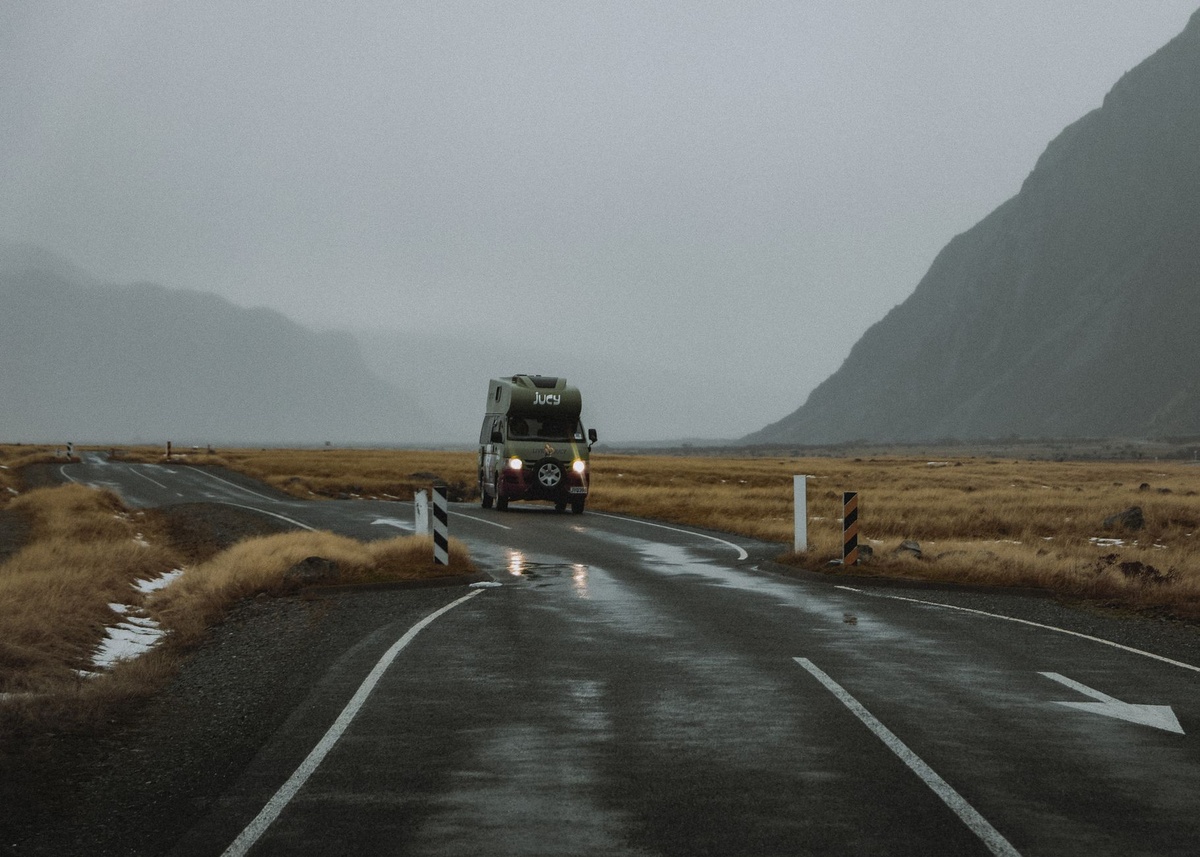
Arthur’s Pass sits above 900 metres and can require chains in September. Haast Pass is lower but vulnerable to slips, heavy rain and temporary closures; check NZTA Journey Planner before leaving Wi-Fi.
Christchurch may reach 15–17°C on a sunny afternoon, while Arthur’s Pass can be near 0°C the same night. That 15-degree temperature swing is why a heater and proper bedding matter more than having an onboard toilet you barely use.
Route Three: Picton to Dunedin
Picton-to-Dunedin links the Marlborough Sounds, Kaikōura, Christchurch, Lake Tekapo, Aoraki/Mount Cook, Oamaru and Dunedin. It covers roughly 1,020 km before local detours—80 km more than Christchurch-to-Queenstown but with fewer demanding rainforest roads.
Recommended 10-Day Itinerary
- Day 1: Wellington to Picton ferry. Cross as a foot passenger or with the campervan.
- Day 2: Picton and Marlborough Sounds. Use this as a ferry-delay buffer.
- Day 3: Picton to Kaikōura — 156 km, 2 hours 10 minutes.
- Day 4: Kaikōura. Whale-watching cruises generally last 3.5 hours.
- Day 5: Kaikōura to Christchurch — 181 km, 2 hours 30 minutes.
- Day 6: Christchurch to Lake Tekapo — 226 km, 3 hours.
- Day 7: Tekapo to Aoraki/Mount Cook — 105 km, 1 hour 25 minutes.
- Day 8: Mount Cook to Oamaru — 210 km, 2 hours 45 minutes.
- Day 9: Oamaru to Dunedin — 115 km, 1 hour 30 minutes.
- Day 10: Dunedin and campervan return.
This route is less forgiving of delays than the Queenstown loop because your ferry, rental pickup and one-way return must align. Add a night in Picton rather than scheduling a four-hour crossing and a 156-km drive to Kaikōura on the same day.
Cook Strait Ferry Costs
| September 2026 sample fare | Interislander | Bluebridge | Typical duration |
|---|---|---|---|
| One adult, foot passenger | NZ$75–$95 / €38–€48 | NZ$70–$90 / €36–€46 | 3.5 hours |
| Two adults, foot passengers | NZ$150–$190 / €76–€97 | NZ$140–$180 / €71–€91 | 3.5 hours |
| Two adults plus 5.5 m campervan | NZ$425–$510 / €216–€259 | NZ$400–$490 / €203–€249 | 3.5–4 hours |
| Private cabin supplement | From about NZ$100 / €51 | From about NZ$95 / €48 | Full crossing |
Check live fares at interislander.co.nz and bluebridge.co.nz. Check-in usually closes 60 minutes before sailing for vehicles and around 45 minutes before departure for foot passengers; follow the specific confirmation rather than relying on a generic timetable.
The cheapest strategy is often crossing as a foot passenger and collecting a van near Picton. The problem is availability: Picton has far fewer one-way campervan options than Christchurch or Queenstown, so compare the complete rental-and-ferry package before buying a non-refundable ticket.
Camping and Food Stops
Kaikōura TOP 10 commonly charges NZ$60–$85 (€30–€43) for two, compared with approximately NZ$36 (€18) at a basic DOC site. Pay the difference if you need laundry, charging and a hot shower after a cold whale-watching trip.
Skip generic highway fish and chips and stop at Kaikōura Seafood BBQ for crayfish, mussels or chowder. Budget around NZ$18–$35 (€9–€18); typical daytime hours are roughly 10:00–17:00 and can change with weather.
In Fairlie, Fairlie Bakehouse is the practical lunch stop between Christchurch and Tekapo. A pie costs about NZ$8–$10 (€4–€5), versus NZ$25–$35 (€13–€18) for a café lunch near Lake Tekapo; hours are generally around 6:00–16:30.
Campervan, Fuel and Campsite Costs Explained
A basic self-contained two-berth campervan in September commonly starts around NZ$130–$190 (€66–€97 or US$76–$112) per day. Summer pricing for the same category can exceed NZ$250 (€127), making September a genuine shoulder-season saving despite the colder nights.
Cheap headline rates rarely include full insurance. Standard excess may be NZ$3,000–$7,500 (€1,523–€3,807), while excess-reduction packages commonly cost NZ$35–$55 (€18–€28) per day.
Sample 10-Day Budget for Two Backpackers
| Expense, September 2026 | Queenstown loop | Christchurch–Queenstown | Picton–Dunedin |
|---|---|---|---|
| Campervan, 10 days | NZ$1,500 / €761 | NZ$1,500 / €761 | NZ$1,500 / €761 |
| Insurance reduction | NZ$450 / €228 | NZ$450 / €228 | NZ$450 / €228 |
| Nine campsites | NZ$430 / €218 | NZ$430 / €218 | NZ$430 / €218 |
| Fuel | NZ$407 / €207 | NZ$297 / €151 | NZ$322 / €164 |
| LPG and toilet chemicals | NZ$45 / €23 | NZ$45 / €23 | NZ$45 / €23 |
| Groceries and four meals out | NZ$600 / €305 | NZ$600 / €305 | NZ$600 / €305 |
| Activities | NZ$250 / €127 | NZ$250 / €127 | NZ$250 / €127 |
| One-way fee | NZ$0 | NZ$300 / €152 | NZ$400 / €203 |
| Ferry, two plus campervan | NZ$0 | NZ$0 | NZ$425 / €216 |
| Total for two | NZ$3,682 / €1,869 | NZ$3,872 / €1,965 | NZ$4,422 / €2,245 |
| Per person | €935 / US$1,083 | €983 / US$1,138 | €1,123 / US$1,300 |
This budget assumes five basic or DOC nights and four holiday-park nights. Staying exclusively at powered parks can add approximately €100–€180, while legal freedom camping could save €50–€100—not enough to justify fines or arguments with enforcement officers.
Diesel Vans and Road User Charges
Diesel may look cheaper at the pump, but New Zealand applies Road User Charges to diesel vehicles. Rental companies may charge RUC by kilometre or include it in the daily price, so a diesel quote that is NZ$10 cheaper per day can still become the more expensive contract.
Ask for the total price including RUC, bedding, kitchen equipment, additional drivers, cleaning and one-way fees. A transparent NZ$1,800 rental is better than a NZ$1,400 headline deal that becomes NZ$2,050 at checkout.
September Weather, Daylight and Road Safety
September is spring, not early summer. Queenstown and Christchurch usually receive around 11.5 hours of daylight at the beginning of the month and more than 12.5 hours by the end, compared with fewer than nine hours in midwinter.
| Area | Typical September daytime range | Night conditions | Main risk |
|---|---|---|---|
| Queenstown and Wānaka | 10–15°C | 0–5°C | Frost, Crown Range snow |
| Aoraki/Mount Cook | 7–13°C | Below 0–3°C | Snow, strong wind |
| West Coast | 11–15°C | 5–9°C | Heavy rain, slips |
| Kaikōura and Christchurch | 12–17°C | 3–7°C | Coastal wind, frosts |
| Dunedin | 10–14°C | 3–7°C | Wind and rapid changes |
Use MetService for weather and NZTA Journey Planner for road status. A generic phone forecast may say “Queenstown: sunny” while the Crown Range 40 minutes away is under a chain requirement.
Rental chains should fit the driven wheels, not simply sit unopened under the bed. Ask the depot employee to demonstrate installation; watching a video beside a snowy pass is a poor substitute.
Camping Rules First-Timers Commonly Misunderstand
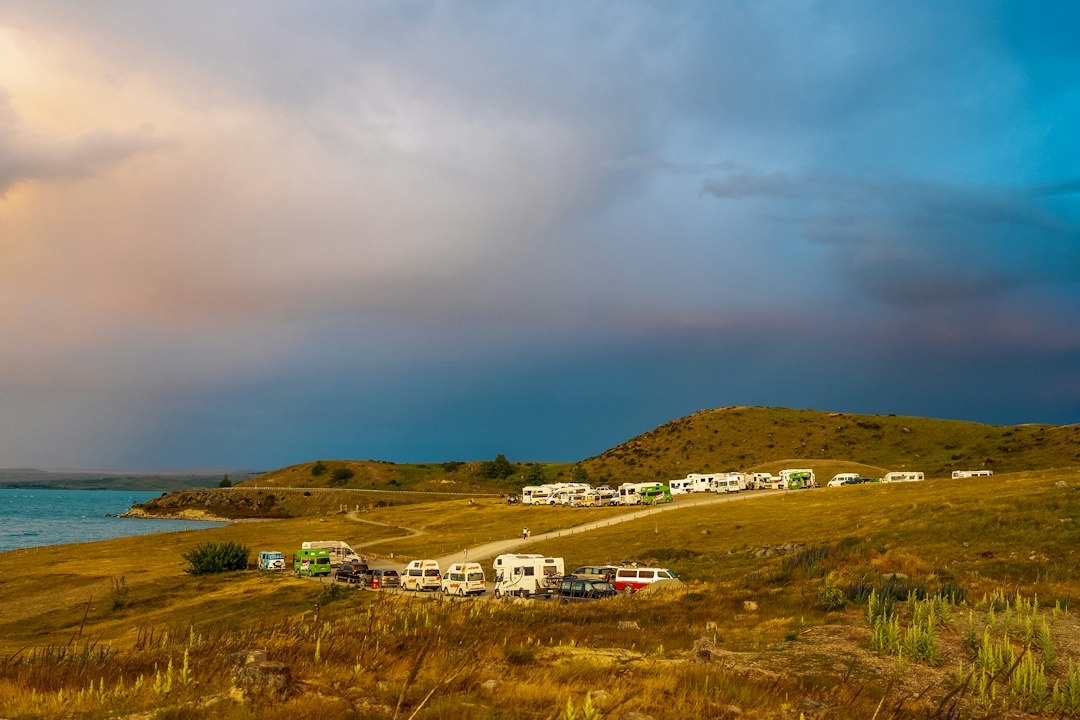
Since June 2025, vehicles relying on a portable toilet no longer meet New Zealand’s stricter self-containment standard. Look for a valid green warrant and confirm that the certification remains valid for the entire rental period.
Self-contained does not mean permitted everywhere. Queenstown Lakes District and other councils use restricted zones, designated sites and enforcement patrols; fines can cost NZ$400 (€203), equivalent to roughly seven holiday-park nights.
- Use CamperMate or Rankers Camping NZ to identify campsites, then verify rules on the council or DOC website.
- Use Gaspy to compare fuel prices; filling 60 litres at a station that is NZ$0.20 cheaper saves NZ$12 (€6).
- Download Google Maps offline, but do not trust its estimated van travel times on narrow roads.
- Carry at least two litres of drinking water per person per day between serviced stops.
- Empty grey water and toilet cassettes only at marked dump stations.
- Photograph the campervan roof, windscreen and wheels before leaving the depot.
Mobile coverage is strong around towns but unreliable through Milford Road, Haast Pass and parts of Arthur’s Pass. A New Zealand eSIM from Airalo can be activated before arrival, but offline maps remain essential because no network covers every alpine corridor.
For audio navigation, open-ear headphones are safer than sealed earbuds when walking near roads or campsites, but never wear headphones while driving. Distratech’s 2026 travel open-earbud comparison covers battery life and situational awareness.
Common Campervan Mistakes—and What to Do Instead
Booking the Cheapest Non-Self-Contained Van
A basic sleeper may save NZ$20–$40 (€10–€20) per day, but it removes many low-cost camping options. For two people, a compliant self-contained van often recovers the difference through cheaper DOC and designated campsites.
Driving Milford Sound From Queenstown in One Day
Queenstown to Milford and back is around 575 km and eight hours of driving before stops. Stay in Te Anau instead, cutting the day to 236 km and approximately four hours behind the wheel.
Ignoring the One-Way Fee
A Christchurch rental advertised at €70 per day can cost more than an €85 Queenstown return rental after a NZ$300 (€152) relocation charge. Compare the final checkout totals, not daily rates.
Taking the Campervan Across Cook Strait Automatically
Two foot-passenger fares can cost around €75–€95 total, versus €203–€259 with a 5.5-metre campervan. Check whether swapping vehicles between islands is permitted and cheaper before reserving vehicle space.
Planning Every Night in Advance
Booking all nine nights protects you around Queenstown and Mount Cook, but it removes flexibility when snow closes a pass. Reserve the first night, Queenstown, White Horse Hill and any Friday or Saturday stays; keep two nights flexible.
Returning the Van Without a Cleanup Buffer
Allow at least two hours to refuel, dump waste, refill LPG and sweep the interior. Missing a 15:00 return by one hour can trigger a late fee larger than the NZ$40–$60 (€20–€30) cost of one additional campsite.
Final Verdict: The Best South Island Route for First-Time Backpackers
The Queenstown loop wins for most first-timers. It costs approximately €935 per person for two sharing, avoids a one-way charge, and lets you reverse or shorten the route when September snow disrupts the plan.
Christchurch-to-Queenstown is my personal scenery pick. Choose it if Arthur’s Pass, glaciers and the West Coast are your priorities—and accept that the €150-ish one-way fee is buying you a better route, not merely adding administrative cost.
Picton-to-Dunedin is best as part of a longer New Zealand journey, not a standalone bargain trip. The Cook Strait sailing is spectacular, but ferry and relocation costs push the realistic budget above €1,100 per person.
Before booking, price the campervan, insurance, ferry and one-way fee in the same browser session, then build two weather-buffer nights into the itinerary. Save this comparison, check live road conditions 48 hours before pickup, and choose the route whose logistics leave room for South Island spring to change the plan.
Frequently Asked Questions
How much does a 10-day South Island campervan trip cost?
Two backpackers should budget approximately €1,870–€2,245 total in September 2026, including rental, insurance, fuel, campsites and food. That equals roughly €935 each for a Queenstown loop or €1,123 each for Picton-to-Dunedin.
What is the best South Island campervan route for beginners?
The 1,290-km Queenstown loop is the best beginner route because pickup and return occur at the same depot, avoiding a NZ$200–$400 one-way fee. It also gives more flexibility to reroute around September snow.
Can you freedom camp in New Zealand in a rental campervan?
Only where local rules allow it, and many sites require a vehicle with a valid green self-containment warrant. Illegal camping fines can reach NZ$400 (€203), so verify every overnight spot with DOC or the relevant council.
Do I need snow chains on the South Island in September?
Yes, chains are strongly recommended for Crown Range, Lindis Pass, Arthur’s Pass and Milford Road, and they may be legally required during snow events. Confirm that the rental includes the correct chains and ask for an installation demonstration.
How much is the Wellington to Picton ferry with a campervan?
For two adults and a 5.5-metre campervan, budget approximately NZ$400–$510 (€203–€259) each way in September 2026. Two foot-passenger tickets generally cost only NZ$140–$190 (€71–€97), so compare vehicle-swap options.

About the Author: Tomáš Bzirský
Founder and editor of Distratech. Based in the Czech Republic, travelling regularly from Central Europe. Writes practical travel guides and travel-tech comparisons (eSIM, apps, airports) in six languages.