Cross-country skiing is the rare winter sport that gets better after 60: no lift queues, no helmet-to-helmet collisions, and a heart-rate zone you control with your own poles. The catch is logistics. Most Nordic centres assume you’ll drive, and a week of taxis to trailheads can quietly add €300 to a holiday.
Four Alpine resorts solve this properly, with the trails starting within a ten-minute walk of a railway station: Seefeld in Tirol (Austria), Dobbiaco/Toblach (South Tyrol, Italy), Davos (Switzerland) and Oberstdorf (Bavaria, Germany). I’ve skied all four in January, arrived by train every time, and have strong opinions about which one you should book this month, while November’s low-season hotel rates and Black Friday gear deals are still on the table.
Key Takeaways
- Seefeld is the overall winner for a car-free over-60 couple: 35 minutes by hourly train from Innsbruck, 245 km of trails, free buses with the guest card and the best flat terrain in Leutasch.
- Dobbiaco is the value pick: Dolomiti Nordicski week pass around €40, half-board 3-star hotels from €150/night for two, and the Holidaypass gives free trains and buses across South Tyrol.
- Davos is the most snow-sure (1,560 m) and most expensive: budget CHF 300–450/night for a decent double, and avoid World Economic Forum week (expected around 18–22 January 2027).
- Oberstdorf is cheapest to reach from Munich (direct regional train, 2h40, covered by the €63 Deutschlandticket) but sits at just 813 m, so January snow is the least reliable of the four.
- Book now: January 2027 half-board rates in all four resorts are typically 20–35% below February prices, and the best flat-walk-to-trail hotels sell out by mid-December.
Key Numbers at a Glance (January 2027)
| Resort | Altitude | Groomed trails | Nearest rail hub & time | Trail pass, 7 days (approx.) | 4-star half-board double, Jan 2027 (approx.) | Free local transport with guest card? |
|---|---|---|---|---|---|---|
| Seefeld in Tirol (AT) | 1,180 m | 245 km (Olympiaregion) | Innsbruck, 35–40 min | €48–52 | €220–300/night | Yes (Seefeld Card: regional buses) |
| Dobbiaco/Toblach (IT) | 1,256 m | 200 km local, 1,300 km Dolomiti Nordicski | Innsbruck, 2h30–2h50 (1 change) | €38–42 | €190–260/night | Yes (Holidaypass: all South Tyrol trains & buses) |
| Davos (CH) | 1,560 m | 100 km (Davos–Klosters) | Zurich, 2h20 (1 change) | CHF 45–50 (€48–53) | CHF 320–450/night (€340–480) | Yes (Davos Klosters guest card: town buses, RhB Davos–Klosters) |
| Oberstdorf (DE) | 813 m | 80 km (Oberstdorf) + Kleinwalsertal | Munich, 2h40 (direct) | €35–40 | €180–240/night | Yes (Allgäu-Walser-Card: Oberstdorf & Kleinwalsertal buses) |
Trail pass and hotel figures are based on published 2025/26 winter rates with the usual €1–3 annual increase applied; confirm on each resort’s website before paying, because all four adjust prices in December.
Getting There by Train: Innsbruck, Munich and Zurich Compared
This is where the four resorts separate fastest. A journey that’s 35 minutes from one hub can be six hours from another, so pick your flight airport after you pick your resort, not before.
| Route | Seefeld | Dobbiaco/Toblach | Davos | Oberstdorf |
|---|---|---|---|---|
| From Innsbruck Hbf | 35–40 min, hourly S5/REX, direct, ~€8 one way | 2h30–2h50, change at Fortezza/Franzensfeste, from ~€30 (Sparschiene from €15) | ~4h, change at Sargans and Landquart, ~€70–90 | 4h30–5h, 1–2 changes via Garmisch/Kempten or Munich, ~€45–60 |
| From Munich Hbf | 2h30–2h50, change at Garmisch or Mittenwald (a few direct REX daily), saver fares from ~€22; Deutschlandticket valid to Mittenwald + ~€5 hop | 4h15–4h45, changes at Innsbruck and Fortezza, saver fares from ~€40 | 5h30–6h, via Zurich or Lindau–Sargans–Landquart, ~€80–110 | 2h40, direct RE every 2 hours (hourly with change at Immenstadt), fully covered by €63 Deutschlandticket |
| From Zurich HB | 4h, change at Innsbruck, ~CHF 70–90 | 6h+, changes at Innsbruck and Fortezza, ~CHF 90–110 | 2h20, hourly, change at Landquart onto Rhaetian Railway, CHF ~57 full fare, Supersaver from ~CHF 28 | 3h50–4h15, change at Lindau-Reutin (EC Zurich–Munich) then via Immenstadt, ~CHF 50–70 |
Rail fares are second-class, one-way, adult, for travel in January 2027 at November 2026 prices; book on oebb.at, bahn.de, sbb.ch or trenitalia.com directly rather than through aggregators, which rarely show the cheapest cross-border saver fares.
Seefeld: the Mittenwaldbahn does the heavy lifting
Innsbruck Hauptbahnhof to Seefeld is a 35-minute climb on the Mittenwaldbahn, with the train hugging cliffs above the Inn valley. The station is a six-minute flat walk from the Olympia Sport- und Kongresszentrum, where the trails begin. Fly into Innsbruck (INN), take the F line bus to the station (€3, 20 min) and you’re on skis within two hours of landing.
From Munich it’s a scenic 2h40 with one same-platform change, and in late November the Garmisch leg runs past the first Christmas markets of the season. Skip the airport shuttle companies quoting €180 for the same journey.
Dobbiaco: the Pustertal line stops at the Nordic Arena’s doorstep
Toblach station sits literally across the road from the Nordic Arena; you can see the grooming machines from the platform. Trains along the Val Pusteria run every 30 minutes between Fortezza and San Candido, and are free with the Holidaypass your hotel issues at check-in.
The weak point is the approach. From Innsbruck you cross the Brenner on a Railjet or Eurocity (1h05 to Fortezza) and change once; from Munich add the EC to Innsbruck for a 4h30 total. Fine for the outbound, tiring on the return if you have an evening flight.
Davos: Zurich is the only sensible gateway
Zurich Airport to Davos Platz is 2h30 with a single cross-platform change at Landquart; the red Rhaetian Railway train then climbs the Prättigau to 1,560 m. The Langlaufzentrum Davos is a 10-minute walk from Davos Platz station, or two stops on a free town bus.
From Innsbruck or Munich, Davos is a half-day slog through two or three changes. Don’t do it unless you’re combining Davos with a Swiss itinerary.
Oberstdorf: Munich’s easiest Nordic escape
The direct Regional-Express from Munich Hbf reaches Oberstdorf in 2h40, and the whole trip is covered by the monthly Deutschlandticket (€63 in 2026, likely the same or a few euros more in January 2027). For a couple, that’s €126 for unlimited regional trains and local buses in Germany for the whole month, which beats any saver fare.
Oberstdorf station is in the village centre; the Nordic Centre at Ried is a 20-minute walk or a free Allgäu-Walser-Card bus (line 1, every 20 min). From Zurich it’s four hours with a change at Lindau, which is reasonable; from Innsbruck it’s nearly five, which isn’t.
Trail Fees, Terrain and the Over-60 Reality Check
Kilometres of trail are a vanity metric. What matters at 62 is how many flat, scenic, sunny loops start within walking distance of your hotel, and whether the resort grooms a classic track alongside the skating lane (most do, but Davos’s high valleys occasionally skate-only in thin snow).
| Resort | Day pass | 7-day pass | Best gentle loop for beginners/returners | Signature longer day | Ski school & rental (7-day rental, approx.) |
|---|---|---|---|---|---|
| Seefeld | ~€13 | ~€50 | Leutasch valley loops (free bus 15 min; 60 km of almost pancake-flat trail) | Seefeld–Mösern–Wildmoos panorama, 18 km, 250 m climb | Cross Country Academy Seefeld; classic set ~€110/week |
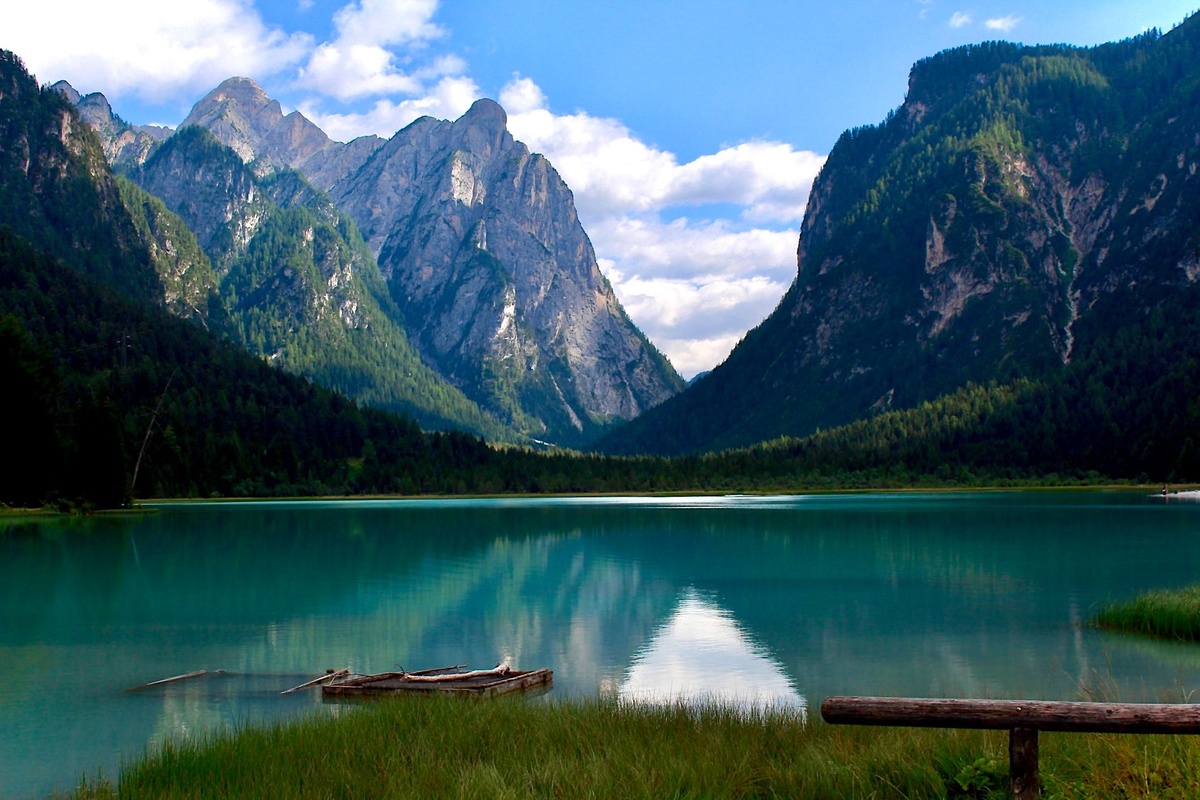
| Dobbiaco/Toblach | ~€8 | ~€40 (Dolomiti Nordicski) | Lago di Dobbiaco loop, 7 km, from the Nordic Arena | Toblach–Cimabanche on the old Dolomites railway, 15 km gentle uphill, bus 445 back (free with Holidaypass) | Nordic Arena rental; classic set ~€90/week |
| Davos | CHF 10 | CHF 45–50 | Landwasser river trail Davos Platz–Frauenkirch, 8 km, nearly flat | Dischma valley to Dürrboden, 12 km each way, steady 250 m climb, bus 12 back | Swiss Ski School Davos; classic set ~CHF 170/week |
| Oberstdorf | ~€8–10 | ~€35–40 | Lorettowiesen/Ried loops, 5 km, snowmaking-backed | Oberstdorf–Riezlern (Kleinwalsertal), 14 km, bus back | Nordic Zentrum Oberstdorf; classic set ~€95/week |
Seefeld’s trail fee is the highest of the four, and it’s worth it: Seefeld grooms nightly, publishes a 6 am trail report (seefeld.com/loipen) and keeps the Leutasch trails flat enough that an out-of-practice 68-year-old on classic skis will finish 15 km smiling.
Dobbiaco’s pass is a bargain because it’s regional. The Dolomiti Nordicski week pass covers 1,300 km across Alta Pusteria, Cortina, Alta Badia and Val Gardena, and the Holidaypass gets you to any of them for free. Pack a thermos for the Cimabanche run: it’s 15 km of 1–2% gradient through the Dolomites with one hut, Rifugio Ospitale, open 10:00–16:00.
Davos has the reliable snow and the most dramatic side valleys, but its gentle options are thinner. The Landwasser trail is lovely; after that you’re climbing. The Davos Klosters app shows live grooming and, usefully, which trails have classic tracks set that morning.
Oberstdorf is the softest terrain of the lot and has excellent snowmaking on the Ried stadium loops, but at 813 m, mid-January rain is a genuine possibility. In the last six Januaries, the village-level trails have been fully open roughly four winters out of six. If a dependable classic track every day is non-negotiable, go higher.
Altitude and the over-60 body
None of the four is high enough to cause real altitude trouble, but Davos at 1,560 m is noticeably thinner air on day one than Oberstdorf at 813 m. If either of you has a cardiac or respiratory condition, Seefeld and Dobbiaco at roughly 1,200 m are the comfortable middle ground, and both have pharmacies and a doctor’s practice within 300 m of the trail start.
Where to Stay and Eat: My Picks for Each Resort
Seefeld
Stay at Hotel Bergland (4-star superior, half-board doubles around €260 in mid-January 2027, bergland-seefeld.at): it’s 400 m from the trails and the pool is big enough to actually swim lengths after a ski day. If the budget stretches, Klosterbräu is the five-star grande dame, from €450 half-board.
Eat at Triendlsäge, a wood-fired mountain inn reached on skis via the Wildmoos trail, for Kaspressknödel soup (€9.50) and a Zirbenschnaps before the glide home. Skip the pizzerias on the pedestrian zone; the Tyrolean food is why you came. Compare current rates for hotels in Seefeld before you commit, because many list a lower direct-booking rate on their own site once you’ve found them.
Dobbiaco/Toblach
Book Hotel Santer (4-star, half-board doubles from about €230, five-minute walk to the Nordic Arena) or Hotel Laurin (3-star, from €150 half-board, family-run, outstanding breakfast). The Grand Hotel Toblach‘s hostel wing has doubles with private bathroom from €95, ideal if you’d rather spend on dinners out.
Dinner: Gasthof Gratschwirt, 1.5 km west of town (free bus 445), for South Tyrolean Schlutzkrapfen at €14 and a Lagrein by the glass for €5. For an after-ski treat, the Loacker café in nearby Heinfels sells the wafers by the kilo; the train there is free.
Davos
Hotel Seehof in Davos Dorf (4-star superior, from CHF 380 half-board) and Hotel Grischa at Davos Platz (4-star, from CHF 330, next to the station) are the two I’d recommend to friends. Both include the guest card.
Eat at Restaurant Gentiana on Promenade for the best fondue in town (CHF 29 per person, book two days ahead in January). Davos prices sting: a mid-range dinner for two with wine runs CHF 120–150, versus €70–90 in Seefeld and €55–75 in Dobbiaco.
Oberstdorf
Parkhotel Frank (4-star superior, from €220 half-board, a 12-minute flat walk to Ried) is the comfortable choice; Hotel Mohren on the main square is the traditional one from €170. For dinner, Zum Wilde Männle serves proper Allgäu Kässpatzen (€15.50) and a mountain cheese board that justifies the whole trip.
The Decision Framework: Which Resort Should You Book?
- Choose Seefeld if you’re flying into Innsbruck or Munich, one of you is a nervous beginner and you want the widest choice of flat terrain, a sunny plateau and four-star spa hotels without Swiss prices.
- Choose Dobbiaco if value matters, you love Italian food and wine, and you’re happy with a 4-hour train from Munich in exchange for the cheapest trail pass, free regional transport and Dolomite scenery on the Cimabanche run.
- Choose Davos if you’re coming from Zurich, you insist on guaranteed snow, your budget is CHF 600+ per day for two, and you can avoid WEF week (expected 18–22 January 2027; confirm at weforum.org).
- Choose Oberstdorf if you want the cheapest, simplest rail trip from Munich, you’re flexible on dates (so you can check the snow forecast two weeks out) and you’d rather save €1,000 for a second trip in March.
My honest ranking for a car-free over-60 couple in January: Seefeld first, Dobbiaco a close second, Davos third on price, Oberstdorf fourth on snow risk. If you’d asked me in February, Oberstdorf would move up a place.
A Costed Sample Week: Seefeld From Munich for Two (17–24 January 2027)
| Item | Detail | Cost for two (EUR, Jan 2027 estimates) |
|---|---|---|
| Rail, Munich–Seefeld return | DB saver fares booked in November, 2h40 each way | €96 |
| Hotel, 7 nights half-board | Hotel Bergland, 4-star superior, double room | €1,820 |
| Trail passes, 7 days | Olympiaregion Seefeld week pass x2 | €100 |
| Ski rental, 7 days | Classic set x2, Cross Country Academy | €220 |
| Two refresher lessons | 2 x 2-hour group sessions, €55 each per person | €220 |
| Lunches on the trail | 7 days x ~€30 for two (soup, strudel, coffee) | €210 |
| Two dinners out | Triendlsäge, plus one in the village, skipping half-board those nights | €160 |
| Local transport | Free with Seefeld Card (Leutasch, Mösern, Scharnitz buses) | €0 |
| eSIM for the week | Airalo Austria 5 GB plan x2 | €22 |
| Total | €2,848 (about $3,100) |
The same week in Davos from Zurich lands at roughly CHF 4,900 (€5,200), mostly hotel and dinners. Dobbiaco from Munich comes in around €2,350 with a 3-star hotel and the cheaper pass, and Oberstdorf from Munich at about €2,250 if you use the Deutschlandticket and Hotel Mohren.
Common Mistakes (I’ve Made Three of These)
- Booking Davos during WEF. Rooms either vanish or triple in price, the Promenade fills with security barriers and the town buses reroute. Check the dates before you pay a deposit.
- Choosing a hotel “near the trails” that’s uphill from them. A 300 m climb back to your room after 15 km is miserable at 65. Use the satellite view on Google Maps and look for a flat line between hotel and Loipe.
- Buying day passes instead of the week ticket. Seven Seefeld day passes cost €91; the week pass is about €50. The maths holds in all four resorts from day four.
- Assuming the Deutschlandticket works in Austria. It ends at Mittenwald. Buy the €5 ÖBB hop to Seefeld on the ÖBB app before you board, or pay a €10 penalty on the train.
- Arriving at Dobbiaco on a Sunday evening without cash. The station has no ticket office, the card reader on the regional train sometimes fails, and the Nordic Arena rental shop closes at 17:00. Sort rental the morning after, not on arrival.
- Skipping travel insurance that covers Nordic skiing. Most standard policies include it, but a few exclude “winter sports” wholesale. Read the exclusions; a helicopter from the Dischma valley is CHF 3,000+.
- Not checking the grooming report before leaving the hotel. All four resorts publish it by 7 am. Pick your loop around what’s freshly set, not around your plan.
Tech and Booking Tips for a Car-Free Nordic Week
- Get an eSIM that covers Switzerland if Davos is on the table. Switzerland isn’t in the EU roaming zone, so a UK or EU SIM can cost €6+ per day there. A regional Airalo Eurolink plan (10 GB, 30 days, about €34) covers Austria, Italy, Germany and Switzerland on one profile. Nomad has a similar Europe pack if Airalo’s app annoys you.
- Install the right rail app for each leg: ÖBB (Austria), DB Navigator (Germany), SBB Mobile (Switzerland) and südtirolmobil (South Tyrol local trains and buses, with live platform info in three languages).
- Download grooming apps before you lose signal in the valleys: Seefeld’s trail report lives on seefeld.com; Davos uses the Davos Klosters app; Dolomiti Nordicski has its own app with trail-by-trail status; Oberstdorf publishes on oberstdorf.de and in the Allgäu-Walser app.
- Book hotels by 10 December. January is low season in all four resorts, but the flat-walk-to-trail hotels are a small set and they fill with regular Nordic groups from the Netherlands and Germany first.
- Buy saver rail fares the day they’re released. ÖBB Sparschiene and DB Sparpreis open roughly six months out and the cheapest tiers sell by late November for January travel.
- Black Friday is the week to buy skis if you’ve decided you’re hooked. A Fischer or Salomon classic touring package that’s €450 in January typically drops to €320–350 this week; just remember the train means carrying them. Rental is still the sensible call for a first week.
- Noise-cancelling headphones earn their keep on the Zurich–Davos or Munich–Dobbiaco legs. If you’re replacing an old pair, we compared the two current Beats models for long train days in our Beats 360 vs Studio Pro travel test.
- If your flight into Innsbruck, Munich or Zurich is delayed more than three hours, file a claim. EU261 pays €250–400 per person and AirHelp handles the paperwork for a cut.
The Verdict: Book Seefeld, Keep Dobbiaco as Plan B
For two people over 60 who want to step off a train and onto a groomed classic track without ever thinking about a car, Seefeld is the complete package: 35 minutes from Innsbruck, the flattest beginner terrain in the Alps at Leutasch, free buses, and a trail report you can trust at breakfast. Dobbiaco beats it on price and food, loses on the approach journey.
Davos is glorious and reliable if you’re Zurich-bound and solvent; Oberstdorf is the easy Munich option as long as you can gamble on 813 m of altitude. Whichever you choose, book the hotel this month while January rates are at their lowest, grab the saver rail fares, and reserve your skis for the morning after arrival rather than the evening of. Then tell us which trail you fell in love with.
Frequently Asked Questions
How much does a cross-country ski trail pass cost in Seefeld, Dobbiaco, Davos and Oberstdorf in January 2027?
Expect roughly €13 per day or €50 per week in Seefeld, €8 per day or €40 per week with the Dolomiti Nordicski pass in Dobbiaco, CHF 10 per day or CHF 45–50 per week in Davos, and €8–10 per day or €35–40 per week in Oberstdorf. All four resorts publish final 2026/27 prices in December, and week passes pay off from the fourth day.
Which cross-country resort is easiest to reach by train from Innsbruck airport?
Seefeld, by a wide margin: bus F from Innsbruck Airport to the main station (€3, 20 min), then the hourly Mittenwaldbahn train takes 35–40 minutes for about €8. Dobbiaco is 2h30–2h50 with one change at Fortezza; Davos and Oberstdorf are 4–5 hours and not worth it from Innsbruck.
Is Oberstdorf snow-sure enough for cross-country skiing in January?
Usually, but not always: at 813 m it’s the lowest of the four, and village-level trails have been fully open in about four of the last six Januaries. The Ried stadium loops have snowmaking and are almost always skiable, but for a guaranteed week of classic track, Davos (1,560 m) or Seefeld (1,180 m) are safer bets.
When is the World Economic Forum in Davos in 2027, and should I avoid it?
The WEF annual meeting is expected around 18–22 January 2027 (confirm at weforum.org, as dates are finalised in autumn). Avoid that week entirely: hotels sell out or triple in price, parts of the Promenade are closed and town buses are rerouted around security zones.
Do I need a car in Seefeld or Dobbiaco to reach the best trails?
No. In Seefeld the guest card gives free regional buses to Leutasch, Mösern and Scharnitz, and in Dobbiaco the Holidaypass covers every bus and regional train in South Tyrol, including the bus back from the Cimabanche trail. Both Nordic centres are under ten minutes on foot from the railway station.

About the Author: Tomáš Bzirský
Founder and editor of Distratech. Based in the Czech Republic, travelling regularly from Central Europe. Writes practical travel guides and travel-tech comparisons (eSIM, apps, airports) in six languages.