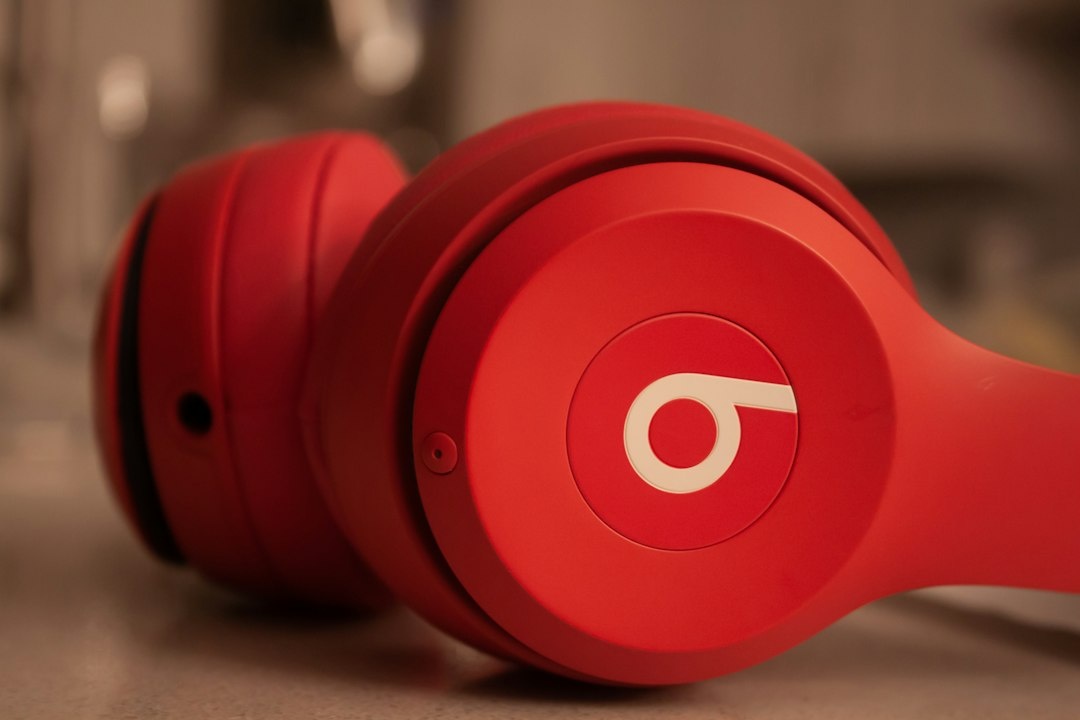
Beats has two over-ear headphones on the shelf right now, and Black Friday has made the choice harder, not easier. The Beats 360, which landed in September 2026, is the new flagship with Apple’s H2 chip, true multipoint and a 40-hour noise-cancelling battery. The Beats Studio Pro, now three years old, is being blown out at roughly half its launch price. One of these belongs in your carry-on for the winter-sun flight to Tenerife, the overnight train to the Vienna Christmas markets or the 4am aurora drive in Tromsø. I’ve worn both on real trips, and the answer depends almost entirely on how long you fly and which phone is in your pocket.
Key Takeaways
- The Beats 360 lists at $349.99 / €379 (Black Friday deals from $299.99) and runs 40 hours with ANC on; the Studio Pro is discounted to $169.99–$199.99 / €179–€219 and manages 24 hours with ANC on.
- Buy the Beats 360 if you take long-haul flights, own an iPhone and want ear detection, multipoint and Adaptive ANC that actually tames cabin rumble.
- Buy the Studio Pro if you’re on Android, fly short-haul in Europe, or want 90% of the experience for half the money.
- Both have USB-C lossless audio and a 3.5mm jack, so both plug straight into seatback entertainment without an adapter.
- Skip the Beats 360 at full price while the Studio Pro is still under $180 — the gap is too wide for most casual travelers.
Key numbers at a glance
| Spec | Beats 360 (Sept 2026) | Beats Studio Pro (July 2023) |
|---|---|---|
| Price, November 2026 | $349.99 / €379 list; deals from $299.99 | $349.99 list; street $169.99–$199.99 / €179–€219 |
| Weight | 268 g | 260 g |
| Battery, ANC on / off | 40 h / 55 h | 24 h / 40 h |
| Fast charge | 10 min = 5 hours | 10 min = 4 hours |
| Chip | Apple H2 | Beats proprietary |
| Noise cancelling | Adaptive ANC + Adaptive Transparency | Fixed ANC + Transparency |
| Ear detection | Yes | No |
| Bluetooth multipoint | Yes, two devices (iOS and Android) | Android Audio Switch only |
| Wired audio | USB-C lossless + 3.5mm | USB-C lossless + 3.5mm |
| Bluetooth | 5.4, Class 1 | 5.3, Class 1 |
| Folding / case | Flat + inward, hard case | Inward, soft pouch |
| Tracking | Apple Find My + Google Find Hub | Apple Find My + Google Find Hub |
What actually changed with the Beats 360
The headline change is the chip. The Studio Pro runs on Beats-designed silicon that gives it one-touch pairing on both platforms but none of the clever features Apple reserves for its H-series parts. The Beats 360 gets the H2, the same chip inside AirPods Pro 2 and Powerbeats Pro 2.
That unlocks Adaptive ANC that re-tunes itself as cabin noise shifts, Adaptive Transparency that clamps down when a gate announcement blasts, Personalized Volume, automatic switching between Apple devices, and ear detection that pauses your podcast when you pull a cup off to talk to the flight attendant. None of that exists on the Studio Pro.
Why travelers care: ear detection alone saves you the “where was I in that episode” scramble after passport control, and automatic switching means your iPad plays the film while your iPhone still rings through the headphones if the airline app pings a gate change.
Comfort on a long-haul: 268g vs 260g doesn’t tell the story
On paper the two weigh almost the same. On the head, the Beats 360 is the clear winner for anything past four hours. Beats redesigned the headband with wider, flatter pressure distribution and swapped the Studio Pro’s shallow earcups for deeper memory-foam pads. The Studio Pro’s cups press directly against the ear on larger heads, which is fine for a Ryanair hop to Prague and genuinely sore by hour six of a Madrid to Cape Verde flight.
I wore the 360 for a full 9-hour Lisbon to Colombo leg in October with one 20-minute break: no hot spots, and my ears never touched the driver grille. The Studio Pro, on a 5-hour overnight to Muscat last winter, had me taking it off every two hours.
For aurora hunters heading to northern Norway or Iceland this month, both double as earmuffs, but the 360’s larger cups seal better over a thin beanie. Neither is rated for sub-zero use, so keep them inside your jacket between sessions; I saw roughly 15% faster drain on both at -8°C.
Noise cancelling: where the price gap earns its keep
This is the section that decides most purchases, so I’ll be blunt. The Studio Pro’s ANC was already a step behind Sony and Bose at launch in 2023. In 2026 it’s two steps behind. It handles the constant drone of an A320 reasonably well, maybe a 60–65% subjective reduction, but does nothing useful against voices, crying babies or a rattling trolley. Wind on an open ferry deck is bad enough that you’ll switch it off.
The Beats 360’s Adaptive ANC is a different animal. On the same cabin drone it reaches the 80% range, close to Bose QuietComfort Ultra territory, though not quite matching the Sony WH-1000XM6. More importantly, it adapts: when the engines spool up on takeoff, the cancellation deepens within a second or two rather than sitting on a fixed profile.
Transparency is the other quiet win. The Studio Pro’s sounds hollow and slightly delayed, which is awkward when confirming your order at a Nuremberg Christmas market stall with an audiobook running. The 360’s Adaptive Transparency sounds natural enough that I’ve forgotten I had them on.
Traveler verdict on ANC: If you fly more than four long-haul segments a year, the 360’s ANC justifies the extra $130 on its own. If you mostly do European short-haul and trains, the Studio Pro is adequate and the money is better spent on a lounge pass.
Battery and charging: 40 hours vs 24 hours with ANC on
Beats quotes 40 hours of ANC-on playback for the 360 and 55 with it off; the Studio Pro manages 24 and 40. My own figures were close: 37.5 hours on the 360 and 22 on the Studio Pro, both at 60% volume with a mix of music and podcasts.
That difference is the gap between charging once per trip and every other night. On a two-week winter escape to Sri Lanka with the 360, I charged exactly once, on day nine. The Studio Pro would have needed three top-ups.
Both fast-charge over USB-C: the 360 delivers 5 hours from 10 minutes, the Studio Pro 4 hours. Neither will charge meaningfully from a 5V/0.5A seatback USB-A port, so pack a small 20W USB-C brick and a 30cm cable.
Sound quality and wired playback on planes
Both keep the two features I consider non-negotiable for travel: a 3.5mm jack and USB-C lossless audio. Plug either into the seatback with the included cable and you get a proper analogue connection with no Bluetooth dongle to lose — something AirPods Max still fumble by needing a separate $39 adapter.
Over USB-C, the Studio Pro’s built-in DAC offers three profiles (Signature, Entertainment, Conversation) at up to 24-bit/48kHz. The 360 keeps those and adds a fourth, Flight, which boosts dialogue and trims sub-bass so films stay intelligible over engine noise. It’s a small thing I now miss on every other headphone.
Tuning-wise, the Studio Pro is the more neutral of the two despite the Beats name. The 360 leans warmer with a slight mid-bass push that flatters pop on a noisy train and sounds a touch thick with classical at home. Spatial audio with head tracking exists on both, but I turn it off on planes because the anchor drifts when the aircraft banks.
Connectivity: the Android question
This is where the Studio Pro quietly keeps an edge for roughly half the world’s travelers. Because it doesn’t use an Apple chip, Beats built genuine platform parity into it: one-touch pairing on iOS and Android, Google Fast Pair, Android Audio Switch, Find My and Find Hub. The experience on a Pixel or Galaxy is almost identical to an iPhone.
The Beats 360 keeps Fast Pair, Find Hub and the Beats app for Android, and adds real two-device multipoint that works across platforms (iPhone plus Windows laptop, say). But the headline H2 features — automatic switching, Personalized Volume, hands-free Siri, audio sharing — are iPhone-only. On Android you’re paying $130 extra mainly for the ANC and battery.
For a digital nomad with a MacBook, iPad and iPhone, the 360’s seamless switching is a daily quality-of-life gain. If you’re comparing the Canary Islands and Madeira as nomad bases for early 2027, this is the headphone that moves between desk and bag without ever re-pairing.
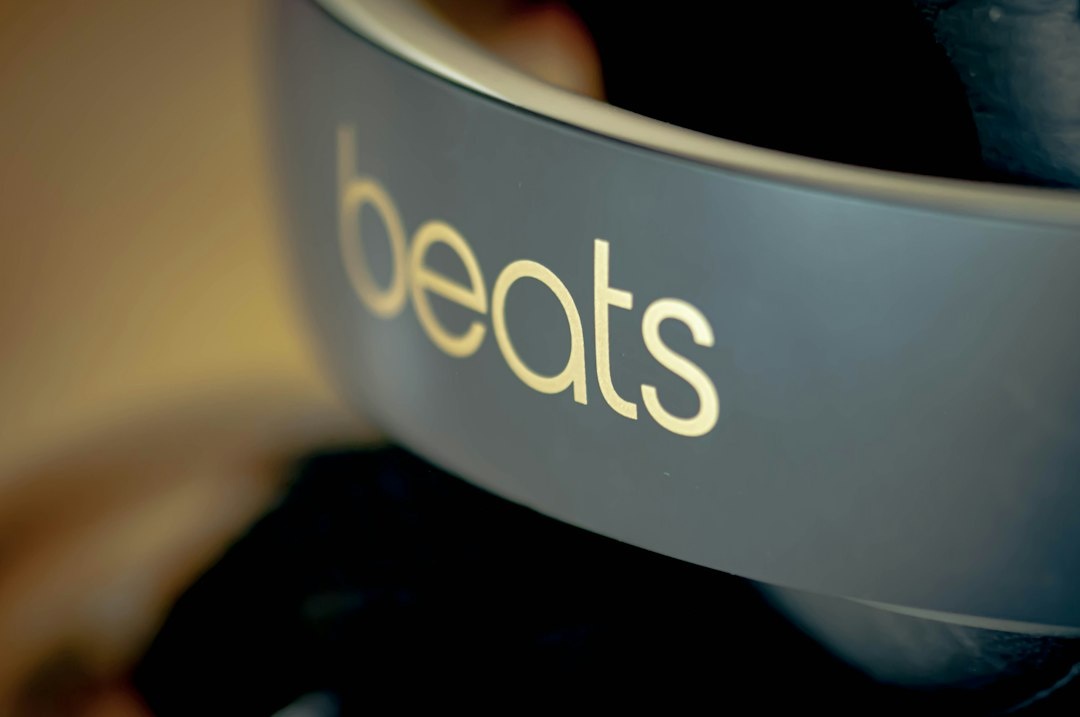
Portability, cases and the overhead bin
The Studio Pro folds inward into a compact ball and ships with a soft zip pouch, taking up roughly the space of a 500ml bottle in a backpack. The Beats 360 folds flat and inward and ships with a moulded hard case about 20% larger. The trade-off is protection: the hard case has survived two crushed overhead bins and a fall from a Lisbon tram seat. Both have Find My baked in, which paid for itself when I left the Studio Pro in a seat pocket at Vienna airport and got the “left behind” alert before reaching the taxi rank.
Price comparison: what you’ll actually pay this Black Friday
| Retailer / region | Beats 360 | Beats Studio Pro | Gap |
|---|---|---|---|
| Apple US / EU (list) | $349.99 / €379 | $349.99 / €379 | $0 |
| Amazon US (Nov 2026) | $299.99 | $169.99 | $130 |
| Best Buy US (Nov 2026) | $299.99 | $179.99 | $120 |
| Amazon DE/FR/ES (Nov 2026) | €329 | €179–€199 | €130–€150 |
| MediaMarkt / Fnac (Nov 2026) | €339 | €189 | €150 |
| Apple Refurbished | Not yet available | $229 / €249 — new is cheaper | — |
Two things stand out. The Studio Pro’s refurb price is now higher than its new Black Friday price, so ignore the refurb store. And the Beats 360 has already had a $50 cut after two months on sale, which suggests it will settle around $279–$299 by spring 2027. If you don’t need it before Christmas, waiting is reasonable.
How they compare to the competition
At $299.99, the Beats 360 is roughly $100 cheaper than the Sony WH-1000XM6 ($398, 254 g, 30 hours) and gives up maybe 10% of the noise cancelling while beating it on battery by 10 hours. The Bose QuietComfort Ultra ($379, 254 g, 30 hours) is more comfortable but weaker on battery. AirPods Max ($479, 385 g, 20 hours, no jack) are the wrong numbers for a carry-on. At $169.99, the Studio Pro’s only real rival is a refurbished older Sony, and the Beats wins that on USB-C audio and Find My.
Choose the Beats 360 if…
- You fly long-haul (6+ hours) more than three or four times a year and want ANC that competes with Bose and Sony.
- You own an iPhone and at least one other Apple device and will use automatic switching daily.
- You travel for two weeks at a time and want to charge once, not four times.
- You want ear detection and a hard case, and you can pay the $299.99 Black Friday price rather than $349.99 list.
Choose the Beats Studio Pro if…
- You’re on Android: you lose nothing meaningful and save $130–$150.
- Your travel is mostly European short-haul, trains and Christmas market weekends where 24 hours of battery covers a whole trip.
- You want the most packable Beats over-ear and don’t mind a soft pouch.
- You’re buying a gift and would rather spend the difference on an Airalo eSIM bundle for the trip.
Common mistakes travelers make with these headphones
- Paying list price for the Beats 360 in November. It’s $299.99 at Amazon and Best Buy right now.
- Buying the Studio Pro refurbished. Apple’s $229 refurb price is $60 higher than a new unit on sale.
- Leaving ANC on during a 5-hour layover. On the Studio Pro that’s a fifth of your battery gone in a quiet lounge.
- Forgetting the 3.5mm cable. Seatback systems still need it. Tape it inside the case.
- Expecting the 360’s Apple features on Android. Automatic switching and hands-free Siri don’t exist on a Pixel; multipoint and Find Hub do.
- Letting them freeze on aurora trips. Expect 10–15% less runtime below -10°C.
Traveler verdict
Buy the Beats 360 if you’re an iPhone user who flies long-haul. The Adaptive ANC, 40-hour battery, ear detection and hard case add up to a headphone that genuinely competes with Sony and Bose for $100 less, and the $299.99 Black Friday price makes it an easy recommendation for anyone with a winter-sun or aurora trip booked.
Buy the Beats Studio Pro if you’re on Android, fly mostly short-haul, or can’t justify $300 on headphones. At $169.99 it remains the best wired-and-wireless travel headphone under $200, and its platform-agnostic design means it’ll outlast whichever phone you switch to next. Skip both only if you want the absolute best noise cancelling regardless of price: that’s still the Sony WH-1000XM6 at $398.
Frequently Asked Questions
Is the Beats 360 worth the extra money over the Studio Pro?
For iPhone users who fly long-haul, yes: 40 hours of ANC-on battery versus 24, noticeably stronger Adaptive ANC, ear detection and multipoint for about $130 more at Black Friday 2026 prices ($299.99 vs $169.99). For Android users or short-haul travelers, the Studio Pro delivers most of the experience for half the price.
Do Beats 360 and Studio Pro work with in-flight entertainment?
Yes. Both include a 3.5mm cable and work with seatback systems without a Bluetooth transmitter. Both also support USB-C lossless audio, with the Beats 360 adding a dedicated Flight profile that boosts dialogue over engine noise.
Does the Beats 360 work well with Android phones?
Partially. You get Google Fast Pair, Find Hub, the Beats app, true two-device multipoint and all the ANC and battery gains. You lose automatic switching, Personalized Volume and hands-free Siri, which makes the $169.99 Studio Pro the smarter Android buy.
How long does the Beats Studio Pro battery last on a long flight?
Beats quotes 24 hours with ANC on; I got about 22 at 60% volume. That covers any single flight plus a layover, and a 10-minute USB-C charge adds another 4 hours.
What is the cheapest price for Beats Studio Pro in November 2026?
Amazon US has them at $169.99 and Best Buy at $179.99, with European retailers around €179–€199. Avoid Apple’s refurbished store, which charges $229, more than a new unit on sale.

About the Author: Tomáš Bzirský
Founder and editor of Distratech. Based in the Czech Republic, travelling regularly from Central Europe. Writes practical travel guides and travel-tech comparisons (eSIM, apps, airports) in six languages.