September puts the Great Migration’s hardest decision into sharp focus: base yourself in Kenya’s Maasai Mara for shorter, more concentrated river action, or choose northern Tanzania for a larger wilderness and longer game drives around the Mara River? I priced both as realistic nine-day trips for two adults in September 2026, comparing crossing access, hours in the vehicle, camps, border friction and the costs operators often leave outside the headline quote.
Key Takeaways
- A nine-day September safari costs about €6,765 per person in Kenya versus €7,840 in northern Tanzania at comparable upper-mid-range camps.
- Kenya offers shorter transfers and denser wildlife, while Tanzania provides more space but typically adds 6–10 driving hours over nine days.
- For crossings, stay within 20–35 minutes of the Mara River; a cheaper camp 90 minutes away wastes the best morning window.
- Combining both countries usually adds €500–€850 per person plus half a safari day at the border.
- Book September river camps 9–12 months ahead, but never accept a promise of a “scheduled crossing”—the herds move unpredictably.
Key Numbers at a Glance
These figures model travel from 12–20 September 2026, with two adults sharing one room and one safari vehicle. Prices are planning estimates based on published fees and September operator quotations available for the 2026 season; the conversion used throughout is US$1 = €0.86.
| Metric | Kenya: Maasai Mara | Tanzania: Northern Serengeti |
|---|---|---|
| 9-day cost per person | €6,765 / US$7,866 | €7,840 / US$9,116 |
| Safari nights | 7 in the Mara | 7 in northern Serengeti |
| Typical river transfer | 20–35 minutes from a well-placed camp | 25–60 minutes from Kogatende camp clusters |
| Game-drive time over 7 safari days | Approximately 55 hours | Approximately 61 hours |
| Internal flight time | 1 hour each way | 2–3 hours each way, usually with stops |
| Reserve or park hours | Generally 06:30–18:30 | Generally 06:00–18:00 |
| Nonresident conservation charge | US$200 / €172 per adult per day in peak season | About US$70.80 / €61 per adult per 24 hours, including VAT |
| Best for | First safari, compact schedule, wildlife density | Space, landscape, longer expedition feel |
The surprise is that Tanzania’s basic park fee is lower, yet the complete trip costs more. Northern Serengeti camps face longer supply lines, concession charges and pricier bush flights, while Kenya’s expensive Maasai Mara entry fee is partly offset by simpler access.
The September Reality: What the Migration Is Actually Doing
September is usually a strong month for the Mara River, with wildebeest spread across Kenya’s Maasai Mara and Tanzania’s northern Serengeti. It is not, however, a wildlife performance running at 10:00 every morning.
Some days produce several crossings; other days deliver thousands of animals gathering at the bank before turning around. Rainfall, grazing pressure and herd behavior matter more than the date printed on your itinerary.
By early September, large herds are often north of the river or moving repeatedly between Kenya and Tanzania. Toward late September, conditions can remain excellent, but the distribution grows less predictable as animals begin responding to southern rains.
This makes September better than July for travelers who value warmer mornings and marginally lower crowd levels. Expect daytime temperatures around 23–27°C, versus cold dawn drives that can begin near 8–12°C at altitude.
Which side has the better Mara River crossings?
Kenya wins for crossing density and ease of access. Several famous crossing points sit within a relatively compact section of the reserve, and well-positioned camps can reach multiple viewpoints without a two-hour repositioning drive.
Tanzania wins for scale and atmosphere. The northern Serengeti’s river zone is more extensive, with kopjes, open plains and woodland around Kogatende, Wogakuria and Lamai. Sightings can feel less compressed, although vehicles still congregate when a major crossing begins.
There is no meaningful difference in the drama itself: both sides can deliver crocodiles, steep banks and chaotic mass movement. The practical difference is that Kenya usually lets a nine-day visitor cover more likely crossing points with fewer dead driving hours.
The Two 9-Day Safari Plans Compared
Both case-study itineraries use flights rather than long road transfers from Nairobi or Arusha. Driving Nairobi to the Maasai Mara takes roughly 5.5–6.5 hours for 250–280 km; Arusha to Kogatende is approximately 430 km and can consume 9–11 hours depending on the route and road conditions.
Skip those marathon arrival drives on a short trip. Paying €300–€550 for bush flights buys back almost two full game-drive sessions.
| Day | Kenya itinerary | Tanzania itinerary | Estimated vehicle time |
|---|---|---|---|
| 1 | Arrive Nairobi; airport hotel | Arrive Kilimanjaro; overnight Arusha | Kenya 30–60 min; Tanzania 60–90 min |
| 2 | Wilson Airport flight to Mara; afternoon drive | Arusha Airport flight to Kogatende; afternoon drive | Kenya 4 hrs; Tanzania 5 hrs |
| 3 | Full-day Mara River circuit | Full-day Kogatende river circuit | 8 hrs vs 9 hrs |
| 4 | Central Mara predators and Paradise Plains | Lamai Wedge and northern river crossings | 7 hrs vs 9 hrs |
| 5 | River watch plus picnic lunch | Wogakuria and Mara River loop | 9 hrs each |
| 6 | Morning river drive; afternoon rest | Full-day eastern plains drive | 6 hrs vs 8 hrs |
| 7 | Southern reserve and Sand River | Southern migration search toward Lobo | 8 hrs vs 10 hrs |
| 8 | Final full-day river circuit | Final Kogatende river circuit | 9 hrs each |
| 9 | Morning drive; fly to Nairobi | Morning drive; fly to Arusha | 4 hrs vs 5 hrs |
Kenya case study: the efficient nine days
On Day 1, stay near Nairobi’s airport instead of crossing the city. Four Points by Sheraton Nairobi Airport commonly prices around US$210–$260 (€181–€224) per room in September, while an airport-to-Westlands transfer can take 25 minutes at night or more than 90 minutes in weekday traffic.
On Day 2, transfer to Wilson Airport and fly with Safarilink or AirKenya. A return Mara ticket generally lands around US$380–$470 (€327–€404) per person, including the customary 15 kg soft-bag allowance.
Base all seven safari nights in the Mara Triangle or close to the central river corridor. Moving camps after three nights sounds adventurous but can sacrifice four hours to packing, checkout, airstrip detours and a guide handover.
My pick is Entim Mara for river access or Little Governors’ Camp for a polished classic experience. For stronger value, ask about Mara Serena Safari Lodge; it lacks the intimacy of a 12-tent camp but its Mara Triangle position beats a prettier tent 90 minutes outside the reserve.
Skip a distant conservancy-only stay if crossings are the priority. Conservancies are excellent for night drives, walking and low vehicle density, but reaching the main river from Naboisho can take 1.5–2 hours each way before you have even started waiting for a crossing.
Tanzania case study: the bigger wilderness
On Day 1, drive approximately 55 km from Kilimanjaro International Airport to Arusha. It normally takes 60–90 minutes; a private transfer costs about US$50–$75 (€43–€65), compared with roughly US$25–$35 (€22–€30) for a shared shuttle.
Stay at Rivertrees Country Inn for gardens and a quiet first night, usually around US$190–$260 (€163–€224) per double with breakfast. Gran Meliá Arusha is more luxurious at roughly US$330–$450 (€284–€387), but it is poor value if you arrive after dinner and leave at 06:30.
Day 2’s flight from Arusha Airport to Kogatende usually takes 2–3 hours because aircraft stop at several Serengeti strips. Return fares on Coastal Aviation or Auric Air commonly cost US$600–$760 (€516–€654) per person.
Use one northern camp for seven nights unless the herds have clearly shifted south before departure. Nasikia Mobile Migration Camp and Serengeti Safari Camp offer a mobile-camp atmosphere; Sayari Camp is the more luxurious choice, but September rates can exceed US$1,500 (€1,290) per person per night.
My value-conscious choice is a seasonal mobile camp around Kogatende at US$850–$1,050 (€731–€903) per person nightly, including meals, shared drives and many—but not always all—park charges. Ask for the camp’s coordinates before paying: “Northern Serengeti” can describe locations more than 80 km apart.
Game-Drive Hours: More Is Not Always Better
The Tanzania itinerary logs about 61 vehicle hours, versus approximately 55 in Kenya. That extra six hours does not automatically produce six hours of better wildlife; much of it comes from covering a larger ecosystem.
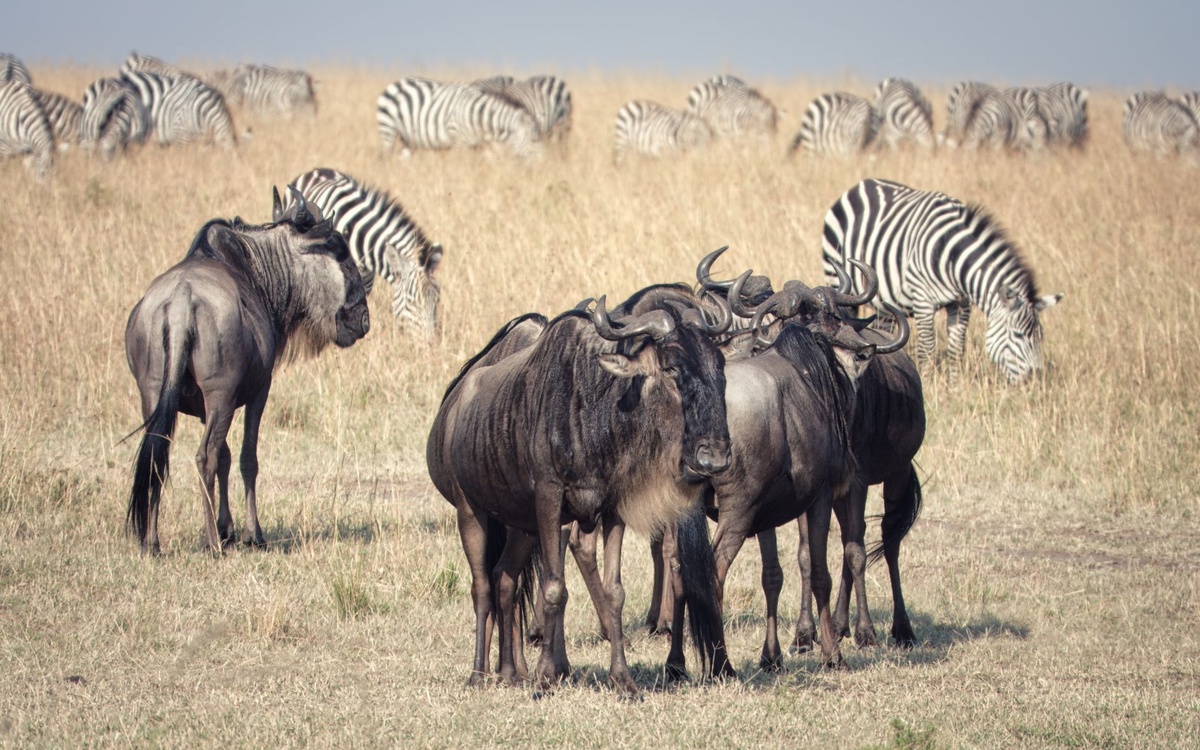
Kenya’s compact geography favors fast repositioning. A guide can move from a cheetah sighting on the plains to a river buildup in 30–45 minutes, while an equivalent switch between Lamai and the eastern Kogatende plains may take 60–90 minutes.
Tanzania’s advantage is continuity. You spend longer traveling through productive habitat rather than leaving a concentrated sighting area and joining another queue.
Private versus shared vehicle
A shared camp vehicle normally seats four to six guests and is included at many camps. A private vehicle supplement runs around US$350–$550 (€301–€473) per day in Kenya and US$400–$650 (€344–€559) in northern Tanzania.
For two travelers, seven private days can add €2,107–€3,913 to the booking. I would instead reserve a private vehicle for three strategic days—roughly €900–€1,650 total—and use shared drives on the others.
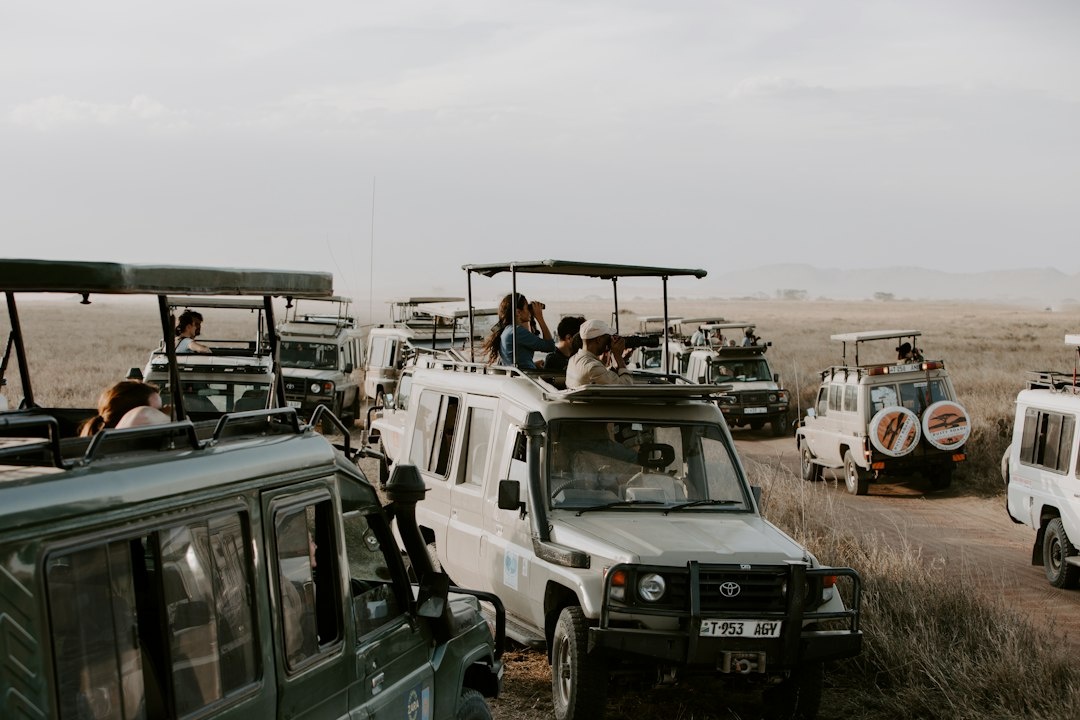
A private vehicle matters most when waiting at the river. Shared passengers may vote to leave after 45 minutes, while a serious crossing watch can involve three quiet hours followed by ten minutes of chaos.
Park operating hours
Maasai Mara entry gates generally operate from 06:30 to 18:30, although specific access rules can vary by gate and county instruction. Serengeti gates and normal game-drive activity generally run from 06:00 to 18:00.
Night driving is prohibited inside the main reserve and national park. Kenya’s private conservancies can offer drives after dark, which gives Kenya an experience advantage, but those hours do not help with Mara River crossings.
Camp Location Beats Camp Luxury
A €1,100-per-night tent with a plunge pool is a bad migration camp if it requires a 90-minute commute to the river. A simpler €750 camp 25 minutes away gives you more sleep, earlier positioning and fewer fuel-heavy transfers.
| Camp style | September 2026 planning rate, per person/night | Typical river access | Trade-off |
|---|---|---|---|
| Kenya river-focused tented camp | €730–€1,075 | 15–35 minutes | Higher reserve fees and crossing traffic |
| Kenya outside-reserve conservancy camp | €600–€945 | 75–120 minutes | Night drives, but long crossing commute |
| Tanzania Kogatende mobile camp | €731–€903 | 25–60 minutes | Basic tent amenities; excellent positioning |
| Tanzania luxury permanent camp | €1,290–€1,720+ | 20–50 minutes | Superb comfort at a large premium |
Check whether “all-inclusive” covers premium alcohol, laundry, conservancy fees, transfers and park fees. Two camps advertising US$900 nightly can differ by US$250 (€215) per person per day once exclusions are added.
Also ask whether game drives are shared and how many guests sit in each row. Six photographers competing through a pop-up roof is substantially worse than four guests with dedicated window positions.
Full Cost Breakdown: Kenya vs Tanzania
This budget excludes international airfare because origins vary, but includes accommodation, domestic flights, conservation charges, game drives, transfers, tips and visas. It assumes two people sharing and no private vehicle upgrade.
| Cost per person | Kenya, September 2026 | Tanzania, September 2026 |
|---|---|---|
| Arrival hotel, half of double room | €100 | €105 |
| Airport and city transfers | €75 | €65 |
| Return bush flights | €370 | €600 |
| 7-night camp package | €5,250 | €5,950 |
| Park, reserve or concession fees not bundled | €420 | €560 |
| Visa or travel authorization | About €28 | €43; €86 for US citizens |
| Tips | €300 | €320 |
| Drinks, laundry and incidental costs | €150 | €125 |
| Travel insurance allowance | €72 | €72 |
| Total per person | €6,765 / US$7,866 | €7,840 / US$9,116 |
Safaris priced below €5,000 per person in September are not automatically scams, but inspect the mechanics. Savings usually come from road transfers, camps far from the river, six-person vehicles or fees omitted from the first quote.
A genuine high-end private itinerary can exceed €12,000 per person before international flights. The biggest cost lever is camp choice: cutting €200 from each of seven nights saves €1,400, while switching airport hotels saves perhaps €60.
Combining Kenya and Tanzania: Border Logistics Explained
A two-country safari looks logical on a map because the Maasai Mara and Serengeti touch. In practice, tourists cannot simply drive a Kenyan safari vehicle across the reserve boundary into Tanzania.
Safari vehicles and guides usually change at the international border. The common road route runs through Isebania–Sirari, turning what appears to be an adjacent transfer into a 300–400 km journey depending on camp locations.
Road crossing via Isebania–Sirari
Allow 8–10 hours from a central Maasai Mara camp to the western or northern Serengeti, including immigration, luggage transfer and vehicle changes. Border processing can take 45 minutes when quiet or more than two hours when systems fail.
A private cross-border transfer typically adds US$500–$900 (€430–€774) per vehicle, before park fees. Compared with a direct 60-minute Mara bush flight back toward Nairobi, it consumes most of a valuable safari day.
Flying via Migori and Tarime
Some operators arrange a Mara–Migori flight, road transfer across Isebania, then a Tarime–Serengeti flight. The full procedure can take 4–6 hours and commonly costs US$600–$1,000 (€516–€860) per person.
It is faster than the all-road route but involves multiple baggage handoffs and strict light-aircraft limits. Soft bags are mandatory, with a typical allowance of 15 kg including hand luggage; excess bags may require a paid freight seat.
Visas and health documents
Apply for Kenya’s Electronic Travel Authorisation through etakenya.go.ke; the standard government charge is about US$32.50 (€28), although nationality rules can change. Tanzania’s official eVisa portal is visa.immigration.go.tz, with a standard tourist visa at US$50 (€43) and US$100 (€86) for US citizens.
The East Africa Tourist Visa does not include Tanzania. Travelers entering Tanzania from Kenya may be asked for proof of yellow-fever vaccination, subject to age and medical exemptions, so verify current requirements with a travel clinic and the Tanzanian authorities.
For only nine days, skip the cross-border combination. Choose one ecosystem and spend the saved €500–€850 on a better-located camp or three private game-drive days.
Technology That Actually Helps on Safari
Download Organic Maps for offline roads and camp locations, but do not use it to direct your guide. Tracks4Africa offers more specialized mapping, while camp radios remain far more useful than consumer navigation for live wildlife information.
Kenyan Safaricom generally provides stronger rural coverage than other Kenyan networks, though river valleys still create dead zones. In Tanzania, Vodacom and Airtel coverage around Kogatende is intermittent; expect messages to work more reliably than video calls.
An East Africa regional eSIM from Nomad can be easier than buying two physical SIM cards, but confirm that the specific plan includes both Kenya and Tanzania. A local SIM may cost only US$10–$25 (€9–€22), versus roughly US$25–$45 (€22–€39) for a regional eSIM with several gigabytes.
- Save passport, insurance and visa copies in an offline encrypted folder.
- Carry a 20,000 mAh power bank; some mobile camps switch charging off overnight.
- Set cameras to local time so wildlife photographs sort correctly across devices.
- Bring a dustproof zip pouch rather than changing lenses during a river stakeout.
- Use FlightRadar24 before leaving camp, but trust the airstrip operator’s departure update over the app.
Do not bring a drone. Recreational drone use around wildlife areas is tightly controlled, and importing or flying one without the relevant aviation, security and park permissions can result in confiscation.
Where to Eat Before and After the Safari
In Nairobi, book Cultiva Farm Kenya for creative farm-led cooking; dinner typically costs US$35–$60 (€30–€52) per person before drinks. Skip an overpriced hotel buffet and order the tasting menu or shared small plates instead.
Talisman in Karen remains convenient if your itinerary passes through Wilson Airport, although crossing Nairobi solely for dinner is not worth two hours in traffic. Allow roughly US$30–$50 (€26–€43) per person.
In Arusha, Khan’s Barbecue is the opinionated choice for an unfussy final dinner: around US$10–$20 (€9–€17) versus US$40–$70 (€34–€60) at a luxury hotel restaurant. Go for the grilled chicken, kebabs and naan, and carry cash as a backup.
Decision Framework: Choose Kenya or Tanzania?
Choose Kenya if…
- This is your first safari: wildlife density and shorter repositioning drives make nine days feel productive.
- Crossings are the main goal: Kenya provides relatively compact access to several famous river points.
- You dislike long bush flights: Wilson–Mara is about one hour, versus 2–3 hours from Arusha to Kogatende.
- Your ceiling is around €7,000: the modeled Kenya trip is €1,075 cheaper per person.
- You want variety after dark: adding two conservancy nights can unlock night drives and walks.
Choose Tanzania if…
- You prioritize wilderness over efficiency: northern Serengeti landscapes feel broader and less compressed.
- You enjoy full-day drives: expect roughly 61 vehicle hours over this itinerary, six more than Kenya.
- You have already visited the Mara: Kogatende, Lamai and Wogakuria provide a distinct migration perspective.
- You want to extend the trip: Tanzania connects naturally to Ngorongoro, Tarangire or Zanzibar.
- Your budget exceeds €8,000: that allows a properly positioned camp without compromising on flights.
My verdict for nine days in September: choose Kenya. Tanzania becomes my preference at 12–14 days, when the longer transfers and larger geography stop feeling like deductions from the itinerary.
The same total-time logic applies to other vehicle-based adventures: our comparison of three South Island campervan routes likewise shows why distance alone is a poor measure of how much a trip contains.
Common September Safari Mistakes
- Booking by country rather than coordinates. Ask for a map pin and realistic one-way driving time to the river; “in the Maasai Mara” can still mean 90 minutes from the action.
- Believing a guaranteed crossing claim. No ethical operator can schedule wildlife, and waiting three hours without a crossing is normal.
- Comparing quotes before matching inclusions. One package may include €172 daily Mara fees while another adds them after the deposit.
- Combining both countries in nine days. Border logistics consume 4–10 hours and add approximately €500–€850 per person.
- Ignoring the 15 kg flight limit. A hard-shell 23 kg suitcase may have to remain in Nairobi or Arusha.
- Choosing the cheapest shared vehicle. Six adults with long lenses can make even a superb sighting frustrating; cap the vehicle at four if possible.
- Scheduling a tight international connection. Bush flights move with weather and airstrip conditions, so keep at least five hours—or preferably an overnight—before the long-haul departure.
- Paying in the wrong currency. Card conversion and lodge surcharges can add 3–5%; request invoices in the operator’s base currency and use a low-fee card.
How and When to Book
For September 2026, prime river camps should ideally have been reserved between September and December 2025. Last-minute space does appear, but it is usually a specific room category rather than a broad shoulder-season discount.
Request quotes directly from camps and from at least two specialist operators. Compare identical dates, vehicle occupancy, airstrips, conservation fees, cancellation terms and emergency evacuation cover—not just the final number.
Use TANAPA to verify Tanzanian park information and county or camp guidance for current Maasai Mara procedures. Reserve domestic flights directly through Safarilink, AirKenya, Coastal Aviation or Auric Air when they are not bundled, but check the camp transfer schedule before selecting an airstrip.
September is shoulder season in many destinations, from the Dolomites to the Douro, but the migration corridor is still peak season. Flights to Nairobi or Kilimanjaro may soften after the European school holidays; correctly located river camps generally do not.
The Bottom Line
For a tightly planned nine-day September Great Migration trip, Kenya offers the stronger ratio of wildlife time to money: approximately €6,765 per person, shorter flights and about 55 productive game-drive hours. Tanzania costs closer to €7,840 and requires more movement, but rewards that effort with larger landscapes and a less compressed expedition feel.
Choose a camp by river access, not thread count, and spend seven nights in one ecosystem rather than losing a day to the Kenya–Tanzania border. Save this comparison, request itemized quotes in euros and dollars, and make every operator state the exact camp coordinates, vehicle occupancy and excluded fees before you pay a deposit.
Frequently Asked Questions
Is Kenya or Tanzania better for the Great Migration in September?
Kenya is better for a first nine-day trip because the Maasai Mara’s crossing areas are more compact and bush flights take about one hour. Tanzania is better for travelers prioritizing space and scenery over transfer efficiency.
How much does a September Great Migration safari cost?
Budget approximately €6,765 per person for nine days in Kenya or €7,840 in northern Tanzania, sharing a room and camp vehicle. Private vehicles and top luxury camps can push either itinerary above €12,000 before international flights.
Can Mara River crossings be guaranteed in September?
No—crossings depend on rainfall, grazing and herd behavior, and animals can wait at the bank for hours before retreating. Seven nights near the river gives much better odds than a rushed two- or three-night stay.
How long does it take to travel from the Maasai Mara to the Serengeti?
The Isebania–Sirari road transfer typically takes 8–10 hours, while the Migori–Tarime flight-and-road combination takes about 4–6 hours. Expect a vehicle change at the border and an additional cost of roughly €500–€850 per person.
How many nights should I spend in the Mara or northern Serengeti?
Spend at least five nights, with seven ideal for a September crossing-focused trip. Three nights provides only two full safari days, leaving little margin for weather, herd movement or a crossing that never starts.

About the Author: Tomáš Bzirský
Founder and editor of Distratech. Based in the Czech Republic, travelling regularly from Central Europe. Writes practical travel guides and travel-tech comparisons (eSIM, apps, airports) in six languages.