A €75 canyoning trip can become a €2,000 mistake surprisingly fast: book the wrong difficulty, arrive without activity-specific insurance, miss a weather message or assume European rescue is automatically free. This audit compares the real first-timer costs, rescue-data limitations, insurance traps, equipment fees and cancellation risks in four of Europe’s major canyoning regions, with prices checked in October 2026.
Key Takeaways
- Entry-level guided trips cost about €65–€85 in Madeira and Sierra de Guara, versus €95–€160 around Lake Garda and Interlaken.
- Swiss helicopter rescue can cost several thousand euros, and Rega patronage is not a substitute for travel insurance.
- Technical canyoning, jumps, abseiling and rescue expenses must be explicitly covered in writing—not merely “outdoor activities.”
- October remains viable in Madeira and parts of Spain, but Interlaken and Lake Garda are near the cold, weather-sensitive end of their seasons.
- Never book a non-refundable onward train or flight within six hours of a canyoning trip finishing.
Key numbers at a glance
| Destination | Typical beginner price | Typical duration | Main base to canyon area | October verdict |
|---|---|---|---|---|
| Madeira, Portugal | €65–€85 | 3–4.5 hours | 18–45 km; 30–60 minutes from Funchal | Good, but rain can change flow rapidly |
| Interlaken, Switzerland | €158 equivalent (CHF149) | 3–3.5 hours | 5–20 km; 10–30 minutes | Late season; cold-water risk |
| Sierra de Guara, Spain | €55–€75 | 4–7 hours | 20–48 km; 30–55 minutes from Alquézar/Huesca | Often excellent after summer heat |
| Lake Garda, Italy | €85–€120 | 3–5 hours | 15–40 km; 25–60 minutes from Riva del Garda | Possible, but operator choice shrinks |
Prices were collected from representative operator listings in October 2026. Interlaken conversion uses CHF1 = approximately €1.06; your card’s exchange rate may differ.
The rescue statistics do not support simplistic “safest destination” rankings
The first finding from this audit is awkward but important: no destination publishes a clean, comparable annual dataset showing canyoning rescues per 10,000 participants. Portugal, Spain, Switzerland and Italy classify mountain incidents differently, while operator-assisted exits may never enter public rescue statistics.
That means a claim such as “Madeira is twice as safe as Lake Garda” is not evidence-based unless it includes participation numbers, canyon difficulty, guided versus independent trips and identical incident definitions. Those denominators are not publicly available.
| Jurisdiction | Published rescue signal | Does it isolate canyoning? | What travelers should infer |
|---|---|---|---|
| Madeira/Portugal | Regional civil-protection reports combine mountain, levada and other search-and-rescue work | No consistent visitor-facing series | Do not confuse an absence of canyoning figures with an absence of incidents |
| Switzerland | The Swiss Alpine Club recorded 3,501 people in mountain emergencies and 114 fatalities in 2023 | Canyoning is not consistently presented as a destination-level rate | Swiss response capacity is excellent, but rescue may be billed |
| Aragón/Spain | Guardia Civil and regional reporting cover hundreds of annual mountain interventions across Aragón | Some reports identify barrancos, but formats vary by year | Heat, flash floods and navigation errors matter more than headline totals |
| Italy | Corpo Nazionale Soccorso Alpino e Speleologico recorded more than 12,000 rescue missions nationally in 2023 | No usable Lake Garda participation rate | Regional billing rules and medical transport coverage require checking |
These totals cover broad mountain activity, not just canyoning. Their value is in showing the scale of organized rescue systems—not proving that one canyoning destination is inherently more dangerous than another.
The more useful comparison is consequence. A delayed group exit in Madeira may mean an extra transfer and missed dinner; a helicopter evacuation near Interlaken can create a bill measured in thousands of euros.
Mistake 1: Buying “adventure insurance” without checking the canyoning definition
The most expensive paperwork error is assuming that hiking cover includes canyoning. Many policies separate walking, scrambling, abseiling, cliff jumping, white-water activities and “canyoning involving technical equipment.”
A policy may cover guided canyoning but exclude independent canyoning. Another may cover abseiling below a specified height yet exclude participation when a local authority has issued a severe-weather warning.
The five clauses that actually matter
- Activity wording: Look for “canyoning” or “canyoneering,” not a vague reference to adventure sports.
- Guided requirement: Confirm whether the guide must be licensed, certified or employed by a recognized operator.
- Search and rescue: Medical treatment coverage does not automatically include helicopter search, extraction or body recovery.
- Altitude and equipment limits: Check restrictions on rope work, abseil heights and technical grades.
- Weather exclusions: Cover may be void if you enter after an official closure or ignore operator instructions.
Expect to pay roughly €18–€45 for a European single-trip policy with an appropriate activity upgrade, compared with €10–€22 for a basic policy that may exclude canyoning. Saving €15 is irrational when the rescue exposure can exceed €5,000.
Ask the insurer this exact question by email: “Does my policy cover guided canyoning involving swimming, jumps, natural slides and rope-assisted abseils, including mountain search, helicopter extraction and medical repatriation?” Save the answer offline as a PDF.
Switzerland’s Rega misunderstanding
Rega patronage costs CHF40 per adult annually, approximately €42 in October 2026. Patronage supports the organization, but Rega explicitly states that patrons do not gain a contractual right to free rescue.
Rega may waive costs at its discretion when insurance does not pay. Treat that as a potential benefit, not an insurance policy; buy rescue cover separately.
Mistake 2: Choosing by price instead of canyon grade
A €65 trip is not necessarily easier than a €110 trip. Price reflects local wages, transport, group size and equipment as much as technical difficulty.
First-timers should look for routes with optional jumps, short abseils and straightforward exits. If an operator’s page leads with a 10-metre jump but does not clearly state that it can be bypassed, skip it.
| Destination and representative product | Listed price, Oct. 2026 | Time | Typical beginner features | Book through |
|---|---|---|---|---|
| Madeira beginner canyoning | €65–€85 | 3–4.5 hours | Short rappels, slides, optional jumps | Epic Madeira or Lokoloko Madeira |
| Canyoning Interlaken | CHF149 / about €158 | 3–3.5 hours | Local canyon, rope descents and water features | Outdoor Switzerland |
| Sierra de Guara initiation route | €55–€75 | 4–7 hours | Longer approach, swimming, optional obstacles | Avalancha |
| Lake Garda introductory canyon | €85–€120 | 3–5 hours | Narrow limestone canyon, slides and abseils | Garda Canyon |
Book directly with the operator when the direct price matches an activity marketplace. Direct booking gives you a clearer line of communication when water levels change, while third-party customer service can add hours to a cancellation discussion.
Madeira: best value for a nervous beginner
Madeira is my first choice for someone who wants technical instruction without committing to an exhausting full day. Beginner outings around Ribeiro Frio or the island’s central mountains generally cost €65–€85, often including pickup from Funchal.
Funchal to Ribeiro Frio is about 18 km and 30 minutes by road. A taxi can cost €30–€45 each way, compared with an included shared transfer worth roughly €15–€25 per person.
October remains warm, but Madeira’s microclimates are real: sunshine on Funchal’s waterfront says little about rainfall in the laurel forest. Skip any unlicensed “friend of a friend” offer and use an operator supplying helmets, proper canyoning harnesses and full wetsuits.
Interlaken: polished operation, highest financial exposure
Interlaken has efficient logistics and experienced commercial operators, but it is the least forgiving destination for a tight budget. Outdoor Switzerland’s local canyoning product has typically been around CHF149, about €158, versus €65–€85 in Madeira.
Higher routes such as Grimsel or Chli Schliere cost more and are not smart first-trip choices. Skip the marketing spectacle and book the local introductory canyon; you can move up after proving that cold water, enclosed rock and abseiling do not trigger panic.
October is marginal. Air temperatures in Interlaken can fall below 10°C in the morning, and even a thick wetsuit does not make repeated cold-water immersion comfortable.
Sierra de Guara: cheapest full-day experience, but more endurance required
Spain’s Sierra de Guara often delivers the most canyon time per euro. A €60–€75 initiation trip may last six hours, compared with about three hours for a €158 Interlaken product.
The catch is endurance. Approaches can involve rough limestone paths, and a “beginner” canyon may still require several hours of walking and swimming.
Alquézar is 47 km from Huesca, normally 50 minutes by car. Public transport is limited enough that a €50–€70 taxi can erase the saving from a cheaper tour, so confirm pickup before choosing accommodation.
October is underrated here: summer heat has eased, yet water and air temperatures can still be manageable. Heavy autumn rain can rapidly close slot canyons, so never use yesterday’s forecast as today’s permission.
Lake Garda: convenient holiday add-on, inconsistent transport
Lake Garda works well when canyoning is one component of an Italian road trip. Introductory trips typically cost €85–€120 and operate in canyons such as Rio Nero, Palvico or Vione, depending on ability and water conditions.
Riva del Garda to Tignale is roughly 32 km, but the drive often takes 45–60 minutes because the western lakeshore road is narrow and congested. A private transfer can exceed €90 return, compared with €10–€20 for an operator pickup when available.
October water is considerably colder than July water, and some operators reduce departures. Skip a non-refundable package sold without a named canyon or difficulty description; book a guide who chooses the route after reviewing current flow.
Mistake 3: Assuming all equipment is included
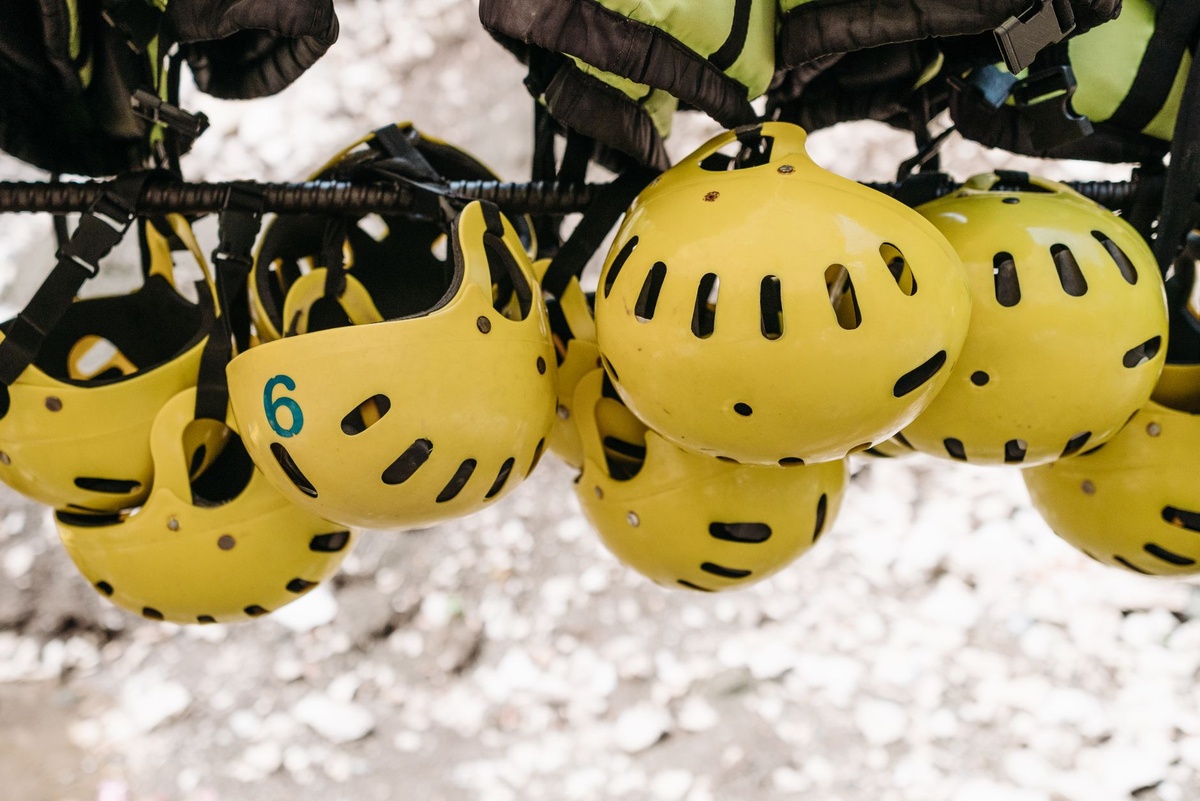
Helmet, harness and wetsuit are normally included with reputable guided tours at all four destinations. The surprise fees tend to involve shoes, transport, photos, parking and damaged-equipment charges.
| Potential extra | Madeira | Interlaken | Sierra de Guara | Lake Garda |
|---|---|---|---|---|
| Canyoning-shoe rental | €0–€10 | Usually included or €10–€16 | €5–€12 | €5–€15 |
| Photos/video | €0–€20 | €20–€40 | €0–€20 | €15–€30 |
| Hotel transfer | Often included from central Funchal | Often included locally | €0–€30 | €0–€25 |
| Parking | €0–€5 | €10–€25 per day | €0–€8 | €5–€15 per day |
These are typical checkout ranges observed in October 2026, not universal mandatory fees. Confirm the final basket before paying.
Do not bring smooth-soled running shoes merely because they can get wet. Canyoning shoes have sticky rubber and ankle support; rental is worth €10 when the alternative is slipping on polished limestone.
Wear a swimsuit under the wetsuit and pack a dry base layer, towel and plastic bag. Leave rings, expensive watches and non-waterproof earbuds at the hotel.
A phone in a cheap pouch is not a navigation or rescue plan. Save the operator’s number, policy certificate, passport copy and 112 emergency details offline in Google Drive, Apple Files or Proton Drive before leaving Wi-Fi.
Mistake 4: Misreading the weather-cancellation policy
Professional guides cancel when rainfall, reservoir releases or water flow make a canyon unsafe. A cancellation is evidence of good judgment, not bad service.
The financial problem arises when the operator refunds the activity but your hotel, rental car or onward train remains non-refundable. The canyon may cost €75 while the collateral loss reaches €300.
Four questions to ask before payment
- Does an operator cancellation produce a cash refund, voucher or rescheduled trip?
- Can the operator substitute a different canyon without obtaining your approval?
- What happens if you reject a harder or more distant replacement?
- At what time and through which channel will the final go/no-go message arrive?
Madeira’s mountain rain can differ sharply from coastal weather. Interlaken’s October issue is often cold combined with high water, while Sierra de Guara’s narrow barrancos are especially vulnerable to upstream storms outside your immediate view.
At Lake Garda, road congestion compounds delay. A trip scheduled to finish at 14:00 can return after 16:00 if the canyon changes or traffic builds, so a 17:00 train from Rovereto is reckless.
Use Meteoblue for hourly precipitation and elevation-specific temperature, Windy for radar and lightning, and the operator’s message as the final authority. Apple Weather alone is too coarse for canyon decisions.
If you like weather-contingency planning for mountain trips, the buffer-day logic in this Scottish Highlands road-trip itinerary transfers well: protect the high-priority outdoor day instead of packing every night with a new hotel.
Mistake 5: Booking transport that depends on a precise finish time
“Three-hour activity” rarely means you are back at your hotel three hours after departure. Briefing, equipment fitting, driving, the approach walk and slower group members can add 60–120 minutes.
For a trip advertised as 09:00–12:30, assume you may not regain your luggage until 14:00. Keep at least six hours between the scheduled finish and a flight, and three hours before a flexible train.
| Base | Public transport comparison | Taxi/private transfer comparison | My verdict |
|---|---|---|---|
| Funchal | Bus to mountain areas: roughly €3–€6, limited schedules | €30–€60 each way depending on canyon | Choose operator pickup |
| Interlaken | Local bus/train: CHF3–CHF12 (€3–€13) | CHF25–CHF70 (€27–€74) | Public transport is practical |
| Alquézar | Very limited regional service | €50–€70 from Huesca | Rent a car or secure pickup |
| Riva del Garda | Bus: €2–€6, often 45–90 minutes | €45–€90 each way | Pickup beats lakeshore traffic logistics |
Physical tourist-office hours shorten outside summer. As an October planning baseline, expect Funchal and Riva offices to operate roughly 09:00–18:00 with lunch or weekend variations, while Alquézar’s office may have reduced weekday hours; online operator booking remains available 24 hours.

Outdoor Switzerland’s Interlaken activity desk commonly opens around 08:00 during operating periods. Verify the previous evening rather than arriving on the strength of a search-result snippet.
Mistake 6: Hiding weak swimming, injuries or panic responses
Guides can adapt around limited experience; they cannot safely manage information you conceal. Tell them about shoulder instability, recent surgery, prescription medication, severe claustrophobia and inability to swim before paying.
“No swimming experience required” does not mean “no comfort in moving water required.” A buoyant wetsuit helps, but splashing, current and enclosed pools can still provoke panic.
A private guide commonly costs €220–€400 per group, compared with €65–€160 per person for a shared trip. For a family of four, the per-person difference may be only €20–€50, making private instruction a sensible upgrade rather than a luxury.
Skip canyoning entirely if you have an untreated shoulder dislocation risk, cannot follow instructions in the guide’s working language or feel pressured into jumping. Every jump on a genuine beginner trip should have a safe alternative.
Decision framework: which destination should you choose?
- Choose Madeira if you want the best blend of warm October conditions, short outings and €65–€85 pricing.
- Choose Interlaken if polished logistics matter more than cost and you have strong rescue insurance plus cold-water tolerance.
- Choose Sierra de Guara if you want a longer day for under €80 and are comfortable with hiking, swimming and rural transport.
- Choose Lake Garda if canyoning is part of a wider northern Italy trip and you can keep the following afternoon flexible.
My first-timer ranking for October is Madeira first, Sierra de Guara second, Lake Garda third and Interlaken fourth. Interlaken moves to first for operational convenience in July or August, but October’s cold and Swiss costs weaken its case.
A realistic three-night canyoning budget
The budget below assumes one traveler, three nights, one beginner trip and midrange-low accommodation. It excludes international flights because they vary too widely by origin.
| Cost | Madeira | Interlaken | Sierra de Guara | Lake Garda |
|---|---|---|---|---|
| Guided canyoning | €75 | €158 | €65 | €100 |
| Three nights | €210 | €285 | €180 | €240 |
| Local transport | €35 | €45 | €90 | €65 |
| Meals | €105 | €165 | €105 | €135 |
| Insurance upgrade | €25 | €40 | €25 | €30 |
| Gear/extras buffer | €20 | €35 | €20 | €30 |
| Total | €470 | €728 | €485 | €600 |
Interlaken costs about €258 more than Madeira in this model, a 55% premium. Sierra de Guara nearly matches Madeira’s total, but only if you control rural transport costs.
How I would schedule the three nights
Day one: Arrive, buy snacks and verify the operator’s weather message. Do not schedule canyoning after a same-day flight.
Day two: Take the morning canyoning trip and keep the afternoon empty. Eat somewhere substantial afterward: try Zarcos in Funchal, Hüsi Bierhaus in Interlaken, Casa Pardina near Alquézar or Panem in Riva del Garda rather than settling for a snack beside the activity office.
Day three: Hold as the weather-rescheduling day. If the trip operated as planned, use it for an easy levada walk in Madeira, Lake Brienz around Interlaken, Alquézar’s Pasarelas route or a ferry ride across Lake Garda.
Day four: Depart after breakfast. This structure costs one additional hotel night compared with a rushed two-night visit, but protects €100–€300 in non-refundable onward travel.
The pre-booking audit I would use
- Check that the operator names the likely canyon, difficulty, duration and maximum group size.
- Confirm helmet, full wetsuit, canyoning harness and suitable footwear in writing.
- Ask whether all jumps are optional and what the longest compulsory abseil is.
- Verify cash refund versus voucher rules for operator cancellations.
- Obtain written insurance confirmation covering canyoning and helicopter rescue.
- Download maps, emergency contacts and the insurance certificate for offline access.
- Leave the afternoon and following morning flexible.
Emergency number 112 works across Portugal, Spain, Switzerland and Italy. Give the canyon name, last known landmark, group size and injuries; do not move deeper merely to obtain a stronger phone signal.
Skip improvised solo canyoning, even on a route described online as easy. Water levels erase familiar anchors, move rocks and turn simple pools into hydraulic traps.
The bottom line
The costliest canyoning mistakes happen before anyone touches the water: inadequate insurance, an over-ambitious route, hidden transfer charges and an itinerary with no weather buffer. For an October first attempt, Madeira offers the strongest overall value, while Sierra de Guara wins for maximum canyon time per euro.
Use the checklist, email the insurer and book directly with a reputable guide. Then keep one flexible day—the cheapest safety tool in this entire audit.
Frequently Asked Questions
How much does beginner canyoning cost in Europe?
Expect €55–€85 in Madeira or Sierra de Guara, €85–€120 at Lake Garda and around CHF149 (€158) in Interlaken as of October 2026. Shoes, photographs and transfers can add €10–€40.
Does normal travel insurance cover canyoning?
Often not. Your policy should explicitly cover guided canyoning, rope-assisted descents, search and rescue, helicopter extraction and medical repatriation.
Is October a good month for canyoning?
October is generally good in Madeira and Sierra de Guara, subject to rainfall and flash-flood risk. Interlaken and Lake Garda are colder and near the end of their normal commercial seasons.
Which canyoning destination is best for first-timers?
Madeira is the best October choice for most beginners because introductory trips cost about €65–€85, transfers are frequently included and outings are relatively short. Choose Sierra de Guara if you prefer a longer, more physical day.

About the Author: Tomáš Bzirský
Founder and editor of Distratech. Based in the Czech Republic, travelling regularly from Central Europe. Writes practical travel guides and travel-tech comparisons (eSIM, apps, airports) in six languages.