Three UNESCO-caliber rail journeys, three very different October bets: the Rhine Gorge delivers reliable vineyard color and frequent trains, Austria’s Semmering Railway packs alpine engineering into a compact route, while Slovenia’s Bohinj Line is cheaper, wilder and considerably wetter. I compared the foliage timing, rainfall, daylight, reservation rules, hostel logistics and realistic scenic-train costs to find out which route gives backpackers the best autumn trip.
Key Takeaways
- The Bohinj Line is cheapest at about €8.70 ($10.20) for Jesenice–Nova Gorica, versus roughly €12.30 ($14.40) across the Semmering core and €18.60 ($21.80) for Koblenz–Bingen.
- Choose the Rhine Gorge for the most dependable mid-to-late October foliage; choose Semmering earlier in the month because its higher trees turn sooner.
- Bohinj can receive 180–250 mm of October rain, roughly three to four times the Rhine Gorge average.
- Regional trains on all three routes generally require no reservation, but Austrian Railjet seats cost €3 and are worth booking on Friday and Sunday afternoons.
- October 25, 2026 is the daylight-saving change, after which sunset arrives about one clock-hour earlier.
Key Numbers at a Glance
The figures below use official railway journey planners and published October 2026 fares where available. Accommodation prices are realistic October 2026 advance-booking rates, not guaranteed walk-up prices; for currency comparison, €1 is shown as approximately $1.17.
| Factor | Rhine Gorge | Semmering Railway | Bohinj Line |
|---|---|---|---|
| Best scenic section | Koblenz–Bingen | Gloggnitz–Mürzzuschlag | Jesenice–Nova Gorica |
| Scenic-section distance | 62 km | 41 km | 89 km |
| Typical journey time | 50–65 minutes | 42–55 minutes | 1 hour 50 minutes–2 hours 10 minutes |
| Indicative one-way fare, October 2026 | €18.60 ($21.80) | €12.30 ($14.40) | €8.70 ($10.20) |
| October rainfall | Approximately 50–65 mm | Approximately 70–90 mm | Approximately 180–250 mm |
| Likely foliage sweet spot | October 15–28 | October 5–20 | October 10–25 |
| Cheapest nearby dorm beds | From €32–38 | From €27 in Vienna/Graz; limited locally | From €24–30 |
| Reservation required? | No on regional trains | No, except selected international services | No on domestic regional trains |
| Best overall for | Reliable foliage and flexibility | Engineering and alpine scenery | Low cost and wilderness |
My overall verdict: the Rhine wins for a short, low-risk October trip. Bohinj wins on value and drama if you can keep two days flexible, while Semmering is best combined with Vienna or Graz rather than treated as a standalone backpacking base.
October Foliage: Which Railway Has the Best Color?
Rhine Gorge: vineyards, castles and the most reliable timing
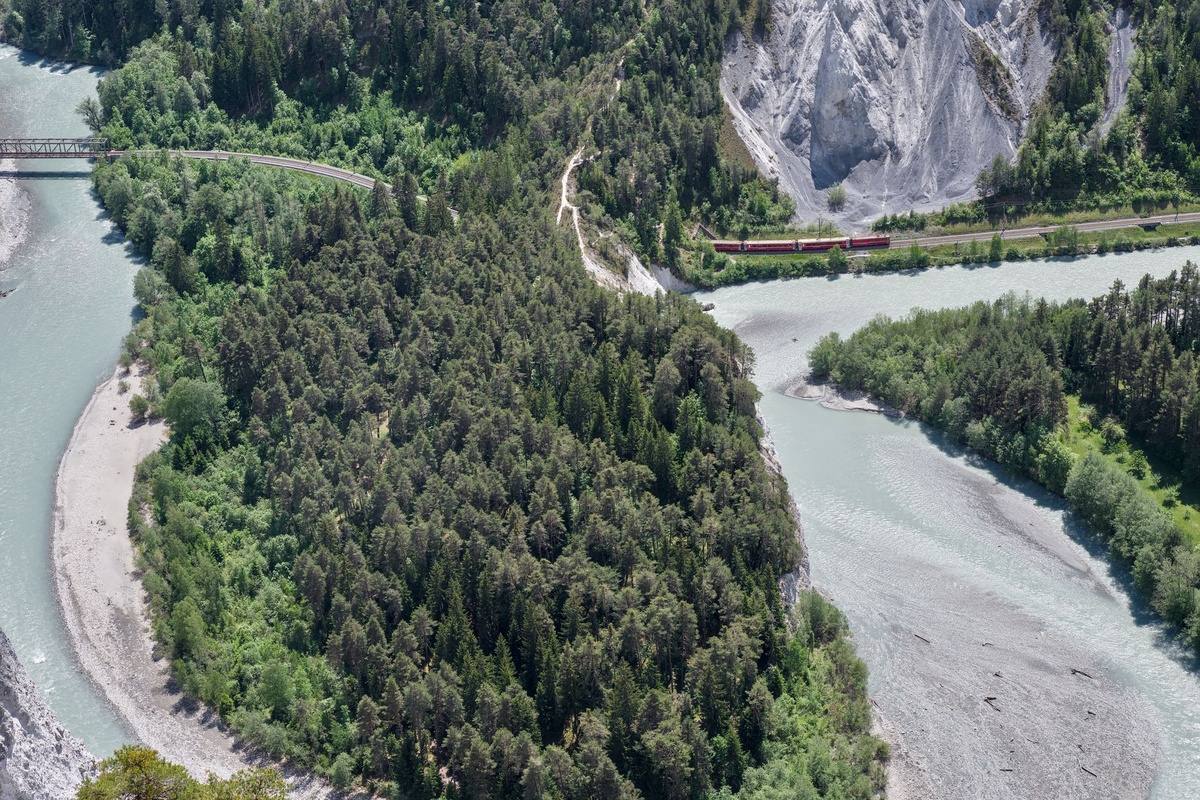
The Middle Rhine between Koblenz and Bingen sits at relatively low elevation, so its autumn transition is later and more gradual than the alpine routes. Expect yellow vineyards, copper beech trees and patches of red around the castles from roughly October 15 through the final week of the month.
The visual density is hard to beat: the 62-kilometer section passes dozens of castles and ruins, including Marksburg, Rheinfels, Katz and Maus. Trains run on both banks, but the left-bank railway through Boppard, St. Goar, Oberwesel and Bacharach gives backpackers the easiest hostel and station access.
Travel southbound from Koblenz to Bingen and try for a left-side seat, where the river appears most consistently. Regional trains do not have assigned seating, so boarding 10 minutes early is more useful than paying for an Intercity reservation.
Skip the sterile high-speed connection that bypasses the river via Limburg. On DB Navigator, select “local transport only” or add a stop at Bacharach to force the scenic Rhine route.
Semmering Railway: brighter color, shorter window
The UNESCO-listed Semmering Railway climbs from Gloggnitz at roughly 440 meters to Semmering Pass near 895 meters before dropping toward Mürzzuschlag. That elevation spread creates layered color, but it also means the highest slopes can be bare by late October.
Aim for October 5–20 for the best balance of gold larch, orange beech and green spruce. Compared with the Rhine’s vineyard-dominated palette, Semmering looks more alpine and rugged, especially around the Kalte Rinne Viaduct and the Adlitzgraben valley.
The historic core contains 16 major viaducts, more than 100 stone bridges and 15 tunnels across approximately 41 kilometers. The catch is that some of the railway’s finest engineering is easier to appreciate from hiking paths than from inside the train.
If the weather is dry, get off at Semmering and walk part of the Bahnwanderweg railway trail. The Semmering–Breitenstein section is roughly 9 kilometers and takes 3–3.5 hours, versus about 12 minutes on the train.
Bohinj Line: the wildest scenery and biggest weather gamble
Slovenia’s Bohinj Line runs beneath the Julian Alps, through the 6,327-meter Bohinj Tunnel and down the Bača and Soča valleys. It delivers the most natural-looking foliage of the three, with fewer towns and less development visible from the carriage.
Color typically peaks around October 10–25 near Bohinjska Bistrica and Most na Soči, although trees around higher trailheads may turn in early October. The turquoise Soča, pale limestone and orange forest create a stronger color contrast than either the Rhine or Semmering.
However, Bohinj’s autumn precipitation is no small footnote. Monthly totals can exceed 200 mm, compared with around 60 mm near Bingen, and a single Adriatic weather system can produce several consecutive wet days.
Do not reject Bohinj solely because rain appears in the forecast. Low cloud and swollen waterfalls can be spectacular, but choose a day with visibility above 1,000 meters if mountain views matter more than atmosphere.
Rainfall, Temperature and Daylight Compared
October daylight looks similar on paper, but mountain shadows shorten the useful photography window around Semmering and Bohinj. On October 15, expect roughly 10 hours 45 minutes to 11 hours between sunrise and sunset across all three regions.
| October condition | Bingen/Rhine | Semmering | Bohinj |
|---|---|---|---|
| Typical daytime high | 14–16°C | 9–13°C | 12–15°C in the valley |
| Typical overnight low | 7–9°C | 2–6°C | 5–8°C |
| Approximate monthly rain | 50–65 mm | 70–90 mm | 180–250 mm |
| Days with measurable rain | 9–11 | 9–12 | 12–15 |
| Daylight around October 15 | About 10 hr 47 min | About 10 hr 54 min | About 10 hr 56 min |
| Sunset near October 31 | Approximately 17:10 | Approximately 16:40 | Approximately 16:50 |
| Weather risk | Low to moderate | Moderate; possible frost | High rainfall and low cloud |
European summer time ends on Sunday, October 25, 2026. The physical daylight loss is gradual, but clocks move back one hour, making late-afternoon plans suddenly feel much tighter.
For photography, schedule the main ride between 09:30 and 15:30. A 16:00 departure in the final week of October gives you less than an hour of useful light in Slovenia or Austria, especially where valleys block the sun.
Pack a waterproof shell rather than an umbrella for Bohinj and Semmering. A €3 disposable poncho is false economy on an exposed trail; a lightweight shell and dry bag protect both you and your phone during wind-driven rain.
Ticket Prices and Reservation Rules
Rhine Gorge tickets
Regional trains through the gorge are operated under Germany’s public-transport system, and reservations are neither required nor available. A Koblenz–Bingen regional fare displayed for October 2026 is approximately €18.60 ($21.80) one way, but pricing varies slightly by train and ticket type.
The Deutschlandticket costs €63 per calendar month in 2026 and covers regional trains, S-Bahn, U-Bahn, trams and most local buses. It does not cover ICE, IC or EC trains, and it is a subscription rather than a casual tourist pass.
Buy through bahn.de or DB Navigator, then cancel by the operator’s stated deadline if you do not want another month. For two people traveling only one day, compare the regional Rheinland-Pfalz day ticket, generally around €29 for the first traveler plus an added charge for each companion.
Do not buy an ICE ticket from Cologne to Frankfurt and assume it follows the river. Most fast services use the inland high-speed line; the slower regional ride via Koblenz is the attraction.
Semmering Railway tickets
A regional ticket across the historic Gloggnitz–Mürzzuschlag section is approximately €12.30 ($14.40) one way in October 2026. Vienna–Graz Sparschiene tickets can start around €19.90 ($23.30), while flexible walk-up fares are often more than twice that.
Book through ÖBB or its mobile app. Sparschiene fares are tied to a specific long-distance train, whereas standard tickets offer more flexibility within their validity conditions.
A second-class seat reservation on an ÖBB Railjet costs about €3 ($3.50). It is optional domestically, but I would pay it on Friday afternoon from Vienna or Sunday evening toward Vienna, when unreserved passengers may spend part of the trip standing.
Regional trains stopping at Semmering generally cannot be reserved. If you want to hike between stations, that is an advantage: you can board the next eligible regional service instead of racing back for a fixed departure.
Bohinj Line tickets
Jesenice–Nova Gorica costs roughly €8.70 ($10.20) one way, making Bohinj less than half the price of the Rhine section while delivering almost 30 kilometers more railway. Bled Jezero–Most na Soči is approximately €5.10 ($6), usually taking 75–90 minutes.
Use the official Slovenian Railways website or the Grem z vlakom app. Domestic regional services do not need reservations, and tickets can be purchased at ticket offices, machines or through supported digital channels.
Check the journey planner the evening before departure. Engineering works can trigger bus substitutions, and replacement buses eliminate the tunnels, bridges and much of the reason for taking this journey.
| Route and fare, October 2026 | One-way price | Reservation | Best budget strategy |
|---|---|---|---|
| Koblenz–Bingen, 62 km | About €18.60 | Not available on regional trains | Use Deutschlandticket if taking several German journeys |
| Gloggnitz–Mürzzuschlag, 41 km | About €12.30 | Not needed on regional trains | Combine with advance Vienna–Graz Sparschiene |
| Jesenice–Nova Gorica, 89 km | About €8.70 | Not needed | Buy point-to-point unless making several Slovenian trips |
| Optional Railjet seat | €3 | Recommended at peak times | Reserve a window seat when offered |
Hostel Access: Where Can Backpackers Actually Sleep?
Rhine Gorge: best station-to-bed convenience
The Rhine has the strongest network of towns, supermarkets and budget beds. Bacharach is the atmospheric choice, but its famous castle hostel, Jugendherberge Burg Stahleck, sits roughly 1.3 kilometers from the station up a steep hill.
Dorm-style or simple youth-hostel beds commonly start around €36–42 ($42–49), often with breakfast. Reception hours vary seasonally, so confirm late check-in directly; arriving after dark with a 15-kilogram pack makes the climb considerably less romantic.
Hostel Die Wohngemeinschaft in Cologne and Jugendherberge Festung Ehrenbreitstein in Koblenz are alternatives from roughly €32–40. Koblenz gives better transport flexibility, while Bacharach gives better sunrise and evening atmosphere.
For food, skip an expensive riverfront three-course dinner. Buy breakfast supplies at REWE or Lidl for €5–7, then spend €12–16 on schnitzel, Flammkuchen or a seasonal onion tart in Bacharach.
Semmering: weak hostel access is its biggest flaw
Semmering has guesthouses and hotels, but few true backpacker hostels. Local private rooms regularly cost €55–85 per person, compared with €27–35 for a Vienna or Graz dorm.
The practical budget strategy is to sleep in Vienna, leave around 07:00, cross the route and finish in Graz. Vienna–Semmering takes roughly 1 hour 15 minutes to 1 hour 40 minutes depending on the connection; Semmering–Graz takes about 1 hour 15 minutes.
In Vienna, Wombat’s City Hostel Vienna Naschmarkt commonly starts near €30–38 for a dorm bed. In Graz, a&o Graz Hauptbahnhof can start around €25–33 and is approximately 500 meters from the station.
Bring lunch from Vienna: a supermarket roll, fruit and drink cost €6–8 versus €18–25 for a sit-down mountain meal. At Semmering station, opening hours can be seasonal and midweek closures are common.
Bohinj: cheap beds, awkward last-mile transport
Hostel pod Voglom near Lake Bohinj commonly lists dorm beds around €25–32. Its lakefront location is excellent, but it is several kilometers from Bohinjska Bistrica railway station and relies on buses, walking or a €20–30 taxi.
Near Bled, dorms such as Castle Hostel 1004 can start around €24–30. Be careful: Bled Jezero station serves the Bohinj Line but sits above the western shore, while many hostels cluster near Bled town on the opposite side of the lake.
Bled Jezero to central Bled is roughly 2–3 kilometers depending on your hostel, versus a 5–10 minute bus connection when schedules align. At night, a taxi can cost €12–18, quickly wiping out the €8.70 train bargain.
Eat at Strud’l in Bohinjska Bistrica for filling Slovenian dishes around €12–18, or use Mercator for a €6 trail lunch. Skip Bled’s most photographed lakeside terraces if you are budgeting; coffee and cake can cost twice what you would pay in Bohinjska Bistrica.
Which Route Should You Choose?
- Choose the Rhine Gorge if you have only one day, want frequent trains, dislike weather gambling or are traveling after October 20.
- Choose Semmering if you enjoy railway engineering, want to combine a scenic train with hiking, or are already traveling between Vienna and Graz.
- Choose the Bohinj Line if your budget is tight, you have two flexible days and you value wild valleys over castles and cities.
- Choose the Rhine over Bohinj if the Slovenian forecast shows continuous heavy rain or low cloud below 800 meters.
- Choose Bohinj over the Rhine if accommodation cost matters more than railway frequency and you can tolerate limited evening transport.
- Choose Semmering early in October; by the final week, the high pass may be past peak while the Rhine vineyards are still golden.
My ranking for a first-time European backpacker is Rhine first, Bohinj second, Semmering third. Semmering is technically extraordinary, but its poor hostel access and the limited view of its own viaducts make it a weaker standalone budget destination.
If cold rain starts dominating central Europe, October can still be around 25°C in parts of the Mediterranean. Compare the rail trip against an off-season October break in Santorini, Mallorca or Bodrum before locking in several nonrefundable hostel nights.
A Costed Seven-Day Three-Railway Plan
This route assumes you begin in Frankfurt and finish in Ljubljana, use advance fares and sleep in dorms. It prioritizes the scenery rather than trying to collect cities at high speed.
- Day 1: Frankfurt to Bacharach. Advance regional or saver ticket from about €20; sleep in Bacharach from €38.
- Day 2: Bacharach–Koblenz–Bingen. Ride the Rhine in both directions or make stops in St. Goar and Oberwesel; transport budget €19–29.
- Day 3: Koblenz to Vienna. Reach Frankfurt and take an advance train or overnight coach; allow €45–65.
- Day 4: Vienna to Semmering and Graz. Use a €19.90 Sparschiene fare where available, adding €3 for a Railjet seat.
- Day 5: Graz to Ljubljana. Advance rail or coach fares commonly start around €18–25; continue to Bohinj for about €10 by bus or regional transport.
- Day 6: Bohinj Line to Nova Gorica. Budget €8.70 for the full line, plus €3–6 for local connections.
- Day 7: Return to Ljubljana. Bus or train combinations usually cost approximately €10–15.
| Seven-day budget item | Estimated cost, October 2026 |
|---|---|
| Six dorm nights at €30 average | €180 |
| Three scenic railway sections | €39.60 |
| Intercity positioning transport | €105–135 |
| Local buses and station transfers | €25 |
| Food at €25 per day | €175 |
| Laundry, lockers and contingency | €25 |
| Total | €549.60–579.60 ($643–678) |
You could reduce the total below €500 by taking overnight buses and cooking every evening, but I would not. Saving €12 while losing a full day to exhaustion is poor backpacker economics.
Booking and Tech Tips That Actually Help
Install DB Navigator, ÖBB and the Slovenian Railways app before crossing borders. No single app handles disruption information equally well in all three countries, and third-party planners sometimes omit replacement buses.
Download each route in Google Maps or Organic Maps before departure. Mobile coverage is generally strong along the Rhine but can drop inside Semmering’s tunnels and across long sections of the Bohinj Line.
- Screenshot your ticket QR code so a weak signal does not delay inspection.
- Carry a 10,000 mAh power bank; cold weather drains phone batteries faster.
- Check platform changes 10 minutes before departure rather than trusting an old screenshot.
- Use the Sun Surveyor or PhotoPills app to estimate when valley slopes will fall into shadow.
- Store accommodation addresses offline, especially around Lake Bohinj where different stations and bus stops use similar place names.
- Keep €20–30 in cash for small guesthouses, lockers and rural buses.
Germany, Austria and Slovenia are all within the EU roaming zone, so EU residents can generally use domestic allowances. Travelers without EU roaming can use an eSIM such as Airalo, but activate it on hostel Wi-Fi before reaching a rural station.
Common Mistakes to Avoid
Taking the fastest train instead of the scenic train
Germany’s fastest Cologne–Frankfurt trains avoid the Rhine Gorge. Add Koblenz or Bacharach as a waypoint and confirm that the map follows the river.
Booking Semmering accommodation before checking prices
A €75 room at the pass can cost more than two Graz hostel nights plus the train. Unless you want sunrise hiking, sleep in Vienna or Graz and treat Semmering as a daylight stop.
Assuming “Bled station” means central Bled
Bled Jezero is useful for the Bohinj Railway but lies on the lake’s quieter western side. Lesce-Bled station is on the main Ljubljana–Jesenice line, about 4 kilometers from central Bled, so check the exact station before booking.
Planning around sunset rather than valley shadow
A listed 17:00 sunset does not guarantee usable light until 17:00. Mountain slopes around Bohinj and Semmering can enter deep shade 60–90 minutes earlier.
Buying three different rail passes automatically
Point-to-point tickets total only about €39.60 for the three core scenic sections. A broad European rail pass rarely makes sense unless you are also taking several expensive intercity journeys.
Ignoring bus-replacement notices
A replacement bus gets you to the destination but skips tunnels, viaducts and trackside views. If Bohinj engineering works appear, move the scenic ride to another day rather than accepting the bus as equivalent.
Final Verdict
The Rhine Gorge is October’s safest all-round choice: foliage peaks relatively late, rainfall is lower, trains are frequent and towns sit directly on the line. Budget around €18.60 for the core ride or use a €63 Deutschlandticket if Germany forms a larger part of your trip.
The Bohinj Line is the best pure bargain, covering 89 kilometers for roughly €8.70. Give it a flexible weather day and solve your station-to-hostel transport before arrival.
The Semmering Railway is best for hikers and railway enthusiasts, particularly during the first half of October. Ride the train, walk the Bahnwanderweg and continue to Graz rather than paying resort prices at the pass.
Bookmark this comparison, check the official operator apps 24 hours before departure, and choose according to the forecast—not just the cheapest ticket. In October, one flexible day is worth more than any rail discount.
Frequently Asked Questions
Which scenic railway is cheapest: Rhine, Semmering or Bohinj?
The Bohinj Line is cheapest at roughly €8.70 for Jesenice–Nova Gorica in October 2026. The comparable Semmering section costs about €12.30, while Koblenz–Bingen through the Rhine Gorge is approximately €18.60.
When is the best time for fall foliage on the Rhine Gorge railway?
The most reliable window is approximately October 15–28, when vineyards turn yellow and riverside forests show copper and red. Semmering generally peaks earlier, around October 5–20.
Do I need to reserve scenic trains in Germany, Austria or Slovenia?
Regional trains on all three routes do not require reservations. An optional ÖBB Railjet seat costs about €3 and is worthwhile on busy Friday and Sunday services.
Is the Bohinj Railway worth taking in rainy October weather?
Yes, provided there is no bus replacement and visibility is reasonable; rain strengthens waterfalls and makes the forest more atmospheric. Avoid committing to one fixed day because Bohinj can receive 180–250 mm of rain during October.
Can I ride all three railways in one week?
Yes, but allow seven days and approximately €550–580 including six dorm nights, food and positioning transport. The efficient order is Rhine Gorge, Semmering via Vienna and Graz, then Bohinj via Ljubljana.

About the Author: Tomáš Bzirský
Founder and editor of Distratech. Based in the Czech Republic, travelling regularly from Central Europe. Writes practical travel guides and travel-tech comparisons (eSIM, apps, airports) in six languages.