A child developing a fever abroad is stressful; discovering that the nearest pediatric clinic charges €140 and closes at 8 p.m. makes it worse. Lisbon, Athens and Valletta are all reassuringly manageable family destinations, but they differ sharply on summer heat, mosquito exposure, pharmacy access and the price of private medical care.
Key Takeaways
- Lisbon is the best all-round choice: reliable tap water, mild October weather and several 24-hour private hospitals within 15 minutes of the center.
- Athens has the strongest specialist pediatric network, but summer heat can exceed 40°C and an uninsured private visit generally costs €60–€140.
- Valletta is easiest logistically, yet Malta’s desalinated tap water tastes noticeably mineral-heavy and specialist options are fewer.
- No special vaccine is routinely required for any of the three, but MMR, tetanus-diphtheria-pertussis and routine childhood vaccinations should be current.
- October 2026 daytime highs average roughly 23°C in Lisbon, 24°C in Athens and 25°C in Valletta, with mosquitoes still possible after rain.
Key Numbers at a Glance
| Factor | Lisbon | Athens | Valletta |
|---|---|---|---|
| Typical October high | 23°C | 24°C | 25°C |
| Airport to center | 7 km; 20–30 min | 35 km; 40–60 min | 8 km; 15–30 min |
| Private pediatric consultation | €70–€110 | €60–€100 | €50–€75 |
| Private emergency visit before tests | €100–€160 | €90–€140 | €35–€80 |
| Tap water | Safe; generally pleasant | Safe; often chlorinated | Safe; hard or salty taste |
| Main mosquito concern | Low on mainland | West Nile virus, seasonal | Low, but biting mosquitoes common |
| Best overall for | First family city break | Medical depth and history | Short, low-logistics trip |
Weather figures are long-term daytime averages. Medical prices are uninsured self-pay planning ranges checked in October 2026; tests, imaging and medication cost extra. For rough budgeting, €100 is approximately US$115, but card exchange rates vary.
The Short Verdict: Which City Should Your Family Choose?
Choose Lisbon if you want the safest all-round compromise
Lisbon wins for most families, particularly those traveling with toddlers. The weather is milder, the water tastes better, English is widely understood in private healthcare, and hospitals such as CUF Tejo and Hospital da Luz operate around the clock.
The drawback is terrain: Alfama’s steps and polished calçada paving are miserable with a travel stroller. Skip a steep Alfama apartment and stay near Parque das Nações, Avenida da Liberdade or flat sections of Baixa instead.
Choose Athens if access to pediatric specialists matters most
Athens has the deepest pool of children’s hospitals, pediatric subspecialists and diagnostic facilities. It is my choice for a family managing asthma, food allergies, epilepsy or another condition that might require specialist intervention.
It is also the hardest city during a heatwave. Athens regularly exceeds 38°C in July and August, versus typical peaks around 28–32°C in Lisbon, while traffic can turn a 6 km clinic journey into 35 minutes.
Choose Valletta if you want a compact three- or four-night break
Valletta’s center measures only about 1 km end to end, and Malta International Airport is 8 km away. English is an official language, pharmacies are easy to use, and a private GP appointment can cost half as much as an equivalent urgent consultation in Lisbon.
However, Malta has fewer pediatric institutions than greater Lisbon or Athens. For complex care, Mater Dei Hospital in Msida—not central Valletta—is the key facility, approximately 6 km or 15–25 minutes away by taxi.
Vaccinations: What Children Actually Need
Portugal, Greece and Malta do not routinely require vaccination certificates for arriving tourists. For a conventional city break, local pediatric guidance aligns on the same priority: complete the child’s normal national schedule rather than chasing destination-specific injections.
Check MMR particularly carefully. European measles outbreaks fluctuate, and airports, ferries and crowded museums create more realistic exposure opportunities than a rare tropical disease.
- MMR: Children should have the age-appropriate measles, mumps and rubella doses recommended at home.
- DTaP/Tdap: Confirm protection against diphtheria, tetanus and pertussis, especially before playground-heavy trips.
- Polio: Routine childhood doses should be complete.
- Influenza: Worth discussing for an October-to-winter trip, particularly for children with asthma or other risk factors.
- COVID-19: Follow current home-country guidance; rules and formulations can change faster than travel guides.
- Hepatitis A: Often recommended by US travel-health authorities for unvaccinated visitors, although it is not an entry requirement.
Do not schedule a first vaccine at the airport clinic unless there is a genuine timing problem. Side effects such as fever can blur the picture if a child becomes ill during the flight, and a pre-travel clinician who knows the medical history is more useful.
| Pre-trip health expense | Typical price, October 2026 | Timing | Practical note |
|---|---|---|---|
| Private travel-health consultation | €45–€90 (US$52–$104) | 4–8 weeks before travel | Usually charged separately from vaccines |
| Hepatitis A vaccine | €35–€65 per dose (US$40–$75) | Ideally at least 2 weeks before | Brand and country determine price |
| Influenza vaccine | €15–€30 (US$17–$35) | Before autumn/winter circulation | May be free for eligible residents, not tourists |
| Replacement paper vaccine record | Often free–€20 | Before departure | Also save an encrypted offline copy |
These are planning costs rather than walk-in tourist prices at the destination. A destination clinic may require a consultation before vaccinating a child, adding another €50–€100.
Heat Illness: Athens Is the Clear Outlier
In October, all three cities are usually comfortable enough for children. Valletta remains warmest at approximately 25°C by day, Athens averages around 24°C, and Lisbon sits near 23°C, although an isolated hot spell can push any of them higher.
Summer is a different comparison. Athens can exceed 40°C, central Valletta’s pale stone streets offer little shade, and Lisbon’s Atlantic breeze usually makes equivalent temperatures feel less punishing.
What local pediatric practice treats as warning signs
Thirst, headache, irritability and reduced urine can indicate dehydration. Move the child into air-conditioning, remove excess clothing and offer frequent small amounts of oral rehydration solution rather than forcing a large bottle of plain water.
Confusion, fainting, difficulty waking, hot skin, persistent vomiting or a body temperature around 40°C is an emergency. Call 112 in Portugal, Greece or Malta; the number is free from any phone.
For babies, seek help earlier if there are markedly fewer wet nappies, no tears, a sunken soft spot or refusal to feed. Medical thresholds depend on age and history, so remote advice cannot replace an examination.
A family-friendly daily rhythm
- Visit outdoor sites between 8 a.m. and 11 a.m.
- Eat lunch and use an indoor museum, hotel room or pool from noon until 4 p.m.
- Return outside after 5 p.m., carrying oral rehydration sachets and water.
- Use breathable clothing and SPF 30–50 sunscreen; reapply after swimming.
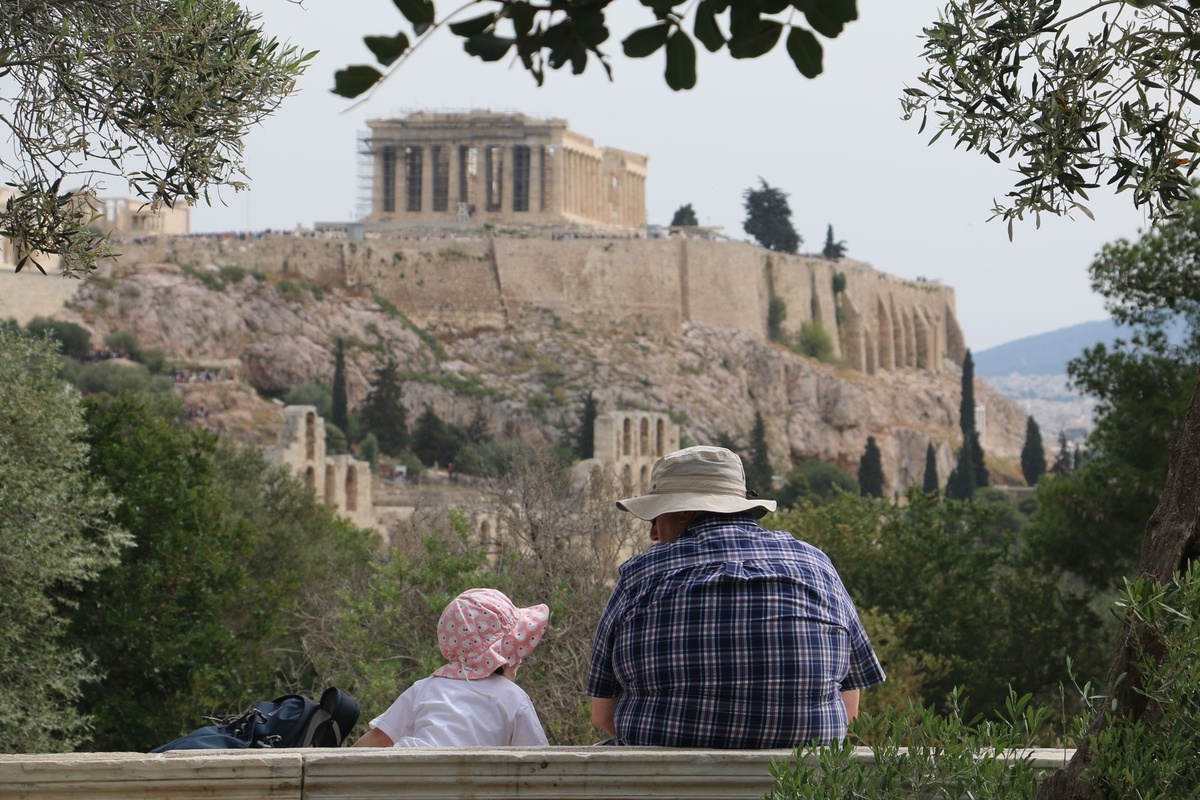
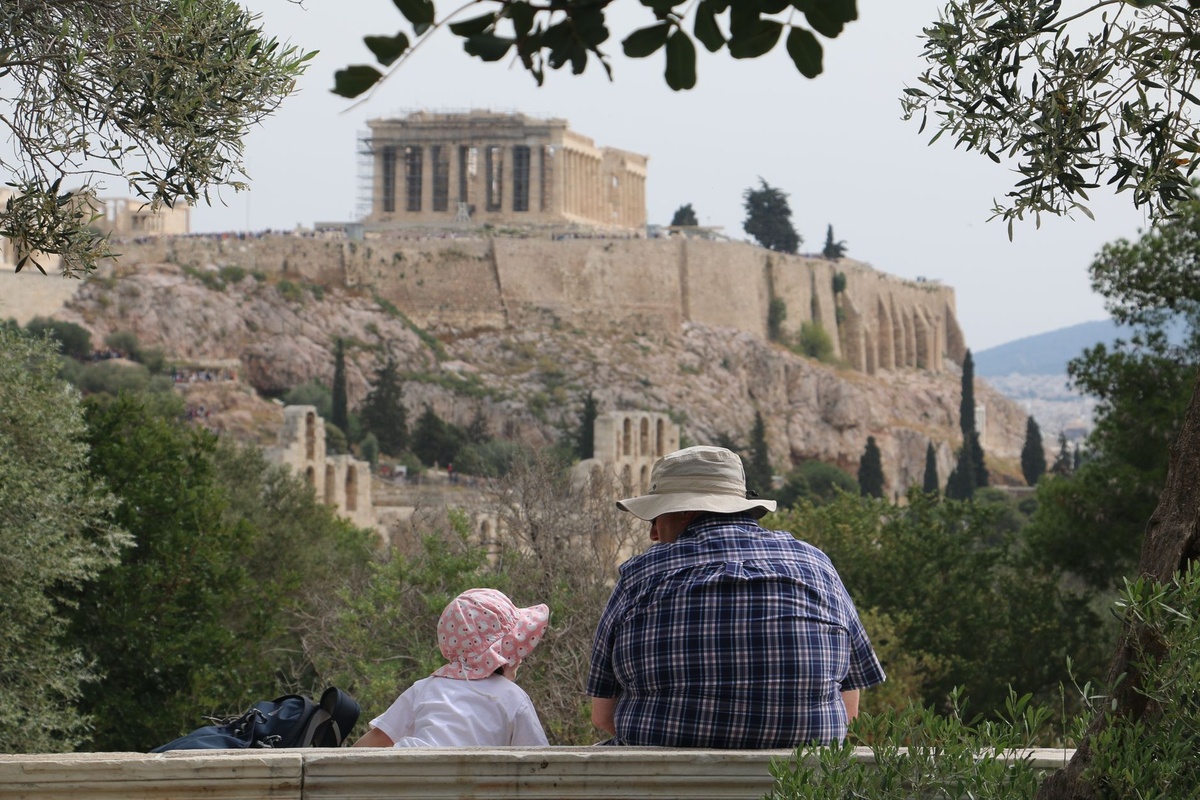
In Athens, skip the Acropolis at noon even in a warm October spell. Book an 8 a.m. timed entry through the official Hellenic Heritage ticket platform; the climb is approximately 1 km with exposed marble and limited shade.
In Lisbon, ride the cable car at Parque das Nações instead of queuing for packed Tram 28 with a toddler. In Valletta, take the Barrakka Lift—€1 return at the latest published fare—from the waterfront rather than pushing a buggy up the hill.
Can Children Drink the Tap Water?
Lisbon: safest bet for both quality and taste
Lisbon’s municipal water is treated and safe to drink. Older plumbing inside a historic apartment can affect taste, so run a cold tap for 20–30 seconds after the water has been sitting overnight.
There is usually no reason to buy bottled water for formula preparation, provided the accommodation’s cold-water supply is potable. Prepare formula according to your home health authority’s temperature and sterilization guidance; “safe tap water” does not mean powdered formula is sterile.
Athens: safe, with more chlorine taste
Athens tap water is potable and supplied by EYDAP. Some children notice a chlorine or mineral taste, but chilling it in a covered jug usually solves the problem more cheaply than buying multiple plastic bottles.
On small Greek islands, water quality and supply systems can differ significantly. Do not assume advice for metropolitan Athens automatically applies to every island stop.
Valletta: safe but least appealing
Malta’s water is treated and monitored, much of it coming from reverse-osmosis desalination blended with groundwater. It is safe, but hardness, sodium and chloride can produce a distinct taste.
This is the one city where I would book accommodation with a filtered-water tap or buy larger refill bottles. A 2-liter supermarket bottle costs roughly €0.50–€1.10, compared with €2–€3 at waterfront kiosks.
| Water expense for a family of four | Lisbon | Athens | Valletta |
|---|---|---|---|
| Tap water, 12 liters/day | Under €0.05 | Under €0.05 | Under €0.10 |
| Supermarket bottled equivalent | €3–€6/day | €3–€6/day | €4–€7/day |
| Restaurant 1-liter bottle | €2–€4 | €2–€4 | €3–€5 |
| My recommendation | Drink tap water | Chill tap water | Filter for taste |
Retail prices checked for October 2026 planning; tourist-zone restaurants may charge more.
Mosquito Risks: Athens Needs the Most Attention
None of these cities requires routine antimalarial medication. The practical comparison is nuisance biting in Lisbon and Valletta versus a small but meaningful seasonal West Nile virus concern in Greece.
Lisbon
Mosquito activity is generally low in central Lisbon, although bites increase near standing water after warm rain. Mainland Portugal is not the same risk profile as Madeira, where Aedes aegypti surveillance and dengue concerns are more relevant.
Athens
Greece reports seasonal West Nile virus cases, generally from summer into early autumn. Risk to an individual tourist remains low, but families should use repellent at dusk, particularly around greener suburban areas and wetlands near the coast.
Valletta
Malta’s warm autumn allows mosquitoes to linger after rain. Disease risk is low, but unscreened ground-floor rooms and roof terraces can produce an annoying number of bites.
For children, use an age-appropriate repellent approved by your home health authority. Products containing up to 30% DEET or suitable concentrations of icaridin/picaridin are commonly recommended for children over the applicable minimum age; do not apply repellent to hands, eyes, broken skin or underneath clothing.
Skip ultrasonic plug-ins: evidence that they prevent bites is poor. Choose window screens, air-conditioning, long loose clothing at dusk and a properly registered skin repellent instead.
Pharmacies and Children’s Medicines
Pharmacists in all three cities can advise on minor illness, check interactions and direct families to a doctor. They cannot safely diagnose every fever, and antibiotics require a prescription—despite stories from travelers who obtained them informally years ago.
| Need | Lisbon | Athens | Valletta |
|---|---|---|---|
| Paracetamol brand commonly seen | Ben-u-ron | Depon | Panadol |
| Typical children’s paracetamol price | €3–€7 | €2–€5 | €4–€8 |
| Ibuprofen brand commonly seen | Brufen/Nurofen | Algofren/Nurofen | Nurofen/Brufen |
| Oral rehydration sachets | €5–€10 per pack | €4–€9 per pack | €5–€10 per pack |
| Typical weekday hours | 09:00–19:00 | 08:00–20:00, often split shifts | 08:30–19:00 |
| After-hours system | Farmácias de serviço | On-duty pharmacies | Sunday/holiday roster |
Indicative retail prices in October 2026. Concentrations and package sizes differ, so compare active ingredient and strength—not brand name.
The biggest medication mistake is assuming every liquid contains the same concentration. A 5 ml dose from home may be wrong for the bottle sold locally; ask the pharmacist to write the dose in milliliters based on the child’s current weight and the exact product.
Do not alternate paracetamol and ibuprofen casually. It increases the chance of duplicate or mistimed doses, while ibuprofen may be inappropriate for a dehydrated child, certain asthma patients or children with kidney problems.
How to find an open pharmacy
In Lisbon, search “farmácia de serviço” plus the neighborhood or use Farmácias de Serviço. A pharmacy may serve customers through a night hatch rather than opening the shop floor.
For Athens, the Pharmaceutical Association of Attica publishes on-duty listings at fsa.gr. Confirm by phone because Greek opening schedules and overnight duty periods rotate.
Malta’s government publishes a weekly Sunday and public-holiday pharmacy roster through gov.mt. Weekday pharmacies are plentiful, but Valletta itself becomes quieter after office hours, so do not wait until bedtime to replace a forgotten inhaler spacer.
Private Clinics, Emergency Care and Actual Costs
EHIC and GHIC holders may access medically necessary state care under applicable rules, but neither card guarantees free treatment or covers private clinics. Travel insurance remains valuable for private care, changed flights and medical repatriation.
Lisbon clinics
Hospital CUF Tejo, approximately 5 km from Baixa, and Hospital da Luz Lisboa, about 8 km away, offer 24-hour emergency services. A taxi generally takes 12–25 minutes and costs €9–€18 depending on traffic.
Allow €70–€110 for a scheduled private pediatric consultation and approximately €100–€160 for an urgent hospital assessment before laboratory work or imaging. A chest X-ray can add €35–€70; blood tests may add €30–€100.
Book routine CUF appointments through cuf.pt or the My CUF app. For a rapidly worsening child, go directly to emergency care rather than waiting for an app slot.
Athens clinics
Euroclinic Children’s Hospital in central Athens and IASO Children’s Hospital in Marousi are major private options. IASO is approximately 13 km from Syntagma Square, a 25-minute taxi ride without traffic but potentially 45 minutes at rush hour.
A private pediatrician commonly charges €60–€100, with urgent hospital assessments around €90–€140 before tests. Ultrasound or X-ray can add €40–€100, while a more involved emergency visit may exceed €250.
Public children’s hospitals include Agia Sofia and P. & A. Kyriakou. They have substantial specialist capability, but non-urgent waits can be longer and administrative English less consistent than at a private international-facing clinic.
Valletta clinics
Saint James HospitalSt Thomas HospitalA private GP visit often costs €25–€40 and a pediatric appointment approximately €50–€75. An initial private urgent assessment may begin around €35–€80, although imaging, specialist review or observation can push the bill above €150.
Malta is cheapest for simple consultations but has less redundancy. Lisbon offers several major private hospitals, while Athens has the broadest pediatric specialist ecosystem.
| Example uninsured bill, October 2026 | Lisbon | Athens | Valletta |
|---|---|---|---|
| Pediatric consultation | €70–€110 | €60–€100 | €50–€75 |
| Urgent assessment + basic blood tests | €140–€260 | €130–€240 | €90–€190 |
| Assessment + X-ray + medication | €170–€300 | €150–€280 | €110–€230 |
| Approximate US-dollar range for consultation | $81–$127 | $69–$115 | $58–$86 |
Always request an itemized invoice, medical report and prescription before leaving. Insurers frequently reject a card receipt that does not identify the patient, diagnosis and treatment.
Getting Around With a Sick or Tired Child
| Airport transfer | Public transport | Taxi or app ride |
|---|---|---|
| Lisbon Airport to Baixa, 7 km | Metro: €1.85 plus €0.50 card; 30–35 min | €12–€20; 20–30 min |
| Athens Airport to Syntagma, 35 km | Metro: €9 adult; about 40 min | Flat fare typically €40 day/€55 night; 35–60 min |
| Malta Airport to Valletta, 8 km | Bus: approximately €2–€2.50; 25–40 min | €15–€22; 15–25 min |
Prices checked for October 2026 planning. Athens airport taxi flat fares and Malta bus seasonal fares can be revised, so confirm before travel.
Lisbon’s Metro is cheapest, but elevators are not reliable enough to make it my first choice with a feverish child and luggage. Bolt and Uber operate in Lisbon and Athens; Malta uses services including Bolt, Uber and eCabs.
Download offline maps and save the hospital address in the local script where relevant. An eSIM from Airalo can keep clinic calls, translation and insurance documents available without airport SIM queues, but emergency number 112 works without mobile data.
Where to Stay for Easier Healthcare
In Lisbon, Martinhal Lisbon Chiado has family-focused apartments, baby equipment and central access, with typical October rates around €320–€480 per night. For better hospital access and flatter pavements, the Parque das Nações branch is more practical than romantic Alfama.
In Athens, AVА Hotel & Suites near Plaka provides kitchenettes and space from roughly €230–€360 per night. Stay near Syntagma or Evangelismos rather than deep inside pedestrianized Plaka if rapid taxi access matters.
In Valletta, Grand Hotel Excelsior offers larger rooms and a pool from approximately €190–€300 per night. It sits just outside the city gate, though the sloped approach can be awkward with a buggy; flatter Sliema has more pharmacies but requires a ferry or taxi to Valletta.
Skip a non-refundable apartment without air-conditioning, even in October. Mediterranean shoulder season can still reach 25–30°C, and sleeping in an overheated room is especially unpleasant for an unwell child.
Costed Four-Night Family Plan
This mid-range estimate covers two adults and two children sharing one family room in October 2026. It excludes flights and assumes one paid attraction per day, casual restaurants and no medical emergency.
| Four-night cost | Lisbon | Athens | Valletta |
|---|---|---|---|
| Family accommodation | €920 | €800 | €760 |
| Meals and snacks | €380 | €340 | €400 |
| Airport and local transport | €85 | €125 | €95 |
| Attractions | €130 | €120 | €115 |
| Pharmacy/health contingency | €150 | €150 | €100 |
| Total | €1,665 (about US$1,915) | €1,535 (about US$1,765) | €1,470 (about US$1,691) |
Athens offers the best-value restaurant meals: a family lunch of souvlaki, salad and drinks can remain near €35–€45. Try O Thanasis near Monastiraki, but go before 12:30 p.m. to avoid the busiest period.
In Lisbon, skip tourist-menu restaurants on Rua Augusta and book O Frade in Belém, where a family meal runs roughly €60–€90. Valletta is priciest for dining; Legligin is excellent, but its tasting format suits older children better than restless toddlers.
If you are comparing warmer October alternatives beyond the Mediterranean, our October family-workation city comparison explains why ending monsoons can mean lower prices but higher mosquito and water-management demands.
Common Mistakes Families Make
- Carrying only brand names: Save the generic ingredient, concentration and prescribed dose for every medicine.
- Buying combination cold remedies: Some contain duplicate paracetamol or ingredients unsuitable for young children.
- Assuming EHIC means private care is free: It generally does not cover private hospital bills.
- Waiting until Sunday to find medicine: Duty pharmacies exist, but they may be several kilometers away.
- Overpacking antibiotics: An old prescription can mask symptoms, cause side effects and be wrong for the illness.
- Ignoring October sun: Temperatures feel moderate, but UV exposure around midday can still be substantial.
- Keeping medical documents only in the cloud: Store encrypted offline copies of prescriptions, allergies and insurance contacts.
- Choosing charm over access: Alfama stairs, Plaka lanes and Valletta slopes delay taxis and frustrate stroller users.
Final Recommendation
Lisbon is the winner for most families. It combines drinkable, pleasant-tasting water, relatively gentle heat, dependable private hospitals and straightforward airport access without Athens’ peak-temperature risk or Malta’s narrower specialist network.
Choose Athens when pediatric specialization is the deciding factor, especially for children with established medical conditions. Choose Valletta for a compact, English-speaking short break where low-cost primary care matters more than having multiple children’s hospitals nearby.
Before booking, save 112, identify the nearest 24-hour facility, photograph every prescription and reserve at least €150 on a card for an initial private consultation and tests. Then share this guide with the other adult traveling—medical planning only works when more than one person knows the plan.
Frequently Asked Questions
Which is safest for a family trip: Lisbon, Athens or Valletta?
Lisbon is the strongest all-round option because heat is generally milder, tap water tastes good and several 24-hour private hospitals are within 5–8 km of the center. All three are broadly safe and have dependable emergency care through 112.
How much does a private pediatrician cost in Lisbon, Athens and Valletta?
Budget €70–€110 in Lisbon, €60–€100 in Athens and €50–€75 in Valletta as an uninsured visitor in October 2026. Emergency fees, blood tests and imaging can raise the final bill to €150–€300.
Can children drink tap water in Lisbon, Athens and Malta?
Yes, municipal tap water is potable in all three destinations. Lisbon generally tastes best, Athens can taste chlorinated, and Malta’s desalinated, mineral-heavy supply is safe but often more palatable after filtering.
Do children need special vaccines for Portugal, Greece or Malta?
No destination-specific vaccine is routinely required for ordinary city trips, but routine MMR, tetanus-diphtheria-pertussis and polio protection should be current. Ask a clinician about hepatitis A and seasonal influenza at least 4–8 weeks before departure.
Are mosquitoes a problem in Athens in October?
Mosquitoes can remain active during a warm October, particularly after rain, and Greece has seasonal West Nile virus transmission. The individual risk is low, but use age-appropriate repellent and long clothing around dusk.

About the Author: Tomáš Bzirský
Founder and editor of Distratech. Based in the Czech Republic, travelling regularly from Central Europe. Writes practical travel guides and travel-tech comparisons (eSIM, apps, airports) in six languages.