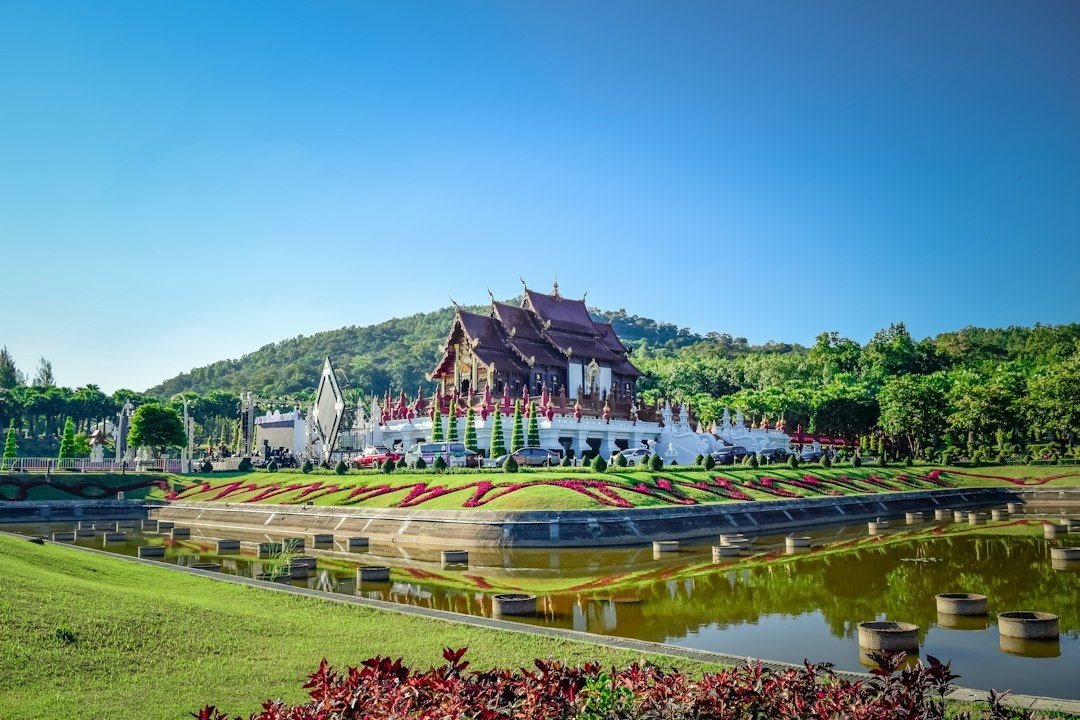
October is the month when Southeast Asia workations require more homework than Instagram suggests. Chiang Mai is emerging from the monsoon, Da Nang is entering its wettest and stormiest period, Penang faces frequent tropical downpours, and Siem Reap combines lush temple scenery with saturated roads—but all four offer affordable apartments, strong café cultures and 30-day budgets below most European capitals.
Key Takeaways
- Chiang Mai is the best all-round choice: budget about €1,080 ($1,250) for 30 days, with improving weather and excellent coworking infrastructure.
- Da Nang is the riskiest October option: expect roughly 600–650 mm of rain plus possible typhoons, flooding and flight disruption.
- Siem Reap is the cheapest: a comfortable month costs about €900 ($1,045), but power and internet redundancy matter.
- Penang offers the best food and most reliable urban infrastructure: allow around €1,230 ($1,425) for 30 days.
- For critical video calls, use two mobile networks: fixed broadband alone is not enough during thunderstorms or local power cuts.
Key Numbers at a Glance
The figures below combine historical October climate normals, October 2026 advertised accommodation and coworking prices, typical city-center mobile speeds, and a realistic mid-range solo-traveler budget. Rainfall is a planning average, not a forecast: a single tropical system can deliver several hundred millimeters in two days.
| October metric | Chiang Mai | Da Nang | Penang | Siem Reap |
|---|---|---|---|---|
| Typical monthly rainfall | 120–140 mm | 600–650 mm | 350–400 mm | 260–290 mm |
| Days with measurable rain | 12–16 | 20–24 | 22–26 | 15–20 |
| Typical daytime temperature | 29–31°C | 27–29°C | 30–32°C | 30–32°C |
| Flood risk | Medium | Very high | High | Medium–high |
| Planning PM2.5 band | 10–20 µg/m³ | 15–25 µg/m³ | 12–25 µg/m³ | 15–30 µg/m³ |
| Typical coworking month, Oct. 2026 | €100–115 | €60–95 | €100–140 | €95–110 |
| Comfortable 30-day cost, Oct. 2026 | €1,080 / $1,250 | €1,000 / $1,160 | €1,230 / $1,425 | €900 / $1,045 |
| Overall October workation score | 8.5/10 | 5.5/10 | 7.5/10 | 7.8/10 |
Price conversions used for October 2026 planning: €1 ≈ $1.16, THB 38, VND 30,000, MYR 5.0 and KHR 4,700. Card exchange rates and weekend spreads vary.
The Short Verdict: Which City Should You Choose?
- Choose Chiang Mai if you want the safest balance of weather, coworking choice, fast internet, cafés and weekend escapes.
- Choose Da Nang if you prioritize a beachfront apartment and low prices—and can tolerate storm warnings, indoor days and schedule changes.
- Choose Penang if food, walkable heritage streets, healthcare and infrastructure matter more than having the lowest budget.
- Choose Siem Reap if you want the cheapest month, Angkor access and atmospheric post-rain landscapes, but do not require flawless electricity.
My October winner is Chiang Mai. Its monsoon is retreating rather than intensifying, air quality is normally far better than during February–April burning season, and the city has enough coworking options that one flooded street or failed router will not ruin a working day.
Penang is the strongest alternative for people who value food and urban convenience. Siem Reap beats both on price and cultural payoff, while Da Nang is the contrarian gamble: spectacular waterfalls and cheap sea-view apartments, but October is precisely when central Vietnam’s weather can become operationally difficult.
October Rain and Flood Risk: The Biggest Difference
Chiang Mai: the monsoon is finally loosening its grip
Chiang Mai receives approximately 120–140 mm of rain in October, compared with roughly 220 mm in September. Showers remain possible, particularly early in the month, but prolonged all-day rain becomes less common toward late October.
The problem is runoff rather than the monthly average. Heavy rain upstream can raise the Ping River and flood low-lying areas around Chang Khlan, Pa Daet and roads east of the river; central Nimman and the western Old City are generally more practical workation bases.
Skip a ground-floor Ping River apartment. Choose an upper-floor condo around Nimman, Santitham or Suan Dok, ideally within 800 meters of a coworking space so one flooded junction does not require a 30-minute Grab detour.
Da Nang: cheap for a reason in October
Da Nang’s typical October rainfall is around 600–650 mm—roughly five times Chiang Mai’s total. It is also central Vietnam’s typhoon and tropical-depression season, so the meaningful risk is not “a rainy afternoon” but canceled flights, beach closures and several days of intense precipitation.
Flooding commonly affects low sections of Hải Châu, Cẩm Lệ, Hòa Vang and roads near the Hàn River. Beachside An Thượng can also suffer waterlogged streets, even when a fifth-floor apartment remains perfectly usable.
Do not reserve a non-refundable beachfront month just because it costs €350. Book the first seven nights through a flexible platform, inspect drainage and ask for the building’s generator policy before extending.
Penang: frequent cloudbursts, usually manageable
George Town typically records 350–400 mm during October, often through short but forceful afternoon or nighttime storms. Rain falls on more days than in Siem Reap, yet Penang’s dense supply of malls, cafés, covered food courts and Grab cars makes wet weather less disruptive.
Flash flooding can affect Jalan P. Ramlee, parts of Air Itam, Sungai Pinang and low roads outside the heritage core. George Town’s shophouses can also leak, so historic charm is not automatically work-friendly.
Stay around George Town’s western edge, Gurney Drive or Tanjung Tokong if reliable lifts, backup power and modern drainage matter. A Grab from Gurney to central George Town covers about 4 kilometers in 12–25 minutes and usually costs MYR 8–15 (€1.60–€3), versus a 45–55-minute walk in oppressive humidity.
Siem Reap: wet, green and unusually photogenic
Siem Reap receives roughly 260–290 mm in October, near the end of Cambodia’s wet season. Angkor’s reservoirs are full, temple moats reflect the towers, and the countryside is intensely green—conditions you simply do not get in dry February.
Urban drainage has improved, but unpaved lanes and outer neighborhoods can become muddy or briefly impassable. Stay near Wat Bo or the quieter northern side of town rather than down a dirt access road advertised as “only ten minutes from Pub Street.”
| Weather disruption | Most likely effect | Best mitigation | Flexibility cost, Oct. 2026 |
|---|---|---|---|
| Chiang Mai river rise | Road detours for 1–2 days | Upper-floor Nimman/Santitham base | Flexible studio from €20–30/night |
| Da Nang tropical system | Flight cancellation; 2–4 indoor days | Refundable first week; avoid basement rooms | Flexible apartment from €22–35/night |
| Penang flash flood | 30–90-minute transport delays | Modern building near food and coworking | Serviced studio from €28–45/night |
| Siem Reap waterlogged lane | Tuk-tuk access interrupted | Paved central road and upper floor | Generator hotel from €18–30/night |
Air Quality: October Is Not Chiang Mai’s “Smoke Season”
Chiang Mai’s notorious air pollution usually peaks during the February–April agricultural burning season, not October. Rain and residual humidity often keep October PM2.5 in a broadly good-to-moderate planning band of 10–20 µg/m³, although traffic and stagnant mornings can still push readings higher.
Penang can experience transboundary haze from regional fires, while Da Nang has traffic, construction dust and humid air that makes pollution feel heavier. Siem Reap’s October air is normally cleaner than in the dry-season burning months, but unpaved-road dust returns quickly after two sunny days.
Use IQAir and the Windy app rather than judging conditions by cloudiness. An N95 mask costs around €0.50–€1.50 locally, versus €120–€200 for a compact HEPA purifier—usually unnecessary for a single October month unless you have asthma.
For outdoor exercise, Chiang Mai wins. Penang’s humidity is more limiting than pollution, while running beside Da Nang’s beach after a storm can mean strong wind and airborne sand despite a respectable AQI reading.
Internet Reliability, Power Cuts and Backup Data
Headline Wi-Fi speed is less important than redundancy. A 300 Mbps fiber line becomes irrelevant when the building loses electricity, while a modest 50 Mbps connection with a UPS and two mobile networks can keep a client call alive.
| Connectivity metric | Chiang Mai | Da Nang | Penang | Siem Reap |
|---|---|---|---|---|
| Typical coworking download | 200–500 Mbps | 150–400 Mbps | 100–300 Mbps | 40–150 Mbps |
| Useful primary mobile network | AIS or True | Viettel | CelcomDigi or Maxis | Smart or Cellcard |
| 30-day mobile data, Oct. 2026 | THB 399–699 (€10.50–€18.50) | VND 160,000–300,000 (€5.30–€10) | MYR 35–50 (€7–€10) | $8–$15 (€7–€13) |
| Outage resilience | Good | Good, except during major storms | Very good | Fair |
| Best backup setup | AIS SIM + True eSIM | Viettel SIM + Vinaphone backup | CelcomDigi + Maxis backup | Smart + Cellcard backup |
Penang has the strongest overall infrastructure, closely followed by Chiang Mai. Da Nang’s normal service is fast, but severe October weather can damage local lines or interrupt electricity; Siem Reap has improved enormously, yet short neighborhood outages remain more plausible.
Before paying for an apartment, ask the host to run a speed test at 10 a.m. and 8 p.m. Request a screenshot showing ping, upload and download speeds—not “Wi-Fi available.” For Zoom, target at least 10 Mbps upload and latency below 60 ms.
A local physical SIM is generally cheaper than a travel eSIM. For instant arrival connectivity, Airalo is convenient, but buy a local carrier package if you plan to tether daily.
Carry a 20,000 mAh power bank, a 65W USB-C charger and a short extension lead. A capable power bank costs €35–€65 and can add several hours to a laptop; compare that with losing a €300 client presentation because Siem Reap’s power disappeared mid-call.
Coworking Spaces and Real October 2026 Prices
Chiang Mai: the deepest coworking bench
Alt_ChiangMai near the Old City is the best community-focused option, particularly for a full month. Expect approximately THB 3,900–4,500 (€103–€118) monthly depending on access level; verify current membership and events through Alt_ChiangMai.
Punspace is better for people who want polished workspaces and multiple locations. Typical passes run around THB 350 (€9.20) per day or THB 3,899–4,500 (€103–€118) monthly, with many monthly plans offering extended or 24-hour access; check the location-specific hours before booking.
Skip cafés for six-hour video-call days. Even excellent Roast8ry Lab—generally open around 8 a.m.–5 p.m.—is for coffee, not treating one drink as rent for a meeting room.
Da Nang: inexpensive desks, serious storm caveats
Enouvo Space is a practical option with day passes around VND 150,000 (€5) and monthly hot desks from approximately VND 1.8–2.5 million (€60–€83). Standard staffed hours are commonly around 8 a.m.–6 p.m. on weekdays, with extended access depending on membership; confirm at Enouvo Space.
Seaview Coworking and smaller An Thượng spaces appeal to beach-area workers, usually at €6–€10 per day or €70–€110 monthly. Before joining, ask whether the backup generator powers wall sockets and routers or only emergency lights.
Penang: more expensive, more professional
Settlements in George Town is my pick for focused work, with indicative day rates around MYR 50 (€10) and monthly hot desks around MYR 500–700 (€100–€140). Typical reception hours are approximately 9 a.m.–6 p.m. Monday–Friday, while member access may extend beyond those times.
Common Ground Penang suits teams needing meeting rooms and a corporate setup, but expect monthly pricing toward €130–€180. Skip noisy heritage cafés for calls and pay the extra €30–€50 for a proper desk, ergonomic chair and air-conditioning.
Siem Reap: small ecosystem, strong community
AngkorHUB remains Siem Reap’s most recognizable remote-work base. Budget roughly $10 (€8.60) for a day or $109–$125 (€94–€108) for a month, often with extended member access; confirm availability and accommodation packages through AngkorHUB.
For occasional work, Footprint Cafés is quieter and more work-friendly than Pub Street venues, with coffee around $2–$3 (€1.70–€2.60) and meals near $4–$7 (€3.50–€6). Buy lunch if you stay several hours, and do not schedule confidential calls in an open café.
Thirty-Day Living Costs: Rent, Food and Transport
These are comfortable solo budgets, not survival budgets. They assume a private studio with air-conditioning, a proper coworking membership, frequent local meals, occasional Western food, mobile data and several leisure outings.
| 30-day expense, Oct. 2026 | Chiang Mai | Da Nang | Penang | Siem Reap |
|---|---|---|---|---|
| Furnished studio | €480 | €390 | €520 | €330 |
| Electricity, water and laundry | €75 | €65 | €75 | €70 |
| Coworking | €105 | €75 | €120 | €100 |
| Food and coffee | €270 | €270 | €330 | €230 |
| Local transport | €65 | €70 | €75 | €65 |
| SIM and backup data | €20 | €15 | €18 | €18 |
| Leisure and contingency | €65 | €115 | €92 | €87 |
| Total | €1,080 / $1,250 | €1,000 / $1,160 | €1,230 / $1,425 | €900 / $1,045 |
Electricity deserves attention. Apartments may exclude it and charge THB 7–10 per kWh in Chiang Mai, VND 3,500–5,000 in Da Nang or $0.25–$0.35 in Siem Reap; heavy air-conditioning can add €40–€90 to the month.
Penang’s food budget is higher because you will keep ordering “one more thing.” A bowl of curry mee might cost MYR 8–12 (€1.60–€2.40), but coffee, seafood dinners and Grab rides accumulate quickly.
Food, Daily Life and After-Work Value
Chiang Mai
Eat khao soi at Khao Soi Maesai, usually open around 8 a.m.–4 p.m. and priced near THB 50–70 (€1.30–€1.85). For dinner, SP Chicken near Wat Phra Singh serves roast chicken and som tam for roughly THB 150–250 (€4–€6.60) per person.
Doi Suthep is 15 kilometers from Nimman: a Grab takes 30–40 minutes and costs roughly THB 250–400 (€6.60–€10.50) each way. Go after a clear night, because post-rain mornings offer the best city views.
Da Nang
Order mì quảng at Mì Quảng Bà Mua for about VND 45,000–70,000 (€1.50–€2.35), then try seafood away from the most aggressively promoted beachfront restaurants. Bếp Cuốn Đà Nẵng is a better casual dinner choice than an anonymous tourist buffet, with meals around VND 120,000–250,000 (€4–€8.30).
Hoi An is about 30 kilometers away: a car takes 45–60 minutes and costs roughly VND 350,000–500,000 (€12–€17) each way. In October, check river levels before going; picturesque lantern streets can become genuine flood zones.
Penang
For char kway teow, try Siam Road Charcoal Char Koay Teow, generally operating daytime hours and often selling out early; expect MYR 10–15 (€2–€3). At night, New Lane Street Foodstalls usually comes alive from approximately 4 p.m. to 10 p.m., weather permitting.
Skip the idea that Gurney Drive is Penang’s only food destination. Cecil Street Market and Air Itam offer better-value hawker meals, often MYR 6–12 (€1.20–€2.40), compared with MYR 25–45 (€5–€9) for a polished café brunch.
Siem Reap
Khmer Grill is dependable for amok, lok lak and grilled dishes around $4–$8 (€3.50–€6.90). For a splurge, book Cuisine Wat Damnak through its official website; tasting menus typically cost several times a local dinner but offer one of Cambodia’s most thoughtful dining experiences.
Angkor Wat is about 7 kilometers from central Siem Reap. A tuk-tuk temple circuit generally costs $18–$25 (€15.50–€21.50) for the small circuit, while a one-day Angkor pass is $37 (€31.90); buy only through the official Angkor Enterprise website or ticket office.
Airport Transfers and Getting Around
| City | Airport distance to workation district | Taxi/car time | Typical cost, Oct. 2026 |
|---|---|---|---|
| Chiang Mai | 5–7 km to Nimman/Old City | 15–25 min | THB 150–250 (€4–€6.60) |
| Da Nang | 5–7 km to An Thượng | 15–25 min | VND 100,000–180,000 (€3.30–€6) |
| Penang | 18–22 km to George Town | 30–60 min | MYR 25–45 (€5–€9) |
| Siem Reap | 45–50 km from SAI airport | 55–75 min | $25–$35 (€21.50–€30) |
Siem Reap’s new airport is the outlier: it is far outside town, so do not accept accommodation descriptions based on the former airport. The official airport shuttle is cheaper than a private car when schedules align, but door-to-door transport is more convenient after a long flight.
Grab works well in Chiang Mai, Da Nang and Penang. In Siem Reap, Grab and PassApp reduce fare negotiation; a short central tuk-tuk ride is generally $1–$3 (€0.85–€2.60).
Avoid renting a scooter unless your license and insurance explicitly cover it. A €5 daily scooter can create a five-figure medical problem, especially on Da Nang’s flooded roads or Siem Reap’s muddy outskirts.
A Costed 30-Day Chiang Mai Workation Plan
This is the plan I would book for October: arrive after the first week, base yourself west of the Old City, and leave the final weekend open for weather-dependent travel.
- Days 1–3: Book a refundable hotel or serviced apartment in Nimman for €25 per night (€75 total), test mobile coverage and inspect monthly condos.
- Days 4–30: Move into an upper-floor studio for approximately €420, including basic Wi-Fi but excluding electricity.
- Work setup: Buy a monthly coworking pass for €105 and AIS plus backup data for €20.
- Meals: Allow €9 per day for local meals and coffee, or €270 for the month.
- Transport: Budget €65 for airport transfers, Grab rides and occasional songthaews.
- Leisure: Reserve €80 for Doi Suthep, massages, a cooking class or a post-rain waterfall trip.
- Utilities and laundry: Set aside €75, especially if you run air-conditioning overnight.
Total: approximately €1,090 ($1,265). You could cut this below €850 by taking a simpler apartment, working from home and eating only local food, but the extra €240 buys redundancy, social contact and fewer arguments over café sockets.
Common October Workation Mistakes
- Using monthly rainfall as a schedule. Rain may arrive in two violent storms rather than evenly across 20 days; keep flight and excursion days flexible.
- Booking Da Nang for 30 non-refundable nights. Reserve seven nights first, then extend once the forecast and building drainage look acceptable.
- Choosing ground-floor accommodation. Saving €40 is poor value if water enters the room or the access lane becomes impassable.
- Trusting “fast Wi-Fi.” Ask for dated speed-test screenshots and confirm whether the building has backup power.
- Having only one SIM. Use two different carrier networks, not two resellers operating on the same network.
- Ignoring air-conditioner electricity rates. Get the per-kWh charge in writing and photograph the meter at check-in.
- Scheduling Angkor at midday. Start around 5 a.m., work during the hottest hours, then return for late-afternoon temples if your pass allows.
- Riding through floodwater. Hidden potholes, open drains and contaminated water make a €3 taxi the smarter choice.
October Ranking: Best to Worst
1. Chiang Mai: best overall combination of retreating rain, reasonable air quality, coworking depth and a €1,080 monthly budget. Choose Nimman or Santitham, not a romantic riverside ground floor.
2. Siem Reap: best for value and culture at roughly €900. Full reservoirs and wet-season greenery make Angkor exceptionally atmospheric, provided your accommodation has dependable power and paved access.
3. Penang: best for food, healthcare and infrastructure, but the €1,230 budget is highest and rain remains frequent. It is the easiest city for someone who wants Southeast Asia without sacrificing urban convenience.
4. Da Nang: best apartment value and weakest October weather. Go only if you can work through storms, carry flexible travel insurance and treat beach days as a bonus rather than the core plan.
If this comparison has you considering a drier month elsewhere, our guide to choosing between İzmir, Antalya and Ankara for a month uses a similarly practical approach to costs, transport and accessibility.
Final Recommendation
Book Chiang Mai for the lowest-friction October workation. It gives you the best probability of usable weather, mature remote-work infrastructure and clean-enough air without peak-season prices.
Pick Siem Reap if budget and temples outweigh occasional outages, or Penang if your ideal workday ends with world-class street food. Save Da Nang for March–May unless a heavily discounted, refundable apartment makes October’s storm risk worth accepting.
Before paying for a month, compare the exact neighborhood’s flood history, request an evening speed test and confirm the cancellation terms in writing. Bookmark this guide, then price a refundable first week rather than gambling on a glossy 30-night listing.
Frequently Asked Questions
Which is the best city for an October workation: Chiang Mai, Da Nang, Penang or Siem Reap?
Chiang Mai is the best overall choice because October rain is decreasing, coworking is mature and a comfortable 30-day stay costs about €1,080 ($1,250). Penang has stronger infrastructure, but it is wetter and roughly €150 more expensive.
How much does a 30-day workation in Southeast Asia cost?
Budget approximately €900 in Siem Reap, €1,000 in Da Nang, €1,080 in Chiang Mai or €1,230 in Penang for October 2026. These totals include a private studio, coworking, food, utilities, transport and mobile data.
Is Da Nang too rainy in October?
For most remote workers, October is Da Nang’s riskiest month, with approximately 600–650 mm of rain and potential typhoon disruption. It can still work if your accommodation is refundable, above ground level and equipped with backup power.
Is Chiang Mai air quality bad in October?
October is normally much cleaner than Chiang Mai’s February–April burning season, with a planning PM2.5 range around 10–20 µg/m³. Check IQAir daily because traffic, local fires and stagnant weather can still create short pollution spikes.
Which city has the most reliable internet for remote work?
Penang has the strongest overall combination of fixed internet, mobile coverage and power reliability, with coworking downloads commonly around 100–300 Mbps. Chiang Mai is a close second and offers more remote-worker-focused spaces.

About the Author: Tomáš Bzirský
Founder and editor of Distratech. Based in the Czech Republic, travelling regularly from Central Europe. Writes practical travel guides and travel-tech comparisons (eSIM, apps, airports) in six languages.