'/%3E%3Cpath%20fill='%23b2b2b2'%20d='M241%20382q0%2016%2017%2026%2017%2011%2042%2011t42-11q16-11%2017-26V269H241'/%3E%3Cpath%20fill='%239f7e00'%20d='M241%20379q0%2014%208%2023%209%209%2021%209%2014%200%2021-9%209-9%209-23V269h-59'/%3E%3Cpath%20d='M241%20339v-70h59v110q0%2014-9%2023l-6%205v-68h-15v72q-8%200-14-4v-68zm59%2040c0%2022%2015%2032%2029%2032%2021%200%2030-18%2030-32v-40h-59'/%3E%3Cpath%20fill='%239f7e00'%20d='M266%20277v5h2v12h-3v-5h2v-5h-9v5h2v5h-4v9h3v18h-5v10h34v-10h-5v-18h3v-9h-4v-5h2v-5h-9v5h2v5h-3v-12h2v-5zm42%20101q0%2010%206%2017%206%206%2015%207%2010-1%2016-7%206-7%206-17v-29h-43'/%3E%3Ccircle%20fill='%230044ad'%20cx='329.5'%20cy='372'%20r='6'/%3E%3Cellipse%20fill='%230044ad'%20cx='300'%20cy='340'%20rx='16'%20ry='21'/%3E%3C/svg%3E)
'/%3E%3C/svg%3E)


'/%3E%3C/g%3E%3Cuse%20href='%23c'%20transform='matrix(-1%200%200%201%20720%200)'/%3E%3C/svg%3E)


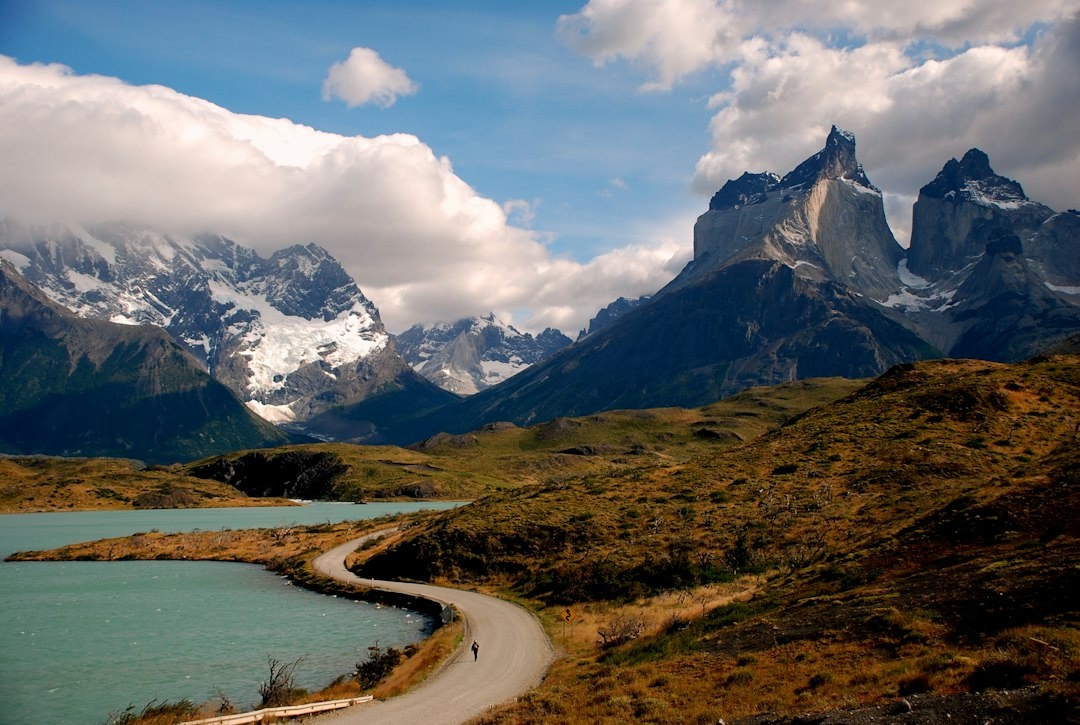
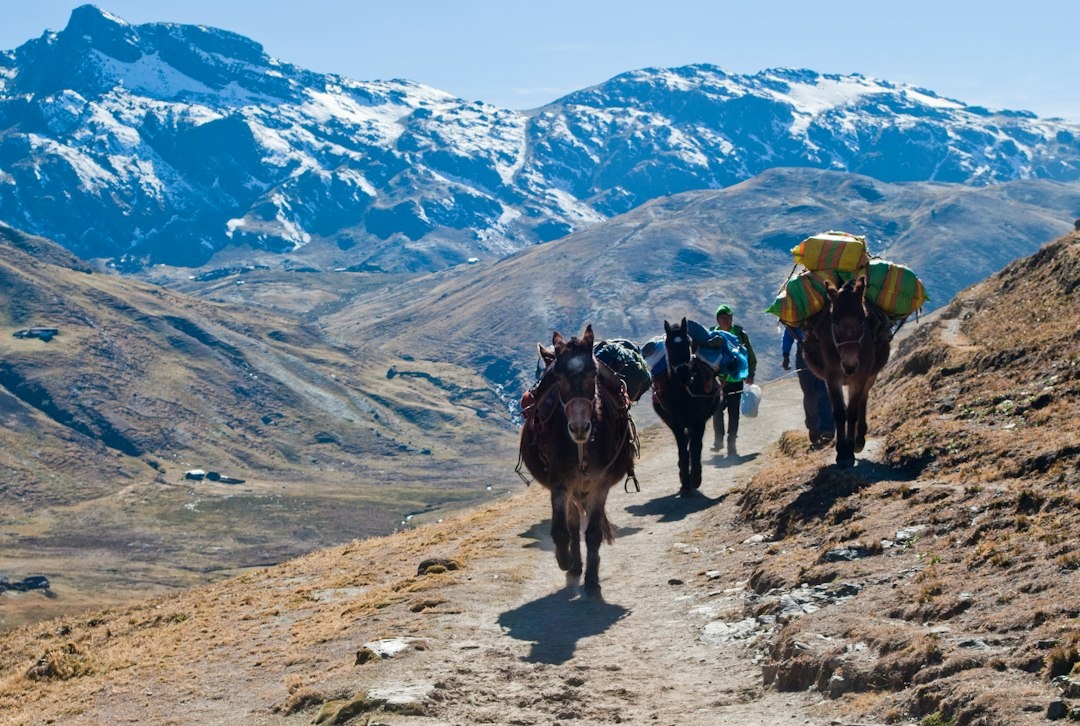
Patagonia forces first-time visitors into one expensive decision: reserve Torres del Paine’s famous W Trek months ahead, or base yourself in El Chaltén and hike equally dramatic trails without committing to a rigid circuit. In October, that choice matters even more—snow can close high sections, buses run less frequently than in midsummer, and one bad-weather day can derail a tightly booked W itinerary.
Key Takeaways
- The classic W covers roughly 72–80 km over five days, while four major El Chaltén day hikes total approximately 65–75 km.
- A five-day self-catered W typically costs €520–€760 before flights; five nights hiking from El Chaltén costs about €285–€480.
- W campsites require advance reservations, but El Chaltén’s basic backcountry sites are generally free and first come, first served.
- October brings 12–15 hours of daylight, fewer hikers and a meaningful risk of snow, winds above 80 km/h and temporary trail closures.
- Choose the W for a continuous wilderness journey; choose El Chaltén for flexibility, lower costs and a safer first Patagonia experience.
Key Numbers at a Glance
The figures below are October 2026 planning benchmarks. Chilean and Argentine prices can change during the season, so reconfirm transport and park fees before paying; conversions use approximately €1 = CLP 1,050, ARS 1,650 or US$1.16.
| Factor | Torres del Paine W Trek | El Chaltén |
|---|---|---|
| Core hiking distance | 72–80 km over 4–5 days | 65–75 km across four day hikes |
| Typical elevation gain | 2,500–3,200 m total | 2,800–3,500 m over four hikes |
| October 2026 park fee | CLP 46,200, about €44, for stays longer than 3 days | Budget ARS 90,000, about €55, for a 3-day Flexipass; verify current APN pricing |
| Basic camping | Approximately €11–€70 per person nightly | Free backcountry sites or €10–€18 in town |
| Main gateway transfer | Puerto Natales–park: 2–2.5 hours each way | El Calafate–El Chaltén: 2.5–3 hours each way |
| Reservation flexibility | Low: every overnight stop must match | High: choose each hike according to weather |
| Best for | A continuous hut-to-hut-style trek | Budget backpackers and uncertain weather |
The Fast Verdict: Which Patagonia Experience Should You Choose?
For most first-time Patagonia visitors traveling in October, I recommend El Chaltén. Its trails are no consolation prize: Laguna de los Tres delivers the defining Fitz Roy view, while Laguna Torre, Loma del Pliegue Tumbado and Piedra del Fraile provide enough variety for four serious hiking days.
El Chaltén’s decisive advantage is flexibility. If Tuesday brings sleet and 90 km/h gusts, take a short walk to Chorrillo del Salto and move Laguna de los Tres to Wednesday; on the W, Tuesday’s campsite reservation remains Tuesday’s reservation.
Choose the W Trek if:
- You want one continuous 4–5-day backpacking route rather than returning to town.
- You can reserve every campsite, bus and catamaran before arriving.
- You have previously carried a pack for at least 15 km on consecutive days.
- You can absorb a €600–€800 trekking bill without cutting food or safety equipment.
- The towers, French Valley and Grey Glacier are non-negotiable objectives.
Choose El Chaltén if:
- This is your first multi-day trip in highly changeable mountain weather.
- You want private-room or hostel comfort between hikes.
- You are traveling alone and prefer busy day trails with easy town access.
- You need to keep ten days in Patagonia below roughly €900.
- You would rather wait for a clear Fitz Roy morning than hike according to fixed accommodation dates.
Trail Difficulty: The W Is Not Technically Hard, but It Is Less Forgiving
Torres del Paine W Trek
The W is a moderate trek with no ropes, glacier travel or sustained scrambling. Its difficulty comes from consecutive long days, a loaded backpack, exposed wind and the inability to shorten several sections after you start.
A west-to-east itinerary usually runs Paine Grande–Grey–Paine Grande–Francés or Cuernos–Central–Base Torres. Expect 15–24 km per day and six to nine hours of walking, depending on campsite placement and whether you visit both Grey viewpoints.
| W section | Distance | Typical time | Difficulty |
|---|---|---|---|
| Paine Grande to Grey and return | 22 km | 7–8 hours | Moderate; rolling trail with exposed wind |
| Paine Grande to Francés | 13–14 km | 4–5 hours | Moderate |
| French Valley return from Francés | 16–20 km | 7–9 hours | Hard; rocky and potentially snowy |
| Francés to Central | 16–17 km | 5–6 hours | Moderate |
| Central to Base Torres return | 20–22 km | 8–10 hours | Hard; final moraine climb gains about 400 m |
The Base Torres day is harder than its distance suggests. The last kilometre rises through loose boulders, and October ice can turn a one-hour ascent into a cautious 90-minute climb.
El Chaltén
El Chaltén’s headline hikes are comparable in daily difficulty, but you carry only water, food and layers. Laguna de los Tres covers about 24 km return from town, gains roughly 1,050 m and takes eight to ten hours.
The final kilometre gains approximately 400 m, much like Base Torres. The difference is that you can look at the Fitz Roy webcam and Windy forecast that morning, then postpone the climb if cloud and gusts make the viewpoint pointless.
| El Chaltén hike | Distance | Typical time | Difficulty |
|---|---|---|---|
| Laguna de los Tres | 22–24 km | 8–10 hours | Hard |
| Laguna Torre | 18–19 km | 6–7 hours | Moderate |
| Loma del Pliegue Tumbado | 20–22 km | 7–9 hours | Hard and exposed |
| Piedra del Fraile from Río Eléctrico | 12–14 km | 4–5 hours | Easy to moderate |
Difficulty verdict: the hardest individual days are similar, but the W demands recovery while camping and carrying more weight. El Chaltén wins for a first trip because bad knees, wet boots or a poor forecast do not automatically compromise the next four days.
Campsites, Refugios and Where to Stay
How W Trek accommodation works
Torres del Paine does not have one central accommodation system. Las Torres Patagonia operates Central, Chileno, Francés, Cuernos and Serón, while Vértice Travel manages Paine Grande, Grey and Dickson.
You must build an itinerary using both booking systems. Do not reserve Paine Grande before confirming Francés or Cuernos for the following night; one missing bed can invalidate the entire route.
October 2026 benchmark rates range from approximately US$13/€11 for a bare Vértice camping space to US$65–$82/€56–€71 for equipped camping at selected Las Torres sectors. A made-up bed in a shared refugio commonly costs US$95–$150/€82–€129 per person.
Equipped camping normally includes a pitched tent, sleeping bag and mat, but inclusions differ by operator and sector. Premium elevated tents at Francés or Chileno cost considerably more than putting your own tent on the ground at Paine Grande.
My pick: carry a tent but use Paine Grande, Francés and Central rather than Chileno. Chileno offers earlier access to Base Torres, but its limited inventory and premium pricing can add €50–€100 for saving roughly two hours the next morning.
Camping and beds in El Chaltén
Poincenot, Laguna Capri and De Agostini are basic backcountry camps with pit toilets, no showers and no food sales. They have traditionally been free and first come, first served, but register where instructed and verify restrictions with Los Glaciares National Park because access rules can change.
In town, dorm beds generally cost US$18–$35/€16–€30 in October, while a simple private double costs US$55–$100/€47–€86. Rancho Grande is social and practical for the northern trailhead; Patagonia Hostel is quieter and more central.
If you want a proper room before or after camping, compare hotels in El Chaltén. Book a refundable rate because October bus schedules and trail conditions are less stable than January’s.
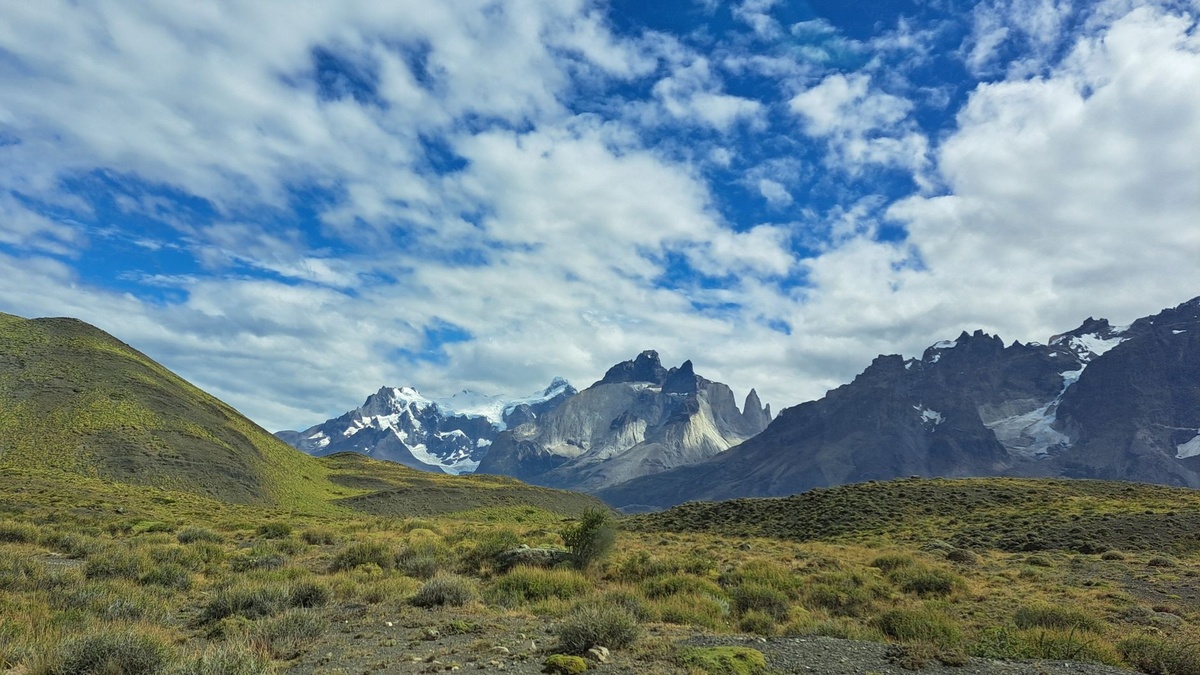
Skip moving camp every night in El Chaltén. Stay in town for four or five nights, then use Poincenot only if the forecast supports a Fitz Roy sunrise; that preserves flexibility without sacrificing the overnight experience.
Permits, Entrance Fees and Reservations
Torres del Paine
Foreign adults should budget CLP 46,200, approximately €44 in October 2026, for a visit longer than three days. Purchase through Pases Parques, download the QR code and save a screenshot because mobile service around Laguna Amarga is unreliable.
A park ticket does not reserve campsites. You still need dated confirmations from Las Torres and Vértice, and rangers may ask to see the complete sequence before allowing you onto the circuit.
Standard hiking hours vary by trail and weather. Base Torres and French Valley access can close early—often around 14:00 for the final ascent—so check notices at each ranger station rather than relying on last season’s blog posts.
Los Glaciares National Park and El Chaltén
Los Glaciares introduced paid access around El Chaltén in late 2024. For October 2026 budgeting, allow roughly ARS 45,000/€27 for one day, ARS 67,500/€41 for two consecutive days or ARS 90,000/€55 for a three-day Flexipass, but check the live tariff at Argentina’s National Parks ticket portal.
Argentina’s prices and exchange rates change faster than Chile’s. Pay online near your visit date rather than converting a large amount of cash months ahead, and carry the ticket offline on your phone.
The Los Glaciares visitor centre south of town generally opens daily around 09:00–17:00 in shoulder season, subject to staffing. Stop there on arrival for closure notices, fire rules and trail-condition reports.
Bus Fares, Catamarans and Gateway Logistics
Getting to Torres del Paine
Puerto Natales is the practical W gateway. Buses from Puerto Natales to Laguna Amarga or Pudeto take approximately two to 2.5 hours and cost around CLP 14,000/€13 each way in October 2026; compare departures through Bus-Sur and Base Torres.
From Laguna Amarga, the shuttle to the Las Torres Welcome Center costs about CLP 4,500/€4 and takes 15 minutes. Walking the 7 km road saves little useful money after an already long transfer.
The Pudeto–Paine Grande catamaran takes about 30 minutes and costs approximately CLP 30,000–35,000/€29–€33 one way. It is weather-dependent and may have only two or three October sailings daily, so build your route around the published timetable.
Puerto Natales to Punta Arenas takes roughly three hours and costs CLP 10,000–14,000/€10–€13. Natales to El Calafate usually takes five to six hours including the border and costs approximately CLP 35,000–45,000/€33–€43.
Getting to El Chaltén
El Calafate–El Chaltén buses take 2.5–3 hours for the 214 km journey. October 2026 fares are typically around ARS 35,000–50,000/€21–€30 each way with Chaltén Travel, Cal-Tur or Marga Taqsa.
A private transfer can exceed US$180/€155 for the vehicle. Unless four travelers split it or you have a tight flight connection, take the bus and spend the difference on an extra weather-buffer night.
The Río Eléctrico shuttle for Piedra del Fraile or the northern approach to Laguna de los Tres costs approximately ARS 15,000–25,000/€9–€15 one way and takes 35–45 minutes. This lets you hike one way back to town instead of retracing the standard Laguna de los Tres route.
Food: Carry It, Pre-Book It or Eat in Town?
Food on the W
Full board at W refugios commonly costs US$90–$120/€78–€103 per person per day. That generally means dinner, breakfast and a boxed lunch, making five days of catered food more expensive than some European city breaks.
Self-catering for five days costs about €55–€85 if you shop in Puerto Natales. Unimarc on Manuel Bulnes generally opens around 08:30–21:30, but buy specialty dehydrated meals at gear shops only if weight matters—one freeze-dried dinner can cost CLP 9,000–14,000/€9–€13.
A balanced approach works best: carry oats, tortillas, tuna, couscous, nuts and instant soup, then reserve one refugio dinner. Paine Grande has one of the better-stocked mini-markets, although a beer can cost €6–€8 and supplies are never guaranteed.
Do not plan meals that require 20 minutes of simmering. Wind dramatically increases fuel use; couscous takes five minutes, while dried beans are a terrible Patagonia economy.
Food in El Chaltén
El Chaltén groceries can cost 20–40% more than El Calafate, particularly cheese, fruit and trail snacks. Bring four days of durable food from La Anónima in El Calafate, then buy bread and fresh items locally.
For a post-hike meal, order lamb stew or locro at La Tapera for roughly ARS 18,000–30,000/€11–€18. Maffia serves excellent house-made pasta at approximately ARS 20,000–32,000/€12–€19, while La Cervecería is better for a burger and beer than for a quiet dinner.
Skip the overpriced trailhead snack kiosks. Buy empanadas the evening before and carry them with fruit, nuts and a thermos; a packed hiking lunch can cost €6 instead of €15–€20.
October Weather Risk: The Factor That Should Decide Your Trip
October is early spring in Patagonia. Daytime temperatures commonly range from 5–13°C, but exposed wind chill can feel below freezing; nighttime temperatures around 0–4°C are normal, and snow remains possible at Base Torres, Paso John Gardner and Laguna de los Tres.
Torres del Paine’s western side is generally wetter than El Chaltén, while both destinations can experience gusts above 80 km/h. A forecast showing 30 km/h wind in town may mean substantially stronger gusts on a moraine or open ridge.
October’s advantage is daylight: expect roughly 12 hours 40 minutes at the start of the month and close to 14 hours 30 minutes by month-end. Trails are quieter than in January, spring waterfalls run strongly, and snow around the granite peaks can produce better photographs than midsummer’s bare rock.
Use Windy to compare ECMWF and GFS models, Meteoblue for multimodel forecasts and Organic Maps or Gaia GPS for offline navigation. Download maps before leaving town; neither park has dependable continuous data coverage.
An eSIM helps with bus changes and accommodation messages in Puerto Natales, El Calafate and El Chaltén, but it is not an emergency device. A Garmin inReach Mini 2 or rented satellite messenger is more useful on the W, especially during quiet October departures.
This is the opposite of planning a hot, dry adventure such as an October Oman road trip: in Patagonia, keep spare days for wind rather than heat, and make every important reservation downloadable offline.
A Costed 10-Day Patagonia Backpacker Plan
This plan combines both destinations without pretending they are next door. It starts in Puerto Natales, completes a shortened but logical west-to-east W, crosses to Argentina, and gives El Chaltén one flexible headline-hike day.
- Day 1: Puerto Natales. Buy food, collect fuel and check catamaran status; sleep in a €20–€30 hostel dorm.
- Day 2: Paine Grande. Bus to Pudeto, catamaran to Paine Grande, then camp.
- Day 3: Grey Glacier. Hike 22 km return to Grey viewpoints and camp again at Paine Grande.
- Day 4: Francés. Hike 13–14 km to Francés; add lower French Valley only if arrival time and weather permit.
- Day 5: Central. Hike 16–17 km to Central and sleep near the Welcome Center.
- Day 6: Base Torres and Puerto Natales. Start before 06:00, hike 20–22 km, then take the late bus to town.
- Day 7: Puerto Natales to El Calafate. Cross the border and sleep in El Calafate.
- Day 8: El Calafate to El Chaltén. Take a morning bus; hike 6 km return to Mirador de los Cóndores and Las Águilas.
- Day 9: Weather-selected hike. Choose Laguna de los Tres for Fitz Roy or Laguna Torre if wind and cloud favor the western valley.
- Day 10: Buffer and departure. Use the morning for Chorrillo del Salto, then bus to El Calafate.
| 10-day expense | Backpacker estimate, October 2026 |
|---|---|
| W park ticket | €44 |
| W camping, four nights | €100–€220 |
| Pudeto catamaran and park shuttles | €38–€42 |
| Puerto Natales–park buses | €26 |
| Puerto Natales–El Calafate bus | €33–€43 |
| El Calafate–El Chaltén return buses | €42–€60 |
| Los Glaciares tickets | €27–€55 |
| Five hostel nights | €100–€160 |
| Food for ten days | €150–€220 |
| Fuel, laundry and contingencies | €35–€60 |
| Total excluding flights and gear | €595–€890 |
This itinerary is feasible, but it is not my first recommendation. If you have only ten days, doing El Chaltén plus Perito Moreno Glacier gives you more weather resilience; combining both parks creates a border-transfer day and leaves only one major El Chaltén hike.
Common Patagonia Planning Mistakes
- Booking flights before campsites: confirm the W’s complete accommodation chain first, then buy non-refundable transport.
- Treating October like summer: pack a comfort-rated -5°C sleeping bag, waterproof gloves and traction such as microspikes when rangers report ice.
- Using one forecast: compare at least two weather models and read wind gusts, not just average wind speed.
- Scheduling no buffer: one spare day is the minimum for El Chaltén; two are preferable for an October W departure.
- Carrying too much water: two one-litre bottles are normally sufficient between reliable sources, but always treat water near busy camps.
- Ignoring trail cutoff times: rangers can close Base Torres, French Valley or exposed paths even when the lower trail remains open.
- Depending on phone coverage: save tickets, campsite confirmations, insurance details and bus vouchers as offline PDFs.
- Bringing prohibited fuel on a flight: buy threaded gas canisters in Puerto Natales or El Chaltén and use stoves only in designated cooking areas.
Final Recommendation
Choose El Chaltén for your first Patagonia trip unless the continuous journey of the W is the main reason you are flying south. It costs roughly €200–€350 less over five hiking days, supports last-minute weather decisions and lets you tackle trails of comparable difficulty with a lighter pack.
If you have ten days and the W is a lifelong goal, commit to it—but reserve four or five consecutive nights, add a Puerto Natales buffer and treat El Chaltén as a bonus rather than squeezing both parks into an inflexible checklist. Save this guide, open the official booking portals in separate tabs and price the complete route before purchasing flights.
Frequently Asked Questions
Is the W Trek or El Chaltén cheaper?
El Chaltén is cheaper: five hiking days typically cost €285–€480 including hostel beds, food and park access, versus approximately €520–€760 for a self-catered W. Refugio beds and full-board meals can push the W above €1,000.
Is October a good month for the W Trek?
October offers long daylight, lower crowds and snow-framed peaks, but temperatures can fall below freezing and winds may exceed 80 km/h. It is a good month for properly equipped hikers who add at least one weather-buffer day.
Do I need to book El Chaltén campsites?
Basic sites such as Poincenot and De Agostini have generally operated without advance reservations, unlike every overnight stop on the W. Check current Los Glaciares rules on arrival because closures, registration requirements and fees can change.
How many days do I need for Torres del Paine and El Chaltén?
Allow at least 12–14 days for both: five W hiking days, two transfer days, three El Chaltén hiking days and two or more weather buffers. Ten days is possible but leaves little protection against bus delays or trail closures.
Which is harder, Laguna de los Tres or Base Torres?
They are similar: both cover roughly 20–24 km and finish with a steep 400 m ascent. Laguna de los Tres is slightly longer, while Base Torres is harder when attempted after several consecutive days carrying a full backpack.

About the Author: Tomáš Bzirský
Founder and editor of Distratech. Based in the Czech Republic, travelling regularly from Central Europe. Writes practical travel guides and travel-tech comparisons (eSIM, apps, airports) in six languages.