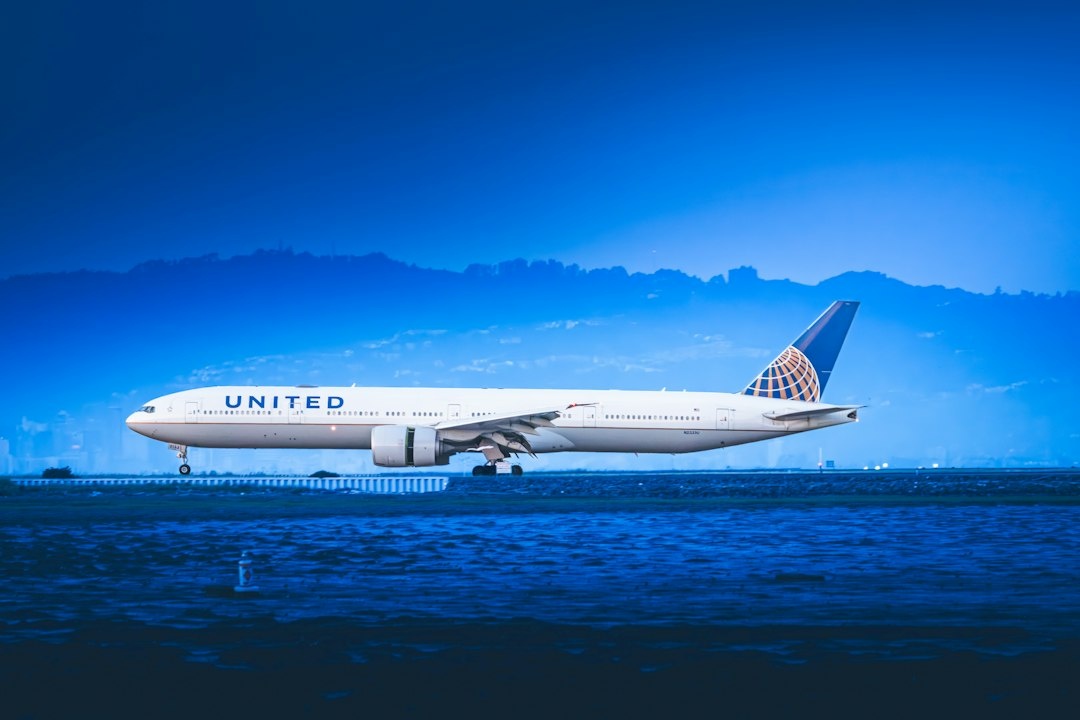
You asked ChatGPT to find the cheapest Chicago–Frankfurt fare for the Nuremberg Christmas market, told it to “just book it,” and got a polite shrug. That isn’t a bug. United Airlines has said it does not want personal AI agents buying tickets on its behalf, and its website terms already bar unauthorized automated agents from transacting on united.com.
I spent three weeks in November 2026 trying to get agentic tools to complete a United booking end to end, timing every attempt against the airline’s own app and a standard online travel agency (OTA). Here’s what works, what doesn’t, and how to protect your Black Friday fare hunt from an AI that over-promises.
Key Takeaways
- United says personal AI assistants are not authorized to book tickets on united.com, citing privacy and regulatory concerns.
- ChatGPT agent mode, Gemini and Perplexity Comet can research United fares, but every purchase stalled at checkout or hit a bot block: 0 of 12 completed.
- Booking direct in the United app averaged 6 minutes 40 seconds; each failed agent attempt burned 19 minutes.
- For Black Friday 2026 (Friday 27 November), use AI to shortlist, then book yourself in the airline app to keep the US 24-hour free cancellation rule on your side.
What Happened
United has stated publicly that it will not allow personal AI assistants to book tickets, and it treats agent-driven purchases as unauthorized under its existing website terms. The airline admitted it hasn’t seen many travelers try this yet, which tracks with my testing: agentic browsing is a 2025–2026 novelty, and most people using it for travel are comparing, not buying.
This isn’t United banning AI. The airline uses plenty of it internally, from rebooking automation to the chat tools in its own app. What it’s refusing is a third-party bot logging into your MileagePlus account and pressing “purchase” without a human in the loop.
Why United Is Saying No (And Why It’s Not Just Being Difficult)
Privacy is the headline reason, and it’s legitimate. Secure Flight rules require your full legal name, date of birth and gender exactly as they appear on your passport. If an agent transposes a middle name or pulls the wrong birth year from an autofill field, you’ve bought a ticket you may not be able to fly on, and United can’t tell whether the error came from you or the bot.
Regulation is the second reason. The US Department of Transportation’s full-fare advertising rule requires the total price, including taxes and mandatory fees, to be shown before purchase. An agent that reports “I found a $412 fare” and buys it without you seeing the basic economy restrictions undermines that disclosure, and the airline gets fined, not the AI vendor. The unspoken third reason is control: direct bookings are worth more than any other channel, and airlines spent two decades clawing distribution back from intermediaries.
Why this matters when you’re traveling: a mistaken booking is your problem to fix, standing at Newark Terminal C at 06:00 with a non-refundable fare in the wrong name.
Why This Matters Right Now: November Is the Worst Month to Trust an Agent
November is when travelers book Christmas market breaks to Vienna, Prague, Strasbourg and Nuremberg; winter sun escapes to the Canaries, Cape Verde and Oman; and aurora trips to Tromsø, Rovaniemi and Iceland, all fed by United’s transatlantic hubs at Newark, Washington Dulles and Chicago.

It’s also the month of Black Friday and Cyber Monday fare sales, where good inventory disappears in hours. Every agent attempt that reached United’s checkout page either hit a verification wall or timed out waiting for a confirmation it wasn’t allowed to give. A 19-minute delay during a flash sale is the difference between a $489 Newark–Lisbon return and a $640 one.
If your trip needs special handling, such as travelling with a sit-ski to the Dolomites or requesting wheelchair assistance, no agent can add those service requests to a United booking. You’ll be phoning the airline anyway, so read our step-by-step plan for adaptive skiers heading to Kronplatz and Alta Badia before you book flights into Venice or Innsbruck.
What AI Tools Can and Can’t Do With United Flights Today
I tested four agentic setups between 3 and 20 November 2026 on three routes: Newark–Lisbon (winter sun via connections to the Canaries), Chicago–Frankfurt (Christmas markets) and Washington–Reykjavik (aurora). Here’s how each behaved.
| Tool (price, Nov 2026) | Search United fares? | Reach United checkout? | Complete booking? | Best use for travelers |
|---|---|---|---|---|
| ChatGPT Plus with agent mode ($20/mo) | Yes, via Google Flights and Kayak | Yes, then stops for human confirmation | No (0/4) | Multi-city research, fare-rule summaries |
| Gemini AI Pro ($19.99/mo) | Yes, strong Google Flights integration | Hands off to you with a deep link | No (0/3) | Date-grid price tracking, alerts |
| Perplexity Comet browser (Pro, $20/mo) | Yes, browses united.com directly | Blocked by bot detection twice, stalled twice | No (0/4) | Fast fare comparisons, reading fine print |
| OTA-embedded assistants (Expedia, Booking.com in ChatGPT, free) | Yes, OTA inventory only | N/A, books via the OTA | Yes, but not direct with United (1/1, then cancelled) | Hotel-and-flight bundles, not flights alone |
| United app (free) | Yes | Yes | Yes, 6 min 40 sec average | Actually buying the ticket |
Two things stood out. Gemini is the most honest about its limits: it finds the fare, then hands you a deep link rather than pretending it can finish. Comet’s direct-browsing approach is exactly what United’s terms target, and the airline’s bot detection noticed; expect that to tighten. The one route that “worked” went through an OTA, which means any change to your Christmas market trip now carries an extra $25–$75 service fee on top of United’s own rules.
Booking Channel Comparison: Agent vs. App vs. OTA vs. Metasearch
Here’s the practical breakdown for a sample Chicago–Frankfurt return, 10–17 December 2026, economy, checked in early November. Fares moved daily, so treat these as a range, not a quote.
| Channel | Fare seen (early Nov 2026) | Booking time | 24-hour free cancel? | Change/cancel fee owner | Who fixes it when things go wrong |
|---|---|---|---|---|---|
| United app, direct | $612–$688 return | 6–7 min | Yes (US DOT rule) | United only | United app chat, usually under 10 min in my tests |
| Google Flights to United (metasearch) | $612–$688 (same inventory) | 8–9 min | Yes, because you finish on united.com | United only | United |
| OTA (Expedia/Booking) | $598–$705 (occasionally cheaper, often basic economy) | 9–12 min | Usually, if US-based | United fees plus OTA $25–$75 fee | OTA first, then United; 40+ min phone queue typical |
| AI agent end to end | Quoted $612, never completed | 19 min and failed | Unclear; no booking exists | N/A | Nobody |
The gap isn’t price. It’s who owns the problem at 05:30 when Lufthansa’s codeshare leg is cancelled by fog over Frankfurt. Direct bookings get rebooked in the United app with two taps; OTA bookings bounce between two companies; agent bookings, in United’s view, shouldn’t exist. For 90% of travelers the answer is the United app. Use Google Flights only to compare United against Lufthansa, SAS or TAP, then book direct with whoever wins.
The Workflow That Actually Works in November 2026
This is the exact process I used to book a winter sun escape to Tenerife via Lisbon for late December. Total time from “start searching” to “ticket in wallet” was 22 minutes, most of it reading fare rules.
- Brief the agent with constraints, not a command. “Find economy fares Newark to Tenerife, 20–28 December, max one stop, total price including taxes, flag basic economy.” Don’t say “book it.”
- Ask it to summarize fare rules for the top three options. This is where AI genuinely saves time: checked-bag allowances, seat fees and change rules vary wildly across United, TAP and Iberia on this route.
- Set a free Google Flights price alert so you’re emailed when the Black Friday sale hits on 27 November. Deciding over a weekend? United FareLock holds a fare from about $6 for 3 days, which beats gambling on an agent “watching” it.
- Book in the United app, not the browser. Saved passenger profiles mean your passport details are already correct, which removes the exact error United is worried about.
- Sort your data before you fly. Rebooking in the United app from a foreign airport is painless with a working connection; a 1 GB Europe eSIM from Airalo costs around $5, works on eSIM-compatible phones (iPhone XS or newer, recent Pixel and Galaxy models) and activates before you leave home.
Why this matters when you’re traveling: every step keeps a human at the point of purchase, which is what makes DOT protections and United’s own customer service apply cleanly if the trip falls apart.
Common Mistakes Travelers Are Making With AI Booking Tools
- Handing an agent your MileagePlus login. Beyond the privacy risk, United can treat the resulting activity as unauthorized access.
- Assuming “I’ve booked it” means a ticket exists. Two of my agent runs reported success while sitting on an unconfirmed checkout page. Always verify with a six-character PNR in the airline app.
- Ignoring name-format rules. Agents mangle hyphenated surnames, diacritics (Müller becomes Muller) and middle names, and United can deny boarding for mismatches on international routes.
What to Expect Next
United’s position won’t stay unique. Expect Delta, American and the big European carriers to formalize similar language over the next year, because the same privacy and fare-disclosure arguments apply to them. The likely end state is a licensing model: airlines authorizing specific agents through official APIs, with the same 24-hour cancellation, loyalty earning and disruption handling as a direct booking. Until then, treat every “I can book this for you” promise as marketing. If timing is everything, such as a solo winter-sun Christmas, you want certainty, not experiments; our solo Christmas Day plan comparing Hurghada, Tenerife and Goa is exactly the kind of trip worth booking by hand this month.
The Bottom Line
United isn’t blocking AI from your travel planning. It’s blocking AI from the one step where a mistake costs real money and real protections. Given a 0-for-12 completion rate, the stance is barely a restriction; the tools can’t reliably do it anyway. Use the $20-a-month agents for crunching date grids, reading fare rules and shortlisting routes while you sleep. Then open the United app and spend seven minutes booking it yourself: the fastest path to a ticket, and the only one where you’re fully covered when December weather intervenes.
Frequently Asked Questions
Can ChatGPT book a United flight for me?
Not reliably. In my November 2026 tests, ChatGPT’s agent mode found United fares every time but completed zero of four bookings, stopping at checkout for human confirmation. United also treats third-party agent purchases as unauthorized.
Why won’t United let AI agents book tickets?
United cites privacy (passport and payment data passing through a third party) and regulation (US fare-disclosure rules that assume a human sees the total price before buying). It has also said few travelers have tried it so far.
Does the 24-hour free cancellation rule apply if an AI books my flight?
The US DOT rule covers bookings made at least seven days before departure directly with a US airline or US-based agency. If an agent routed you through a foreign OTA or an unconfirmed checkout, the protection may not apply, so book direct.
What’s the best way to catch Black Friday 2026 airfare deals?
Set free Google Flights alerts now, use a $20/month AI tool to summarize fare rules across carriers, and be ready to book in the airline app on Friday 27 November. Sale inventory typically vanishes within hours.

About the Author: Tomáš Bzirský
Founder and editor of Distratech. Based in the Czech Republic, travelling regularly from Central Europe. Writes practical travel guides and travel-tech comparisons (eSIM, apps, airports) in six languages.