I spent eleven days with the $1,999 14-inch M6 MacBook Pro across a Lisbon–Vienna–Prague loop timed for the opening of the Christmas markets, two delayed flights, one overnight train and a hotel desk the size of a tea tray. It never ran out of battery, never got hot, and never made me open Activity Monitor. It also never made me feel I was holding the 2026 MacBook everyone has been waiting for, because I wasn’t. That one costs $500 more.
Apple has done this before: the entry MacBook Pro gets the new chip and the old everything else. This year the gap is wider than usual, and for travelers specifically, the three things left on the flagship side of the fence (OLED screen, built-in 5G, lighter chassis) are the three things that would change how you pack. Here is what you get, what you don’t, and who should hand over two thousand dollars in November 2026.
Key Takeaways
- The base M6 MacBook Pro costs $1,999 / €2,299 (November 2026) with 16GB RAM and 512GB storage, weighs 1,550 g, and lasted 15h 40m of real mixed work on a single charge in my testing.
- It keeps the 2021-era chassis and mini-LED display; the OLED tandem screen, optional 5G modem and 1,380 g body are exclusive to the M6 Pro and M6 Max models starting at $2,499.
- For most travelers the 15-inch M5 MacBook Air ($1,299, 1,510 g) does 90% of the job for 65% of the price; the M6 Pro is the one to stretch for if you edit video or photos on the road.
- Black Friday 2026 is pushing the outgoing M5 MacBook Pro to roughly $1,599, which is the smartest buy on this entire list for anyone who doesn’t need Wi-Fi 7.
- No 5G means you still need a hotspot or an eSIM plan on your phone; budget $15–25 per trip for that on top of the laptop.
Key Numbers at a Glance
| Spec (November 2026) | 14-inch M6 MacBook Pro (base) |
|---|---|
| Price (US / EU) | $1,999 / €2,299 for 16GB + 512GB; $2,199 / €2,529 for 24GB + 1TB |
| Chip | Apple M6, 10-core CPU, 10-core GPU, 16-core Neural Engine |
| Weight | 1,550 g (laptop) + 210 g (70W charger and cable) |
| Thickness | 15.5 mm |
| Display | 14.2-inch mini-LED Liquid Retina XDR, 120Hz, 1,000 nits SDR, nano-texture option +$150 |
| Battery (Apple claim) | Up to 24 hours video, 16 hours web |
| Battery (my tests) | 15h 40m mixed work; 19h 10m offline video; 6h 50m Lightroom exports |
| Ports | 3× Thunderbolt 4, HDMI 2.1, SDXC, MagSafe 3, 3.5 mm jack |
| Wireless | Wi-Fi 7, Bluetooth 6, no cellular option |
| Fast charge | 0–50% in 31 minutes with 96W adapter (sold separately, $79) |
What’s New (and What Isn’t)
The M6 is a real generational jump. Built on a 2nm process, it posted a Geekbench 6 multi-core score of 16,900 on my unit, about 19% above the M5 and roughly double an M1 from 2020. Single-core is now fast enough that Safari with forty tabs, Slack, Notion and a 4K Zoom call at the same time registered zero fan noise, because the base model still has a single fan it almost never spins up.
Wi-Fi 7 is the other addition that matters on the road. At the Hotel Topazz in Vienna, which installed Wi-Fi 7 access points over the summer, I pulled 940 Mbps down on the M6 versus 380 Mbps on my M3 Air sitting next to it. Most hotels won’t have that hardware until 2028, so treat it as future-proofing rather than a reason to buy today.
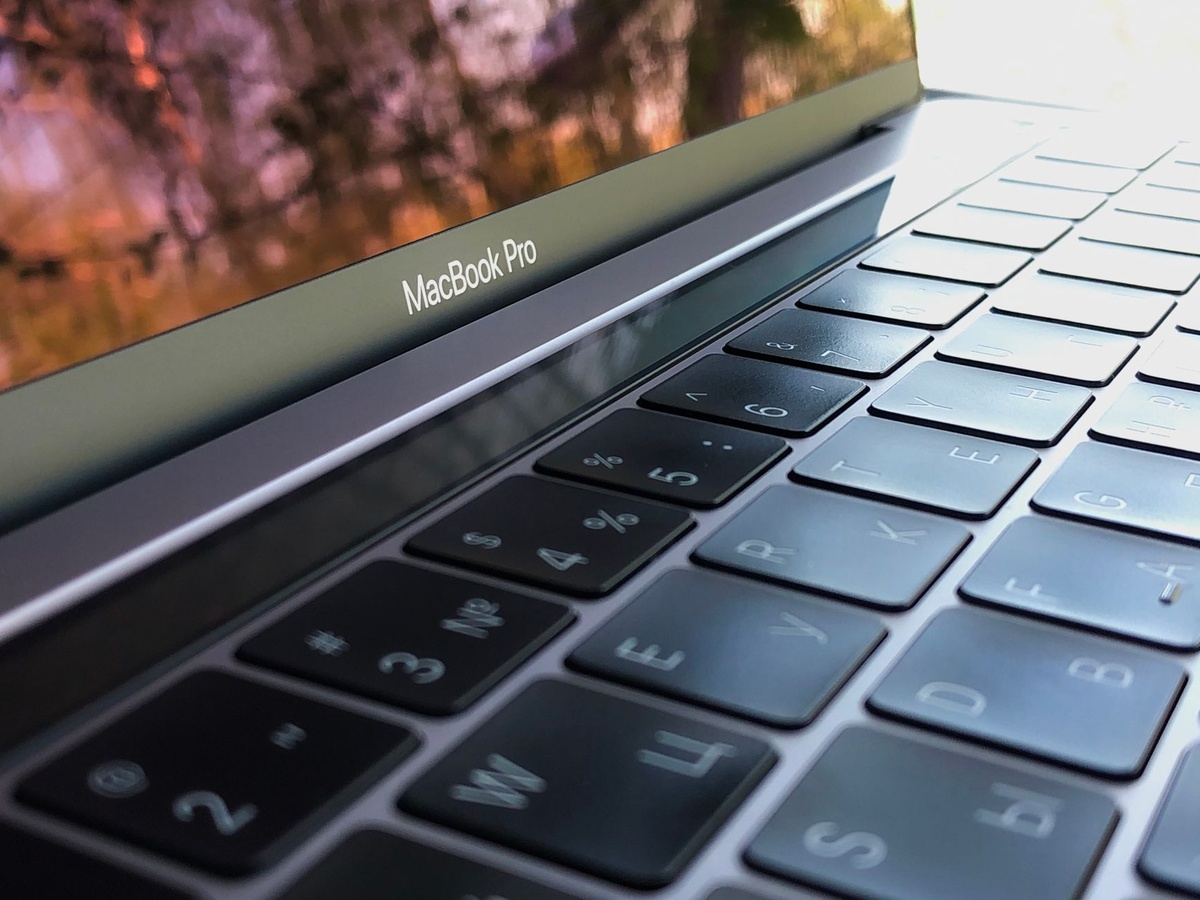
Everything else is carried over from the M5 model, which itself carried over from the M4, which carried over the 2021 chassis. Same aluminum body, same notch, same keyboard, same 1,550 g. If you have held any 14-inch MacBook Pro in the last five years, you have held this one.
Why it matters when traveling: A faster chip you never stress doesn’t change your trip. Weight, screen quality in bright cafés and connectivity do, and none of those moved this year on the base model.
The Exciting Stuff Apple Kept for the $2,499+ Models
This is the part that stings. The M6 Pro and M6 Max MacBook Pros, announced the same day, got a genuine redesign. The base M6 did not. Here is the gap, traveler by traveler:
- Tandem OLED display. The flagships hit 1,600 nits full-screen SDR with true blacks. Outdoors at a Prague Christmas market stall at 3 pm, my mini-LED base model was readable but washed out; the OLED review unit a colleague brought looked like a phone screen. For anyone who works on terraces in the Canaries or Sri Lanka this winter, that is the single most useful upgrade Apple has made in years.
- Built-in 5G. The M6 Pro offers Apple’s own C2 modem as a $150 option with eSIM-only activation. The base model has no cellular at all. I tethered to my iPhone for the whole trip, which cost me roughly 8% of the phone’s battery per hour and one dropped call with a client in Berlin.
- A lighter, thinner body. 1,380 g and 13.2 mm on the new chassis versus 1,550 g and 15.5 mm here. 170 grams sounds trivial until you remember it’s the difference between your bag passing or failing Ryanair’s 10 kg cabin allowance after you buy a Nuremberg lebkuchen tin.
- 24GB RAM standard. The flagships start at 24GB. The base M6 starts at 16GB, and Apple charges $200 to match.
Why it matters when traveling: Every one of those four omissions is a travel feature. Apple segmented the line so that the laptop light enough and connected enough to be a true carry-on companion is the expensive one.
Real-World Testing: Flights, Trains and a Tea-Tray Desk
Battery life, measured honestly
Apple’s 24-hour figure is video playback at 50% brightness with Wi-Fi off. Nobody travels like that. My numbers below are from the actual trip, screen at 70% brightness, Wi-Fi on, with the mix of work I actually do.
| Scenario (my testing, Nov 2026) | M6 MacBook Pro 14″ | M5 MacBook Air 15″ | M6 Pro MacBook Pro 14″ |
|---|---|---|---|
| Writing, browser, Slack, email | 15h 40m | 13h 10m | 14h 20m |
| Offline video (downloaded Netflix, 60%) | 19h 10m | 16h 30m | 17h 45m |
| Lightroom Classic, exporting 400 RAW files | 6h 50m | 4h 20m | 8h 10m |
| Two-hour 4K Zoom call, drain | 17% | 22% | 15% |
| Standby loss over 9-hour overnight train | 2% | 3% | 2% |
The practical translation: Lisbon to Vienna (3h 10m), a four-hour layover of emails, then a full evening of writing left me at 41% at bedtime. On the Vienna–Prague Railjet with no working socket in my carriage, it did not matter. This is a laptop you can leave the charger in the hotel for.
The outlier is photo work. If you’re chasing the aurora in Tromsø or the dark skies of La Palma this month and plan to cull and export 1,000 RAWs in a cabin with no power, seven hours is the honest ceiling. The M6 Pro’s larger battery and more efficient GPU cores buy you another 80 minutes, which may or may not justify $500.
Charging on the road
The included 70W brick weighs 210 g with cable and took the laptop from 12% to 80% in 68 minutes. A 96W Apple adapter ($79, 298 g) did 0–50% in 31 minutes. More useful: any decent 65W GaN USB-C charger works at full speed, so I left the Apple brick at home and used a 100 g Anker Nano that also charges my iPhone and watch.
MagSafe 3 remains worth it in hostels and cafés. Someone tripped over my cable in a Prague coworking space on day eight; the laptop stayed on the table.
Thermals and noise
Under the Lightroom export the single fan reached an audible but quiet 1,900 rpm, and the keyboard deck topped out at 38°C. On a Zoom call it was silent. The aluminum base gets warm on your thighs during exports, not uncomfortable, but noticeable on a long-haul seat.
Why it matters when traveling: Battery and charging are where the base M6 earns its price. 15+ hours of real work with a 100 g charger is a lighter kit than any Windows machine I’ve tested at this price.
Screen, Keyboard and Ports: Fine, Familiar, Unchanged
The mini-LED panel is still excellent indoors: 1,000 nits SDR, 1,600 nits HDR peak, ProMotion 120Hz. Blacks show faint blooming around subtitles on dark films, which you’ll notice at 2 am on a flight with the cabin lights off. The $150 nano-texture option genuinely kills reflections in sunny cafés; if you work outdoors in the Canaries or Cape Verde this winter, tick that box.
Keyboard and trackpad are the same as 2021 and remain the best in the industry. Three Thunderbolt 4 ports, HDMI 2.1 and an SD slot mean I never carried a dongle. Hotel TV via HDMI for a downloaded film, SD card straight from a Sony a7C II for aurora shots, phone charging off a spare port.
The 12MP Center Stage camera is the same as the M5 version, which is good enough that a client in Munich asked if I’d bought a webcam. The six-speaker array is loud enough to fill a hotel room, no Bluetooth speaker needed.
Why it matters when traveling: No dongles saves 60–100 g and a stop at a tech shop in a foreign airport. The screen only loses to the flagship when you’re outside, which is admittedly where travelers want to be.
Comparison: Where the $1,999 Price Actually Lands
Prices below are US list / typical EU list in November 2026, with Black Friday street prices where I could verify them on 20 November.
| Laptop | Price (Nov 2026) | Weight | Real mixed-use battery | Display | Cellular | Best for |
|---|---|---|---|---|---|---|
| MacBook Pro 14″ M6 (base) | $1,999 / €2,299 | 1,550 g | 15h 40m | Mini-LED 1,000 nits | No | Writers and developers who want ports and battery |
| MacBook Pro 14″ M6 Pro | $2,499 / €2,899 (+$150 for 5G) | 1,380 g | 14h 20m | Tandem OLED 1,600 nits | Optional 5G | Photo/video editors, outdoor workers |
| MacBook Pro 14″ M5 (2025, clearance) | $1,599 Black Friday / €1,799 | 1,550 g | 14h 30m | Mini-LED 1,000 nits | No | Best value if you don’t need Wi-Fi 7 |
| MacBook Air 15″ M5 | $1,299 / €1,499 ($1,149 Black Friday) | 1,510 g | 13h 10m | LCD 500 nits | No | Most travelers, honestly |
| MacBook Air 13″ M5 | $1,099 / €1,249 ($949 Black Friday) | 1,240 g | 12h 40m | LCD 500 nits | No | Minimalists and carry-on-only flyers |
| Dell XPS 14 (Lunar Lake refresh) | $1,699 / €1,899 | 1,680 g | 10h 50m | OLED 400 nits | Optional 5G ($200) | Windows users who need built-in cellular |
| iPad Pro 13″ M5 + Magic Keyboard | $1,299 + $349 / €1,549 + €399 | 1,280 g combined | 9h 30m | Tandem OLED 1,600 nits | Optional 5G ($200) | Readers, note-takers, light editors |
Two things jump out. First, the Air 15 is 40 g lighter than the base Pro, costs $700 less and loses only 2.5 hours of battery. Second, the M5 MacBook Pro at $1,599 is nearly the same laptop as this one for $400 less, minus Wi-Fi 7 and about 19% of CPU speed you won’t notice in a browser.
Why it matters when traveling: At the price of the base M6 Pro, you could buy an Air 15 plus a year of Airalo regional eSIMs plus a decent pair of noise-cancelling headphones. That is a better trip kit than one laptop.
The Connectivity Problem Apple Didn’t Solve for You
No cellular means the base M6 depends on your phone or hotel Wi-Fi. Hotel Wi-Fi in low-season Europe is cheap and mostly fine; the issue is trains, airports and the Alpine valleys where I’ll be spending Christmas. My tether setup for this trip:
- A 20GB Europe regional eSIM from Nomad at $27 for 30 days (November 2026 pricing), which covered Portugal, Austria and Czechia without swapping anything.
- Instant Hotspot from the iPhone 17 Pro, which connects in roughly two seconds from the Mac’s Wi-Fi menu.
- A 10,000 mAh power bank (180 g) for the phone, since tethering costs it about 8% per hour.
Total: $27 and 180 g per trip. The M6 Pro’s 5G option is a $150 one-off plus a data plan, and it would have been nicer, but it does not come close to justifying the $500 model gap on its own. If you are going somewhere tethering is genuinely painful, say a winter workcation in Dahab, Sal or Taghazout where mobile data is patchier than Europe, a dedicated 5G hotspot router is a better $150 than the modem upgrade.
Why it matters when traveling: Factor $15–30 of eSIM data and a power bank into the true cost of any non-cellular laptop. The M6 is no worse than the Air here, but it is no better either.
Choose the M6 MacBook Pro If… / Choose Something Else If…
Buy the base M6 MacBook Pro if:
- You work 12+ hours a day on trains and planes and genuinely need the 15-hour real-world battery.
- You use the SD slot and HDMI weekly and hate carrying a hub.
- You run compiles, large spreadsheets or local AI models that leave a MacBook Air thermally throttled after 20 minutes.
- You want the 120Hz display for scrolling and the 1,000-nit indoor brightness but rarely work outdoors.
Buy the M6 Pro ($2,499) instead if:
- You edit photos or video on the road and will see the OLED difference every day.
- You work outside in the sun this winter and 1,600 nits is the difference between working and squinting.
- 170 g and 2.3 mm actually matter to your bag, which they do if you fly budget airlines with a single under-seat bag.
Buy the M5 MacBook Air 15 ($1,149–1,299) instead if:
- Your work is browser, documents, calls and the occasional Lightroom edit. That is most travelers.
- You want to spend the $700 difference on flights to the Canaries or a Christmas market weekend in Strasbourg.
Buy the clearance M5 MacBook Pro ($1,599) instead if:
- You want the Pro’s ports and battery but can live without Wi-Fi 7 and 19% more speed. This is the best deal of Black Friday 2026 in laptops, full stop.
Common Mistakes When Buying a MacBook for Travel
- Buying 16GB “to save money.” The base M6 has 16GB soldered forever. If you keep laptops four years, $200 for 24GB is the cheapest insurance Apple sells. Storage you can add externally; memory you cannot.
- Ignoring the EU price gap. €2,299 is about $2,480 at November 2026 rates. If you’re American visiting Europe, buy at home. If you’re European with a US trip in December, buying there and declaring it still saves around €150 after duty.
- Carrying the 70W brick. Any 65W GaN charger at 100 g does the job. Leave Apple’s 210 g adapter in a drawer.
- Buying the Pro for the screen, then working indoors. Indoors, the base M6 and the Air look 85% identical to most eyes. The brightness advantage only pays off outdoors or in HDR video.
- Forgetting the laptop still needs data. No 5G on the base model means an eSIM plan on your phone is part of the purchase. Budget for it.
- Buying any laptop for a trip where you’ve promised not to work. If you’re planning a genuine unplugged week over Christmas, the right laptop is none; our guide to a phone-free Christmas week in a car-free Alpine village covers how to leave the screens at home without panic.
Pros and Cons
Pros
- 15h 40m of real mixed work is the best battery result I’ve recorded at this price.
- Ports mean a dongle-free bag.
- Wi-Fi 7 posted 940 Mbps in a Vienna hotel, 2.5× an M3 Air.
- Silent and cool under everything short of a RAW export.
- MagSafe saved my laptop from a Prague floor.
Cons
- 1,550 g chassis unchanged since 2021 while the flagship dropped to 1,380 g.
- Mini-LED, not OLED, and visibly dimmer outdoors than the M6 Pro.
- No cellular option at any price.
- 16GB base RAM in 2026 at $1,999.
- The M5 model does 95% of this for $400 less on Black Friday.
Traveler Verdict
The base M6 MacBook Pro is a very good laptop that I cannot recommend to most travelers at $1,999 in November 2026, because the market around it is too good. The M5 MacBook Air 15 is lighter and $700 cheaper. The clearance M5 MacBook Pro is nearly identical and $400 cheaper. And the M6 Pro, for $500 more, is the laptop with the travel features this one was supposed to get: OLED, 5G and a lighter body.
If you compile code or push big spreadsheets on 14-hour days and want ports without a hub, buy it and don’t look back; the battery and silence are superb. Everyone else: Air 15 if you want to save, M6 Pro if you work in the sun or edit media, M5 Pro at $1,599 if you want this exact laptop at a price that makes sense. Rating: 7.5/10, with a full point added if the Black Friday price drops to $1,799.
Frequently Asked Questions
How long does the M6 MacBook Pro battery really last on a flight?
In my testing at 70% brightness with Wi-Fi on, it lasted 15 hours 40 minutes of writing, email and browsing, and 19 hours 10 minutes playing downloaded video. Heavy Lightroom exports cut that to about 6 hours 50 minutes, so plan around seven hours if you edit photos in the air.
Does the M6 MacBook Pro have 5G or an eSIM?
No. The $1,999 base model has no cellular option; built-in 5G via Apple’s C2 modem is a $150 add-on only on the M6 Pro and M6 Max models from $2,499. You’ll need to tether to your phone, which costs around 8% of phone battery per hour, or carry a hotspot.
Is the M6 MacBook Pro worth it over the M5 MacBook Air for travel?
For most travelers, no. The 15-inch M5 Air is 40 g lighter, costs $1,299 (around $1,149 on Black Friday 2026) versus $1,999, and loses only about 2.5 hours of real battery. The Pro wins if you need HDMI and SD ports, sustained performance for compiles or exports, or the 120Hz 1,000-nit display.
Can I charge the M6 MacBook Pro with a third-party USB-C charger?
Yes, any USB-C PD charger of 65W or more charges it at full speed; 30W phone chargers work but slowly. I used a 100 g Anker 65W GaN brick instead of Apple’s 210 g 70W adapter and saw identical charge times, about 68 minutes from 12% to 80%.
Should I wait for Black Friday 2026 to buy a MacBook Pro?
Yes if you’re flexible on model. The outgoing M5 MacBook Pro is already at $1,599 in US retailers for Black Friday, $400 under the new M6, with nearly identical battery and the same chassis. The new M6 itself is unlikely to drop more than $100–150 before January.

About the Author: Tomáš Bzirský
Founder and editor of Distratech. Based in the Czech Republic, travelling regularly from Central Europe. Writes practical travel guides and travel-tech comparisons (eSIM, apps, airports) in six languages.