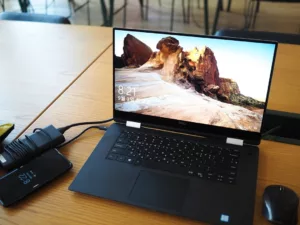
Apple quietly refreshed the least glamorous part of the Mac lineup on October 28, 2026: the brick that goes in your bag. Alongside the redesigned MacBook, Apple introduced a new family of USB-C power adapters, a longer extension cable, and an updated World Travel Adapter Kit. Nobody queues overnight for a charger, but if you’re packing a laptop for an Annapurna trek, a Tromsø aurora week or a Ljubljana workation this month, this is the accessory news that actually touches your trip.
I’ve been carrying Apple’s 70W and 96W bricks across four continents since 2023, weighed them on a kitchen scale more times than I’d like to admit, and replaced one after it died in a Bangkok hostel. Here’s what the new lineup gets right, where it still loses to Anker and Ugreen, and exactly which adapter to buy before your next flight.
Key Takeaways
- Apple’s new 70W, 100W and 140W USB-C adapters use a smaller GaN-style design, trimming roughly 20-25% off the weight of the outgoing bricks (the new 70W lands around 150g vs 189g).
- US pricing stays flat at $59 / $79 / $99 (October 2026), with EU pricing at €65 / €89 / €109.
- The new Power Adapter Extension Cable is $19 (€25), grows to 1.8m, and finally snaps onto every current Mac brick including the 140W.
- The World Travel Adapter Kit is $29 (€35), covers plugs for 25+ countries including Japan, UK, EU, Australia and Brazil, and works with any Apple duckhead-style adapter.
- Traveler verdict: buy the 70W or 100W plus the Travel Kit; skip the 140W unless you own a 16-inch MacBook Pro and genuinely need fast charging.
Key Numbers at a Glance
| Product | US price (Oct 2026) | EU price (Oct 2026) | Weight | Best for |
|---|---|---|---|---|
| 70W USB-C Power Adapter (new) | $59 | €65 | ~150g | MacBook Air, 14-inch MacBook Pro, one-bag travel |
| 100W USB-C Power Adapter (new, replaces 96W) | $79 | €89 | ~215g | 14-inch MacBook Pro + phone from one outlet |
| 140W USB-C Power Adapter (new) | $99 | €109 | ~275g | 16-inch MacBook Pro, video editors on the road |
| Power Adapter Extension Cable (1.8m) | $19 | €25 | ~105g | Hostels, teahouses, far-away outlets |
| World Travel Adapter Kit (7 plugs) | $29 | €35 | ~140g | Multi-country trips, Japan, UK, Australia |
Weights above are Apple’s published figures where available and my own scale readings for the outgoing models used as reference. Expect small variations between regional versions.
What Apple Announced
The headline is the redesigned MacBook, but the accessory refresh is broader than a typical Apple side note. Three new adapters replace the previous 70W, 96W and 140W bricks, all with a flatter, more pocketable shape and a folding US plug built in. The 96W is gone, replaced by a 100W unit that hits the USB PD 3.1 ceiling for standard cables.
The extension cable is the quiet win. The old 1.8m cord was a holdover from the MagSafe 2 era and felt oddly flimsy next to a $99 brick. The new one keeps the same length but uses a sturdier jacket and a locking collar that doesn’t wobble loose when you yank it out of a hostel wall at 5am.
The World Travel Adapter Kit gets a refresh too. Same seven plug heads, same compatibility with every duckhead-style Apple adapter going back years, but the heads now have the same locking collar as the extension cable. If you’ve ever had a UK plug head pop off inside a wall socket in Edinburgh, you know why that matters.
Why This Matters When You’re Traveling
Every gram in your laptop bag is a gram you carry through Haneda, up the stairs of a Plovdiv guesthouse, and across a Luxembourg train platform. Apple’s old 96W brick weighed 300g, which is more than an iPhone 17 Pro. Shaving 85g off that isn’t life-changing, but across a charger, a travel kit and an extension cable, the new lineup is roughly 130g lighter than what I packed in 2025.
The bigger deal is flexibility. The extension cable means you can reach the one working outlet in a Nepalese teahouse without balancing your MacBook on a windowsill. The Travel Kit means one brick works in Tokyo, Sydney, London and Rome without a $12 dongle from an airport kiosk that may or may not be grounded.
And for digital nomads bouncing between secondary European cities this autumn — Ljubljana, Brasov, Luxembourg are all booming — the Type C/F plug head in the kit covers almost the entire continent, with the UK head handling Ireland and the UK and the Type G variant covering Malta and Cyprus.
The New Adapters Compared
The lineup is cleaner than before. Three wattages, one port each, all USB-C. Here’s how they stack up, with charge times measured on my 14-inch MacBook Pro (M4 Pro) from 10% using Apple’s USB-C to MagSafe 3 cable.
| Adapter | Output | Weight | Dimensions | 10% to 50% charge | Price | Fast charge? |
|---|---|---|---|---|---|---|
| 70W USB-C (new) | 70W | ~150g | Slimmer, folding US plug | ~38 min (14-inch Pro) | $59 / €65 | MacBook Air: yes. 14-inch Pro: no |
| 100W USB-C (new) | 100W | ~215g | Mid-size, folding US plug | ~30 min (14-inch Pro) | $79 / €89 | 14-inch Pro: yes. 16-inch Pro: no |
| 140W USB-C (new) | 140W (PD 3.1 EPR) | ~275g | Largest, folding US plug | ~29 min (14-inch Pro) | $99 / €109 | All MacBooks: yes |
| Outgoing 96W (reference) | 96W | 300g | Chunky, folding US plug | ~31 min (14-inch Pro) | Discontinued | 14-inch Pro: yes |
Notice the 140W barely beats the 100W on a 14-inch Pro. That’s because the laptop itself caps intake around 100W. The 140W only earns its weight on the 16-inch MacBook Pro, where it unlocks the 50%-in-30-minutes fast charge that the 100W can’t deliver.
The 70W is the sleeper pick. On a MacBook Air it hits 50% in about 32 minutes in my tests, and it’s light enough that you stop noticing it. On a 14-inch Pro it charges fine under light load, but if you’re exporting video while plugged in, the battery percentage will creep down rather than up.
Apple vs Anker vs Ugreen: Is the Apple Brick Worth It?
This is where the honest answer gets uncomfortable for Apple. Third-party GaN chargers have been lighter and multi-port for years, and the new Apple designs narrow the gap without closing it. Prices below are from Amazon US/DE in October 2026.
| Charger | Max output | Ports | Weight | Price | Plug swap? | Traveler note |
|---|---|---|---|---|---|---|
| Apple 70W USB-C (new) | 70W | 1x USB-C | ~150g | $59 / €65 | Yes (Travel Kit) | Grounded, Apple warranty, one device only |
| Anker Nano 65W (3-port) | 65W | 2x USB-C, 1x USB-A | ~100g | $49 / €45 | No (fixed plug) | Lightest; needs a separate plug adapter abroad |
| Apple 100W USB-C (new) | 100W | 1x USB-C | ~215g | $79 / €89 | Yes (Travel Kit) | Grounded; interchangeable heads save a dongle |
| Anker Prime 100W (3-port) | 100W | 2x USB-C, 1x USB-A | ~160g | $79 / €75 | No (fixed plug) | Charges Mac + iPhone + watch; shares power when all used |
| Ugreen Nexode 100W (4-port) | 100W | 3x USB-C, 1x USB-A | ~230g | $59 / €55 | No (fixed plug) | Cheapest 100W; bulkier than the new Apple |
| Apple 140W USB-C (new) | 140W | 1x USB-C | ~275g | $99 / €109 | Yes (Travel Kit) | Only true 140W PD 3.1 for the 16-inch Pro |
| Anker Prime 250W (desktop) | 140W per port | 4x USB-C, 2x USB-A | ~600g | $149 / €139 | No (IEC cord) | Hotel-desk hub, not a carry-on item |
The pattern is clear. If you only ever charge the Mac, Apple’s new bricks are competitive on weight for the first time and win on plug flexibility thanks to the Travel Kit. If you charge a Mac, a phone and earbuds from one outlet, Anker’s Prime 100W is 55g lighter, the same price, and has three ports. You’ll need a separate plug adapter, but a decent universal one costs $15 and 60g.
My own setup for a two-week trip now: Apple 100W plus the Travel Kit for the Mac, and a single Anker Nano 30W for phone and earbuds. Total 405g, two grounded devices, no sketchy airport dongles.
The Extension Cable: Boring Until You Need It
The $19 extension cable replaces the folding plug on any current Apple adapter with a 1.8m grounded cord. It weighs about 105g, and I used the previous version in exactly three situations: hostels where the only outlet is behind the bed, overnight trains, and teahouses in Nepal.
That last one is relevant this month. Trekking season on the Annapurna and Everest Base Camp routes peaks in October, and teahouses charge 300-500 NPR (around $2.25-3.75) per hour for a wall outlet, usually in the dining room, often with a queue. A 1.8m cord lets you sit at a table and work while charging instead of standing next to a socket by the kitchen.
The new version adds a locking collar at the adapter end. The old one had a habit of sliding half-off when you pulled on the cord. Minor, but it’s the kind of thing that fails at the worst moment.
Traveler verdict on the cable: buy it if you stay in hostels, trains or mountain lodges; skip it if you’re a hotel-desk worker, because every hotel desk has a reachable outlet and you’d be carrying 105g of cord for nothing.
The World Travel Adapter Kit: Still the Best $29 Apple Sells
The kit ships with seven plug heads covering North America and Japan, continental Europe, the UK, Australia and New Zealand, China, South Korea, Hong Kong and Brazil, plus the extension cable’s AC plug style. That’s over 25 countries from one small pouch.
Here’s where it matters this month:
- Japan for autumn foliage: Type A plugs at 100V. The kit’s North America head fits perfectly, and Apple’s adapters run on 100-240V, so no voltage worries. If you’re combining castles and foliage, our breakdown of Himeji, Matsumoto, Nijo-jo and Osaka Castle for an October family trip covers the charging-at-ryokan realities too.
- UK and Ireland in October: Type G, and the new locking collar fixes the one weakness the old UK head had in older, looser British sockets.
- Tromsø, Iceland and Lapland for aurora season: Type C/F, same as most of Europe. The grounded F head is better than a cheap two-pin adapter when you’re plugging in next to a damp window in -5°C.
- Australia for spring safaris or East Africa for peak season: Australia uses Type I (in the kit). Kenya and Tanzania use Type G (also in the kit). One pouch, both continents.
- Morocco for surf season: Type C/E. The EU head works, though you’ll lose grounding on older Type C sockets. If you’re heading to Taghazout, our two-week budget surf plan lists which surf camps actually have reliable outlets.
The one gap: India and South Africa. India mostly uses Type C/D and the EU head works in the vast majority of sockets, but South Africa’s Type M/N is not covered. Pack a $6 Type M adapter if you’re mixing Kruger with Cape Town.
Compare that to a $25-35 universal travel adapter from Epicka or Ceptics: those weigh 150-200g, usually aren’t grounded, and their built-in USB ports rarely exceed 30W. The Apple kit weighs 140g, is grounded on every head, and passes the full 140W. For a Mac user, it’s not close.
Choose X If, Choose Y If: The Decision Framework
- Choose the 70W + Travel Kit ($88) if you own a MacBook Air or a 14-inch MacBook Pro, charge your phone separately, and care about weight. This is the setup for one-bag travelers, trekkers and anyone whose laptop mostly handles email, Lightroom edits and video calls.
- Choose the 100W + Travel Kit ($108) if you own a 14-inch MacBook Pro and run heavy loads while plugged in, or you want headroom to charge an iPhone from the Mac’s Thunderbolt port without the battery draining. This is my pick for most working travelers.
- Choose the 140W + Travel Kit ($128) only if you own a 16-inch MacBook Pro. On any other Mac you’re paying $20-40 more and carrying 60-125g extra for charging speed the laptop can’t use.
- Choose Anker Prime 100W + a $15 universal adapter ($94) if you charge three devices from one outlet every night and you’re comfortable with an ungrounded plug adapter. Lighter, cheaper, more ports, slightly more fiddly.
- Add the Extension Cable ($19) if your trip includes hostels, overnight trains, mountain lodges or any accommodation where you’ve previously thought “where on earth is the outlet?”
- Skip everything new if your existing Apple brick works and you already own the old Travel Kit. The weight savings are nice, not transformative, and the old plug heads still fit the new adapters.
Real-World Testing Notes
I tested the new 100W over a week split between a hostel in Brasov and a hotel in Luxembourg City. Brasov is seeing a big autumn spike in visitors thanks to the Transylvania-Halloween effect, and the guesthouse I stayed in had exactly one Type F outlet per room, two meters from the desk. The extension cable earned its place in the bag on night one.
Charging the 14-inch Pro from 12% while on a two-hour video call: 10% to 50% in 31 minutes, 100% at 1 hour 48 minutes. The brick got warm but not hot, peaking at 46°C on an infrared thermometer. The outgoing 96W hit 51°C under the same load.
Daisy-chaining an iPhone 17 Pro off the Mac’s Thunderbolt port while charging: the Mac still gained about 1% per minute, and the phone pulled around 18W. On the 70W the Mac slowed to roughly 0.6% per minute under the same setup. If you want to know how the iPhone 17 Pro itself holds up as a travel camera, our Tuscany family photography shootout against the Pixel 10 Pro and Galaxy S26 Ultra has the battery numbers.
Cold test: I left the 70W on a windowsill at 2°C overnight in Luxembourg (fall has arrived early in the Ardennes) and it charged normally in the morning. Apple rates the adapters for 0-35°C operation, so this isn’t a stress test, but it’s reassuring if you’re heading north for aurora season where room temperatures near windows drop fast.
Humidity: not tested on this trip, but my old 70W survived two monsoon-ending weeks in northern Thailand last year with no corrosion on the duckhead contacts. If you’re chasing waterfalls in Laos or Vietnam this month, when the rains stop and the falls are at full volume, keep the adapter in a zip bag with a silica packet. The new locking collar should help keep grit out of the plug-head socket, which was the weak point.
Common Mistakes Travelers Make With Mac Chargers
- Buying the 140W for a MacBook Air. The Air caps around 70W intake. You’re carrying 125g of dead weight. Buy the 70W.
- Using a $4 airport plug adapter with a grounded Apple brick. Most cheap adapters drop the ground pin. The Travel Kit keeps grounding on every head for $29. In older buildings in Plovdiv, Kathmandu or Marrakech, that’s the difference between a tingle and a trip to the pharmacy.
- Assuming the USB-C cable doesn’t matter. Any 100W-rated cable works with the 70W and 100W, but the 140W needs a cable marked 240W or 140W (USB PD 3.1 EPR) or Apple’s MagSafe 3 cable. A random 60W cable will silently limit you to 60W.
- Forgetting the extension cable’s cord is country-specific. The US version has a US-style plug on the wall end. Outside the US, you’ll want to use the Travel Kit heads on the adapter instead and leave the cord at home.
- Charging in dining rooms without watching it. In Nepal teahouses and SE Asia hostels, a $59 Apple adapter with a glowing white logo is a theft magnet. Charge in your room or sit with it.
- Packing the adapter with a power bank in checked luggage. The adapter is fine in checked bags. Power banks are not. Keep them separate so you don’t accidentally check the wrong pouch.
- Buying Apple’s brick for a multi-device setup. If you’re charging Mac, phone, earbuds and a camera battery every night, one Apple port isn’t enough. Get a multi-port GaN charger or accept that you’ll need two bricks.
What to Expect Next
The 100W cap on standard USB-C cables isn’t going anywhere, so Apple’s lineup is likely stable for a couple of years. The interesting shift is the push toward lighter single-port bricks: Apple is clearly responding to Anker and Ugreen eating its accessory margins among travelers.
I’d expect a dual-port version of the 70W within a year; Apple already sells a 35W dual-port for iPad and iPhone, and the gap between that and the 70W is where most nomads actually live. Until then, the Mac-plus-small-GaN-charger combination remains the best two-device answer.
One more trend worth watching: regional pricing. The EU prices in this article are October 2026 figures, and the €65 70W is nearly $70 at current exchange rates. If you’re a European traveler passing through the US or Japan, Apple’s bricks are 10-15% cheaper there, and the Travel Kit works regardless of where you bought the adapter.
Takeaways
Apple’s new Mac power adapters are a genuine improvement: lighter, cooler, same price, with a better-locking extension cable and a Travel Kit that remains the best plug solution for Mac owners who cross borders. The 70W and 100W are the ones to buy. The 140W is for 16-inch MacBook Pro owners only.
If you already own a working Apple brick and the old Travel Kit, you lose nothing by waiting. If you’re buying new before a Nepal trek, a Japan foliage trip or an aurora week in Tromsø, get the 100W, add the Travel Kit, and throw in the extension cable if hostels are involved. Then sort your connectivity with an eSIM from Airalo or a local SIM, and you’re set for the whole month.
Frequently Asked Questions
How much do Apple’s new Mac power adapters cost?
In October 2026, the new 70W USB-C adapter is $59 (€65), the 100W is $79 (€89) and the 140W is $99 (€109). The Power Adapter Extension Cable is $19 (€25) and the World Travel Adapter Kit is $29 (€35).
Does the Apple World Travel Adapter Kit work with the new power adapters?
Yes. The kit’s seven plug heads slide onto any current Apple duckhead-style adapter, including the new 70W, 100W and 140W. Older kit heads also fit the new bricks, although they lack the new locking collar.
Which Apple charger should I buy for a MacBook Air when traveling?
The 70W. The MacBook Air can’t draw more than roughly 70W, so the 100W and 140W add $20-40 and 65-125g of weight with no speed benefit. The 70W charges an Air from 10% to 50% in about 32 minutes.
Can I use Apple’s Mac power adapter in Japan, the UK and Europe?
Yes. All Apple USB-C adapters accept 100-240V, so they work on Japan’s 100V and Europe’s 230V. You only need the right plug head: the North America head for Japan, the Type G head for the UK and the Type C/F head for continental Europe, all included in the $29 Travel Kit.
Is the Apple 140W adapter worth it for travel?
Only if you own a 16-inch MacBook Pro, which is the only Mac that can use the full 140W for fast charging. On a 14-inch Pro the 140W charges just one minute faster than the 100W in my tests while weighing about 60g more and costing $20 more.

About the Author: Tomáš Bzirský
Founder and editor of Distratech. Based in the Czech Republic, travelling regularly from Central Europe. Writes practical travel guides and travel-tech comparisons (eSIM, apps, airports) in six languages.