Here’s the uncomfortable truth about Japanese castles: of the four everyone has heard of, two are 400-year-old wooden originals, one has no keep at all, and one is a 1931 concrete tower with an elevator and a gift shop. Pick wrong with a seven-year-old in tow and you’ll either be carrying a sobbing child down a 61-degree ladder-staircase or paying €15 a head to stand in a 45-minute queue.
We’ve climbed all four with kids under 10, timed the stairs, counted the socks we forgot, and tracked the October 2026 prices (including Himeji’s new foreign-visitor rate). This is the comparison we wish we’d had before booking.
Key Takeaways
- Himeji now charges non-resident adults ¥2,500 (≈€15) since March 2026, but kids under 18 still pay ¥300 (≈€1.80) and preschoolers go free.
- Matsumoto’s keep has roughly 140 steps at up to 61 degrees — the steepest of the four and the one most likely to defeat a nervous six-year-old.
- Osaka Castle is the cheapest family ticket (¥600 adults, free under 15) and the only one with an elevator, but it’s a concrete reconstruction.
- Nijo-jo has zero steep stairs, squeaking “nightingale” floors kids adore, and costs ¥1,300 (≈€7.65) per adult, ¥300 per elementary child.
- Himeji, Nijo-jo and Osaka are all within 60 minutes of each other; Matsumoto is a €65-per-adult, 3-hour detour from Kyoto — only go if you’re already routing Tokyo↔Kyoto via the Alps.
Key Numbers at a Glance (October 2026, ¥170 ≈ €1)
| Castle | Built / status | Adult ticket | Child (6–12) ticket | Opening hours | Stairs to top | Elevator? |
|---|---|---|---|---|---|---|
| Himeji (Hyogo) | 1609, original wooden keep, UNESCO | ¥2,500 (≈€14.70) non-residents | ¥300 (≈€1.80); under 6 free | 9:00–17:00, last entry 16:00 | ~200 steps, 7 levels, 40–50° | No |
| Matsumoto (Nagano) | 1590s, original wooden keep, National Treasure | ¥700 (≈€4.10) | ¥300 (≈€1.80); under 6 free | 8:30–17:00, last entry 16:30 | ~140 steps, 6 floors, up to 61° | No |
| Nijo-jo (Kyoto) | 1603 palace, original; keep burned 1750, UNESCO | ¥1,300 (≈€7.65) incl. Ninomaru Palace | ¥300 (≈€1.80); under 6 free | 8:45–17:00, last entry 16:00 | Effectively none (flat palace corridors) | N/A |
| Osaka (Osaka) | 1931 concrete reconstruction, museum inside | ¥600 (≈€3.50) | Free under 15 | 9:00–17:00, last entry 16:30 | Elevator to 5F, ~60 ordinary steps to 8F | Yes |
One October-specific note: Japan’s Sports Day long weekend falls on 10–12 October 2026. Himeji and Matsumoto both see 60–90 minute keep queues on those days. Go on the Tuesday instead and you’ll walk straight in.
Original Keep vs Concrete Reconstruction: What Your Kids Will Actually Notice
Adults care about authenticity. Kids care about whether the floor creaks, whether there’s a hole to drop rocks through, and whether they can see the car park from the top. Judged on those criteria, the four castles split very differently from how guidebooks rank them.
Himeji: the real thing, with crowds to match
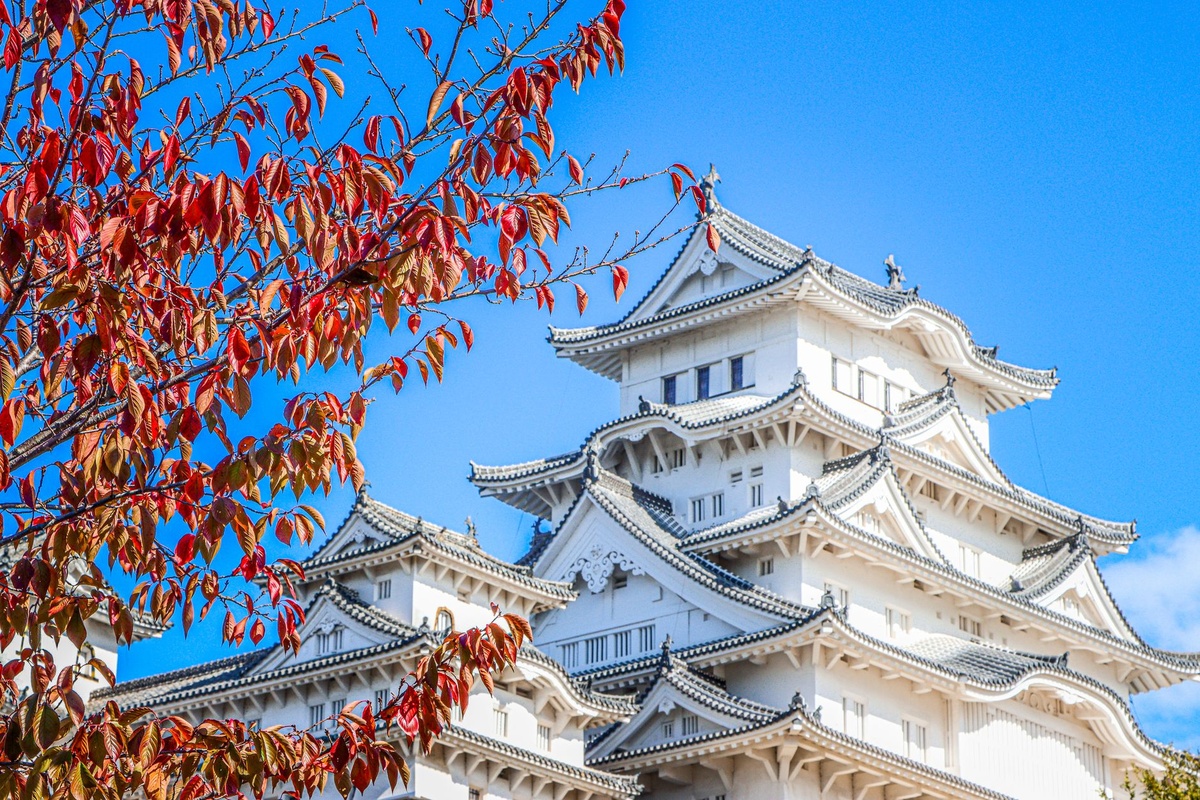
Himeji is the one that survived everything — the Meiji demolition orders, the 1945 firebombing of the city, the 1995 Kobe earthquake. Inside the keep it’s bare wooden floors, weapon racks, arrow slits and stone-dropping chutes (ishi-otoshi) your kids will try to post things through. There are no exhibits, which is exactly why it feels like a castle rather than a museum.
The catch is the queue. On an October Saturday the keep entrance operates a numbered-ticket system from around 10:30 and you can wait 45–60 minutes before the stairs even start. Arrive at 8:45 for the 9:00 opening and you’ll have the top floor nearly to yourselves by 9:40.
Budget tip: buy the combined castle + Koko-en garden ticket at the gate (¥2,550 for non-resident adults — the garden adds only ¥50 over the castle alone). Koko-en’s nine walled gardens are stroller-friendly and the koi pond is where under-fives recover from the keep.
Matsumoto: the black castle with the scary ladder
Matsumoto is smaller and blacker than Himeji and sits in a moat that reflects the Northern Alps, which in late October are already dusted with snow while the castle-park maples go red. It’s the better photograph by a mile. Inside, the floors are original, the beams are hand-adzed, and there’s a fascinating matchlock gun collection on the second floor that nine-year-olds inexplicably love.
The stairs are the issue, and we cover them in detail below. The other issue is distance: Matsumoto is 2h40 from Shinjuku on the Azusa limited express (¥6,620 / ≈€39 per adult) or 2 hours from Nagoya on the Shinano (¥6,140 / ≈€36). From Kyoto you’re looking at roughly 3 hours and ¥11,000 (≈€65) each way via Nagoya.
Nijo-jo: no keep, zero stairs, best for under-sevens
Nijo-jo is the shogun’s Kyoto residence, not a fortress, and the keep burned down after a lightning strike in 1750 — you can climb its stone base (a few dozen stone steps) for a view over the moat, but that’s it. What you get instead is Ninomaru Palace, 33 rooms of gold-leaf screens and the famous nightingale floors that chirp with every footstep.
For kids, the floors are the entire show. Ours spent 20 minutes trying to walk without triggering a squeak (impossible — that’s the point, it was an intruder alarm). Shoes come off, strollers can’t come in, but the corridor route is completely flat and takes 25–30 minutes.
Skip the ¥600 audio guide and download the free Nijo-jo official app on the Wi-Fi at the ticket gate instead. Honmaru Palace, reopened in 2024, costs ¥1,000 extra per adult and needs a timed slot booked at nijo-jocastle.city.kyoto.lg.jp — it’s beautiful but with under-tens it’s one palace too many.
Osaka: concrete, elevator, air-con, and your kids won’t care
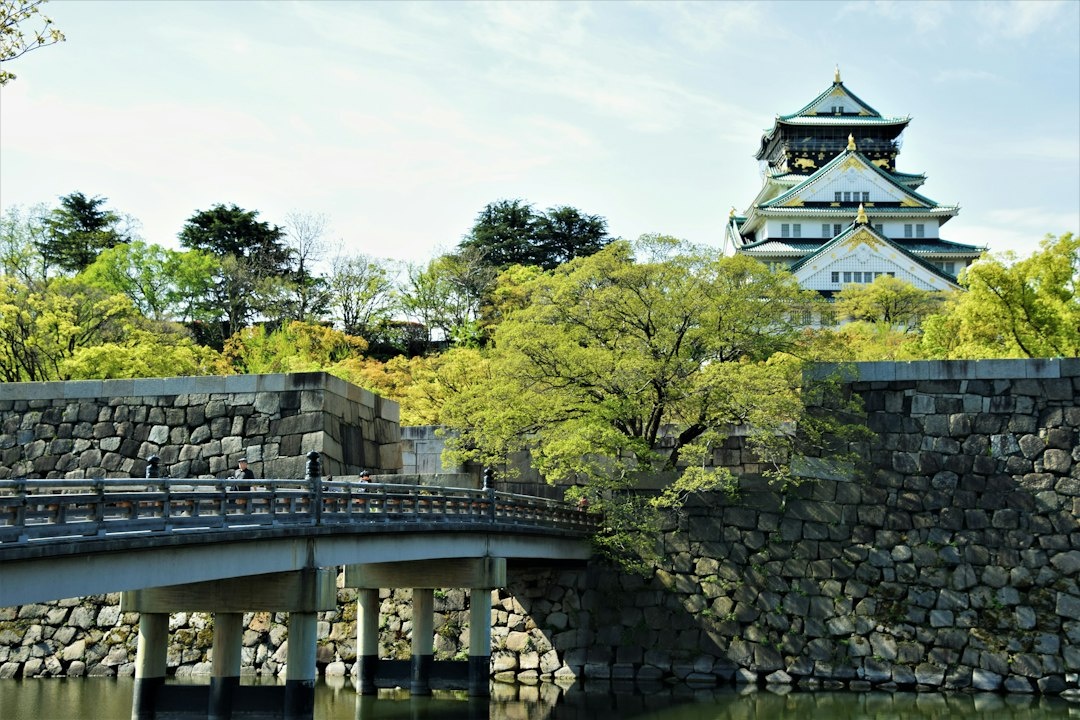
Purists sniff at Osaka Castle, and they’re right that the 1931 ferro-concrete tower is a reconstruction of a reconstruction. But let’s be honest about what a family gets: an elevator to the fifth floor, air-conditioning, a baby-change room, a folding-screen-sized diorama of the 1615 siege with little moving samurai, and a free dress-up corner where kids can try on a kabuto helmet for a photo.
The surrounding park is free, enormous and has a proper playground near the Aoyamon gate. In October the ginkgo avenue along the outer moat turns yellow in the final week of the month, and the Nishinomaru Garden (¥200, ≈€1.20) gives you the classic keep-over-moat shot without paying the tower fee at all.
Important: Osaka Castle has an ongoing seismic-retrofit programme and periodically closes floors. Check osakacastle.net the week before you go rather than trusting a blog post from 2024 — ours included.
The Stair Test: Which Keeps Can a Child Under 10 Actually Climb?
We counted steps, estimated angles with a phone inclinometer app, and timed a seven-year-old and a nine-year-old on each ascent. The numbers below are from our October visits; nobody official publishes them.
| Castle | Approx. steps to top | Steepest flight | Handrails | Shoes off? | Our 7-year-old’s time (up) | Verdict for under-10s |
|---|---|---|---|---|---|---|
| Himeji | ~200 (basement to 6F) | ~45–50°, narrow, low headroom | Rope rails both sides | Yes — carry shoes in a plastic bag | 18 min incl. queue shuffling | Fine from age 5 if they’re used to stairs; one-way flow means no turning back |
| Matsumoto | ~140 (1F to 6F) | 55–61°, treads ~40cm high, effectively a ladder | Rope rails, staff spotter at the worst flight | Yes — slippers provided, bring socks | 22 min, needed hand-holding on 4F–5F | Confident 6+ only; expect a 20-min bottleneck on the 4F stairs on weekends |
| Nijo-jo | 0 in palace; ~45 stone steps up the old keep base (optional) | Gentle | N/A | Yes in the palace | Walked the corridor route in 25 min | Any age, including toddlers walking |
| Osaka | Elevator to 5F, then ~60 modern concrete steps to 8F | Standard 30° | Proper handrails | No | 6 min | Any age; strollers fold into the elevator |
Two practical rules from this table. First, Himeji and Matsumoto both run one-way traffic inside the keep: once you start up, you finish up. If your child freezes on a 55-degree flight at Matsumoto with 40 people behind you, there is no graceful exit.
Second, pack socks. Both wooden keeps and Nijo-jo are socks-only, the floors are cold in October, and every family we saw in sandals regretted it. Matsumoto hands out plastic slippers; Himeji does not.
Tickets, Free-Entry Tricks and Free English Guides
Admission is only part of the cost — Himeji’s walk from the station is free, but Osaka’s park is free, Nijo-jo’s audio guide isn’t, and Matsumoto gives you a human guide for nothing. Here’s how to spend the least.
- Himeji: The ¥2,500 non-resident adult fee started in March 2026; a passport may be checked. Kids under 18 are ¥300, under-6s free. Free English volunteer guides from the Himeji Castle English Speaking Guides group wait at the ticket gate 9:00–15:00 — just ask, no booking needed except for groups. The free “Himeji Castle Grand Guide” AR app overlays the lost buildings on your screen and is genuinely good for kids.
- Matsumoto: ¥700 adults, ¥300 kids. The Alps Language Service volunteers (ALSA) offer free English-language tours from a desk inside the main gate daily from April to November — 45 minutes, no reservation. The castle exterior, moat and swans are free from the park, and the nightly illumination until around 22:00 is free.
- Nijo-jo: ¥1,300 adults includes Ninomaru Palace; grounds-only is ¥800 but pointless — the palace is the reason you’re there. Elementary kids ¥300, junior high ¥400. There are no regular free English guides; use the free app.
- Osaka: ¥600 adults, free for anyone under 15 — the clear winner for families. If you’re buying the Osaka Amazing Pass (1-day ¥3,500 / ≈€20.60) for the Umeda Sky Building and a river cruise anyway, castle entry is included.
Free-entry days exist but mostly fall outside October: Himeji opens free on 6 April (national Castle Day), and Osaka’s grounds and Nishinomaru Garden have free evenings during the castle’s autumn illumination events. In October your best “free” play is simply skipping Osaka’s tower and doing the park plus Nishinomaru for ¥200 a person.
Getting There on a Budget: Transport Compared
The single biggest money decision isn’t tickets, it’s whether to buy a rail pass. The 7-day national JR Pass is ¥50,000 (≈€294) per adult, ¥25,000 per child since the 2023 price hike, and it is simply not worth it for a Kansai castle circuit. Here’s what each castle actually costs to reach.
| Route | Cheapest option | Time | Faster option | Time | Family-of-4 cost (2 adults, 2 kids 6–11) |
|---|---|---|---|---|---|
| Osaka Station → Himeji | JR Special Rapid, ¥1,520 (≈€8.95) adult, ¥760 child | 62 min | Shinkansen from Shin-Osaka, ¥3,280 (≈€19.30) | 30 min | ¥4,560 (≈€26.80) one way on the Special Rapid |
| Kyoto Station → Himeji | JR Special Rapid, ¥2,310 (≈€13.60) adult | 95 min | Hikari Shinkansen, ¥5,170 (≈€30.40) | 50 min | ¥6,930 (≈€40.80) one way |
| Himeji Station → Castle gate | Walk 1 km up Otemae-dori, free | 18 min | Loop bus, ¥100 (≈€0.60) | 8 min | Walk — it’s flat and lined with 100-yen shops |
| Kyoto Station → Nijo-jo | City bus 9 or 50, ¥230 (≈€1.35) adult, ¥120 child | 20 min | Subway via Karasuma Oike to Nijojo-mae, ¥260 | 14 min | ¥700 (≈€4.10) by bus |
| Osaka Station → Osaka Castle | JR Loop Line to Osakajokoen, ¥170 (≈€1) + 15-min walk | 28 min | Taxi, ~¥2,000 (≈€11.80) | 15 min | ¥520 (≈€3.05) by train |
| Kyoto → Matsumoto | Shinkansen to Nagoya + Shinano limited express, ~¥11,100 (≈€65) adult | 3h 05 | Same — no faster route | — | ~¥33,300 (≈€196) one way |
| Tokyo Shinjuku → Matsumoto | Highway bus (Alpico), ¥4,200 (≈€24.70) adult | 3h 20 | Azusa limited express, ¥6,620 (≈€39) | 2h 40 | ¥12,600 (≈€74) by bus one way |
The smart buy for Himeji day is the JR West Kansai Area Pass, 1-day: ¥2,800 adult, ¥1,400 child, which covers Osaka↔Himeji return (¥3,040 at full fare) plus any Kyoto or Nara hopping the same day. Buy it at westjr.co.jp and collect at the Osaka Station ticket machines with your passport.
For everything else, load a Suica or ICOCA card into Apple Wallet or Google Wallet before you fly — it works on every bus and train above except the Shinkansen, and avoids the queue for paper child tickets, which have to be bought at a staffed window.
Where to Eat Near Each Castle for Under €10 a Head
Castle-gate restaurants in Japan are rarely tourist traps, but they are often tiny and close by 14:30. Here’s one pick per castle that we’d actually go back to with kids.
- Himeji — Menme (めんめ), Otemae-dori: Kamaage udon in a big shared bowl, ¥750 (≈€4.40), five minutes from the gate. Afterwards, Himeji’s odd local speciality is almond-butter toast at any kissaten on Miyuki-dori for ¥450 — kids are baffled, then hooked.
- Matsumoto — Kobayashi Soba (小林そば), est. 1889, two minutes from the castle: Zaru soba ¥1,100 (≈€6.50), kids’ half portions available. If you’re there 10–12 October 2026, the Shinshu Matsumoto Soba Festival sets up stalls in the castle park with ¥500 bowls — eat lunch there instead.
- Nijo-jo — Honke Owariya, Kurumayacho: Kyoto’s oldest soba house (1465), 10 minutes’ walk east. Nishin soba ¥1,350 (≈€7.95); the plain kake soba for kids is ¥900. Cheaper alternative: the 7-Eleven on Horikawa-dori opposite the gate, where four onigiri and two juices run ¥1,100 for the family.
- Osaka — Miraiza Osaka-jo food hall, inside the castle grounds: Takoyaki eight for ¥600 (≈€3.50) eaten on the lawn. Skip the castle’s own café (¥1,200 for a sad curry) and don’t do Dotonbori for lunch — save it for dinner at Chibo (okonomiyaki ¥1,400) when the lights are on.
Where to Stay: Base in Osaka, Not Kyoto
Osaka is the right base for three of the four castles. Himeji is 62 minutes west, Nijo-jo is 45 minutes north-east, and Osaka Castle is a loop-line ride away — and Osaka hotel prices in October 2026 run 25–30% below Kyoto’s foliage-season rates for the same family room.
Our picks: MIMARU Osaka Namba North (apartment-style, sleeps 4 with a kitchenette, around €165/night in mid-October) if you want to self-cater breakfast, or Toyoko Inn Osaka Namba (twin plus free bed-sharing for under-12s, around €95/night, free onigiri breakfast). Compare current rates for hotels in Osaka around the Namba or Tennoji stations — both put you on the loop line within two stops.
If Matsumoto makes your route, stay one night at Hotel Buena Vista (family quad from €140) or, better, in Asama Onsen 15 minutes north where Onyado Nono Matsumoto offers tatami family rooms with a public bath for about €155 including breakfast. October nights there drop to 6–8°C, so the bath earns its keep.
Decision Framework: Which Castle for Which Family?
Choose Himeji if your kids are 6+, you want the one genuinely great original keep, and you can arrive before 9:00 on a weekday. The ¥2,500 adult fee stings, but ¥300 for kids keeps a family of four under €34 for a UNESCO site, and the walk-up from the station costs nothing.
Choose Matsumoto if you’re already travelling between Tokyo and Kyoto and willing to route via Nagano or Nagoya, your children are confident 7+ climbers, and you value the Alps-and-foliage backdrop (peak colour in the castle park: 20–31 October 2026). Do not make it a day trip from Kansai.
Choose Nijo-jo if you have a child under 6, a stroller, or anyone with wobbly knees. It’s the only one of the four where nobody has to climb anything, and the nightingale floors beat any museum display for a five-year-old’s attention span.
Choose Osaka if budget is the overriding concern, you have a baby, or it’s raining. It’s the cheapest, most accessible and least atmospheric. Pair it with Himeji the next day and the contrast between concrete and 400-year-old cedar becomes a lesson in itself.
Our verdict for a one-castle family: Himeji, early on a weekday, with the Koko-en combo. For a two-castle family on a budget: Nijo-jo plus Osaka — you’ll spend under €30 total on tickets for four and nobody cries on a staircase.
Costed Sample Plan: 3 Days, 3 Castles, Family of Four (October 2026)
This assumes two adults and two children aged 7 and 9, based in Osaka, using IC cards and one Kansai Area Pass day. Flights excluded; prices at ¥170 = €1.
Day 1 — Osaka Castle and the park
- JR Loop Line return: ¥520 (≈€3.05)
- Castle tower: ¥1,200 for two adults, kids free (≈€7.05)
- Nishinomaru Garden: ¥800 (≈€4.70)
- Lunch at Miraiza food hall: ¥2,800 (≈€16.50)
- Dinner, Chibo okonomiyaki, Dotonbori: ¥5,200 (≈€30.60)
- Day total: ¥10,520 (≈€62)
Day 2 — Himeji, early
- Kansai Area Pass 1-day: ¥8,400 (≈€49.40)
- Himeji + Koko-en combo: 2 × ¥2,550 + 2 × ¥360 = ¥5,820 (≈€34.20)
- Udon lunch at Menme: ¥3,000 (≈€17.65)
- Almond toast and coffee: ¥1,400 (≈€8.25)
- Convenience-store dinner back in Osaka: ¥2,400 (≈€14.10)
- Day total: ¥21,020 (≈€123.65)
Day 3 — Nijo-jo and Nishiki Market
- JR Special Rapid Osaka→Kyoto return: 2 × ¥1,180 + 2 × ¥590 = ¥3,540 (≈€20.80)
- City bus to Nijo-jo and back: ¥1,400 (≈€8.25)
- Nijo-jo incl. Ninomaru Palace: 2 × ¥1,300 + 2 × ¥300 = ¥3,200 (≈€18.80)
- Soba at Honke Owariya: ¥4,500 (≈€26.50)
- Nishiki Market snacks: ¥2,000 (≈€11.75)
- Day total: ¥14,640 (≈€86.10)
Accommodation and the bottom line
- 3 nights Toyoko Inn Osaka Namba, twin with kids sharing: ≈€285
- Three days of activities, transport and food as above: ≈€272
- Total for four people, three castles, three nights: ≈€557 — or about €46 per person per day.
Adding Matsumoto turns this into a six-day trip and adds roughly €390 in rail fares and €155 for a night in Asama Onsen for the family — worth it only if the Alps were already on your list.
Common Mistakes Families Make at Japanese Castles
- Arriving at Himeji at 11:00 on a Saturday. You’ll queue 45–60 minutes for a keep that takes 25 minutes to climb. Go at 9:00 on a weekday, or at 15:30 when the tour buses have left (last entry 16:00).
- Bringing a stroller into a keep. None of the four allows them inside wooden buildings. Himeji has free lockers at the entrance to the keep; Matsumoto has a stroller rack by the ticket office. Bring a carrier for anyone under 4.
- Expecting a tower at Nijo-jo. There isn’t one. Set expectations before you arrive or you’ll hear “where’s the castle?” for 40 minutes.
- Buying the national JR Pass for a Kansai trip. At ¥50,000 per adult you’d need to ride the Shinkansen to Tokyo and back to break even. The 1-day Kansai Area Pass does Himeji for ¥2,800.
- Treating Matsumoto as a day trip from Kyoto. Six hours of trains for a 90-minute castle visit, and you’ll arrive at 13:00 behind every tour group. Overnight or skip.
- No socks, no cash. Himeji’s keep is socks-only and its ticket counters have only recently accepted cards; Matsumoto’s ALSA guides can’t take tips but the soba stalls are cash-only.
- Not checking Osaka’s renovation status. Floors close without much English notice. A two-minute look at osakacastle.net the night before saves a wasted morning.
Tech Tips That Actually Matter at These Four Castles
Data first: all four sites have patchy free Wi-Fi and you’ll want maps, translation and the Himeji AR app working. A 10GB/30-day Japan eSIM from Airalo costs about €16, and Nomad regularly undercuts it with 20GB for around €20 — install one before departure so it activates when you land at Kansai.
Photography second: Himeji’s white plaster walls blow out highlights at midday, Matsumoto’s black lacquer eats shadow detail, and both keeps are too dim inside for a basic phone sensor. If you’re the designated family photographer, our test of which flagship phone copes best with high-contrast family shots applies directly here — the same dynamic-range problems that hit Tuscan stone hit Himeji plaster.
Navigation third: Google Maps handles the trains fine, but the Japan Transit Planner app (Jorudan) shows which carriage to board to exit near the stairs — useful when you’re carrying a child and two bags off the Special Rapid at Himeji. And if your flight into Kansai is delayed more than three hours, AirHelp can claim up to €600 per person on EU-departing routes; file before you forget.
Final Call: Three Castles, One Base, Under €560
Himeji for the real thing, Nijo-jo for the little ones, Osaka for the budget and the rain day — and all three from a single Osaka hotel in three days for about €557 for four people. Matsumoto is the most beautiful of the four in October’s foliage, but it belongs to a different trip, the one where you’re crossing the Alps anyway.
Book the Toyoko Inn now (October 2026 weekend nights in Namba are already thin), buy the Kansai Area Pass online, and put socks on the packing list twice. Then tell us in the comments which stairs your kids conquered — and which ones you had to carry them down.
Frequently Asked Questions
How much does Himeji Castle cost for a family in 2026?
Since March 2026, non-resident adults pay ¥2,500 (≈€14.70), children under 18 pay ¥300 (≈€1.80) and preschoolers enter free. A family of two adults and two school-age kids pays ¥5,600 (≈€33), or ¥5,820 (≈€34.20) with the Koko-en garden combo, which adds only ¥50 per adult.
Can a 6-year-old climb Matsumoto Castle?
Physically yes, but the fourth-to-fifth-floor flight is around 61 degrees with 40cm treads and one-way traffic, so a nervous child cannot turn back. We’d say confident six-year-olds with an adult directly behind them; for anyone younger, the free moat-side views and castle park are the better experience.
Is Osaka Castle worth visiting if it’s a concrete reconstruction?
For families, yes: it’s ¥600 for adults and free under 15, has an elevator to the fifth floor, air-conditioning and a free samurai-helmet dress-up corner. Just don’t expect atmosphere — pair it with Himeji the next day so kids see the difference between a museum and a real keep.
Which Japanese castle has no stairs for toddlers or strollers?
Nijo-jo in Kyoto. The Ninomaru Palace route is a flat wooden corridor with chirping nightingale floors, takes 25–30 minutes, and costs ¥1,300 per adult and ¥300 per elementary child. Strollers must be parked at the entrance, but a walking toddler can do the whole thing.
Is October a good time to visit Japanese castles?
It’s one of the best: Kansai sits at 20–24°C, Matsumoto’s castle-park maples peak around 20–31 October, and crowds are far below April cherry-blossom levels. Avoid the Sports Day long weekend of 10–12 October 2026 at Himeji and Matsumoto, when keep queues reach 60–90 minutes.

About the Author: Tomáš Bzirský
Founder and editor of Distratech. Based in the Czech Republic, travelling regularly from Central Europe. Writes practical travel guides and travel-tech comparisons (eSIM, apps, airports) in six languages.