Pixar put Nemo’s anemone on the Great Barrier Reef, and the real thing is 90 minutes by boat from Cairns. In October 2026 the water is 25–26°C, the trade winds that chop up the outer reef in August and September are dying down, and the box-jellyfish season that forces everyone into full lycra from November hasn’t started. If you’ve ever wanted to learn to dive, this is the month and this is the place.
I’ve done the research the dive shops won’t do for you: which agency to pick (PADI vs SSI), which Cairns school is worth the extra AUD 300, how the Queensland dive medical works, and why you need an 18-hour no-fly buffer in your week. Here’s the plan, step by step, with October 2026 prices.
Key Takeaways
- A 4-day Open Water course in Cairns costs AUD 760–895 (EUR 455–540) on day boats; a 5-day course with a 2-night liveaboard runs AUD 1,095–1,195 (EUR 655–715), October 2026 pricing.
- October is pre-stinger season: water 25–26°C, visibility 15–25 m on the outer reef, and stinger suits are optional rather than mandatory (they become compulsory from roughly 1 November).
- Queensland law is stricter than most of the world: budget AUD 60–85 (EUR 36–50) and 30 minutes for a doctor’s dive medical before you can enter the pool.
- PADI and SSI certifications are recognised identically worldwide; pick the boat and instructor ratio over the agency logo.
- Do not fly for 18 hours after your last dive and avoid the Atherton Tablelands (700–1,000 m elevation) the same day; plan a 7-day trip, not a 5-day one.
Key Numbers at a Glance (October 2026)
| Item | Figure |
|---|---|
| Course length | 4 days (day boat) or 5 days (liveaboard) |
| Course price range | AUD 760–1,195 (EUR 455–715) |
| Hidden extras (reef levy, port fees, medical) | AUD 110–170 (EUR 65–100) |
| Water temperature, October | 25–26°C |
| Air temperature, October | 22°C low / 29°C high |
| Rain days, October | ~6 (vs 18 in February) |
| Stinger season start | ~1 November (lycra suits mandatory on most boats) |
| Cairns CBD to outer reef | 45–60 km, 90 min by boat |
| Airport to CBD | 7 km, Uber AUD 22–28 (EUR 13–17), 12 min |
| Minimum age | 10 (Junior Open Water), 15 for full certification |
| No-fly wait after last dive | 18 hours (multiple dives) |
| Exchange rate used | AUD 1 ≈ EUR 0.60 |
Why October Is the Sweet Spot for Learning to Dive in Cairns
Cairns dive shops run year-round, but the months are not equal. Summer (December to March) brings 30°C water, afternoon storms, cyclone risk and runoff that drops inshore visibility to single digits. Winter (June to August) is dry and clear, but the south-easterly trade winds blow 20–25 knots, and seasick students don’t learn well.
October sits in the gap. Winds ease to 10–15 knots, outer-reef visibility is routinely 15–25 m, and the water is warm enough that most people dive in a 3 mm shorty rather than a full 5 mm.
The stinger factor matters more than first-timers realise. From November to May, box jellyfish (Chironex) and the tiny Irukandji are active in coastal waters, and nearly every operator makes full-body lycra suits compulsory. Learning buoyancy control and mask clearing in a hooded onesie on a 32°C day is sweatier and clumsier. In October the suits are offered, not enforced.
Two caveats. Late October (after the 20th) starts to feel humid as the build-up begins, and Irukandji have been recorded in every month on the outer reef, so if a crew member says wear the suit, wear it. Book the first three weeks of the month if you can.
| Month | Water temp | Typical outer-reef vis | Stinger suit | Avg wind |
|---|---|---|---|---|
| August | 23°C | 15–20 m | Optional | 20–25 kn |
| October | 25–26°C | 15–25 m | Optional | 10–15 kn |
| December | 28°C | 10–20 m | Mandatory | 10 kn, storms |
| February | 29°C | 5–15 m | Mandatory | Cyclone risk |
Step 1: PADI vs SSI — Decide Before You Compare Dive Shops
Every Cairns dive school is affiliated with PADI (Professional Association of Diving Instructors) or SSI (Scuba Schools International). Both certifications meet the same ISO 24801-2 standard, both let you dive to 18 m anywhere on earth, and no dive shop in Thailand, Egypt or Mexico will care which card you hold. The differences are about money, materials and flexibility, not safety or recognition.
| Factor | PADI Open Water Diver | SSI Open Water Diver |
|---|---|---|
| Global recognition | Largest agency, ~70% of certifications worldwide | Second largest, fully recognised everywhere |
| Theory materials | eLearning sold separately by PADI (USD 230 / EUR 215 if bought direct; usually bundled by Cairns shops) | Free digital materials via MySSI app, always included |
| Typical Cairns course price (Oct 2026) | AUD 825–1,195 (EUR 495–715) | AUD 760–985 (EUR 455–590) |
| Certification card | eCard free, physical card USD 20–30 extra | Digital card free, physical card optional |
| Instructor flexibility | Fixed skill sequence | Instructor can reorder skills to suit the student |
| Referral (theory + pool at home, dives in Cairns) | Yes, 12-month validity | Yes, SSI shops must be affiliated |
| Who uses it in Cairns | Pro Dive, Divers Den, Down Under Cruise & Dive, Tusa | Cairns Dive Centre, Reef Encounter, some Down Under courses |
Choose PADI if you plan to continue to Advanced Open Water in another country and want the most widely stocked eLearning, or if the boat you want (Pro Dive’s ScubaPro fleet, Divers Den’s OceanQuest) only teaches PADI.
Choose SSI if you’re on a budget — you’ll save AUD 100–200 (EUR 60–120) with identical outcomes — or if you learn better with an instructor who can adapt the skill order rather than follow a script.
My opinion, after comparing both: pick the boat, the instructor-to-student ratio and the number of reef dives first, then accept whichever agency comes with it. The card in your wallet matters far less than whether your instructor had four students or eight.
Step 2: Pick Your Cairns Dive School and Boat
Cairns has a dozen schools, but four do the bulk of first-timer certifications. The real decision is day boat versus liveaboard: that determines whether your four certification dives are rushed between a 7:30 am departure and a 4:30 pm return, or spread over two days sleeping on the reef.
| Operator (agency) | Course format | Price Oct 2026 | Extras not included | Max students per instructor | Book at |
|---|---|---|---|---|---|
| Pro Dive Cairns (PADI) | 5 days: 2 pool + 3-day/2-night liveaboard, 9 dives total (4 training + 5 fun incl. night dive) | AUD 1,195 (EUR 715) | Reef levy + port fees ~AUD 85, medical ~AUD 70 | 4 | prodivecairns.com |
| Divers Den (PADI) | 4 days: 2 pool + 2 day-boat days (4 dives); or 5 days with OceanQuest liveaboard (8 dives) | AUD 895 / AUD 1,095 (EUR 540 / 655) | Reef levy AUD 8/day, port fee AUD 20, medical | 4 | diversden.com.au |
| Down Under Cruise & Dive (PADI/SSI) | 4 days: 2 pool + 2 day-boat days on Evolution (large catamaran) | AUD 825 (EUR 495) | Reef levy, medical | 4–6 | downunderdive.com.au |
| Cairns Dive Centre (SSI) | 4 days day-boat, or 5 days on Kangaroo Explorer liveaboard | AUD 760 / AUD 985 (EUR 455 / 590) | Reef levy, medical | Up to 8 | cairnsdive.com.au |
Choose the Pro Dive 5-day liveaboard if you want nine dives instead of four, a night dive on your first trip, and sites like Milln and Flynn reefs that day boats rarely reach. At EUR 715 it’s EUR 260 more than the cheapest option, but you get more than double the bottom time. This is the one I’d book.
Choose a 4-day day-boat course (Divers Den or Down Under) if you get seasick easily, you’re travelling with a non-diving partner who wants you back in town every evening, or you simply want the card and plan to do your “real” diving elsewhere.
Choose Cairns Dive Centre if the EUR 455 price point is the difference between diving and not diving. The Kangaroo Explorer is older and the groups can be bigger, but the instructors are fine and the reef is the same reef.
Skip the Green Island and Fitzroy Island “intro dive” packages if your goal is certification. They’re inner-reef sites 45 minutes out, visibility is 8–12 m, and an intro dive doesn’t count toward anything.
Booking tip: October is Cairns’ second-busiest month after July, and liveaboard courses sell out 3–5 weeks ahead. Book direct on the operator’s site rather than through a hostel desk; the hostel takes 15–20% commission and you get no better price.
Step 3: eLearning, the Queensland Dive Medical and Insurance
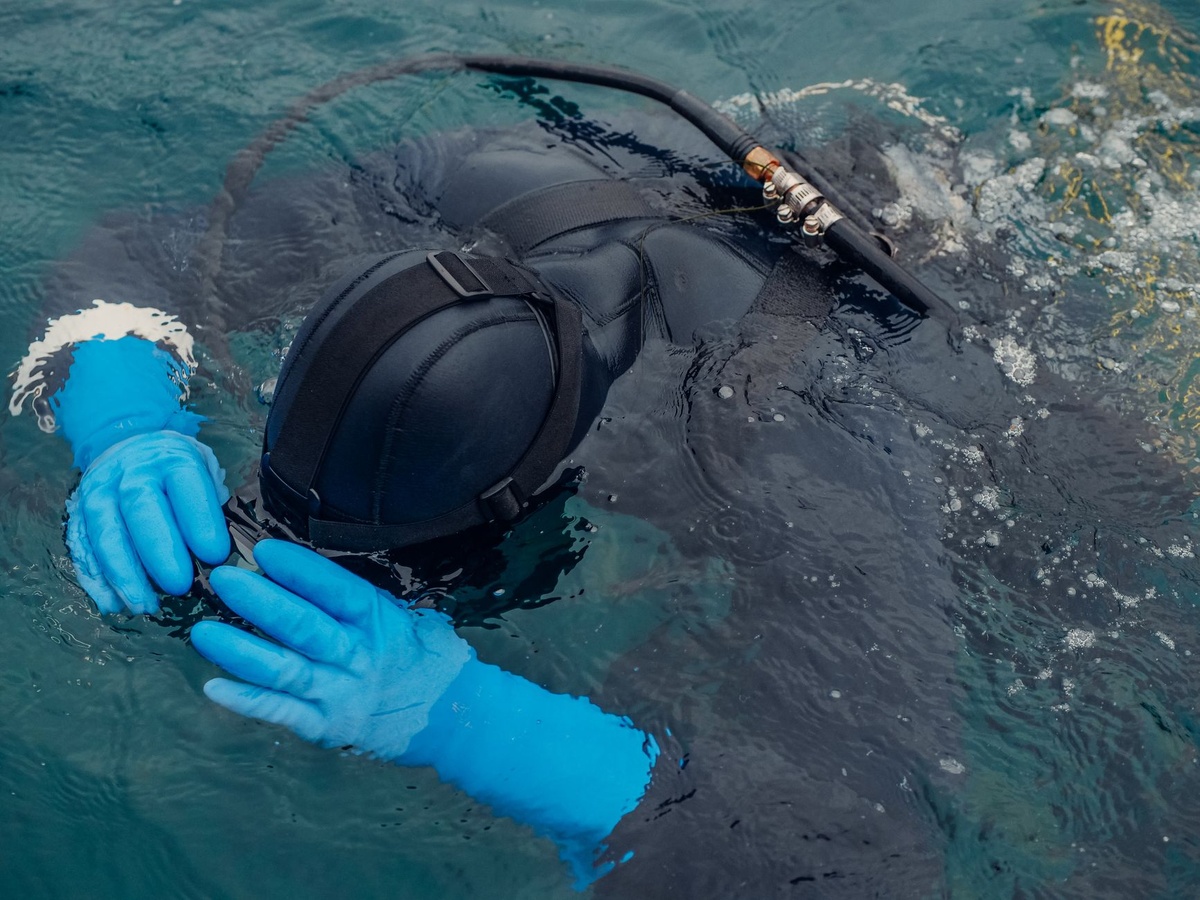
Do the theory before you fly
Both PADI and SSI let you finish the knowledge sections online. PADI’s Open Water eLearning takes 8–12 hours; SSI’s is closer to 6–8. Doing it at home saves a full classroom day in Cairns and, with Pro Dive and Divers Den, knocks AUD 50–100 off the course. If your operator bundles PADI eLearning, they’ll email a code after booking; download the sections on wifi, because the PADI app works offline on the plane.
The Queensland dive medical is not optional
This trips up more first-timers than anything else. Under Queensland’s Recreational Diving Code of Practice, every student must complete the AS4005.1 medical questionnaire, and in practice almost all Cairns schools send every student to a doctor on day one regardless of answers.
The exam is 20–30 minutes: blood pressure, lung function, ears, basic history. Cost is AUD 60–85 (EUR 36–50) at Cairns 24 Hour Medical Centre on Grafton Street or the dive-doctor clinics the schools partner with. Pro Dive schedules it for you on the first morning.
Asthma, epilepsy, diabetes, recent surgery or any heart history can mean a fail, and the fee is non-refundable if you’re declined. If any of those apply, get a dive medical from a hyperbaric-trained doctor at home before you book flights. A European medical signed on the AS4005.1 form within the last 12 months is accepted by most operators; email a scan and confirm.
Insurance that actually covers diving
Standard travel insurance usually excludes scuba or caps it at 10 m. Check the wording for “scuba diving to 18 m with a certified instructor” and chamber treatment. DAN World annual membership with dive accident cover is AUD 110–160 (EUR 65–95) and covers recompression, which runs AUD 1,500+ per session at Townsville’s hyperbaric unit.
If you’re flying from Europe via Singapore or Doha on a European-departing ticket, EU261 rules apply to the outbound leg. A cancellation at Frankfurt or Paris that makes you miss day one of a prepaid AUD 1,195 course is exactly the scenario where filing with AirHelp is worth the 35% fee.
Step 4: What the Five Days Actually Look Like
This is the Pro Dive 5-day schedule; the 4-day day-boat courses compress days 3–5 into two long boat days.
Day 1: Medical, pool, first breaths
7:30 am hotel pickup, dive medical at the clinic, then the training pool by 10 am. You’ll assemble gear, breathe off a regulator, clear a flooded mask and recover a lost regulator, finishing around 3:30 pm. Nobody enjoys mask clearing; everybody gets it by the fifth attempt.
Day 2: Pool skills and theory check
Controlled emergency swimming ascents, buoyancy hovering, the 200 m swim and 10-minute float, plus the final exam (75% to pass; nobody fails who did the eLearning). Done by 4 pm with a free evening — this is the night for Prawn Star, not for Gilligan’s.
Day 3: Depart Marlin Marina 6:00 am, outer reef by 8:00 am
Two training dives at Norman or Hastings Reef, usually 12 m max on dive one and 15 m on dive two. This is where your instructor swims you to an anemone and points. Ocellaris clownfish — Nemo’s species — are reliably found at Hastings and Norman in 5–12 m, and they’re bold enough to swim up to your mask.
Day 4: Certification dives 3 and 4, then you’re a diver
Compass navigation, a mini-dive you plan yourselves, and your card is earned by lunch. The afternoon and night dives are fun dives: sleeping parrotfish, hunting trevally, the reef lit by torch. A night dive on your fourth day underwater is the single best argument for the liveaboard.
Day 5: Morning fun dives, back in Cairns by 4:30 pm
Two or three dives at Milln or Flynn Reef, which day boats skip. The last dive is typically around 10:30 am, which means your earliest safe flight is 4:30 am the next morning. Nobody books that. You’re staying another night.
Step 5: Build the Week Around the Course — Flights, Beds, Food and the No-Fly Buffer
Getting to Cairns
From Europe, Singapore Airlines flies Singapore–Cairns direct in 7 h 20 min; expect EUR 1,150–1,500 return from Frankfurt, Paris or Amsterdam in mid-October 2026. Qantas via Sydney or Brisbane is comparable but adds 4–5 hours. From Sydney, Jetstar one-way is AUD 120–220 (EUR 70–130) for the 3-hour flight.
Airport to the CBD: Uber AUD 22–28 (EUR 13–17), 12 minutes. The shared shuttle is AUD 15 but waits for a full van, and there’s no useful public bus from the terminal.

Where to stay
Book within 800 m of Marlin Marina so the 6 am liveaboard departure doesn’t need a taxi. Dive-school pickups cover the whole CBD, but you want to walk home from the boat, not wait.
- Budget: Mad Monkey Village, Sheridan Street — dorms AUD 42–55 (EUR 25–33), quieter than Gilligan’s. Skip Gilligan’s unless you don’t need to be functional at 6 am; it’s a nightclub with beds.
- Mid-range: Pacific Hotel Cairns on the Esplanade — doubles AUD 165–210 (EUR 100–125), two blocks from the marina, pool for post-dive flopping.
- Treat yourself: Riley, a Crystalbrook Collection Resort — AUD 350–420 (EUR 210–250), the best pool in town, 10 minutes’ walk to the boat.
Compare current rates for hotels in Cairns; October prices run 20–30% below July peak but above the November wet-season dip.
Where to eat
Prawn Star is a fishing trawler moored at E-Finger, Marlin Marina, that sells plates of just-cooked prawns, bugs and oysters for AUD 35–60 (EUR 21–36) — BYO drinks, no bookings, go at 5 pm before the queue. Ochre Restaurant on the Pier does crocodile, kangaroo and wattleseed properly; mains AUD 38–48 (EUR 23–29), book online.
Rusty’s Markets (Friday 5 am–6 pm, Saturday 6 am–3 pm, Sunday 6 am–2 pm) is where to stock up on mangoes, lychees and AUD 6 smoothies before the boat. Caffiend on Grafton Street for coffee, Lillipad Cafe for the AUD 22 breakfast that gets you through a pool day. The Night Markets on the Esplanade are a tourist trap; the free Esplanade Lagoon next to them (6 am–9 pm, closed Wednesday mornings for cleaning) is the best thing in the city.
The buffer day: what to do when you can’t fly or go high
The 18-hour no-fly rule is well known. Less known: ascending to altitude counts too, and the Atherton Tablelands waterfalls sit at 700–1,000 m. Driving up to Millaa Millaa Falls the afternoon after your last dive is a genuine decompression risk. Kuranda at 330 m is borderline — leave it 12+ hours.
Better buffer-day options: the Daintree and Cape Tribulation day tour (sea level, AUD 210–260 / EUR 125–155, 12 hours, with Uncle Brian’s or Daintree Discovery Tours), a lazy day at the Lagoon, or the Cairns Aquarium (AUD 52 / EUR 31, 9 am–4 pm), which is surprisingly good at explaining what you just saw at 15 m.
If you prefer your ocean adventures above the surface, our team’s three slow weeks of whale-watching and crater lakes in the Azores in October is the Atlantic counterpoint to a Cairns dive week.
Sample 7-Day Costed Plan (Mid-Range, Per Person, October 2026)
| Day | Plan | Cost (AUD) | Cost (EUR) |
|---|---|---|---|
| Day 1 (Sun) | Arrive CNS, Uber to Pacific Hotel, Lagoon swim, Prawn Star dinner | 25 + 185 + 50 | 156 |
| Day 2 (Mon) | Dive medical, pool day 1, Lillipad breakfast, hotel | 70 + 22 + 185 + 30 food | 184 |
| Day 3 (Tue) | Pool day 2, exam, Ochre dinner, hotel | 185 + 75 food | 156 |
| Days 4–6 (Wed–Fri) | Pro Dive 5-day course total incl. liveaboard, all meals aboard | 1,195 + 85 levies | 768 |
| Day 6 (Fri) night | Back 4:30 pm, Hemingway’s Brewery, hotel | 185 + 45 | 138 |
| Day 7 (Sat) | Rusty’s Markets, Cairns Aquarium, Uber to airport, 3 pm flight (28 h after last dive) | 15 + 52 + 25 | 55 |
| Extras | DAN insurance, eSIM, physical PADI card | 130 + 15 + 40 | 111 |
| Total (excluding international flights) | AUD 2,614 | EUR 1,568 |
Budget version: swap the hotel for a Mad Monkey dorm (saves EUR 400), choose Cairns Dive Centre’s SSI liveaboard (saves EUR 125), cook at the hostel on pool days (saves EUR 70). You’ll come in around EUR 950 all-in for the same certification and the same reef.
Tech Kit for a First-Time Diver in Cairns
- eSIM: Telstra has the only reliable signal north of Cairns and on inner-reef islands, and Airalo‘s Australia plan (10 GB, 30 days, about EUR 14) runs on the Telstra network. There is zero signal on the outer reef, so download everything before the boat. Nomad is the alternative if Airalo is out of stock for your phone model.
- Logbook apps: PADI’s app and the MySSI app both log dives and store your eCard; screenshot the card too, because dive shops with bad wifi will ask to see it.
- Dive computer: Rental is included in every Cairns course. Don’t buy one before you’re certified; if you fall in love with diving, the Shearwater Peregrine (EUR 420) or Garmin Descent G1 (EUR 350) are the ones instructors wear.
- Camera: A GoPro Hero 13 in the official 60 m housing (EUR 50) is all you need, but leave it on the boat for your four training dives. Students holding cameras lose buoyancy and bump coral; most instructors ban them until the fun dives anyway.
- Weather and sea state: Check Willy Weather and BOM’s Cairns Coast marine forecast the evening before; if swell is over 1.5 m, pack Kwells (AUD 12 at any Chemist Warehouse) and take one at breakfast, not on the boat.
- Offline maps: Download Cairns in Google Maps. Uber works fine in the CBD; the 13CABS app is the backup when surge pricing hits after the boats return at 4:30 pm.
Common Mistakes First-Timers Make in Cairns
- Booking the flight home for the day the course ends. The last liveaboard dive is around 10:30 am; the 18-hour rule means no flights before 4:30 am the next day. Budget a seventh night.
- Not doing the eLearning before arrival. A classroom day in a dive shop in 29°C Cairns is a wasted day of a EUR 1,500 trip.
- Hiding a medical condition on the questionnaire. Queensland doctors do a lung function test. If you have asthma, sort a specialist dive medical at home first.
- Driving up to the Tablelands the afternoon you get off the boat. 1,000 m of altitude within 18 hours of multiple dives is a decompression risk, not a scenic drive.
- Choosing the agency over the boat. PADI and SSI cards are equal; four students per instructor versus eight is not.
- Booking through the hostel tour desk. Same price, 15–20% commission, and you lose the direct line to the operator if weather cancels a day.
- Skipping reef-safe sunscreen. Two hours on deck between dives at 10°S latitude will burn you in 20 minutes; buy a zinc stick in Cairns for AUD 15 and reapply after every dive.
Go Find Nemo
You can learn to dive in a Mediterranean cove or a Thai bay for less money. You cannot learn to dive anywhere else on the planet where your fourth-ever dive is on the outer Great Barrier Reef in 25°C water with a clownfish checking out its reflection in your mask. Mid-October 2026 is the narrow window where the wind has dropped and the stingers haven’t arrived.
Book the Pro Dive 5-day course (or Cairns Dive Centre’s SSI version if the budget says so) at least a month out, finish the eLearning on the flight, get the medical done on day one, and leave yourself a seventh night. Then tell us in the comments which reef you found your anemone on.
Frequently Asked Questions
How much does it cost to get PADI Open Water certified in Cairns?
In October 2026, a 4-day day-boat course costs AUD 825–895 (EUR 495–540) and a 5-day course with a 2-night liveaboard costs AUD 1,095–1,195 (EUR 655–715). Add AUD 110–170 (EUR 65–100) for reef levies, port fees and the compulsory Queensland dive medical, which are never in the headline price.
Is October a good time to dive the Great Barrier Reef?
Yes, it’s one of the two best months alongside September. Water is 25–26°C, outer-reef visibility is 15–25 m, winds have eased from the August trade-wind peak, and the November-to-May box-jellyfish season hasn’t started, so stinger suits are optional rather than mandatory.
PADI or SSI — which is better for a first-time diver?
They’re equivalent: both meet ISO 24801-2, both certify you to 18 m, and both are recognised at every dive shop worldwide. SSI courses in Cairns are typically AUD 100–200 cheaper because the digital materials are free, so choose by operator, boat and instructor ratio rather than by agency.
Do I need a dive medical to learn to dive in Queensland?
In practice, yes. Queensland’s Recreational Diving Code of Practice requires the AS4005.1 medical questionnaire, and nearly all Cairns schools send every student to a doctor on day one. It takes 20–30 minutes, costs AUD 60–85 (EUR 36–50), and the fee isn’t refunded if you fail.
How long after diving in Cairns can I fly home?
Wait at least 18 hours after your last dive when you’ve done multiple dives, which every course involves. Liveaboard courses finish diving around 10:30 am on the final day, so book your flight for the following afternoon and avoid driving to the Atherton Tablelands (700–1,000 m) in that window too.

About the Author: Tomáš Bzirský
Founder and editor of Distratech. Based in the Czech Republic, travelling regularly from Central Europe. Writes practical travel guides and travel-tech comparisons (eSIM, apps, airports) in six languages.