Here is the uncomfortable truth most volcano guides skip: “accessible crater” usually means “accessible car park with a crater somewhere above it.” I have taken a parent with a bad hip up all four of these mountains, and the gap between the brochure and the reality of loose cinder at 2,900 m is wide.
This guide compares Mount Etna, Mount Teide, Vesuvius and Haleakalā on the things that actually matter if your knees, lungs or wallet have limits: how close a cable car or shuttle gets you to the crater zone, what the rim paths are made of, how steep they are, and what happens to your body between 2,500 m and 3,555 m. All prices are October 2026 adult rates unless stated.
Key Takeaways
- Teide’s cable car (€42 return, October 2026) delivers the highest crater-zone drop-off at 3,555 m, but every path from the top station is uneven rock, so wheelchair users get the terrace only.
- Haleakalā is the only one of the four with a paved road and ramped viewing building right at the summit (3,055 m), though with no public bus you need a $60/day rental car plus the $30 park fee.
- Etna gives the best mix of cheap public bus (€6.60 return from Catania), a wheelchair-capable cable car (€50 return) and flat walking at the 1,900 m Silvestri Craters.
- Vesuvius is the cheapest (€12 entry + €12 shuttle) and lowest (no altitude issues at 1,170 m), but the final 860 m gravel climb at 14–18% gradient is non-negotiable and not wheelchair-friendly.
- October is prime time: Etna and Vesuvius are 15–20°C cooler than summer at the rim, Teide skies are at their clearest, and Haleakalā sunrise slots are far easier to book than in July.
Key Numbers at a Glance
| Volcano | Highest mechanised drop-off | Transport to drop-off | Crater-zone access cost (Oct 2026) | Step-free at the top? | Altitude concern |
|---|---|---|---|---|---|
| Etna (Sicily, 3,357 m) | 2,500 m by cable car; 2,900 m by 4×4 bus | AST public bus from Catania, €6.60 return, 2 h | €50 cable car return; €78 with 4×4 + guide | Yes at 2,500 m terrace; no on the 4×4 leg | Mild (2,500–2,900 m) |
| Teide (Tenerife, 3,718 m) | 3,555 m by cable car | TITSA bus 342/348, approx €8 each way, 1h45 | €42 return (online) | Terrace and cabin only; trails are rock | Significant (3,555 m) |
| Vesuvius (Campania, 1,281 m) | 1,000 m by shuttle bus | Circumvesuviana train €2.60 + Vesuvio Express €12 return | €12 park entry (timed slot) | No; 860 m gravel climb to rim | None (1,170 m rim) |
| Haleakalā (Maui, 3,055 m) | 3,055 m by your own car | No public bus; rental car from ~$60/day, 1h45 from Kahului | $30 per vehicle (3 days) + $1 sunrise reservation | Yes; ramped summit building and paved overlooks | Significant (3,055 m) |
Getting to the Crater Zone: What “Access” Actually Means on Each Mountain
Etna: the best budget-plus-mobility combination in Europe
The AST bus leaves Catania’s Piazza Giovanni XXIII (in front of the central train station) at 8:15 and reaches Rifugio Sapienza at 1,910 m around 10:15; it heads back down at 16:30. €6.60 return is absurd value compared with the €60–80 shared-tour minivans that leave from the same square. Buy the ticket from the AST kiosk or the driver, cash preferred.
At Rifugio Sapienza the Funivia dell’Etna (funiviaetna.com) runs 9:00–16:30 in October, and the gondola cabins take wheelchairs with a short ramp at both stations. The cable-car-only return ticket is €50, and the upper station at 2,500 m has a flat terrace, a café and toilets with level access.
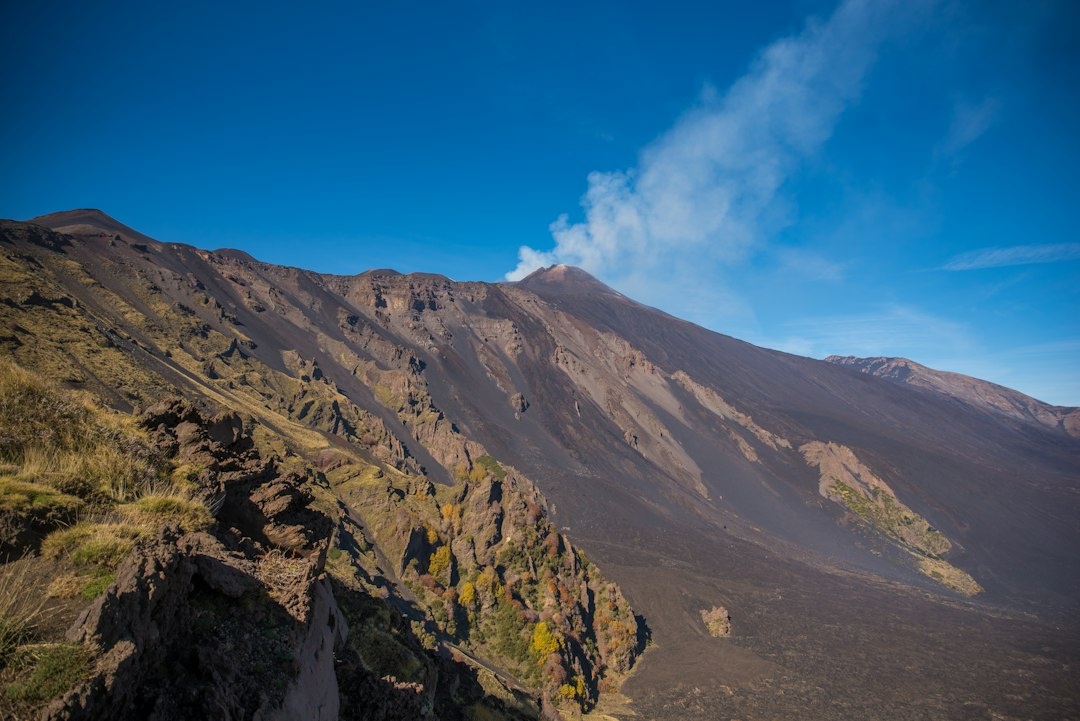
The €78 combined ticket adds the 4×4 Unimog bus to 2,900 m with a mountain guide. Those buses have three high steps and no lift, so if you cannot climb onto a truck bed, the 2,500 m terrace is your ceiling. That is still a view over the whole of eastern Sicily with the active summit craters steaming above you, which in October 2026 means genuinely visible gas plumes after the busy 2025 eruptive phase.
Teide: highest drop-off, least walking possible beyond it
Teide’s Teleférico (volcanoteide.com) climbs 1,200 m in eight minutes from the base station at 2,356 m to La Rambleta at 3,555 m. Book the €42 return ticket online, because walk-ups regularly sell out by 11:00 and the official site is the only place that will refund you if wind closes the line, which happens roughly one day in five in autumn.
TITSA runs one bus a day from each coast: the 342 from Costa Adeje (departs about 9:15) and the 348 from Puerto de la Cruz (about 9:30), both returning from the cable car around 15:40. Fares are distance-based and come to roughly €8 each way; load the ten+ card in the TITSA app to avoid fumbling for change. Miss the 15:40 and a taxi back to the coast is €90–110, so set two alarms.
The honest mobility verdict: cabins accept wheelchairs and staff are used to them, but the upper station opens onto paths 11 and 12, both bare lava rock with 10–20 cm steps. A rollator will not work; a walking pole and patience will get you 100 m along the Pico Viejo trail to the first viewpoint. The summit itself (3,718 m) needs a free permit from reservasparquesnacionales.es, booked two to three months ahead, and a 160 m rock scramble; skip it unless you are fully mobile.
Vesuvius: cheapest, lowest, but the climb is mandatory
Vesuvius has had no funicular since 1944 and no chairlift since 1984, so everyone walks the last stretch. Take the Circumvesuviana train from Naples Garibaldi to Ercolano Scavi (€2.60, 20 min), then the Vesuvio Express minibus from the station forecourt (€12 return, 20 min, departs every 30–40 min from 9:00). The EAV bus from Pompei’s Piazza Anfiteatro is cheaper at about €3.50 but runs only a handful of times a day.
Park entry is €12 plus a €1.50 fee on vesuviopark.vivaticket.it, with timed slots and October hours of 9:00–16:00 (last entry 15:00). Book the slot before you leave Naples; the ticket office at the top does not sell same-day tickets when online slots are full, which they often are on sunny October weekends.
From the bus car park at 1,000 m, the Gran Cono path climbs 860 m horizontally and 170 m vertically to the rim at 1,170 m. Rent a wooden pole for €1 at the start. My mother did it in 35 minutes with two rests; a friend with a knee replacement turned back at the first switchback. There is no step-free alternative, full stop.
Haleakalā: drive to the summit, but there is no bus
Haleakalā is the only volcano here where you park at the crater rim. Haleakalā Highway (Route 378) climbs 37 miles and 3,000 m from Kahului to the Puʻu ʻUlaʻula summit building at 3,055 m, in about 1h45 at night or 1h30 in daylight. Maui Bus does not enter the park, so the budget option is a split rental car: Turo Kihei listings start around $45/day in October, agency cars at Kahului airport about $60.
Entry is $30 per vehicle, valid three days, paid at the gate or on recreation.gov. Sunrise viewing between 3:00 and 7:00 requires a separate $1 vehicle reservation, released 60 days ahead at 7:00 HST with a second batch two days out. In October 2026 the 60-day batch is still available a week after release; in July it goes in minutes.
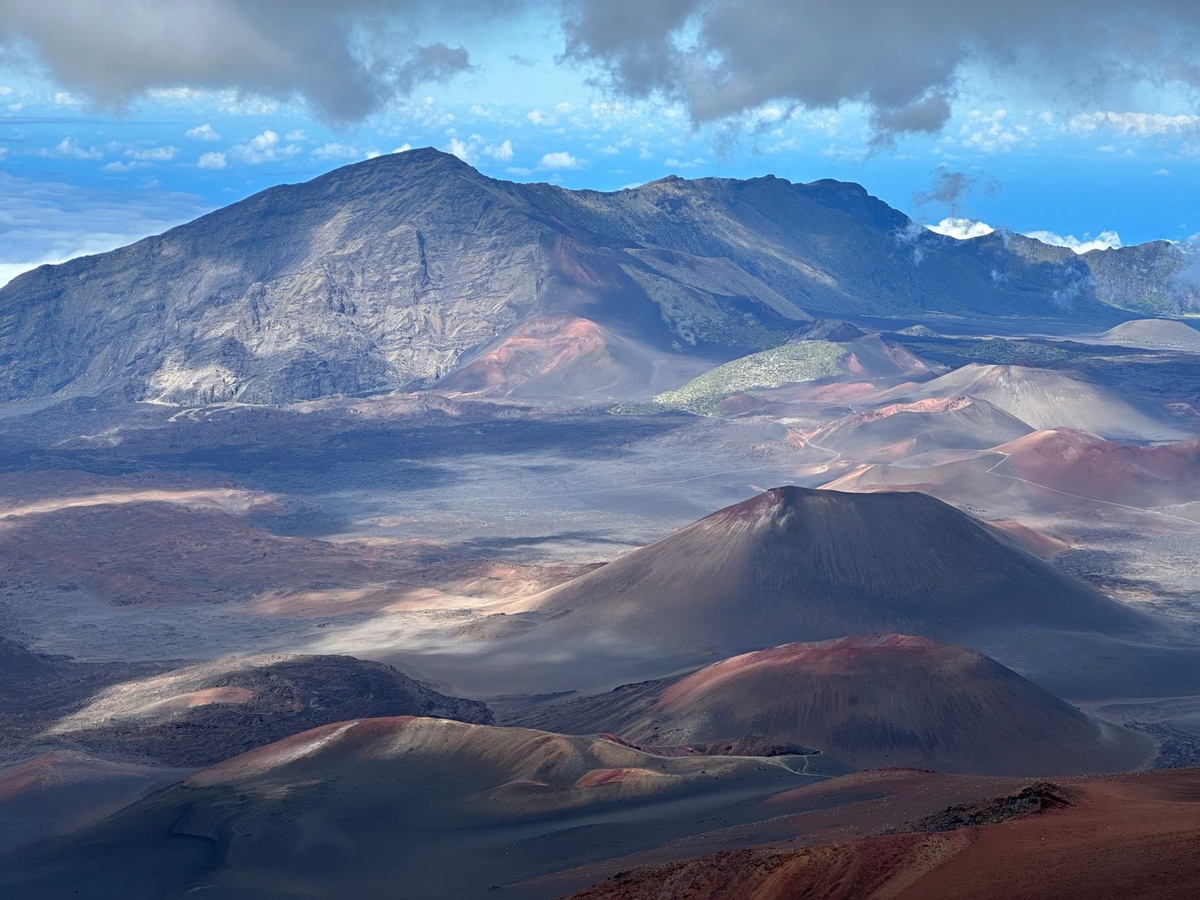
The summit building has a ramp, interior glass windbreak and accessible toilets, and the Haleakalā Visitor Center at 2,969 m has a paved rim overlook. This is the closest any of the four comes to true wheelchair access at a crater edge. The catch is the cold: 0–5°C at sunrise with wind, so bring every layer you own.
Rim Paths Compared: Surfaces, Gradients and Real Distances
Brochures say “short walk.” Here is what short actually means, measured with a GPS watch rather than optimism.
| Volcano / path | Start altitude | Length | Elevation gain | Average gradient | Surface | Rollator? | Walking pole + rests? |
|---|---|---|---|---|---|---|---|
| Etna – Silvestri Craters loop (lower crater) | 1,900 m | 450 m loop | 15 m | 3–5%, one 10% ramp | Compacted cinder, 2–3 cm gravel | Marginal (wide tyres only) | Yes, 15 min |
| Etna – 2,500 m upper station terrace | 2,500 m | 60 m | 0 m | Flat | Concrete | Yes | Yes |
| Etna – 2,900 m guided walk | 2,900 m | 1.2 km loop | 60 m | 8–12% | Loose ash, ankle-deep in spots | No | Difficult, 45 min |
| Teide – La Rambleta terrace | 3,555 m | 40 m | 0 m | Flat | Concrete | Yes | Yes |
| Teide – Trail 12 to Pico Viejo viewpoint | 3,555 m | 750 m one way | 20 m | 3–6%, with rock steps | Bare basalt, irregular | No | Yes, 25 min, slow |
| Teide – Trail 11 to La Fortaleza viewpoint | 3,555 m | 630 m one way | 25 m | 4–7%, steps | Bare basalt | No | Yes, 20 min |
| Vesuvius – Gran Cono to rim | 1,000 m | 860 m one way | 170 m | 14–18%, short 25% ramps | Loose gravel on hardpack, zigzag road | No | Possible, 30–40 min up |
| Vesuvius – rim path to far kiosk | 1,170 m | 600 m one way | 20 m | 3–5% | Packed gravel, 1.5 m wide, rope rail | No (gravel) | Yes, 15 min |
| Haleakalā – summit building overlook | 3,055 m | 50 m from parking | 0 m | Ramped | Asphalt and concrete | Yes | Yes |
| Haleakalā – Pā Kaʻoao (White Hill) trail | 2,969 m | 640 m loop | 40 m | 8–12% | Cinder with rock steps | No | Yes, 25 min |
Two things jump out. First, the only places where a wheelchair or rollator gets a crater-zone view are the Etna upper terrace, the Teide terrace and the Haleakalā summit building. Second, Vesuvius has the most demanding compulsory climb despite being the lowest mountain, because there is no mechanised help past the car park.
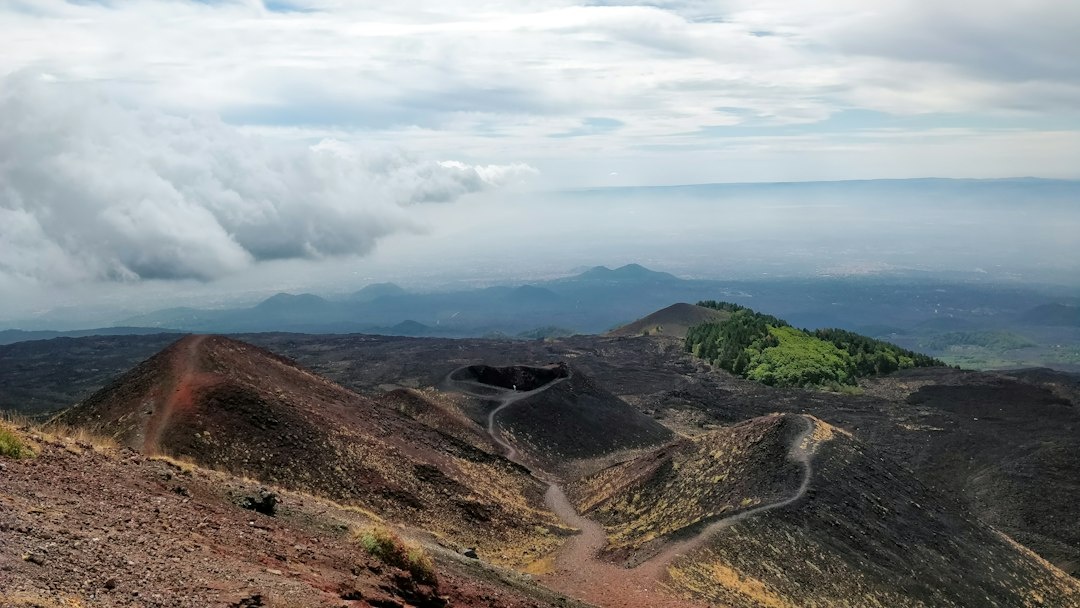
If you walk with a pole and can handle 20 minutes of uneven ground with rests, Etna’s Silvestri loop and Teide’s Trail 12 are the two most rewarding short walks here. The Silvestri lower crater is a complete bowl you can circle; Trail 12 ends at a viewpoint over the 800 m wide Pico Viejo crater and the whole of Tenerife’s west coast.
Altitude Between 2,500 m and 3,555 m: What It Does to You
Altitude is the variable most mobility-focused guides ignore, and it is the one that sends people to the medical hut. At 2,500 m (Etna upper station) the air holds about 74% of sea-level oxygen; at 3,055 m (Haleakalā) about 69%; at 3,555 m (Teide) roughly 65%. Vesuvius at 1,170 m is effectively sea level for your lungs.
The problem on Teide and Haleakalā is speed. You go from the coast to 3,000 m plus in under two hours, which gives your body zero time to adapt. Expect a mild headache, breathlessness on any incline and slight dizziness in roughly a third of visitors on Teide’s terrace; the cable car company posts signs advising against ascent for anyone with heart or respiratory conditions, and those signs are serious rather than legal boilerplate.
Etna is kinder because the 2,500 m terrace is below the threshold where most people notice anything, and the 4×4 only adds another 400 m. Haleakalā’s extra trap is that most people arrive at 5:30 am after four hours of sleep, which amplifies every symptom. Do the sunset instead: no reservation needed, you are awake and fed, and October sunsets at 18:10 are arguably better than sunrise because the clouds sit below you.
- Hydrate the day before: two litres minimum; dehydration doubles the headache rate at 3,000 m.
- No alcohol the night before Teide or Haleakalā: the hangover and the altitude headache are the same headache, now with friends.
- Eat before you ascend: Teide’s upper station sells nothing; Etna’s 2,500 m café does a €4 arancino and €1.50 espresso.
- Go slow on the terrace: sit for ten minutes before attempting any trail; symptoms peak around 20–30 minutes after arrival.
- Descend if you feel confused or nauseous: the cable car staff on both Etna and Teide will prioritise you on the next cabin down if you ask.
- Cardiac or COPD history: talk to your doctor and consider Etna (2,500 m) or Vesuvius (1,170 m) instead of the two 3,000 m-plus summits.
For a medication check, the Spanish national parks site has a short altitude advisory, and the Haleakalā NPS page lists the symptoms rangers watch for. Both are worth five minutes.
What It Costs: Budget Breakdown and a Costed Sample Day
These are per-person costs for one full crater-zone day using the cheapest sensible transport, October 2026. Accommodation is excluded except where noted.
| Line item | Etna (from Catania) | Teide (from Puerto de la Cruz) | Vesuvius (from Naples) | Haleakalā (from Kihei, 2 people sharing a car) |
|---|---|---|---|---|
| Public/shared transport | €6.60 AST bus return | €16 TITSA 348 return | €5.20 train + €12 shuttle | $30 rental share + $12 fuel share |
| Crater-zone access | €50 cable car (or €78 with 4×4 + guide) | €42 cable car | €13.50 park ticket incl. fee | $15 park fee share + $0.50 sunrise reservation share |
| Food on the mountain | €9 (arancino, coffee, water) | €12 (bring your own; base café is pricey) | €8 (rim kiosk panino + water) | $10 (pack it; nothing sold in the park) |
| Extras | €0 | €0 (summit permit is free) | €1 walking pole | $0 |
| Day total | €65.60 (€93.60 with 4×4) | €70 | €39.70 | ~$67.50 (≈€62) |
Sample costed plan: Etna on a budget with limited mobility
Base yourself in Catania rather than Nicolosi, because the AST bus starts there and dinner is cheaper. A double at B&B Crociferi near Via Etnea runs about €75 in October; browse hotels in Catania and filter for “lift” since many palazzo B&Bs are third-floor walk-ups.
- 07:30 – Granita and brioche at Pasticceria Savia on Via Etnea, €5. Walk or taxi (€8) to Piazza Giovanni XXIII.
- 08:15 – AST bus to Rifugio Sapienza, €6.60 return. Sit on the right-hand side for views of the 2002 lava flows above Nicolosi.
- 10:15 – Silvestri Craters loop, 15 minutes, free. Stop at the café in the Rifugio for an espresso and a bathroom with level access.
- 11:00 – Cable car to 2,500 m, €50. Terrace, photos, 20 minutes sitting before any walking. Lunch at the upper station, €9.
- 13:30 – Back down; browse the lava-souvenir stalls, buy nothing (the same Etna honey is €4 cheaper in Catania’s Fera ‘o Luni market).
- 16:30 – AST bus back, arriving Catania 18:30. Dinner at Trattoria da Antonio on Via Castello Ursino, pasta alla Norma €10.
Total for the day: about €96 including breakfast, dinner and taxi, or €124 if you upgrade to the 4×4 leg. Compare that with a €95 shared tour from Catania that gives you the same cable car for an extra €45, and the public bus wins easily.
If this is part of a longer October swing through Italy, the same budget-first logic applies very differently in the north, where the Alba truffle fair pushes Piedmont hotel rates up 40% in exactly the weeks Sicily gets cheaper.
Decision Framework: Which Volcano for Which Traveller
Choose Etna if you want the cheapest combination of a wheelchair-capable cable car, flat crater walking at the Silvestri Craters and genuinely active volcanism, and you want to stay below the altitude where symptoms start. It is my overall pick for limited mobility on a budget.
Choose Teide if the number on the altimeter matters to you, you can tolerate 3,555 m for an hour, and you accept that the views come from a terrace rather than a trail. It also wins on October weather: Tenerife’s upper park averages 25 clear days in the month versus about 18 on Etna.
Choose Vesuvius if you can walk 860 m uphill on gravel with a pole and rests, your budget is under €45 for the day, and you want to combine the crater with Pompeii or Herculaneum on the same train line. Avoid it entirely if you use a wheelchair or rollator; there is no workaround.
Choose Haleakalā if you need true step-free access right at a crater rim and you are already in Hawaii. It is the only one with paved overlooks at the summit, but the car requirement and $30 fee make it the least “budget” option unless you split a rental with two or three people.
Skip the sunrise crowd at Haleakalā and go at sunset; skip the Teide summit permit unless you are fully mobile; skip the Vesuvio Express if you have a Campania Artecard, because the EAV bus from Pompei is covered. Those three skips alone save a lot of frustration and about €40.
Common Mistakes That Ruin the Day
- Buying Teide cable car tickets on the day. The 11:00–14:00 slots sell out most October days; book online 48 hours ahead and choose the 9:00 cabin, when wind is calmest and the terrace is empty.
- Assuming Etna’s 4×4 bus is accessible. It is a converted truck with a ladder. Buy the €50 cable-car-only ticket, not the €78 combo, unless you can climb three high steps.
- Arriving at Vesuvius without a timed ticket. The shuttle will still drive you up, and you will stand in the car park watching others walk through the gate.
- Booking a Haleakalā sunrise tour at $180 when the car park is free. Tours make sense only if nobody in your group can drive a mountain road in the dark.
- Dressing for the coast. In October the Etna upper station is 5–8°C at noon, Teide’s terrace 4–9°C, Haleakalā 0–5°C at dawn. Mediterranean beach weather at 25°C is 2,500 m below you.
- Trusting phone signal. There is no reliable data on Etna above 2,000 m or anywhere inside Haleakalā’s crater district. Download offline maps before you leave the hotel.
- Underestimating the return bus times. The last AST bus from Etna is 16:30 and the TITSA from Teide is 15:40. Both leave full and on time; a taxi back costs €80–110.
Tech Tips for the Crater Zone
Download the Google Maps offline area for the whole mountain, plus the Teide park map PDF or the NPS app’s Haleakalā bundle. Both the TITSA and AST timetables live on sites that do not load at altitude, so screenshot them.
For data, an eSIM from Airalo (Spain 5 GB for about $13, Italy 5 GB similar) saves the €8/day roaming surcharge some non-EU carriers still apply, and a US-focused Nomad plan covers Maui where European carrier roaming can hit €10/day. Install the eSIM at home and activate on landing; the Haleakalā gate at 4:00 am is not the place to discover your QR code expired.
Carry a 10,000 mAh power bank; cold kills phone batteries, and I have watched an iPhone drop from 60% to shutdown in 20 minutes on Teide’s terrace. If your flight to Catania or Tenerife is delayed more than three hours, which happens regularly with October Sicilian storms, AirHelp will chase the EU261 compensation of up to €400 for a fee only if they win.
One last practical: Teleférico del Teide, Funivia dell’Etna and recreation.gov all send confirmation emails with QR codes that scan fine offline. Vesuvius Vivaticket QR codes sometimes do not render in Gmail’s mobile app; save the PDF to Files before you board the Circumvesuviana.
The Verdict
For most budget travellers with limited mobility, Etna is the answer: €56.60 gets you a public bus, a cable car that takes wheelchairs and a flat walk around a genuine crater, all below the altitude where your body complains. Teide is the spectacular runner-up if you can handle 3,555 m, Haleakalā is the accessibility gold standard if you have a car, and Vesuvius is the one to book only if you can climb.
Pick your mountain, book the cable car or park slot this week while October availability is still open, and screenshot the last bus time before you go. If you have climbed any of these four with a mobility limitation and found a trick I missed, send it in; this guide gets updated every season.
Frequently Asked Questions
Can a wheelchair user reach the crater zone on Mount Etna?
Yes, as far as the 2,500 m upper cable car station. The Funivia dell’Etna gondolas take wheelchairs with staff assistance, and the top terrace, café and toilets are level. The 4×4 bus to 2,900 m is not accessible, and the walking loop at the Silvestri Craters (1,900 m) is compacted cinder that suits wide-tyre chairs only.
How much does the Teide cable car cost in October 2026?
An adult return ticket is €42 when booked online at volcanoteide.com; one-way tickets are about €25. Book two days ahead for the 9:00 or 9:30 cabin, and remember the free summit permit is a separate booking on reservasparquesnacionales.es that fills two to three months out.
Is Vesuvius accessible for people with limited mobility?
Not step-free. The Vesuvio Express shuttle (€12 return) reaches a car park at 1,000 m, and from there everyone walks 860 m up a gravel road with a 14–18% gradient to the rim at 1,170 m, roughly 30–40 minutes with a pole. The rim path itself is gentler at 3–5% but still gravel.
Do you need a reservation to visit Haleakalā?
Only for sunrise between 3:00 and 7:00, which needs a $1 vehicle reservation on recreation.gov released 60 days ahead, plus the standard $30 park entry. Sunset and daytime visits need no reservation, and the ramped summit building at 3,055 m is accessible around the clock.
Which of these volcanoes is safest for someone worried about altitude sickness?
Vesuvius, whose rim sits at only 1,170 m, followed by Etna’s 2,500 m cable car station where most people notice nothing. Teide (3,555 m) and Haleakalā (3,055 m) both lift you from sea level in under two hours and commonly cause headaches and breathlessness; anyone with heart or lung conditions should choose the lower two.
Is October a good month to visit these volcanoes?
Yes for all four. Etna and Vesuvius drop to a comfortable 5–15°C at the rim after summer’s heat, Teide has its clearest skies of the year, and Haleakalā sunrise reservations are easy to secure compared with July. Pack a warm jacket regardless: the coast may be 25°C but the crater zones are 15–20°C colder.

About the Author: Tomáš Bzirský
Founder and editor of Distratech. Based in the Czech Republic, travelling regularly from Central Europe. Writes practical travel guides and travel-tech comparisons (eSIM, apps, airports) in six languages.