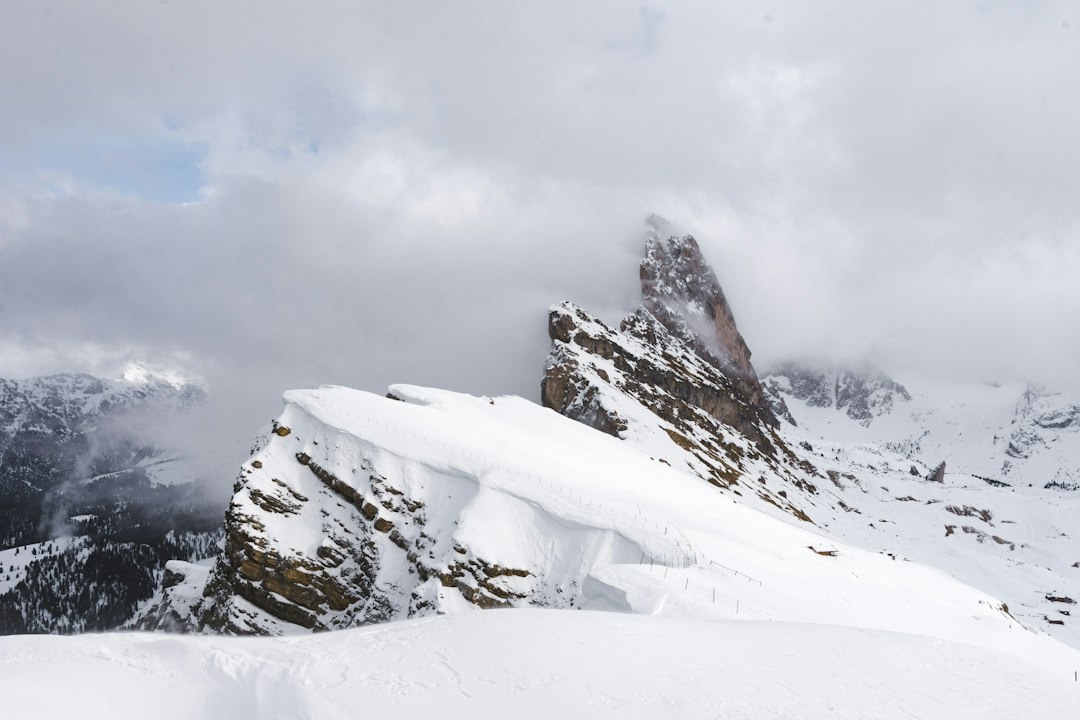
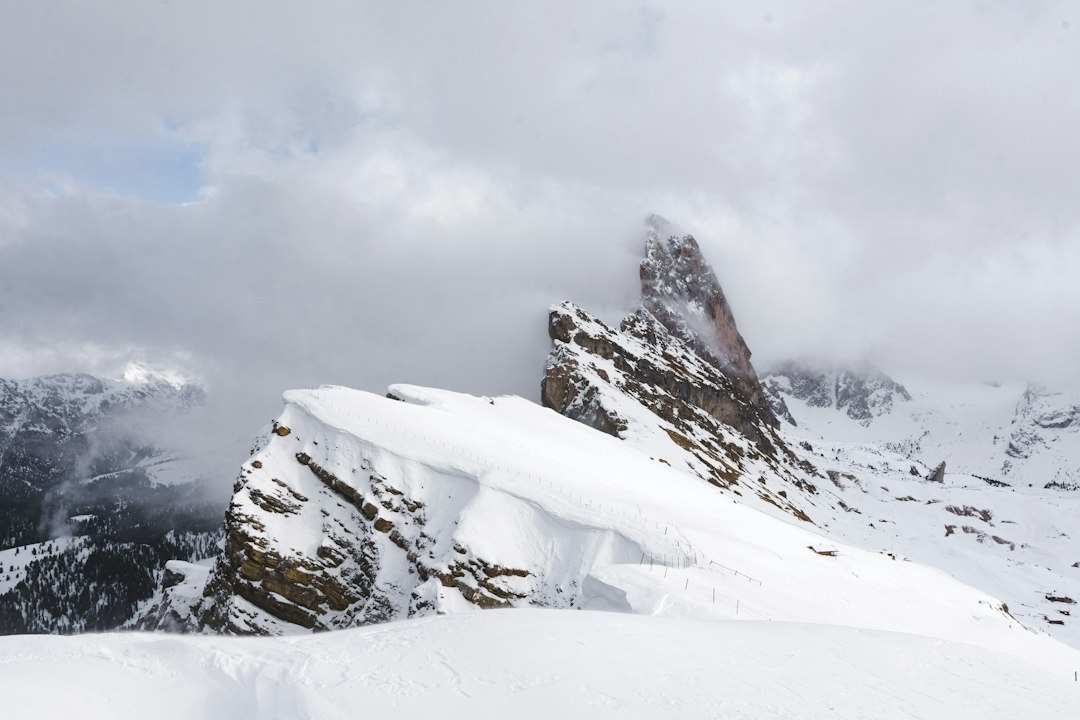
The Dolomites just hosted the Paralympic alpine events at Cortina in March 2026, and the 2026/27 season is the first one where that accessibility money is actually sitting in the lift stations. But here’s the thing nobody tells you: Dolomiti Superski is 12 separate ski areas with 450 lifts, and roughly 60 of them are drag lifts that a mono-skier simply cannot ride. Pick the wrong valley and you’ll spend your week stranded at the bottom of a T-bar watching everyone else go up.
Pick the right one and you get the most sit-ski-friendly big-mountain skiing in Europe: Kronplatz is a gondola-only summit, Alta Badia’s main loop runs almost entirely on cabins and six-seat chairs, and Val Gardena’s Alpe di Siusi is 60 km of wide, flat-angled cruising. This guide tells you which base to pick, exactly which lifts load a sit-ski, what the pass costs with the disability tariff, and what a six-day trip in January 2027 actually comes to.
Key Takeaways
- Kronplatz is the easiest sit-ski resort in Dolomiti Superski: six access gondolas, zero drag lifts on the main summit circuit, and the Ried gondola sits 150 m from Percha train station.
- A 6-day Dolomiti Superski pass cost €368 (low season) to €409 (high season) in 2025/26; disabled skiers get the reduced tariff with an invalidity certificate, bought in person, not online.
- Stay 4+ nights between opening (expected 28 Nov–5 Dec 2026) and 24 Dec 2026 and the Dolomiti SuperPremière deal gives you a free ski day plus a free hotel night.
- Alta Badia’s Sella Ronda is doable in a sit-ski but has three flat sections that need a tether or a push; the Alta Badia-only loop (Piz La Ila–Pralongià–Piz Sorega) is the better first day.
- Budget roughly €2,450 per person for 6 days in January 2027 including flights from London, train transfers, ski pass, 3 half-days of adaptive instruction and a mid-range hotel.
Key Numbers at a Glance (2026/27 Season)
| Item | Number | Notes |
|---|---|---|
| Dolomiti Superski total | 1,200 km pistes, 450 lifts, 12 areas | One pass covers everything |
| Expected opening 2026/27 | 28 Nov 2026 (Val Gardena, Alta Badia), 5 Dec 2026 (Kronplatz full) | Weather-dependent; Kronplatz summit often opens late Nov |
| Season end | Approx. 6–11 April 2027 | Kronplatz and Alpe di Siusi hold snow longest |
| 1-day adult pass | €78 low / €85 high (2025/26) | Expect +3–5% for 2026/27 |
| 6-day adult pass | €368 low / €409 high (2025/26) | Disability tariff roughly 10–30% lower |
| Drag lifts you must avoid | Kronplatz: 0 on summit / Alta Badia: ~5 / Alpe di Siusi: ~9 | All are beginner or side-valley lifts |
| Nearest accessible airport | Innsbruck (INN), 90 km to Bruneck | Munich 230 km, Venice 220 km |
| Private adaptive lesson | €75–90/hour, €380–420 full day | Book 6+ weeks ahead for January |
| Sit-ski rental | €45–60/day (Sportabili, Predazzo) | Thin fleet elsewhere; bring your own |
Step 1: Pick Your Base — Kronplatz vs Alta Badia vs Val Gardena
These three areas are linked (Kronplatz connects to Alta Badia via the Piculin gondola at San Vigilio; Alta Badia connects to Val Gardena over Passo Gardena), but you’ll sleep in one of them. The decision comes down to how you load and how much terrain you want.
| Factor | Kronplatz | Alta Badia | Val Gardena / Alpe di Siusi |
|---|---|---|---|
| Piste km | 121 km | 130 km | 175 km (plus 60 km Alpe di Siusi) |
| Access from base | Gondola only (6 of them) | Gondola from every village | Gondola from Selva, S. Cristina, Ortisei |
| Chair vs drag ratio on main circuit | 100% gondola/chair | ~95% gondola/chair | ~85% gondola/chair (drags on Alpe di Siusi) |
| Typical piste | Wide, machine-perfect red, few flats | Gentle blues on Pralongià plateau | Mixed; Saslong black, Seceda long reds |
| Flat traverses (sit-ski killers) | One: Reischach base return | Three on Sella Ronda | Several between Ciampinoi and Plan de Gralba |
| Rail access | Percha station at Ried gondola, Olang station 400 m from Olang gondola | Nearest station Bruneck, 35 km (bus 1h) | Chiusa/Klausen station, 22 km (bus 40 min) |
| Village flatness for wheelchair | Bruneck centre flat; Reischach gentle | Corvara flat; La Villa and San Cassiano steep | Ortisei flat centre; Selva on a slope |
| Mid-range hotel, Jan 2027 (per night, half board) | €140–190 | €180–260 | €160–230 |
Decision framework
- Choose Kronplatz if it’s your first European sit-ski trip, you’re travelling by train, or you use a mono-ski with no outrigger confidence on flats. Zero drag lifts on the summit circuit and every descent ends at a gondola.
- Choose Alta Badia if you’re an intermediate-to-strong sit-skier who wants the Sella Ronda bragging rights and the best on-mountain food in the Alps. Base in Corvara, not La Villa.
- Choose Val Gardena if you want maximum mileage and the flattest learning terrain (Alpe di Siusi), and you’re happy to plan around a handful of T-bars. Base in Ortisei for the flat village centre.
- Skip Arabba and Cortina as a base even though they’re on the same pass: Arabba is steep and north-facing with a tricky base area, and Cortina’s lifts are scattered across three separate sectors that need a car or shuttle between them.
Step 2: Get There With a Sit-Ski Without Losing Your Mind
Your mono-ski frame is a mobility aid under EU Regulation 1107/2006, which means every EU carrier must fly it free as a second mobility device alongside your wheelchair. Push back if the check-in desk tries to call it sports equipment: Lufthansa, ITA Airways and easyJet all carry sit-skis free when you pre-notify 48 hours ahead through their special assistance lines. Skis and outriggers go as regular ski baggage (€40–60 each way on easyJet, free on ITA with a Comfort fare).
Innsbruck is the airport to aim for. It’s 90 km from Bruneck via the Brenner, and the Austrian ÖBB Railjet to Franzensfeste/Fortezza takes 55 minutes (€19.90 one-way, booked at oebb.at) with level boarding and a staff-operated lift at both ends. From Fortezza, the South Tyrol Pustertal line runs every 30 minutes to Percha and Olang on new Stadler Flirt trains with step-free boarding, €4.50 with a Südtirol Mobil ticket.
| Route to Bruneck/Kronplatz | Cost (Jan 2027) | Time | Accessibility verdict |
|---|---|---|---|
| Innsbruck → train via Fortezza | €24.40 | 2h 15m | Best: level boarding, Ried gondola 150 m from Percha station |
| Innsbruck → private wheelchair-accessible transfer | €230–280 per vehicle | 1h 25m | Book Taxi Kronplatz 10 days ahead; worth it for 3+ people |
| Munich → train via Brenner | €49–79 (ÖBB Sparschiene) | 4h 10m | One change at Fortezza; good if you fly into MUC |
| Venice → hire car | €55/day plus €25 fuel | 3h 10m | Hand-control cars from Hertz VCE with 7 days’ notice; A27 then SS51 is mostly dry in Jan |
| Venice → FlixBus to Bruneck | €29 | 4h 40m | Avoid: coach lifts unreliable, one change in Bolzano |
For Alta Badia, stop at Bruneck and take the Südtirol Mobil bus 460 to Corvara (€6, 65 minutes, low-floor buses with ramp). For Val Gardena, get off at Chiusa/Klausen and catch bus 350 to Ortisei (€4, 40 minutes). Both routes run hourly in January; check mobility.bz.it the night before because the 460 drops to every two hours after 7 pm.
Step 3: Sort the Pass, the Disability Tariff and the November Deal
Dolomiti Superski passes are sold at dolomitisuperski.com, but the disability tariff is not. Disabled skiers get the reduced rate (the same tier as juniors and seniors, which worked out to €320 for 6 days in low season January 2026 versus €368 full price) on presentation of an Italian invalidity certificate, the EU Disability Card, or a foreign equivalent with a translation. You must buy it in person at a ticket office: Kronplatz 2000 at Reischach, Boè at Corvara, or Ciampinoi at Selva all handle it routinely.
An accompanying person (guide, tethering partner, instructor) does not automatically get a free pass across the whole consortium. Cortina issues a free companion pass for skiers with 100% invalidity; the three areas in this guide give a discounted companion pass at the ticket office if the companion is listed on your certificate. Ask, because the policy sits in a drawer rather than on the website.
If you can travel before Christmas, do. The Dolomiti SuperPremière offer runs from opening day until 24 December 2026: book 4 nights at a participating hotel and you get a 4-day pass for the price of 3 plus the fourth night free. In 2025 that saved a couple roughly €390 on a four-night Kronplatz stay. Bruneck’s Christmas market also runs in the old town from 28 November, which makes a nice flat, mulled-wine-scented evening when your shoulders are done.
Low vs high season dates matter. Low season 2026/27 runs opening to 24 Dec, then 9 Jan to approx. 6 Feb, then 13 March onward. High season covers 25 Dec–8 Jan and 7 Feb–12 March. The second week of January is the sweet spot: full snowpack, empty lifts, and operators who have time to help you load.
Step 4: The Lift-by-Lift Loading Guide
Three rules first. Every gondola in Dolomiti Superski loads a sit-ski: cabins slow to walking pace in the station, and a lift operator will hold the door while you roll or transfer in. Every detachable chairlift built after about 2005 loads a sit-ski using the chair’s safety bar and your frame’s lift lock; the 6- and 8-seaters with loading carpets are easiest because the carpet matches your speed. Drag lifts are a no.
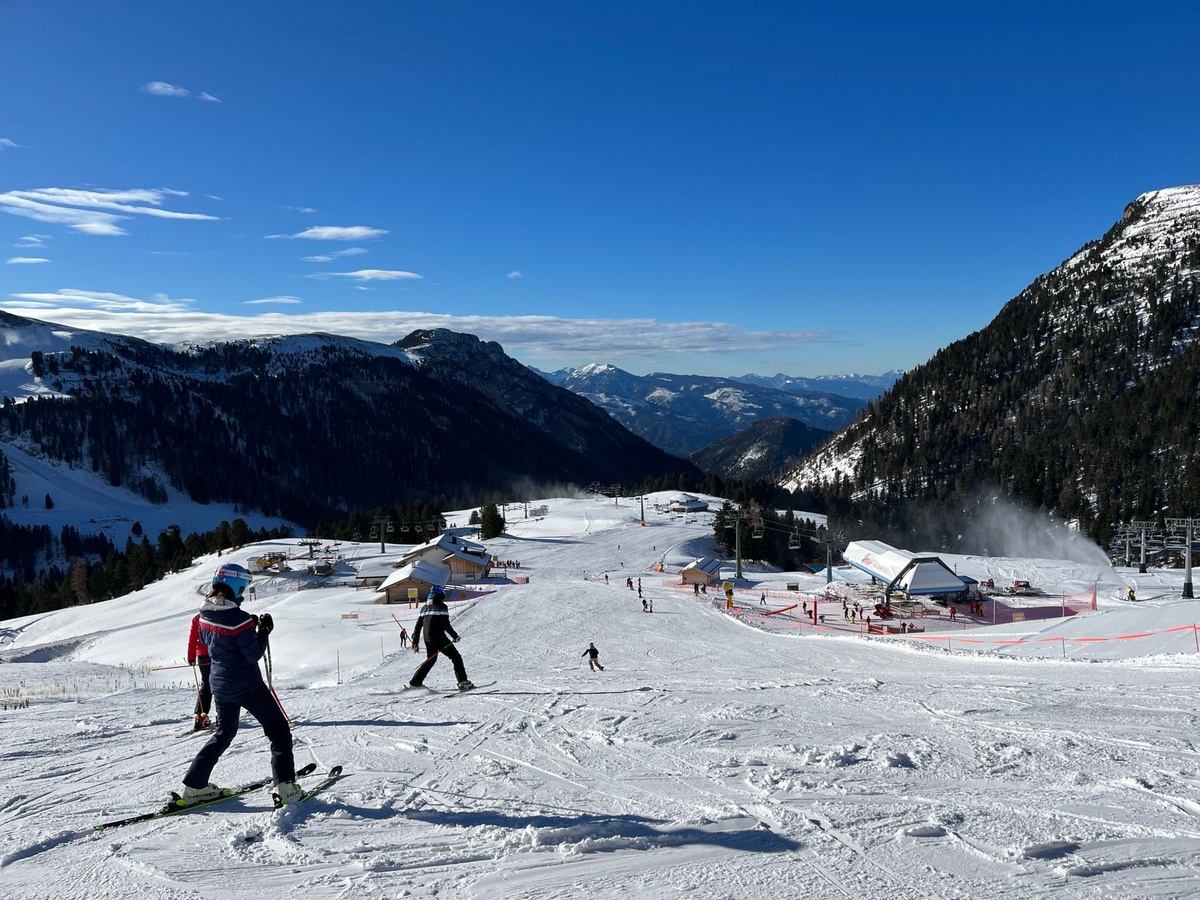
Tell the operator at the bottom station how you load (“blocco sedia, per favore” or “Sessel stoppen, bitte”), and they’ll radio the top. In January 2026 I never waited more than 90 seconds for a slowed chair on any of the lifts below.
| Lift | Area | Type | Sit-ski loading | Notes |
|---|---|---|---|---|
| Kronplatz 2000 | Kronplatz (Reischach) | 10-pax gondola | Yes, roll-in | Main access, level from car park and bus stop |
| Ried | Kronplatz (Percha) | 8-pax gondola | Yes, roll-in | Train station 150 m away; best arrival lift in the Dolomites |
| Olang I + II | Kronplatz (Olang) | 10-pax gondola | Yes, roll-in | Two stages, stay in cabin at mid-station |
| Ruis / Miara | Kronplatz (San Vigilio) | Gondola | Yes | Miara mid-station has a short step; ask for help |
| Piculin | Kronplatz → Alta Badia link | 8-pax gondola | Yes | The link to Piz de Plaies and Alta Badia; the run down is a flat-ish red, fine with outriggers |
| Belvedere | Kronplatz summit | 6-seat chair, carpet | Yes, slowed | Lap this for 2–3 km reds back to the summit |
| Col Alto | Alta Badia (Corvara) | 10-pax gondola (2017) | Yes, roll-in | Best start to the Alta Badia loop |
| Boè | Alta Badia (Corvara) | Gondola | Yes | Start of clockwise Sella Ronda; Vallon chair above is 4-seat, slowed OK |
| Piz La Ila | Alta Badia (La Villa) | Gondola | Yes | Base station is uphill from La Villa bus stop; get dropped at the lift |
| Piz Sorega | Alta Badia (San Cassiano) | Gondola | Yes | Lands you directly on the gentle Pralongià blues |
| Pralongià / Bioch / Braia Fraida | Alta Badia plateau | 4- and 6-seat chairs | Yes, slowed | The whole plateau is sit-ski heaven; one short poling section below Bioch |
| Santa Croce | Alta Badia (Badia) | Gondola | Yes | Quiet, steeper reds; skip in flat light |
| Ciampinoi | Val Gardena (Selva) | Gondola | Yes | Top of the Saslong; the easier way down is the red 3 toward Plan de Gralba |
| Dantercepies | Val Gardena (Selva) | 10-pax gondola (2014) | Yes, roll-in | Link to Alta Badia via Passo Gardena; flat section at Colfosco needs a push |
| Col Raiser | Val Gardena (S. Cristina) | Gondola | Yes | Access to Seceda reds without the Ortisei two-stage |
| Seceda (Furnes–Seceda) | Val Gardena (Ortisei) | Two-stage gondola | Yes | Change cabins at Furnes; operators assist. 10 km La Longia run is sit-ski gold |
| Mont Sëuc (Alpe di Siusi) | Val Gardena (Ortisei) | Gondola | Yes | Gateway to the flattest cruising in Italy |
| Laurin / Spitzbühl / Florian | Alpe di Siusi | Chairs | Yes, slowed | Stay on this side; the Bullaccia/Puflatsch sector has T-bars |
| Any lift labelled “skilift” or “T-bar” on the piste map | All areas | Drag | No | Marked with a straight line icon, not a chair icon |
The Sella Ronda question
Yes, a sit-skier can do the Sella Ronda (40 km, 26 lifts, no drags on the orange clockwise route), but there are three flats where you’ll crawl: the Passo Campolongo road crossing above Arabba, the Lupo Bianco–Belvedere link above Canazei, and the Colfosco traverse under Passo Gardena. With a tether partner it’s a 6-hour day; solo on a mono-ski it’s miserable. Do the Alta Badia loop instead (Col Alto → Pralongià → Piz Sorega → La Villa → Piz La Ila, about 25 km, 11 lifts, two gentle flats). It’s the same views with a third of the frustration.
Step 5: Instructors, Rental and Where to Eat on the Hill
The established adaptive hub in Dolomiti Superski is Sportabili Onlus in Predazzo (sportabili.org), which runs a fleet of mono-skis, bi-skis and tandem sleds and charges members roughly €45 for a two-hour lesson. It’s in Val di Fiemme, 90 minutes by road from Val Gardena, so use it for rental and a first-day tune-up, not as your base. The Dolomiti Open network (dolomitiopen.com) lists accessible huts and hotels across the region and is more current than any tourist-board PDF.
In the three areas themselves, book an adaptive-certified instructor through the main ski school: Scuola Sci Kronplatz at Reischach (from €85/hour private, €410 full day), Scuola Sci Alta Badia in Corvara (€88/hour, €420 full day), or Scuola Sci Selva in Val Gardena (€80/hour). Email in October or November specifying “monosci / sit-ski” because each school has only two or three instructors trained for it, and January fills six weeks out. Half-days (3 hours, €260–280) are the sensible format; a full day loading chairs is more than most shoulders want.
Bring your own rig. Rental sit-skis outside Sportabili are rare and often a decade old. If you must rent, Sportabili charges €45–60/day for a Praschberger or Tessier mono-ski and will deliver to Val Gardena for a €90 fee with a week’s notice.
Mountain huts that work from a sit-ski
- Kronplatz: Herzlalm (mid-mountain, piste-side terrace, Kaiserschmarrn €13.50, level entrance). Skip the summit self-service.
- Alta Badia: Ütia de Bioch on the Pralongià plateau is the gold standard: ski-in to a flat terrace, barrier-free toilet, and the barley soup (€9) is the best in the valley. Las Vegas Lodge at Piz Sorega is the splurge (tasting menu €75), with a flat approach from the gondola top.
- Val Gardena: Rifugio Emilio Comici at Plan de Gralba does serious seafood (spaghetti alle vongole €24) on a terrace you can roll onto from the Piz Seteur chair side. Baita Sofie on Seceda is lovely but the entrance has two steps; call ahead and they’ll set a table outside the ski-in door.
Where to sleep: in Kronplatz, the Falkensteiner Hotel Kronplatz at Reischach has accessible rooms 80 m from the Kronplatz 2000 gondola, from €210 half board in January. In Alta Badia, Hotel Col Alto in Corvara (from €195) is flat to the Col Alto gondola. In Val Gardena, the Adler Spa Resort Dolomiti in Ortisei (from €290) has genuinely step-free rooms and an accessible pool; for cheaper options browse hotels in Ortisei with the “wheelchair accessible” filter, then phone the hotel and ask for the door width in centimetres. “Barrier-free” in South Tyrol can mean a 70 cm bathroom door.
Step 6: The Tech Kit That Actually Helps
Download the Dolomiti Superski app (iOS/Android, free) and turn on lift-status notifications for your home area; it shows which lifts are closed for wind before you’re sitting in the gondola queue, and in January 2026 Kronplatz’s summit chairs closed for wind on three mornings. The My Dolomiti account in the same app logs your vertical metres, which is oddly motivating when every loading is a workout.
Mobile data: the Italian networks cover all three areas well, but roaming from the UK or US still bites. A 10 GB Italy eSIM from Airalo costs about €13 for 30 days and activates before you land at Innsbruck, which matters when you need to call the ski school from the Percha platform.
Put a tracker on your frame. Sit-skis get moved by well-meaning lifties, left at hut doors and occasionally loaded into the wrong cabin. An AirTag or, for Android users, the new $30 Pixel Tag zip-tied under the seat pan means you can find a €4,000 mono-ski that’s wandered 200 m across a plateau. Both work through the Find My / Find Hub networks even with no phone signal on the frame itself.
Flight delays are common out of Innsbruck in January because of fog. If your flight is delayed over three hours or cancelled, AirHelp will chase the €250–400 EU261 compensation for a cut of the payout; worth it when you’re also managing two mobility devices at the desk.
A Costed 6-Day Kronplatz Plan: Saturday 9 to Friday 15 January 2027
This assumes one adaptive skier flying from London, bringing their own mono-ski, with three half-days of instruction and a mid-range hotel in Reischach. Prices are what these items cost in January 2026 plus roughly 4%.
| Item | Cost (EUR) | Cost (USD approx.) | Notes |
|---|---|---|---|
| Flights LHR–INN return (easyJet, incl. ski bag) | €240 | $260 | Mono-ski frame flies free as mobility aid |
| Trains INN–Percha return | €49 | $53 | ÖBB + Südtirol Mobil |
| 6-day pass, disability tariff, low season | €335 | $365 | vs €383 full price (2026/27 est.) |
| Hotel, 6 nights half board, accessible room | €1,080 | $1,175 | Reischach 4-star, €180/night |
| 3 half-day adaptive lessons | €780 | $850 | Scuola Sci Kronplatz, 3 hours each |
| Lunches on the hill, 6 days | €150 | $165 | €25 average at Herzlalm/Oberegger Alm |
| eSIM, tracker, misc | €45 | $50 | |
| Total | €2,679 | $2,920 | Drops to ~€2,100 with SuperPremière dates in December |
Day by day
- Day 1 (Sat): Fly to Innsbruck, train to Percha, taxi 5 minutes to hotel (€14). Buy pass at Kronplatz 2000 ticket office before it closes at 5 pm. Evening at the Bruneck Christmas market stalls if they’re still trading (they usually close 6 Jan, so for a January trip it’s Gasthof-night instead).
- Day 2 (Sun): Half-day lesson. Kronplatz 2000 up, lap the Belvedere chair on the Belvedere and Herrnegg reds, lunch at Herzlalm. Gondola down; don’t attempt the Reischach return piste on day one, it has a 400 m flat.
- Day 3 (Mon): Olang side. Gondola up from Reischach, ski Olang I and II (long, wide, 1,300 m vertical in two stages), ride back up. Afternoon off; the Cron4 pool in Reischach has a hoist and costs €18.
- Day 4 (Tue): San Vigilio side and the Piculin link. Ride Ruis down, Miara up, descend to Piculin, gondola into Alta Badia, lunch at Ütia de Bioch via Piz Sorega. Return the same way by 3 pm; the Piculin gondola closes at 4:15 pm.
- Day 5 (Wed): Second lesson, working on loading the Belvedere chair unassisted and outrigger technique on the steeper Sylvester red.
- Day 6 (Thu): Third lesson or free ski. Visit the Lumen photography museum at the summit (gondola-accessible, €18) and Reinhold Messner’s MMM Corones next door, both step-free.
- Day 7 (Fri): Train to Innsbruck. Allow 3 hours at INN for the mobility-device check-in dance.
Common Mistakes Adaptive Skiers Make in the Dolomites
- Buying the pass online. You’ll pay full price and the disability tariff can’t be refunded against it. Buy in person.
- Basing in La Villa or San Cassiano. Both are steep villages where the gondola is uphill from the bus stop. Corvara is flat.
- Starting with the Sella Ronda. Do the Alta Badia loop first and the Ronda on day four with a partner, or not at all.
- Trusting the “accessible” badge on hotel listings. Phone and ask for bathroom door width, roll-in shower, and bed height. Two of the five “barrier-free” hotels I checked in Selva had steps to the ski room.
- Skiing the Reischach return at 3:30 pm. The bottom section is flat and by late afternoon it’s scraped ice. Ride the gondola down.
- Ignoring the wind forecast. Kronplatz’s summit chairs and the Dantercepies gondola close in Föhn wind. Check the app at 7:30 am and have a plan B (Olang side at Kronplatz, Alpe di Siusi in Val Gardena, both more sheltered).
- Packing outriggers in checked ski bags without padding. The flip-up tips break. Wrap them in a jacket, or carry them as cabin baggage; airlines rarely object to walking-aid-shaped items.
Book the Lift Pass, Then Book the Instructor
Dolomiti Superski in 2026/27 is a better bet for sit-skiers than Chamonix, Zermatt or anywhere in the French mega-resorts, simply because the three areas in this guide let you ski all week without ever seeing a T-bar. Kronplatz for your first trip, Alta Badia when you want to eat as well as you ski, Val Gardena when you want mileage.
Right now, in November 2026, the SuperPremière window (opening day to 24 December) is the cheapest moment of the whole season to do this, and the adaptive instructors still have gaps in their December calendars. Email the ski school this week, buy the ÖBB Sparschiene fare before it jumps, and tell the lift operator at Kronplatz 2000 I said to slow the Belvedere.
Frequently Asked Questions
Can you ride the Dolomiti Superski gondolas in a sit-ski?
Yes. Every gondola in the consortium (Kronplatz 2000, Ried, Olang, Col Alto, Boè, Piz La Ila, Piz Sorega, Ciampinoi, Dantercepies, Seceda, Mont Sëuc and the rest) loads a sit-ski by rolling or transferring in at the station, with the operator holding the door. Only drag lifts are off-limits, and none of those sit on the main circuits at Kronplatz or Alta Badia.
How much does a Dolomiti Superski pass cost for a disabled skier in 2026/27?
The 2025/26 adult 6-day pass was €368 in low season and €409 in high season; the disability tariff matched the junior/senior tier at roughly €320–355. Expect 3–5% more for 2026/27, and buy it in person at a ticket office with an invalidity certificate or EU Disability Card, because the discount isn’t available online.
Which Dolomiti Superski area is best for a beginner sit-skier?
Kronplatz. The summit is served entirely by gondolas and carpeted six-seat chairs, the pistes are wide machine-groomed reds with almost no flats, and the Ried gondola is 150 m from Percha train station. Alpe di Siusi in Val Gardena is flatter still but has around nine T-bars to plan around.
Can an adaptive skier do the Sella Ronda?
Yes, on the clockwise orange route, which uses only gondolas and chairs over 40 km and 26 lifts. But three flat sections (Passo Campolongo, Lupo Bianco–Belvedere, and the Colfosco traverse) need a tether partner or a push, so budget six hours and don’t attempt it solo on a mono-ski.
When is the cheapest time to ski the Dolomites as an adaptive skier?
Between opening (expected 28 November–5 December 2026) and 24 December 2026, when the Dolomiti SuperPremière offer gives you a free ski day and a free hotel night on a 4-night stay, saving roughly €390 per couple. The second week of January 2027 is the next best: low-season pass prices, full snowpack, and adaptive instructors with open slots.

About the Author: Tomáš Bzirský
Founder and editor of Distratech. Based in the Czech Republic, travelling regularly from Central Europe. Writes practical travel guides and travel-tech comparisons (eSIM, apps, airports) in six languages.