'/%3E%3Cpath%20fill='%23b2b2b2'%20d='M241%20382q0%2016%2017%2026%2017%2011%2042%2011t42-11q16-11%2017-26V269H241'/%3E%3Cpath%20fill='%239f7e00'%20d='M241%20379q0%2014%208%2023%209%209%2021%209%2014%200%2021-9%209-9%209-23V269h-59'/%3E%3Cpath%20d='M241%20339v-70h59v110q0%2014-9%2023l-6%205v-68h-15v72q-8%200-14-4v-68zm59%2040c0%2022%2015%2032%2029%2032%2021%200%2030-18%2030-32v-40h-59'/%3E%3Cpath%20fill='%239f7e00'%20d='M266%20277v5h2v12h-3v-5h2v-5h-9v5h2v5h-4v9h3v18h-5v10h34v-10h-5v-18h3v-9h-4v-5h2v-5h-9v5h2v5h-3v-12h2v-5zm42%20101q0%2010%206%2017%206%206%2015%207%2010-1%2016-7%206-7%206-17v-29h-43'/%3E%3Ccircle%20fill='%230044ad'%20cx='329.5'%20cy='372'%20r='6'/%3E%3Cellipse%20fill='%230044ad'%20cx='300'%20cy='340'%20rx='16'%20ry='21'/%3E%3C/svg%3E)
'/%3E%3C/svg%3E)


'/%3E%3C/g%3E%3Cuse%20href='%23c'%20transform='matrix(-1%200%200%201%20720%200)'/%3E%3C/svg%3E)


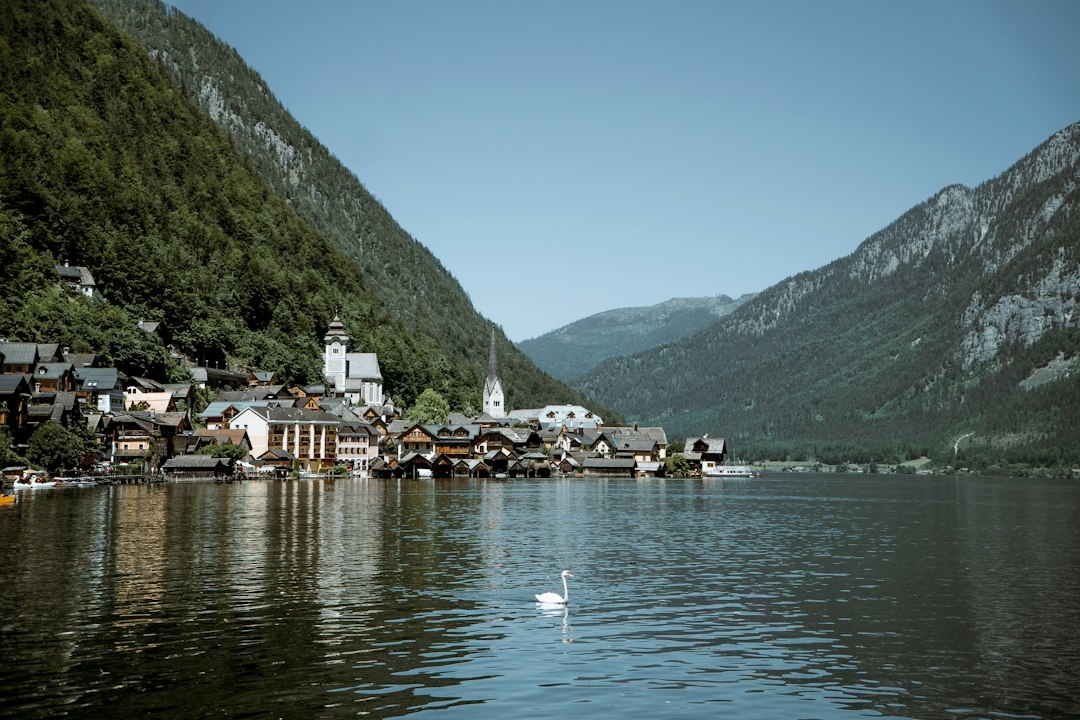
Europe’s most photographed lakes and castles look peaceful on Instagram, but October reality can involve coach groups, steep stroller pushes, timed-entry stress and a queue where your tripod should be. I compared three famous destinations with quieter alternatives—measuring October crowds, public-transport emissions, walking distances, family costs and stroller practicality—to identify where the better photograph is actually easier to take.
Key Takeaways
- Gmunden saves roughly 60 rail kilometres and one hour from Vienna compared with Hallstatt, while offering a flat 4.5-kilometre lakeside walk.
- Lake Bled has the easier 6-kilometre stroller circuit, but Bohinj is quieter and better for wide mountain photography in mid-October.
- Neuschwanstein requires a 1.5-kilometre uphill approach; Hohenzollern’s included shuttle makes it easier with small children.
- For the lowest-impact trio, choose Gmunden, Bohinj and Hohenzollern—but approach Hohenzollern from Stuttgart, not Munich.
- Book castle tickets and long-distance trains before October weekends; lake walks themselves remain free.
Key Numbers at a Glance
Prices below were displayed or published for October 2026 travel. Dynamic rail fares can rise substantially, so treat advance fares as book-early targets rather than guaranteed walk-up prices.
| Destination | Best gateway | Public transport | Core photo walk | Adult admission | October crowd level | Stroller score |
|---|---|---|---|---|---|---|
| Hallstatt | Vienna | 3 hr 15–40 min; from €19.90 | 2–3 km | Village free; museum €12 | High, especially 10:00–15:00 | 3/5 |
| Gmunden | Vienna | 2 hr 15–35 min; from €19.90 | 4.5 km | Schloss Ort courtyard free | Low to moderate | 5/5 |
| Lake Bled | Ljubljana | Bus 70–85 min; about €5.70 | 6 km | Bled Castle €18 | Moderate to high | 4/5 |
| Lake Bohinj | Ljubljana | Bus 1 hr 50–2 hr 15 min; about €9 | 4–12 km | Lake free; Savica Waterfall €4 | Low to moderate | 3/5 |
| Neuschwanstein | Munich | 2 hr 30–3 hr to castle | 3–5 km | €21 including reservation fee | High | 2/5 |
| Hohenzollern | Stuttgart | 1 hr 35–2 hr to castle | 1–3 km with shuttle | From €26 online | Low to moderate | 3/5 |
My overall winners: Gmunden beats Hallstatt for families, Bohinj beats Bled for landscape photography, and Hohenzollern beats Neuschwanstein if Stuttgart already fits your route. Bled remains the best choice for a completely stroller-friendly lake circuit.
How the Comparison Was Calculated
Crowd ratings reflect typical October weekday conditions, published opening schedules and the physical capacity of each viewpoint—not official visitor counts. Expect all six places to be busier on sunny Saturdays and during German, Austrian or Slovenian school holidays.
Rail emissions use a planning estimate of 20 grams of CO₂e per passenger-kilometre for European electric and mixed rail. Actual figures vary with train type, electricity source and occupancy, but the same methodology makes the routes comparable.
| Route, one way | Approx. rail distance | Estimated CO₂e, family of four | Typical family fare strategy |
|---|---|---|---|
| Vienna–Hallstatt | 290 km | 23.2 kg | ÖBB Sparschiene; add children during booking |
| Vienna–Gmunden | 230 km | 18.4 kg | ÖBB Sparschiene or regional group ticket |
| Ljubljana–Lesce-Bled | 55 km | 4.4 kg | Slovenian Railways family discounts |
| Ljubljana–Bohinjska Bistrica | 90 km | 7.2 kg | Direct regional train where available |
| Munich–Füssen | 130 km | 10.4 kg | Bayern-Ticket from €32 for first adult |
| Stuttgart–Hechingen | 75 km | 6 kg | Baden-Württemberg-Ticket from €27 |
Bohinj illustrates an important point: a quieter destination is not automatically the shortest or lowest-emission journey. It requires roughly 35 more rail kilometres than Bled from Ljubljana, but disperses visitors around a much larger lake and creates less pressure on one tiny waterfront.
Hallstatt vs Gmunden: Which Austrian Lake Town Works Better?
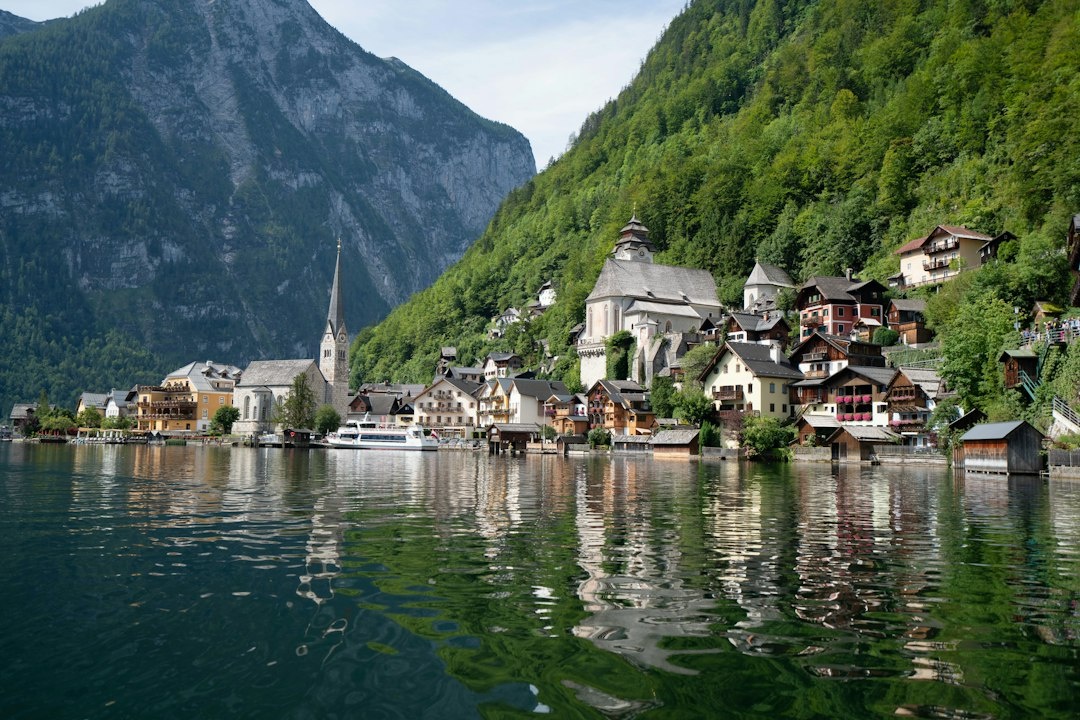
Hallstatt: iconic composition, awkward logistics
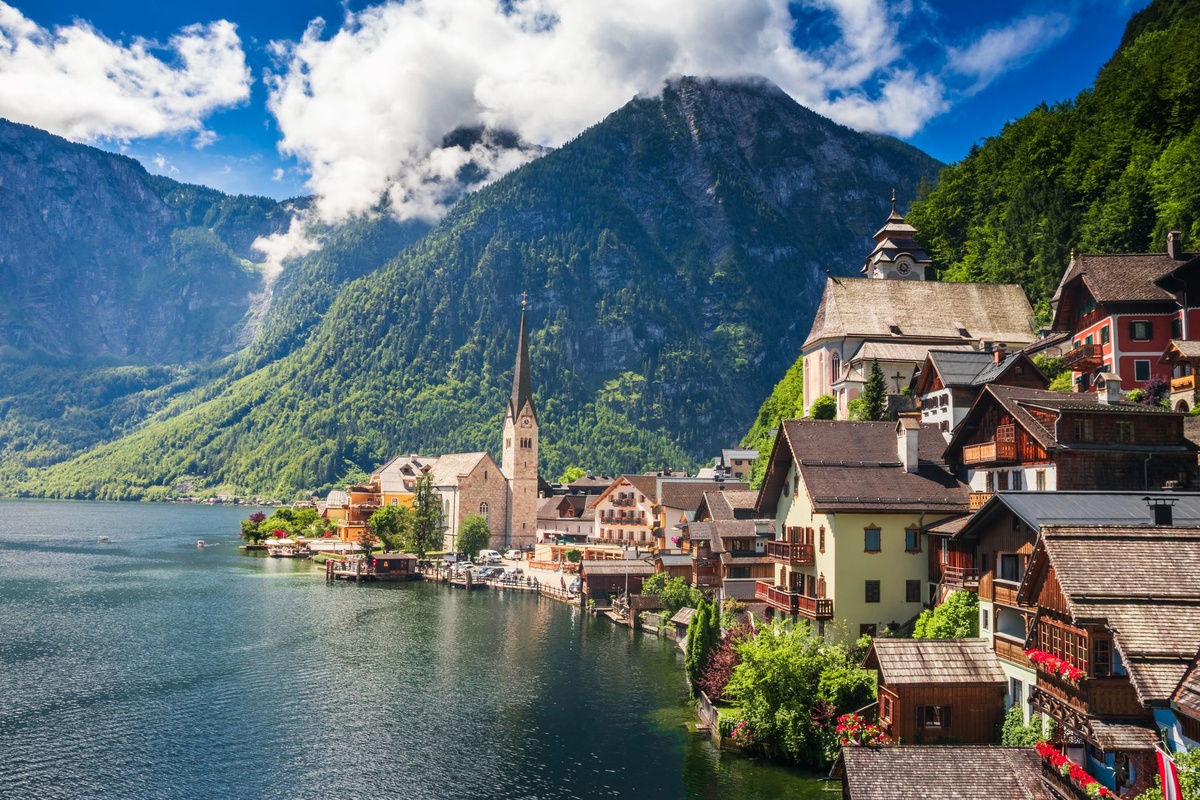
Hallstatt earns its reputation at first light. The classic northern viewpoint frames the church tower, timber houses and Dachstein mountains in one clean composition, particularly when October mist hangs above Hallstätter See.
The problem is timing. Most day-trip buses arrive from about 09:30, and the narrow Marktplatz-to-viewpoint lane can feel compressed by 10:30 even in shoulder season.
From Vienna Hauptbahnhof, the train normally takes 3 hours 15 minutes to 3 hours 40 minutes, usually with a change at Attnang-Puchheim. Book through ÖBB; Sparschiene fares for October 2026 started around €19.90 each way, while flexible fares could exceed €60.
Hallstatt station sits across the lake. The connecting ferry takes about 15 minutes and costs approximately €4 one way or €8 return per adult; the boat is part of the experience, but loading a stroller while managing luggage is less charming.
The village itself is not huge. A station-ferry arrival, Marktplatz visit and northern viewpoint outing covers about 2.5 kilometres, but cobbles, steps and sloping alleys make that distance feel longer.
Hallstatt Museum generally operates around 10:00–18:00 during the main season, with adult admission listed at about €12. Check Hallstatt’s official tourism website before travelling because October hours and salt-mine operations can change around maintenance periods.
Photography verdict: arrive on the first ferry or stay overnight. Sunset is less reliable for the famous northern view because surrounding mountains remove direct light earlier than the published sunset time.
Gmunden: more space, easier walking and a better family day
Gmunden does not replicate Hallstatt’s stacked village scene. Instead, it gives you Traunstein mountain, paddle steamers, a long esplanade and Schloss Ort sitting on its tiny island—the elements are spread out rather than compressed into one viral frame.
That is exactly why families have more room. From Gmunden railway station, tram line 161 reaches Franz-Josef-Platz or Rathausplatz in roughly 10–15 minutes; local fares are generally around €2.60–€3.
Vienna to Gmunden takes about 2 hours 20 minutes, roughly one hour less than reaching Hallstatt. It also removes the obligatory ferry transfer and around 60 kilometres of rail travel.
The best stroller route runs from Rathausplatz along the Esplanade to Schloss Ort. It is approximately 2.2 kilometres each way, almost entirely level, with benches, toilets and cafés en route.
The castle courtyard and exterior causeway are usually free to enter during daytime opening. Interior access and event areas vary, but the grounds generally open from morning until early evening; consult Gmunden tourism for the exact event calendar.
For lunch, skip the first café facing Rathausplatz and walk to Das Forst for contemporary Austrian cooking. A main course costs roughly €18–€29, compared with €25-plus tourist-menu mains common in central Hallstatt.
Where to stay: Seehotel Schwan is convenient for dawn photography from the waterfront, with October family rooms commonly around €170–€230. Compare that with additional hotels in Gmunden, particularly around Rathausplatz rather than the more distant railway station.
Hallstatt or Gmunden: the verdict
- Choose Hallstatt if the exact church-and-lake composition is a personal bucket-list photograph and you can stay overnight.
- Choose Gmunden for children under six, wheelchairs, a double stroller or a lower-stress day trip from Vienna.
- Skip Hallstatt as a midday coach excursion. If you cannot arrive before 08:30 or remain after 16:00, Gmunden produces a calmer and more enjoyable family shoot.
October is especially good in Gmunden because deciduous colour appears along the esplanade while the higher peaks may receive their first snow. That layered autumn-and-winter look is harder to photograph in summer.
Lake Bled vs Lake Bohinj: Convenience or Wilderness?
Lake Bled: the easier stroller circuit
Lake Bled is busy because its layout works. The complete lakeside circuit is approximately 6 kilometres, takes 90 minutes without stops, and is mostly paved or firm gravel.
From Ljubljana bus station, direct buses generally take 70–85 minutes and cost about €5.70 one way. Check departures through Ljubljana Bus Station; October frequency is lower than the summer timetable.
The train to Lesce-Bled takes around 50 minutes and costs approximately €5–€7, but Lesce station is 4 kilometres from the lake. Add a local bus or taxi, making the direct coach simpler with children.
Bled Castle opens approximately 08:00–18:00 in October. Published 2026 admission was around €18 per adult and €7 per child aged 7–14; verify and book at the official Bled Castle website.
The climb involves a steep path and steps. Take a taxi from the lake if you have a sleeping toddler: approximately €10–€15 is a better use of money than pushing a loaded stroller uphill.
For the celebrated Ojstrica overlook, expect a 20–30-minute steep woodland climb. It is not stroller-compatible, becomes slippery after rain and requires proper footwear—not white trainers chosen for family portraits.
Eat at Špica Restaurant for lake views and dependable Slovenian dishes; mains generally cost €17–€28. Skip buying kremšnita at every waterfront café and get one at Hotel Park, where the famous cream slice costs roughly €6–€7.
Lake Bohinj: better landscapes, more complicated walking
Bohinj is the stronger landscape-photography destination. From the Ribčev Laz stone bridge, the Church of St John the Baptist anchors the foreground while Mount Triglav’s surrounding peaks fill the horizon.
Direct buses from Ljubljana to Ribčev Laz take around 1 hour 50 minutes to 2 hours 15 minutes and cost approximately €9 one way. Trains reach Bohinjska Bistrica in roughly two hours, followed by a 6-kilometre bus or taxi connection to the lake.
Bohinj is quieter but not universally easier. The full lake circuit measures roughly 11–12 kilometres; the northern shore includes roots, rocks and narrow sections unsuitable for standard strollers.
For families, walk the southern shore from Ribčev Laz toward Ukanc and turn around after 2–3 kilometres. This creates a 4–6-kilometre outing with broad lake views while avoiding the roughest trail.
Savica Waterfall costs approximately €4 per adult and €2 per child, but reaching it involves more than 500 stone steps. A baby carrier is essential; leave the stroller at your accommodation or locked in the car park.
The Vogel cable car is the expensive add-on. Adult return fares are typically around €29–€32, with October operations weather-dependent, but the upper station gives a dramatically wider view than anything accessible directly from Bled’s waterfront.
For food, choose Foksner in Ribčev Laz for burgers using local Bohinj beef, around €13–€17. For a proper sit-down dinner, Hotel Bohinj’s restaurant is more polished, with mains generally between €20 and €32.
If you are building a car-free Slovenian itinerary, save offline medical details and policy documents. Our account of needing medical care during a car-free Slovenia trip explains why relying on a screenshot of an insurance card is not enough.
Bled or Bohinj: the verdict
Choose Bled if you need a compact day trip, frequent buses, a near-continuous stroller path and cafés every 15–20 minutes. It is also the safer choice during heavy rain because retreating indoors is easy.
Choose Bohinj if photographs matter more than convenience, your children can walk 5 kilometres, or you carry a baby rather than push a stroller. Mid-October often brings gold and copper foliage around the lower lake while the Julian Alps receive early snow.
My contrarian recommendation is to sleep in Bohinj and visit Bled for two hours while changing buses. Doing the reverse means sacrificing Bohinj’s misty sunrise—the best photographic window of the pair.
Neuschwanstein vs Hohenzollern: Fairytale Castle or Hilltop Fortress?
Neuschwanstein: beautiful, expensive and relentlessly scheduled
Neuschwanstein’s exterior is genuinely extraordinary, especially when Bavarian forest foliage peaks in early to mid-October. Its visitor system, however, turns a family photo day into a timed logistical exercise.
Munich to Füssen takes approximately 2 hours by regional train, usually with a change at Buchloe. From Füssen, bus 73 or 78 reaches Hohenschwangau in about 10 minutes.
A Bayern-Ticket starts around €32 for the first adult plus €10 per additional adult, with accompanying children aged 6–14 often travelling free under the ticket’s family provisions. Confirm current conditions in DB Navigator before purchase.
Castle tickets cost approximately €21 per adult including the online reservation fee; visitors under 18 enter free but still need a reserved ticket. Buy only through Hohenschwangau’s official ticket shop, because reseller markups can double the price.
From the ticket centre, the castle is a 1.5-kilometre uphill walk gaining roughly 110 metres. Allow 35–45 minutes with children, not the optimistic 20 minutes sometimes quoted for adults.
The shuttle bus costs roughly €3 uphill and €2 downhill, but it does not stop at the castle door. Passengers still walk approximately 500 metres downhill from the Marienbrücke stop, and queues are common.
Between October 16 and March, Neuschwanstein generally opens 10:00–16:00; through October 15, longer summer hours of about 09:00–18:00 may apply. Tours are fixed-time and last approximately 30 minutes.
Strollers cannot be used during the interior tour, and there are more than 300 steps. If your priority is photography rather than royal interiors, skip the tour, photograph from Marienbrücke early, and spend the ticket money on lunch in Füssen.
Hohenzollern: fewer people, stronger autumn atmosphere
Hohenzollern looks less like a Disney palace and more like a fortress erupting from a forested cone. In October, that forest becomes the photograph: layers of orange and yellow wrap around dark neo-Gothic walls.
From Stuttgart Hauptbahnhof, trains to Hechingen take about 60–75 minutes. Seasonal bus 306 then reaches the castle car park in roughly 25 minutes, but departures are limited and must be coordinated with the return journey.
The Baden-Württemberg-Ticket starts at roughly €27 for one adult, with supplements for additional adults and favourable rules for accompanying children. A family of two adults and two children can often travel for around €35–€40 total.
Online castle admission starts at approximately €26 per adult, with lower rates for children and family combinations. Parking and the shuttle from the main visitor area are commonly incorporated into relevant admission products; confirm inclusions at Burg Hohenzollern’s official website.
October opening is typically around 10:00–18:00, with last admission before closing. The shuttle removes the steepest approach, although courtyards contain cobbles and interior routes still include stairs.
The most dramatic distant photograph is not taken from the entrance. The Zeller Horn viewpoint creates the classic elevated castle composition, but it requires a separate woodland hike of roughly 6–7 kilometres return depending on the trailhead and is not stroller-friendly.
With small children, photograph the castle from the approach road, use the shuttle and concentrate on the courtyards. Eat afterward at Hofgut Domäne near Hechingen, where Swabian mains run approximately €16–€26.
Neuschwanstein or Hohenzollern: the verdict
- Choose Neuschwanstein for the globally recognisable image, provided you reserve a morning slot and can handle steep walking.
- Choose Hohenzollern for autumn forest, fewer timed-entry pressures and a Stuttgart-based itinerary.
- Do not travel from Munich to Hohenzollern merely to avoid crowds. The longer rail journey can erase the alternative’s emissions and time advantage.
- Skip both interiors with toddlers unless the adults genuinely care about royal history; the best family photographs are outside.
The Clear Decision Framework
| Your priority | Best choice | Why |
|---|---|---|
| Lowest crowd pressure | Bohinj | Visitors spread around a 12-km shoreline |
| Best full-size stroller trip | Gmunden | Flat esplanade, tram access and frequent benches |
| Best compact stroller lake loop | Bled | 6-km circuit with food and toilets nearby |
| Most recognisable photograph | Neuschwanstein | Marienbrücke delivers the classic castle angle |
| Best October foliage photograph | Hohenzollern | Castle rises above a densely wooded hill |
| Best car-free Austrian day trip | Gmunden | One hour faster than Hallstatt from Vienna |
| Best sunrise | Bohinj | Mist, church and mountain reflections align |
If you have children under four, choose Gmunden, Bled and Hohenzollern with the shuttle. If your children are confident walkers aged eight or older, choose Hallstatt at dawn, Bohinj and Hohenzollern’s Zeller Horn trail.
A Costed Seven-Night Lower-Impact Family Plan
This open-jaw route works for two adults and two children aged 8 and 12. It connects Gmunden, Bohinj and Hohenzollern without renting a car, although the Ljubljana-to-Stuttgart transfer is the long day.
- Days 1–2: Gmunden. Arrive via Vienna, photograph Schloss Ort at sunset and the Traunstein reflection at sunrise.
- Day 3: Gmunden to Ljubljana. Travel via Salzburg and Villach; allow approximately 6–7 hours.
- Days 4–5: Bohinj. Stay in Ribčev Laz, walk the south shore and use the second day for Vogel or a short Bled stop.
- Day 6: Ljubljana to Stuttgart. Expect 8–10 hours and several connections; book a through itinerary with a generous transfer margin.
- Day 7: Hohenzollern. Take the early train to Hechingen and coordinate bus 306 before leaving Stuttgart.
- Day 8: Depart Stuttgart. Keep this morning unscheduled in case the previous day’s castle trip is disrupted by weather.
| Expense for family of four | Estimated October 2026 cost |
|---|---|
| Seven hotel nights, family rooms | €1,260 |
| Intercity and regional trains | €520 |
| Local buses, trams and castle shuttle | €105 |
| Hohenzollern family admission estimate | €70–€85 |
| Vogel cable car family estimate | €75–€90 |
| Food: breakfasts, picnics and one restaurant meal daily | €650 |
| Travel insurance and contingency | €160 |
| Estimated total | €2,840–€2,870 |
Dropping Vogel, self-catering two dinners and booking trains eight weeks ahead can reduce the total to roughly €2,550. Adding Hallstatt, Bled and Neuschwanstein as separate day trips could add €400–€650 without materially improving the family experience.
Photography, Navigation and October Tech Tips
October light changes quickly in mountain valleys. Civil sunset moves from roughly 18:40 near the start of the month to around 17:00 after Europe’s daylight-saving change on October 25, 2026.
- Use PhotoPills or Sun Surveyor: check when mountains block direct light rather than relying only on the official sunset time.
- Download Organic Maps: offline paths are useful around Bohinj and Zeller Horn, where mobile reception can weaken.
- Keep DB Navigator, ÖBB and Slovenian Railways apps separate: no single app handles all regional disruption equally well.
- Carry a 10,000 mAh power bank: cold mornings reduce phone and camera-battery performance.
- Pack a rain cover and microfibre cloth: October mist creates excellent atmosphere but quickly coats lenses and stroller seats.
- Use a 24–70 mm equivalent lens: it covers villages, family portraits and most castle views without changing lenses in drizzle.
Tripods are most useful at Bohinj and Gmunden. In Hallstatt’s narrow lanes or on Neuschwanstein’s Marienbrücke, a tripod obstructs other visitors; use stabilisation, a railing clamp where permitted, or a fast shutter instead.
Common Mistakes to Avoid
Assuming the quieter alternative is always more accessible
Bohinj is quieter than Bled but its full circuit is twice as long and substantially rougher. Hohenzollern’s distant Zeller Horn view is also harder than Neuschwanstein’s shuttle-assisted Marienbrücke approach.
Comparing destinations from the wrong gateway
Hohenzollern is lower-impact from Stuttgart, not Munich. Gmunden is especially efficient from Vienna, while Hallstatt becomes more competitive if you are already staying in Salzburg or Bad Ischl.
Trusting the last bus of the day
October timetables are thinner than summer schedules. Missing bus 306 at Hohenzollern or an evening Bohinj connection can mean a €25–€60 taxi, assuming one is available.
Booking castle tickets through search-ad resellers
Use only official castle websites. Resellers frequently charge €10–€30 above face value and may sell inflexible vouchers rather than confirmed timed admission.
Taking a travel stroller onto hiking paths
Compact wheels work around Bled and Gmunden but fail on Bohinj’s north shore, Ojstrica and Zeller Horn. A structured child carrier is safer and leaves both adult hands available on wet roots.
Planning only midday photography
Hallstatt and Neuschwanstein are at their busiest when day tours overlap. Sleep nearby, shoot before breakfast, and use midday for interiors, lunch or rail transfers.
Final Verdict: Skip the Checklist, Keep the Better Day
Gmunden is the clearest alternative winner: it is faster from Vienna, flatter, less crowded and genuinely easier with a stroller. Hallstatt remains worthwhile only when you can protect the first or last hours of the day.
Bohinj produces the strongest October landscape photographs, but Bled wins on practical accessibility. Hohenzollern is the better autumn castle experience from Stuttgart; Neuschwanstein still wins for instant recognition but demands more money, planning and uphill effort.
Build your route around the regional gateway, reserve the castles directly, and save offline timetables before departure. Then choose the place where your family can spend an hour looking at the landscape—not an hour waiting to photograph it.
Frequently Asked Questions
Is Gmunden better than Hallstatt for families?
Yes for most families with young children: Gmunden has a flat 4.5-kilometre waterfront outing and takes about 2 hours 20 minutes from Vienna. Hallstatt is more iconic but requires a longer train journey, a ferry and steeper village lanes.
Is Lake Bohinj less crowded than Lake Bled in October?
Usually, especially on weekdays, because visitors disperse along Bohinj’s 11–12-kilometre shoreline. Bled remains busy around the castle, island boat docks and lakeside town between approximately 10:00 and 16:00.
Can you walk around Lake Bohinj with a stroller?
Not comfortably around the entire lake because the northern shore has roots, rocks and narrow trail sections. Use the flatter southern shore for a 4–6-kilometre out-and-back stroller walk.
Is Hohenzollern Castle easier than Neuschwanstein with children?
Hohenzollern is easier if you use its shuttle from the visitor area, although interiors and courtyards still contain steps and cobbles. Neuschwanstein requires a 1.5-kilometre uphill approach or a shuttle followed by roughly 500 metres of walking.
Which destination has the best October photography?
Bohinj is best for misty lake-and-mountain landscapes, while Hohenzollern has the strongest fall-foliage castle setting. For village architecture, Hallstatt’s northern viewpoint remains unmatched if photographed before 08:30.
About the Author: Tomáš Bzirský
Founder and editor of Distratech. Based in the Czech Republic, travelling regularly from Central Europe. Writes practical travel guides and travel-tech comparisons (eSIM, apps, airports) in six languages.