Planning your first Southeast Asia trip for the 2026–2027 high season? You’ve probably narrowed it down to Thailand, Vietnam, or Malaysia. All three are affordable, food-obsessed, and well connected — but safety is where first-time travelers hesitate.
I’ve refreshed this comparison with the latest 2026 data on petty crime, road accident rates, new entry requirements, and real hospital costs (with actual hospital names and current prices). Here’s what matters — and what doesn’t — if you’re choosing your first base in the region as the November–February dry season kicks off.
Key Takeaways
- Malaysia has the lowest road fatality rate (~22 per 100,000) vs Thailand (~30–32) and Vietnam (~23–24); Vietnam’s stricter 2025 traffic law is slowly pushing its numbers down.
- Minor private hospital visit: $35–$65 in Thailand, $25–$55 in Vietnam, $45–$85 in Malaysia (late-2026 prices).
- Petty theft is most common in Bangkok and Ho Chi Minh City tourist zones; violent crime against tourists is rare in all three.
- All three countries now require a free online arrival card before you land: Thailand (TDAC), Malaysia (MDAC), and Vietnam (e-visa for most Western passports).
- Grab rides: $3–$8 city trips in Bangkok/KL vs $2–$6 in Hanoi/Ho Chi Minh City.
- Travel insurance for 2 weeks (World Nomads, 30-year-old, US resident): ~$70–$95 in high season — worth it.
1. Petty Crime: Pickpocketing, Scams, and Tourist Hassles
Good news first: violent crime against tourists is low across Thailand, Vietnam, and Malaysia. The real issue is petty theft and scams — and the patterns are predictable. The one thing that changes in high season (November onward) is volume: more tourists means more opportunistic theft in the same handful of hotspots.
Thailand (Bangkok, Phuket, Chiang Mai)
Bangkok sees the highest concentration of reported pickpocketing, especially around Khao San Road, Chatuchak Market (open Sat–Sun 9am–6pm), and BTS stations during rush hour. Loy Krathong (late November) and the New Year countdown crowds are peak pickpocket windows — keep your phone in a front pocket or zipped bag at riverside events.
The classic scam? “The Grand Palace is closed” — it’s not. Official hours are 8:30am–3:30pm daily, entry 500 THB (~$15). If someone approaches you outside saying it’s closed, walk away. The same tuk-tuk “temple tour” routine ends at a gem shop or tailor every time.
Petty theft rate is moderate for the region. Thailand still reports roughly 60–70 theft cases per 100,000 people nationally, with higher concentration in tourist districts. One newer 2026 note: cannabis is now restricted to medical use with a prescription, so the “walk into any dispensary” era is over — buying from a street vendor can now land you in legal trouble.
Risk comparison: Bangkok feels busier and more chaotic than Kuala Lumpur, but more organized than Ho Chi Minh City traffic-wise.
Vietnam (Hanoi, Ho Chi Minh City)
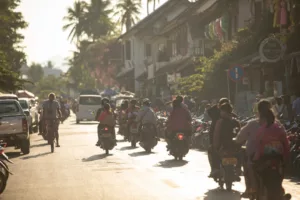
Vietnam has a reputation for phone snatching — especially in Ho Chi Minh City’s District 1 and around Hanoi’s Old Quarter. Motorbike drive-bys are the main issue: hold your phone with two hands and stand back from the curb when checking maps.
Grab is widely used (grab.com), and local rival Xanh SM (electric taxis and bikes) is now a solid, metered alternative in both cities. A 15-minute ride in HCMC costs $2–$4 vs $5–$8 in Bangkok for a similar distance.
Scams are usually low-level: overcharging for taxis (avoid by using an app), currency confusion between 10,000 and 100,000 VND notes, or aggressive souvenir pricing. Shoe-shine and “free” coconut-vendor photo setups in HCMC still end with a demand for $5–$10.
In practical terms, Vietnam requires more “street awareness” than Malaysia. Not dangerous — just alert.
Malaysia (Kuala Lumpur, Penang)
Malaysia consistently reports lower petty crime rates in tourist areas compared to Bangkok or HCMC.
Kuala Lumpur’s Bukit Bintang area has occasional pickpocketing and bag-snatching from motorbikes, but violent crime against visitors is rare. English is widely spoken, which reduces confusion-based scams. The most common tourist complaint in 2026 is still unmetered taxis at KL Sentral and the airport — Grab solves that.
Bottom line on petty crime: All three are manageable. Malaysia feels the calmest. Vietnam requires the most vigilance with phones. Thailand sits in the middle.
2. Road Safety: The Real Risk Most Travelers Ignore
If there’s one data point that should influence your choice, it’s road accidents — especially if you plan to rent a scooter (which I still don’t recommend for first-timers).
| Country | Road Fatalities (per 100,000) | Scooter Culture | Traffic Feel |
|---|---|---|---|
| Thailand | ~30–32 | Very high | Fast, chaotic outside cities |
| Vietnam | ~23–24 | Extremely high | Constant motorbike flow |
| Malaysia | ~22 | Moderate | More structured, highway-focused |
Thailand consistently ranks among the highest road fatality rates in Southeast Asia. Many incidents involve motorbikes — especially in Phuket, Koh Phangan, and rural areas. The “seven dangerous days” around New Year (late December–early January) are statistically the worst stretch of the year, so avoid long road transfers on those dates if you can.
Vietnam’s traffic looks terrifying (crossing the street in Hanoi is a leap of faith), but speeds are often lower in cities. The traffic law that took effect in January 2025 — with much higher fines for red-light running, drink-driving, and riding without a helmet — has visibly improved compliance at major intersections in Hanoi and HCMC through 2026. Highways are improving but still risky.
Malaysia has better road infrastructure overall. Highways between Kuala Lumpur and Penang (4–5 hours, tolls ~$8–$9 total) are modern and well maintained. The one seasonal caveat: east coast roads can flood during the November–February monsoon.
First-timer rule:

- Skip scooter rentals in Thailand and Vietnam unless you have a motorcycle license (an International Driving Permit with the motorcycle category) + insurance coverage. Most policies void claims if you’re unlicensed.
- Use Grab: $3–$8 per ride in KL or Bangkok; $2–$6 in Vietnam.
- For intercity travel: 1-hour flight Bangkok–Chiang Mai ~$35–$55 in high season vs 10–12 hour train ~$25–$30 sleeper. Book trains a few weeks ahead for December.
If you plan a road trip, Malaysia is the safest starting point. And if you’re renting a car this season, test the newer navigation features in Apple’s latest update — here’s a practical breakdown of CarPlay upgrades worth using for road trips and rentals.
3. Hospital Costs in 2026: What You’ll Actually Pay
This is where Southeast Asia shines. Private healthcare is affordable — and often excellent. Prices below reflect late-2026 quotes; expect roughly 5–10% drift year on year, and slightly higher bills at the very top-tier international hospitals.
Thailand
Bangkok’s Bumrungrad International Hospital is globally accredited and English-speaking. Bangkok Hospital and Samitivej are comparable, and both run branches in Phuket, Pattaya, and Chiang Mai.
- Doctor consultation: $35–$65
- Basic ER visit: $110–$190
- Stitches for minor cut: ~$120–$150
- Appendectomy (private): $4,500–$6,500
Pharmacy antibiotics: $8–$20 without drama. Dengue tests run $25–$40 — relevant if you arrive while the rainy season tails off on the Gulf coast.
Vietnam
FV Hospital (Ho Chi Minh City) and Vinmec (Hanoi, Da Nang, Nha Trang) are top private options; Family Medical Practice has English-speaking clinics in all major cities.
- Consultation: $25–$55
- ER visit: $80–$160
- X-ray: $30–$60
- Appendectomy: $3,000–$5,500
Cheapest of the three overall — but English proficiency varies more outside top hospitals, and ambulance response in rural areas is slow. Travel insurance with evacuation cover matters most here.
Malaysia
Prince Court Medical Centre (Kuala Lumpur), Gleneagles (KL and Penang), and Sunway Medical Centre are excellent.
- Consultation: $45–$85
- ER visit: $130–$220
- MRI: $400–$750
- Appendectomy: $5,000–$7,500
Malaysia is slightly more expensive than Thailand and Vietnam — but facilities are extremely modern, and Penang is a genuine medical-tourism hub if you’re island-hopping on the west coast.
Insurance comparison: A 14-day policy via World Nomads Explorer Plan (US traveler, age 30) currently runs about $80 for Thailand, $76 for Vietnam, and $84 for Malaysia in high season. Differences are minimal; what matters is that medical evacuation and motorbike exclusions are read before you buy.
4. Seasonal Safety: November–February Reality Check
It’s November — the start of peak season for Europeans and North Americans fleeing winter. The weather picture across the three countries is the reverse of mid-year, and it affects which coasts and regions are safe to plan around.
Thailand: The Andaman side (Phuket, Krabi, Koh Lanta) is now entering its dry season — calm seas, open dive sites, lower drowning risk at beaches that were red-flagged in July. The Gulf side (Koh Samui, Koh Phangan, Koh Tao) still gets its wettest weeks in November into early December, so time island hops accordingly. Chiang Mai is cool and clear now; just avoid February–April if you’re sensitive to smoke, when burning-season air quality becomes the north’s main health hazard.
Vietnam: Central Vietnam (Da Nang, Hoi An, Hue) is in its typhoon and flood window through November — in 2025 Hoi An’s old town flooded badly in late October, and the pattern repeats most years. Check forecasts before booking the central coast before mid-December. Hanoi is pleasantly cool and dry; HCMC is drying out and entering its best months.
Malaysia: The west coast (Penang, Langkawi, KL) is at its best from November onward. The east coast (Perhentians, Redang, Tioman) effectively shuts down for the northeast monsoon from November to February — most resorts and ferries stop running, and Kelantan and Terengganu see annual flooding.
There’s a contrarian point here too: with the green season behind us, scam activity in tourist zones ticks back up alongside the crowds. I broke down why the quieter months can work in your favor here: why the green season can actually be safer for solo travelers.
5. Ease for First-Time Travelers (Language, Transport, Entry Rules, Stress Level)
Safety isn’t just crime stats. It’s how confident you feel navigating daily life.
Entry Requirements (new since mid-2026 planning)
All three now expect digital paperwork before arrival, and immigration lines move faster if you’ve done it:
- Thailand: Free Thailand Digital Arrival Card (TDAC) submitted online within 3 days of arrival; most Western passports get visa-free entry (currently 60 days — check for changes, as the government has debated shortening it).
- Vietnam: E-visa ($25, up to 90 days, apply at least a week ahead); several European passports also get 45-day visa-free entry.
- Malaysia: Free Malaysia Digital Arrival Card (MDAC) within 3 days of arrival; 90-day visa-free for most Western passports.
Language
Malaysia wins. English is widely spoken — menus, hospitals, transport apps.
Thailand is moderate. Tourist zones speak functional English.

Vietnam requires more translation apps (Google Translate works well, and the camera mode handles menus).
Public Transport
Bangkok’s BTS/MRT is modern. Day pass ~$4.50–$5; the Rabbit card or contactless credit cards work on most lines now.
Kuala Lumpur’s MRT/LRT network is clean and has become more useful with the Putrajaya Line fully open. Single rides $0.70–$1.50; the KLIA Ekspres from the airport is ~$12.
Vietnam has finally joined the metro club: HCMC’s Line 1 (Ben Thanh–Suoi Tien) has been running since late 2024 and is a safe, air-conditioned way to skip District 1 traffic for ~$0.30–$0.80 a ride. Hanoi has two lines (Cat Linh–Ha Dong and the elevated section of Nhon–Hanoi Station), but Grab and Xanh SM still dominate.
Stress Factor (subjective but real)
Vietnam feels the most intense for first-timers (traffic, crossings, negotiation culture) — though the metro and stricter traffic enforcement have taken some edge off since 2025.
Thailand feels tourist-ready, with the caveat that high-season crowds in Phuket and Koh Phangan push prices and hassle up.
Malaysia feels easiest logistically.
So… Which Is Safest for a First-Time Trip?
Most predictable and structured: Malaysia.
Best healthcare-to-cost balance: Thailand.
Cheapest overall but requires more street awareness: Vietnam.
If safety anxiety is high, start in Kuala Lumpur for 3–4 days, then branch out to Penang or across to Thailand’s Andaman coast, which is at its calmest from now through April. If you want classic Southeast Asia energy with strong infrastructure, Thailand is the sweet spot. If you’re confident and budget-focused, Vietnam offers value with manageable risk — just save the central coast for after mid-December.
None of these countries are “dangerous” in the way headlines suggest. The biggest risk statistically is traffic — not crime. The second biggest in high season is simply overestimating your scooter skills on holiday.
Smart Safety Setup for 2026–2027
- Complete your digital arrival card (TDAC or MDAC) or Vietnam e-visa before departure — screenshot the confirmation.
- Use Grab (or Xanh SM in Vietnam) instead of street taxis; download and verify your account before arrival.
- Buy travel insurance before departure (~$75–$90 for two weeks in high season) and confirm it covers medical evacuation.
- Avoid scooter rentals unless properly licensed — and wear a helmet every time if you do.
- Use eSIMs (Airalo 10GB Asia plan ~$26–$30) to keep maps and ride apps active from the moment you land.
- Carry small bills to avoid currency confusion scams, and keep a backup card separate from your wallet.
Planning beyond Southeast Asia this year? Southern-hemisphere seasons run opposite to Asia’s — a useful counterpoint if you’re comparing regions for a winter escape. Here’s a detailed climate breakdown for couples visiting Bolivia’s Uyuni Salt Flats.
Frequently Asked Questions
Which country has the lowest crime rate: Thailand, Vietnam, or Malaysia?
Malaysia generally reports lower petty crime rates in tourist areas compared to Bangkok or Ho Chi Minh City. Violent crime against tourists is rare in all three countries; phone snatching is the most common incident, and it peaks in Vietnam’s big cities.
How much does a hospital visit cost in Thailand in 2026?
A private hospital consultation in Bangkok costs $35–$65, while an ER visit runs $110–$190. Major surgery like an appendectomy typically costs $4,500–$6,500 at an international hospital such as Bumrungrad or Bangkok Hospital.
Is it safe to rent a scooter in Vietnam or Thailand?
Road fatality rates are high (Thailand ~30–32 per 100,000; Vietnam ~23–24), and many tourist accidents involve motorbikes. If you don’t have a proper motorcycle license and insurance coverage, skip it — most insurers won’t pay out for unlicensed riders.
Is November–December a safe time to visit Southeast Asia?
Yes — it’s the start of the dry season for Thailand’s Andaman coast, northern Vietnam, and Malaysia’s west coast. Avoid central Vietnam and Malaysia’s east coast islands until mid-December due to typhoons, flooding, and monsoon closures, and expect bigger crowds and more scam activity than in the green season.
Do I need a visa or arrival card for Thailand, Vietnam, or Malaysia?
Thailand and Malaysia require a free online digital arrival card (TDAC and MDAC) submitted within 3 days of arrival, with visa-free stays for most Western passports. Vietnam requires a $25 e-visa for most nationalities, valid up to 90 days.
If you’re booking flights now for December–January (the busiest and priciest window of the year), compare multi-city routes — flying into Kuala Lumpur and out of Bangkok is often $80–$150 cheaper than a round-trip into one city, and lets you start in the easiest country before moving to the busier ones.
Want more data-driven travel comparisons like this? Explore our Asia safety guides and seasonal breakdowns before you book.

About the Author: Tomáš Bzirský
Founder and editor of Distratech. Based in the Czech Republic, travelling regularly from Central Europe. Writes practical travel guides and travel-tech comparisons (eSIM, apps, airports) in six languages.