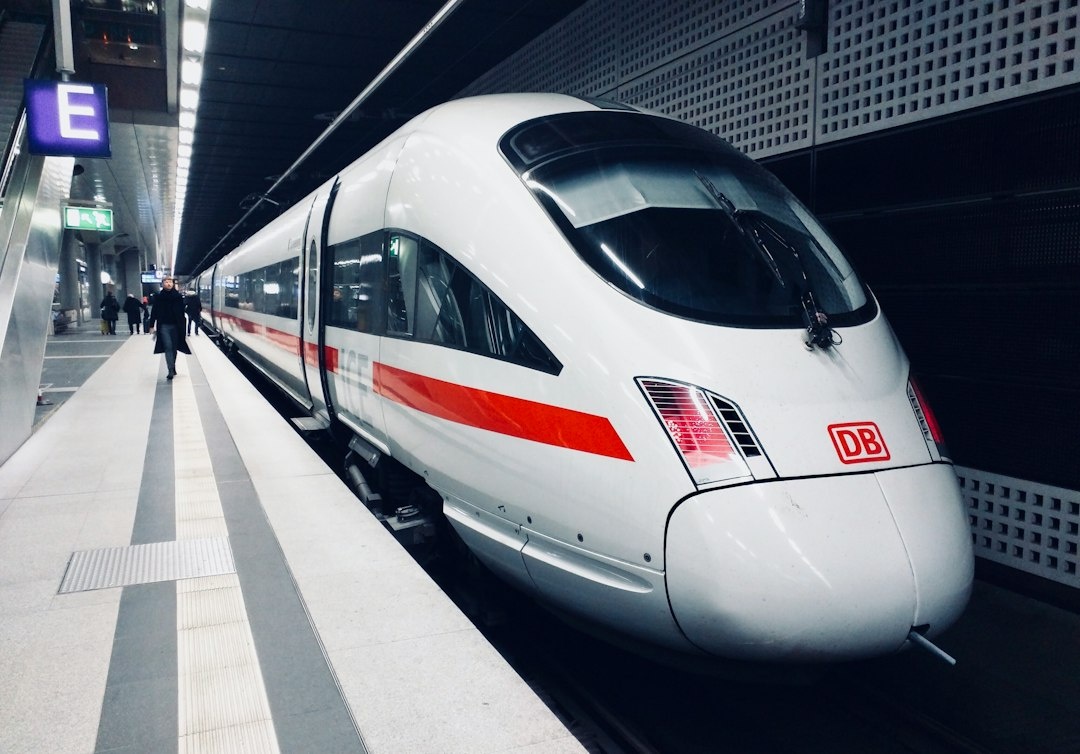
A cheap train ticket is not a bargain if a storm cancels your connection, the Wi-Fi dies at the border, and the only power outlet belongs to seat 61. For this ranking, I compared 12 useful European cross-border routes using five years of punctuality reporting, weather exposure, onboard connectivity, power access, and recovery options when things go wrong.
Key Takeaways
- Munich–Salzburg ranks first overall: 1 hour 29 minutes, fares from €17.99, frequent departures, Wi-Fi, and seat-level power.
- Vienna–Bratislava is the best short hop at 56–67 minutes and €11.40, but onboard Wi-Fi depends on the train.
- Zurich–Milan is spectacular but weather-sensitive; allow at least 90 minutes before an important meeting or flight.
- October 2026 advance fares range from €9.10 on Basel–Strasbourg to €57 on London–Paris.
- Book through national operators rather than third-party apps when you need easy delay notifications and rebooking.
Key Numbers at a Glance
| Rank | Cross-border route | Distance | Fastest direct time | From, Oct. 2026 | Reliability score |
|---|---|---|---|---|---|
| 1 | Munich–Salzburg | 153 km | 1h 29m | €17.99 | 91/100 |
| 2 | Paris–Luxembourg | 373 km | 2h 12m | €39 | 89/100 |
| 3 | Vienna–Bratislava | 67 km | 56m | €11.40 | 88/100 |
| 4 | Brussels–Paris | 264 km | 1h 22m | €29 | 87/100 |
| 5 | Berlin–Prague | 381 km | 4h 13m | €19.99 | 85/100 |
| 6 | Copenhagen–Malmö | 43 km | 39m | €13 | 84/100 |
| 7 | Basel–Strasbourg | 142 km | 1h 18m | €9.10 | 83/100 |
| 8 | Amsterdam–Brussels | 212 km | 2h 08m | €25 | 81/100 |
| 9 | Geneva–Lyon | 150 km | 1h 57m | €29 | 80/100 |
| 10 | Zurich–Milan | 293 km | 3h 17m | €29 | 78/100 |
| 11 | Vienna–Budapest | 243 km | 2h 23m | €13 | 77/100 |
| 12 | Ljubljana–Zagreb | 141 km | 2h 18m | €25 | 72/100 |
Price basis: lowest bookable second-class single fares found for representative October 2026 departures, excluding rail-pass reservations. Prices are dynamic and can rise substantially near departure.
How This Data-Driven Ranking Works
Europe does not publish one standardized route-level reliability database. A German “on-time” train may be measured at under six minutes late, while another operator reports arrivals within 15 minutes, making headline punctuality figures poor direct comparisons.
I therefore built a practical nomad score from 2021–2025 operator reports, infrastructure-manager statistics, major disruption notices, typical service frequency, and current rolling stock. The result is a comparative planning tool—not an audited promise that 89% of one specific train number will arrive on time.
| Category | Weight | What was assessed |
|---|---|---|
| Delay performance | 40% | Five-year operator and network punctuality trends, plus route complexity |
| Storm resilience | 20% | Exposure to floods, wind, snow, landslides, alpine closures, and single-track bottlenecks |
| Wi-Fi | 15% | Availability, login friction, international continuity, and mobile fallback |
| Power | 10% | Seat-level sockets or USB access and rolling-stock consistency |
| Recovery options | 15% | Frequency, alternative routes, ticket flexibility, and same-day rebooking |
October deserves separate attention. Alpine rain can become early snow, North Sea wind affects Dutch and Danish infrastructure, and shorter daylight makes a two-hour disruption more consequential.
On the upside, October brings Bavarian and Central European foliage, thinner Mediterranean crowds, and lower accommodation prices outside school holidays. It is an excellent rail month—provided you do not schedule a client call during a mountain crossing.
The 12 Best Routes, Ranked
1. Munich to Salzburg: Best Overall for Working En Route
Direct Railjet, EuroCity, and Westbahn services cover 153 km in about 1 hour 29 minutes. Advance fares start at €17.99 through Deutsche Bahn, while flexible tickets commonly cost €39–€45.
Railjet and Westbahn trains normally provide Wi-Fi and power at the seat, although German-Austrian mobile handovers can interrupt calls for several minutes. The route’s multiple operators and frequent departures make recovery easier than on longer alpine lines.
October is especially good: the Untersberg and foothills around Salzburg display strong fall color, but severe snow is still uncommon. Choose a morning departure before regional weekend traffic builds.
Nomad verdict: Skip a regional Bayern-ticket itinerary with crowded changes; pay roughly €8–€15 more for a direct Railjet or Westbahn service.
2. Paris to Luxembourg: Best Medium-Distance Productivity Route
TGV INOUI covers approximately 373 km in as little as 2 hours 12 minutes. October 2026 fares start near €39 on SNCF Connect, compared with €79–€110 for flexible or late bookings.
TGV INOUI offers free Wi-Fi and power sockets, and the relatively long nonstop section creates a useful 90-minute working block. Luxembourg’s network is compact, so disruption recovery is usually simpler than on journeys continuing into Germany.
Paris Gare de l’Est’s SNCF lounge is generally open on weekdays from early morning into the evening for eligible premium passengers, while Café de l’Est opposite the station usually opens around 7:00. Check current hours before relying on either for a call.
Nomad verdict: This is the best route for completing a presentation rather than merely checking email. The train saves airport security time and delivers you within a 15-minute walk of central Luxembourg.
3. Vienna to Bratislava: Best Short Cross-Border Commute
The 67 km journey takes 56–67 minutes, with tickets around €11.40 through ÖBB. The Bratislava-Ticket, when offered for your dates, can bundle rail travel and local public transport for roughly €18–€20.
Services generally run twice hourly across the two principal approaches, giving this route excellent recovery capacity. Wi-Fi and sockets vary by Cityjet or regional set, however, so download files before boarding.
Vienna Hauptbahnhof’s ÖBB Lounge generally operates approximately 06:00–23:30 for eligible first-class and status passengers. By comparison, a station café may charge €4.50 for coffee but is accessible without a premium ticket.
Nomad verdict: Use the train for the reliability, not as a guaranteed office. A phone hotspot is essential despite excellent 4G and 5G coverage along most of the route.
4. Brussels to Paris: Fastest Major-City Connection
Eurostar covers 264 km in approximately 1 hour 22 minutes. Promotional fares begin around €29, but realistic October bookings often cost €49–€89 through Eurostar.
Wi-Fi and power are standard, though Wi-Fi performance deteriorates when trains are full. Unlike London services, Brussels–Paris passengers do not face Channel Terminal-style check-in, but arriving 20 minutes early remains sensible.
Five years of operations show strong normal-day performance but vulnerability to French or Belgian industrial action. If a strike notice appears, move your ticket immediately rather than waiting for the cancellation email.
Nomad verdict: Pay for Eurostar rather than combining regional trains via Lille. Saving €15 is not worth adding one or two changes and up to 90 minutes.
5. Berlin to Prague: Best Scenic Workday Journey
The direct EuroCity follows the Elbe for much of its 381 km, reaching Prague in around 4 hours 13 minutes. Sparpreis fares start at €19.99 through Deutsche Bahn, while flexible fares can exceed €70.
Most Berliner EuroCity sets have Wi-Fi, tables, and power, although the exact carriage configuration can change. Mobile data is weakest through Saxon Switzerland, so do not lead a video meeting between Bad Schandau and Děčín.
The dining car is a genuine advantage: Czech meals commonly cost €8–€14, versus €16–€25 at Berlin Hauptbahnhof restaurants. Order the svíčková if available and skip the platform sandwich.
Nomad verdict: Book a window seat on the left leaving Berlin for some of the best river views later in the trip, but schedule offline work for the final 90 minutes.
6. Copenhagen to Malmö: Most Frequent International Route
Øresundståg trains cross the 43 km corridor in about 39 minutes, generally several times per hour. A one-way ticket costs approximately DKK 100, or about €13.40 in October 2026, through Øresundståg or the Skånetrafiken app.
Frequency is the route’s superpower: missing one train often costs only 10–20 minutes. Strong wind can restrict bridge traffic, and police checks may add friction even when the train itself remains punctual.
Do not count on stable onboard Wi-Fi or a conveniently located socket. Copenhagen–Malmö scores higher for operational recovery than for workstation quality.
Nomad verdict: Choose this route for commuting, not a concentrated work sprint. The 39-minute trip is shorter than many airport transfers, but barely long enough to open a laptop.
7. Basel to Strasbourg: Best Budget Route
Regional TER trains cover roughly 142 km in 1 hour 18 minutes. Advance and regional fares can start around €9.10 through SNCF Connect, although common walk-up prices are closer to €28–€31.
The railway follows the relatively flat Rhine corridor, avoiding the alpine weather exposure of Swiss-Italian routes. Direct services are not equally frequent throughout the day, so verify that your itinerary does not require a change in Mulhouse.
Wi-Fi is usually absent and power is inconsistent on TER stock. Mobile coverage is generally usable, but the France-Switzerland border can trigger a short network handover.
Nomad verdict: This is the value winner if you can work offline. A €9.10 fare is less than one Basel coworking day, which commonly costs €25–€40.
8. Amsterdam to Brussels: Better Since the New Faster Service
Eurocity Direct typically connects Amsterdam Zuid and Brussels-Midi in about 2 hours 08 minutes, covering roughly 212 km. Entry fares begin around €25 through NS International; flexible tickets usually cost €55–€65.
Newer ICNG equipment improves power access and passenger comfort compared with older Intercity stock. Wi-Fi is available on suitable trains, but tunnels, border handovers, and high passenger loads still make mobile backup necessary.
North Sea wind and Dutch infrastructure congestion weigh down the score. Schiphol-area works can also cause rerouting, so confirm whether your train leaves Amsterdam Zuid rather than Centraal.
Nomad verdict: Skip Eurostar on this short sector unless its departure time is much better. Eurocity Direct is usually cheaper and does not require a compulsory reservation.
9. Geneva to Lyon: Best Low-Stress France–Switzerland Link
Direct TER services cover approximately 150 km in 1 hour 57 minutes. Fares typically begin around €29 through SNCF Connect, compared with €35–€50 for less flexible last-minute options.
The line avoids high-alpine passes but remains vulnerable to regional signaling failures and Rhône corridor disruption. Direct departures are less frequent than Copenhagen–Malmö or Munich–Salzburg, so one cancellation can cost two hours.
Onboard Wi-Fi is not dependable, and sockets vary by train. Geneva station has cafés opening from approximately 06:00, making it safer to send large files before departure.
Nomad verdict: Take the direct train even if a connection via Bellegarde appears five minutes faster. One fewer transfer matters more than a theoretical timetable gain.
10. Zurich to Milan: Best Scenery, Highest Alpine Risk
EuroCity trains cover the 293 km trip in about 3 hours 17 minutes using the Gotthard corridor. Saver fares start around €29 through SBB or Trenitalia, with flexible tickets commonly reaching €80–€100.
Modern Giruno trains provide Wi-Fi and power, but connectivity weakens inside long tunnels and mountain sections. The Gotthard Base Tunnel alone is 57 km, making uninterrupted video calls unrealistic.
Heavy rain, rockfall risk, early snow, and infrastructure incidents make this the ranking’s most weather-sensitive route. October can be glorious, but build a 90-minute buffer before a hotel check-in deadline and at least three hours before a flight.
Nomad verdict: Ride it for the journey and do offline work. If an important client call is unavoidable, take it in Zurich HB before boarding, where SBB’s lounge generally opens from around 06:00 on weekdays.
11. Vienna to Budapest: Cheap, Frequent, but Operationally Uneven
Railjet and EuroCity services travel 243 km in about 2 hours 23 minutes. Advance ÖBB Sparschiene fares start near €13, while flexible second-class tickets are commonly €45–€55.
Railjet usually means Wi-Fi, tables, and power; older EuroCity rolling stock is less consistent. Cross-border delays can compound because trains often arrive from Germany or western Austria before continuing east.
Choose a train originating in Vienna when possible. It has less accumulated delay than a through service that has already covered 600 km.
Nomad verdict: The €13 fare is excellent, but do not book the final train of the evening. A daytime departure leaves multiple recovery options if disruption hits around Hegyeshalom.
12. Ljubljana to Zagreb: Useful but Too Infrequent
The 141 km trip takes approximately 2 hours 18 minutes, with tickets around €25 through Slovenian Railways or Croatian Railways. Buses can cost €14–€22 and take roughly 2 hours 15 minutes, but road congestion makes arrival times variable.
The railway’s main weakness is frequency rather than constant lateness. A cancelled or missed departure can create a wait of several hours, and onboard Wi-Fi and power are not reliable enough for deadline work.
October is attractive around Ljubljana, with fall color and fewer visitors, while Zagreb accommodation can be 15%–25% below summer levels. The railway itself, however, needs more departures before it becomes a top nomad corridor.
Nomad verdict: Take the train for comfort and border simplicity, but compare the timetable with FlixBus. If the next train is four hours away, the bus is the rational backup.
Detailed Comparison: Connectivity and Disruption Risk
| Route | Typical frequency | Wi-Fi | Power | October weather risk | Recommended buffer |
|---|---|---|---|---|---|
| Munich–Salzburg | 1–2 per hour | Usually good | Yes on RJ/WB | Low–medium | 30 min |
| Paris–Luxembourg | Every 1–2 hours | Good on TGV | Yes | Low | 30 min |
| Vienna–Bratislava | Up to 2 per hour | Variable | Variable | Low | 20 min |
| Brussels–Paris | Roughly hourly | Available | Yes | Low–medium | 45 min |
| Berlin–Prague | Every 2 hours | Available | Usually | Medium | 60 min |
| Copenhagen–Malmö | 3–6 per hour | Unreliable | Variable | Medium wind risk | 20 min |
| Basel–Strasbourg | Every 1–2 hours | Usually none | Variable | Low | 45 min |
| Amsterdam–Brussels | About hourly | Available | Yes on ICNG | Medium wind/flood risk | 60 min |
| Geneva–Lyon | Several daily | Unreliable | Variable | Low–medium | 60 min |
| Zurich–Milan | Every 1–2 hours | Patchy | Yes | High | 90 min |
| Vienna–Budapest | About hourly | Good on RJ | Usually | Low–medium | 60 min |
| Ljubljana–Zagreb | 2–4 daily | Usually none | Variable | Medium | 90 min |
Which Route Should You Choose?
- Choose Munich–Salzburg if you need the best balance of punctuality, frequency, power, Wi-Fi, and fall scenery.
- Choose Paris–Luxembourg if you want a two-hour uninterrupted laptop session with strong onboard facilities.
- Choose Vienna–Bratislava for the cheapest reliable international commute and easy same-day recovery.
- Choose Copenhagen–Malmö if frequency matters more than onboard working comfort.
- Choose Berlin–Prague if you want a scenic four-hour travel day with a proper dining car.
- Choose Zurich–Milan for scenery, but not when the arrival controls a same-day flight or client meeting.
- Choose Basel–Strasbourg if price matters and you can work offline.
For night-sky travelers, October also marks the start of Europe’s northern aurora season, although those longer Scandinavian routes are less dependable for real-time work. If stargazing is the trip’s main objective rather than a bonus, compare the planning principles in this four-night Atacama stargazing itinerary.
A Costed Seven-Day Cross-Border Nomad Plan
This route links Munich, Salzburg, Vienna, Bratislava, and Budapest without requiring a flight. It uses three ranked international connections and keeps daily rail segments below 2 hours 30 minutes.
| Item | Calculation | Cost, Oct. 2026 |
|---|---|---|
| Munich–Salzburg | Advance Railjet/Westbahn fare | €17.99 |
| Salzburg–Vienna | Advance Railjet fare | €29.90 |
| Vienna–Bratislava return | Two regional journeys | €22.80 |
| Vienna–Budapest | Sparschiene fare | €13 |
| Accommodation | 6 nights × €85 private room | €510 |
| Coworking | 2 day passes × €25 plus one €15 pass | €65 |
| Food | 7 days × €32 | €224 |
| Local transport | Metro, tram, and bus tickets | €38 |
| Data backup | Regional eSIM allowance | €20 |
| Total | Seven days excluding arrival flight | €941.69 |
A rail pass is not automatically cheaper. The four international and intercity journeys above cost €83.69 booked separately, substantially below many multi-day Eurail options before reservation fees.
Stay near Salzburg Hauptbahnhof rather than in the historic center if you have an early departure. Cocoon Salzburg and harry’s home are practical rather than romantic; expect approximately €90–€140 per night in October, compared with €160 or more around Getreidegasse.
For food, skip an overpriced station pretzel in Munich and eat at Türkitch near Hauptbahnhof, where a dürüm costs roughly €8–€10. In Bratislava, Urban House is useful for a coffee and laptop session, but buy lunch elsewhere if you want to keep it below €12.
Booking and Tech Setup That Actually Works
- Book with the operating railway. Use DB, ÖBB, SNCF Connect, SBB, NS International, or Eurostar rather than an aggregator when prices are equal.
- Save the ticket offline. Station Wi-Fi and app logins fail at exactly the wrong moment; keep the PDF in your phone’s files.
- Install two journey planners. Use the operator app for tickets and DB Navigator for broad European timetable monitoring.
- Carry a 10,000–20,000 mAh power bank. “Power available” does not mean your seat’s socket will work.
- Use an eSIM with cross-border roaming. Airalo and Nomad offer regional options, but check data limits and hotspot permissions before buying.
- Download an offline task list. Tunnels on Zurich–Milan and valleys on Berlin–Prague are for writing, editing, and spreadsheet work—not video calls.
A phone hotspot often outperforms onboard Wi-Fi, but border handovers can interrupt service for 30 seconds to several minutes. If your Zoom call cannot survive that gap, take it at the station before departure.
Common Mistakes Digital Nomads Make
Booking the Last Train of the Day
A 45-minute delay is inconvenient at 14:00 and disastrous at 22:00. On Vienna–Budapest or Ljubljana–Zagreb, the final departure can leave no rail-based recovery option.
Treating Every Wi-Fi Symbol as a Guarantee
Train Wi-Fi may block VPN traffic, throttle video, or lose its upstream mobile connection. Download at least two hours of offline work even on TGV and Railjet services.
Scheduling Calls Through Tunnels and Border Zones
Zurich–Milan includes long tunnels, while Berlin–Prague has weak sections near the Elbe valley. A €25 coworking day is cheaper than losing a €500 client because a call repeatedly drops.
Buying a Rail Pass Before Pricing Individual Tickets
Advance Munich–Salzburg, Vienna–Bratislava, and Vienna–Budapest tickets can total under €45. A pass adds flexibility, but it is rarely the cheapest answer for a short, fixed October itinerary.
Ignoring the Departure Station
Amsterdam’s international services increasingly use Amsterdam Zuid, while tickets and habits may send travelers toward Centraal. Crossing the city after discovering the mistake can consume 25–35 minutes.
Assuming a One-Hour Flight Is Faster
Brussels–Paris takes 1 hour 22 minutes city center to city center. Flying adds airport transfers and security, turning a nominal one-hour flight into a four-hour journey that also provides less usable work time.
Final Verdict
Munich–Salzburg is Europe’s best all-round cross-border train for digital nomads in October 2026. It combines frequent departures, sub-90-minute travel, fares from €17.99, power, Wi-Fi, and Bavarian-Alpine foliage without the severe disruption exposure of the Gotthard route.
Paris–Luxembourg is better for concentrated laptop work, while Vienna–Bratislava wins for low-cost commuting. Book Zurich–Milan for scenery and Ljubljana–Zagreb only when its limited timetable matches your day.
Save this ranking before booking, then check the operating railway’s live engineering notices 48 hours before departure. In October, the smartest ticket is not always the fastest—it is the one with another train behind it.
Frequently Asked Questions
What is the most reliable international train route in Europe for digital nomads?
Munich–Salzburg is the strongest overall choice in this comparison, scoring 91/100. Direct trips take about 1 hour 29 minutes, fares start at €17.99, and Railjet or Westbahn trains normally provide Wi-Fi and power.
Which European cross-border train has the best Wi-Fi?
Paris–Luxembourg on TGV INOUI offers the most dependable combination of Wi-Fi, seat-level power, and a useful two-hour working window. Brussels–Paris and Railjet services are close alternatives, but no train connection is reliable enough for a critical uninterrupted video call.
Are European trains reliable in October?
Generally yes, but weather risk varies sharply. Rhine and lowland routes such as Basel–Strasbourg face less October disruption than alpine Zurich–Milan, where heavy rain, early snow, and landslide risk justify a 90-minute buffer.
Is Eurail cheaper than booking individual cross-border tickets?
Not always: advance tickets for Munich–Salzburg, Vienna–Bratislava, and Vienna–Budapest can total under €45. Eurail is more valuable when you need last-minute flexibility or expensive long-distance routes rather than fixed regional journeys.
How early should I book European cross-border trains for October?
Book high-speed routes such as Eurostar and TGV four to eight weeks ahead for the best chance of €29–€39 fares. Regional routes including Vienna–Bratislava and Copenhagen–Malmö usually have stable pricing and can often be bought on the day.

About the Author: Tomáš Bzirský
Founder and editor of Distratech. Based in the Czech Republic, travelling regularly from Central Europe. Writes practical travel guides and travel-tech comparisons (eSIM, apps, airports) in six languages.