'/%3E%3Cpath%20fill='%23b2b2b2'%20d='M241%20382q0%2016%2017%2026%2017%2011%2042%2011t42-11q16-11%2017-26V269H241'/%3E%3Cpath%20fill='%239f7e00'%20d='M241%20379q0%2014%208%2023%209%209%2021%209%2014%200%2021-9%209-9%209-23V269h-59'/%3E%3Cpath%20d='M241%20339v-70h59v110q0%2014-9%2023l-6%205v-68h-15v72q-8%200-14-4v-68zm59%2040c0%2022%2015%2032%2029%2032%2021%200%2030-18%2030-32v-40h-59'/%3E%3Cpath%20fill='%239f7e00'%20d='M266%20277v5h2v12h-3v-5h2v-5h-9v5h2v5h-4v9h3v18h-5v10h34v-10h-5v-18h3v-9h-4v-5h2v-5h-9v5h2v5h-3v-12h2v-5zm42%20101q0%2010%206%2017%206%206%2015%207%2010-1%2016-7%206-7%206-17v-29h-43'/%3E%3Ccircle%20fill='%230044ad'%20cx='329.5'%20cy='372'%20r='6'/%3E%3Cellipse%20fill='%230044ad'%20cx='300'%20cy='340'%20rx='16'%20ry='21'/%3E%3C/svg%3E)
'/%3E%3C/svg%3E)


'/%3E%3C/g%3E%3Cuse%20href='%23c'%20transform='matrix(-1%200%200%201%20720%200)'/%3E%3C/svg%3E)


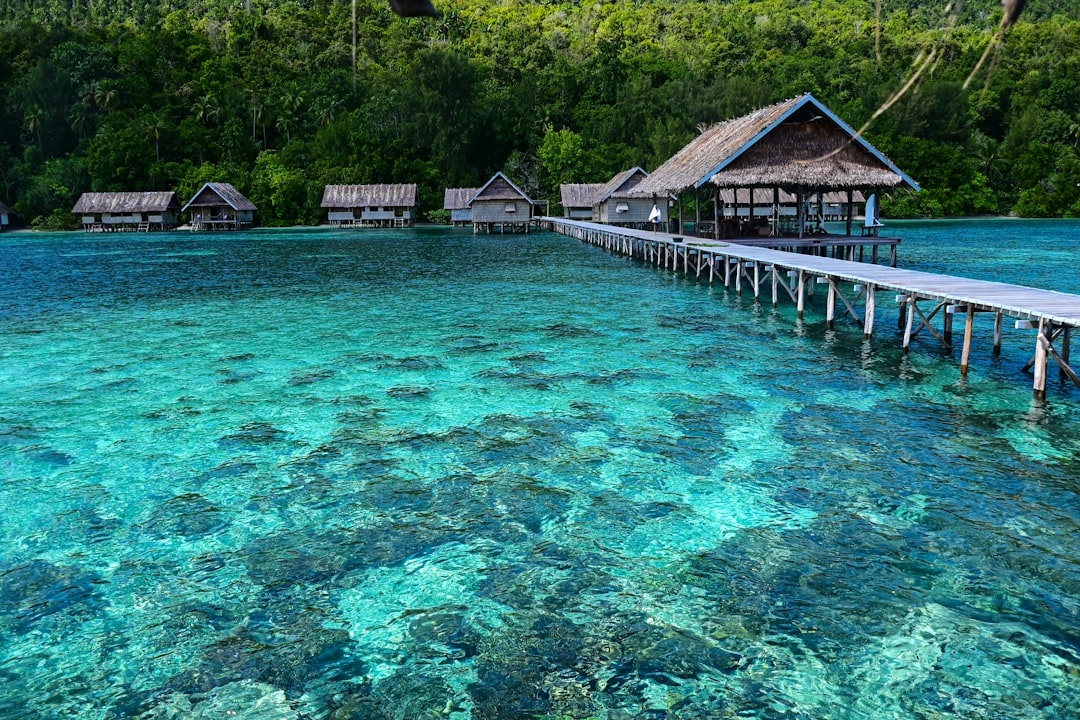
Raja Ampat looks like the dream remote-work escape: overwater bungalows, manta rays, limestone islands, and enough blue water to make your laptop wallpaper jealous. But if you’re planning now in August 2026 — while Europe is sweating through 40°C heat, Edinburgh Fringe is eating hotel inventory, and smart travelers are already eyeing September Mediterranean shoulder season — Raja Ampat needs a more honest question: can you actually work there?
Key Takeaways
- October–November 2026 is a good Raja Ampat window for diving, but expect tropical rain, humidity, and occasional boat delays.
- Budget $55–$90 per day for a basic homestay base stay, or $300–$900+ per night for liveaboards.
- Telkomsel 4G works best around Waisai and parts of Waigeo, but many islands are effectively offline.
- Sorong to Waisai ferry takes about 2 hours and costs roughly IDR 125,000–250,000 ($8–$16) one way.
- Raja Ampat is worth it for async work, writing, editing, and planning — not for daily Zoom-heavy schedules.
Myth 1: “Raja Ampat Is Perfect for Digital Nomads”
Reality: Raja Ampat is perfect for digital nomads who can work offline. It is rough for anyone who needs reliable calls, fast uploads, or instant Slack replies.
The archipelago sits off West Papua, about 75 km from Sorong to Waisai, the main town on Waigeo Island. That short-looking distance still means airport taxi + ferry + small boat transfer, often 4–6 hours door to beach if your flights line up.
Compare that with Bali: Canggu airport transfer can be 1.5–2.5 hours in traffic, but you’ll usually have fiber Wi-Fi, cafés, coworking spaces, Grab, Gojek, and same-day laptop repair. In Raja Ampat, a “productive day” often means drafting offline in Google Docs and syncing when the generator comes on.
My take: skip Raja Ampat if your workday depends on live client calls. Do Raja Ampat if your work is writing, coding offline, photo editing, research, strategy decks, or batch email.
Myth 2: “Rainy Season Means Don’t Go in October–November”
Reality: October–November is not a simple “bad season.” Raja Ampat is equatorial, so rain can happen year-round, but October and November are also when many dive operations ramp up after the windier mid-year period.
Expect hot, humid weather around 27–31°C, with tropical downpours rather than all-day European-style drizzle. Sorong commonly sees 250–300 mm of rain per month in this period, compared with Mediterranean September destinations that may get 30–80 mm.
That means your risk is not “my whole trip is ruined.” The real risk is boat logistics: a 45-minute transfer can become 90 minutes if seas are choppy, and a planned dive may be shifted to a more sheltered site.
October–November is also manta season territory, with cleaning stations like Manta Sandy and Blue Magic coming alive from roughly October to April. If August in Europe is about Perseids meteor showers and last-minute summer deals, Raja Ampat in October is about trading crowded festival travel for reef time and fewer inbox distractions.
Getting There: The Real Travel Time From Jakarta, Bali, and Singapore
Raja Ampat starts with Sorong Airport, officially Domine Eduard Osok Airport. There are no direct long-haul flights from Europe, Australia, or the US, so expect at least one Indonesian connection.
From Jakarta, flights to Sorong take about 4 hours 5 minutes nonstop, often departing late evening or just after midnight. From Bali, expect 7–10 hours total with a connection via Makassar, Jakarta, or Manado.
| Route | Typical Time | Typical One-Way Cost | Best Booking Sites |
|---|---|---|---|
| Jakarta CGK → Sorong SOQ | 4h 05m nonstop | $150–$280 | Garuda Indonesia, Batik Air, Traveloka, Tiket |
| Bali DPS → Sorong SOQ | 7–10h with 1 stop | $180–$350 | Traveloka, Tiket, Google Flights |
| Singapore → Sorong | 8–14h via Jakarta/Makassar | $250–$500 | Singapore Airlines + domestic add-on, Traveloka |
| Sorong Airport → Ferry Port | 20–30 min by taxi | IDR 100,000–150,000 / $6–$9 | Airport taxi desk or hotel transfer |
| Sorong → Waisai ferry | About 2 hours | IDR 125,000 economy / IDR 250,000 VIP, $8–$16 | Buy at Sorong ferry terminal |
The Sorong–Waisai express ferry usually runs around 09:00 and 14:00, but schedules can shift. Ticket counters typically open from about 07:00 to 16:00; arrive 45–60 minutes early because the queue can be weirdly slow for such a short route.
Skip the heroic same-day transfer if you land after noon. Book one night in Sorong at Swiss-Belhotel Sorong ($60–$85), ASTON Sorong Hotel ($65–$95), or favehotel Sorong ($35–$55), then take the morning ferry with a functioning brain.
Connectivity Expectations: Telkomsel, eSIMs, Starlink, and the Truth
Telkomsel is the only network I would trust as a first choice in Raja Ampat. XL and Indosat may work in Sorong and Waisai, but they fade faster once you move toward smaller islands.
In Waisai, you may see 4G speeds of 5–25 Mbps on a good day. On homestay islands, you may get 0–5 Mbps, no signal inside your room, and surprisingly better reception standing on the jetty like a human antenna.
For eSIM convenience before landing, Airalo can be useful for Indonesia transit days in Jakarta, Bali, or Sorong. But don’t treat an eSIM as a magic fix for Raja Ampat: if the island has no usable tower coverage, your beautiful data plan is just decoration.
Some higher-end resorts and liveaboards now advertise Starlink or satellite Wi-Fi. That is a game changer for email and messaging, but not a guarantee for perfect video calls during rain squalls or when 18 guests all upload GoPro files after diving.
What Actually Works for Remote Work
- Email and Slack: workable in Waisai, resorts with satellite, and some Waigeo stays.
- Zoom calls: safe only in Sorong, Waisai hotels, or confirmed Starlink properties.
- File uploads: batch overnight; 2 GB video uploads can take 2–6 hours or fail entirely.
- VPN: bring one, but expect slower speeds; test before your first urgent login.
- Offline tools: use Notion offline alternatives, Google Docs offline, Obsidian, or a lightweight editor like the one we covered in our travel-friendly Mac code editor review.
My rule: if a task would cost you more than $300 if it failed, do it before leaving Sorong. That includes contract uploads, payment approvals, code deploys, and client presentations.

Liveaboard vs Base Stay: Which Is Better for Digital Nomads?
For divers, liveaboards are seductive. For digital nomads, they are either brilliant or disastrous depending on your work type.
A liveaboard compresses the best dive sites into one itinerary: Dampier Strait, Misool, Wayag, Fam Islands, and manta sites without repacking every two days. But you are also locked into boat Wi-Fi, generator schedules, and group movement.
| Option | Cost | Connectivity | Best For | Skip If |
|---|---|---|---|---|
| Budget homestay base | $40–$80 pp/night incl. meals | Patchy; often mobile-only | Offline writers, budget divers, slow travel | You need AC, calls, or fast uploads |
| Waisai hotel base | $35–$90/night | Best local 4G and some Wi-Fi | Admin days, calls, ferry access | You came for postcard beaches |
| Eco resort base | $180–$500/night | Variable; ask about Starlink | Couples, divers, part-time work | You’re on a strict backpacker budget |
| Liveaboard | $300–$900+ pp/night | From none to paid Starlink | Serious divers, offline work blocks | You need daily meetings |
Book homestays through Stay Raja Ampat, which lists island family stays and transfer details better than big hotel platforms. For resorts, check direct sites like Papua Explorers, Raja Ampat Biodiversity Eco Resort, and Meridian Adventure Dive Resort, then compare on Booking.com or Agoda.
For liveaboards, use Liveaboard.com to compare cabins, routes, nitrox fees, and Wi-Fi claims. Email the operator directly with one blunt question: “Can I do a 45-minute video call at 10:00 WIT on a rainy day?”
Skip ultra-cheap liveaboards if they won’t define Wi-Fi. Do a base stay on Kri, Gam, or Waigeo instead, then pay for individual dive days at $45–$65 per tank plus boat fees.
The Hidden Cost of Offline Work
Raja Ampat’s biggest digital nomad cost is not the ferry, the park fee, or the $6 coconuts at a resort. It is the billable work you cannot do.
Let’s say you bill $75/hour and lose two 3-hour work blocks because uploads fail, weather delays your transfer, or your homestay generator dies. That is $450 of lost productivity — more than a three-night homestay stay.
| Hidden Cost | Budget Scenario | Comfort Scenario |
|---|---|---|
| Lost work from poor internet | 6 hours x $50 = $300 | 6 hours x $100 = $600 |
| Extra Sorong buffer night | $35–$55 hotel | $75–$120 hotel |
| Satellite/Starlink Wi-Fi add-on | Often unavailable | $10–$30/day if offered |
| Private boat due to missed ferry | $150–$300+ | $250–$500+ |
| Power bank / backup gear | $40–$80 | $100–$250 |
This is where tech planning matters. Download project files before you fly, sync password managers, cache maps in Google Maps and Organic Maps, and bring at least a 20,000 mAh power bank.
If you handle AI, video, or local compute-heavy work, travel with enough hardware to operate offline. Our piece on the cheap AI workstation hack travelers should care about is overkill for a tropical island, but the principle applies: don’t assume the cloud will be there when you need it.
Where to Stay: My Opinionated Picks
For digital nomads, I’d split the trip: 1 night in Sorong, 3–5 nights on a connected-ish base, then 3–5 nights fully offline somewhere beautiful. Trying to work every day from paradise is how paradise becomes annoying.
Best practical base: Waisai or nearby Waigeo. It is less dreamy than Kri or Gam, but you get better mobile signal, shops, ATMs, and faster access to the ferry.
Best diver-nomad compromise: Kri Island or Gam Island. Transfers from Waisai are commonly 45–90 minutes by small boat and cost roughly IDR 700,000–1,500,000 ($43–$92) per boat depending on distance, fuel, and sea conditions.
Best comfort option: Papua Explorers or Raja Ampat Biodiversity Eco Resort. Expect roughly $300–$500 per night depending on season and package, but confirm Wi-Fi before paying a deposit.
Best “I need one normal workday” hotel: Swiss-Belhotel Sorong. It is not romantic, but the Wi-Fi, air-conditioning, and breakfast buffet beat pretending your island bungalow is a coworking space.
Food, Supplies, and the “Don’t Arrive Hungry” Rule
Most island homestays include three meals per day: rice, fish, vegetables, noodles, fruit, coffee, and tea. This is simple, filling food, not a café scene.
In Sorong, stock up before the ferry. Saga Supermarket is usually open around 08:00–22:00 and is better for snacks, electrolyte tablets, instant coffee, and toiletries than tiny island shops.

For dinner in Sorong, skip hotel room service and go to the Tembok Berlin seafood stalls, which come alive around 18:00–23:00 along the waterfront. Grilled fish with rice and sambal might cost IDR 70,000–120,000 ($4–$7), versus $12–$20 for a bland hotel pasta.
In Waisai, eat where your guesthouse recommends rather than chasing Google ratings. Many listings are outdated, and opening hours can be “after the owner comes back from the market.”
Permits, Park Fees, and Booking Logistics
International visitors should budget for the Raja Ampat marine park/environmental service fee, commonly around IDR 700,000 ($43), valid for the calendar year. Domestic visitors usually pay less, around IDR 425,000 ($26), but check the current rate before October 2026.
You may be asked to show proof at resorts, dive centers, or marine patrol checks. Buy it through your operator, resort, or the official Raja Ampat tourism channels when available; don’t rely on a random WhatsApp middleman.
Dive shops usually operate morning departures around 08:00–09:00, with two-tank trips returning around 14:00–15:00. A single dive often costs $45–$65, while a two-dive day with boat and guide can land around $120–$180 depending on distance.
My October–November 2026 Digital Nomad Setup
If I were booking Raja Ampat for late October or November 2026, I’d build it like this:
- Day 1: Arrive Sorong, sleep at Swiss-Belhotel or ASTON, finish all calls and uploads.
- Day 2: Morning ferry to Waisai, transfer to Waigeo/Kri/Gam, no meetings scheduled.
- Days 3–6: Dive mornings, offline work from 15:00–18:00, sync email only.
- Days 7–9: Go fully offline or take a short liveaboard segment if Wi-Fi is not essential.
- Day 10: Return to Sorong, buffer night before onward flight.
That buffer night is non-negotiable. Ferry plus flight on the same day can work on paper, but one storm, engine issue, or schedule change turns a $70 hotel saving into a $250 missed flight problem.
Verdict: Is Raja Ampat Worth It for Digital Nomads?
Yes — but only if you treat Raja Ampat as a deep-work and dive destination, not a tropical coworking hub. It is one of the most spectacular marine environments on earth, but it does not care about your Monday stand-up.
Choose a base stay if you need some control, lower costs, and occasional signal. Choose a liveaboard if diving is the priority and your work can disappear into offline mode for several days.
My strongest advice: schedule Raja Ampat after a productive city week in Jakarta, Singapore, or Bali, then let the islands be what they are. Book October–November 2026 now if your dates are fixed, ask every property about Starlink in writing, and build your work calendar around disconnection instead of fighting it.
If this helped you plan smarter, save it before you lose signal — and check Distratech for more travel-tech guides that tell you what glossy destination posts usually leave out.
Looking for places to stay while you explore the islands? Find hotels in Raja Ampat so you can book around the best October–November 2026 diving conditions.
Frequently Asked Questions
Is Raja Ampat good for digital nomads?
Raja Ampat is good for digital nomads who can work offline or asynchronously. It is not a good choice if you need reliable daily Zoom calls, fast uploads, or coworking-style internet.
How much does Raja Ampat cost per day?
A budget homestay trip costs about $55–$90 per day including meals, before dives and transfers. Comfort travelers should budget $180–$500 per night for resorts, while liveaboards usually run $300–$900+ per person per night.
Does Raja Ampat have good internet?
Internet is best in Sorong, Waisai, and some Waigeo areas, where Telkomsel 4G may reach 5–25 Mbps. Smaller islands often have weak or no signal, though some resorts and liveaboards now offer Starlink or satellite Wi-Fi.
Is October or November a good time to visit Raja Ampat?
Yes, October and November are good months for diving and manta encounters, but expect tropical rain and humidity. Build in a Sorong buffer night because boat transfers can be delayed by weather.
Should I choose a liveaboard or homestay in Raja Ampat?
Choose a liveaboard if diving is your main priority and you can work offline for several days. Choose a homestay or resort base if you need lower costs, more flexibility, and occasional mobile signal.

About the Author: Tomáš Bzirský
Founder and editor of Distratech. Based in the Czech Republic, travelling regularly from Central Europe. Writes practical travel guides and travel-tech comparisons (eSIM, apps, airports) in six languages.