At 2,407 meters above sea level, San Pedro de Atacama puts families beneath some of the clearest skies on Earth—but successful stargazing here depends on more than booking a telescope tour. Moonlight, altitude, desert temperatures and poorly timed excursions can turn an extraordinary four-night trip into four days of headaches and overtired children.
Key Takeaways
- Plan around the new moon—October 10, 2026 is significantly better for deep-sky viewing than the October 26 full moon.
- Calama Airport is 100 km from San Pedro; shared transfers cost about €29 return per person and take 75–90 minutes each way.
- Spend your first 48 hours below 2,600 meters before considering El Tatio Geysers at 4,320 meters.
- A realistic four-night budget for two adults and two children is €1,900–€2,500, excluding flights to Chile.
- Book two possible astronomy nights, not one, because wind or high cloud can cancel tours with little warning.
Key Numbers at a Glance
San Pedro is compact enough to cross on foot in roughly 20 minutes, but its surrounding attractions spread across hundreds of kilometers. Temperatures also change faster than distances suggest: an October afternoon can reach 25°C, while an astronomy tour later that evening may fall below 3°C.
| Planning detail | Number | Why it matters |
|---|---|---|
| San Pedro altitude | 2,407 m | Mild altitude symptoms are possible from the first evening |
| Calama Airport distance | 100 km | 75–90 minutes by shared shuttle versus about 70 minutes privately |
| Typical October temperature | 5–25°C | Night tours require insulated layers despite warm afternoons |
| El Tatio altitude | 4,320 m | Almost 1,900 m higher than your hotel in San Pedro |
| October 2026 new moon | October 10 | Best darkness falls approximately October 6–15 |
| October 2026 full moon | October 26 | Bright moonlight washes out galaxies and faint nebulae |
| Recommended stay | 4 nights minimum | Allows two potential astronomy nights and gradual acclimatization |
| Typical family budget | €1,900–€2,500 | Four nights for two adults and two children, excluding flights |
Prices in this guide are October 2026 planning prices. Conversions use approximately €1 = CLP 1,050 and US$1 = CLP 950; Chilean-peso charges and exchange rates can change.
Step 1: Choose the Right Dates Using the Moon Phase
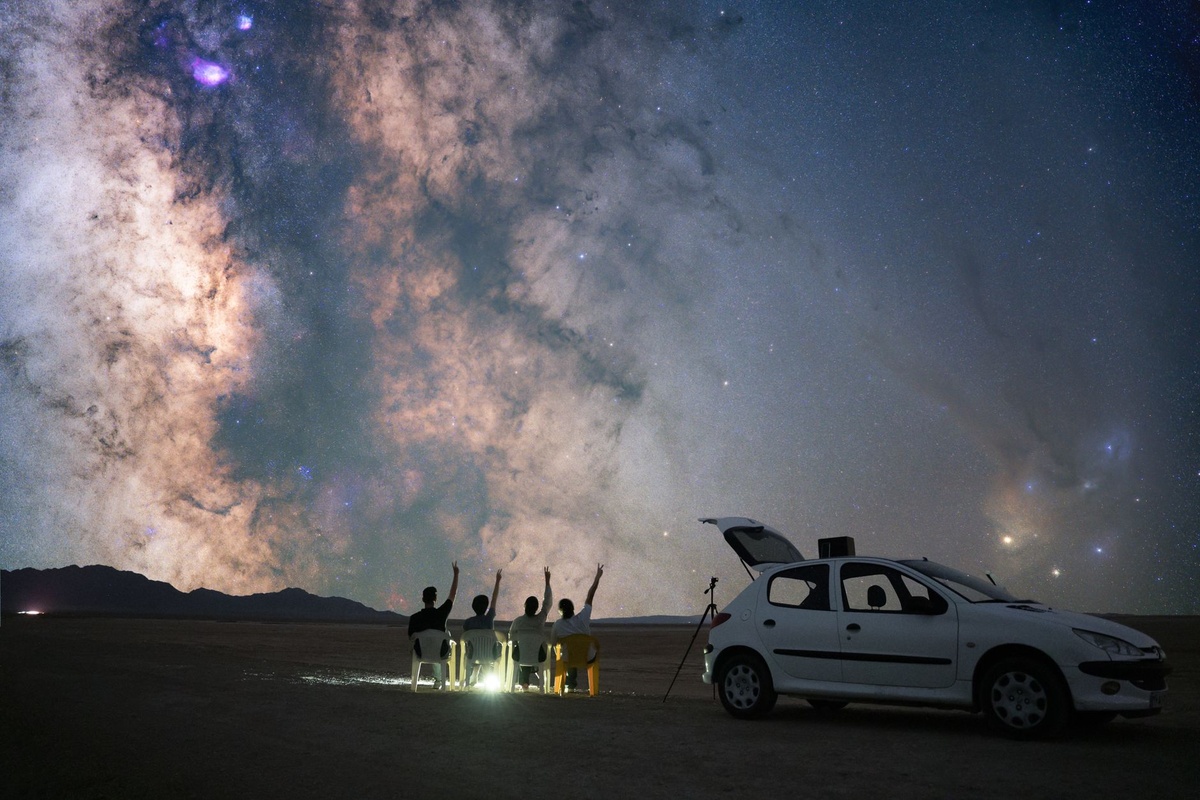
The Atacama’s low humidity, high altitude and limited light pollution produce superb visibility, but a full moon can be brighter than many first-time visitors expect. Around October 26, 2026, it will illuminate the landscape beautifully while hiding much of the Milky Way and reducing contrast on galaxies, clusters and nebulae.
For the darkest October skies, arrive between October 6 and 15, with the new moon on October 10. The Milky Way’s bright galactic core is no longer at its midyear best, but it remains visible low in the western sky early in the evening before setting.
| October 2026 period | Sky conditions | Best for | Verdict |
|---|---|---|---|
| October 6–15 | Little moonlight | Milky Way, nebulae, clusters and astrophotography | Best overall |
| October 16–21 | Increasing evening moonlight | Planets, bright stars and lunar viewing | Good compromise |
| October 22–29 | Near-full or full moon | Moon craters and moonlit landscapes | Skip for deep-sky viewing |
| October 30–31 | Moon rises later | Earlier evening stargazing | Improving again |
Use this moon-phase decision framework
- Choose October 6–15 if your priority is seeing faint objects through large telescopes.
- Choose October 16–21 if school dates matter more and your children mainly want planets, constellations and the Moon.
- Choose October 22–29 only if you prefer moonlit desert photography or cannot change dates.
- Choose a 9 p.m. tour for children under 10; an 11 p.m. departure may not finish until 1:30 a.m.
- Reserve two possible nights and confirm the provider’s cancellation or rebooking policy.
Check exact rise and set times with Timeanddate, then use Stellarium Plus or SkySafari to preview what will be overhead. Stellarium Plus costs about €19.99 versus roughly €22.99 for SkySafari 7 Plus; Stellarium is easier for children, while SkySafari has stronger telescope and object databases.
Step 2: Fly to Calama and Arrange the Transfer in Advance
The practical gateway is El Loa Airport in Calama, airport code CJC. Nonstop flights from Santiago cover approximately 1,225 km in 2 hours 5 minutes, compared with roughly 20–22 hours by long-distance bus.
LATAM, SKY Airline and JetSMART operate the route. October one-way fares commonly start around €32–€55 without a checked bag, but family-friendly fares with seat selection and luggage are more realistically €65–€110 per person.
| Calama–San Pedro option | October 2026 price | Travel time | Best for |
|---|---|---|---|
| Shared airport shuttle | CLP 15,000/€14 one way; CLP 30,000/€29 return per person | 75–90 min | Families of two or three |
| Private transfer | CLP 95,000/€90 each way per vehicle | About 70 min | Families of four with luggage |
| Taxi to Calama bus station plus bus | About CLP 23,000/€22 per person total | 2–3 hours | Solo travelers, not families |
| Rental car | €48–€80 per day plus fuel | 70–80 min | Experienced drivers staying outside town |
Book shared and private transfers through Transvip or Transfer Pampa. For four people, a €90 private vehicle costs nearly the same as four €14 shuttle seats but avoids multiple hotel stops.
Skip the taxi-and-bus combination with children. Saving perhaps €5–€10 per person is not worth transferring luggage through central Calama after a flight.
Try to land before 3 p.m. The transfer road is straightforward, but reaching San Pedro in daylight makes check-in, hydration and dinner considerably easier than arriving after 9 p.m.
Step 3: Pick a Quiet Family Hotel, Not a Party Hostel
San Pedro’s central streets are lively and dusty, with tour vans starting before 5 a.m. Families should prioritize heating, blackout curtains and a room at least two blocks from the bars around Calle Caracoles.
For current availability, compare hotels in San Pedro de Atacama, but check room layouts carefully. A “family room” may mean one double bed plus a narrow sofa bed rather than two proper children’s beds.
| Hotel | October 2026 family price | Distance from Plaza de San Pedro | Our take |
|---|---|---|---|
| Hotel La Casa de Don Tomás | €190–€245 per night | 850 m, about 11 min walking | Best balance of pool, breakfast and quiet |
| Terrantai Lodge | €230–€310 per night | 150 m, about 2 min walking | Beautiful and central, but check child policies |
| Hotel Poblado Kimal | €210–€290 per night | 300 m, about 4 min walking | Good cabins and easy restaurant access |
| Hostal Desert | €85–€120 per night | 1.1 km, about 15 min walking | Better for budget-minded families with older children |
Choose Casa de Don Tomás if you want reliable family logistics and a pool. Choose Poblado Kimal if separate cabin-style space matters more than price, and choose a simple hostal only if your children sleep easily through early vehicle departures.
Skip remote luxury resorts for a four-night first visit unless all transfers are included. A property 6 km outside town can add €12–€20 per taxi journey, while a central hotel lets you walk to restaurants in under 10 minutes.
Four-Night Family Itinerary With Altitude Acclimatization
Day 1: Calama Arrival, Hydration and an Early Dinner
Take the 100 km transfer to San Pedro, check in and keep the first afternoon deliberately uneventful. Walking around Plaza de San Pedro at 2,407 meters is enough activity after arriving from Santiago, which sits at only about 520 meters.
Drink regularly, but do not force several liters at once. Avoid alcohol on the first night, eat a carbohydrate-rich meal and aim for bed by 9:30 p.m.; a gentle 1 km town walk is safer than immediately booking a 4,000-meter sunset excursion.
Have dinner at Ckunna, where mains such as quinoa risotto or chicken cost roughly CLP 12,000–17,000 (€11–€16). Typical hours are 12:30–10:30 p.m., though kitchens in San Pedro often pause between lunch and dinner.
Skip your astronomy tour tonight. A two-hour telescope session in near-freezing temperatures is a poor trade when children are tired, dehydrated and still adjusting to altitude.
Day 2: Easy Desert Landscapes and Your First Astronomy Tour
After breakfast, visit the Meteorite Museum near central San Pedro. The collection turns astronomy into something tactile for children, and the visit takes 45–60 minutes rather than the three hours required by a major archaeological excursion.
Admission is approximately CLP 5,000 (€4.75) per adult and CLP 4,000 (€3.80) for children. Typical opening periods are 10 a.m.–1 p.m. and 3–7 p.m.; confirm at Museo del Meteorito because seasonal hours change.
Spend the afternoon at Valle de la Luna, 13 km from town and generally 20 minutes by vehicle. Its trails sit around 2,500 meters—only about 100 meters above San Pedro—making it much more suitable for acclimatization than high-altitude lagoons.
Reserve through the official Valle de la Luna booking site. October admission is approximately CLP 10,800 (€10.30) per adult and CLP 5,400 (€5.15) for children; independent entry normally runs from around 9 a.m. to 5 p.m., with final access varying by route and season.
A shared tour costs about CLP 30,000–40,000 (€29–€38) per person including transport but not always admission. For four people, a private half-day vehicle at US$170–$220 (€154–€199) can be competitive and gives you control over snack and toilet stops.
Night 2: Book the Main Stargazing Experience
SPACE is the best-known science-focused operator, with large telescopes and explanations in English, Spanish and French. Standard sessions generally last 2–2.5 hours and cost about CLP 40,000–50,000 (€38–€48) per adult, with child pricing commonly around CLP 35,000 (€33).
Exact departure times shift with darkness and language. Typical October sessions begin around 9 p.m. and 11 p.m., with transport from central San Pedro included or arranged from a specified meeting point.
For children aged six to ten, choose the earlier session and ask whether hot chocolate, toilets and an indoor warm-up space are available. A private family astronomy session costs roughly US$260–$380 (€235–€344) total versus approximately €142 for two adults and two children on a shared tour.
The shared option wins on value, but a private guide wins if your child asks constant questions, has sensory needs or cannot remain outdoors for two uninterrupted hours. Confirm the operator’s minimum age—many do not accept children under six because darkness, cold and delicate equipment make the format difficult.
Day 3: Sleep Late, Visit Laguna Cejar and Hold a Backup Night
Do not book a 4:30 a.m. geyser departure after a midnight astronomy finish. Sleep until at least 8:30 a.m., have a slow breakfast and leave the morning unscheduled.
In the afternoon, visit Laguna Cejar, approximately 28 km south of San Pedro and 35–40 minutes by road. Its elevation is around 2,300 meters, slightly lower than town, so it adds almost no altitude stress.
Entry generally costs about CLP 20,000 (€19) per adult and CLP 10,000 (€9.50) per child. Typical visiting hours are 9 a.m.–1 p.m. and 2–6 p.m.; reserve timed access through Laguna Cejar.
Swimming rules rotate between protected lagoons, so never promise children they can swim until you confirm current access. Saltwater can sting cuts badly; bring fresh water for rinsing, closed sandals and a bag for damp clothing.
Keep Night 3 as your weather backup. If Night 2 ran successfully, have an early dinner instead; if it was cancelled, rebook for tonight rather than hoping for availability on your final evening.
Day 4: Decide Whether Your Family Should Go Above 4,000 Meters
El Tatio Geysers lie approximately 80 km north of San Pedro and reach 4,320 meters. Tours leave around 4:30–5 a.m., take 90–120 minutes each way and usually return between noon and 1 p.m.
This is not an automatic family excursion. The geyser field is nearly 1,900 vertical meters above San Pedro, with pre-dawn temperatures commonly between -8°C and -2°C in October—more than 25°C colder than the previous afternoon.
| Day 4 choice | Altitude | Cost per person | Family suitability |
|---|---|---|---|
| El Tatio shared tour | 4,320 m | €29–€43 plus about €14 entry | Older children who acclimatized well |
| Pukará de Quitor | About 2,500 m | About €6–€10 entry | Most families |
| Tulor archaeological village | About 2,400 m | About €5–€8 entry | Young children and relaxed pacing |
| Free day in San Pedro | 2,407 m | €0–€20 | Anyone tired or symptomatic |
Choose El Tatio only if every family member has slept normally for three nights, has no headache or nausea, and your tour accepts the children’s ages. Discuss high-altitude travel with your pediatrician if a child has heart, lung or blood conditions.
Choose Pukará de Quitor instead if anyone has had symptoms, your children are under eight, or early departures trigger meltdowns. The archaeological site is only 3 km from town, compared with an 80 km drive to El Tatio, and the lower trails can be explored in about 90 minutes.
Families considering other high-elevation adventures may also find the pacing advice in our October Acatenango overnight plan useful, although Acatenango involves strenuous trekking rather than vehicle-assisted altitude.
Night 4: A Simple Naked-Eye Stargazing Session
After a major telescope tour, give children ownership of the final night. Walk only where your hotel recommends, or arrange a 60–90 minute private driver to a safe pull-off away from road traffic; do not wander alone into Valle de la Luna after closing.
Use a red flashlight, find south with the Southern Cross and compare Mars, Saturn or bright stars with Stellarium. A private vehicle and driver for 90 minutes generally costs CLP 60,000–90,000 (€57–€86), versus no cost for a hotel garden with shielded lighting.
What to Pack for Cold Desert Nights
San Pedro’s afternoon warmth is misleading because the air is exceptionally dry and loses heat quickly after sunset. Jeans and a hoodie may suffice at 6 p.m., but at 11 p.m. children need the same layered system they would wear on a cold European winter evening.
- Pack a base layer, fleece and insulated jacket. Three adjustable layers work better than one bulky coat when temperatures fall from 15°C to 3°C.
- Bring a warm hat and thin gloves. Children become uncomfortable at telescope eyepieces when their hands are cold.
- Use SPF 50 sunscreen and UV400 sunglasses. UV exposure is stronger at 2,407 meters than at sea level.
- Carry one reusable liter bottle per person. For half-day outings, two liters each is safer than relying on vendors.
- Add lip balm, moisturizer and saline spray. Desert dryness causes more complaints than daytime heat.
- Bring a red-light torch. White phone flashlights destroy night vision for roughly 20–30 minutes.
- Download offline maps. Google Maps and Organic Maps both work offline, while mobile reception weakens outside town.
Entel generally has stronger regional coverage than relying on open Wi-Fi, but no network should be treated as dependable in remote valleys. Download tickets, hotel addresses and emergency contacts before leaving Calama.
Where to Eat With Children in San Pedro
Restaurant prices are higher than elsewhere in northern Chile because ingredients travel long distances. A family dinner with four mains and nonalcoholic drinks commonly costs €55–€80, compared with €25–€40 at a simple takeaway or lunch menu restaurant.
Best breakfast: Franchutería
This bakery is worth the short walk for croissants, baguettes and filled sandwiches. Expect CLP 3,000–6,500 (€2.85–€6.20) per item, with typical hours around 7:30 a.m.–1 p.m.; arrive before 10 a.m. for the best selection.
Best easy family dinner: Adobe
Adobe serves generous Chilean and international dishes around a central fire, but it becomes busy after 8 p.m. Mains cost approximately CLP 14,000–21,000 (€13–€20), and typical service runs from noon to about 11 p.m.
Best value: Emporio Andino
Empanadas cost roughly CLP 3,500–5,000 (€3.30–€4.75), making this a practical pre-tour meal. Two empanadas and juice can cost under €12 per person versus €20–€25 at a sit-down restaurant.
What to skip
Skip a heavy tasting menu before an astronomy session. Rich food, cold weather and altitude are an unpleasant combination; eat an early meal around 6:30 p.m. and carry a banana, crackers or cereal bar for later.
Sample Four-Night Family Budget
This midrange estimate covers two adults and two children sharing a suitable room. It assumes a shared airport shuttle, one guided astronomy tour and an optional private Valle de la Luna outing, but excludes international and Santiago–Calama flights.
| Expense | Calculation | Family total |
|---|---|---|
| Hotel with breakfast | 4 nights × €210 | €840 |
| Calama transfers | 4 × €29 return | €116 |
| Astronomy tour | 2 adults × €43; 2 children × €33 | €152 |
| Private Valle de la Luna transport | One vehicle | €175 |
| Valle de la Luna admission | 2 adults and 2 children | €31 |
| Laguna Cejar transport and admission | Shared family outing | €190 |
| Food | €120 per day × 5 days | €600 |
| Museum and local activities | Family total | €55 |
| Water, snacks and contingency | Approximate | €120 |
| Total | Four nights, excluding flights | €2,279 |
A budget version using a €105 hostal, shared Valle de la Luna transport and takeaway meals can fall near €1,550. A private astronomy session and €290-per-night hotel raise the same trip above €3,000.
Common Mistakes That Can Ruin the Trip
Booking the only astronomy tour on the final night
Wind and high cloud can cancel a session even in the Atacama. Night 2 gives you two possible rebooking nights; Night 4 gives you none.
Visiting El Tatio on the first morning
Ascending from 2,407 meters to 4,320 meters within 12 hours of arrival is unnecessary. Valle de la Luna is only around 100 meters above town, making it the smarter first excursion.
Assuming “desert” means warm
October afternoons can reach 25°C while El Tatio begins below freezing. Pack for a temperature swing exceeding 25°C, not for one stable climate.
Choosing an adult-oriented late astronomy tour
A technically excellent 11 p.m. session is poor value if your eight-year-old sleeps through it. The 9 p.m. departure may offer the same telescopes and guide for the same €38–€48 price.
Relying on a phone camera
Phones can capture the Moon and bright constellations, but handheld deep-sky images usually disappoint. Use NightCap or a phone’s astrophotography mode with a €20–€35 tripod rather than holding the device against a telescope eyepiece without permission.
Ignoring symptoms because “it is only San Pedro”
Headache, poor appetite, dizziness and disturbed sleep can occur at 2,407 meters. Rest and avoid further ascent; worsening symptoms, confusion, breathlessness at rest or difficulty walking require urgent medical assessment and descent.
Is Four Nights Enough?
Four nights is the minimum stay I recommend for a family astronomy trip. Three nights leave little weather flexibility, while five or six nights allow a proper rest day and make El Tatio easier to place after gradual acclimatization.
For this trip, prioritize one outstanding astronomy tour over filling every afternoon. The Atacama rewards patience: a rested child who recognizes Saturn through a telescope will remember more than one dragged through five rushed excursions.
Plan Your Atacama Stargazing Trip
Start with the moon, reserve two possible astronomy nights and keep your first 48 hours below 2,600 meters. Then book the Calama transfer, a quiet central hotel and only the excursions your children can comfortably handle.
Save this itinerary, check the current lunar calendar and contact astronomy operators before purchasing nonrefundable flights. In the Atacama, thoughtful timing—not an overloaded schedule—is what delivers the unforgettable sky.
Frequently Asked Questions
When is the best time for stargazing in the Atacama Desert?
Choose a period within five days of the new moon; in October 2026, the best window is approximately October 6–15 around the October 10 new moon. Avoid October 22–29 if faint galaxies and nebulae are your priority.
How much does an Atacama stargazing tour cost?
Shared astronomy tours generally cost CLP 40,000–50,000 (€38–€48) per adult and around €33 per child in October 2026. Private family sessions typically cost US$260–$380 (€235–€344) in total.
Is San Pedro de Atacama safe for children?
Yes, with standard precautions and sensible altitude planning; the town sits at 2,407 meters. Keep children hydrated, avoid high-altitude excursions during the first 48 hours and use organized transport outside town after dark.
Can children visit El Tatio Geysers?
Some operators accept older children, but El Tatio reaches 4,320 meters and can be below -5°C before sunrise. Wait until Day 4, verify the tour’s age limit and skip it if anyone has headache, nausea, dizziness or unusual fatigue.
How many nights should a family stay in San Pedro de Atacama?
Stay at least four nights, which provides two potential astronomy nights and 48–72 hours for acclimatization. Five or six nights are better if El Tatio or another excursion above 4,000 meters is important.

About the Author: Tomáš Bzirský
Founder and editor of Distratech. Based in the Czech Republic, travelling regularly from Central Europe. Writes practical travel guides and travel-tech comparisons (eSIM, apps, airports) in six languages.