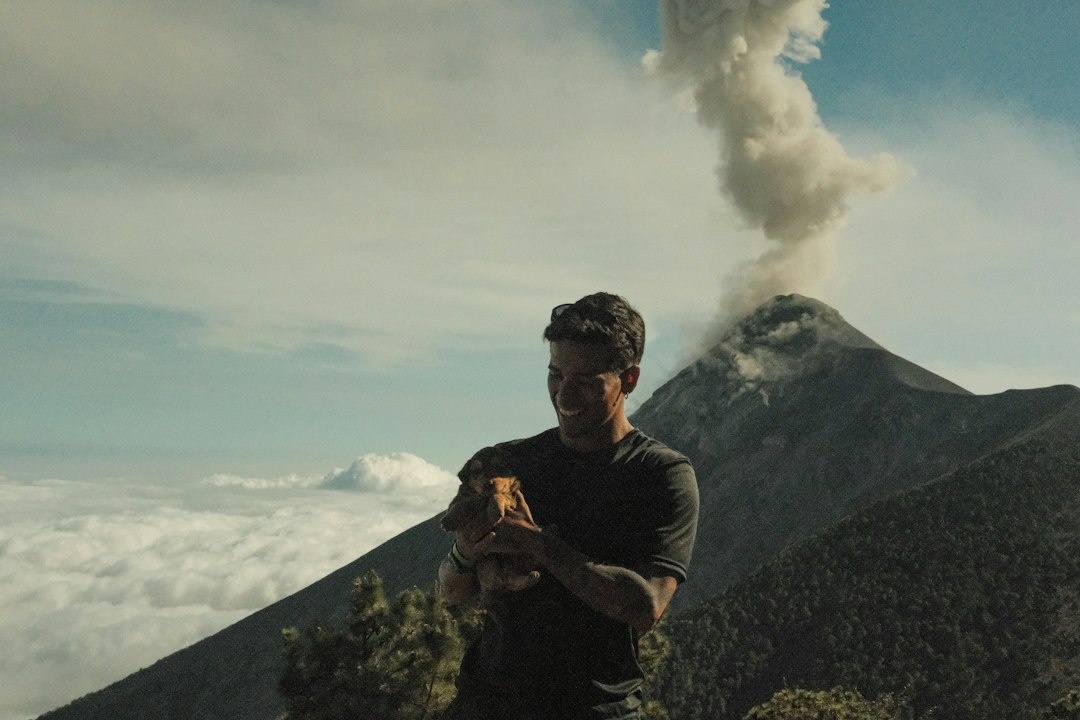
Acatenango is one of the rare hikes where bedtime entertainment can include lava fountains, glowing rockfalls and the low-frequency boom of an active volcano. October makes the experience harder to plan—but potentially more dramatic—because Guatemala’s rainy season is ending, clouds can clear spectacularly after sunset, and fewer hikers occupy the camps than during December’s dry-season peak.
Key Takeaways
- The standard overnight trek covers 14–16 km with roughly 1,500–1,600 meters of elevation gain to Acatenango’s 3,976-meter summit.
- Reputable shared tours cost about US$89–$109 (€76–€93) in October 2026, usually excluding the Q100 (€11) park fee.
- Book three nights in Antigua so you can move the trek by 24 hours if thunderstorms or a tropical system approach.
- October summit temperatures commonly fall to 0–5°C, while afternoon rain makes waterproof boots and a proper shell essential.
- The optional Fuego ridge hike adds approximately 4–5 km, 500–700 meters of climbing and three to four hours after the main ascent.
Key Numbers at a Glance
| Detail | October planning figure | Why it matters |
|---|---|---|
| Acatenango summit | 3,976 m | Altitude sickness is possible even on a one-night trek |
| Typical trailhead | About 2,350–2,450 m | Creates roughly 1,500–1,600 m of total ascent |
| Standard round-trip distance | 14–16 km | Normally 7–10 hours of walking over two days |
| Fuego ridge extension | 4–5 km; 3–4 hours | Considerably harder than its distance suggests |
| Antigua to trailhead | 30–35 km; 1–1.5 hours | Road traffic and village pickups affect departure times |
| Shared tour price | US$89–$109 (€76–€93) | October 2026 advertised range before extras |
| Park entrance | Q100, about €11 | Often collected separately in cash |
| October summit temperature | Approximately 0–5°C before sunrise | Wind chill can make it feel several degrees colder |
| Sunrise and sunset | About 5:50 a.m. and 5:40 p.m. | The Fuego ridge return frequently happens after dark |
Euro conversions in this guide use planning rates of €1 = US$1.17 and approximately €1 = Q9.0, checked in October 2026. Card exchange rates and operator prices can change.
Is October a Good Month for Acatenango?
October is a calculated gamble. December through February offers more reliable visibility, but it also brings colder nights, dustier trails and substantially busier campsites; October delivers greener slopes, powerful cloud movement and a better chance of watching Fuego with fewer people.
The first half of October is generally wetter than the final week. Afternoon showers remain common, while clearer windows most often develop overnight and shortly after sunrise—the exact hours when Fuego’s incandescent eruptions look best.
How to identify a usable weather window
Start checking forecasts five days out, but make your final decision 24–36 hours before departure. A generic Antigua forecast is nearly useless because Antigua sits around 1,530 meters while the summit rises to 3,976 meters.
- Use Windy to compare ECMWF and ICON rainfall, cloud and wind layers.
- Check Meteoblue for high-, medium- and low-level cloud cover over Acatenango.
- Read bulletins from INSIVUMEH, Guatemala’s volcanology and meteorology agency.
- Monitor CONRED for volcanic, landslide and severe-weather advisories.
- Download the area in Organic Maps or Gaia GPS before leaving Antigua; mobile service is intermittent above the farms.
A promising window is one where two forecast models show limited afternoon precipitation, no organized thunderstorm line and summit winds below roughly 40 km/h. A forecast of 1–3 mm of rain is manageable with proper gear; 10–20 mm plus lightning risk is a reason to postpone.
Skip the climb entirely if CONRED issues a relevant volcanic restriction, a tropical depression is approaching Guatemala, or your operator refuses to explain its cancellation procedure. Losing a €85 tour payment is preferable to spending six hours above the tree line during electrical storms.
October decision framework
| Forecast or personal situation | Best decision | Comparison |
|---|---|---|
| Light rain, low lightning risk, models agree on overnight clearing | Do the standard overnight trek | 14–16 km versus 18–21 km with the Fuego extension |
| Clear, dry afternoon and strong fitness | Consider the Fuego ridge option | Add 3–4 hours and 500–700 m of ascent |
| More than 10 mm forecast or thunderstorm signals | Delay by 24 hours | A flexible Antigua night may cost €15–€60 versus a wasted €85–€100 trek |
| No acclimatization or recent illness | Spend another night in Antigua | Antigua is 1,530 m; Acatenango’s summit is 2,446 m higher |
| Bad knees or difficulty climbing 1,000 m in a day | Skip Acatenango or hire private support | A porter reduces pack weight, not the 1,500 m climb |
Step 1: Build a Three-Night Antigua Buffer
Do not fly into Guatemala City and attempt Acatenango the following morning. Spend at least one complete day in Antigua first, then reserve an additional night after the trek; three Antigua nights provide one acclimatization day and one possible weather-shift day.
La Aurora International Airport to Antigua takes about 60–90 minutes in light traffic but can exceed two hours on Friday afternoons. A shared shuttle costs approximately US$20–$25 (€17–€21), compared with US$40–$55 (€34–€47) for a private car.
Book accommodation near the center rather than outside town because most operators require a morning office check-in. Browse hotels in Antigua Guatemala, but confirm whether the property will store your main luggage overnight.
Maya Papaya is my budget choice: dorm beds commonly run US$18–$24 (€15–€21), while private rooms are often US$55–$75 (€47–€64). Good Hotel Antigua is quieter and more comfortable at roughly US$100–$150 (€85–€128), but spending extra on a room before the trek will not improve your weather window.
For your pre-hike meal, go to Rincón Típico for roast chicken, potatoes, salad and tortillas from roughly Q45–Q60 (€5–€7). Its published hours are generally around 8:30 a.m.–4:30 p.m.; arrive before 2 p.m. because popular dishes can sell out.
Skip a giant burger and several beers the night before. Choose rice, tortillas, chicken and vegetables, then drink steadily through the day rather than forcing down two liters immediately before bed.
Step 2: Choose the Right Guide and Tour
Guides are not optional in practical terms, even when independent access appears possible. October fog can reduce visibility to a few meters, informal tracks diverge through farmland, and volcanic restrictions can change without warning.
The cheapest operator may save €15–€25, but that difference often buys weaker rain gear, overcrowded tents or a guide-to-hiker ratio above 1:10. I would rather pay €90 for a documented emergency plan than €65 for a social-media seller who communicates only through disappearing WhatsApp messages.
| Operator | Advertised shared price | Approx. EUR, Oct. 2026 | Typical format | Booking website |
|---|---|---|---|---|
| Wicho & Charlie’s | From US$99 | From €85 | Established permanent camp or cabin-style sleeping options; meals and transport | wichoandcharlies.com |
| OX Expeditions | From US$99 | From €85 | Shared overnight departure with office briefing, transport and meals | oxexpeditions.com |
| Tropicana | From US$95 | From €81 | Hostel-oriented group trip, generally social and budget focused | tropicanahostel.com |
| Smaller local group tour | US$70–$89 | €60–€76 | Inclusions, tent quality and ratios vary considerably | Book only after verifying guide credentials and insurance |
Prices are representative published starting rates reviewed in October 2026; the Q100 park fee, equipment, tips and Fuego extension may be separate. Confirm the final itemized price before paying.
Questions to ask before booking
- What is the maximum guide-to-client ratio? One guide for eight hikers is preferable to one for 12 or more.
- Is the Q100 park fee included? Two US$99 tours can differ by €11 once entrance charges are added.
- Where exactly is the campsite? Ask whether it has a toilet, roofed cooking space and fixed shelters or tents.
- What happens during lightning or increased volcanic activity? “The guide decides” is insufficient without an evacuation and communication plan.
- Are sleeping bags comfort-rated or merely survival-rated? Look for a comfort rating around -5°C to 0°C.
- What is the weather cancellation policy? Some operators offer rescheduling but no cash refund.
- Is the Fuego ridge excursion decided at camp? It should depend on conditions, not be sold as guaranteed.
Choose Wicho & Charlie’s if sleeping setup and established infrastructure matter most. Choose OX if you prefer an expedition-style operation, while Tropicana suits sociable backpackers who value group atmosphere over a quiet night.
Choose a private guide if you hike slowly, want more control over breaks or are traveling as a family. Private overnight arrangements commonly cost US$180–$300 (€154–€256) per person, compared with €81–€93 for a standard group.
Step 3: Rent Gear Without Getting Stuck With Useless Equipment
Most Antigua operators lend or rent jackets, gloves, hats, backpacks and trekking poles. Inspect everything in daylight: zippers should close, waterproof layers should have intact seam tape, and a headlamp should run for at least five hours.
Rental clothing is a backup, not a complete system. Bring your own moisture-wicking base layer and socks because a borrowed cotton hoodie is heavier, colder and slower to dry after October rain.
| Item | Typical rental price | EUR, Oct. 2026 | My recommendation |
|---|---|---|---|
| Trekking poles | US$5–$8 | €4–€7 | Rent them; they help enormously on the loose descent |
| 20–40 L backpack | US$5–$10 | €4–€9 | Rent only if it has a hip belt and rain cover |
| Insulated jacket | US$5–$10 | €4–€9 | Useful at camp, but keep it dry inside a bag |
| Rain jacket | US$5–$10 | €4–€9 | Bring your own if possible; rental waterproofing varies |
| Gloves and warm hat | US$3–$6 | €3–€5 | Essential for the pre-dawn summit |
| Porter | US$25–$40 each way or package-dependent | €21–€34 | Arrange in advance and clarify maximum weight |
Pack two liters of water minimum, plus whatever water your operator supplies. Three liters gives more margin, but three liters weighs three kilograms—meaning a porter does not excuse careless overpacking.
October packing list
- Waterproof shell with a hood, not a thin disposable poncho
- Fleece or synthetic mid-layer and a packable insulated jacket
- Quick-drying hiking trousers plus dry thermal leggings for camp
- Waterproof hiking shoes with aggressive tread
- Two pairs of wool or synthetic socks
- Headlamp with spare batteries
- Power bank of at least 10,000 mAh
- Dry bags or heavy zip bags for phone, insulation and sleep clothes
- Sun protection: SPF 50, sunglasses and hat
- Buff or well-fitted mask for dust and occasional ash
- Personal medication, blister treatment and toilet paper
- Cash for the park fee, Fuego extension and guide tip
Skip umbrellas, jeans, cotton sweatshirts and wheeled luggage. A 7–9 kg trekking pack is realistic; 12–14 kg will feel punishing during the steep agricultural section.
Step 4: Follow This Overnight Trek Schedule
Day 0: Acclimatize in Antigua
Walk gently around Antigua, eat an early dinner and finish gear fitting before evening. Climbing Cerro de la Cruz adds only around 100 meters of elevation and takes 20–30 minutes from the center; it is a leg check, not meaningful high-altitude acclimatization.
Download offline maps, place your passport in hotel storage and carry a copy instead. Mobile data may work at portions of camp but should never be your emergency plan; if you need an eSIM, compare a Guatemala package from Airalo with your carrier’s roaming rate before arrival.
Day 1, 7:00–10:30 a.m.: Breakfast, briefing and transfer
Eat a moderate breakfast of eggs, oats, fruit and bread. Samsara is a good option for bowls and vegetarian breakfasts costing about Q55–Q80 (€6–€9), with published opening hours commonly around 7:00 a.m.–9:00 p.m.
Most operators brief and fit gear between 7:00 and 9:00 a.m., then drive 1–1.5 hours to La Soledad or another authorized access point. A 14-seat shuttle may make several pickups, so a stated 8:00 departure can become 8:30.
Day 1, 11:00 a.m.–1:00 p.m.: Farmland ascent
The opening climb through cornfields is steep, exposed and frequently muddy in October. Expect approximately 400–500 meters of ascent in the first 1.5–2 hours—harder than walking the same distance on Acatenango’s gentler upper slopes.
Set a sustainable pace immediately. If you are breathless enough that you cannot speak a complete sentence, slow down rather than trying to remain beside the fastest hiker.
Day 1, 1:00–4:30 p.m.: Cloud forest to base camp
After lunch, vegetation shifts from humid cloud forest toward pine and volcanic terrain. Depending on campsite location and group speed, you will reach roughly 3,500–3,750 meters after five to seven total hiking hours.
October rain most often catches groups during this section. Keep your warm layer sealed away until camp: hiking in your insulated jacket can soak it with sweat, leaving you with nothing dry when temperatures fall by 10–15°C.
Day 1, 5:00 p.m.–midnight: Fuego viewing
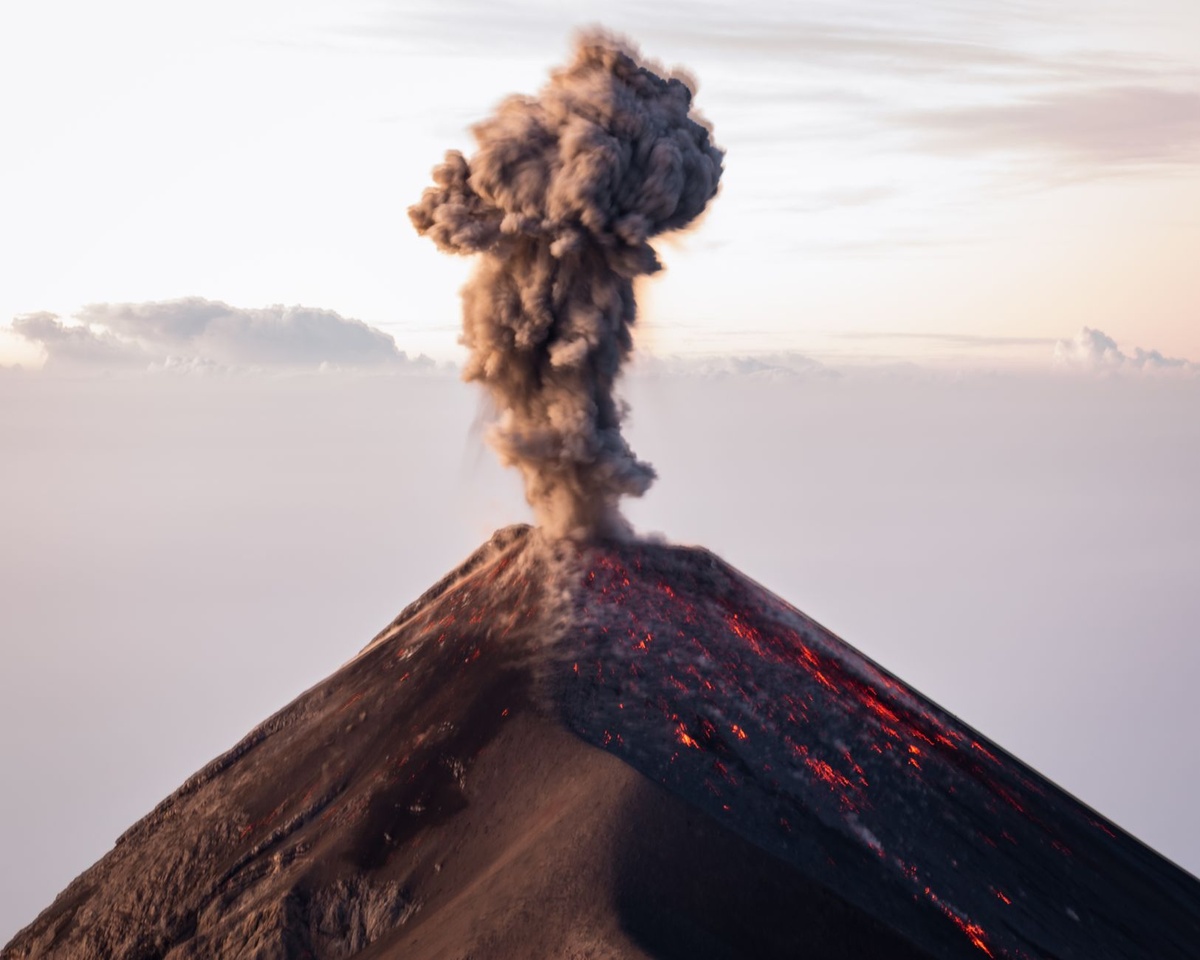
Sunset occurs near 5:40 p.m. in October. Fuego’s eruptions can happen several times an hour during active periods—or become less visible behind clouds—so a clear ten-minute interval is more valuable than obsessively filming all night.
Use a tripod or brace your phone against a fixed object. On newer phones, try a one- to three-second exposure rather than maximum night mode; longer exposures blur glowing rocks as they fall down Fuego’s flank.
Turn screen brightness down and enable airplane mode. A phone that loses 30% battery searching for signal is less useful than one reserved for sunrise photos and emergencies.
Day 2, 3:45–7:30 a.m.: Summit push
The summit ascent usually begins between 3:45 and 4:30 a.m. The route gains approximately 300–500 meters over loose volcanic gravel, taking 60–120 minutes depending on camp position and pace.
Sunrise is around 5:50 a.m., but the exposed summit can be brutally windy. Take photographs, watch Fuego and descend once cold hands or poor balance become an issue; ten minutes at 50 km/h wind is less comfortable than 45 minutes in a sheltered camp.
Day 2, 8:00 a.m.–1:00 p.m.: Descent and Antigua return
After breakfast, the descent typically takes 2.5–4 hours. Trekking poles are worth their €4–€7 rental cost here because wet dust, pine needles and loose scree create more falls on the descent than the ascent.
Most groups return to Antigua between noon and 2:00 p.m., compared with 4:00–6:00 p.m. if delays or vehicle problems occur. Do not book an international flight that evening.
Should You Add the Fuego Ridge Hike?
The optional excursion does not climb to Fuego’s crater. It crosses toward a viewing ridge below the active cone, and its availability must depend on official restrictions, eruption behavior, lightning, visibility and the guide’s judgment.
The extension commonly costs US$25–$40 (€21–€34) and adds three to four hours. It can increase your day-one climbing by 500–700 meters after you have already gained around 1,100–1,300 meters to camp.
Choose the Fuego extension if you regularly complete 1,500-meter mountain days, arrive at camp with energy, and conditions are dry and officially permitted. Skip it if your boots are wet, clouds hide the ridge, lightning is possible or the main climb already exhausted you.
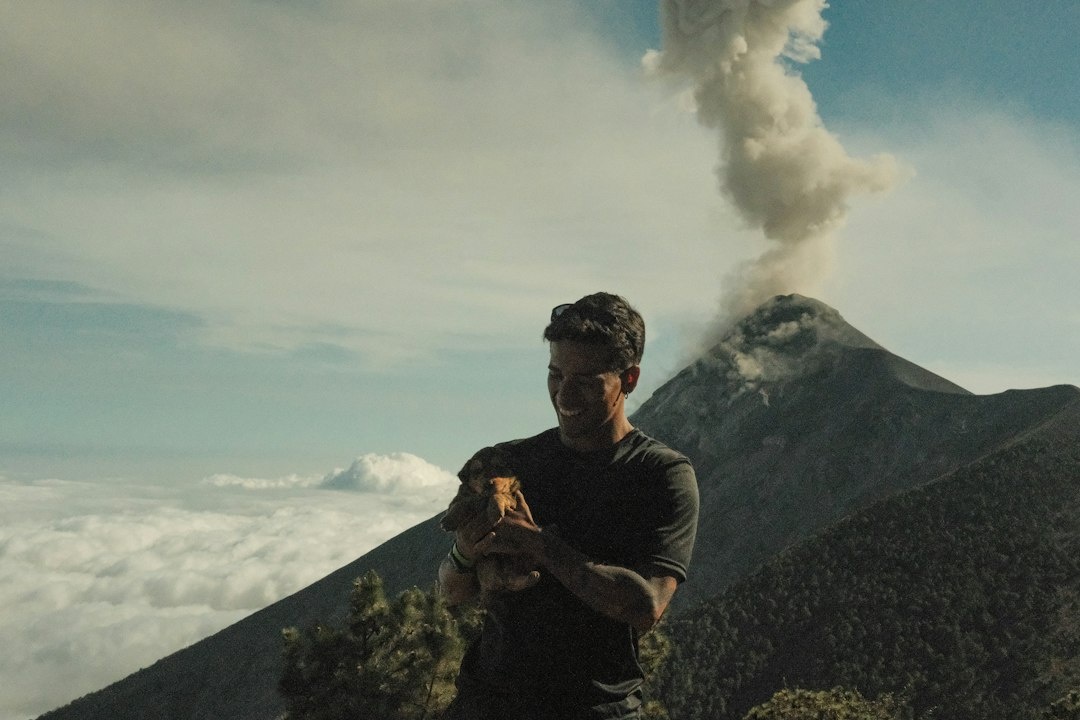
My opinion: in October, make the decision at camp, not while booking. Watching Fuego from Acatenango’s established campsite is already exceptional, while slogging across a muddy saddle in darkness can leave you too depleted for sunrise.
Campsite and Volcano Safety
Acatenango’s central hazard is not simply cold. Lightning, hypothermia, altitude illness, steep terrain and unpredictable volcanic activity can combine, particularly when hikers arrive soaked after an October downpour.
A permanent or regularly maintained camp with a covered cooking area offers more protection than a basic tent pitched on an exposed platform. The price difference may be only €15–€25, which is poor territory for aggressive cost-cutting.
At camp
- Ask the guide to identify the toilet, evacuation direction and group meeting point before dark.
- Keep boots, shell, headlamp and emergency layers together rather than scattering them around the tent.
- Do not leave camp alone for a “better angle,” especially in fog or after drinking alcohol.
- Stay away from eroded edges and gullies that can channel rainwater, ash and debris.
- Keep food sealed; camp animals and stray dogs can tear into unattended bags.
- Follow official guide instructions immediately if volcanic activity changes.
Normal exertion can cause headache and fatigue, but worsening headache, vomiting, confusion, inability to walk straight or shortness of breath at rest require descent. Going from Antigua at 1,530 meters to nearly 4,000 meters in about 24 hours is far more abrupt than sleeping at 2,500 meters first.
Travel insurance should explicitly cover hiking to 4,000 meters and evacuation. A basic policy limited to 3,000 meters is not equivalent, even if it costs €20 less.
What the Trek Really Costs
A US$99 headline price does not make this a US$99 trip. Once you add the park fee, gear, food, tips and Antigua accommodation, a realistic budget is close to €200 from arrival in Antigua to post-hike shower.
| Expense | Budget plan | Comfort plan |
|---|---|---|
| Shared overnight tour | €81 | €93 |
| Park fee | €11 | €11 |
| Gear rental | €12 | €25 |
| Optional Fuego ridge hike | €0 | €30 |
| Two Antigua nights | €36, dorm | €200, private hotel |
| Pre- and post-hike food | €18 | €35 |
| Guide and porter tips | €9 | €25 |
| Airport shuttle share | €17 | €47 private car |
| Total | €184 | €466 |
Porters should be paid transparently and tipped separately when service is good. Confirm whether a quoted US$30 covers one direction, both directions or a fixed kilogram allowance.
Common Acatenango Mistakes
Booking the cheapest tour without comparing inclusions
A €65 tour plus an €11 entrance fee, €20 gear package and €30 Fuego supplement becomes €126. An €85 tour with better equipment and meals can be both cheaper and safer.
Trusting Antigua’s weather forecast
Antigua may report 22°C while Acatenango’s summit sits near freezing. Compare mountain-level wind and cloud forecasts instead of relying on a city weather widget.
Attempting the trek immediately after flying
One acclimatization night is the minimum; two is better if you arrived from sea level. The summit is nearly 2,450 vertical meters above Antigua, despite appearing close on the map.
Wearing all warm layers while climbing
You will sweat through them and become colder at camp. Hike slightly cool, keep insulation dry and add layers within minutes of stopping.
Assuming eruptions are guaranteed
Fuego is persistently active, but visible lava depends on eruption behavior and cloud cover. Tour companies sell access to the experience, not a guaranteed volcanic performance.
Committing to the Fuego extension too early
The extra 4–5 km sounds minor, but it comes after hours of steep ascent and may finish in darkness. Decide at camp after evaluating your legs, weather and official guidance.
Planning a same-day flight after descending
A normal return around 1:00 p.m. can slide several hours because of slow hikers, rain or vehicle delays. Stay one more night in Antigua rather than gambling an international ticket worth hundreds of euros.
Final Verdict: Is Acatenango Worth It in October?
Yes—if you treat October as a weather-window expedition rather than a fixed-date attraction. The combination of night hiking, a 1,500-meter climb and Fuego’s red eruptions is among Central America’s most memorable nocturnal experiences, but flexibility is what turns a rainy-season gamble into a calculated plan.
Book a reputable guide, reserve three Antigua nights, keep the Fuego extension optional and protect one complete set of dry clothing. Save this guide, compare the forecast models 36 hours before departure, and send your operator the seven safety questions before paying.
Frequently Asked Questions
How much does the Acatenango overnight hike cost?
Shared tours generally cost US$89–$109 (€76–€93) in October 2026. Budget another Q100 (€11) for admission, €12–€25 for equipment and €9–€25 for tips.
How hard is the Acatenango overnight trek?
The standard route covers roughly 14–16 km and gains about 1,500–1,600 meters to the 3,976-meter summit. Most hikers walk five to seven hours on day one, one to two hours to the summit and 2.5–4 hours down.
Can you hike Acatenango in October?
Yes, but October remains part of Guatemala’s rainy-season transition, with afternoon showers and possible thunderstorms. Keep a 24-hour scheduling buffer and postpone if heavy rain, lightning or an official volcanic advisory is forecast.
Is the Fuego ridge hike worth the extra cost?
It is worth the US$25–$40 (€21–€34) supplement for fit hikers in dry, officially permitted conditions. Skip it during rain or low visibility because it adds 4–5 km, 500–700 meters of ascent and up to four hours.
Do I need a guide to hike Acatenango?
A reputable guide is strongly recommended because October fog, volcanic restrictions and rapidly changing weather complicate navigation and emergency decisions. Look for a ratio near one guide per eight clients and ask for a written cancellation and evacuation policy.
About the Author: Tomáš Bzirský
Founder and editor of Distratech. Based in the Czech Republic, travelling regularly from Central Europe. Writes practical travel guides and travel-tech comparisons (eSIM, apps, airports) in six languages.