Uzbekistan’s three headline Silk Road cities look interchangeable in photographs, but they feel remarkably different on the ground. Samarkand delivers monumental architecture and the easiest trains, Bukhara rewards slow neighborhood wandering, and Khiva offers the most complete old-city atmosphere—along with more tour groups and a much longer journey.
Key Takeaways
- Choose Samarkand for major monuments and fast trains, Bukhara for mahalla life and food, and Khiva for a compact walled-city experience.
- A comfortable three-night stay for two costs about €243 in Samarkand, €219 in Bukhara or €205 in Khiva, excluding intercity transport.
- Afrosiyob trains take roughly 2 hours 10 minutes from Tashkent to Samarkand and 1 hour 45 minutes from Samarkand to Bukhara.
- October is peak Uzbekistan weather: expect approximately 18–24°C by day, cool evenings and high demand for trains and family guesthouses.
- For a first trip under seven nights, visit Samarkand and Bukhara; add Khiva when you have at least nine nights.
Key Numbers at a Glance
The prices below are practical October 2026 planning figures. Uzbekistan’s exchange rate moves regularly, so I have used a budgeting rate of approximately €1 to UZS 14,000 and rounded euro amounts.
| Comparison | Samarkand | Bukhara | Khiva |
|---|---|---|---|
| Ideal first stay | 3 nights | 3 nights | 2–3 nights |
| Old-city walking area | Spread across 4–6 km | Roughly 2.5 km end to end | About 1 km across |
| Family guesthouse double | €40–€58 | €35–€52 | €28–€45 |
| Main sightseeing cost per person | €18–€24 | €12–€19 | €14–€25 |
| Plov lunch | €3.50–€5.50 | €3–€5 | €3.50–€6 |
| Typical station taxi | €2.50–€4.50 | €3–€5 | €2–€4 from Khiva station |
| Crowd level in October | High at headline sights | Moderate outside Lyabi-Hauz | High from 10am–4pm |
| Best quality | Architecture | Neighborhood atmosphere | Historic cohesion |
Prices are per room or per person as indicated and reflect October 2026 planning rates. Admission policies and exchange rates can change without notice.
The Fast Decision: Which City Should You Choose?
- Choose Samarkand if this is your first journey in Central Asia, you want Uzbekistan’s biggest visual hits, or you need simple rail connections from Tashkent.
- Choose Bukhara if you value family-run guesthouses, neighborhood walks, courtyard meals and a city that becomes better after the day-trippers leave.
- Choose Khiva if you want to sleep inside a nearly intact walled city, photograph blue-tiled minarets at sunrise and do minimal urban transport.
- Choose Samarkand plus Bukhara for a six- or seven-night trip. This pairing gives you monumental scale and lived-in old-city texture without losing a day reaching western Uzbekistan.
- Choose all three only with nine nights or more. The Bukhara–Khiva leg commonly consumes 6–8 hours door to door.
My first-trip ranking is Bukhara first, Samarkand second and Khiva third. Samarkand has the strongest individual monuments, but Bukhara provides the best complete stay: easier walks, better evening atmosphere and more rewarding interactions beyond ticketed sites.
Samarkand: Best for Monumental Architecture and Train Connections
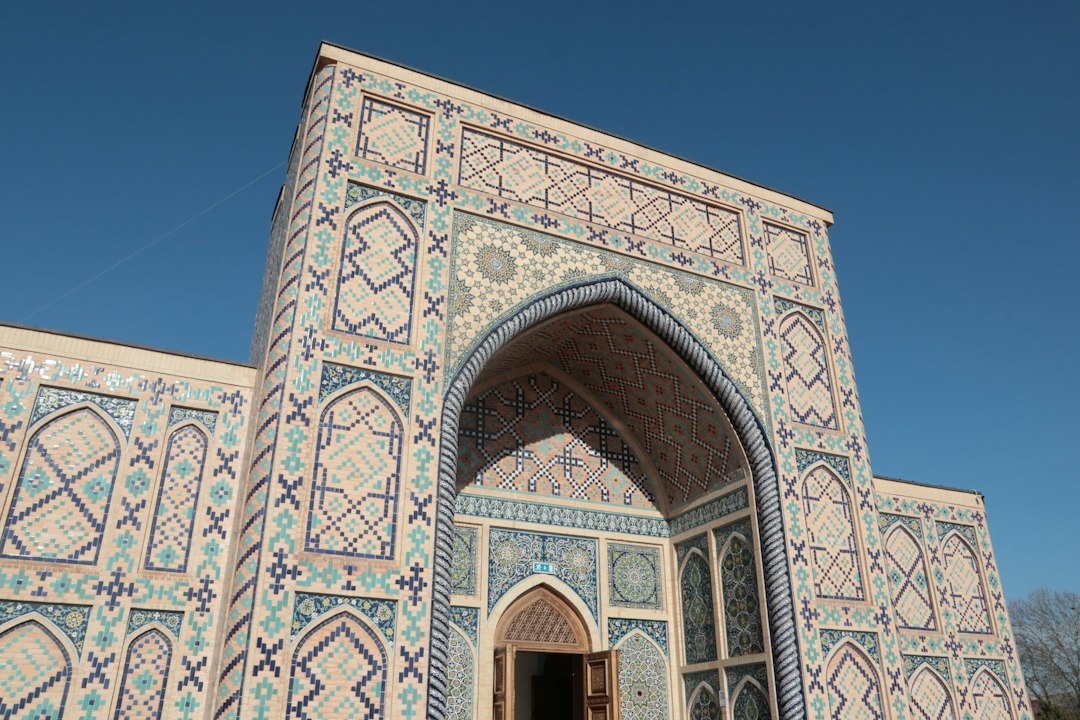
Samarkand is the city that sells Uzbekistan, and Registan Square genuinely earns its reputation. The catch is urban scale: Registan, Shah-i-Zinda, the Afrosiyob Museum and Samarkand’s best plov restaurant are spread over several kilometers rather than contained in one old quarter.
Where to Stay: Family Guesthouses Near Registan
Jahongir Guest House, around 700 meters south of Registan, is my practical first choice. October doubles commonly fall between €42 and €55 including breakfast, and its vine-shaded courtyard feels personal without sacrificing reliable heating, Wi-Fi or English-speaking help.
Antica B&B sits opposite the Gur-e-Amir area and usually costs €48–€65 for a double with breakfast. It is quieter and more polished than Jahongir, but you will walk approximately 20 minutes to Registan instead of 9–10 minutes.
Skip generic business hotels around University Boulevard unless you need elevators or international-hotel facilities. A courtyard guesthouse places you closer to evening street life and usually saves €20–€45 per night.
For broader availability, compare family stays with hotels in Samarkand, but message the property to confirm whether your room is in the historic house or a newer annex. October is a high-demand month, so reserve four to six weeks ahead.
The Best Samarkand Mahalla Walk
Start at Gur-e-Amir around 8am, walk through the low-rise lanes east of Ruhabad Mausoleum, cross toward Registan, then continue behind Bibi-Khanym into the residential streets west of Shah-i-Zinda. The full route is approximately 4.5 kilometers and takes 2.5 hours without monument visits versus about 5 hours with admissions.
The section behind Bibi-Khanym is more revealing than the heavily reconstructed pedestrian boulevard between Registan and Siyob Bazaar. Expect uneven asphalt, open drainage channels and few benches; readers concerned about surfaces may also appreciate our guide to walking routes ranked by gradient and accessibility when planning other trips.
Mahallas are residential communities, not open-air museums. Keep cameras lowered around doorways, ask before photographing people and avoid blocking narrow entrances while families are coming home.
Markets and Plov: Where Samarkand Wins
Siyob Bazaar, beside Bibi-Khanym Mosque, generally operates from about 7am to 7pm, with the fullest produce selection before 11am. Bread rings cost roughly UZS 5,000–10,000 (€0.35–€0.70), while 500 grams of dried apricots or raisins usually costs UZS 30,000–55,000 (€2.15–€3.95).
The front aisles cater heavily to visitors. Walk 150 meters deeper for household goods, dairy products and more realistic prices; skip pre-packed “Silk Road spice” gift sets unless you enjoy paying two or three times the loose-market rate.
For lunch, go to Samarkand Osh Markazi near the Ulugh Beg Observatory. A serving of Samarkand plov with salad, bread and tea costs approximately UZS 55,000–75,000 (€3.95–€5.35), compared with €8–€12 for a dressed-up version near Registan.
Arrive between 11:30am and 12:30pm. Plov is a lunch dish, and the best cauldrons may be scraped clean by 2pm even if an online listing says the restaurant remains open later.
Sights, Opening Hours and Crowds
Registan is typically open from 8am to 7pm in the warmer season, with an indicative foreign-visitor ticket of UZS 100,000 (€7.15). Shah-i-Zinda usually opens around 7am and costs approximately UZS 50,000 (€3.60), while Gur-e-Amir is about UZS 75,000 (€5.35).
October tour groups reach Registan most heavily between 10am and 4pm. Visit at opening, return after sunset to see the illuminated façades, and skip the packaged “traditional costume photo” pitches unless that is specifically your thing.
Shah-i-Zinda is better at 7:30am than Registan because its narrow passage becomes congested quickly. At 8am you may share it with 30 people; by 11am, several hundred visitors can cycle through in an hour.
Bukhara: Best for Mahalla Walks, Courtyard Guesthouses and Slow Travel
Bukhara has fewer jaw-dropping standalone monuments than Samarkand, but it is considerably better for unstructured exploration. From Lyabi-Hauz you can walk to the Poi Kalyan complex in 12 minutes, the Ark in another 10 and quiet residential lanes almost immediately.
Where to Stay: Bukhara’s Strongest Guesthouse Scene
Minzifa Boutique Hotel is more polished than a simple homestay, but its carved courtyard and family-style service make it a dependable choice at roughly €50–€70 per double with breakfast. It is approximately 600 meters from Lyabi-Hauz.
For better value, try Komil Bukhara Boutique Hotel, where doubles commonly run €42–€58. Its 19th-century merchant-house interiors are more atmospheric than most newly built “traditional” hotels, though steep stairs make upper rooms inconvenient with heavy luggage.
Old Bukhara Boutique and smaller mahalla guesthouses around Eshoni Pir Street often cost €35–€50. Ask whether breakfast is served in the historic courtyard and whether the room has an exterior window; some cheaper rooms face only an internal corridor.
Stay within a 10-minute walk of Lyabi-Hauz, but not directly on the square. The southern mahalla lanes are quieter, while waterside rooms can pick up restaurant music until 11pm.
The Best Bukhara Mahalla Walk
Begin at Chor Minor at 8am, continue through the lanes around Eshoni Pir, pass the old Jewish quarter and synagogue area, then cross Lyabi-Hauz toward Magoki Attori. Continue through the trading domes, Poi Kalyan and the backstreets north of the Ark.
This route covers approximately 4 kilometers and needs 3 hours at a slow pace, compared with only 45 minutes if you charge straight through the tourist corridor. Add the Samanid Mausoleum and Chashma-Ayub for a 6-kilometer loop.
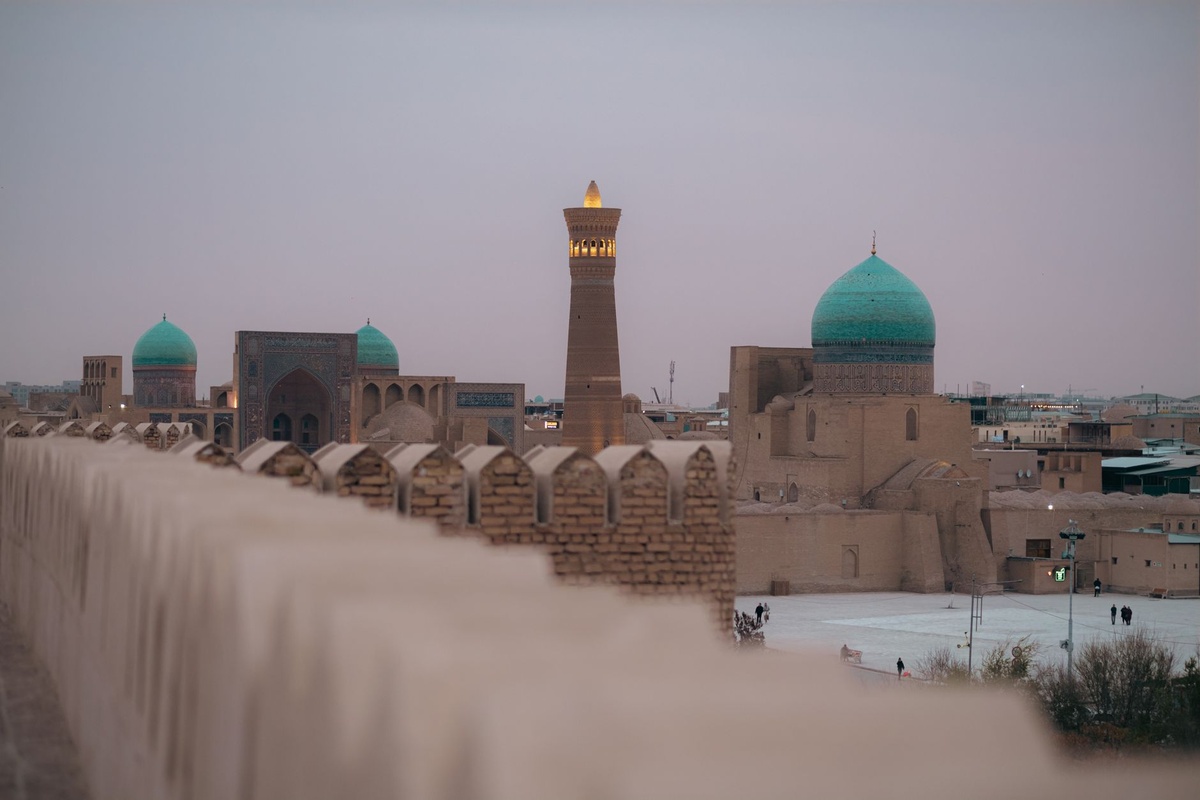
Bukhara’s lanes feel more lived-in than central Khiva and less traffic-dominated than Samarkand. Look for carved doors, irrigation channels and neighborhood bakeries, but skip unsolicited “my family workshop” detours unless prices are agreed before entering.
Markets, Trading Domes and the Best Plov
The historic trading domes generally become active from around 9am until 6pm, but they now function mainly as souvenir arcades. For food and ordinary commerce, head to Bukhara Central Dehqon Market, about 2 kilometers north of Lyabi-Hauz, operating roughly 7am–6pm.
A Yandex Go taxi from the old center costs around UZS 15,000–25,000 (€1.05–€1.80), compared with UZS 50,000 or more quoted by drivers waiting beside tourist hotels. The market is strongest before noon for fruit, nuts, bread and dairy products.
For plov, Chinar Chaikhana is more convincing than the most visible Lyabi-Hauz restaurants. Budget UZS 50,000–70,000 (€3.60–€5) for plov, achichuk tomato salad and tea, and arrive before 1pm.
Old Bukhara Restaurant is useful for a broad menu and rooftop seating, but its plov is designed for all-day tourist demand rather than cooked around a single lunchtime cauldron. Eat plov at Chinar; use Old Bukhara for dinner dishes such as dimlama or lamb kebabs.
Sights, Prices and Evening Atmosphere
Much of Bukhara’s appeal is free: Poi Kalyan’s exterior courtyards, Lyabi-Hauz, Chor Minor’s surroundings and the trading domes require no combined old-city pass. Individual interiors generally cost UZS 20,000–60,000 (€1.45–€4.30).
The Ark is usually open around 9am–6pm and costs approximately UZS 60,000 (€4.30), while climbing or entering specific monuments may require separate tickets. Verify same-day hours because museum closures and restoration work are not always reflected online.
After 6pm, Bukhara beats both rivals. Day tours retreat, Poi Kalyan is illuminated, and the walk between the minaret and Lyabi-Hauz takes about 15 minutes through largely pedestrian streets.
Khiva: Best for a Walled-City Stay and Sunrise Photography
Khiva’s Itchan Kala is the closest Uzbekistan comes to a complete architectural stage set. That is both its strength and weakness: almost every major sight is within a 15-minute walk, but craft stalls and organized tours dominate the central streets during the day.
Where to Stay Inside Itchan Kala
Meros B&B, near the western wall, offers rooftop views and doubles around €32–€45 with breakfast. Rooms are simple, but watching sunset over Kalta Minor from the terrace is worth more than another layer of boutique decoration.
Musafir Guest House and Khiva Alibek B&B frequently offer doubles between €28 and €42. Alibek’s location near the West Gate is convenient for luggage, though rooms facing public areas can be noisy during early departures.
Stay inside Itchan Kala for at least one night. Outside-the-wall hotels may save €8–€15, but Khiva’s best hours are before 8am and after 7pm, when group buses have gone.
Mahalla Walks: Inside and Outside the Walls
For the postcard circuit, enter through Ota Darvo at sunrise, walk past Kalta Minor to the Juma Mosque, continue to Islam Khoja and loop along the quieter eastern wall. It is only 2 kilometers and takes around 90 minutes with photography.
For actual neighborhood life, leave through Polvon Darvo and walk east toward Khiva’s produce market, then circle north around the outer wall. The 3.5-kilometer loop takes about two hours and feels markedly less curated than the central axis.
Khiva is flatter and more compact than Samarkand, but cobbles, high thresholds and narrow monument stairs remain common. A healthy traveler can cross Itchan Kala in 15 minutes; someone using a cane may need twice that.
Markets and What to Eat Instead of Chasing Plov
Khiva Dehqon Market, east of the old city, generally trades from 7am until around 6pm. It is less photogenic than Siyob but more local, with bread from about UZS 5,000 (€0.35) and seasonal pomegranates around UZS 12,000–20,000 (€0.85–€1.45) per kilogram.
Khorezm plov is worth tasting, but Khiva’s more distinctive dishes are shivit oshi, green dill noodles, and tukhum barak, egg-filled dumplings. At Khorezm Art Restaurant, expect UZS 45,000–70,000 (€3.20–€5) for either dish versus roughly UZS 70,000–90,000 (€5–€6.40) for plov and salad.
Terrassa Cafe has the classic Kalta Minor view, but you pay for it: dinner with a main course and drink is about €12–€18 per person. Go for sunset tea or one shared appetizer, then eat at Khorezm Art; the food-to-price ratio is better.
Tickets, Towers and Tour-Group Timing
The standard Itchan Kala admission package is approximately UZS 200,000 (€14.30), commonly valid for two days, although inclusions can change. Major towers, mausoleums or panoramic platforms may require separate UZS 50,000–100,000 (€3.60–€7.15) tickets.
Most museums operate around 9am–6pm. Tour groups are thickest from 10am to 4pm, so use that period for lunch, the outer neighborhoods or a rest at your guesthouse.
Do not assume every minaret can be climbed. Closures occur because of restoration, weather and safety controls; ask at the West Gate ticket office before purchasing add-ons.
Train Connections: Samarkand Is Easiest, Khiva Requires Planning
Book through the official Uzbekistan Railways e-ticket website or the Uzrailways Tickets app. Afrosiyob seats for October can disappear 10–20 days ahead, especially on Friday and Sunday departures.
| Route | Approx. distance | Fastest practical train | Typical duration | Indicative fare, October 2026 |
|---|---|---|---|---|
| Tashkent–Samarkand | 300 km | Afrosiyob | 2h 10m–2h 30m | €16–€28 |
| Samarkand–Bukhara | 270 km | Afrosiyob | 1h 40m–2h | €13–€23 |
| Tashkent–Bukhara | 590 km | Afrosiyob | 3h 50m–4h 20m | €22–€36 |
| Bukhara–Khiva | 450 km | Conventional train | 6h–8h | €12–€22 |
| Samarkand–Khiva | 720 km | Overnight/conventional train | 10h–13h | €17–€35 |
Schedules and fares vary by service and class. Search “Khiva,” not only “Urgench,” because some services terminate at Khiva’s own station.
Samarkand station is approximately 6 kilometers from Registan. Yandex Go costs around UZS 30,000–60,000 (€2.15–€4.30) and takes 20–30 minutes, compared with 45 minutes on public transport with luggage.
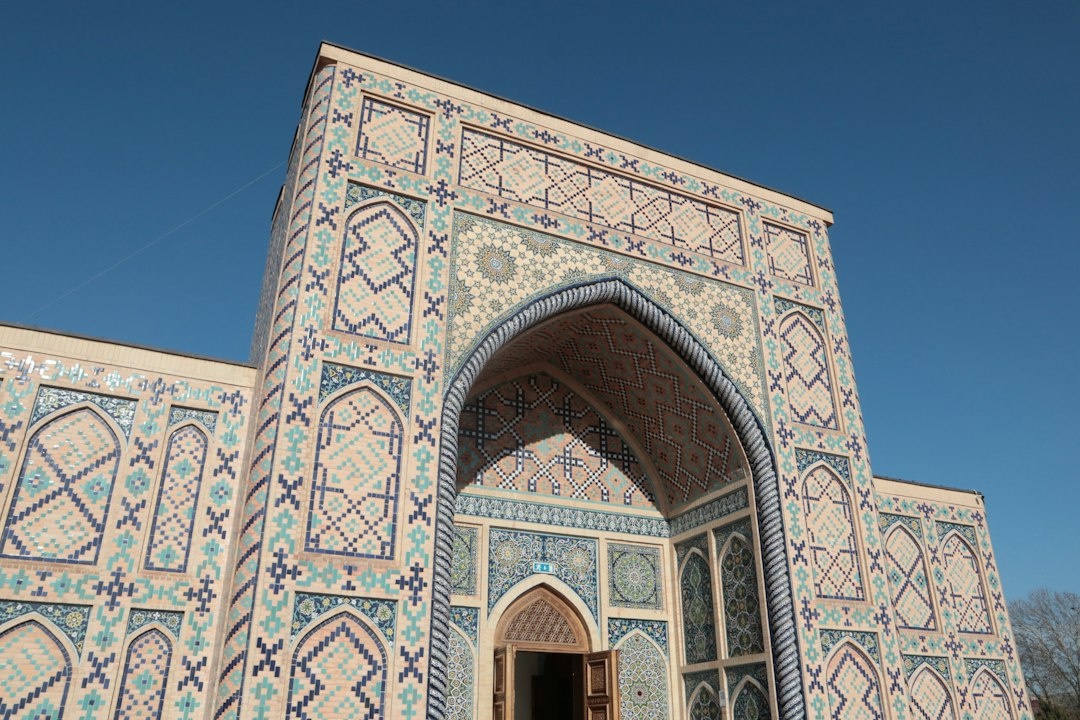
Bukhara’s Kogon station is roughly 15 kilometers from the old city. Allow 25–35 minutes and UZS 45,000–70,000 (€3.20–€5) by app taxi; ignore drivers asking €15 inside the arrivals area.
Khiva station is only about 2.5 kilometers from Itchan Kala. A taxi takes 8–12 minutes and costs roughly UZS 25,000–50,000 (€1.80–€3.60), while walking with luggage takes 30–40 minutes.
If a Bukhara–Khiva daytime train would consume your only full day, take an overnight service or fly between Tashkent and Urgench. Urgench Airport is 35 kilometers from Khiva; a taxi takes about 45 minutes and costs €8–€15.
Three-Night Cost Comparison
This budget assumes two people sharing a well-reviewed guesthouse, eating one market or plov lunch and one sit-down dinner daily. It includes major sights and local taxis but excludes trains between cities.
| Three-night cost for two | Samarkand | Bukhara | Khiva |
|---|---|---|---|
| Guesthouse with breakfast | €150 | €135 | €114 |
| Three lunches | €30 | €27 | €30 |
| Three dinners | €54 | €48 | €45 |
| Main admissions for two | €40 | €30 | €36 |
| Taxis and city transport | €18 | €14 | €10 |
| Tea, snacks and water | €12 | €12 | €12 |
| Total for two | €304 | €266 | €247 |
| Per person | €152 | €133 | €124 |
Solo travelers should budget roughly €210 in Samarkand, €185 in Bukhara or €170 in Khiva because rooms do not halve in price. Add €45–€70 per person for the Tashkent–Samarkand–Bukhara rail sequence, plus €12–€22 for Bukhara–Khiva.
A Costed Nine-Night First-Trip Plan
- Nights 1–3: Samarkand. Visit Shah-i-Zinda at opening, Siyob Bazaar, Registan, Gur-e-Amir and Samarkand Osh Markazi. Budget €152 per person sharing.
- Nights 4–6: Bukhara. Take a morning Afrosiyob, explore the southern mahallas, eat plov at Chinar and reserve one evening for Poi Kalyan. Budget €133 plus approximately €18 for the train.
- Nights 7–9: Khiva. Use a daytime train only if you have work or reading to catch up on; otherwise choose an overnight departure. Budget €124 plus approximately €17 for rail.
The nine-night city total is approximately €444 per person sharing, including accommodation, food, principal attractions, city transport and the Samarkand–Bukhara–Khiva trains. Add your Tashkent accommodation, international flights and roughly €20–€40 for souvenirs.
October Weather, Crowds and Booking Strategy
October is one of Uzbekistan’s best travel months. Typical daytime temperatures sit around 18–24°C in Samarkand and Bukhara, while nights can fall to 7–12°C; Khiva often feels warmer in the afternoon but colder after sunset because of its desert setting.
Pack a light down jacket or fleece rather than relying on summer clothing. Compared with September’s 28–32°C afternoons, October is far better for 5-kilometer walks, but evening rooftop meals become chilly.
Book Afrosiyob trains as soon as your dates are fixed and reserve guesthouses at least a month ahead. Khiva may look quiet at dawn yet sell out because small properties often contain only six to twelve rooms.
Travel Tech That Actually Helps
- Yandex Go: best for fixed taxi pricing in Samarkand and Bukhara; coverage is less consistent in outer Khiva.
- 2GIS: useful for business locations and offline urban maps, while Organic Maps performs better in small mahalla lanes.
- Uzrailways Tickets: use it for schedules and QR tickets, but keep a screenshot because station connectivity can be uneven.
- Google Translate: download Russian and Uzbek offline; Russian remains widely useful for transport and market transactions.
- Cash: carry UZS 20,000 and 50,000 notes for markets, small admissions and guesthouses; foreign cards are unreliable outside larger hotels.
Buy a local SIM at Tashkent Airport or an official operator shop rather than from an unmarked kiosk. A 20–30GB package generally costs €5–€9, compared with international roaming that can exceed €8 per day.
Common Mistakes to Avoid
Trying to See All Three Cities in Six Nights
Three cities in six nights means at least two rail days and repeated check-ins. Skip Khiva on a short first trip and give Samarkand and Bukhara three nights each.
Eating Plov at Dinner
The best plov is prepared for lunch and may sell out by 2pm. A restaurant serving it at 8pm is often reheating an earlier batch or offering a tourist-oriented version.
Booking the Cheapest “Old City” Room
A €25 room may have no exterior window, private bathroom or reliable heating. Paying €8–€15 more usually secures breakfast, courtyard access and help with station transfers.
Accepting Station Taxi Prices
A driver at Bukhara station may ask €10–€15 for a journey that costs €3–€5 through Yandex Go. Walk beyond the immediate taxi crowd before ordering through the app.
Spending the Entire Day Inside Ticketed Monuments
Uzbekistan’s cities make more sense when you mix architecture with markets and mahallas. In Bukhara, two unplanned hours south of Lyabi-Hauz reveal more local life than a rushed sequence of six small museums.
Assuming Khiva Is Only a Day Trip
Khiva is most crowded during day-trip hours and most atmospheric after dark. If you make the long journey west, sleep inside Itchan Kala for at least two nights.
The Final Verdict
Bukhara is the best all-round city for a first Uzbekistan trip. Its monuments, family guesthouses, walkable mahallas and evening atmosphere form the most satisfying three-night experience, while daily costs remain about €19 per person lower than Samarkand.
Samarkand is non-negotiable for first-time visitors because Registan and Shah-i-Zinda are Uzbekistan’s strongest architectural sights. Its fast rail links also make it the easiest city to integrate into a short itinerary.
Khiva is worth the detour when time permits. Add it for the walled-city atmosphere and dawn photography, not because it offers better markets or food than Bukhara.
Use this comparison to lock in your city order, then reserve the Afrosiyob legs before choosing non-refundable rooms. If you have only one week, book Samarkand and Bukhara and save Khiva for the trip that continues into Karakalpakstan and the Aral Sea region.
Frequently Asked Questions
Is Samarkand, Bukhara or Khiva best for first-time visitors?
Bukhara is the best complete three-night stay, while Samarkand has the most important individual monuments. Visit both on a first trip; add Khiva if you have at least nine nights in Uzbekistan.
How many nights do you need in Samarkand, Bukhara and Khiva?
Allow three nights each in Samarkand and Bukhara and two or three nights in Khiva. A realistic three-city itinerary therefore needs nine nights, excluding extra time in Tashkent.
How much does a three-night stay cost in Uzbekistan’s Silk Road cities?
For two people sharing a guesthouse, budget about €304 in Samarkand, €266 in Bukhara or €247 in Khiva for three nights. These October 2026 estimates include food, main admissions and local transport but exclude intercity trains.
How long is the train from Samarkand to Bukhara and Khiva?
Samarkand to Bukhara takes approximately 1 hour 40 minutes to 2 hours by Afrosiyob. Bukhara to Khiva usually takes 6–8 hours by conventional train, while Samarkand to Khiva can require 10–13 hours.
Is October a good time to visit Uzbekistan?
October is one of the best months, with typical daytime temperatures of 18–24°C and cooler 7–12°C nights. It is also busy, so book popular trains and family guesthouses four to six weeks ahead.

About the Author: Tomáš Bzirský
Founder and editor of Distratech. Based in the Czech Republic, travelling regularly from Central Europe. Writes practical travel guides and travel-tech comparisons (eSIM, apps, airports) in six languages.