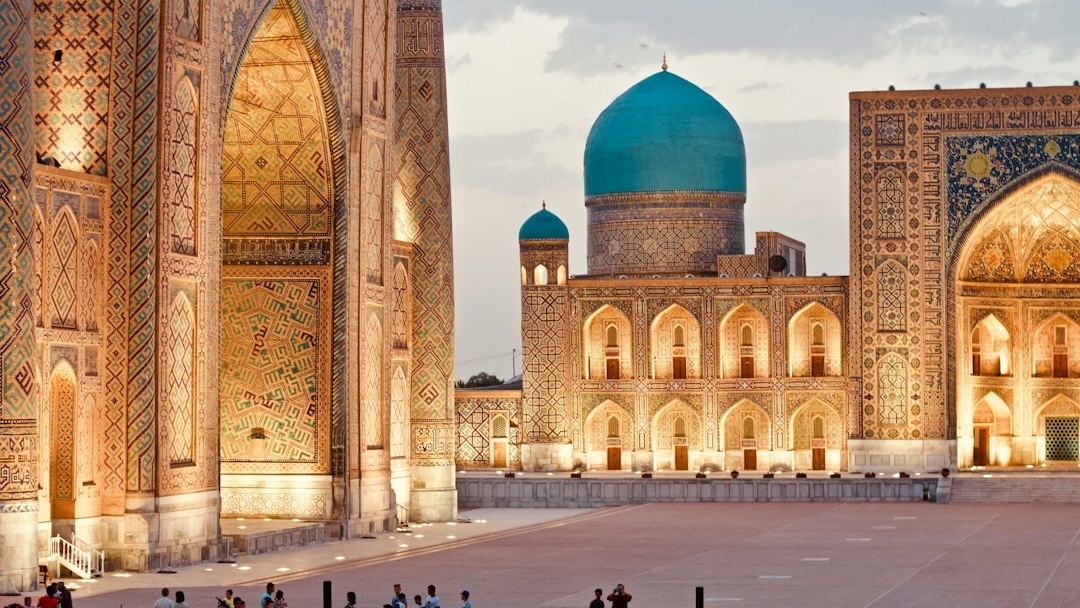
September and October are Uzbekistan’s two strongest months for a luxury Silk Road journey, but they deliver noticeably different trips. September offers warm evenings, grape-and-melon season and longer sightseeing days; October brings cooler walking weather, lower hotel rates and a better chance of securing premium Afrosiyob seats—provided you avoid the first half of the month.
Key Takeaways
- September averages 28–30°C in Samarkand, Bukhara and Khiva versus 19–21°C in October.
- Five-star rooms in this comparison averaged €184 per night in September 2026 and €158 in October, a 14% drop.
- Afrosiyob tickets cost roughly €12–€45 per journey and should be booked when sales open, usually 45 days ahead.
- Choose 15–30 September for warm evenings; choose 15–31 October for cooler weather and better value.
- A nine-night luxury trip for two costs approximately €4,615 in September versus €4,139 in late October, excluding international flights.
Key Numbers at a Glance
| Metric | September 2026 | October 2026 |
|---|---|---|
| Typical daytime temperature | 28–30°C | 19–21°C |
| Typical nighttime temperature | 12–15°C | 5–9°C |
| Usable daylight in Tashkent | 12 hr 25 min average | 11 hr 10 min average |
| Five-star double room average* | €184 per night | €158 per night |
| Estimated major-site crowd index** | 8/10 | 6/10 early; 4/10 late |
| Afrosiyob sell-out risk | High, especially Friday–Sunday | Moderate after mid-month |
| Rain days across the route | 1–3 days | 3–5 days |
| Best window | 15–30 September | 15–31 October |
*Sample of eight upscale hotels checked for representative midweek dates in September and October 2026; breakfast included where noted, excluding variable local tourist taxes. **A planning index based on seasonal hotel demand, tour-group concentration and likely congestion at the Registan, Shah-i-Zinda and Itchan Kala—not an official visitor count.
My verdict: late September is the better first-time experience if budget is secondary. Late October is the smarter luxury-value play, particularly if you dislike heat, want better room categories for your money and do not mind wearing a jacket after sunset.
September vs October Weather in Tashkent, Samarkand, Bukhara and Khiva
Uzbekistan’s desert climate creates a bigger September-to-October shift than many travelers expect. A 29°C afternoon at the Registan in September can become a 7°C breakfast terrace in October, even though the cities are only one month apart on the calendar.
| City | September high/low | October high/low | September rain | October rain |
|---|---|---|---|---|
| Tashkent | 29°C / 15°C | 21°C / 9°C | About 10 mm | About 25 mm |
| Samarkand | 28°C / 13°C | 20°C / 7°C | About 8 mm | About 23 mm |
| Bukhara | 30°C / 14°C | 21°C / 8°C | About 3 mm | About 12 mm |
| Khiva | 28°C / 12°C | 19°C / 5°C | About 4 mm | About 10 mm |
These are rounded climate averages rather than forecasts. In practice, early September can still exceed 34°C in Bukhara, while a late-October cold front can push Khiva’s nighttime temperature close to freezing.
September: better for terraces and photography
September gives you reliably warm evenings for rooftop dinners and blue-hour photography. Sunset moves from approximately 6:55 p.m. to 6:10 p.m. in Samarkand during the month, compared with roughly 6:10 p.m. to 5:25 p.m. during October.
The drawback is midday heat. Touring the Bukhara Ark at 2 p.m. in 31°C sun is considerably less comfortable than doing it at 21°C in October, so September itineraries need an air-conditioned lunch break between 1 and 4 p.m.
October: better for walking, worse for packing light
October is ideal for covering Samarkand’s monuments on foot. The 4.5-kilometer route from Gur-e-Amir through Registan Square to Shah-i-Zinda feels easy at 18°C, compared with a sweaty two-hour exercise at 29°C in September.
Pack a lightweight down jacket for Khiva and Samarkand. A wool overshirt is enough in September; October requires layers, closed shoes and occasionally a compact umbrella.
Weather winner: September for atmospheric evenings and outdoor dining; October for active sightseeing. I would skip 1–10 September if you are sensitive to heat and avoid the final week of October if warm nights are important.
Which Month Has Fewer Crowds?
September is shoulder season elsewhere, but it functions like peak cultural-tour season in Uzbekistan. European tour groups return after the summer heat, domestic travel remains active, and the country’s dry weather concentrates visitors at the same landmark hours.
At Samarkand’s Registan, September group traffic typically peaks from 9:30 a.m. to noon. In October, the comparable rush is shorter—roughly 10 a.m. to 11:30 a.m.—and becomes much lighter after the middle of the month.
| Location | September pressure | October pressure | Best quiet-time strategy |
|---|---|---|---|
| Registan, Samarkand | High | Medium | Enter at 8 a.m. or return after 5 p.m. |
| Shah-i-Zinda, Samarkand | Very high after 10 a.m. | Medium | Arrive at 7:15 a.m. |
| Lyabi-Hauz, Bukhara | Busy at dinner | Moderate | Eat at 6 p.m., before tour groups |
| Itchan Kala, Khiva | High from 10 a.m.–4 p.m. | Low to medium | Walk before 8 a.m. and after sunset |
The busiest September dates often cluster around weekends and festival programming. Exact 2026 cultural-event schedules can change, so confirm them through the official Uzbekistan tourism portal rather than building an expensive itinerary around an unofficial festival calendar.
October is not automatically empty. The first two weeks remain popular with escorted tours, while school and conference traffic can raise Tashkent occupancy without noticeably affecting Khiva.
Crowd winner: late October. Skip a rushed one-night stop in Samarkand; stay two nights and visit Shah-i-Zinda at opening, when you may share its narrow tiled passageways with 20 people instead of 200.
Afrosiyob Availability, Fares and Booking Strategy
The Afrosiyob high-speed train is the best way to cover Tashkent, Samarkand and Bukhara. It is faster and smoother than driving, but premium seats are scarce because each departure has limited Business and VIP capacity.
Khiva is not on the Afrosiyob network. From Bukhara, choose a private car, a conventional train to Khiva or Urgench, or an occasional domestic flight rather than assuming the high-speed service continues west.
| Route | Rail distance | Typical Afrosiyob time | Economy | Business | VIP |
|---|---|---|---|---|---|
| Tashkent–Samarkand | Approximately 344 km | 2 hr 10 min | €13 | €20 | €32 |
| Samarkand–Bukhara | Approximately 256 km | 1 hr 35 min | €12 | €17 | €27 |
| Tashkent–Bukhara | Approximately 600 km | 3 hr 50 min | €20 | €29 | €45 |
Planning fares for September 2026, converted at approximately €1 = 14,000 Uzbek som. Uzbekistan Railways can adjust fares and schedules, so treat the euro totals as working figures rather than fixed quotations.
How early should you book?
Uzbekistan Railways commonly releases domestic tickets about 45 days before departure, although the window can vary. Book through eticket.railway.uz or the official Uzrailways Tickets app, entering each passenger’s name exactly as shown on the passport.
For September travel, book on release day if you want two adjacent Business or VIP seats. In the second half of October, Economy may remain available closer to departure, but relying on that for a luxury itinerary is a false economy.
- Best value: Business class, usually €7–€9 more than Economy on shorter routes.
- Best privacy: VIP, but seat layouts vary and the service is not equivalent to European first class.
- Best backup: ask your hotel concierge or local operator to purchase seats using the correct passport details.
- Avoid: third-party resellers charging €60–€90 for a €20 ticket without a meaningful transfer or guide service.
A private Tashkent–Samarkand transfer takes approximately 4.5–5 hours and costs €130–€170 per car, versus 2 hours 10 minutes and €20 per person in Afrosiyob Business. Pay for the train and spend the difference on a better hotel.
Getting from Bukhara to Khiva
A private air-conditioned sedan covers the roughly 450-kilometer road in 6.5–7.5 hours and costs €145–€190. A conventional train generally takes 6–8 hours and costs about €10–€25, depending on class and whether the service terminates at Khiva or Urgench.
For two luxury travelers, I prefer the car because you control rest stops and hotel-to-hotel luggage handling. For one traveler, a first-class train compartment is better value, although daytime departures and schedules are less consistent than the Afrosiyob timetable.
Five-Star Hotel Rates: Does October Really Save Money?
October usually saves money, but not evenly. The clearest drops appear in Khiva and Bukhara after mid-month, while Tashkent’s weekday business demand can keep luxury rates surprisingly firm.
| Hotel | September 2026 sample rate | October 2026 sample rate | Difference |
|---|---|---|---|
| InterContinental Tashkent | €260 | €225 | -13% |
| Hyatt Regency Tashkent | €235 | €205 | -13% |
| Silk Road by Minyoun, Samarkand | €210 | €185 | -12% |
| Mövenpick Samarkand | €170 | €145 | -15% |
| Mercure Bukhara Old Town | €145 | €125 | -14% |
| Wyndham Bukhara | €130 | €115 | -12% |
| Farovon Khiva | €125 | €105 | -16% |
| Orient Star Khiva* | €95 | €80 | -16% |
Indicative flexible double-room rates sampled for midweek stays in September and October 2026, generally including breakfast but excluding any property-specific tourist tax. *Orient Star is a heritage stay rather than a conventional international five-star hotel.
Silk Road by Minyoun has stronger resort facilities, but it is around 10 kilometers from the Registan and can require a 20–30-minute drive. For a first visit, I prefer Mövenpick or a polished boutique property closer to the historic center; saving 40 minutes of daily transfers matters more than having a larger spa.
In Khiva, Farovon has modern five-star facilities but sits outside Itchan Kala. Orient Star places you inside the old city in the former Muhammad Amin Khan Madrasa, trading standardized luxury for an unbeatable setting.
Skip the anonymous international room outside the walls if this is your only night in Khiva. Stay inside Itchan Kala, then move to Farovon only if you are adding a second night and want a pool, spacious bathroom and quieter sleep.
For broader inventory, compare direct hotel offers with hotels in Samarkand. Check whether breakfast, VAT, airport pickup and cancellation are included—the cheapest displayed rate can be €20–€35 less but fully nonrefundable.
Price winner: October. Across this sample, the average room fell from about €184 to €158, saving approximately €234 over nine nights.
What the Four Cities Feel Like in Each Month
Tashkent: businesslike in September, calmer on October weekends
Tashkent deserves at least one full day, not just an airport transfer. Visit Chorsu Bazaar from 8 a.m. to 11 a.m., ride the metro for about 1,700 som (€0.12) per journey, and see the State Museum of the Temurids, generally open Tuesday–Sunday from 10 a.m. to 5 p.m.
September is better for dinner outdoors at Caravan, where plov, salads and grilled meat cost approximately €18–€30 per person. October favors the polished indoor dining room at Ember or Setters; expect €35–€55 per person with wine.
Skip a private driver for central Tashkent. Yandex Go commonly charges €1.50–€4 for urban rides, versus €35–€50 for a half-day chauffeured car.
Samarkand: September spectacle versus October breathing room
The Registan typically opens around 8 a.m. and closes between 6 and 7 p.m., with seasonal adjustments. Budget about 100,000 som (€7) for admission in 2026 and verify evening-show access locally because rehearsals and official events can close the square without much notice.
Shah-i-Zinda often opens near 7 a.m., giving early risers a valuable hour before groups arrive. The Registan and Shah-i-Zinda are about 2.5 kilometers apart: a Yandex ride costs roughly €1.50 and takes 8 minutes, versus a 30–35-minute walk.
Book dinner at Platan for steaks, Uzbek wine and composed service, with dinner around €30–€45 per person. Skip the Registan-facing tourist menus with laminated photographs; do lunch at Bibikhanum Teahouse instead, where plov and salads run €10–€16.
Bukhara: hot courtyards in September, ideal walking in October
Bukhara’s historic core rewards slow travel. The Ark, Poi Kalyan, trading domes and Lyabi-Hauz form a walk of roughly 4 kilometers, which is comfortable in October but requires a shaded lunch interval in September.
The Ark is generally open from 9 a.m. until 6 p.m., with last admission earlier, and costs approximately 60,000–80,000 som (€4–€6). A multi-site ticket does not always cover every monument, so keep small som notes available.
Eat at Old Bukhara for a refined courtyard experience at €18–€30 per person, but reserve the rooftop. For better local flavor, choose Joy Chaikhana for plov, manti and tea at €8–€14; it is less polished but more memorable.
September aligns with grape and melon abundance, while pomegranates become more prominent into October. Bukhara’s market produce costs a fraction of hotel snacks: roughly €1–€2 for fruit versus €8–€12 for a luxury-hotel minibar plate.
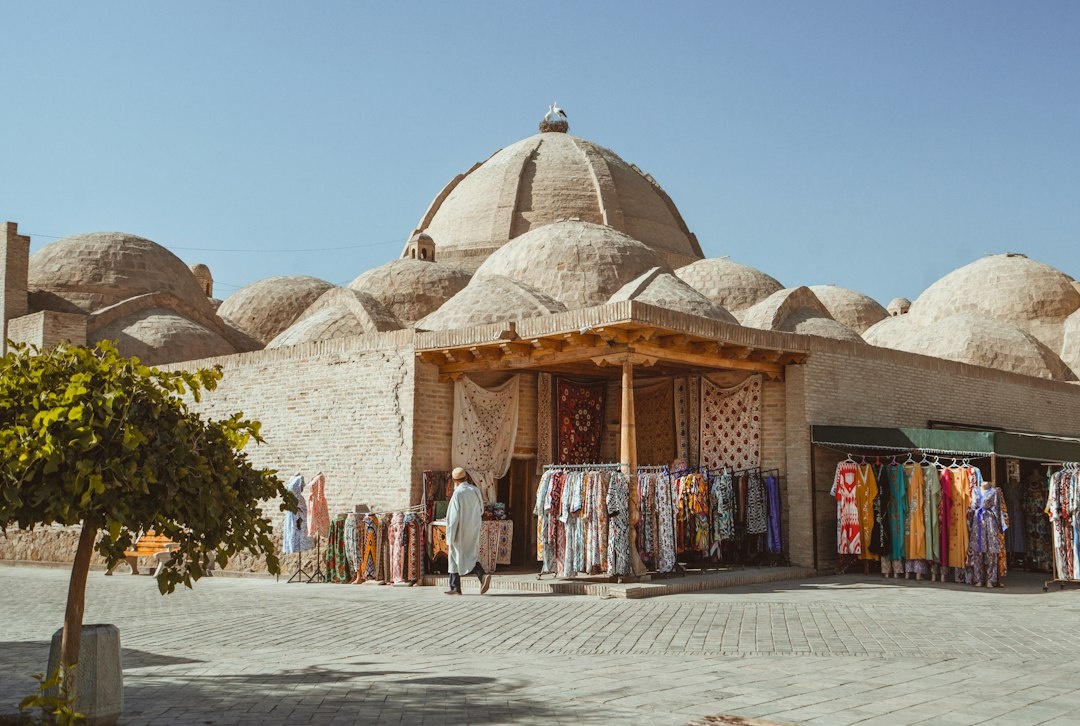
Khiva: late October is quiet, but nights turn cold
Itchan Kala itself is accessible around the clock, while museums and ticketed monuments generally operate from 9 a.m. to 6 p.m. A combined ticket commonly costs around 200,000 som (€14), although the Islam Khoja minaret and certain attractions may require separate payment.
September evenings are made for Terrassa Café, where sunset dinner overlooking the Kalta Minor area costs about €15–€25 per person. In late October, indoor tables are more comfortable and the rooftop may feel cold as soon as the sun disappears.
Skip the rushed day trip from Urgench. Khiva is at its best before 8 a.m. and after 7 p.m., when day groups leave; one overnight gives you both windows, while two nights allow a half-day excursion to the Khorezm fortresses.
A Costed Nine-Night Luxury Silk Road Plan for Two
This itinerary balances high-end accommodation with trains where they are objectively better than private cars. It assumes two nights in Tashkent, three in Samarkand, two in Bukhara and two in Khiva.
- Days 1–2: Tashkent, including Chorsu Bazaar, metro architecture and a private city guide.
- Days 3–5: Afrosiyob Business to Samarkand; Registan, Shah-i-Zinda and a half-day wine or paper-making excursion.
- Days 6–7: Afrosiyob Business to Bukhara; old-city walking tour, Ark and hammam.
- Day 8: Private Bukhara–Khiva transfer with a lunch stop.
- Days 9–10: Itchan Kala, Khorezm cooking and departure via Urgench Airport, 35 kilometers away.
| Expense for two | September 2026 | Late October 2026 |
|---|---|---|
| Nine hotel nights with breakfast | €1,656 | €1,422 |
| Afrosiyob Business tickets | €148 | €148 |
| Bukhara–Khiva private transfer | €170 | €160 |
| Airport and station transfers | €150 | €140 |
| Private guides, four full days | €560 | €520 |
| Admissions and experiences | €310 | €290 |
| Lunches and dinners | €1,170 | €1,080 |
| Spa, hammam and contingencies | €451 | €379 |
| Total excluding international flights | €4,615 | €4,139 |
October saves approximately €476 for two, or 10%. That is enough to upgrade two long-haul flight segments to premium economy on some routes, add a private Khorezm fortresses excursion for €90–€130, or book a suite for two nights.
International flights vary too widely by origin to bundle honestly. From major European hubs, a reasonable target is €550–€850 return per person in economy or €1,700–€2,800 in business class, usually with one connection.
Travelers comparing autumn trips should note that shoulder-season savings are not universal. Our costed November Crete road-trip plan shows how transport choices can matter more than hotel discounts; Uzbekistan follows the same rule, with rail-versus-driver decisions moving the total by hundreds of euros.
Technology, Payments and Connectivity
Download Yandex Go for taxis, 2GIS for local business listings and Organic Maps for offline walking routes. Google Maps is useful for landmarks, but restaurant hours and entrances can be less accurate than 2GIS in Uzbekistan.
A local Ucell or Beeline SIM usually offers better value than roaming, with tourist-sized data packages commonly costing €5–€12. If you want connectivity before landing, compare an Uzbekistan package from Airalo, but keep offline screenshots of hotel addresses in case activation fails.
Visa and Mastercard work in upscale hotels and many restaurants, yet cash remains useful for markets, small admissions and tips. Withdraw Uzbek som from bank ATMs rather than airport exchange counters; fees vary, so one €150 withdrawal is usually better than three €50 withdrawals.
Store train PDFs and passport scans offline. A failed hotel Wi-Fi connection at 6 a.m. is inconvenient; not having the ticket barcode when boarding is worse.
Common Mistakes That Make the Trip Worse
- Booking September trains late: waiting until two weeks before departure can leave only awkward departure times or slower trains.
- Assuming “five-star” means central: Samarkand’s resort district has excellent facilities but adds up to 60 minutes of daily transfers.
- Doing Khiva as a day trip: you miss the quietest hours and spend too much of the day driving to and from Urgench.
- Scheduling Bukhara at midday: in September, tour from 8 a.m. to noon and again after 4 p.m.
- Overpacking formal clothing: smart-casual works in almost every hotel; prioritize breathable layers, covered shoulders and shoes suitable for uneven paving.
- Paying for a driver on Afrosiyob routes: a €150 car is slower than a €20 Business-class train seat.
- Relying on cards everywhere: carry 300,000–500,000 som, approximately €21–€36, for minor tickets, tips and cafés.
Decision Framework: Choose September or October?
Choose September if:
- You want 25–30°C days and comfortable rooftop dinners.
- You care about long golden-hour evenings and blue-sky photography.
- You want peak grape, melon and market-produce season.
- You can book Afrosiyob seats and top hotels at least 45 days ahead.
- A €400–€500 premium for two is less important than warm weather.
Choose October if:
- You prefer walking at 18–21°C rather than sightseeing near 30°C.
- You want five-star rates averaging roughly 14% below September.
- You dislike large escorted groups and can travel after 15 October.
- You are comfortable with 5–9°C mornings and earlier sunsets.
- You want a better chance of room upgrades and restaurant availability.
Best overall dates: 20–30 September for atmosphere, or 15–25 October for value. My personal choice is 17–26 October: it is cool enough for full-day walking, warm enough at lunch, and materially quieter in Bukhara and Khiva.
Final Verdict
September delivers the classic luxury Silk Road image: sunlit turquoise domes, warm courtyards, abundant fruit and dinners under the stars. You pay more, share the major monuments with more groups and need military precision when booking Afrosiyob seats.
October is the data-driven winner for comfort and value. Late-month hotel rates are around 14% lower in this sample, crowd pressure eases, and a couple can save approximately €476 over nine nights without downgrading the experience.
Book the trains first, then lock in centrally located hotels and build the guides around those fixed travel days. Save this comparison, check the live Uzbekistan Railways timetable 45 days before departure, and choose late September for warmth or late October for the strongest luxury-to-price ratio.
Frequently Asked Questions
Is September or October better for Uzbekistan?
September is better for warm evenings and reliable outdoor dining, with daytime highs around 28–30°C. October is better for walking, lighter crowds and hotel savings averaging about 14% in this comparison.
How far in advance should I book Afrosiyob tickets?
Book when sales open, commonly around 45 days before departure. September Business and VIP seats can sell out quickly, while late-October availability is usually better but never guaranteed.
How much does a luxury Uzbekistan tour cost for two?
A nine-night independent luxury trip costs approximately €4,615 in September or €4,139 in late October for two, excluding international flights. Private packaged tours may add 15–30% for operator support and bundled logistics.
Does the Afrosiyob train go to Khiva?
No, Afrosiyob primarily links Tashkent, Samarkand and Bukhara. Continue from Bukhara to Khiva by a 6.5–7.5-hour private car costing about €145–€190 or use a slower conventional train.
How many days do you need for Tashkent, Samarkand, Bukhara and Khiva?
Allow at least nine nights: two in Tashkent, three in Samarkand, two in Bukhara and two in Khiva. Seven nights is possible, but it turns Bukhara and Khiva into rushed stops rather than luxury stays.

About the Author: Tomáš Bzirský
Founder and editor of Distratech. Based in the Czech Republic, travelling regularly from Central Europe. Writes practical travel guides and travel-tech comparisons (eSIM, apps, airports) in six languages.