Rocky Mountaineer looks effortless in the brochures: glass-domed coaches, Champagne breakfasts and the Canadian Rockies rolling past your seat. For a wheelchair user, the real honeymoon test is less photogenic—lift dimensions, seat transfers, accessible hotel inventory and finding a vehicle that can carry both a power chair and two suitcases.
Key Takeaways
- Budget approximately €15,200–€18,900 for two people for six days with GoldLeaf rail service, accessible rooms and private transfers in September 2026.
- Rocky Mountaineer’s Vancouver–Banff journey covers roughly 950 km over two daylight-only train days, with one hotel night in Kamloops.
- GoldLeaf offers an onboard elevator and an accessible washroom, but chair dimensions, weight and transfer ability must be approved before payment.
- September delivers mild valley weather and fewer families, but accessible hotel rooms can cost more than August because inventory is extremely limited.
- Skip a tightly timed shared coach to Calgary; reserve a wheelchair-accessible private vehicle with a written equipment specification.
Key Numbers at a Glance
This case study assumes two honeymooners, one using a power wheelchair full-time, traveling in mid-September 2026. Prices were converted at a planning rate of CAD 1.60 to €1; card issuers and package quotes will use the live exchange rate.
| Item | Planning figure | Accessibility significance |
|---|---|---|
| Entire trip | 6 days / 5 nights | Only two consecutive train days |
| Rail distance | Approximately 950 km | No overnight sleeping on the train |
| GoldLeaf package for two | About €10,600–€13,000, September 2026 | Confirm accessible rooms before deposit |
| Vancouver–Kamloops train day | Approximately 460 km / 11–13 hours | Long day with limited opportunities to reposition |
| Kamloops–Banff train day | Approximately 490 km / 10–12 hours | Arrival can be late because freight traffic has priority |
| Banff–Calgary Airport | Approximately 145 km / 1 hour 45 minutes | Allow at least 3.5 hours before flight check-in |
| Accessible private transfers | Approximately €1,350–€2,200 total, September 2026 | Ramp-equipped vehicles cost far more than standard cars |
| Typical September temperatures | Vancouver 12–19°C; Banff 2–17°C | Snow is possible at altitude even when Vancouver is warm |
The pricing surprise is accommodation rather than rail. September is shoulder-season gold across much of Canada, but Banff’s scarce roll-in-shower rooms can remain €500–€800 per night—sometimes more expensive than ordinary rooms in July or August.
Is Rocky Mountaineer Actually Accessible?
Yes, with advance coordination—but it is not a book-now-and-explain-later trip. Start through Rocky Mountaineer and ask for the Guest Experience Centre or accessibility team before selecting a non-refundable fare.
GoldLeaf coaches are bi-level: panoramic seating is upstairs, while the dining room and boarding level are downstairs. An internal elevator connects the levels, and an accessible washroom is provided, but the operator must verify that the passenger and mobility device fit the current coach’s lift and securement limits.
The questions to answer before paying
- Is the wheelchair manual or powered, and what are its exact length, width and total occupied weight?
- Does it use lithium-ion, gel or spill-proof batteries?
- Can the traveler transfer into a fixed GoldLeaf seat, and what physical assistance is required?
- Can the chair be folded, or must it remain upright and powered?
- Is a roll-in shower mandatory, or would a tub with grab rails work?
- Does the companion provide transfer assistance, or is trained staff support required?
- Will the passenger bring a portable hoist, shower chair or other large medical equipment?
Send measurements in centimetres and inches, plus photographs of the chair from the front and side. A vague note saying “wheelchair accessible” is less useful than “power chair: 68 cm wide, 112 cm long, 145 kg unoccupied.”
Rocky Mountaineer staff can assist with boarding procedures and coach equipment, but they are not personal care attendants. Compared with an airline aisle-chair transfer lasting 10–20 minutes, this journey may involve 10–13 hours aboard each day, so pressure relief, medication and toileting plans matter much more.
GoldLeaf versus SilverLeaf for a wheelchair user
| Feature | GoldLeaf | SilverLeaf |
|---|---|---|
| Indicative two-day rail price per person | €3,100–€4,300, September 2026 | €2,100–€3,000, September 2026 |
| Coach layout | Bi-level dome with separate dining room | Single-level coach |
| Movement during journey | Internal elevator between levels | No need to change floors |
| Meal style | Cooked-to-order dining downstairs | Meals served at the seat |
| Views | Full glass dome and outdoor viewing platform | Large windows but less overhead visibility |
| Best for | A honeymooner able to transfer and use the onboard elevator | Someone prioritizing fewer internal movements |
My verdict: choose GoldLeaf if the elevator has been approved for your chair and you can tolerate transfers into the fixed seat. The dome view through the Fraser Canyon and over the Continental Divide is the experience you are paying for.
Choose SilverLeaf if reducing transfers is more important than restaurant-style dining. It is still expensive, but a single-level coach may be operationally simpler; ask the accessibility team exactly where your chair will be positioned before assuming that simpler automatically means better.
Unlike the private cabins compared in our guide to European luxury sleeper trains, Rocky Mountaineer runs only during daylight. You sleep in hotels, which is excellent for comfort but introduces three separate accessible-room handoffs.
The Six-Day Accessible Honeymoon Itinerary
Day 1: Arrive in Vancouver and test every accessibility promise
Arrive at Vancouver International Airport before 15:00 if possible. The airport is approximately 14 km from downtown: Canada Line rail costs about CAD 9.65 (€6, September 2026, including the airport add-fare) and takes 25–30 minutes, while a wheelchair-accessible taxi generally costs CAD 40–55 (€25–€34) and takes 25–45 minutes.
The train is cheaper and step-free, but I would take the accessible taxi after a long flight. There is room for luggage, no platform gap stress, and you can go directly to the hotel rather than rolling several blocks over downtown paving.
Request a confirmed accessible room at Fairmont Hotel Vancouver, often used by premium rail travelers. Typical September rates are CAD 650–950 (€406–€594) per night before tax, compared with approximately CAD 380–550 (€238–€344) at a modern mid-range property.
Ask the hotel for doorway measurements, bed height, toilet transfer space and photographs of the exact bathroom category. “Accessible” may mean grab bars and a lower peephole—not necessarily a roll-in shower.
For alternatives, compare verified accessible room categories among hotels in Vancouver, but call the property directly before relying on a third-party room description.
Spend the afternoon along the Vancouver waterfront, where Canada Place and the Coal Harbour promenade offer a mostly level 3 km return outing. Skip Gastown’s uneven paving on arrival day; do sunset drinks at Botanist instead, where cocktails run CAD 19–25 (€12–€16) and the Fairmont Pacific Rim has step-free entry.
Dinner at Nightingale is my practical pick: broad contemporary interiors, shareable plates and better circulation than many compact Gastown restaurants. Budget CAD 140–190 (€88–€119) for two with drinks, versus roughly CAD 250–350 (€156–€219) for a tasting-menu dinner.
Day 2: Vancouver to Kamloops in GoldLeaf
Rocky Mountaineer departures occur early, with exact pickup and boarding times supplied in the final travel documents. Build around a 06:00–07:30 start rather than booking a celebratory late dinner the night before.
At check-in, reconfirm that the boarding crew has the accessibility record. The wheelchair should be tagged separately from checked luggage, and medication, chargers, pressure cushions, catheter supplies and one change of clothing should remain in a small onboard bag.
The approximately 460 km journey to Kamloops usually takes 11–13 hours. A flight between Vancouver and Kamloops is around one hour, but it misses the Fraser Valley, Hell’s Gate and the transition from coastal forest to dry Interior landscape—the scenery is the entire justification for the train’s premium.
Breakfast and lunch are included, as are beverages and snacks. GoldLeaf’s separate dining service feels more like a moving restaurant than conventional rail catering, although transferring between the upper seats and lower dining room can happen four or more times during the day.
Discuss a reduced-transfer dining arrangement in advance if repeated movement is tiring. Do not wait until meal service starts to discover that a portable hoist, armrest configuration or staff procedure cannot be accommodated.
Kamloops hotel assignments vary and are normally confirmed closer to departure. This is the least luxurious night: think practical chain hotel rather than mountain resort, with comparable public rates around CAD 220–380 (€138–€238) in September 2026.
Rocky Mountaineer transfers checked luggage to the room, which is a meaningful accessibility benefit. Nevertheless, carry essential overnight medical equipment separately and verify that it will travel in the correct vehicle—not in a luggage truck inaccessible until later.
Day 3: Kamloops to Banff through the Rockies
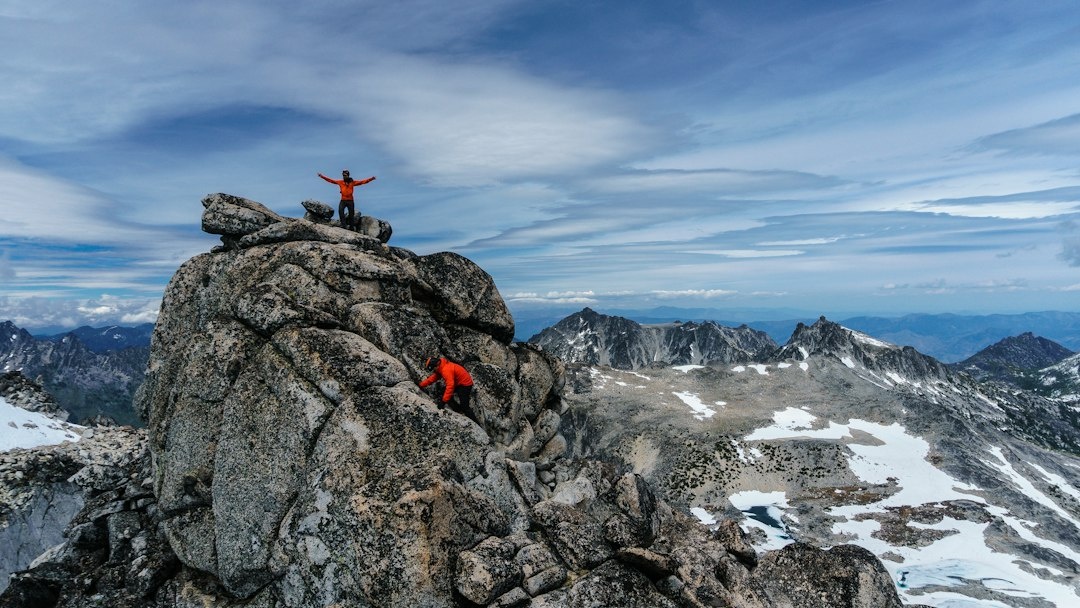
The second rail day covers approximately 490 km in 10–12 hours, passing Shuswap Lake, Rogers Pass, the Spiral Tunnels area and the Continental Divide. It is a more dramatic day than Day 2, so save phone battery and camera storage for the final six hours.
Canadian freight traffic can delay the train, making the arrival time flexible. A scheduled coach may complete Kamloops–Banff in around 7.5 hours, but the slower train buys vastly better views, included meals and a calmer honeymoon atmosphere.
Download offline entertainment and maps before departure. Mobile coverage is intermittent through mountain passes; a 10 GB Canadian eSIM from Airalo may cost roughly €18–€30, but no eSIM can manufacture a signal inside Rogers Pass.
Banff hotel transfers are usually coordinated with the rail package. Make sure the assigned vehicle is ramp- or lift-equipped if the traveler cannot transfer into a standard coach seat.
For a luxury stay, Fairmont Banff Springs is romantic but not automatically the easiest wheelchair choice. Its historic layout, long corridors and sloping hillside setting create more friction than a compact modern property, despite accessible rooms and elevators.
Moose Hotel & Suites is my more practical central choice, approximately 500 metres from Banff Avenue’s core. September rooms commonly run CAD 600–900 (€375–€563), while Fairmont rates can exceed CAD 900–1,300 (€563–€813) before tax.
Ask for a low-floor accessible room close to the elevator and confirm the bed base allows any portable lift you use. On the first evening, eat at The Bison: expect CAD 150–220 (€94–€138) for two, and reserve for 19:30 or later because the train can arrive behind schedule.
Day 4: Banff Gondola and an accessible spa afternoon
Do not attempt Lake Louise the morning after two 12-hour train days. A slower Banff day provides recovery while still delivering a major Rocky Mountain viewpoint.
Reserve a wheelchair-accessible private vehicle from the hotel to the Banff Gondola, approximately 5.5 km away. A standard taxi might cost CAD 20–30 (€13–€19) each way, while a dedicated accessible vehicle can be CAD 90–160 (€56–€100) for a short minimum booking.
The Banff Gondola generally operates daily, with hours varying seasonally; September service is commonly around 08:00–21:00. Adult advance tickets use dynamic pricing and often fall between CAD 65 and CAD 85 (€41–€53, September 2026), so book a late-morning slot at Banff Jasper Collection.
The gondola cabins and summit building can accommodate many wheelchairs, subject to equipment dimensions and safe loading. The multi-level summit complex has elevators, restaurants and indoor viewpoints, but the Sanson’s Peak boardwalk includes stairs and is not a continuous wheelchair route.
Skip the stair-heavy boardwalk and use the main summit terraces instead. You retain the six-range panorama without turning a romantic outing into a frustrating access audit.
Return to Banff for lunch at Farm & Fire, where two people can eat for CAD 75–110 (€47–€69). Compared with a CAD 170 (€106) summit meal for two, it provides better value and more flexibility if the weather closes in.
Use the afternoon for the accessible pool or spa facilities at your hotel, subject to lift availability. Ask specifically whether the pool has a mechanical chair lift; “accessible pool area” may only mean step-free access to the deck.
Day 5: Private Lake Louise excursion
Lake Louise sits approximately 58 km northwest of Banff, normally a 45–60-minute drive. September brings clearer hiking weather, fewer school-holiday families and the first yellow larches at altitude, but morning temperatures can hover near freezing.
A ramp-equipped private vehicle with waiting time is expensive: plan CAD 900–1,400 (€563–€875) for a six- to eight-hour charter in September 2026. By comparison, Roam public transit costs only a few euros per ride, but fixed timetables, crowding and wheelchair-space uncertainty are poor honeymoon trade-offs.
Request direct hotel pickup, four-point wheelchair securement, an integrated shoulder belt and enough payload for the occupied chair. “Wheelchair friendly SUV” often means the passenger must transfer while the folded chair goes in the boot; that is not equivalent to a wheelchair-accessible vehicle.
The lakeshore in front of Fairmont Chateau Lake Louise is step-free, and part of the shoreline route has a firm surface. Conditions deteriorate after rain, so large power-chair casters perform better than narrow manual-chair front wheels.
Have lunch at the Fairmont rather than carrying a picnic. Expect CAD 120–190 (€75–€119) for two, but indoor accessible toilets and protection from rapidly changing weather justify the premium.
I would skip Moraine Lake unless the operator can document an accessible commercial transfer and enough time. Private cars are prohibited from the access road, and adding another timed shuttle introduces a failure point for comparatively little relaxation.
If Moraine Lake is non-negotiable, ask the private operator to coordinate an authorized commercial service before the trip. Never assume an accessible space will be available on the day simply because a standard seat remains online.
Day 6: Private transfer to Calgary Airport
Banff to Calgary International Airport is approximately 145 km and usually takes 1 hour 45 minutes to 2 hours 15 minutes. Roadworks, wildlife and Calgary traffic can push it beyond 2.5 hours.
A standard shared shuttle commonly costs CAD 80–100 (€50–€63) per person. A pre-booked ramp-equipped private vehicle is more likely to cost CAD 500–850 (€313–€531), depending on pickup time, chair size and whether the operator deadheads from Calgary.
For a 14:00 international flight, leave Banff by 08:00. That provides roughly two hours for the drive, three hours at the airport and a buffer for securement or vehicle delays.
Skip the cheapest transfer quote if it does not list the vehicle model, entry height and ramp or lift specifications. Saving €150 is irrelevant if the chair cannot clear the doorway at 08:00 on departure day.
Accessible Hotels: What to Book and What to Verify
An accessible-room confirmation should be treated like a flight segment, not a casual hotel preference. Across this route, an ordinary room may be plentiful while the property has only one room with a true roll-in shower.
| Stop | Recommended approach | Typical nightly price | Main drawback |
|---|---|---|---|
| Vancouver | Fairmont Hotel Vancouver or a modern downtown alternative | €406–€594, September 2026 | Older room layouts vary |
| Kamloops | Accept package hotel only after written room confirmation | €138–€238, September 2026 | Hotel is assigned rather than freely selected |
| Banff | Moose Hotel for location; Fairmont Banff Springs for ceremony | €375–€813, September 2026 | Very limited accessible inventory |
Request the following in writing: roll-in-shower dimensions, fixed or folding shower seat, handheld shower head, toilet height, clear transfer side, sink clearance, bed height and route from entrance to room. Video from the hotel is more reliable than a generic accessibility icon.
If romance and historic architecture lead the decision, choose Fairmont Banff Springs. If independent rolling access to restaurants and shops matters more, choose Moose Hotel; its central location can eliminate two CAD 25 (€16) taxi rides per day.
Costed September 2026 Honeymoon Budget
This is a realistic luxury budget rather than a teaser “from” price. It assumes GoldLeaf, five hotel nights, two accessible private excursions or transfers, quality dinners and contingency money.
| Expense for two | Economy-luxury mix | Higher-comfort plan |
|---|---|---|
| GoldLeaf rail package and included hotel nights | €10,600 | €13,000 |
| Accessible Vancouver airport transfer | €34 | €75 private meet-and-greet |
| Banff local accessible transport | €225 | €450 |
| Lake Louise private accessible charter | €563 | €875 |
| Banff–Calgary accessible transfer | €313 | €531 |
| Gondola tickets for two | €82 | €106 flexible pricing |
| Meals not included by the rail package | €900 | €1,350 |
| Tips | €500 | €700 |
| Connectivity and small expenses | €180 | €300 |
| Accessibility contingency | €800 | €1,500 |
| Total excluding flights | €14,197 | €18,887 |
Add long-haul flights separately; premium-economy fares from Western Europe to Vancouver and home from Calgary commonly add €1,200–€2,200 per person in September. Open-jaw flights cost slightly more than a Vancouver return but avoid an 850 km backtrack from Calgary.
Tips are not a minor line item. Published onboard gratuity guidance can change, so check the 2026 documents, but a multi-day service gratuity plus drivers and hotel staff can readily reach €500–€700 for two.
A Clear Booking Decision Framework
- Choose GoldLeaf if the traveler can use the coach elevator safely, transfer into the assigned seat and values panoramic views over the lowest possible price.
- Choose SilverLeaf if remaining on one level and minimizing movement outweigh restaurant-style dining.
- Choose September for cool, generally stable sightseeing weather and fewer families; choose July for warmer mornings but higher crowd pressure.
- Choose Moose Hotel for easier independent access to Banff Avenue; choose Fairmont Banff Springs for resort atmosphere and stay mostly on-site.
- Choose a private accessible vehicle for Lake Louise and the airport when the passenger cannot transfer; choose public transport only if equipment dimensions and backup services have been verified.
- Postpone the trip if the operator cannot confirm the chair, boarding process, bathroom access and all three hotel room types in writing.
This trip suits couples who enjoy slow scenery and can tolerate long seated days. It is less suitable for someone needing frequent hoist transfers, nursing support or guaranteed arrival times.
Technology and Equipment That Make the Route Easier
Download Google Maps areas for Vancouver, Banff and Calgary, plus the Parks Canada app for current closures. Offline maps use no mobile data, while a two-hour video call can consume 1–3 GB—save hotel Wi-Fi for uploads.
Bring a compact multi-port charger and a Canadian Type A/B plug adapter. Canada uses 120V electricity; verify that wheelchair chargers accept 100–240V before plugging in a European 230V-only device.
Useful equipment includes:
- A laminated card listing wheelchair dimensions, weight, battery type and emergency freewheel instructions.
- An Apple AirTag or similar tracker in checked medical-equipment bags.
- A portable power bank for phones—not as a substitute for the wheelchair’s approved charger.
- A compact threshold ramp only if the manufacturer and hotels approve its use.
- A repair kit with correct tyre tools, fuses, charging adapter and controller documentation.
- A pressure cushion and an emergency day of medication kept with the passenger.
Save accessibility confirmations as PDFs, not only inside email apps. Mountain mobile coverage can disappear for hours, whereas a 2 MB offline document remains available instantly.
Common Mistakes That Can Derail the Honeymoon
Booking online before disclosing the wheelchair
A GoldLeaf seat may be available while an accessible Kamloops room is not. Confirm the complete chain first; correcting one inaccessible room later can cost €300–€600 or force a date change.
Confusing “accessible” with “wheelchair-accessible vehicle”
A driver willing to lift a folding chair is not offering a ramp-equipped van. Request the entry width, internal height, maximum lift capacity and securement system in writing.
Scheduling a flight too close to the train arrival
Freight traffic can delay the second rail day. Sleep in Banff and fly on Day 6 rather than attempting a same-night Calgary flight, which would add a 145 km transfer after an already long day.
Trying to combine Lake Louise and Moraine Lake casually
Lake Louise is straightforward with a private vehicle; Moraine Lake has controlled road access and requires authorized transport. One relaxed lake visit is better than two timed transfers and a missed accessible space.
Assuming September means summer
Vancouver may reach 19°C while Banff starts near 2°C, and the gondola summit can feel below freezing in wind. Pack gloves, a waterproof wheelchair cover and one insulating layer more than the forecast suggests.
Leaving no repair contingency
Specialist wheelchair repairs may not be available overnight in Banff or Kamloops. A €800–€1,500 contingency is more realistic than assuming travel insurance will immediately source a replacement power chair.
Why September Is the Sweet Spot—With One Catch
September is arguably the best month for this route: the valleys retain mild weather, summer family crowds recede and early autumn color begins to appear. It also aligns with the 2026 altitude-shift trend, as travelers increasingly choose mountain-view stays outside peak summer.
The catch is the pricing flip. Standard rooms may soften after August, but accessible rooms do not follow ordinary supply patterns; a hotel with 300 rooms may have only a handful meeting a specific transfer or shower requirement.
Target the first three weeks of September for longer daylight and lower snow risk. Late September offers more autumn color but colder mornings, shorter days and a greater chance that high-elevation paths become icy.
The Verdict
An accessible Rocky Mountaineer honeymoon can be genuinely luxurious rather than merely manageable. GoldLeaf is worth its premium for the dome views, dining and staff coordination—but only after the operator approves the wheelchair and every overnight room is documented.
The winning six-day plan is deliberately unhurried: Vancouver, two rail days, one easy Banff day, one private Lake Louise excursion and a protected transfer day to Calgary. Start by sending Rocky Mountaineer a complete mobility profile, then obtain written vehicle and hotel confirmations before booking flights.
Save this itinerary, build a shared accessibility checklist with your partner, and request quotes from at least two ramp-equipped transfer providers—the difference between a dream honeymoon and a stressful one is usually settled months before boarding.
Frequently Asked Questions
How much does an accessible Rocky Mountaineer honeymoon cost?
Budget approximately €15,200–€18,900 for two people for six days in September 2026, excluding international flights. GoldLeaf rail and hotels form the largest expense, while wheelchair-accessible private transport can add €1,350–€2,200.
Is GoldLeaf on Rocky Mountaineer wheelchair accessible?
GoldLeaf coaches have accessibility equipment including an elevator between levels and an accessible washroom, but the operator must approve the wheelchair’s dimensions, weight and battery type. Confirm whether a transfer into the fixed panoramic seat is required before paying.
What is the best month for a wheelchair-accessible Vancouver-to-Banff trip?
Early to mid-September offers a strong balance of mild weather, fewer families and long enough daylight for mountain scenery. Expect roughly 2–17°C in Banff and carry cold-weather protection for gondola and lake visits.
Can a wheelchair user visit Lake Louise from Banff?
Yes; the main lakeshore viewpoint is step-free, and parts of the shoreline have a firm surface. A six- to eight-hour ramp-equipped private charter typically costs about €563–€875 in September 2026.

About the Author: Tomáš Bzirský
Founder and editor of Distratech. Based in the Czech Republic, travelling regularly from Central Europe. Writes practical travel guides and travel-tech comparisons (eSIM, apps, airports) in six languages.