For a first solo trip, the “safest” country is not automatically the easiest one. Slovenia combines low crime with compact distances, Japan has superb transport but a steeper language gap, Portugal is wonderfully social yet has more pickpocketing, and New Zealand feels approachable until expensive buses and remote hiking routes complicate the plan.
Key Takeaways
- Slovenia is the best all-round first solo destination: budget about €1,120 for 14 days, excluding international flights.
- Japan has the best public transport and lowest homicide rate, but a two-week trip costs approximately €1,450.
- Portugal is best for meeting other travelers, although Lisbon and Porto require more pickpocket awareness than Ljubljana or Tokyo.
- New Zealand is easiest culturally but hardest logistically: allow about €1,650 and book intercity buses early.
- September is the sweet spot for all four, with Slovenia’s Alps, Portugal’s wine regions, Japan’s mountain towns, and New Zealand’s early spring especially appealing.
Key Numbers at a Glance
The prices below are practical September 2026 planning figures for one person staying in well-reviewed hostel dorms. Budgets exclude long-haul flights because a return ticket to Tokyo from Los Angeles is not meaningfully comparable with a train from Vienna to Ljubljana.
| Country | 14-day budget | Typical dorm bed | Major route | Emergency number | Best for |
|---|---|---|---|---|---|
| Slovenia | €1,120 | €30–€38 | Ljubljana–Bled: 55 km, 1 hr 10 min | 112; police 113 | Easiest overall first trip |
| Portugal | €1,260 | €34–€46 | Lisbon–Porto: 313 km, 2 hr 49 min | 112 | Social hostels and food |
| Japan | €1,450 | €29–€42 | Tokyo–Kyoto: 450 km, about 2 hr 10 min | Police 110; ambulance/fire 119 | Transport and low street crime |
| New Zealand | €1,650 | €29–€39 | Auckland–Rotorua: 228 km, about 4 hr | 111 | English-speaking adventure travel |
Prices are September 2026 estimates converted at approximately €1 = ¥168 = NZ$1.95 = US$1.17. Exchange rates and dynamic hostel fares can change the totals by 10–20%.
The Quick Verdict: Which Country Should You Choose?
- Choose Slovenia if you want the least complicated combination of safety, affordability, short journeys, mountains, and friendly hostels.
- Choose Portugal if meeting people, nightlife, beaches, and inexpensive restaurant meals matter more than having the lowest petty-crime risk.
- Choose Japan if you are comfortable solving small language and etiquette puzzles in exchange for exceptionally reliable trains and low violent crime.
- Choose New Zealand if you want an English-speaking outdoor trip and can spend more on transport, tours, and weather-proof accommodation.
My recommendation for a nervous first-time solo traveler is Slovenia. It is small enough that a missed bus is an inconvenience rather than a trip-ending crisis: Ljubljana to Lake Bled is only 55 km, compared with 450 km between Tokyo and Kyoto or 642 km between Auckland and Wellington.
Japan is a close second and wins for transport. Portugal wins for sociability, while New Zealand makes the most sense for travelers who value easy communication and outdoor scenery over budget efficiency.
Crime Data: What the Rankings Do—and Do Not—Tell You
All four countries are low-risk by global standards. In the 2025 Global Peace Index, New Zealand ranked third, Portugal seventh, Slovenia ninth, and Japan around the edge of the global top dozen; annual positions can move slightly as methodology and source data change.
Homicide rates offer another comparison, but they are imperfect for travelers because reporting years differ. Recent World Bank and UNODC series put Japan near 0.2 intentional homicides per 100,000 people, Slovenia and Portugal around 0.6–0.8, and New Zealand around 1.0–1.2—still low internationally.
| Safety measure | Slovenia | Portugal | Japan | New Zealand |
|---|---|---|---|---|
| 2025 Global Peace Index position | Top 10 | Top 10 | Approximately top 12 | 3rd |
| Recent homicide rate per 100,000 | About 0.6 | About 0.7 | About 0.2 | About 1.1 |
| Main traveler crime concern | Opportunistic theft | Pickpocketing and phone theft | Nightlife scams and isolated theft | Vehicle theft and unattended gear |
| Highest-attention locations | Ljubljana station; Lake Bled buses | Lisbon Tram 28; Baixa; Porto nightlife | Kabukicho; Roppongi; crowded trains | Auckland CBD; trailhead car parks |
Crime data snapshot reviewed for September 2026; rates refer to the most recent broadly comparable international series available, not necessarily offenses committed in 2026.
Slovenia: low crime without Japan’s complexity
Ljubljana feels unusually relaxed for a European capital. The biggest realistic risks are an unsecured phone in a hostel, luggage left beside a bus, and poorly planned mountain hikes—not random street violence.
The main railway and bus station area is scruffier after dark than the riverfront, but it is not comparable with a high-risk transit district. A taxi from Ljubljana station to the Old Town is roughly €7–€10 for 2 km, versus a 20-minute walk.
Portugal: safe, but petty crime is the outlier
Portugal remains a strong first-trip choice, but it has the most persistent tourist pickpocketing problem of these four. Lisbon’s crowded Tram 28, the Santa Justa area, Baixa metro escalators, and Porto’s São Bento station deserve active bag awareness.
Skip Tram 28 between 10 a.m. and 5 p.m. if the queue is long. Walk the parallel streets through Graça or take Tram 12 instead; you will see similar tiled facades without standing chest-to-back with 50 people.
Japan: exceptionally low street crime, with specific exceptions
A forgotten wallet is more likely to reach a police box in Tokyo than in most capitals, but “Japan is completely crime-free” is bad advice. Travelers should watch for inflated bar bills, drink spiking, aggressive touts in Kabukicho and Roppongi, and sexual harassment on packed commuter trains.
Never follow a street tout into a bar. If you want nightlife, use venues with published menus and recent reviews, such as Good Heavens in Shimokitazawa or craft-beer bars listed on Google Maps rather than an unnamed second-floor club.
New Zealand: people are not the main logistical risk
New Zealand’s low national risk can disguise localized problems with vehicle break-ins. A rental car containing a visible backpack at an Auckland beach, Rotorua attraction, or remote trailhead is a more tempting target than a locked hostel cabinet.
Weather and isolation matter more than urban crime on many itineraries. The Tongariro Alpine Crossing is 19.4 km and normally takes 7–8 hours; spring snow, wind, and transport cutoffs can turn a casual hike into an emergency.
Women’s Safety: The Practical Differences
Women can travel solo in all four countries, but the friction points differ. Slovenia has the best balance of low harassment, compact geography, and easy retreat options; Japan has low street violence but a documented problem with groping on crowded trains.
Slovenia
Central Ljubljana remains active around the river well into the evening, and the pedestrianized core reduces traffic and taxi hassles. The walk from Prešeren Square to Hostel Celica is 1.4 km and takes about 20 minutes; after midnight, pay €7–€9 for a metered taxi rather than crossing the station district alone with luggage.
The bigger concern is solo hiking. For Triglav-area routes, use the maPZS trail app, leave your plan with reception, and avoid exposed routes after afternoon storms.
Portugal
Lisbon and Porto are generally comfortable for solo women, but persistent attention is more likely around nightlife districts than in Ljubljana or Kyoto. In Lisbon, Bairro Alto can feel rowdy after 1 a.m.; Chiado or Príncipe Real is a calmer base and remains within a 10–15-minute walk.
Use Bolt or Uber for a late ride rather than accepting an unofficial offer. A Bolt from Bairro Alto to Lisbon Home Hostel is commonly €6–€10 and takes 10–15 minutes, while the night-bus alternative can take 30 minutes.
Japan
Some Japanese commuter lines provide women-only cars during weekday rush hours, with platform markings showing where to board. They reduce stress, but service periods vary by line and usually do not cover the full day.
Stay alert in packed trains between roughly 7:30–9:30 a.m. and after the last rounds of nightlife. If someone touches or follows you, move toward other passengers, say “yamete kudasai” firmly, and approach station staff or the nearest kōban police box.
New Zealand
Communication is easiest in New Zealand, which matters when something feels wrong. The trade-off is that long-distance buses may drop passengers in quiet areas, while trail transfers often leave early in the morning.
Book accommodation within 1 km of the bus stop rather than saving €5 on an isolated property. In Rotorua, staying near Fenton Street or the lakefront is more practical than relying on a late taxi from an outer motel.
Women’s safety verdict: Slovenia wins overall; Japan wins for low street crime; New Zealand wins for easy communication; Portugal wins for social support through organized hostels but requires the most pickpocket awareness.
Public Transport: Japan Wins, Slovenia Is Easiest
Japan’s network is the most extensive, but Slovenia’s short distances make it easier to understand. Portugal sits comfortably in the middle, while New Zealand is the only option where not renting a car substantially limits spontaneity.
| Route and distance | Typical September 2026 fare | Travel time | Where to book |
|---|---|---|---|
| Ljubljana–Lake Bled, 55 km | €6–€8 each way | 1 hr 10–20 min by bus | AP Ljubljana or station counter |
| Lisbon–Porto, 313 km | €27–€36 standard fare | 2 hr 49 min–3 hr 15 min | Comboios de Portugal |
| Tokyo–Kyoto, about 450 km | About ¥14,170/€84 reserved | About 2 hr 10 min by Nozomi | SmartEX or JR ticket office |
| Auckland–Rotorua, 228 km | NZ$49–$79/€25–€41 | About 4 hr | InterCity New Zealand |
| Wellington–Picton, 92 km across Cook Strait | NZ$89–$129/€46–€66 | About 3 hr 30 min | Interislander or Bluebridge |
Local transport costs
Ljubljana’s urban bus fare is about €1.30 with an Urbana card, but the historic center is compact enough to walk. A city bike often saves more time than waiting for a bus.
Lisbon metro rides cost roughly €1.85 plus the reusable Navegante card, while the airport-to-center journey takes approximately 25–35 minutes. Metro is the sensible choice; a taxi or app ride usually costs €12–€20 depending on traffic.
Tokyo Metro base fares begin around ¥180/€1.07, rising with distance. Add a digital Suica or PASMO card to a compatible phone before arrival, but keep a physical card or cash backup because foreign-wallet compatibility still varies.
New Zealand city buses are usable, but intercity departures can be infrequent. Auckland Airport to the CBD on the SkyDrive bus takes about 40 minutes and costs around NZ$20/€10; a rideshare commonly exceeds NZ$50/€26.
Do you need a rail pass?
Do not automatically buy the nationwide Japan Rail Pass. At ¥50,000 for seven days, it costs considerably more than a Tokyo–Kyoto round trip plus several local journeys; use a fare calculator first and buy individual tickets for a standard two-city trip.
Portugal’s advance-purchase train discounts can reduce Lisbon–Porto tickets substantially, especially when booked 5–30 days ahead. In Slovenia, buses are often more direct than trains for Bled and Piran, so skip the assumption that rail is always better.
Hostel Security and the Best Places to Stay
A €5 padlock prevents more trouble than an elaborate anti-theft backpack. Prioritize individual lockers large enough for a full cabin bag, 24-hour reception or controlled late entry, privacy curtains, and recent reviews mentioning door access.
| Hostel example | Typical dorm price, Sep 2026 | Security strengths | Watch for |
|---|---|---|---|
| Hostel Celica, Ljubljana | €30–€38 | Reception, lockers, busy cultural complex | About 1.4 km from the riverfront |
| Lisbon Home Hostel | €38–€48 | Central location, staffed reception, organized dinners | Higher weekend prices |
| Nui. Hostel & Bar Lounge, Tokyo | ¥5,000–¥7,000/€30–€42 | Key access, lockers, staffed common area | Compact luggage space |
| Haka House Auckland City | NZ$57–$76/€29–€39 | Electronic access, lockers, established operator | Uphill walk from parts of the CBD |
For Portugal, Lisbon Home Hostel is my first-solo-trip pick because its communal dinners make meeting people easier without forcing a pub crawl. Skip party hostels in Bairro Alto if you value sleep or need an early train.
In Tokyo, Nui is sociable without being chaotic, while capsule hotels are less useful for a two-week trip because luggage storage can be awkward. A women-only dorm may cost €4–€10 more nightly, but that premium can be worthwhile on a first visit.
In New Zealand, check whether a hostel accepts long-term residents as well as travelers; the atmosphere can be very different. Also confirm kitchen hours, since cooking is the easiest way to control a food budget that can otherwise exceed €40 per day.
Hostel security rules I would actually follow
- Carry a 30–40 mm padlock because hostel lock sizes are inconsistent.
- Keep your passport, backup bank card, and €50 equivalent in separate locked locations.
- Photograph your passport and insurance policy, then store encrypted copies offline.
- Do not charge a phone unattended in a common room; use a 10,000 mAh power bank instead.
- Never leave valuables in a parked New Zealand rental car, even under a jacket.
- Choose a lower bunk near the room entrance only if it has curtains; otherwise an upper bunk offers slightly more privacy.
Emergency Support, Apps, and Staying Connected
Emergency response is only useful if you know which number to call. Slovenia and Portugal use the European 112 number, Japan separates police from ambulance and fire, and New Zealand uses 111 for all immediate emergencies.
| Country | Emergency contacts | Useful non-emergency support | Best apps |
|---|---|---|---|
| Slovenia | 112 emergency; 113 police | Police stations and mountain rescue via 112 | Arriva, Urbana, maPZS, Google Maps |
| Portugal | 112 | PSP tourist police in Lisbon and Porto | CP, Navegante, Bolt, Citymapper |
| Japan | 110 police; 119 ambulance/fire | Japan Visitor Hotline: +81 50 3816 2787, 24/7 | Google Maps, SmartEX, Japan Travel by NAVITIME |
| New Zealand | 111 | 105 for non-urgent police matters | MetService, InterCity, NZ Topo50, Gaspy |
Download offline Google Maps for each city and save your hostel address in the local language. In Japan, screenshot the Japanese address; a taxi driver may not recognize the English property name.
An eSIM is convenient for receiving directions immediately after landing. Compare regional plans from Airalo with local SIMs, but check whether your phone is unlocked before paying.
Keep emergency details on paper as well as on your phone. A dead battery after a 19 km hike or late train is more consequential than losing access to social media.
Two-Week Solo Trip Costs in 2026
These are realistic mid-budget backpacker totals, not fantasy budgets built around cooking every meal and taking no paid attractions. Each estimate includes 13 hostel nights, food, transport within the country, activities, connectivity, laundry, and a modest contingency.
| 14-day expense | Slovenia | Portugal | Japan | New Zealand |
|---|---|---|---|---|
| 13 hostel nights | €442 | €507 | €468 | €429 |
| Food | €350 | €350 | €392 | €490 |
| Local and intercity transport | €160 | €185 | €300 | €440 |
| Activities | €115 | €140 | €180 | €210 |
| SIM, laundry, contingency | €53 | €78 | €110 | €81 |
| Total, September 2026 | €1,120 | €1,260 | €1,450 | €1,650 |
Private rooms materially change the comparison. Expect to add roughly €400–€650 in Slovenia, €550–€850 in Portugal, €500–€800 in Japan, and €650–€1,000 in New Zealand over 13 nights.
A costed two-week Slovenia plan
This is the itinerary I would recommend to a first-time solo traveler because it avoids constant packing while mixing a social capital, Alpine scenery, and the Adriatic coast.
- Days 1–4: Ljubljana. Three nights, city walks, Central Market, castle funicular, and a day at museums: about €245.
- Days 4–7: Lake Bled and Bohinj. Three nights, return buses, Bled Castle, and a Vintgar-style gorge outing: about €275.
- Days 7–10: Piran. Three nights plus a Ljubljana connection of roughly 2 hr 20 min: about €250.
- Days 10–14: Ljubljana with Škofja Loka or Postojna. Four nights and one paid day trip: about €350.
For food, skip the restaurants directly facing Lake Bled and walk to Old Cellar Bled, where a main typically costs €16–€24. In Ljubljana, Druga Violina is a better-value lunch than the most photographed river terraces, with many dishes around €10–€16.
Opening hours change seasonally, but Druga Violina is generally a daytime and early-evening restaurant rather than a late-night option. Check Google Maps and the restaurant’s official page on the day, especially on Sundays.
Why September 2026 Is the Smart Month
September is shoulder-season gold in three of these countries and early spring in the fourth. You generally get warmer conditions and longer daylight than October without July and August’s peak crowds.
Slovenia: the altitude-shift winner
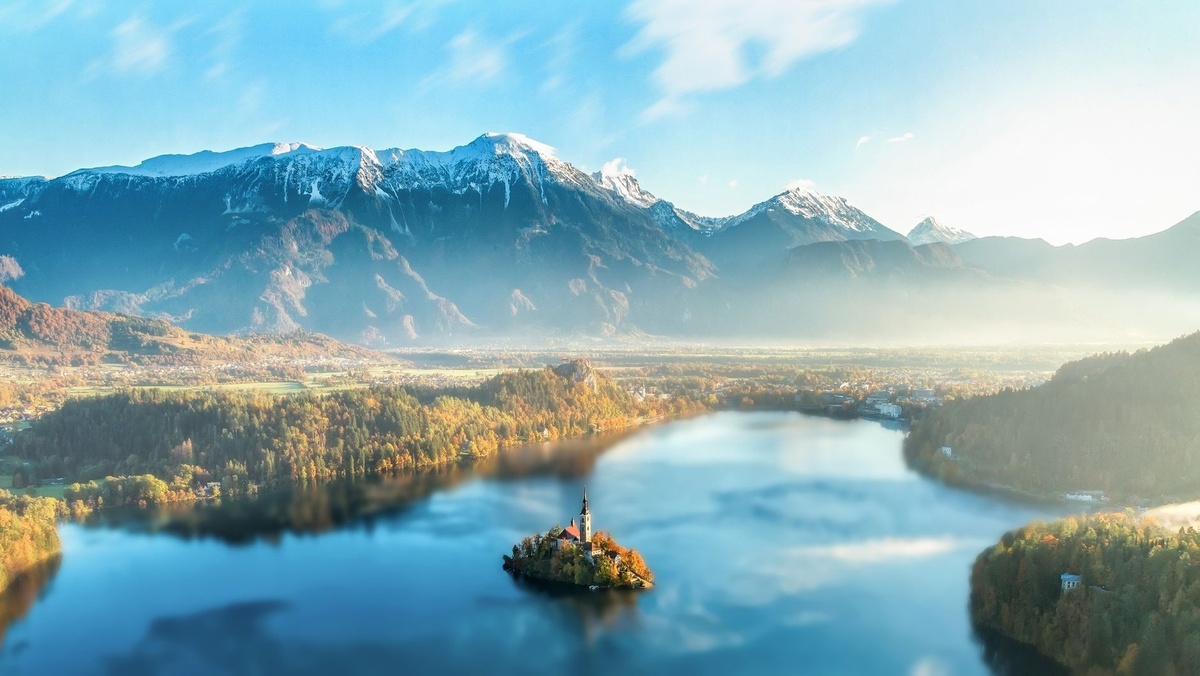
The Julian Alps are ideal for the current move toward off-peak mountain escapes. Bled and Bohinj remain lively, daytime temperatures in Ljubljana often sit around 20–24°C early in the month, and high-country trails are usually more accessible than in spring.
Mountain weather can turn quickly after mid-September, so carry a waterproof layer and verify hut closing dates. If an Alpine hot-spring trip is your priority, compare Slovenia with our guide to Iceland, the Azores, and the Japanese Alps in September.
Portugal: wine harvest without midsummer heat
September brings warm Atlantic weather and grape harvest activity in the Douro Valley. Porto to Pinhão takes roughly 2 hr 20 min by train and costs around €12–€16 each way, making it a better-value wine day than a €120 organized tour.
Lisbon can still exceed 28°C, so book Sintra’s Pena Palace for the first morning slot rather than arriving at noon. Entry times vary; reserve through the official Parques de Sintra website instead of buying marked-up reseller tickets.
Japan: choose altitude over humid cities
Tokyo and Kyoto can remain hot, humid, and vulnerable to typhoon disruption in September. For cooler conditions, spend two or three nights in Matsumoto, Kamikōchi, or the Japanese Alps rather than adding another dense city.
Kamikōchi buses from Matsumoto require transfers and take about 1 hr 30 min to 2 hours. September is excellent for hiking, but monitor Japan Meteorological Agency alerts before long rail journeys.
New Zealand: cheaper, but weather-dependent
September is early spring, with snow sports continuing in parts of the South Island while lower trails begin reopening. Crowds are lighter, but conditions around alpine crossings remain less predictable than in January or February.
Do not choose September solely because a room is €15 cheaper. If Milford Sound, Tongariro, or multi-day hiking is the core goal, weather buffers and flexible bookings are worth more than squeezing in another destination.
Food, Social Life, and Ease of Meeting People
Portugal is the clear winner for spontaneous social travel. Lisbon’s hostel dinners often cost €12–€18, compared with €20–€30 for a typical restaurant meal with drinks in Auckland.
For Lisbon seafood, skip restaurants with laminated multilingual menus on Rua Augusta. Try O Velho Eurico for Portuguese dishes or Taberna da Rua das Flores, where sharing several plates commonly costs €25–€40 per person; expect queues because reservations and opening schedules vary.
Japan is easier for solo dining than socializing. Counter restaurants such as ramen shops and conveyor-belt sushi venues normalize eating alone, and a bowl of ramen usually costs ¥900–¥1,500/€5.35–€8.95.
Use ticket-machine restaurants when the language barrier feels tiring. Skip international hotel breakfasts at €20–€30 and buy an onigiri, yogurt, and coffee from a convenience store for approximately €4–€6.
New Zealand hostels are friendly, but travelers disperse onto tours and road trips. Joining a small hiking transfer or hostel dinner is often more effective than waiting for conversation in a cavernous common room.
Common First-Solo-Trip Mistakes
- Trying to cover both New Zealand islands in 14 days. Choose one island or a simple Auckland–Rotorua–Wellington route; domestic flights and ferry crossings consume time and money.
- Buying the Japan Rail Pass automatically. Individual Tokyo–Kyoto tickets are usually cheaper for a standard two-city itinerary.
- Leaving Portugal train bookings until Friday afternoon. Popular Lisbon–Porto departures sell out and advance discounts disappear.
- Treating Slovenia’s mountains like city parks. Carry water, offline maps, rain protection, and proper shoes even on a sunny morning.
- Booking the cheapest hostel without checking locker size. A tiny valuables box is not the same as luggage storage.
- Carrying only one bank card. Keep a backup card away from your wallet and enable instant transaction alerts.
- Ignoring arrival time. A €6 cheaper flight that lands after public transport stops can create a €40–€80 taxi bill.
- Overplanning every day. Keep at least one weather-buffer day in Japan and New Zealand during September.
Final Ranking for a First Solo Trip
1. Slovenia: the best complete package. It is safe, affordable, compact, and adventurous without overwhelming a new solo traveler.
2. Japan: the strongest choice for transport confidence and low street crime. Pick it if navigating unfamiliar systems feels exciting rather than stressful.
3. Portugal: best for friendships, food, and nightlife. It ranks below Japan only because petty theft requires more vigilance in major tourist zones.
4. New Zealand: safe and welcoming, but not the easiest budget trip without a car. It becomes the winner only when hiking, English-language support, and big landscapes outweigh transport costs.
For September 2026, I would book Slovenia first, Japan second, and Portugal when social travel is the priority. Choose New Zealand when you can afford weather flexibility and at least €1,650 on the ground—then build the route before buying the flight, not afterward.
Frequently Asked Questions
Which country is safest for a first-time solo female traveler?
Slovenia offers the best overall balance of low crime, short distances, limited street harassment, and simple emergency support. Japan has lower violent-crime figures, but crowded-train harassment and the language gap create specific complications.
How much does a two-week solo trip cost in 2026?
Excluding international flights, budget approximately €1,120 for Slovenia, €1,260 for Portugal, €1,450 for Japan, or €1,650 for New Zealand. Private rooms can add €400–€1,000 depending on the country and dates.
Which country has the best public transport for solo travelers?
Japan has the most reliable and extensive network, with Tokyo–Kyoto taking about 2 hr 10 min. Slovenia is simpler for a first trip because Ljubljana, Bled, Bohinj, and Piran are separated by relatively short bus journeys.
Is September a good month for Slovenia, Portugal, Japan, or New Zealand?
September is excellent for Slovenia’s Alps and Portugal’s wine regions, while Japan is better at higher elevations because cities remain humid. New Zealand is quieter and cheaper, but early-spring alpine weather requires flexible plans.
Can I visit these countries without renting a car?
Yes in Slovenia, Portugal, and Japan, where trains and buses cover a strong two-week route. New Zealand is possible by InterCity bus, ferry, and organized transfers, but limited schedules make it the least flexible car-free option.

About the Author: Tomáš Bzirský
Founder and editor of Distratech. Based in the Czech Republic, travelling regularly from Central Europe. Writes practical travel guides and travel-tech comparisons (eSIM, apps, airports) in six languages.