'/%3E%3Cpath%20fill='%23b2b2b2'%20d='M241%20382q0%2016%2017%2026%2017%2011%2042%2011t42-11q16-11%2017-26V269H241'/%3E%3Cpath%20fill='%239f7e00'%20d='M241%20379q0%2014%208%2023%209%209%2021%209%2014%200%2021-9%209-9%209-23V269h-59'/%3E%3Cpath%20d='M241%20339v-70h59v110q0%2014-9%2023l-6%205v-68h-15v72q-8%200-14-4v-68zm59%2040c0%2022%2015%2032%2029%2032%2021%200%2030-18%2030-32v-40h-59'/%3E%3Cpath%20fill='%239f7e00'%20d='M266%20277v5h2v12h-3v-5h2v-5h-9v5h2v5h-4v9h3v18h-5v10h34v-10h-5v-18h3v-9h-4v-5h2v-5h-9v5h2v5h-3v-12h2v-5zm42%20101q0%2010%206%2017%206%206%2015%207%2010-1%2016-7%206-7%206-17v-29h-43'/%3E%3Ccircle%20fill='%230044ad'%20cx='329.5'%20cy='372'%20r='6'/%3E%3Cellipse%20fill='%230044ad'%20cx='300'%20cy='340'%20rx='16'%20ry='21'/%3E%3C/svg%3E)
'/%3E%3C/svg%3E)


'/%3E%3C/g%3E%3Cuse%20href='%23c'%20transform='matrix(-1%200%200%201%20720%200)'/%3E%3C/svg%3E)



You can now land in Las Vegas, open an app, and pay to ride in a vehicle with no steering wheel, no pedals, and no human driver. For the first time in the U.S., Amazon-owned Zoox has federal approval to charge passengers for rides in a purpose-built robotaxi designed from the ground up to be fully autonomous.

This isn’t a test loop with an engineer in the front seat. It’s a commercial service. And if you’re traveling in peak summer 2026 — when Vegas hotel rates regularly top $280 per night and airport rideshare surge pricing hits 2x during conventions — this matters.
Key Takeaways
- Zoox is the first U.S. company allowed to charge for rides in a steering-wheel-free robotaxi.
- Initial commercial service launches in Las Vegas, expanding beyond employee-only testing.
- The vehicle has no steering wheel or pedals and seats up to 4 passengers in a bidirectional layout.
- Expect pricing comparable to Uber Comfort ($20–$40 typical Strip rides), not budget public transit.
- For travelers, this means fixed, app-based airport and Strip transport without surge or tipping.
What Exactly Changed?
Until now, U.S. safety rules assumed every car has a steering wheel, mirrors, and human controls. Zoox’s robotaxi has none of that. It’s a boxy, symmetrical pod built purely for autonomy.
The federal government granted Zoox a temporary exemption from certain safety standards, allowing it to operate commercially without traditional driver controls. That’s the breakthrough.
Why this matters when you’re traveling: This shifts robotaxis from “tech demo” to real transportation option. If you’re landing at Harry Reid International (LAS) during July’s peak family travel season, this becomes another way to get to your hotel without renting a car or waiting for a human driver.
What the Zoox Robotaxi Is Actually Like
This isn’t a retrofitted SUV. It’s a custom-built autonomous vehicle designed for dense urban trips like the Las Vegas Strip.
Core Specs (Traveler-Relevant)
- Seating: 4 passengers, face-to-face layout
- Controls: No steering wheel, no pedals
- Top speed: ~75 mph (121 km/h)
- Operational focus: Dense urban routes (Strip, downtown Vegas)
- Electric powertrain: Battery-electric, fast-charging capable
The face-to-face seating makes it feel more like a lounge than a taxi. Think airport lounge pod on wheels.
Why this matters when you’re traveling: If you’re traveling as a family of four in July — peak U.S. vacation month — this layout is more social and less cramped than a standard sedan Uber. For business travelers heading to a convention, it’s quiet enough to prep slides en route.
How Much Will It Cost?
Zoox hasn’t published full nationwide pricing tiers yet, but early commercial robotaxi services in U.S. cities typically align with mid-tier rideshare pricing.
In Las Vegas right now (July 2026):
- UberX: $18–$30 (LAS to central Strip, non-surge)
- Uber Comfort: $28–$45
- Taxi (flat airport zone rate): $21–$30 depending on hotel zone
Expect Zoox to land somewhere in the $20–$40 range for typical tourist routes.
Why this matters when you’re traveling: If pricing avoids surge multipliers, that’s the real win. Vegas conventions (and summer weekends) routinely push rideshare to 1.5x–2x pricing. A flat or predictable robotaxi fare could save $15–$40 per ride during peak hours.
How It Compares to Waymo (and Why That’s Important)
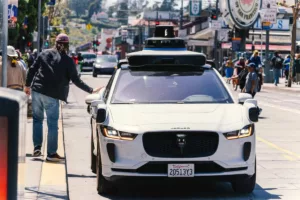
Waymo already operates paid autonomous rides in cities like Phoenix and San Francisco. The difference? Waymo uses modified production vehicles with steering wheels.
Zoox is the first in the U.S. to charge passengers in a vehicle built without human driving controls.
Why this matters when you’re traveling: Purpose-built autonomy means:
- More interior space per passenger
- No awkward unused driver seat
- Potentially smoother, more predictable routing
It also signals regulatory confidence. That increases the odds we’ll see this expand to other tourist-heavy cities.
Is It Safe?
Safety is the obvious question. The exemption doesn’t mean “lower standards.” It means the vehicle meets safety intent differently.
Zoox vehicles use a multi-sensor array (lidar, radar, cameras) providing 360-degree awareness. Unlike a human driver, the system doesn’t get distracted, tired, or overheated in 42°C (107°F) Vegas summer heat.
Why this matters when you’re traveling: July is peak road congestion season in U.S. tourist cities. More traffic equals more human error. Autonomous systems excel in repetitive, mapped urban environments like the Strip.
That said: if you’re uncomfortable without a human fallback driver, you may prefer a traditional rideshare — at least for now.
Airport Use: The Real Test for Travelers
The big question isn’t novelty rides on the Strip. It’s airport integration.
If Zoox expands to direct LAS airport pickups and drop-offs, here’s what that changes:
- No tipping required (typical Vegas rideshare tips run 15–20%).
- No small talk when you’re jetlagged.
- App-based booking before you land.
- Potentially smoother luggage handling design (flat floor, no center console).
For travelers who obsess over route optimization — like we do when analyzing which European airports offer the most direct connections — ground transport efficiency matters just as much as flight networks.
Saving 20 minutes at pickup during peak arrivals can mean beating hotel check-in lines or catching a dinner reservation.
Who Should Actually Use It?
Great For:
- Tech-curious travelers
- Families of 3–4
- Business travelers who want quiet transit time
- Visitors staying on or near the Strip
Skip If:
- You need child car seats (availability may vary early on)
- You’re heading far outside mapped service zones
- You prefer a human driver for local tips
Why this matters when you’re traveling: In peak July heat, waiting outdoors for pickup is miserable. If Zoox optimizes tight geofenced pickup zones, it could actually reduce curb chaos compared to traditional rideshare lanes.
Will This Expand Beyond Las Vegas?
Las Vegas is the ideal testing ground: predictable grid layout, strong tourism demand, and favorable state-level autonomy laws.
If commercial service performs well through summer 2026 — one of the highest-volume travel periods of the year — expansion to cities like Miami, Los Angeles, or Austin becomes more likely.
Imagine landing in Miami during winter high season or in a packed Mediterranean summer city and having guaranteed autonomous airport transfers.
Why this matters when you’re traveling: Reliable robotaxi networks could reduce the need for rental cars in short-stay urban trips. That’s $60–$90 per day saved on rentals, plus parking fees.
Traveler Verdict: Try It Once — Strategically
This isn’t just a tech milestone. It’s a shift in how urban travel works.
If you’re in Las Vegas this summer:
- Book it for: Airport → hotel daytime transfers or mid-Strip hops.
- Skip it for: Remote desert attractions or Hoover Dam runs.
At similar pricing to Uber Comfort, the value isn’t necessarily cost savings. It’s predictability, novelty, and a glimpse of frictionless transport.
And for travelers who plan trips around efficiency — the same way we calculate seasonal pricing for destinations like Mendoza wine country or analyze high-season flight routes — this is another tool in your optimization kit.
The Bigger Picture for 2026 Travel
July 2026 is peak everything: packed Mediterranean beaches, Nordic hiking at its best, and U.S. family travel surging before school restarts.
Urban congestion is real. Ground transportation delays are worse than flight delays in some cities.
A scalable robotaxi network could:
- Reduce traffic accidents caused by fatigued drivers
- Lower per-mile operating costs long term
- Cut wait times during high-demand events
For now, Zoox in Vegas is the pilot moment. But if it works commercially during the busiest travel season of the year, expect rapid rollout.
Bottom Line
Zoox becoming the first U.S. company allowed to charge for rides in a steering-wheel-free robotaxi isn’t just regulatory trivia.
It’s the beginning of autonomous transport as a real option in tourist cities.
If you’re heading to Las Vegas this summer, it’s worth trying once — not because it’s futuristic, but because it may soon become normal.
And when frictionless, app-based transport becomes standard at major destinations, the way we plan trips — from airport choice to hotel location — changes with it.
Für deinen Trip lohnt es sich, früh zu schauen: Hotels in Las Vegas vergleichen und buchen.
Frequently Asked Questions
Can anyone book a Zoox robotaxi in Las Vegas?
Commercial service is rolling out in phases in 2026, starting in designated zones in Las Vegas. Access may initially require app registration and availability within geofenced areas.
How much does a Zoox ride cost compared to Uber?
Expected pricing is roughly $20–$40 for common Strip routes, similar to Uber Comfort. Unlike Uber, pricing may avoid surge multipliers during peak demand.
Is the Zoox vehicle really missing a steering wheel?
Yes. The vehicle is purpose-built without a steering wheel or pedals and seats four passengers in a face-to-face layout.
Can Zoox robotaxis go on highways?
The vehicle’s top speed is about 75 mph (121 km/h), but early service focuses on dense urban routes rather than long highway trips.

About the Author: Tomáš Bzirský
Founder and editor of Distratech. Based in the Czech Republic, travelling regularly from Central Europe. Writes practical travel guides and travel-tech comparisons (eSIM, apps, airports) in six languages.