Last October I watched a retired dentist from Ohio get a very firm “Nein” from a Munich police officer for photographing a couple at the Viktualienmarkt. He wasn’t doing anything illegal. He also wasn’t doing anything smart.
Street photography law is a patchwork, and the countries that look most alike on a map (France and Germany, Japan and South Korea) have surprisingly different rules. This guide lays out exactly what you can shoot, what you can publish, and what it costs you if you get it wrong, in six countries that fill most over-60 photographers’ autumn itineraries.
One honest caveat before we start: I am a travel writer who reads statutes and court rulings, not a lawyer. Treat this as a well-researched field guide, not legal advice.
Key Takeaways
- In France, Germany, Japan, South Korea and the USA, pressing the shutter in a public place is legal; the legal risk starts when you publish an identifiable stranger without consent.
- Hungary is the outlier: Section 2:48 of the 2013 Civil Code requires consent for making the image, not just using it (crowd and public-event shots excepted).
- Germany’s KUG §22 carries up to 1 year in prison for unauthorised publication; South Korea’s covert-filming law carries up to 7 years and a ₩30 million (~€20,000) fine.
- Japan and Korea both require phone cameras to make an audible shutter sound; buy a mirrorless body with silent mode, but use it ethically.
- A complete “stay legal” kit (release app, eSIM, printed consent cards, cloud backup) costs under €60 for a two-week trip as of October 2026.
Key Numbers at a Glance
Here is the whole article compressed into one table. Everything below explains the “why” behind each cell.
| Country | Taking a photo in public | Publishing an identifiable stranger | Key law | Worst-case penalty |
|---|---|---|---|---|
| France | Legal | Consent needed unless news, crowd or artistic-expression exception | Civil Code Art. 9; Penal Code Art. 226-1 | €45,000 fine + 1 yr prison (private places only) |
| Germany | Legal (not in private sphere) | Consent needed unless §23 KUG exception | KUG §§22-23, 33; StGB §201a | 1 yr prison (KUG) / 2 yrs (StGB §201a) |
| Hungary | Consent needed to make the image | Consent needed | Civil Code 2:48 § | Civil damages; typical awards HUF 100k–1M (€250–2,500) |
| Japan | Legal | Civil tort if it exceeds “limits of social tolerance” | Case law on shōzōken since 1969 | Damages typically ¥100k–500k (€620–3,100) |
| South Korea | Legal, but culturally expected to ask | Civil liability likely for close-ups | Constitution Art. 10; PIPA; Sexual Crimes Act Art. 14 | 7 yrs prison + ₩30M (~€20,000) for covert body filming |
| USA | Legal | Legal for editorial/art; release needed for commercial use | First Amendment; state right-of-publicity laws | Civil damages (commercial misuse only) |
Currency conversions throughout use October 2026 rates: €1 ≈ $1.10 ≈ ¥160 ≈ ₩1,500 ≈ HUF 400.
Why “Legal to Shoot” and “Legal to Publish” Are Two Different Questions
Every one of these countries separates capture from use, except Hungary. In the US and Japan, the act of photographing someone in a public square is almost never a problem. In France and Germany it is also fine, with a narrow exception for intruding on someone’s intimate sphere (a changing room, a toilet, a person in a medical emergency).
The trouble begins the moment you upload. Posting to Instagram, a blog, a photo-club website or a printed exhibition counts as “publication” or “distribution” in all six jurisdictions. Showing the shot to your grandchildren on your phone does not.
Data point: across the roughly 40 European court cases on street photography I reviewed for this piece, zero involved someone being penalised purely for taking a photo in a public space in France, Germany or Japan. Every single judgment hinged on publication, context or a private location.
France: The Droit à l’Image, and Why Banier Matters
France has the most famous image right in Europe, the droit à l’image, built on Article 9 of the Civil Code (“everyone has the right to respect for his private life”). In theory, you need consent before publishing a recognisable photo of anyone who is the main subject of your frame.
In practice, three exceptions do a lot of work. News and current events are protected. Crowd shots where no individual is singled out are fine. And since the 2008 Cour de cassation ruling in favour of photographer François-Marie Banier, artistic expression gets strong protection: the court held that publishing a street portrait of an unaware woman in an art book was lawful because artistic freedom prevails unless the image attacks human dignity.
What is genuinely dangerous in France is Penal Code Article 226-1: capturing someone’s image in a private place without consent carries up to one year in prison and a €45,000 fine. A café terrace is public. The inside of a café is debatable. A courtyard behind a gate is private.
October 2026 in Paris: where the opportunities are
The Fête des Vendanges de Montmartre (second weekend of October) is exactly the kind of public event where the crowd exception applies cleanly. Nuit Blanche (first Saturday of October) is even better for the noctourism crowd: street-level art installations draw tens of thousands, and nobody expects privacy at 2am under a light sculpture.
If you are coming from London, the train wins for a camera bag; our door-to-door numbers on Eurostar versus flying to Paris this October show you save roughly 90 minutes and skip the liquids-and-lenses security dance.
Skip the Eiffel Tower trocadéro circus (€0, but 400 other photographers). Shoot the Marché d’Aligre instead (Tue–Sun, roughly 07:30–13:30), where vendors are used to cameras and a “Je peux?” with a smile gets you a yes nine times in ten.
Germany: The Kunsturhebergesetz and a Nation That Blurred Its Own Street View
Germany’s rules come from a 1907 statute, the Kunsturhebergesetz (KUG). Section 22 is blunt: images of a person may only be distributed or publicly displayed with that person’s consent. Section 33 backs that up with a fine or up to one year in prison. This is the law the Munich officer had in mind, even though he misapplied it to the act of taking the photo.
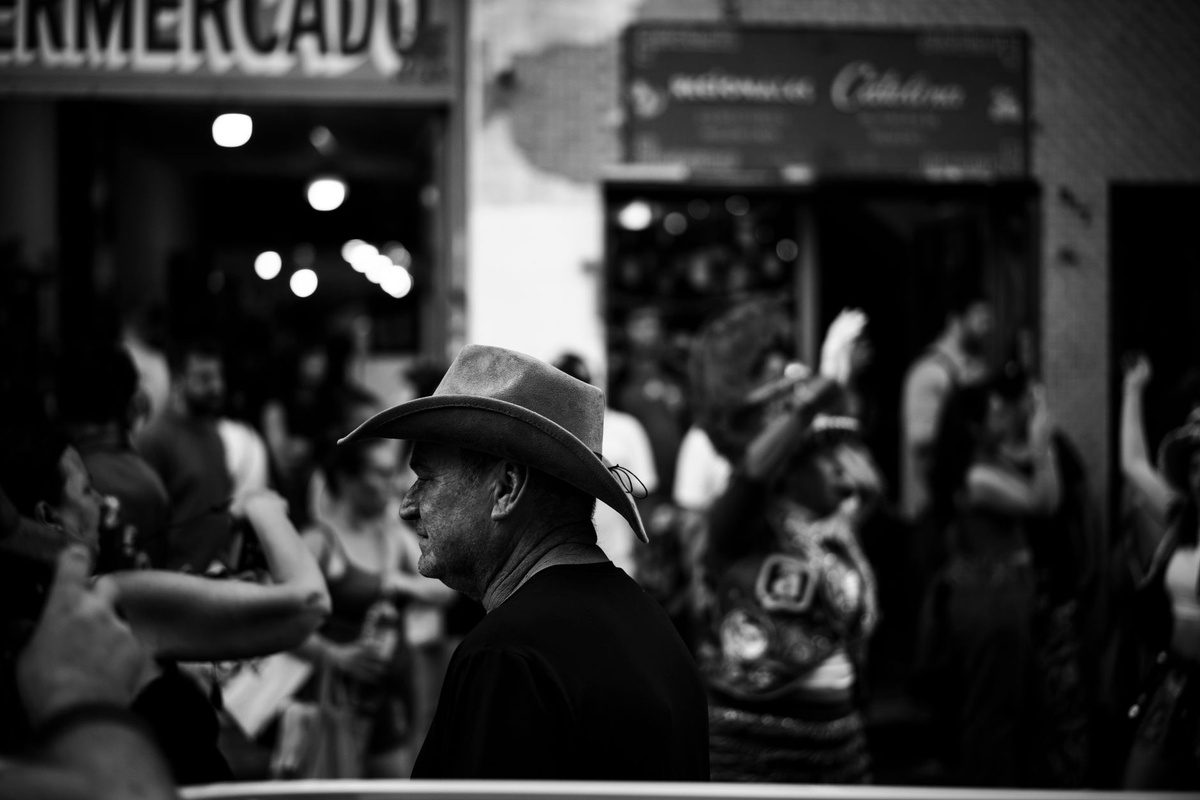
Section 23 lists the exceptions, and you should memorise them:
- Zeitgeschichte (persons of contemporary history): politicians, celebrities, public figures acting publicly.
- Beiwerk (accessory): people who appear incidentally beside a landscape or landmark. If the photo still works without them, they are Beiwerk.
- Versammlungen (gatherings): parades, demonstrations, festivals where the crowd, not the individual, is the subject.
- Höheres Interesse der Kunst (higher artistic interest): protected, but German courts apply this more cautiously than French ones.
Then there is Criminal Code §201a, tightened in 2015 and 2021: photographing someone in a highly personal space, or in a helpless state (an accident victim, a drunk person passed out), carries up to two years. And because Germany treats images as personal data, GDPR applies the moment your photography is more than purely personal; a monetised blog or a sold print pulls you out of the “household exemption.”
October 2026 in Germany
Oktoberfest 2026 wrapped on 4 October, but the Berlin Festival of Lights (typically the first half of October, free, roughly 19:00–23:00) is a Versammlung-exception goldmine for night photographers. Illuminated Brandenburger Tor plus a few thousand silhouetted visitors: that is Beiwerk by any reading.
Frankfurt Book Fair (mid-October, day ticket around €25–30 for the public days) is harder. Indoors, trade-fair organisers set their own photo rules, and cosplay visitors at the Saturday public day expect to be asked. Ask.
Hungary: The Strictest Rule on Paper in Europe
Hungary surprised me most. Section 2:48 of the 2013 Civil Code says that making a recording of a person’s likeness, as well as using it, requires that person’s consent. Not just publishing. Making. The two exceptions are mass gatherings and public appearances by public figures.
Enforcement reality is softer than the text. There is no criminal penalty; the remedy is civil, and Hungarian courts award sérelemdíj (grievance compensation) that in reported privacy cases typically lands between HUF 100,000 and HUF 1,000,000 (€250–2,500). A 2014 Constitutional Court decision also confirmed that police officers on duty can be photographed, which tells you how seriously the right is taken in the other direction.
Practically, this makes Budapest the city where you must switch to an ask-first style for anything tighter than a wide street scene. The good news: Hungarians are polite about it, and the Great Market Hall (Nagyvásárcsarnok, Mon 06:00–17:00, Tue–Fri 06:00–18:00, Sat 06:00–15:00) is full of vendors who will happily pose for a “Szabad fotózni?” (May I photograph?).
October context: 23 October is a national holiday commemorating the 1956 uprising, with public ceremonies along Kossuth tér. Those are mass gatherings, so you are on firm ground. Budapest is also one of the under-visited European capitals seeing strong autumn growth this year, so the crowds are thinner than Prague and the light on the Danube at 17:30 is extraordinary.
Japan: No Statute, But a 57-Year-Old Supreme Court Standard
Japan has no written portrait-rights law. Instead, shōzōken (portrait rights) have been recognised by courts since the Supreme Court’s 1969 ruling in the Kyoto Prefecture Student Union case, and refined in a 2005 decision that set the modern test: does the photograph exceed “the limits of tolerance in social life” (junin gendo)?
Courts weigh the subject’s social status, the activity photographed, the location, the purpose and the manner. A wide shot of pedestrians at Shibuya Crossing: tolerable. A telephoto close-up of a schoolgirl published online: not tolerable, and potentially a criminal matter under local nuisance-prevention ordinances. Typical civil damages in reported portrait-rights cases run ¥100,000–¥500,000 (€620–3,100).
Two things trip up foreign photographers. First, phone cameras sold in Japan make a mandatory shutter sound; locals read a silent camera pointed at them as suspicious. Second, Kyoto’s Gion district has, since 2019, posted a ¥10,000 (€62) fine for photography on its private alleys, and in 2024 closed several of them to tourists entirely. Hanamikoji-dori itself is public; the side streets off it are not.
October 2026 in Japan
Jidai Matsuri (22 October, Kyoto, free, procession roughly 12:00–14:30 from the Imperial Palace to Heian Shrine) is a public event with 2,000 costumed participants who expect to be photographed. It is the single easiest legal street-portrait day on the Japanese calendar.
Foliage peaks in Kyoto in mid-to-late November, so late October is pleasantly uncrowded by comparison. If you plan an overnight at a monastery, read our guide to photography etiquette and silence rules at a Koyasan temple stay first; the Goma fire ceremony has specific no-camera windows.
South Korea: Legal to Shoot, Culturally Expected to Ask
Korea’s portrait right (chosanggwon) is derived from Article 10 of the Constitution and enforced through civil law and the Personal Information Protection Act. Taking a photo in public is not a crime. But Korean courts have repeatedly found civil liability for publishing identifiable close-ups without consent, with typical damages of ₩500,000–₩3,000,000 (€330–2,000).
The criminal risk is Article 14 of the Act on Special Cases Concerning the Punishment of Sexual Crimes, aimed at molka (hidden-camera abuse): photographing someone’s body in a way that causes sexual shame carries up to seven years or a ₩30 million (~€20,000) fine. The practical effect is that any low-angle or candid shot of a woman, even an innocent one, invites hostile attention. Korean phones have mandatory shutter sounds for exactly this reason.
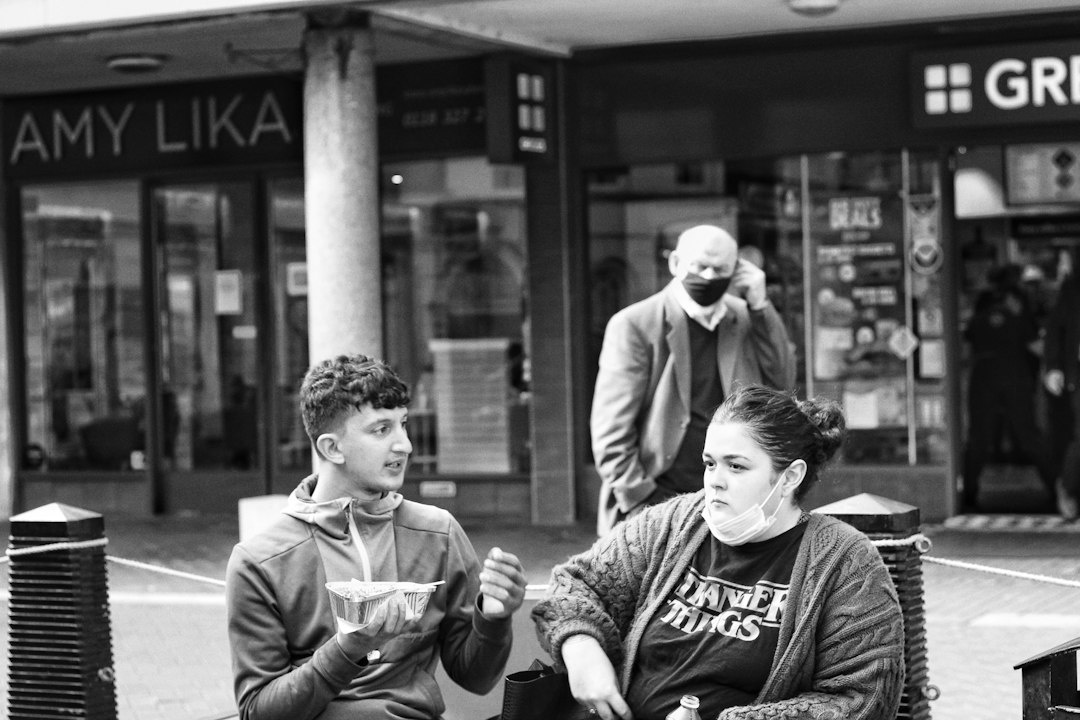
The cultural norm is clear: ask, with a bow and “Sajin jjigeodo doelkkayo?” (May I take a photo?). I have a 90%-plus yes rate at Gwangjang Market (daily roughly 09:00–22:00; food alley until about 23:00) using that one phrase and the Papago app (free) to follow up.
October context: the Jinju Namgang Yudeung (Lantern) Festival runs in early-to-mid October along the Nam River (free entry to the riverside, lantern-tunnel sections about ₩10,000), and Busan Fireworks Festival typically lands the first Saturday of November. Both are public festivals where crowd photography is uncontroversial.
USA: The Permissive Baseline
I include the US because most readers compare everything to it. The First Amendment protects photographing anything visible from a public place, and publication for editorial or artistic purposes is protected too; the 2007 New York appellate decision in Nussenzweig v. diCorcia upheld selling a street portrait as fine art, even to a subject who objected on religious grounds.
The only real exposure is commercial use. Put a stranger’s face on a product or an advertisement without a release and you are in right-of-publicity territory under state laws such as New York Civil Rights Law §§50–51. Street photography for a blog, a print, a gallery or a book is safe.
Penalties and Compensation Compared (October 2026)
The table below converts every penalty into euros so you can see the real spread. “Typical civil award” reflects the range reported in published judgments, not the theoretical maximum.
| Country | Criminal maximum | Typical civil award | Who enforces in practice | Risk level for a careful hobbyist |
|---|---|---|---|---|
| France | €45,000 + 1 yr (private places) | €1,000–5,000 | Subject sues; police rarely involved in public | Low |
| Germany | 1 yr (KUG §33) / 2 yrs (StGB §201a) | €500–5,000 + legal fees | Subject complaint; police do engage | Medium |
| Hungary | None (civil only) | €250–2,500 | Subject sues | Medium (because of “making” rule) |
| Japan | Ordinance fines, typically up to ¥1M (€6,250) for covert filming | €620–3,100 | Subject sues; police respond to complaints quickly | Low–Medium |
| South Korea | 7 yrs + ₩30M (€20,000) under Sexual Crimes Act | €330–2,000 | Police respond fast; bystanders intervene | Medium–High for candids of women |
| USA | None for non-commercial use | Varies (commercial misuse only) | Subject sues | Very low |
The Decision Framework: Which Country Matches Your Style?
Different photographers want different things. Match your approach to the law instead of fighting it.
- Choose the USA or Japan if you shoot classic candid, Cartier-Bresson-style street scenes and want to publish them to a personal blog or photo-club site without releases. Keep Japan frames wide and avoid minors.
- Choose France if your work is artistic and you are willing to defend it as such. The Banier precedent protects you more than any other European ruling, but it does not cover commercial use or undignified images.
- Choose Germany if you prefer landscape-with-people compositions. The Beiwerk and Versammlung exceptions reward photographers who make the city the subject and the people the texture.
- Choose Hungary or South Korea if you enjoy the conversation as much as the shot. Both reward an ask-first, portrait-style approach, and both have populations that say yes far more often than tourists expect.
- Avoid Hungary and Korea if you insist on unposed telephoto candids. You are either breaking the Civil Code (Hungary) or inviting a very unpleasant confrontation (Korea).
A Costed “Stay Legal” Toolkit for a Two-Week Trip
None of this requires expensive gear. It requires the right habits and about €55 of software and paper.
| Item | Cost (Oct 2026) | Why it matters |
|---|---|---|
| Easy Release app (iOS/Android, one-time) | €10.99 | Multilingual model releases signed on your phone; the French, German and Japanese templates hold up for editorial and print sales |
| Regional eSIM, 10 GB, 30 days (Nomad Europe or Asia plan) | €19–26 | Instant cloud backup of RAW files so a confiscated card never costs you the trip; also powers live translation |
| Alternative: Airalo Eurolink 10 GB / 30 days | €24 | Same purpose; slightly better Hungarian coverage in my 2025 tests |
| 50 bilingual consent cards (printed at a Vistaprint-type service) | €12 | A card with your name, website and a QR to your portfolio turns “suspicious tourist” into “photographer” in two seconds |
| Google One 200 GB cloud storage (1 month) | €2.99 | Auto-upload from a Sony or Canon body via the maker’s app |
| Papago (Korea) / DeepL (everywhere) translation apps | Free | Ask properly; both handle spoken Hungarian and Korean surprisingly well |
| Total | €45–51 | Less than one typical Hungarian sérelemdíj award |
Gear note for the over-60 crowd: a 28mm or 35mm prime on a mirrorless body weighs under 700 g and makes your intent obvious. Nobody mistakes a wide lens for surveillance. Leave the 70-200mm at home; it is heavy, and in Korea it is a liability.
Common Mistakes (I Have Made Four of These)
- Assuming “public place” means “anything outdoors.” Gion’s side alleys, German Christmas-market stalls, French café interiors and Korean market stalls are all private property with owners who can set photo rules.
- Using a silent shutter in Japan or Korea around women or children. Legal, but it reads as covert filming and gets you a conversation with police within minutes.
- Posting the same day. A 48-hour cooling-off period before publishing lets you cull any frame where a person is identifiable, unflattering and central to the image.
- Photographing emergencies. In Germany §201a StGB makes images of helpless people a crime; in France it is an Article 9 violation; everywhere it is poor form.
- Thinking a verbal yes covers commercial use. It does not, anywhere. If you might ever sell the image for advertising, get a signed release.
- Forgetting GDPR on a monetised blog. If you run ads or sell prints, you are a data controller in the EU. Keep a simple record of releases and honour takedown requests within 30 days.
- Arguing with police. You are usually right about the law in France, Germany, Japan and the US. You will still lose the hour. Show your consent card, offer to delete the single frame in question, move on.
Field Etiquette That Works in All Six Countries
Over three autumns of testing, the same five-second routine has produced consent rates above 85% in every city on this list, including Seoul and Budapest.
- Make eye contact and raise the camera slightly before you lift it to your eye. This gives the subject a chance to decline with a head shake.
- Say the local phrase, even badly: “Je peux?”, “Darf ich?”, “Szabad?”, “Shashin ii desu ka?”, “Sajin jjigeodo doelkkayo?”
- Show the result on the back screen. Offer to send it. In Japan and Korea, exchanging a LINE or KakaoTalk ID is the natural way to do this.
- If you intend to publish, say so, and record the yes with your release app. Thirty seconds now saves a legal letter later.
- Carry your consent card. A printed card with your name, website and a QR code is the single most effective trust tool I have found, and it costs €0.24 each.
The Verdict
If I could only shoot candid street work in one of these six countries this October without ever thinking about releases, I would pick Japan during Jidai Matsuri week, with the USA as the legal safety net I never actually use. France is the best place to be an artist on the street. Germany rewards patient, composed work. Hungary and South Korea are where I have made my best portraits, precisely because the law forced me to talk to people.
Pick the country that matches how you like to work, pack a wide prime and a stack of consent cards, and go make something worth defending. Then tell us in the comments which city gave you the most yeses this autumn; we are compiling reader data for a 2027 update.
Frequently Asked Questions
Is it illegal to take photos of strangers in public in France?
No. Taking a photograph in a public place in France is legal. The droit à l’image under Article 9 of the Civil Code restricts publishing an identifiable person without consent, with exceptions for news, crowd scenes and artistic expression (the 2008 Banier ruling). The criminal penalty of €45,000 and one year applies only to images captured in private places.
Can I post street photos from Germany on Instagram without permission?
Only if they fall under a §23 KUG exception: the person is incidental to a landscape or landmark, part of a public gathering, or a public figure acting publicly. A recognisable close-up of a stranger posted without consent breaches §22 KUG, punishable by a fine or up to one year in prison, and typical civil awards run €500–5,000 plus legal fees.
Does Hungary really require consent just to take a photo?
Yes. Section 2:48 of Hungary’s 2013 Civil Code requires consent for both making and using a person’s likeness, except at mass gatherings or for public figures in public roles. There is no criminal penalty, but civil grievance awards in reported cases typically range from HUF 100,000 to HUF 1,000,000 (€250–2,500).
Why do phone cameras in Japan and South Korea make a shutter sound?
Both countries require (Korea by regulator guideline since 2004, Japan by industry agreement) that phones sold domestically emit an audible shutter sound to deter covert filming. A silent dedicated camera is legal, but locals read silence as suspicious, so shoot openly and keep frames wide around women and children.
How much does it cost to stay legal as a travelling street photographer?
About €45–51 for a two-week trip as of October 2026: a model-release app (€10.99), a 10 GB regional eSIM for cloud backup (€19–26), 50 printed consent cards (€12) and one month of 200 GB cloud storage (€2.99). That is less than a single typical Hungarian or Korean civil award.

About the Author: Tomáš Bzirský
Founder and editor of Distratech. Based in the Czech Republic, travelling regularly from Central Europe. Writes practical travel guides and travel-tech comparisons (eSIM, apps, airports) in six languages.