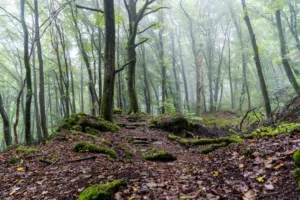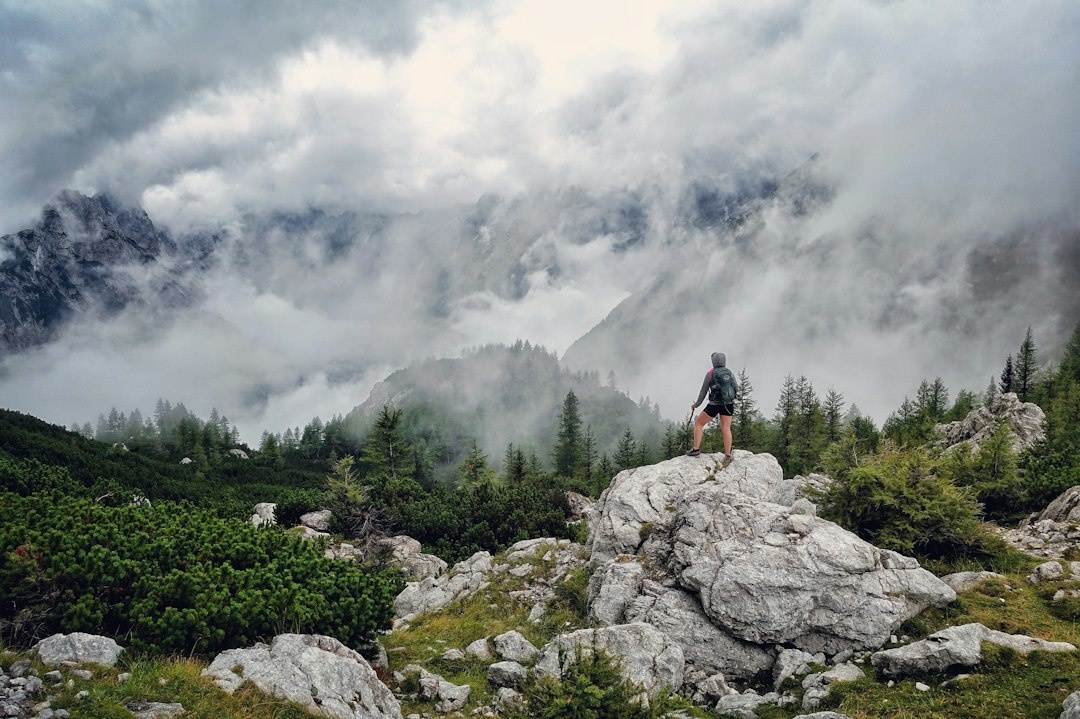
An 8-year-old stopping at a steel cable above a misty limestone slope was the moment this Seven Lakes Valley weekend nearly unraveled. The family completed all 24.1 kilometers, but their GPS track, hut receipt and tired-leg debrief show why this is a serious mountain hike—not a longer version of a Lake Bohinj stroll.
Key Takeaways
- The family walked 24.1 kilometers over two days, with approximately 1,150 meters of total ascent.
- The weekend cost €327.20 ($360) for two adults and children aged 8 and 11, excluding travel to Bohinj.
- Koča pri Triglavskih jezerih charged the family €98.20 for four beds in September 2026, before meals.
- Families should use the easier Prodi route and skip the exposed Štapce crossing in wet, icy or windy conditions.
- October brings quieter trails and autumn color, but huts may be closed and early snow can make the route unsuitable for children.
Key Numbers at a Glance
This case study follows a September 12–13, 2026 weekend from Planina Blato to Koča pri Triglavskih jezerih and back. Distances came from the family’s GPX recording; prices came from receipts and booking confirmations rather than estimated package rates.
| Measurement | Actual result | What it meant for the family |
|---|---|---|
| Total distance | 24.1 km | 11.4 km on day one; 12.7 km on day two |
| Total ascent | Approximately 1,150 m | Comparable to climbing Slovenia’s tallest office building roughly 13 times |
| Highest point | Štapce, approximately 1,851 m | Steep limestone, a short protected section and the weekend’s hardest moment |
| Sleeping elevation | 1,685 m | About 8°C colder than Bohinj before sunrise |
| Walking time | 10 hr 52 min moving; 14 hr 10 min elapsed | Breaks added more than three hours |
| Family cost | €327.20 / about $360 | Based on an editorial conversion of €1 = $1.10 |
| Water carried | 5.5 liters on day one | 1.5 liters per adult and roughly 1.25 liters per child |
| Mobile coverage | Intermittent to absent | Offline maps were essential rather than optional |
For comparison, the family’s usual lowland target is 12–14 kilometers with no more than 450 meters of ascent. Here, roughly the same daily distance felt twice as demanding because of loose rock, pack weight and the 700-meter climb on the first day.
The Route: Why 24 Kilometers Felt Like More
The hike started at Planina Blato, reached Planina pri Jezeru and Dedno polje, then continued to Planina Ovčarija. From there, the family crossed Štapce before descending to Double Lake and Koča pri Triglavskih jezerih.
They returned by the lower Prodi route, rejoining the outward trail near Ovčarija. That avoided repeating the Štapce cables and produced a total GPS distance of 24.1 kilometers.
| Route segment | Distance | Time with children | Elevation change | Difficulty |
|---|---|---|---|---|
| Planina Blato to Planina pri Jezeru | 2.6 km | 1 hr 18 min | +310 m | Steady forest climb |
| Planina pri Jezeru to Dedno polje | 2.1 km | 58 min | +125 m | Moderate, with grazing cattle |
| Dedno polje to Ovčarija | 2.8 km | 1 hr 22 min | +160 m, -90 m | Rolling woodland and pasture |
| Ovčarija via Štapce to Double Lake hut | 3.9 km | 2 hr 47 min | +255 m, -270 m | Steep and exposed in places |
| Hut to Ovčarija via Prodi | 4.7 km | 2 hr 9 min | +160 m, -155 m | Longer but less intimidating |
| Ovčarija to Planina Blato | 8.0 km | 3 hr 18 min | +140 m, -635 m | Easy navigation; tiring descent |
The popular name is slightly misleading: this weekend did not visit every named lake in the full Triglav Lakes chain. It reached the photogenic Double Lake area in the valley’s lower section; continuing toward Black Lake, Veliko jezero and Zasavska koča na Prehodavcih would add too much distance for a relaxed two-day family trip.
Skip the urge to “collect” all seven lakes with primary-school children. The Double Lake itinerary already delivered an 11-hour moving-time weekend; extending toward Prehodavcih can push the trip beyond 30 kilometers and add several hundred meters of ascent.
Štapce versus Prodi: the decision that mattered
| Option | Approximate distance, Ovčarija to hut | Typical family time | Best for | Avoid when |
|---|---|---|---|---|
| Via Štapce | 3.9 km | 2 hr 15 min–3 hr | Confident children, dry rock and clear visibility | Wet rock, frost, strong wind or fear of exposure |
| Via Prodi | 4.7 km | 2 hr–2 hr 40 min | Most families and cautious hikers | Only when officially closed or obstructed |
Choose Štapce if every child already handles steep alpine terrain calmly, the rock is dry and an adult can stay immediately behind them. It saves only about 800 meters, not enough to justify pushing a frightened child.
Choose Prodi if this is the child’s first hut-to-hut hike, anyone dislikes exposure, or clouds are touching the ridges. It is longer but psychologically easier, which usually makes it faster for families.
Choose neither if the forecast includes thunderstorms, snow, freezing rain or gusts above roughly 45 km/h. In that situation, walk only as far as Planina pri Jezeru or Dedno polje and return to Blato.
Day One: Blato to Double Lake via Štapce
The family left Bohinj at 7:05 a.m., drove through Stara Fužina and reached Planina Blato shortly before 8 a.m. The final mountain road is narrow, paved in parts and slow; the 13-kilometer drive from Ribčev Laz took 38 minutes versus about 20 minutes on ordinary valley roads.
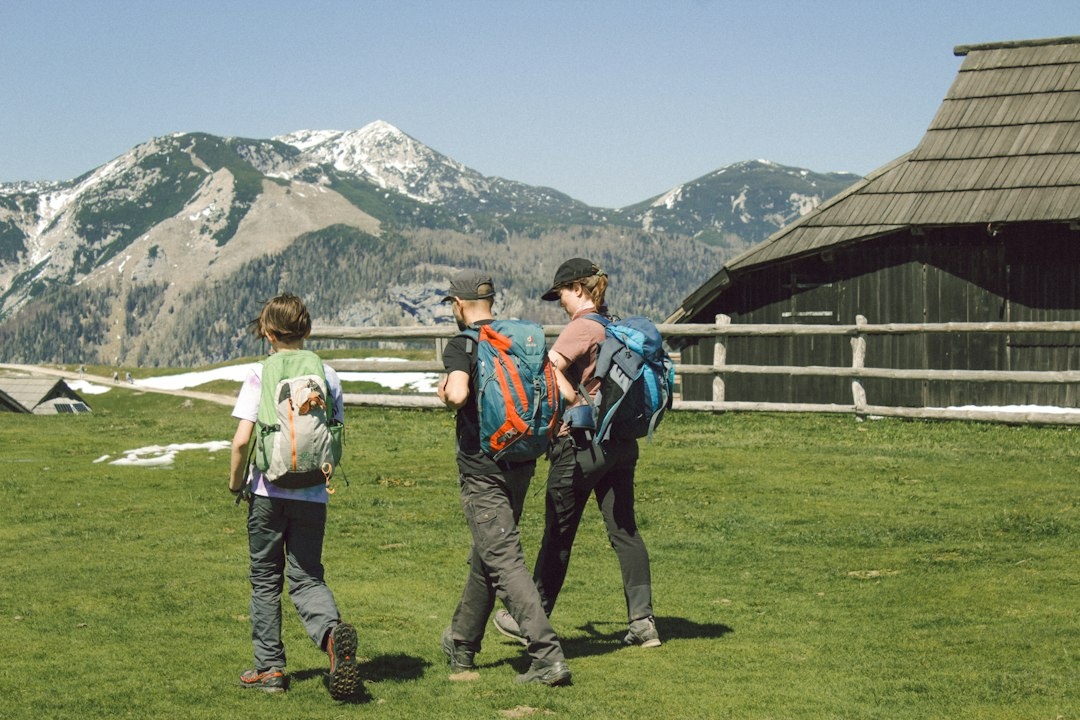
They started walking at 8:12 a.m. in 12°C sunshine. Each child carried a small pack containing a waterproof jacket, fleece, gloves, snack, water and sleeping liner; the adults carried the first-aid kit and most shared food.
8:12–9:30 a.m.: The forest climb
The first 2.6 kilometers climb persistently through forest to Planina pri Jezeru. It took 78 minutes, compared with the 55–65 minutes often quoted for adults on trail signs and mapping apps.
The 8-year-old’s mistake was starting too quickly. After 20 minutes, a five-minute water stop and slower “conversation pace” worked better than promising a large break at the top.
Planina pri Jezeru’s circular alpine pasture and dark-green lake made the first worthwhile stop. The family spent 22 minutes here—long enough for sandwiches, but not long enough for legs to cool completely.
9:52 a.m.–12:32 p.m.: Pastures, cows and slower progress
The path to Dedno polje was gentler, although cattle turned one section into slick mud. Trail-running shoes would have saved roughly 300 grams per foot, but the children’s mid-height boots provided noticeably better grip and ankle protection.
At Dedno polje, the family followed signs toward Planina Ovčarija and Triglavska jezera. There are multiple intersecting trails here, so relying only on painted signs is riskier than following a downloaded GPX track.
They used Mapy.com offline alongside the official Planinska zveza Slovenije mapping tools. Google Maps was useful for driving to Bohinj but essentially useless for judging alpine trail difficulty.
12:32–3:19 p.m.: The Štapce problem
Cloud increased around noon, and the temperature fell from 17°C in the pastures to about 11°C near Štapce. That 6°C drop over less than three hours explains why carrying only a cotton sweatshirt is inadequate.
Near the protected section, the 8-year-old stopped and refused to move for roughly 12 minutes. One adult went ahead with the 11-year-old while the second adult stayed behind, clipped away trekking poles and talked the younger child through one move at a time.
No via ferrata kit is normally required on this marked route in good summer conditions, but hands are needed. The real issue was not technical climbing; it was the combination of polished limestone, a visible drop and an adult-sized backpack affecting balance.
The family reached the top of Štapce at 2:27 p.m., 35 minutes behind its conservative schedule. They arrived at Koča pri Triglavskih jezerih at 3:19 p.m., after 7 hours 7 minutes elapsed and 5 hours 25 minutes moving.
What day one proved
The 11-year-old handled the distance but became careless on the final descent. The 8-year-old had enough physical stamina, yet needed far more emotional support than the elevation profile predicted.
That distinction matters. A child who can walk 15 flat kilometers is not automatically ready for 11 mountain kilometers with loose rock and exposure.
Sleeping and Eating at Koča pri Triglavskih Jezerih
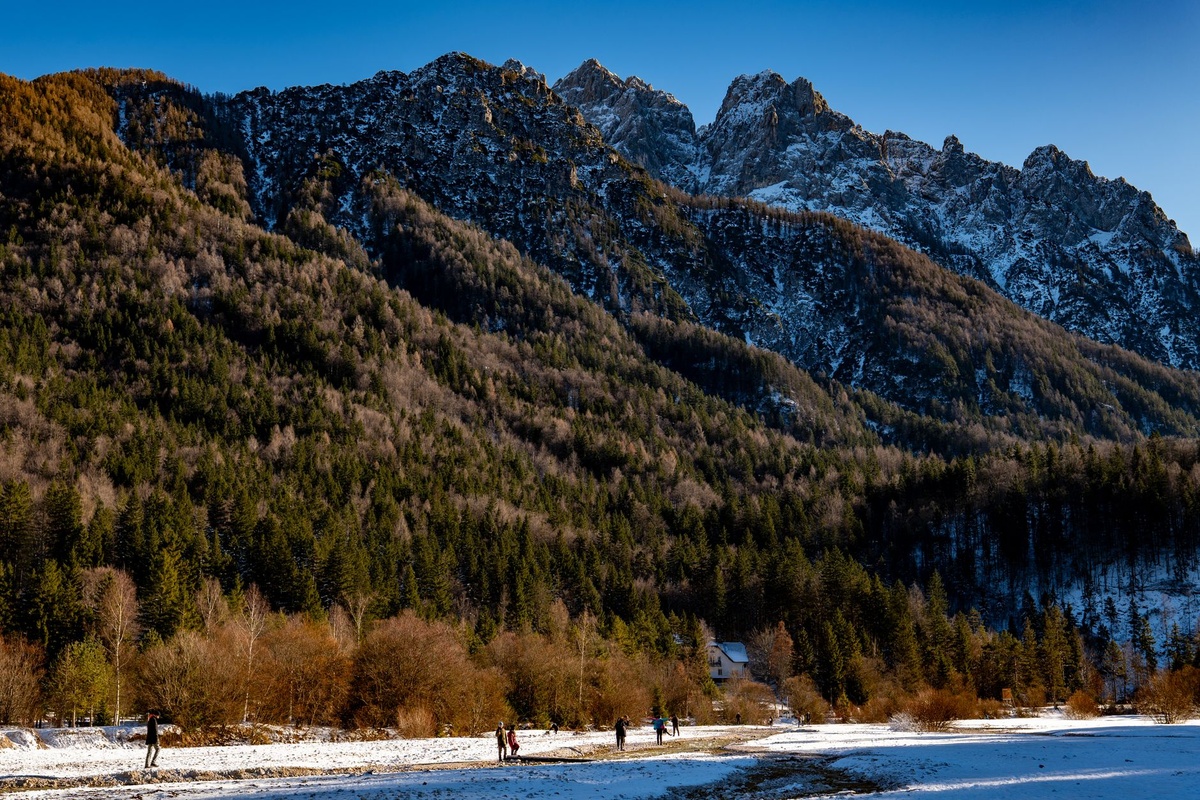
Koča pri Triglavskih jezerih sits beside Double Lake at approximately 1,685 meters. The setting is exceptional, but this is a practical Slovenian mountain hut—not a hotel with private bathrooms, soundproofing or reliable device charging.
The family reserved through the Alpine Association of Slovenia’s mountain-hut directory, which links to current contact and booking information. The confirmation arrived by email four days later; calling is smarter if departure is less than a week away.
The hut’s operating season depends on snow, water supply and staffing, generally running from June into late September or early October. Its September 2026 service hours were breakfast from 7–9 a.m., hot meals approximately 11 a.m.–7:30 p.m. and quiet hours from 10 p.m.; these are not guaranteed October hours.
By October, assume nothing. Autumn color can be excellent around Bohinj, but the first snow and overnight frost often arrive while the valley below still feels mild; confirm the hut is staffed directly rather than trusting an old Google listing.
What the family paid at the hut
| Hut expense | Quantity | September 2026 price | Approx. USD |
|---|---|---|---|
| Adult beds, non-member rate | 2 | €62.00 | $68.20 |
| Child beds | 2 | €36.20 | $39.82 |
| Jota bean-and-sauerkraut stew | 4 | €38.00 | $41.80 |
| Štruklji | 4 portions | €24.00 | $26.40 |
| Breakfast | 4 | €36.00 | $39.60 |
| Tea and hot chocolate | 4 drinks | €13.00 | $14.30 |
| Total hut bill | €209.20 | $230.12 |
Meals cost more than in a Bohinj supermarket because supplies must reach a remote hut. A €9.50 bowl of jota looks expensive beside a roughly €6–€7 valley lunch, but carrying four dinners uphill would add around 1.5–2 kilograms.
The family brought sleeping-bag liners and avoided renting or buying additional bedding. Alpine-club members with reciprocal rights may qualify for discounted sleeping rates, but membership cards must be shown at check-in; a photo on a phone is not always accepted.
The room was warm enough in base layers and liners, although corridor noise continued until roughly 10:15 p.m. Earplugs weighing 5 grams delivered more value than the family’s 340-gram travel pillows.
Day Two: Returning via the Safer Prodi Route
At 6:40 a.m., the temperature beside Double Lake was 4°C—8°C below the previous afternoon’s temperature at Blato. Mist hid the surrounding ridges, making the decision to avoid Štapce easy.
Breakfast began at 7 a.m., and the family departed at 8:03 a.m. They carried 4.5 liters of water for the return, one liter less than on day one because the forecast was cooler and the route trended downhill.
Why the longer route worked better
The Prodi trail added approximately 800 meters but removed the psychologically difficult cable section. It took 2 hours 9 minutes to reach Ovčarija, only about 20 minutes slower than their planned Štapce time.
This is the central lesson from the weekend: the shortest line on a map is not necessarily the quickest family route. An exposed 100-meter section can consume more time than an extra kilometer of ordinary trail.
Cloud lifted near Dedno polje, and the family took a 35-minute lunch break. The children ate flatbread, cheese, apples and chocolate; compared with energy gels at €2–€3 each, ordinary supermarket food was cheaper and more appealing.
The final descent from Planina pri Jezeru to Blato caused more complaints than the previous day’s climb. Downhill walking loads knees and quadriceps, and the 8-year-old’s pace dropped from roughly 2.5 km/h to 1.8 km/h over the final hour.
They reached the car at 3:06 p.m.: 7 hours 3 minutes elapsed, with 5 hours 27 minutes moving. Nobody had blisters, although both children changed socks at lunch after the previous day’s lesson about damp feet.
Gear That Earned Its Place—and What Stayed Home
The adults kept their packs near 8.5 and 7.2 kilograms including water. The children carried 2.6 and 3.4 kilograms respectively, below the commonly used ceiling of roughly 10–15% of a child’s body weight.
A 6-kilogram pack might sound manageable for an 11-year-old, but it would have been nearly twice the load used here. That difference becomes obvious after 700 meters of climbing.
| Item | Family carried | Typical cost, September 2026 | Verdict |
|---|---|---|---|
| Waterproof jackets | 4 | €45–€160 each | Essential even with a dry forecast |
| Mid-height hiking boots | 4 pairs | €70–€150 per pair | Better than smooth-soled trainers here |
| Trekking poles | 2 adult pairs, 1 child pair | €25–€90 per pair | Most useful on the return descent |
| Sleeping-bag liners | 4 | €15–€35 each | Required or strongly expected in many huts |
| 10,000 mAh power bank | 1 | €20–€35 | Enough for two phones over one night |
| Emergency bivvy bags | 2 | €4–€8 each | Cheap insurance at under 120 g each |
| Microspikes | 0 in September | €30–€60 per pair | Potentially necessary after October frost or snow |
They skipped sleeping bags because the staffed hut supplied blankets. They also left the tablet, camera tripod and children’s hardback books in Bohinj, saving roughly 2.3 kilograms compared with their original packing pile.
Family packing list
- Waterproof jacket and waterproof trousers for each person
- Fleece or lightweight insulated layer, plus hat and gloves
- Broken-in boots with grippy soles and two pairs of hiking socks
- Sleeping liner, headlamp and earplugs
- At least 1.25–1.5 liters of water per person in warm weather
- Two lunches, high-calorie snacks and one emergency meal
- Paper map plus downloaded offline maps
- Compact first-aid kit, blister dressings and emergency bivvy
- Cash, alpine-club cards and photo identification
- Power bank, charging cable and phone in a waterproof pouch
For navigation, download the GPX before reaching the toll road. A phone constantly searching for reception can lose battery far faster than one kept in airplane mode; this family finished with 58% power versus an estimated 20–30% without offline settings.
Slovenia uses the European emergency number 112. Mobile coverage is inconsistent, so leave the route and expected return time with someone in Bohinj rather than treating a live-tracking app as a rescue plan.
What the Weekend Actually Cost
The total was €327.20 ($359.92) for four people, excluding fuel to reach Bohinj and the previous night’s accommodation. That equals €81.80 ($89.98) per person.
| Expense | September 2026 cost | Approx. USD | Cheaper alternative |
|---|---|---|---|
| Mountain-road access and parking | €20.00 | $22.00 | Seasonal shuttle when operating |
| Four hut beds | €98.20 | $108.02 | Reciprocal alpine-club discount, if eligible |
| Hut meals and drinks | €111.00 | $122.10 | Carry breakfast and more food |
| Supermarket trail food | €43.00 | $47.30 | Prepare food at home |
| Post-hike meal in Bohinj | €55.00 | $60.50 | Supermarket picnic for about €20 |
| Total | €327.20 | $359.92 |
The post-hike meal was at Foksner in Ribčev Laz, where burgers and hearty plates were more useful than a formal tasting menu. Four mains and drinks cost €55; a comparable supermarket meal would have saved about €35 but required cooking after seven hours on foot.
Do not cut the budget by removing waterproofs or emergency equipment. Save money on restaurant meals, branded snack bars and unnecessary luggage instead.
Families needing a base before or after the hike can compare hotels in Bohinjsko Jezero. In September, simple family apartments commonly start around €120–€170 per night, while lakeside hotels can exceed €220.
For comparison, a three-day lower-altitude route usually demands less specialist gear and offers easier exits. Distratech’s guide to the Mullerthal Trail’s manageable three-day sections is a better model for families that have not yet tested themselves on consecutive hiking days.
Getting to Planina Blato
The trailhead is reached through Stara Fužina on a controlled mountain road. Access arrangements and vehicle fees can change seasonally, so check the Bohinj municipal traffic information immediately before departure rather than relying on last year’s blog posts.
| Transport option | Typical cost, September 2026 | Travel time from Ribčev Laz | Main drawback |
|---|---|---|---|
| Private car to Planina Blato | €20 road-access fee | 35–45 min | Narrow road and limited parking |
| Seasonal Bohinj shuttle | Typically €0–€5 per person, route dependent | 45–60 min | Limited dates and fixed departures |
| Taxi/private transfer | Approximately €45–€65 one way | 30–40 min | Expensive and must be prearranged |
| Walk from Stara Fužina | Free | Add roughly 3–4 hr each way | Turns a 24 km weekend into an unsuitable marathon |
Choose the shuttle when its schedule matches your hut booking; it removes parking anxiety and saves emissions. Choose a car outside the shuttle season, but arrive before 8 a.m. on fair-weather weekends.
Skip walking the entire road from Stara Fužina with children just to avoid the €20 fee. The additional distance and ascent would erase the safety margin needed for a late start, weather delay or tired child.
October Conditions: Beautiful, Quieter and Much Less Forgiving
October is an excellent month for lower Bohinj walks, with golden larches at elevation and quieter villages than August. Seven Lakes Valley is different: shaded limestone can hold frost all morning, daylight is shrinking and staffed huts begin closing.
A sunny 18°C afternoon beside Lake Bohinj can coincide with 3°C, wind and frozen puddles near Štapce. That 15°C contrast is larger than many families expect from a climb of under 1,500 vertical meters.
For an October attempt, check three things: the live hut status, the Slovenian Environment Agency mountain forecast and recent trail reports. If snow has fallen, downgrade to Mostnica Gorge, Voje Valley or a lower section around Planina Blato instead.
September offers about 12.5 hours of useful daylight for this itinerary, while late October can provide closer to 10 hours. A 7-hour family day that feels comfortable in September leaves far less room for delays a month later.
Common Mistakes This Family Would Not Repeat
- Choosing Štapce because it looked shorter. The route saved only 800 meters but cost approximately 35 minutes when the younger child froze at the cable.
- Leaving the hut booking too late. A September Saturday can fill weeks ahead; four adjacent beds are harder to secure than one adult bunk.
- Believing valley weather represents mountain weather. The family experienced a 13°C temperature range over the weekend.
- Carrying too many “comfort” items. Removing a tablet, tripod and books saved 2.3 kilograms—more than the children’s combined water at several points.
- Scheduling a long drive after the hike. Seven hours of walking followed by a three-hour motorway drive is a poor safety combination; stay in Bohinj another night.
- Depending on mobile coverage. Download maps, save the hut number offline and tell a third party the planned return time.
- Forcing the full route after bad sleep or bad weather. Turning around at Planina pri Jezeru produces a respectable 5.2-kilometer outing instead of a preventable rescue.
The biggest mistake would be treating completion as mandatory. Turning back two kilometers into a 24-kilometer plan is good mountain judgment, not a failed holiday.
Is This Route Right for Your Family?
Do this overnight hike if your youngest child has already completed at least 10–12 kilometers with 500 meters of ascent, can walk on loose rock and is comfortable sleeping in shared accommodation. A previous mountain day is more meaningful than age alone.
Use the Prodi route both ways if the children are strong walkers but new to exposed trails. The extra 1.6 kilometers across the round trip is a sensible trade for less stress.
Try a Planina pri Jezeru day hike first if your child’s longest walk is under 8 kilometers. That test is approximately 5.2 kilometers return from Blato with around 310 meters of ascent, versus 24.1 kilometers and 1,150 meters for the full weekend.
Postpone the trip if the hut is closed, snow is forecast or an adult would struggle to carry extra child gear in an emergency. Self-sufficiency matters more here than on busy paths around Lake Bled.
The Verdict After 24 Kilometers
The family finished tired but enthusiastic, and both children wanted another hut trip. The success came from a light packing system, an early start and changing the return route—not from pushing through the original plan at all costs.
The honest verdict is that Seven Lakes Valley is suitable for capable 8- and 11-year-olds, but it is not automatically a child-friendly hike. Use Prodi, book the hut directly, budget about €330 for a family of four and keep an easier Bohinj plan ready for October weather.
Save this itinerary, download the route before leaving Wi-Fi and check the hut and mountain forecast again 24 hours before departure. In the Julian Alps, that final check matters more than any packing hack.
Frequently Asked Questions
Can children hike Slovenia’s Seven Lakes Valley?
Yes, fit children with prior mountain experience can reach Double Lake from Planina Blato. This family’s 8- and 11-year-olds covered 24.1 kilometers and roughly 1,150 meters of ascent over two days, but the easier Prodi route is preferable to Štapce.
How much does a Seven Lakes Valley family hike cost?
This September 2026 weekend cost €327.20 ($360) for two adults and two children, including parking, hut beds, food and a post-hike meal. Accommodation and meals at Koča pri Triglavskih jezerih accounted for €209.20.
How long does it take to hike from Planina Blato to Double Lake?
Allow six to seven hours with children, including rests, compared with roughly four to five hours for experienced adults. This family took 7 hours 7 minutes elapsed via Štapce and just over seven hours to return via Prodi.
Is Seven Lakes Valley safe to hike in October?
Only in stable, snow-free conditions with confirmed hut availability. October can bring frost, early snow and temperatures near freezing at 1,700–1,850 meters even when Lake Bohinj is mild.
Do you need to book Koča pri Triglavskih jezerih?
Yes, reserve ahead for summer and September weekends through the Alpine Association hut listing or the hut’s direct contact details. Families need four beds together, which can sell out earlier than individual bunks.

About the Author: Tomáš Bzirský
Founder and editor of Distratech. Based in the Czech Republic, travelling regularly from Central Europe. Writes practical travel guides and travel-tech comparisons (eSIM, apps, airports) in six languages.