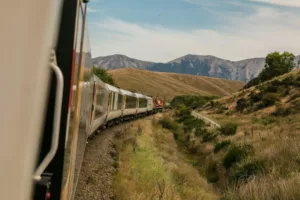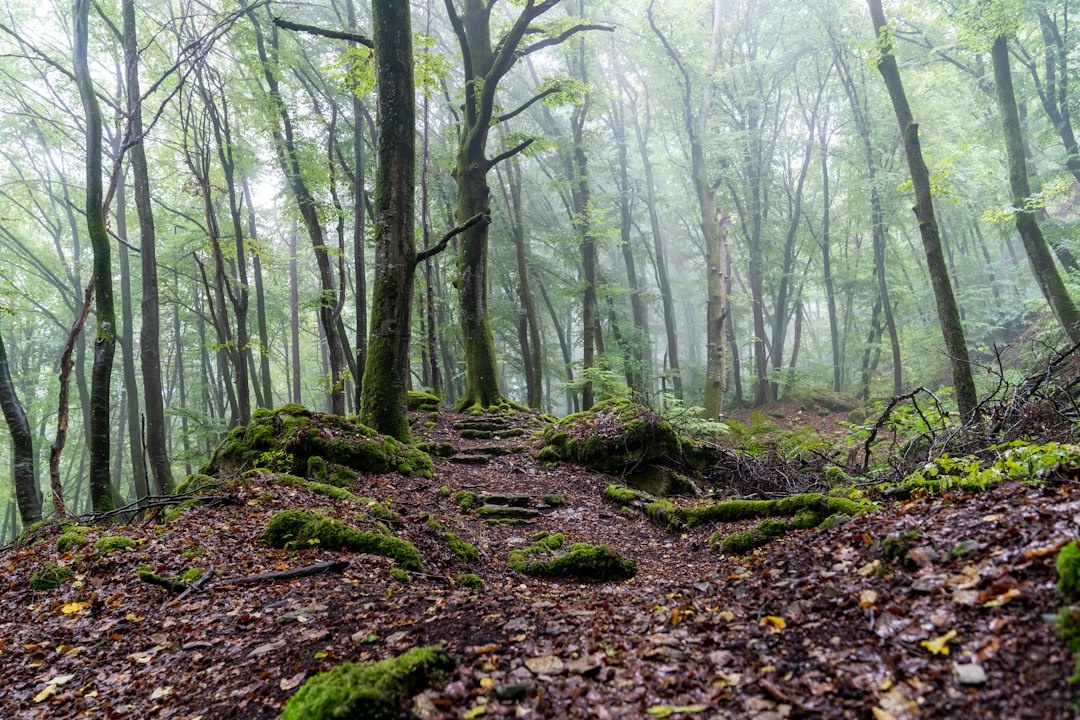
Luxembourg’s Mullerthal Trail delivers mossy sandstone gorges, beech forest and storybook villages without Alpine altitudes—but “Little Switzerland” is not a flat park walk. The sensible way to hike it after 65 is to skip the full 112-km circuit and build a 29.5-km weekend around short stages, free buses, luggage transfers and hotels where recovery does not involve climbing three flights of stairs.
Key Takeaways
- This three-day route covers 29.5 km, with daily stages of 8.2–11.7 km and 190–310 m of ascent.
- Luxembourg’s second-class buses and trains are free for residents and visitors as of October 2026.
- Budget €330–€520 ($383–$603) per person for three nights, meals and luggage transfers, excluding travel to Luxembourg.
- October brings colorful beech forest, quieter trails and slippery leaves; start by 9:30 a.m. because sunset moves from about 19:10 to 17:20.
- Book luggage transfers at least five working days ahead and carry trekking poles for wet sandstone steps.
Key Numbers at a Glance
| Item | Planning figure | What it means |
|---|---|---|
| Total hiking distance | 29.5 km | About one quarter of the complete 112-km Mullerthal Trail |
| Daily stages | 8.2, 11.7 and 9.6 km | Roughly 3.5–6 hours per day with generous stops |
| Maximum daily ascent | Approximately 310 m | Less elevation than many Alpine hikes, but with more roots and steps |
| Public transport | €0 ($0), October 2026 | All standard second-class buses and trains within Luxembourg are free |
| Luggage transfer | Budget €12–€18 ($14–$21) per bag per move | Two transfers usually cost €24–€36 per bag |
| Hotel rooms | Approximately €120–€175 ($139–$203) per double | Weekend October rate range, often including breakfast |
| Trail toilets | Usually 0 between villages | Use facilities in Echternach, Berdorf, Mullerthal and Consdorf |
| Best October start time | 09:00–09:30 | Allows a 90-minute daylight buffer after a slow stage |
Dollar conversions in this guide use a planning rate of €1 = $1.16. Hotel and restaurant prices are October 2026 planning rates and can rise during Luxembourg school holidays or autumn festival weekends.
Is the Mullerthal Trail Suitable After 65?
Yes, if you are comfortable walking 10 km on uneven ground and can repeatedly step up or down 20–30 cm. Age is less important than balance, knee tolerance and your ability to remain on your feet for four to six hours.
The Mullerthal is lower than famous routes in Nepal or the Alps: these stages stay roughly between 160 and 380 m above sea level. The difficulty comes from damp roots, narrow rock passages and sandstone stairways—not altitude or sustained climbs.
Choose this three-day itinerary if:
- You regularly walk 6–8 km and can manage stairs without using both hands.
- You prefer hotels and restaurant meals over hostels or packed dinners.
- You want the best rock formations without completing all three official trail loops.
- You value escape options; each stage begins and ends near a bus stop.
Choose a fixed-base version instead if:
- You use a walking stick for everyday balance rather than only for hiking.
- You dislike changing hotels or need a guaranteed accessible bathroom.
- You are uncertain about walking on wet stone.
- You want to decide each morning between a 4-km walk and a 10-km walk.
For a fixed base, stay in Echternach and use buses to Berdorf, Mullerthal and Consdorf. You will spend approximately 30–45 minutes on transport each morning versus 10–15 minutes when sleeping along the route, but you eliminate luggage-transfer logistics.
| Plan | Daily walking | Hotel changes | Transport cost | Best for |
|---|---|---|---|---|
| Point-to-point route in this guide | 8.2–11.7 km | 2 | €0 buses + €24–€36 per bag transfer | Confident walkers wanting continuous progress |
| Echternach fixed base | 4–12 km, adjustable | 0 | €0 by bus | Travelers prioritizing comfort and flexibility |
| Taxi-supported private itinerary | As little as 3–6 km | 0–2 | About €25–€55 per ride | Walkers needing door-to-door backup |
My verdict: choose point-to-point if you can comfortably complete a hilly 10-km practice walk at home. Choose Echternach as a base if that test leaves your knees sore the following morning.
Step 1: Reach Echternach and Complete a Short Mobility Test
Arrive in Echternach the afternoon before hiking. From Luxembourg City, regional buses normally take 55–70 minutes and cost €0; a taxi takes about 35–45 minutes but commonly costs €90–€120.
Use the official Mobiliteit.lu journey planner rather than Google Maps alone. Mobiliteit shows real-time stop changes, accessible vehicles and walking connections, while Google occasionally proposes rural stops on the wrong side of a fast road.
If arriving by international train, compare standard and premium rail products before booking. Distratech’s European first-class train booking case study explains when extra space is worth paying for—particularly useful if you are carrying poles or need easier luggage storage.
Do a 20-minute test walk
From Echternach’s market square, walk to the abbey, continue through the municipal park and climb a few streets toward the trail. If your footwear slips on wet paving or your knees object to the first steps, switch to the fixed-base plan before your luggage moves.
Use the public toilets near the central bus station before starting each day. Facilities are generally accessible from early morning into the evening, but hours can vary; cafés are a more dependable backup after approximately 08:00.
Step 2: Book Senior-Friendly Hotels and Luggage Transfers
“Senior-friendly” should mean a lift, walk-in shower option, restaurant nearby and no steep final approach. It does not simply mean a hotel is expensive.
Search hotels in Echternach for the pre-hike night, but contact the property directly before choosing a room. Ask specifically about lift access from reception, shower thresholds and stairs between the lift and bedroom; “upper floors accessible by elevator” does not guarantee a step-free entrance.
| Night | Recommended property | October 2026 planning price | Senior-friendly strengths | Watch for |
|---|---|---|---|---|
| Before Day 1: Echternach | Hotel Le Pavillon | €120–€155 double, breakfast often extra | Central location; restaurants and bus stops within roughly 300 m | Confirm lift and shower arrangement for your room |
| After Day 1: Berdorf | Trail-Inn Natur & Sporthotel | €130–€165 double with breakfast | Trail-oriented staff, central village position and on-site dining | Request the quietest room away from restaurant activity |
| After Day 2: Mullerthal | Hotel-Restaurant Le Cigalon | €140–€175 double with breakfast | Restaurant on site; avoids an evening bus or taxi | Limited room inventory, so book early |
| Alternative near Consdorf | Hotel Bon Repos, Scheidgen | €135–€175 double with breakfast | Lift, wellness facilities and more modern rooms | Requires a bus or adjusted walk from the planned endpoint |
Skip isolated spa hotels outside Echternach unless you are renting a car. A pool is appealing, but a steep 2-km road walk or €25 taxi each evening cancels out much of the benefit.
How luggage transfer works
Local operators such as Move We Carry arrange bag transport between participating accommodations. Published or quoted rates typically start around €12 per item per stage; budget €15–€18 for a one-off booking, with a minimum charge sometimes applied.
- Reserve every hotel before requesting transport.
- Send the operator the guest name, dates, hotel addresses and number of bags.
- Confirm the maximum weight; 20 kg per bag is a common working limit.
- Attach a durable label with your name and next hotel.
- Leave the suitcase at reception by the stated time, commonly 09:00.
- Keep medication, rain gear, electronics and one change of clothing in your daypack.
Book at least five working days ahead; ten days is safer for an October weekend. A transfer may cost €30 for two bags, while a local taxi carrying you and the same luggage can cost €30–€55 depending on distance and availability.
Step 3: Follow This Three-Day Mullerthal Route
| Day | Route | Distance | Ascent | Realistic time after 65 | Bus bailout |
|---|---|---|---|---|---|
| 1 | Echternach to Berdorf | 8.2 km | About 280 m | 3.5–4.5 hours | Return from Berdorf Duerfplaz in about 15–25 minutes |
| 2 | Berdorf to Mullerthal | 11.7 km | About 310 m | 5–6 hours | Exit toward Berdorf or Mullerthal village stops |
| 3 | Mullerthal to Consdorf | 9.6 km | About 190 m | 4–4.75 hours | Bus from Consdorf to Echternach or Luxembourg City |
Distances can vary by 300–800 m depending on your hotel, toilet detours and exactly where a tracking app snaps to the official path. Download the official GPX track and an offline map rather than treating any single phone reading as exact.
Day 1: Echternach to Berdorf — 8.2 km
Start by 09:30 after using the toilets in Echternach. Follow the Mullerthal Trail Route 2 markings toward Trooskneppchen and the Wolfsschlucht, or Wolf’s Gorge.
The first stage introduces the route’s main challenge quickly: stone steps, roots and narrow passages between sandstone walls. Take the stairs slowly and allow faster hikers to pass; the difference between a rushed pace and a controlled pace is only about 20 minutes over the whole day.
Wolfsschlucht is dramatic but can remain wet long after rain. Use both trekking poles where space permits, but collapse one pole in tight rock corridors so it cannot catch behind you.
There are several informal rest opportunities on rocks and trail edges, but do not expect a bench every kilometer. The most reliable seated break is around the viewpoints and approach to Berdorf, approximately 5–6 km into the stage.
There is no dependable staffed toilet between Echternach and Berdorf. Use the facilities in Echternach, then plan on cafés, your hotel or the tourist facilities in Berdorf.
If you arrive tired, stop in Berdorf rather than adding an optional cave loop. Eight kilometers on roots can demand as much concentration as 12 km on a paved riverside path.
Where to eat in Berdorf
Eat at Trail-Inn if you are staying there. Expect soups around €8–€11, salads or pasta around €17–€23 and meat mains approximately €24–€32, with dinner service commonly beginning around 18:00.
Skip the temptation to survive on pastries from a bakery. A dinner with 25–35 g of protein will support next-day recovery better than a €7 snack, even if it raises your bill to roughly €35–€45 with a drink.
Day 1 shortcut
If Wolfsschlucht proves harder than expected, return to Echternach while still near town and take a free bus to Berdorf. From central Echternach, the ride is generally 15–25 minutes versus approximately €25–€35 and 12–18 minutes by taxi.
Service numbers and stop patterns change, so search “Echternach Gare Centre” to “Berdorf, Duerfplaz” in Mobiliteit on the morning of travel. Do not build the weekend around a memorized route number from an old blog post.
Day 2: Berdorf to Mullerthal — 11.7 km
This is the longest and most technical day. Leave between 09:00 and 09:15, especially after the final Sunday of October, when the clock change brings sunset forward by an hour.
Follow Route 2 past Berdorf’s sandstone formations, including Huel Lee and the amphitheater area. Huel Lee is an old millstone quarry whose circular cutting marks remain visible in the rock.
The route continues through formations such as Werschrummschlëff and near Perekop. Some passages are narrow enough that large backpacks become awkward, which is another reason to transfer luggage and hike with a 15–22-liter daypack.
Plan your first seated pause after 3–4 km and lunch after roughly 7 km. Benches occur near major formations and junctions, but fallen leaves can obscure side paths leading to them.
Carry at least 1.25 liters of water per person in cool October weather; take 1.75 liters if the forecast exceeds 18°C. There is usually no reliable potable-water tap or public toilet in the forest between Berdorf and Mullerthal.
Lunch strategy
Bring a packed lunch ordered from the hotel the previous evening; expect €10–€16 for a sandwich, fruit and drink. That costs more than a supermarket picnic at €6–€9, but it avoids hunting for an open shop before a 09:00 departure.
Do not rely on a woodland café being open on Monday or Tuesday. Rural Luxembourg restaurants commonly close one or two days each week, and autumn hours may be shorter than summer schedules.
Arrival in Mullerthal
At Mullerthal village, go directly to your hotel or to the visitor facilities around Heringer Millen. Seasonal information and toilet access are commonly available during daytime hours, approximately 09:30–16:30 or 17:00, but confirm at Mullerthal Trail’s official website.
A room with dinner included is valuable here because evening choices are limited. At Le Cigalon, allow approximately €30–€48 per person for a two-course dinner and drink, compared with €25–€55 for a taxi to a larger restaurant and back before buying food.
Day 2 shortcut
If you are behind schedule at the final major junction, follow signed access paths toward a road stop rather than continuing through another rock formation after dusk. A bus is free; a rescue call caused by pushing on with a weak headlamp is not a sensible badge of honor.
The safer decision point is 14:30 in late October. If you still have more than 4 km remaining then, take the shortest signed connection toward Berdorf or Mullerthal village.
Day 3: Mullerthal to Consdorf — 9.6 km
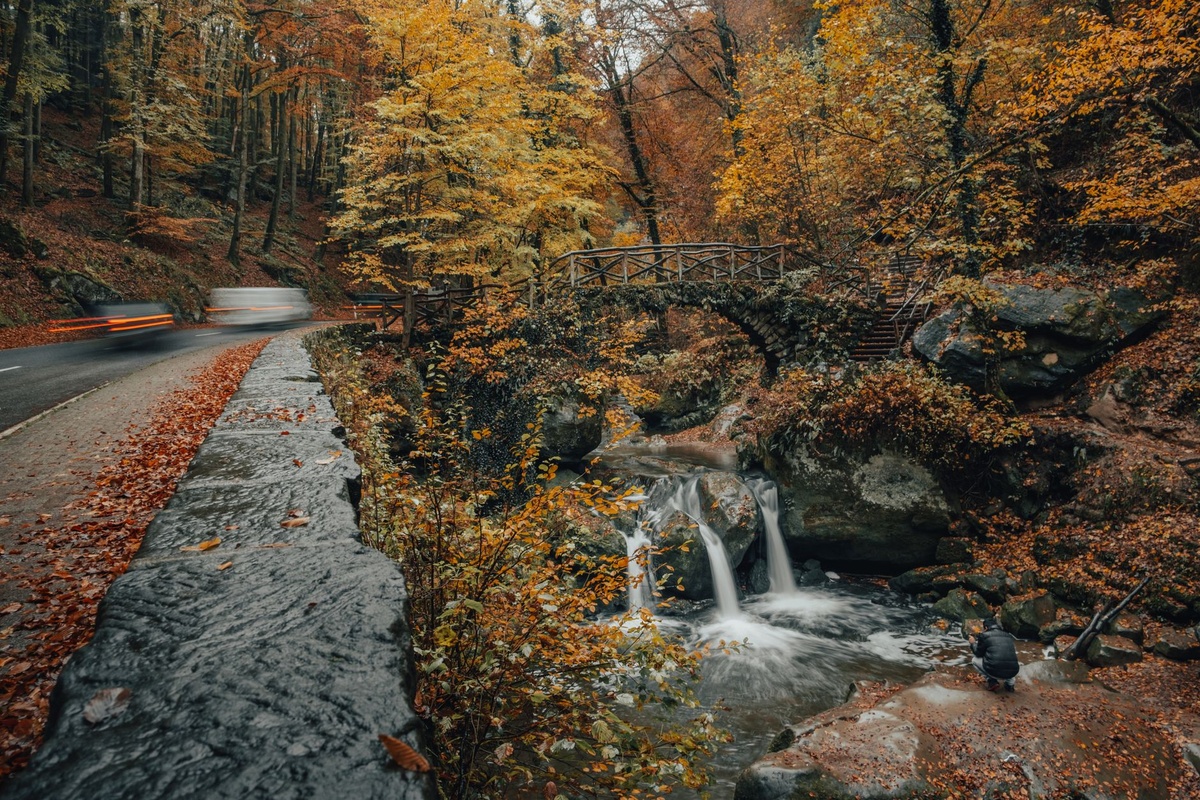
Begin with Schiessentümpel, Luxembourg’s much-photographed stone bridge and waterfall. Go before 09:00 if possible: at 08:30 you may share it with two photographers, while around midday a coach group can fill the small viewing area.
After the waterfall, use the signed Route 2 and local connector paths toward Consdorf, including the Kuelscheier area where your selected GPX track allows. The darkest rock passage is atmospheric but not mandatory; use the signed bypass if the floor is wet or confined spaces make you uneasy.
A phone flashlight is inadequate inside the darkest crevices because holding the phone removes one balance hand. Carry a 200-lumen headlamp costing roughly €20–€35, even though all three stages are intended as daylight walks.
The stage has less ascent than Day 2 but can feel tiring after two previous days. Stop every 60–75 minutes before fatigue changes your foot placement; five planned pauses add only 25–35 minutes.
Use the toilet before leaving your Mullerthal accommodation. Your next dependable facilities are in Consdorf at a café, municipal building or accommodation, and availability may be restricted on Sunday.
Finish and onward travel
From Consdorf, take a free bus back to Echternach in roughly 20–30 minutes or onward toward Luxembourg City in about 55–80 minutes, depending on the connection. A taxi to Echternach may save only 10–15 minutes while costing approximately €30–€45.
Build a 60-minute buffer before any international train. Rural buses are usually dependable, but a missed connection matters more when the next cross-border departure requires a paid reservation.
October Conditions: Foliage, Mud and Daylight
October is one of the best-looking months in Mullerthal. Beech leaves turn yellow and copper, daytime temperatures often sit near 10–16°C, and trails are quieter than during summer weekends.
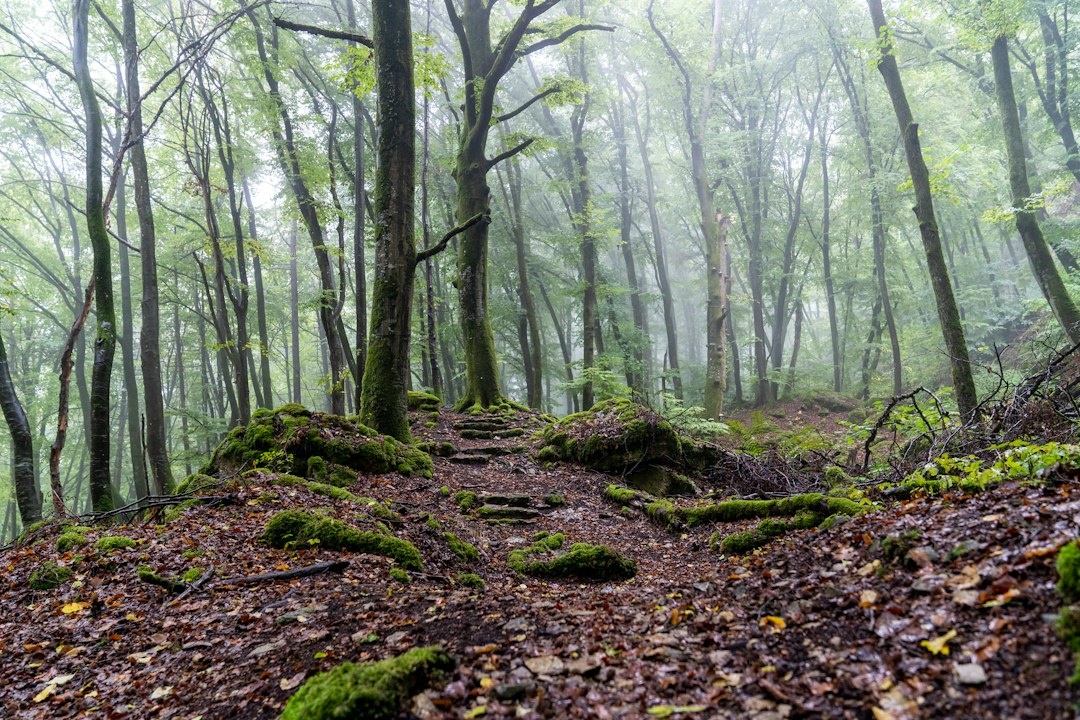
The trade-off is moisture. Sandstone remains slick in shaded gorges, wet leaves hide roots, and a 12-km October stage can take an hour longer than the same route in dry June conditions.
| October factor | Early month | Late month | Planning response |
|---|---|---|---|
| Approximate sunset | Around 19:10 | Around 17:20 after clock change | Start 30–60 minutes earlier late in the month |
| Typical daytime feel | Often mild, around 12–17°C | Often cooler, around 8–14°C | Use removable layers rather than one heavy coat |
| Trail surface | Damp rock and early leaf fall | Thicker wet leaves and mud | Add 15–20% to summer walking times |
| Crowds | Moderate on sunny weekends | Usually light outside school holidays | Visit Schiessentümpel before 09:00 |
Check MeteoLux rather than relying only on a generic weather widget. If more than 15–20 mm of rain is forecast, skip the narrowest passages and use a village-based walk; postponing one stage is better than testing balance on polished wet stone.
Navigation, Mobile Coverage and Safety Tech
Download the Mullerthal GPX files before arrival and save the region in an offline navigation app such as Organic Maps, Komoot or Outdooractive. Komoot’s regional offline mapping may require a paid region or subscription, while Organic Maps is free but gives less trail-specific context.
Use Mobiliteit for buses and the official 112 LU app for emergency location support in Luxembourg. The European emergency number is 112.
- Carry a 10,000 mAh power bank; expect to pay €20–€35 for a reputable model.
- Put the phone in airplane mode when coverage fluctuates, then reconnect at junctions.
- Share each day’s GPX route and hotel address with a family member.
- Photograph bus timetables only as backup; live data is more useful.
- Save hotel phone numbers offline rather than assuming mobile data will work inside a gorge.
Luxembourg has strong general mobile coverage, but sandstone cuts can interrupt signal. A paper map weighing 50 g is a better backup than a second navigation app running on the same dead phone.
What to Pack for an 8–12 km Mullerthal Stage
Keep the daypack under 5–6 kg including water. A 9-kg pack may not sound heavy, but it raises fatigue and changes balance on repeated steps.
- Footwear: low or mid-cut hiking shoes with aggressive rubber tread; skip smooth-soled city sneakers.
- Poles: two collapsible trekking poles, ideally with cork or foam grips.
- Rain protection: waterproof jacket plus pack cover or dry bags.
- Warmth: lightweight fleece and thin gloves for October mornings.
- Light: 200-lumen headlamp with spare battery.
- Food: lunch, two snacks and an emergency 200–300 calorie bar.
- Health kit: regular medication, blister dressings, elastic wrap and emergency details.
- Seating aid: a 50–100 g folding foam sit pad for damp benches.
Skip heavy leather boots unless you already use them regularly. A 450-g trail shoe is generally less tiring than an 800-g boot, provided it has reliable wet-rock grip and enough underfoot protection.
Costed Three-Day Weekend Budget
This sample assumes one traveler sharing a double room, three hotel nights, two luggage moves and moderate restaurant meals. Solo travelers should expect the hotel component to increase by approximately €120–€220 because single-room savings are rarely 50%.
| Expense | Per person, shared double | USD equivalent |
|---|---|---|
| Three hotel nights with breakfast | €210–€255 | $244–$296 |
| Two luggage transfers | €24–€36 | $28–$42 |
| Three packed or café lunches | €30–€45 | $35–$52 |
| Three dinners | €90–€135 | $104–$157 |
| Snacks and drinks | €20–€30 | $23–$35 |
| Luxembourg buses and trains | €0 | $0 |
| Contingency or one short taxi | €0–€35 | $0–$41 |
| Total | €374–€536 | $434–$622 |
You can reduce the total to approximately €330 by choosing simpler rooms and supermarket lunches. Spending below that usually means compromising hotel location, which can add road walking or taxi costs.
Common Mistakes to Avoid
Trying to cover an official full route in three days
The complete Mullerthal Trail is 112 km, and even Route 2 alone is far beyond a relaxed three-day senior weekend. A 29.5-km highlight route leaves time to enjoy the formations rather than racing through them.
Assuming free buses mean frequent buses
Public transport costs €0, but rural frequency can drop in the evening or on Sunday. Check the next two departures, not only the first one, before leaving a village.
Counting cafés as guaranteed toilets
A café listed online may be closed for its weekly rest day. Use every open toilet before entering the forest and carry tissues plus a sealable waste bag.
Wearing brand-new waterproof boots
New boots may stay dry while creating blisters after 6 km. Complete at least three walks totaling 25–30 km in your chosen footwear before the trip.
Letting luggage transfer take essential medication
Your suitcase may arrive after you, or a hotel can mislabel it. Keep medication, documents, chargers and rain gear with you; the transferred bag should contain only replaceable items.
Starting late because the stage “is only 10 km”
Ten forest kilometers with photos, steps and breaks can take five hours. A 09:00 start gives substantially more margin than 11:00, especially after October’s daylight-saving change.
The Verdict: The Best Mullerthal Weekend After 65
The winning plan is not the longest one. Echternach to Berdorf, Berdorf to Mullerthal and Mullerthal to Consdorf combine the trail’s best sandstone scenery with manageable 8–12 km stages, hotel beds and free bus escape routes.
Book the hotels first, arrange two luggage moves, download the GPX tracks and complete one hilly 10-km practice walk before departure. Then send this itinerary to your walking partner and agree in advance that taking a bus is smart route management—not failure.
Frequently Asked Questions
Is the Mullerthal Trail suitable for people over 65?
Yes, for active walkers who can manage 8–12 km, uneven roots and repeated stone steps. This 29.5-km itinerary is safer than attempting an entire official loop and includes a bus escape at every overnight village.
How much does a three-day Mullerthal Trail trip cost?
Budget approximately €374–€536 ($434–$622) per person sharing a double room in October 2026. Luxembourg’s domestic second-class buses and trains are free, while luggage transfers add roughly €24–€36 per bag for two moves.
Can luggage be transferred between Mullerthal Trail hotels?
Yes, participating accommodations and local operators can arrange transfers, typically from €12–€18 per bag per stage. Book at least five working days ahead and confirm collection time, weight limit and hotel acceptance in writing.
Are there toilets and benches on the Mullerthal Trail?
Benches appear near some viewpoints and major formations, but they are not available at predictable one-kilometer intervals. Dependable toilets are mainly in Echternach, Berdorf, Mullerthal and Consdorf, so use village facilities before each stage.
When is the best time to hike Mullerthal for autumn foliage?
Mid- to late October usually offers the strongest beech color, although timing varies with temperature and wind. Start by 09:00–09:30 because wet leaves slow progress and sunset shifts from roughly 19:10 early in October to around 17:20 late in the month.

About the Author: Tomáš Bzirský
Founder and editor of Distratech. Based in the Czech Republic, travelling regularly from Central Europe. Writes practical travel guides and travel-tech comparisons (eSIM, apps, airports) in six languages.