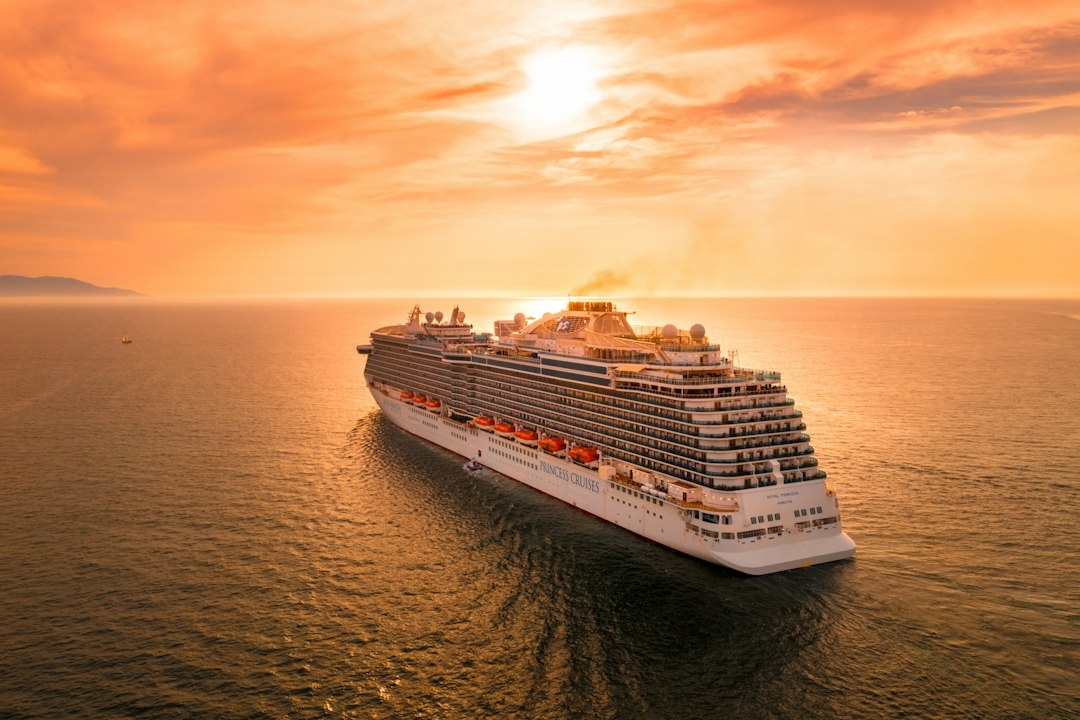
A 150-passenger expedition ship sounds greener than a floating resort carrying 5,000 people—but that assumption can be badly wrong. Smaller ships usually reduce shore crowding and reach quieter ports, while large new ships can burn less fuel per passenger and offer substantially better wheelchair access, medical facilities and weather protection.
Key Takeaways
- Expect roughly 180–350 kg CO₂e per guest-night on a remote expedition cruise versus about 120–250 kg on a modern mega-ship, depending on fuel, occupancy and methane leakage.
- A 2027 expedition sailing can cost €6,500–€14,000 per person, compared with roughly €850–€2,800 for seven nights on a 5,000-passenger ship.
- Expedition ships create less port congestion, but Zodiac landings, steep gangways and limited elevators can exclude travelers with reduced mobility.
- Mega-ships generally provide more accessible cabins and medical capacity, yet tender ports and queues of 2,000–5,000 guests can erase those advantages ashore.
- For lower impact, prioritize rail-accessible embarkation, shore power, longer itineraries and fewer tender ports—not ship size alone.
Key Numbers at a Glance
| Measure | About 150 passengers | About 5,000 passengers |
|---|---|---|
| Typical 2027 fare, per person | €6,500–€14,000 for 8–12 nights | €850–€2,800 for 7 nights |
| Modeled operational emissions | 180–350 kg CO₂e per guest-night | 120–250 kg CO₂e per guest-night |
| Total guests arriving in port | 100–150 | 4,500–6,500 |
| Typical accessible cabins | 0–4; layouts vary considerably | 30–60 or more on newer ships |
| Medical capability | Usually one doctor and one nurse | Multiple clinicians, treatment rooms and isolation capacity |
| Shore transfer | Often Zodiac; wet or moving landing | Usually gangway, but tenders at some ports |
| Walking distances aboard | Approximately 50–130 meters end to end | Approximately 300–365 meters end to end |
| Best fit | Quiet ports, wildlife and small-group landings | Mobility support, medical resilience and lower price |
Fare examples and availability are snapshots for 2027 departures viewed or advertised in October 2026; cruise pricing changes dynamically. Emissions are comparison ranges, not audited figures for every ship.
Step 1: Decide What “Lower Impact” Means to You
There is no single green score for cruising. Carbon, air pollution, wildlife disturbance, port congestion, accessibility and local economic benefit are separate issues—and the winner changes according to which one you weight most heavily.
A small polar ship may carry just 150 guests but travel thousands of kilometers through rough water, run hotel systems in cold conditions and use Zodiacs daily. A 5,000-passenger ship concentrates an enormous total footprint, yet it divides propulsion and hotel energy among far more occupied berths.
Use a weighted score, not a green label
Give each category a weight totaling 100 points. A traveler with COPD might allocate 30 points to medical care and 20 to air quality, while a mobile wildlife enthusiast might assign 35 points to shore crowding and 25 to ecosystem disturbance.
| Priority | Suggested weight | Small expedition ship | Mega-ship |
|---|---|---|---|
| Carbon per passenger | 25 | 2/5 | 3/5 |
| Low shore crowding | 20 | 5/5 | 1/5 |
| Mobility access | 20 | 2/5 | 4/5 |
| Medical resilience | 20 | 2/5 | 4/5 |
| Quiet, locally focused visits | 10 | 5/5 | 2/5 |
| Price transparency | 5 | 4/5; usually more inclusive | 2/5; more add-ons |
On those sample weights, the small ship scores 310 out of 500 versus 295 for the mega-ship. Raise accessibility and medical care to a combined 55 points, however, and the mega-ship becomes the sensible choice.
My view: skip vague “eco-luxury” language. Ask for fuel type, shore-power capability, passenger capacity, tender arrangements and an accessible-cabin diagram before paying a deposit.
Step 2: Compare Emissions Properly
The useful metric is kilograms of carbon-dioxide equivalent per passenger-night, including methane where relevant—not total ship emissions and not marketing claims about being “20% more efficient.” Ask what the percentage is measured against, whether it is per berth or per voyage, and whether upstream fuel emissions are included.
For preliminary 2027 screening, use approximately 180–350 kg CO₂e per guest-night for a remote 100–200-passenger expedition vessel. A large modern ship operating near capacity may fall around 120–250 kg CO₂e per guest-night, although individual itineraries can sit outside both ranges.
Why the small ship can perform worse per guest
- Lower occupancy: carrying 115 guests instead of 150 increases the footprint per occupied cabin.
- Remote distances: a Drake Passage crossing is roughly 1,000 km each way, before local cruising.
- Cold-weather demand: heating, ice navigation and water production consume additional energy.
- Extra craft: ten Zodiacs making repeated shore runs use fuel that a docked Mediterranean ship does not.
A small ship can still be the better overall choice if it stays longer, visits communities that can absorb 150 people and avoids overwhelming fragile streets. Carbon efficiency and destination impact are not interchangeable.
Do not assume LNG means low carbon
Liquefied natural gas reduces sulfur oxides and much of the particulate pollution associated with conventional marine fuel. That matters in ports, but unburned methane can escape through the engine and fuel supply chain; methane warms the climate far more strongly than CO₂ over 20 years.
A 5,000-passenger LNG ship can therefore look efficient on a tank-to-wake CO₂ chart while performing less impressively on a full lifecycle CO₂e calculation. Seek well-to-wake reporting aligned with the International Council on Clean Transportation methodology rather than accepting an LNG badge as proof.
The flight can reverse the result
Flying roughly 11,300 km from London to Buenos Aires, then another 2,370 km to Ushuaia, adds far more travel than taking a train from London to Southampton. Even before the return journey, the Antarctic option involves about 13,670 km of flying versus roughly 130 km from London to Southampton.
If impact is the deciding factor, skip a fly-cruise to the poles and book a rail-accessible Norwegian or British Isles itinerary. London Waterloo to Southampton Central takes about 1 hour 15 minutes and can cost approximately €24–€75 one way, while a London–Ushuaia itinerary commonly requires 18–24 hours in transit plus a connection.
Step 3: Price the Whole 2027 Trip, Not the Advertised Fare
Small expedition fares often include excursions, lectures, boots and most non-premium dining. Mega-ship prices can exclude service charges, Wi-Fi, drinks, specialty restaurants, transfers and many shore tours, making an €899 headline fare a poor basis for comparison.
| 2027 example, priced October 2026 | Expedition-style option | Mega-ship option |
|---|---|---|
| Illustrative itinerary | 9–11 nights, Ushuaia–Antarctic Peninsula–Ushuaia | 7 nights, Barcelona–Western Mediterranean |
| Advertised fare | Approximately €9,000–€13,500 pp | Approximately €900–€1,900 pp |
| Daily fare | €818–€1,350 | €129–€271 |
| Excursions | Usually included | Allow €250–€600 |
| Gratuities/service charge | Often included | Allow €84–€126 |
| Wi-Fi | Included on some ships; otherwise €80–€250 | About €100–€180 |
| Pre-cruise hotel | €120–€250 in Ushuaia | €120–€220 in Barcelona |
| Likely trip total before long-haul flights | €9,500–€14,500 pp | €1,600–€3,100 pp |
Check live inventory directly with operators such as Swan Hellenic, HX Expeditions, MSC Cruises and Royal Caribbean. Verify whether the quoted price is per person based on two sharing, and compare refundable deposits rather than simply sorting from cheapest.
A costed lower-impact sample plan
A rail-connected October 2027 Norway cruise is a more defensible compromise than flying to Antarctica for a first expedition. October begins the aurora season, nights are properly dark and coastal temperatures commonly hover around 3–10°C, although storms can disrupt landings.
| Item | Cost per person | Time or distance |
|---|---|---|
| London–Hamburg train, booked ahead | €90 | About 9–11 hours; roughly 720 km |
| Hamburg–Bergen rail/ferry connections | €190 | About 22–28 hours over two days |
| Two en-route hotel nights | €240 | Two nights |
| 9-night small-ship Norwegian coast cruise | €6,900 | Approximately 2,000–3,000 km by route |
| Insurance with €1 million evacuation cover | €260 | 11–14 days of cover |
| Meals and local transport before sailing | €180 | Two days |
| Return flight Bergen–London | €120 | About 2 hours; 1,040 km |
| Estimated total | €7,980 | About 13 nights |
Taking rail one way adds roughly €400 over a cheap flight but turns the journey into part of the holiday and removes one flight sector. Travelers who prefer an entirely land-based accessible alternative should compare that budget with our 14-day accessible Slovenia case study, where trains and short transfers avoid both Zodiac landings and mega-port congestion.
Step 4: Measure Shore Crowding and Local Benefit
A 150-passenger ship can usually disembark everyone within 20–40 minutes at a straightforward pier. A 5,000-passenger vessel may need 60–120 minutes to move the first waves ashore, especially when tenders carry only a few hundred people per trip.
In Antarctica, International Association of Antarctica Tour Operators procedures generally limit landings to 100 visitors ashore at one site at a time, with at least one guide for every 20 guests. A 150-passenger vessel rotates groups; ships carrying more than 500 passengers do not make Antarctic landings under the applicable visitor guidelines.
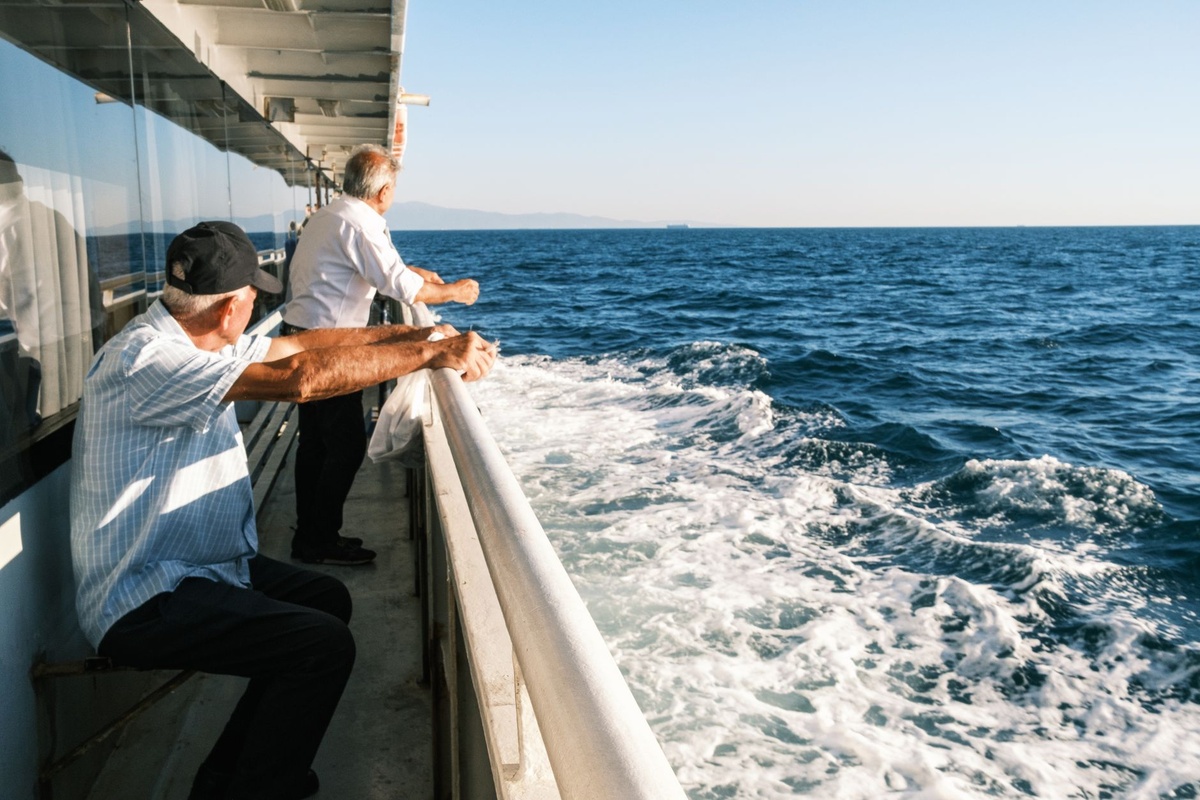
That gives the small ship a decisive experiential advantage. One hundred people spread around a landing is still noticeable, but it is fundamentally different from 5,000 passengers entering Santorini, Mykonos or Dubrovnik within the same morning.
Examine the port schedule before booking
Use CruiseMapper or MarineTraffic to inspect likely port traffic. One 5,000-passenger arrival is manageable in a large city; three ships totaling 12,000–15,000 visitors can overwhelm buses, cable cars and accessible taxis.
Prefer secondary ports where your spending is less diluted. A small call at Sibenik or Koper is generally easier to absorb than another peak-day arrival in Dubrovnik or Venice, while Slovenia’s Ljubljana and Laško can be reached without joining the cruise-port rush.
Skip cruise-owned beach compounds if local benefit matters. Book a locally operated accessible food tour for €60–€120 instead of a €160 coach convoy, but confirm step-free toilets, walking distance and cancellation terms directly with the operator.
Step 5: Audit Accessibility Cabin by Cabin
Mega-ships win this category more often than expedition vessels. Their newer ships commonly have dozens of accessible cabins, multiple elevators, pool lifts, wide promenades and indoor routes protected from rain and spray.
The drawback is scale. Walking from a forward theater to an aft dining room can cover 300–365 meters each way, compared with perhaps 50–130 meters on a 150-passenger vessel.
Questions to send the cruise line in writing
- What is the cabin door width and the narrowest bathroom clearance in centimeters?
- Is the shower genuinely roll-in, and are grab rails fixed rather than suction-mounted?
- Is there turning space for a 150-centimeter wheelchair circle?
- Does the bed have at least 15 centimeters of under-bed clearance for a hoist?
- Can a wheelchair user reach the restaurant, muster station and open deck without stairs?
- Which ports use tenders or Zodiacs, and can staff carry a guest or mobility device?
- Are powered wheelchairs accepted, and what battery documentation is required?
Never accept “wheelchair friendly” as an answer. Request a dimensioned deck plan and current cabin photographs; a 2-centimeter bathroom lip or a heavy balcony door can matter more than the ship’s overall age.
Zodiacs change the calculation
Expedition landings may require stepping down a moving exterior staircase, transferring into an inflatable boat and making a wet landing in ankle-deep water. Operators can sometimes assist ambulatory guests, but manual lifting is unsafe and may be prohibited.
A mega-ship docked at a level terminal is much easier. Yet a tender port can reproduce the same barrier, so a seven-night itinerary with three tender calls may provide fewer usable shore days than a small ship visiting proper piers.
Skip the accessible cabin if the itinerary is inaccessible. A larger cabin does not compensate for missing half the ports.
Step 6: Compare Medical Care and Evacuation Risk
Neither ship type carries a full hospital. Cruise medical centers stabilize illness and injury, perform basic laboratory tests, administer oxygen and arrange evacuation, but they are not substitutes for an emergency department with a CT scanner, cardiac catheterization lab or intensive-care team.
A 150-passenger ship commonly sails with one doctor and one nurse. A ship carrying 5,000 guests plus 1,500–2,000 crew may have several doctors and nurses, multiple treatment spaces, isolation rooms and more diagnostic equipment.
| Medical factor | 150-passenger expedition ship | 5,000-passenger mega-ship |
|---|---|---|
| Clinical staffing | Often 1 doctor + 1 nurse | Often several doctors and nurses |
| Access | Emergency response 24/7; routine hours posted onboard | Emergency response 24/7; routine clinic sessions commonly morning and late afternoon |
| Advanced imaging | Usually unavailable | Usually unavailable beyond basic X-ray or ultrasound capability on some ships |
| Nearest hospital | Potentially 12–72+ hours away | Often within several hours on Mediterranean routes |
| Evacuation complexity | Weather, ice and distance can prevent rapid transfer | More ports and helicopters nearby, depending on route |
For a traveler with unstable angina, recent stroke, oxygen dependence or complex dialysis needs, a Mediterranean mega-ship staying near major ports is usually safer than a polar expedition. Barcelona to Palma is roughly 210 km, whereas an Antarctic ship can be more than 1,000 km from Ushuaia before local distances are counted.
Ask whether the medical team follows CLIA medical-facility guidance. Also request the onboard consultation price: a basic visit can cost approximately €100–€200, while tests, medication, after-hours attendance and evacuation are additional.
Insurance is non-negotiable
Many expedition operators require medical and evacuation cover of at least US$200,000–500,000, approximately €185,000–€460,000 at an indicative October 2026 exchange rate. I would buy at least €1 million in evacuation and repatriation cover for polar travel.
Declare every pre-existing condition and medication. A €180 policy that excludes your cardiac history is worse than a properly underwritten €350 policy that actually responds.
Step 7: Evaluate Air Quality, Noise and Infection Risk
Large ships put far more engines, generators and people in one place. Even with scrubbers or cleaner fuel, sensitive travelers should avoid cabins near funnels, smoking areas and heavily trafficked indoor promenades.
Small ships feel calmer, with 150 guests instead of 5,000, but older vessels may vibrate more and use conventional marine diesel. Ask whether the ship has selective catalytic reduction, particulate filters, battery-assisted operation or shore-power capability.
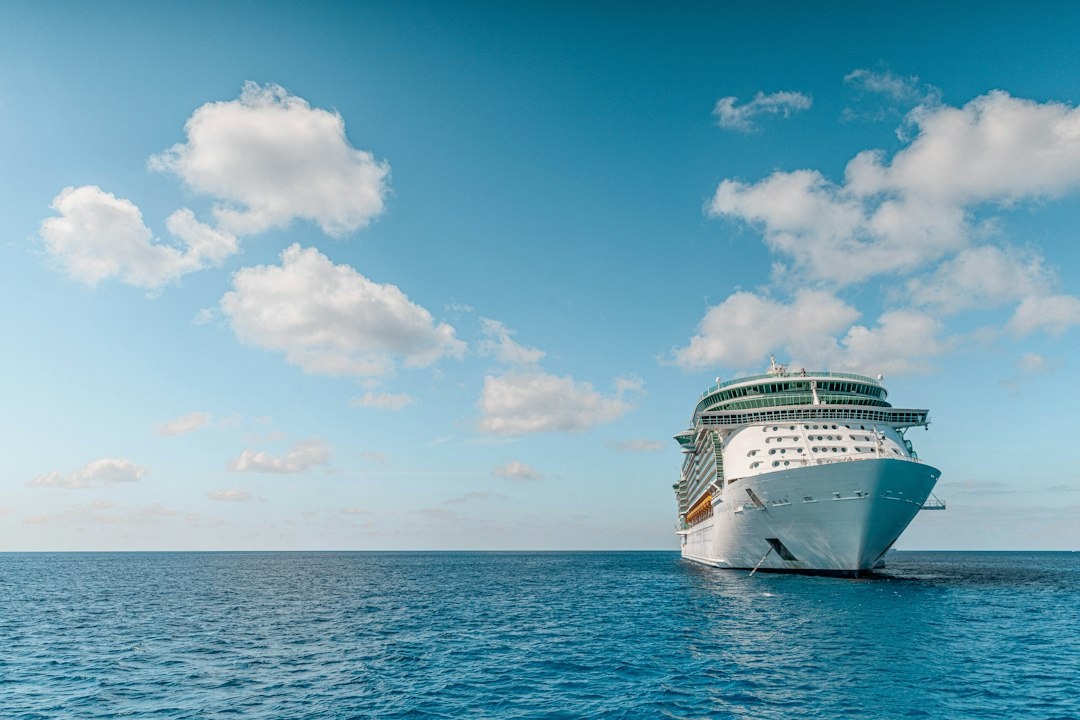
For infection exposure, density matters as much as passenger count. A mega-ship offers larger medical and isolation facilities, but buffet lines, theaters and elevators create thousands more close contacts than a 150-person vessel.
- Choose a balcony or opening window where the ship design permits fresh air.
- Use stairs during quiet periods if physically able; otherwise avoid elevators immediately after shows.
- Carry seven extra days of prescription medication in original packaging.
- Pack two high-filtration masks per travel day for terminals and transfers.
- Download the ship’s app before departure, but retain paper copies of insurance and prescriptions.
Step 8: Check the Technology Before You Sail
Mega-ships generally provide better app integration for dining, accessibility requests and daily schedules, but their Wi-Fi packages can cost €15–€27 per device per day. Expedition operators increasingly include basic satellite internet, although video calls may be blocked and polar coverage can fail.
Do not rely on WhatsApp as your medical alert system. Carry a waterproof card listing diagnoses, allergies, medication doses, insurer telephone numbers and your emergency contact.
Useful apps include Windy for weather, Organic Maps for offline port navigation, Medisafe for medication reminders and MarineTraffic for berth checks. Download maps before boarding: a 10-day paid Wi-Fi package can cost €150–€250 versus free offline mapping.
If you use banking apps over ship Wi-Fi, configure a VPN before leaving home and route only sensitive apps through it. Travelers who read Greek can follow our split-tunneling setup guide for travelers.
Choose the 150-Passenger Ship If…
- You can manage steps, moving gangways and assisted Zodiac transfers.
- Your priority is wildlife, quiet decks and landings with 100 people rather than ports shared with 5,000.
- Your health is stable and your physician considers remote travel reasonable.
- You can pay roughly €6,500–€14,000 before long-haul flights.
- You are prepared to skip a landing when weather or mobility makes it unsafe.
The small ship is the stronger social-impact choice when it visits genuinely small communities and uses local suppliers. It is not automatically the carbon winner, particularly on polar routes.
Choose the 5,000-Passenger Ship If…
- You need a roll-in shower, wide doors, pool lift or dependable elevator redundancy.
- You want multiple clinicians and to remain within several hours of major hospitals.
- Your budget is closer to €1,600–€3,100 including common extras.
- You prefer indoor entertainment and sheltered movement during bad weather.
- You can select quieter ports, travel in October shoulder season and avoid tender-heavy itineraries.
October 2027 Mediterranean departures may still see daytime temperatures near 22–25°C, but crowds are usually lighter than in July and August. Choose a Barcelona or Civitavecchia sailing with shore-power connections where available, then stay aboard during the busiest morning disembarkation wave.
Common Mistakes to Avoid
Assuming small means low carbon
A 150-passenger polar vessel can emit more per guest-night than a full 5,000-passenger ship. Compare itinerary distance, occupancy and well-to-wake emissions rather than hull size.
Booking an accessible cabin before checking tender ports
Three inaccessible tender calls on a seven-night cruise can remove almost half the itinerary. A standard cabin on a fully docked route may work better for an ambulatory traveler than an accessible cabin on the wrong route.
Using advertised fare as the total
A €1,100 mega-ship fare can become €2,200 after gratuities, excursions, Wi-Fi, drinks and transfers. Expedition fares costing €9,000 remain far dearer, but the gap is smaller after inclusions are normalized.
Flying farther to take a supposedly greener ship
A long-haul flight to Ushuaia can undermine marginal efficiency gains onboard. Start near home, take rail to the port or choose one longer cruise instead of two short fly-cruises.
Treating the medical center as a hospital
Both ship types focus on stabilization, not definitive specialist care. If your condition might require intensive care, choose a route remaining close to Barcelona, Rome or Athens rather than Antarctica, Greenland or the remote Arctic.
The Practical Verdict for 2027
For a healthy, mobile senior concerned about overtourism, the 150-passenger expedition ship is the better experience: quieter landings, less shore congestion and more meaningful wildlife access. Its weaknesses are higher cost, difficult transfers, limited medical backup and often higher carbon emissions per passenger-night.
For seniors prioritizing wheelchair access, medical resilience and price, the 5,000-passenger ship is usually the rational choice. Make it lower impact by sailing in October shoulder season, embarking by rail, choosing a newer shore-power-equipped vessel and avoiding iconic ports on multi-ship days.
Before booking, score both options across carbon, accessibility, medical risk, crowding and total door-to-door travel. Send the operator your questions in writing, compare the complete price and share this guide with your doctor or travel companion before paying a non-refundable deposit.
Frequently Asked Questions
Are small expedition cruise ships better for the environment?
Not automatically. A remote 150-passenger ship may produce roughly 180–350 kg CO₂e per guest-night, while a full modern mega-ship may fall around 120–250 kg; the small ship’s clearer advantage is lower shore crowding.
How much does a senior-friendly expedition cruise cost in 2027?
Budget approximately €6,500–€14,000 per person for 8–12 nights, plus flights, hotels and insurance. Antarctic trips can reach €9,500–€14,500 before long-haul airfare, based on October 2026 pricing for 2027 travel.
Are expedition ships suitable for wheelchair users?
Many are not fully suitable because Zodiac boarding can involve stairs, moving platforms and wet landings. Request exact cabin dimensions and written confirmation for every landing; a large ship with docked ports is usually more dependable.
Do cruise ships have doctors and hospitals?
Ships have medical centers, not full hospitals. A small expedition ship may carry one doctor and one nurse, while a 5,000-passenger ship generally has several clinicians, but serious cases still require evacuation.
What is the best lower-impact cruise choice for seniors in October 2027?
A rail-accessible Norwegian coast or Mediterranean shoulder-season itinerary offers a strong balance of milder crowds, shorter flights and hospital access. Choose a ship with shore power, few tender ports and written accessibility specifications.

About the Author: Tomáš Bzirský
Founder and editor of Distratech. Based in the Czech Republic, travelling regularly from Central Europe. Writes practical travel guides and travel-tech comparisons (eSIM, apps, airports) in six languages.