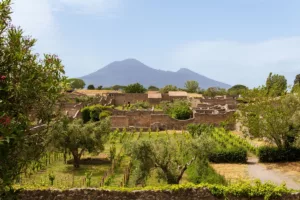
A French vineyard at harvest, a Kent cider farm, a riverside German Stellplatz, or a parking area beneath a Norwegian mountain can all be legal campervan beds—but under four very different rulebooks. The expensive mistake is assuming that “wild camping” laws automatically apply to a vehicle: across most of Europe, they do not.

Key Takeaways
- France Passion costs €33 for the 2026 season and includes 24-hour stays at roughly 2,200 farms, vineyards, and food producers.
- Brit Stops membership was £45—about €53—in September 2026, while England and Wales otherwise offer almost no general right to sleep on private land.
- German Stellplätze require no membership and typically cost €8–€25 per night, compared with €30–€55 for a serviced campsite.
- Nordic freedom-to-roam laws generally protect tent camping, not parking or driving a campervan off-road.
- September is the sweet spot: fewer campervans and cooler nights, but vineyards may restrict arrivals during the grape harvest.
Key Numbers at a Glance
| System | 2026 access cost | Typical nightly fee | Usual stay limit | Booking method |
|---|---|---|---|---|
| France Passion | €33 per annual vehicle membership | €0 | 24 hours | Usually no booking; contact host when requested |
| Brit Stops | £45 / approximately €53 | €0 | Usually one night | App or guide; many hosts request a call |
| German Stellplätze | No national membership | €8–€25; some are free | One night to 72 hours | Arrival machine, app, or pay-and-display |
| Nordic legal overnight sites | No universal pass | €0–€35 | Often 8–24 hours | Signage, parking app, Campio, or NorCamp |
Prices were checked for September 2026. The Brit Stops conversion uses £1 = €1.17; municipal charges, exchange rates, and individual parking fees can change during the season.
The Fast Verdict: Which Campervan System Should You Choose?
- Choose France Passion if wine, cheese, orchards, and quiet rural stops matter more than showers or electrical hookups.
- Choose Brit Stops for farm shops, pubs, breweries, and practical overnight breaks across the UK.
- Choose German Stellplätze if you want reliable locations near old towns, cycle routes, or public transport without paying full campsite prices.
- Choose Nordic designated sites for mountain and fjord scenery—but only if you are comfortable reading signs and changing plans when parking is prohibited.
For predictability, Germany wins. For memorable hosts and local food, France wins; for scenery, Norway wins—but it also carries the highest risk of misunderstanding what “wild camping” permits.
| Factor | France Passion | Brit Stops | German Stellplätze | Nordic sites |
|---|---|---|---|---|
| Legal certainty | High on listed host property | High after host approval | Very high where signed | Medium; local restrictions vary |
| Facilities | Usually none | None to pub toilets | Often water, waste, electricity | None to full campsite services |
| Best unusual setting | Vineyard or cheese farm | Farm, pub, or brewery | Riverbank, marina, castle town | Fjord, beach, or mountain trailhead |
| Typical effective cost for two nights | €33 plus optional purchases | €53 plus optional purchases | €16–€50 | €0–€70 |
| Best month | September | May or September | April–October | June–September |
1. France Passion: The Best Choice for Vineyards and Food Producers
France Passion is not a campsite network. It is an annual invitation system connecting self-contained motorhomes and campervans with around 2,200 winegrowers, farmers, cheesemakers, beekeepers, and other producers across France.
The 2026 membership costs €33 per vehicle. That is more than a single €15 municipal aire but cheaper than two nights at a conventional French campsite, where September pitches commonly cost €22–€38.
How the 24-hour stay works
You select a host in the France Passion app or annual guide, check its opening days and vehicle restrictions, and arrive during the indicated window. Many estates prefer arrivals between roughly 16:00 and 19:00; arriving at 21:30 during harvest is inconsiderate even if the gate is technically open.
Stays are normally limited to 24 hours. No purchase is compulsory, but parking for free and then refusing a €9 bottle tasting feels miserly when a municipal aire would have cost nearly as much.
Most sites provide no toilet, shower, rubbish disposal, or electricity. France Passion is therefore best for a genuinely self-contained vehicle with an onboard toilet, wastewater tank, and enough fresh water for at least 24 hours.
Why September is excellent—and occasionally awkward
September places you in Bordeaux, Burgundy, Champagne, Alsace, and the Rhône during or close to harvest. Days are still warm, vineyard roads are quieter than in August, and a pitch overlooking vines can cost €0 instead of €35 at a serviced campground.
The trade-off is that harvest is the busiest working period of the year. A producer listed as open may close a parking field after rain, reduce capacity from five vans to two, or ask guests to arrive after the picking crew finishes.
Call ahead when the listing requests it, using a short message such as: “Bonjour, nous sommes deux personnes en camping-car de 6 mètres. Est-ce possible d’arriver vers 17h?” That is more useful than sending a long English email at noon and expecting an instant reply.
What makes France Passion legally different?
You are staying with the landowner’s invitation, rather than claiming a right to camp. That matters because French municipalities can prohibit motorhome parking overnight in specific coastal, heritage, or environmentally sensitive zones even when daytime vehicle parking remains legal.
Do not extend your awning, put chairs between vine rows, or empty grey water onto the ground. Parking a vehicle is one activity; creating a campsite is another, and local enforcement often focuses on visible “camping behaviour.”
My verdict: skip trying to hide at an Atlantic beach car park and sleep at a France Passion oyster farm or Médoc wine estate instead. The €33 membership buys considerably more legal certainty than a €135 parking fine.
2. Brit Stops: Farm Shops, Pubs, and Breweries in the UK
Brit Stops applies a similar model to more than 1,000 participating pubs, farm shops, vineyards, breweries, and rural attractions in the United Kingdom. Its September 2026 annual price was £45, approximately €53.
That is €20 more than France Passion, but UK campsites are also pricier. A basic two-person hardstanding pitch commonly costs £28–£45 (€33–€53), so one avoided campsite night can almost repay the membership.
What is included?
The overnight space is normally free for members, but facilities vary sharply. One stop may be a gravel corner behind a country pub with toilets available until 23:00; another may be an unlit farm field with no services at all.
Most stays are limited to one night. Unlike a hotel reservation, membership does not guarantee that every host will have room, particularly on Friday evenings, bank holidays, or after heavy rain.
Check the app for the host’s contact instructions and vehicle-size limits. A phone call between 10:00 and 17:00 is generally more effective than turning up at pub closing time, while farm shops often close earlier—commonly 16:00 or 17:00.
The UK legal reality
England and Wales have no broad legal right to park and sleep on private land without permission. Roadside lay-bys may have local restrictions, while many council car parks specifically prohibit sleeping, cooking, or “habitation” inside vehicles.
Scotland’s access rights are frequently misunderstood. The Scottish Outdoor Access Code supports responsible non-motorised recreation and lightweight tent camping, but it does not give campervans a right to drive or park on private land.
Brit Stops solves the permission issue at participating properties. It does not override access roads, height barriers, posted restrictions, or a host telling you that the field is closed.
Should you buy food or drink?
A purchase is normally optional, but I budget £15–£30 (€18–€35) per stop. Spending £22 on dinner at a host pub still compares well with paying £35 for a campsite and then cooking in the van.
Skip generic chain-pub food when a stop has a genuine farm shop. Buy the local pork pie, cider, eggs, or cheese; it supports the business providing the legal pitch and usually costs less than two restaurant mains.
My verdict: Brit Stops is worth buying for a five-night UK road trip, but not for one speculative night near London. Around major cities, a booked campsite with public transport is usually more reliable than hunting for a participating rural pub 40 kilometres away.
3. German Stellplätze: Europe’s Most Practical Motorhome Network
Germany’s Stellplätze are designated motorhome parking areas rather than a single membership club. They range from free supermarket spaces to landscaped municipal sites beside rivers, spas, castles, marinas, and medieval town walls.
A typical 2026 charge is €8–€25 per 24 hours. Electricity usually adds €1–€5, while fresh water may cost €1 per 80–100 litres; comparable campsites often charge €30–€55 for two adults and a vehicle.
Real 2026 price examples
| Example Stellplatz | September 2026 price | Distance to attraction | Access and payment |
|---|---|---|---|
| Reisemobilhafen Köln, Cologne | About €18 per 24 hours | Approximately 3 km to Cologne Cathedral; 15–20 minutes by bicycle | 24-hour vehicle access; pay on site |
| Wohnmobil-Oase Berlin | About €30 per night | Roughly 4 km to Brandenburg Gate; about 20 minutes by transit | Controlled access; advance contact advisable |
| Mosel-area municipal Stellplatz | Typically €10–€18 | Often 300 metres–1 km from wine villages | Usually 24-hour entry with ticket machine |
| Small-town supermarket Stellplatz | €0–€8 | Usually 1–3 km from the historic centre | Check signs; stays may be limited to one night |
Use Campercontact, Stellplatz-Radar, or Park4Night to identify sites, but verify the newest review and the sign at the entrance. An app listing from 2024 does not overrule a barrier or “Übernachten verboten” notice installed in 2026.
Can you legally sleep in an ordinary German parking space?
Germany generally tolerates a one-off stop required to restore a driver’s fitness to continue—often interpreted as roughly 8–10 hours—where the vehicle may legally park. It is not a licence for a two-night city break or roadside holiday.
Keep the van in parking mode: no awning, levelling spread across multiple bays, barbecue, chairs, or wastewater discharge. Protected landscapes, forests, and local parking rules can prohibit an overnight stop entirely.
A signed Stellplatz is the better answer. Paying €14 for a legal Mosel riverbank pitch is smarter than trying to defend “driver recuperation” after opening wine, setting out furniture, and staying for 36 hours.
Germany’s operational advantage
France Passion and Brit Stops depend on host schedules; many German Stellplätze are accessible 24 hours a day. If your motorway delay pushes arrival from 18:00 to 22:30, a ticket-machine site is far less stressful than calling a closed vineyard.
Germany also offers the best service-to-price ratio. A €16 Stellplatz with waste disposal and water can cost half the €32 campsite down the road, although campsite prices may include showers that cost €1–€3 separately at a Stellplatz.
My verdict: Germany is the winner for first-time European campervan travelers. Skip free motorway rest areas except for genuine rest stops; use a town Stellplatz and walk to dinner instead.
4. Nordic “Wild Camping”: Spectacular, but Frequently Misquoted
Norway, Sweden, and Finland are associated with freedom-to-roam traditions, but these rights largely concern people travelling on foot, skis, bicycles, or with tents. They do not create a general right to drive onto beaches, meadows, forests, or private tracks.
Denmark is stricter still: there is no comparable nationwide vehicle-based right to roam. Its free forest shelters and primitive tent sites are useful for hikers, not automatic campervan parking spaces.
Country-by-country reality
| Country | Can you park and sleep? | Typical legal price | Important restriction |
|---|---|---|---|
| Norway | Where parking is legal and overnight habitation is not prohibited | €0 at some pull-offs; €15–€35 at popular designated sites | No off-road driving; signs and local rules control parking |
| Sweden | At legal parking areas or designated ställplatser | €0–€30 | Freedom to roam does not permit driving onto natural ground |
| Finland | At permitted parking areas, rest stops, and motorhome sites | €0–€25 | Do not obstruct forestry roads or remain where overnight stays are banned |
| Denmark | At motorhome areas, campsites, or parking specifically allowing it | €10–€35 | Forest tent sites generally do not include vehicle camping |
Popular Norwegian locations increasingly charge because toilets, rubbish removal, road maintenance, and rescue access cost money. A beach or trailhead fee of 200–350 NOK—roughly €17–€30—is now normal in pressured areas such as Lofoten.
That can still undercut a Norwegian campsite at €35–€55. The difference is facilities: a €22 designated parking area may offer only toilets and bins, while a €45 campsite can include hot showers, electricity, laundry access, and wastewater disposal.
How to find legitimate Nordic sites
Use NorCamp, Campio, Campercontact, municipal parking pages, and recent user reports. Download offline map areas in Google Maps or Organic Maps before heading into valleys where mobile service disappears.
EasyPark and Parkster handle many Scandinavian municipal parking areas, but an accepted payment does not necessarily mean sleeping is permitted. Read the physical sign for time limits, motorhome symbols, and wording equivalent to “no camping.”
If a sign says parking from 08:00 to 22:00, paying in an app does not legalise the other ten hours. A designated motorhome site 12 kilometres away is a better bet than testing enforcement at midnight.
September’s altitude-shift advantage
September is superb for Nordic and Alpine campervan travel: summer crowds have fallen, mountain-view stays remain in demand, and daytime temperatures can still reach 12–18°C in southern Norway. Nights may fall below 5°C, however, and early snow can close high roads with little warning.
Norwegian Scenic Routes publish seasonal closures, while ferry frequency may decrease after August. A fjord crossing that ran every 20 minutes in July may shift to a 40- or 60-minute schedule in September.
My verdict: pay for the view when pressure is obvious. A €20 legal mountain or beach space with toilets is better value than a €0 roadside pull-off where traffic, signs, or an angry landowner wake you at 06:00.
Legal Parking Versus Illegal Camping
The decisive question is not always “May I sleep here?” but “Does my behaviour still look like parking?” A closed, legally parked van occupies one marked space; an awning, chairs, ramps, washing line, and barbecue create a campsite.
- Read the sign, not just the app. A current municipal notice beats every crowdsourced review.
- Stay within one bay. A 7.4-metre motorhome hanging across traffic lanes can be ticketed even where overnight parking is permitted.
- Keep everything inside. Do not deploy steps, tables, roof tents, or awnings unless the site explicitly allows camping.
- Never discharge grey or black water. Use a signed service point; Germany commonly charges €1–€3, versus potential fines running into hundreds of euros.
- Leave after one night unless longer stays are authorised. Repeated overnight use can transform tolerated parking into prohibited camping.
Local rules can be stricter than national principles, especially around beaches, national parks, lakes, and historic centres. France’s Atlantic coast, Scotland’s North Coast 500, Lofoten, and the German Baltic coast all experience enough pressure to justify extra controls.
A Costed Nine-Night Campervan Plan
This sample September route uses all four systems: southeast England, Champagne, the Mosel, northern Germany, and Denmark. It covers approximately 1,750 kilometres from London to Ribe, excluding the return journey.
| Night | Stop type | Approximate drive | Overnight cost |
|---|---|---|---|
| 1 | Brit Stops farm or pub in Kent | London–Kent: 90 km / 1.5–2 hours | €0 plus €25 dinner |
| 2–3 | France Passion near Reims | Folkestone–Reims: 325 km plus Channel crossing / 4.5–5.5 hours | €0 plus €33 membership and €24 wine |
| 4–5 | Mosel Stellplätze | Reims–Trier area: 260 km / 3 hours | €16 per night; €32 total |
| 6 | German town Stellplatz near Hanover | Mosel–Hanover: 400 km / 4.5–5 hours | €18 |
| 7 | Stellplatz near Lübeck | Hanover–Lübeck: 220 km / 2.5 hours | €20 |
| 8–9 | Legal Danish motorhome area near Ribe | Lübeck–Ribe: 275 km / 3.5 hours | €22 per night; €44 total |
Budget for two people
| Brit Stops membership | €53 |
|---|---|
| France Passion membership | €33 |
| Paid overnight sites | €114 |
| Host purchases and one pub dinner | €49 |
| Fuel: 1,750 km at 9 L/100 km and €1.78/L | €280 |
| Channel crossing, one way | Approximately €140 |
| Tolls and parking extras | €45 |
| Total excluding campervan rental and return journey | €714 |
The overnight component is €249 including memberships and host purchases, or €27.67 per night. Nine conventional campsites averaging €38 would cost €342 before restaurant meals or wine, a difference of €93.
This route is efficient only if the memberships support a longer trip or future stays. For a three-night holiday, paying €86 for both schemes makes less sense than booking one €20 aire and two €30 campsites.
The Best Apps and Tech Setup
No single app reliably covers every country. Campercontact has strong continental coverage, Stellplatz-Radar is especially useful in Germany, and NorCamp performs better for Scandinavian campsites and motorhome areas.
Park4Night has the largest volume of informal reports but also the most noise. A scenic pin with 70 reviews is not necessarily legal; compare it with the municipality’s website and the latest on-site signage.
- Offline navigation: download Google Maps or Organic Maps for each country; a full regional map typically occupies 1–3 GB.
- Parking payments: install EasyPark and Parkster before leaving reliable Wi-Fi.
- Weather: use Yr in Norway and DWD WarnWetter in Germany rather than relying solely on a generic phone widget.
- Vehicle dimensions: store height, width, length, and weight in a note pinned to your home screen.
- Connectivity: verify whether your UK SIM still includes EU roaming; a £2–£5 daily charge can exceed a €20 regional data package over a week.
A dedicated motorhome sat-nav can avoid low bridges, but it is not infallible. Compare a proposed 2.9-metre clearance with your van’s actual 3.05-metre height—the difference between the “car” and “motorhome” profile is more important than saving four minutes.
Common Mistakes That Lead to Fines or Awkward Knock-on-the-Door Visits
Assuming freedom to roam includes vehicles
It usually does not. Norway may allow a tent on uncultivated land under specific conditions while simultaneously prohibiting you from driving or parking a campervan there.
Arriving at a vineyard during harvest without checking
September is atmospheric but operationally intense. Call when requested and carry a backup aire within 20–30 kilometres in case tractors, mud, or picking crews occupy the parking area.
Confusing a parking fee with permission to camp
Paying €12 through EasyPark proves only that you paid to park. It does not cancel a sign prohibiting overnight habitation, awnings, or cooking.
Expecting campsite facilities at a free stop
A €0 farm pitch usually means no shower, power, bins, or toilet. Arrive with a full freshwater tank and empty waste tanks; finding an emergency disposal point can add 30 kilometres and €5–€10 in fuel and service fees.
Using only old app reviews
Coastal and mountain restrictions change quickly. Filter reviews to the last three months and reject any location where recent users mention new barriers, fines, or resident complaints.
Which System Offers the Best Value in 2026?
France Passion offers the best experience per euro if you use it at least twice. Two vineyard nights make the effective access cost €16.50 per night; six nights reduce it to €5.50 before optional purchases.
Germany offers the best overall infrastructure. There is no annual fee, late arrival is easy, and €12–€20 often buys a central location plus waste disposal.
Brit Stops works best for longer UK trips. At one night the €53 membership is expensive; at seven nights it falls to €7.57 per stop, although buying meals or farm products raises the real spend.
Nordic designated parking is the scenery winner, not always the budget winner. A €25 Lofoten parking area may have fewer facilities than a €16 German Stellplatz, but its mountain-and-ocean setting would cost far more at a conventional hotel.
Final Recommendation
For a first campervan trip, build the route around German Stellplätze and add two or three France Passion nights for character. Use Brit Stops only when the UK forms a substantial part of the itinerary, and treat Nordic roadside sleeping as a sign-reading exercise—not a blanket legal right.
September is arguably the best month for this trip: warm vineyard afternoons, thinner queues, cooler sleeping temperatures, and fewer vans competing for limited pitches. Keep one paid fallback site saved each night, arrive before dark, and choose legal certainty over a supposedly secret parking pin.
Bookmark this comparison before collecting your campervan, then check every membership listing, municipal notice, and parking sign again on the day you travel.
Frequently Asked Questions
Can you legally sleep overnight in a campervan anywhere in Europe?
No. Rules vary by country, municipality, land ownership, and parking area; even Nordic freedom-to-roam laws generally do not give vehicles access to private or natural land. Use designated motorhome parking, campsites, or host networks with explicit permission.
How much does France Passion cost in 2026?
France Passion costs €33 for the 2026 season and includes approximately 2,200 participating producers. Stays are normally free for 24 hours, but buying wine or food from the host is courteous.
Is Brit Stops worth the membership price?
At about €53 in September 2026, Brit Stops is good value after roughly two nights compared with UK campsites charging €33–€53 per night. It is poor value for a single stop unless you particularly want a farm, pub, or brewery setting.
Can you sleep for free in a German Stellplatz?
Some German Stellplätze are free, but most central or serviced sites charge €8–€25 per 24 hours. Free sites may still impose a one-night limit or charge €1–€5 for water, electricity, and waste services.
Does Norway’s right to roam apply to campervans?
Not to driving or parking the vehicle off-road. You may sleep in a legally parked campervan where local signs allow it, but popular beaches and trailheads increasingly charge €17–€30 or prohibit overnight stays.

About the Author: Tomáš Bzirský
Founder and editor of Distratech. Based in the Czech Republic, travelling regularly from Central Europe. Writes practical travel guides and travel-tech comparisons (eSIM, apps, airports) in six languages.