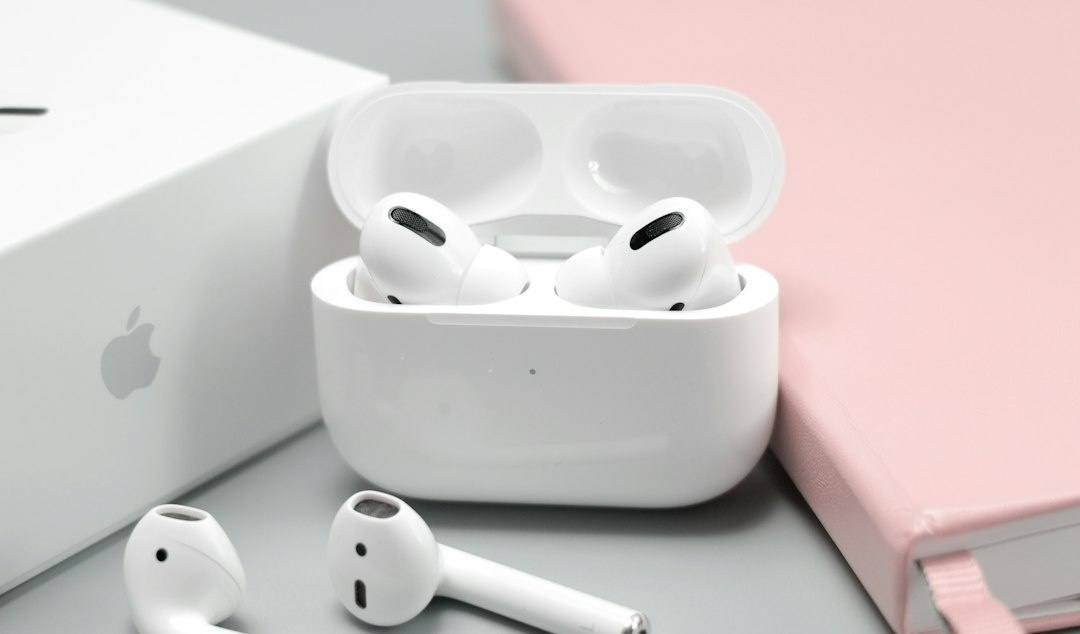
Apple now sells two genuinely good earbuds at very different prices, and the gap between them has never been more confusing. The AirPods 5 arrived this autumn with noise cancellation and the new H3 chip, which used to be the whole reason you paid extra for the Pro. So on a Black Friday weekend where both are discounted, the real question is: which pair survives a 14-hour flight, a rainy Christmas market in Nuremberg, and a hostel dorm in Sri Lanka without regret?
I’ve flown with both since October: Lisbon to Vienna, an overnight to Muscat, and a lot of trains. This guide is built on what those trips revealed, not the spec sheet.
Key Takeaways
- AirPods Pro 3 ($249 / €279 list, around $199 / €229 for Black Friday 2026) are the better travel earbuds for anyone who flies more than four times a year.
- AirPods 5 with ANC ($179 / €199 list, around $149 / €169 on sale) deliver roughly 70% of the Pro noise cancellation at 60% of the price, with a lighter 35 g case.
- Battery: Pro 3 last 8 hours with ANC on (24 with case); AirPods 5 manage about 6 hours (30 with case).
- Only the Pro 3 have IP57 dust and water resistance, foam-infused tips, a heart-rate sensor, and a seal you can sleep on.
- Skip the non-ANC AirPods 5 ($149) if you travel; the $30 upgrade to the ANC model is Apple’s best value right now.
Key numbers at a glance
| Spec | AirPods 5 (ANC) | AirPods Pro 3 |
|---|---|---|
| List price (Nov 2026) | $179 / €199 / £169 | $249 / €279 / £219 |
| Typical Black Friday 2026 price | $149 / €169 | $199 / €229 |
| Chip | H3 | H2 (updated audio architecture) |
| Active noise cancellation | Yes (open-fit, no seal) | Yes (in-ear seal, ~2x ANC of Pro 2) |
| Battery, ANC on (buds / with case) | ~6 h / ~30 h | 8 h / 24 h |
| Weight per bud / case | 4.4 g / 35 g | 5.6 g / 51 g |
| Water resistance | IP54 | IP57 |
| Ear tips | None (open fit) | Foam-infused silicone, 5 sizes |
| Heart-rate sensor | No | Yes |
| Live Translation / Find My | Yes / Yes (case speaker) | Yes / Yes (speaker + precision finding) |
Those are Apple’s published numbers, checked with a kitchen scale and a stopwatch. Here’s what they mean on the road.
Price: what you’ll really pay in November 2026
Black Friday is the one time of year the Pro 3 get close to AirPods 5 money, and that changes the calculation. At list price the gap is $70 (€80). On sale it narrows to about $50 (€60): Amazon US has run the AirPods 5 ANC at $149 and the Pro 3 at $199, with 48-hour dips to $189, while MediaMarkt and Amazon DE sit at €169 and €229.
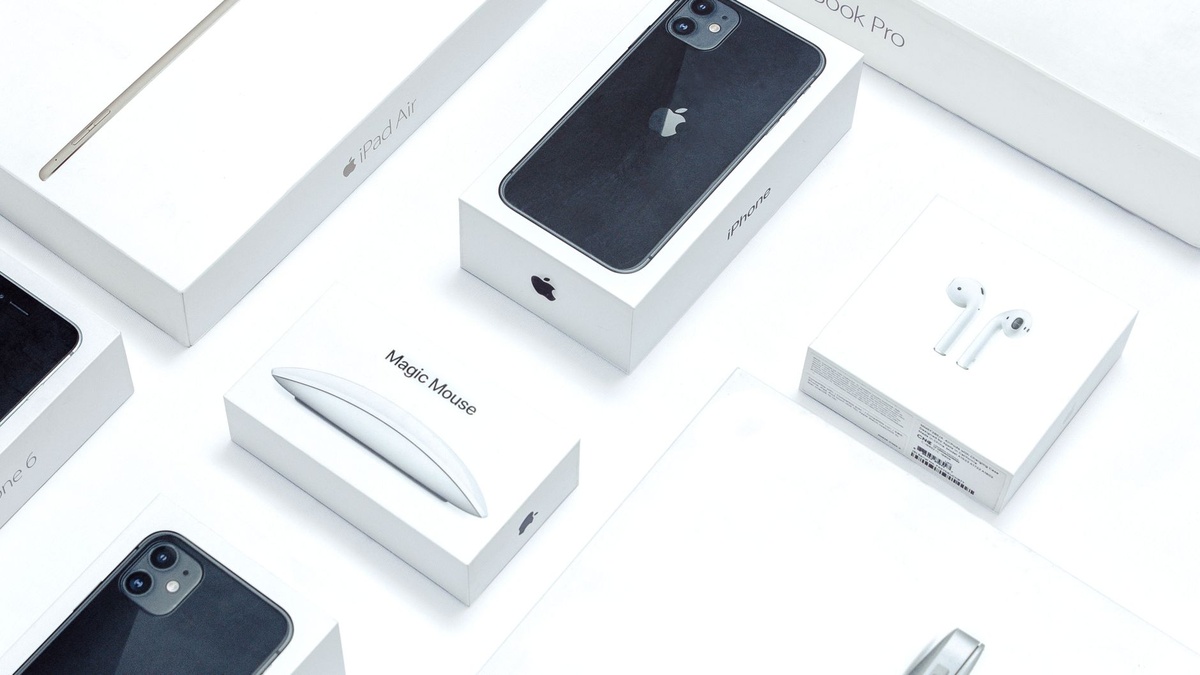
Why travelers care: if you’re transiting the US or the UAE before Christmas, prices there run 10-15% below the eurozone even before discounts. Apple Dubai lists the Pro 3 at AED 999 (~$272) with no VAT-refund hassle, and I bought mine at JFK’s Apple-authorized kiosk for $229 in October while they were still €279 in Lisbon. Avoid non-authorized airport electronics boutiques: they charge list price or above, and the AirPods 4 with ANC box looks almost identical to the AirPods 5 box at a glance.
Noise cancellation: the only spec that matters at 35,000 feet
This is where the two diverge most, and where the Pro 3 earn their premium. Their sealed in-ear design with foam-infused tips delivers roughly double the noise cancellation of the Pro 2, and the claim holds up in the air. On an A350 from Lisbon to Muscat, engine drone dropped to a faint hiss and I could follow quiet film dialogue at 40% volume. The seal also preserves far more of the music; in a quiet hotel room the sound-quality gap is noticeable but not dramatic.
The AirPods 5 do something impressive for an open-fit bud: the H3 chip cancels low-frequency rumble convincingly. But physics wins. Without a seal, cabin noise bleeds in at around 60-65 dB, so you crank the volume to compensate. On a four-hour hop to the Canaries that’s fine. On an overnight to Colombo it’s the difference between sleeping and not. On the Vienna U-Bahn at Christmas market time, the Pro 3 made the U4’s screech almost disappear; the AirPods 5 softened it to a hum.
- Long-haul flights (8+ hours): Pro 3, no contest.
- Short European hops and trains: AirPods 5 ANC are perfectly adequate.
- Hostel dorms and noisy hotels: Pro 3, because you can sleep on your side without the stem digging in.
- City walking at night: AirPods 5, because you can hear traffic. Pro 3 Transparency mode is excellent, but open-fit is still safer on icy roads in Tromsø.
Battery life: 8 hours vs 6, and why the case numbers lie
Apple quotes 8 hours with ANC for the Pro 3 and about 6 for the AirPods 5. My stopwatch gave 7 hours 40 minutes and 5 hours 50 minutes respectively, at 50% volume with ANC on.
Here’s the trap: the AirPods 5 case holds more total charge (30 hours vs 24), but you can only use what’s in the buds. On a 13-hour Frankfurt to Singapore flight, the Pro 3 cover the first 8 hours, a 20-minute top-up during a meal adds another 2, and you’re done. The AirPods 5 need two top-ups and still leave you with dead buds on descent. If your trips involve long-haul, this gap alone justifies the $50 Black Friday difference.
Charging is identical: 5 minutes in the case gives about an hour of playback, both cases use USB-C (one cable for iPhone, iPad and earbuds), and both support Qi2, so a MagSafe battery bank on the hotel nightstand works.
Weight, fit and durability on the road
The AirPods 5 case weighs 35 g and is noticeably slimmer; it disappears in a coat pocket next to your passport. The Pro 3 case is 51 g and about 20% thicker. Per bud, 4.4 g versus 5.6 g sounds trivial, but the lighter AirPods 5 are more comfortable for six-hour coworking sessions in Lisbon, while the Pro 3 seal can cause mild ear fatigue by hour four, even with the new XXS to L tip sizes. For a carry-on-only traveler, the 16 g case difference is less than a pack of gum. Don’t let it decide.
Durability is a clearer split. The Pro 3’s IP57 rating means dust-tight and 30 minutes in a metre of water; the AirPods 5’s IP54 is splash-resistant only. Both survived a proper downpour at the Strasbourg Christmas market, but the Pro 3 are the pair for Cape Verde’s dusty trails, running in Omani humidity, or a boat in Sri Lanka at the tail of December’s monsoon. The foam tips also stop them slipping out when you sweat, something open-fit AirPods have never managed.
Travel-specific features: translation, Find My and heart rate
Both support Live Translation through iOS 26. Say “Translate” to Siri and you get near-real-time spoken translation in your ears with a transcript on your phone, covering English, French, German, Portuguese, Spanish, Italian, Japanese, Korean and Simplified Chinese.
Two caveats. It needs a data connection for most language pairs, so sort your Airalo or Nomad eSIM before you need it at a Prague market stall. And it isn’t available on iPhones purchased in the EU thanks to ongoing regulatory wrangling, though a US-bought iPhone works fine in Europe. Check this before buying earbuds specifically for translation.
Find My works on both, and both cases have a speaker to ping under a hotel bed. Only the Pro 3 case supports precision finding (the on-screen arrow), which has saved me once in a Vienna café. The Pro 3’s heart-rate sensor is useful for runners without an Apple Watch; for most travelers it’s irrelevant, so don’t pay for it.
Real-world travel scenarios
- Overnight flight, Lisbon to Muscat (7h 20m): Pro 3 with ANC on throughout, 45% battery left on landing, three hours of side-sleeping without discomfort. AirPods 5 on the return: one top-up needed, and cabin noise woke me twice.
- Vienna Christmas markets, three days: AirPods 5 won. Open-fit meant I could hear vendors and trams, and the slim case lived in a coat pocket with gloves and a Rathausplatz punch mug.
- Night train, Munich to Venice: Pro 3. Sleeping in a couchette with four strangers is their purpose in life.
- Aurora chase outside Tromsø, minus 8°C: Both worked, but the AirPods 5 were easier to insert with gloves on. Cold drained the Pro 3 battery about 15% faster.
For a December ski trip with small kids, where you need to hear what’s happening in the chairlift queue, the open-fit AirPods 5 make more sense; we cover that kind of trip in our guide to which Alpine glacier resort is safest for families with a toddler this December. For a long-haul winter-sun escape like the 11-hour Paris to Mauritius route, it flips to the Pro 3: the seal for the flight and IP57 for a week mixing beaches with historical sites around Port Louis and Le Morne in humid 30°C heat.
Choose AirPods 5 if… / Choose AirPods Pro 3 if…
Choose the AirPods 5 (ANC model) if:
- Most of your trips are under 5 hours (city breaks, domestic flights, trains).
- You dislike silicone tips in your ears.
- You walk cities at night and want situational awareness without toggling modes.
- You’re buying a gift and don’t know the recipient’s tip size, or your budget stops at $150.
Choose the AirPods Pro 3 if:
- You take at least two long-haul flights a year.
- You sleep in hostels, night trains or hotel rooms with a snorer.
- You run, hike or sweat in them regularly (IP57 and secure fit).
- Black Friday brings them to $199 / €229, at which point the extra $50 is trivially justified.
Skip both if you own AirPods Pro 2 that still hold charge; the Pro 3 are a solid upgrade for ANC and fit, but not a $249 one. And skip the non-ANC AirPods 5 at $149; the $30 jump to ANC is too cheap to pass up.
Alternatives worth a glance
The Sony WF-1000XM6 ($299, often $229 on Black Friday) have marginally stronger ANC and 12 hours of bud battery, but a clunky app and no iCloud device switching. The Nothing Ear (3) at $149 / €169 give about 80% of the AirPods 5 experience with better battery, minus Find My, automatic switching and Live Translation. Android users should skip both AirPods and buy the Sony or Pixel Buds Pro 3 instead.
Common mistakes travelers make with AirPods
- Buying the non-ANC AirPods 5 to save $30. You’ll regret it on the first flight; noise cancellation is the single most useful travel feature in earbuds.
- Not fitting the Pro 3 tips properly. Run the Ear Tip Fit Test in Bluetooth settings; a bad seal roughly halves ANC effectiveness.
- Expecting them to connect to seatback screens. Pack a $25-35 Bluetooth transmitter such as the AirFly Pro 2, or download content before boarding.
- Letting the case hit 0% before a trip. An empty case won’t charge the buds, and both pairs will flash amber and refuse to pair.
- Not enabling “Notify When Left Behind” in Find My. It saved me from a $249 mistake in a Prague Airbnb.
Traveler verdict
Buy the AirPods Pro 3 if Black Friday gets them to $199 or €229. At that price they’re the best travel earbuds Apple has made, and the ANC, battery and seal together solve the three problems that actually matter on a plane. The extra $50 costs less than one airport lounge pass and lasts three years of trips.
Buy the AirPods 5 with ANC if you’re a short-haul traveler, a nighttime city walker, or simply don’t like tips in your ears. At $149 they’re the best open-fit earbuds in the world, and nobody will be disappointed to unwrap them on Christmas morning. The non-ANC AirPods 5 and the Pro 2 (now clearing at $169) are the pairs to avoid.
Frequently Asked Questions
Are AirPods Pro 3 worth the extra money over AirPods 5 for travel?
Yes, if you fly long-haul or sleep in shared spaces. You get roughly double the noise cancellation of an open-fit design, 8 hours of ANC battery versus about 6, and IP57 protection. On Black Friday 2026 the gap is only about $50 / €60, easy to justify over three years of trips.
How long do AirPods Pro 3 last on a long-haul flight with noise cancellation on?
About 8 hours; my own test gave 7 hours 40 minutes at 50% volume. A 20-minute top-up in the case during a meal adds roughly 2 more hours, which comfortably covers a 10-12 hour flight. The case holds 24 hours in total.
Can I use AirPods with in-flight entertainment screens?
Not directly. Neither pair connects to the 3.5 mm jack on seatback screens. A Bluetooth transmitter such as the AirFly Pro 2 (around $35 / €39) plugs into the jack and pairs with your AirPods in about 10 seconds.
Does Live Translation on AirPods work in Europe?
Yes on iPhones bought outside the EU, with either AirPods 5 or Pro 3 running iOS 26. EU-purchased iPhones currently have the feature restricted, and it needs a data connection, so set up an eSIM before you land.

About the Author: Tomáš Bzirský
Founder and editor of Distratech. Based in the Czech Republic, travelling regularly from Central Europe. Writes practical travel guides and travel-tech comparisons (eSIM, apps, airports) in six languages.