'/%3E%3Cpath%20fill='%23b2b2b2'%20d='M241%20382q0%2016%2017%2026%2017%2011%2042%2011t42-11q16-11%2017-26V269H241'/%3E%3Cpath%20fill='%239f7e00'%20d='M241%20379q0%2014%208%2023%209%209%2021%209%2014%200%2021-9%209-9%209-23V269h-59'/%3E%3Cpath%20d='M241%20339v-70h59v110q0%2014-9%2023l-6%205v-68h-15v72q-8%200-14-4v-68zm59%2040c0%2022%2015%2032%2029%2032%2021%200%2030-18%2030-32v-40h-59'/%3E%3Cpath%20fill='%239f7e00'%20d='M266%20277v5h2v12h-3v-5h2v-5h-9v5h2v5h-4v9h3v18h-5v10h34v-10h-5v-18h3v-9h-4v-5h2v-5h-9v5h2v5h-3v-12h2v-5zm42%20101q0%2010%206%2017%206%206%2015%207%2010-1%2016-7%206-7%206-17v-29h-43'/%3E%3Ccircle%20fill='%230044ad'%20cx='329.5'%20cy='372'%20r='6'/%3E%3Cellipse%20fill='%230044ad'%20cx='300'%20cy='340'%20rx='16'%20ry='21'/%3E%3C/svg%3E)
'/%3E%3C/svg%3E)


'/%3E%3C/g%3E%3Cuse%20href='%23c'%20transform='matrix(-1%200%200%201%20720%200)'/%3E%3C/svg%3E)


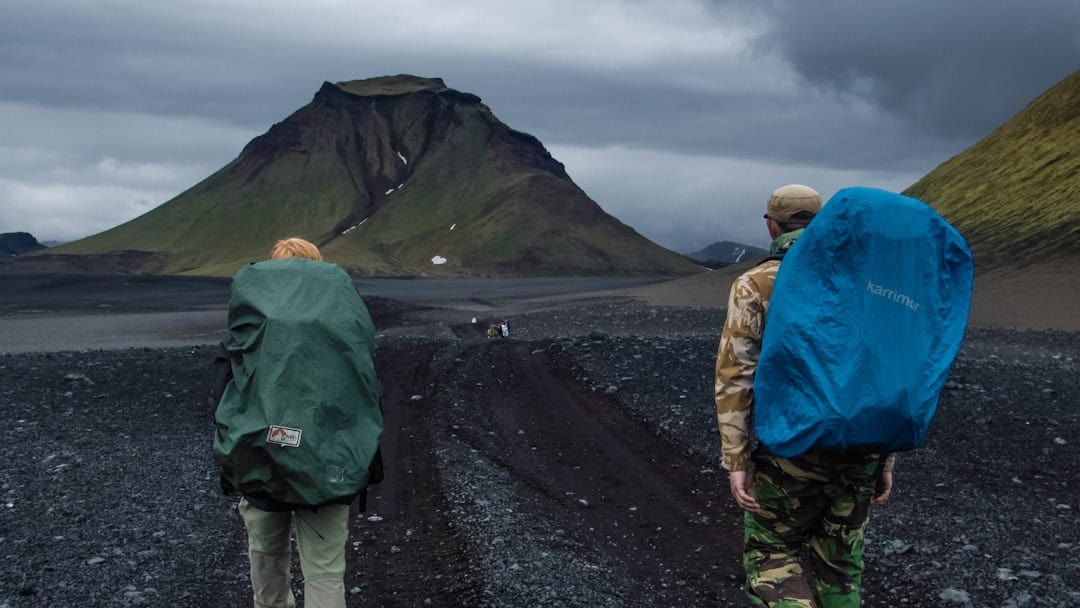
I still remember stepping off the bus at Landmannalaugar at 10:15 a.m., the air smelling faintly of sulfur and wet moss, staring at neon-green rhyolite mountains that looked photoshopped. Four days later, I was covered in volcanic dust, socks permanently damp, and completely convinced that the 55 km (34 miles) Laugavegur Trail is one of the best hikes on the planet.
If you’re planning to hike it in 2026, here’s exactly what you need to know — from hut prices and river crossings to whether you really need those $400 boots.
Key Takeaways
- The Laugavegur Trail is 55 km (34 miles) and typically takes 3–4 days to complete.
- The 2026 hiking season runs late June to early September, with peak conditions in July and August.
- Mountain hut beds cost around 13,000–15,000 ISK per night and must be booked months in advance.
- Expect to budget €350–€800 total, depending on huts vs. camping and transport choices.
- No permits are required, but river crossings and weather can be serious — this is not a casual walk.
Why Hike the Laugavegur Trail in 2026?
Spring in Iceland (April–May) is still too early — snow covers most of the route. But as we move into late June 2026, trail crews begin marking the path with stakes, and the highland buses resume service.
This is shoulder-season magic. Fewer hikers than peak July, but long daylight hours — up to 20+ hours of light near the solstice.
If you’re into dramatic landscapes without Everest-level crowds, this is your window.
Laugavegur Trail Overview (Quick Facts)
- Distance: 55 km / 34 miles
- Start: Landmannalaugar
- End: Þórsmörk (Thórsmörk)
- Elevation gain: ~2,000 meters total
- Difficulty: Moderate (weather makes it harder)
- Best direction: North to south (easier overall)
Most hikers continue 25 km further over Fimmvörðuháls to Skógar, but that’s a tougher, more exposed add-on.
Day-by-Day Itinerary (4 Days, Classic Route)
Day 1: Landmannalaugar to Hrafntinnusker (12 km / 7.5 miles)
You’ll start in a geothermal wonderland — steaming vents, rainbow hills, black lava fields. It feels unreal.
The climb is steady but manageable. Snow patches often linger here even in July.
Pro tip: Soak in the Landmannalaugar hot spring before you start. Not after. You’ll be too tired on return.
Day 2: Hrafntinnusker to Álftavatn (12 km / 7.5 miles)
This is where the landscape shifts dramatically. Black obsidian gives way to green valleys and glacier views.
You’ll hit your first proper river crossings. Water depth varies — sometimes ankle-deep, sometimes mid-thigh depending on melt.
Unbuckle your backpack waist strap before crossing. If you fall, you want to ditch it fast.
Day 3: Álftavatn to Emstrur (15 km / 9 miles)
Wind. Lots of it.
This section crosses wide black sand plains. It feels lunar and exposed. On a clear day, you’ll see the Mýrdalsjökull glacier looming in the distance.
Detour to Markarfljótsgljúfur canyon near Emstrur. It’s one of the most underrated viewpoints on the trail.
Day 4: Emstrur to Þórsmörk (16 km / 10 miles)
The final stretch descends into a lush valley surrounded by glaciers.
After days of volcanic desert, Þórsmörk feels almost tropical (by Iceland standards). Birch trees! Moss! Actual greenery!
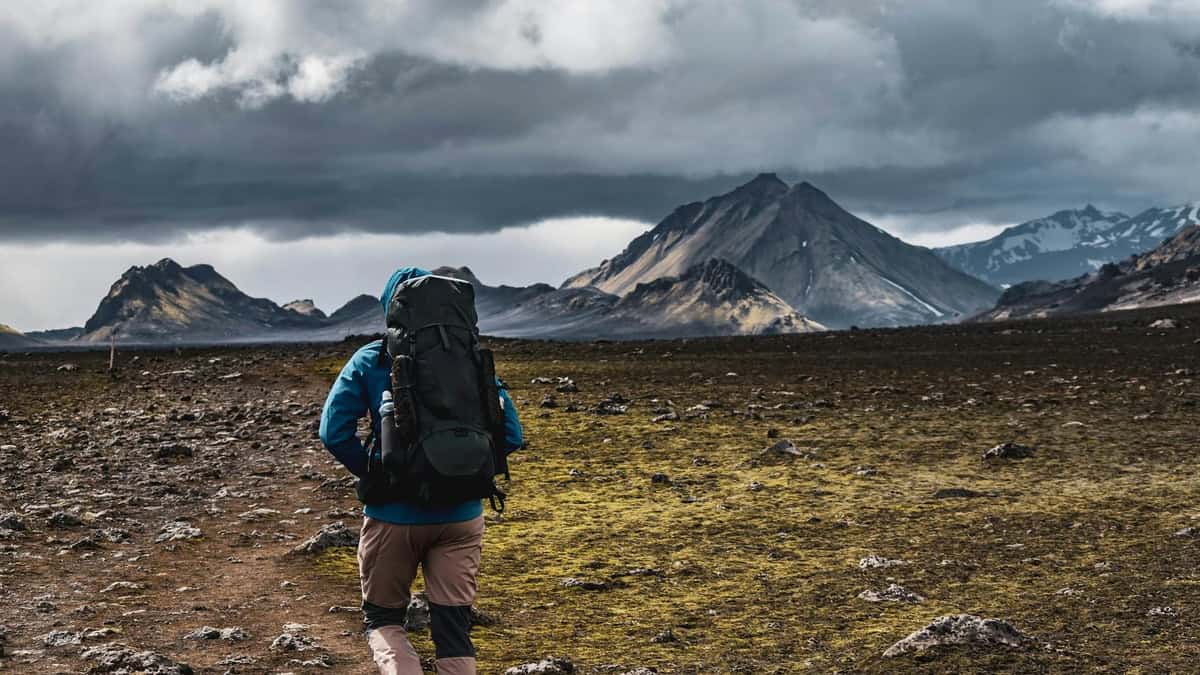
Celebrate with a burger and beer at Volcano Huts. You’ve earned it.
Huts vs Camping (2026 Prices)
This is the biggest decision you’ll make.
Mountain Huts
- Price: 13,000–15,000 ISK per night (€85–€100)
- Shared dormitory style
- Basic cooking facilities
- No food provided
Book through the Iceland Touring Association (FÍ). For summer 2026, many July dates are already filling up by spring.
If you wait, you’ll likely end up adjusting your itinerary around availability.
Camping
- Price: 2,500–3,500 ISK per night (€16–€23)
- Access to hut toilets and water
- Must carry full camping gear
Camping is dramatically cheaper but Icelandic wind is not forgiving. I’ve seen tents flattened at 2 a.m.
If you’re unsure about gear, read our breakdown of DJI’s new Lito series beginner drones — not for hiking itself, but because lightweight tech like compact drones and power banks can seriously reduce your overall pack weight while capturing epic highland footage.
How Much Does It Cost? (Realistic 2026 Budget)
Here’s what most hikers spend:
- Highland bus (Reykjavík–Landmannalaugar, Þórsmörk–Reykjavík): €120–€160 round trip
- Huts (3 nights): ~€270
- Camping (3 nights): ~€60
- Food (4 days): €60–€100
- Gear rental (if needed): €150–€300
Total: €350 (budget camper) to €800+ (hut comfort + rentals).
Iceland isn’t cheap. But compared to guided multi-day treks elsewhere, this is solid value.
When Is the Best Time to Hike?
Late June: Fewer crowds, possible snowfields, magical midnight light.
July: Best overall conditions, busiest month.
August: Slightly fewer hikers, more stable river levels.
September: Risky. Early snow can close sections.
As of spring 2026, bookings are strongest for mid-July departures. If you want quieter trails, aim for the last week of June or late August.
What to Pack (Don’t Get This Wrong)
Icelandic weather changes hourly. Sunshine to horizontal rain in 20 minutes is normal.
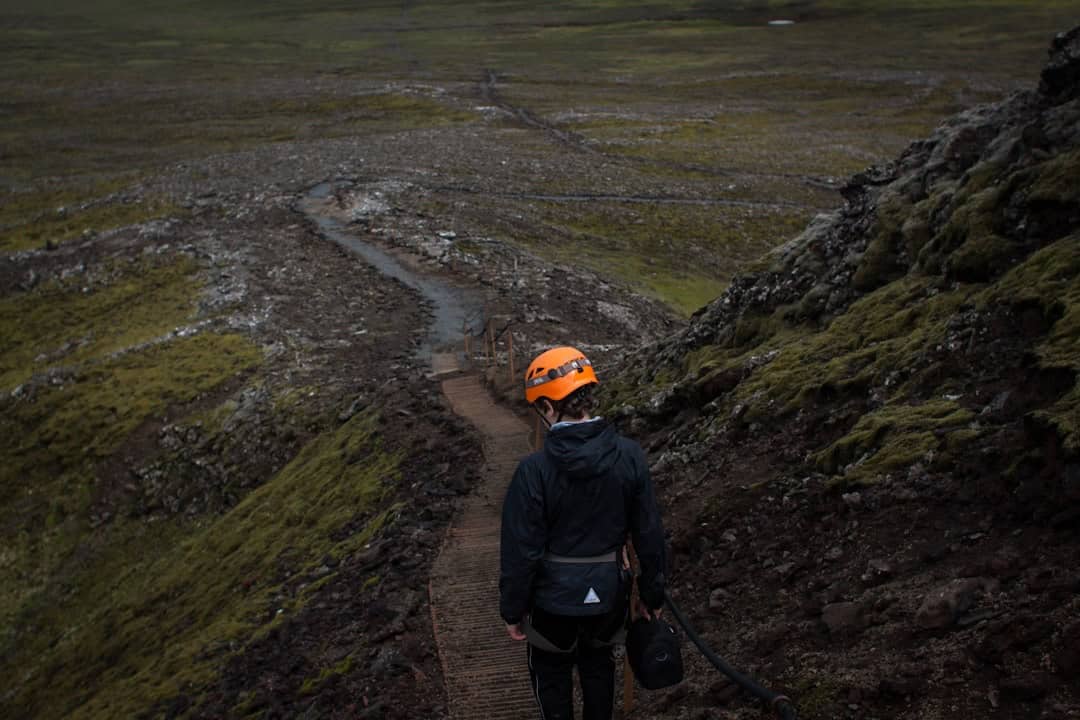
- Waterproof jacket and pants (Gore-Tex level, not “water-resistant”)
- Two pairs of wool socks
- Lightweight sandals for river crossings
- Trekking poles (huge help in wind)
- Offline maps (AllTrails+ or Gaia GPS)
There’s no cell service for much of the route. Download everything in advance.
Getting There (Logistics Made Simple)
No rental car required.
Highland buses depart Reykjavík’s BSI terminal daily during hiking season. The ride takes 3–4 hours, including rough F-roads and river crossings.
Book round-trip tickets in advance — especially for the return from Þórsmörk, where seats fill quickly in peak season.
Is the Laugavegur Trail Difficult?
Physically, it’s manageable for anyone in decent shape. The daily distances aren’t extreme.
The real challenge is exposure: cold rain, strong winds, and unpredictable river depth.
If you’ve done multi-day hikes before, you’ll be fine. If not, train with a loaded pack beforehand.
If you’re looking for other emerging adventure destinations with fewer crowds, keep an eye on Kazakhstan’s expanding national parks — Central Asia’s landscapes are starting to attract serious trekkers.
Common Mistakes to Avoid
- Underestimating wind chill
- Skipping advance hut bookings
- Wearing waterproof boots during deep river crossings (they’ll flood anyway)
- Not budgeting enough time between bus connections
- Ignoring weather forecasts from vedur.is
This isn’t a casual Instagram stroll. Respect the environment and the conditions.
Final Thoughts: Is It Worth It?
Absolutely.
The Laugavegur Trail compresses glaciers, volcanoes, obsidian deserts, neon mountains, and mossy valleys into four unforgettable days.
In 2026, with smart planning and shoulder-season timing, you can avoid the heaviest crowds and experience Iceland’s highlands the way they’re meant to be — wild, quiet, and slightly unpredictable.
If this is your year for a big adventure, start booking now. And if you’ve already hiked it, drop your favorite section — Landmannalaugar or Þórsmörk? I’m firmly team Þórsmörk.
Für die passende Unterkunft in Island, vor allem rund um Landmannalaugar und Þórsmörk, sieh dir verfügbare Hotels für den Laugavegur Trail an an und buche früh.
Frequently Asked Questions
How much does it cost to hike the Laugavegur Trail in 2026?
Most hikers spend between €350 and €800 total, depending on whether they camp or stay in huts, plus transport and gear rental costs.
When is the best time to hike the Laugavegur Trail?
Late June through August offers the best conditions, with July providing the most stable weather but also the biggest crowds.
Do you need a guide for the Laugavegur Trail?
No, the trail is well-marked during the summer season. However, beginners or early-season hikers may prefer a guided tour for added safety.
How difficult are the river crossings?
Most crossings are manageable but can reach thigh depth depending on melt and rainfall. Always cross in sandals and unbuckle your pack.

About the Author: Tomáš Bzirský
Founder and editor of Distratech. Based in the Czech Republic, travelling regularly from Central Europe. Writes practical travel guides and travel-tech comparisons (eSIM, apps, airports) in six languages.