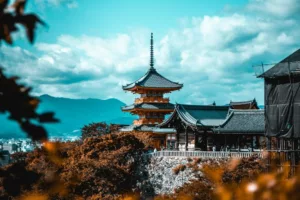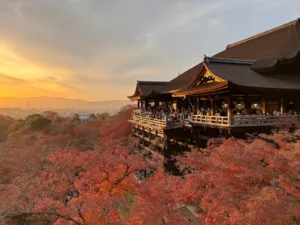
Kyoto’s autumn leaves are spectacular; the combination of diesel-bus queues, disposable snack packaging and shoulder-to-shoulder photography is not. I compared 15 major foliage temples using a repeatable low-impact model: round-trip public-transport emissions from Kyoto Station, peak crowd pressure, visitor-facing waste rules, walking distance, admission price and reservation controls.
Key Takeaways
- Bishamon-do ranks first, combining an estimated 0.12 kg CO₂e round trip, free grounds and a walkable 1.3 km approach.
- Kyoto’s strongest color usually arrives from November 20 to December 5; October is generally too early except at cooler northern sites.
- Temple admission in October 2026 ranges from free to ¥2,000 (€11.43), with Ruriko-in the most expensive.
- Rail-first routes produce approximately 60–85% less transport carbon than bus-heavy itineraries from Kyoto Station.
- For fewer crowds, visit Bishamon-do, Shinnyo-do or Manshu-in before 09:30 instead of Kiyomizu-dera or Eikando.
Key Numbers at a Glance
The figures below use an October 2026 planning exchange rate of ¥175 to €1. Prices are shown in yen because temples collect admission locally; euro amounts are budgeting equivalents, not guaranteed card conversions.
| Metric | Best result | Worst result | What it means |
|---|---|---|---|
| Estimated return transport emissions | Tofuku-ji: 0.08 kg CO₂e | Komyo-ji: 0.65 kg CO₂e | Rail plus walking generally beats a direct city bus |
| Admission, October 2026 | Shinnyo-do grounds: free | Ruriko-in: ¥2,000 (€11.43) | Special autumn openings cost more than ordinary visits |
| Final walk from transit | Daigo-ji: 0.2 km | Gio-ji: 1.8 km | Longer walks reduce vehicle use but affect accessibility |
| Typical Kyoto foliage peak | November 20–December 5 | Late October produces scattered color, not citywide peak foliage | |
| Lowest crowd-pressure score | Bishamon-do: 2/5 | Kiyomizu-dera: 5/5 | Lower is better; scores reflect peak-period congestion |
| Basic public-transport fare | City bus: ¥230 (€1.31) | Subway trip: typically ¥220–¥290 (€1.26–€1.66) | A subway-rail route can be both cleaner and faster |
How the Low-Impact Ranking Works
This is not a claim that one Buddhist institution is inherently “greener” than another. Most Kyoto temples do not publish independently audited energy, procurement or waste data, so the ranking evaluates the part a visitor can control and verify.
Each site receives a score out of 100. Transport emissions and crowd pressure each account for 25%, walking access 15%, visitor-facing waste management 15%, admission value 10%, and reservation or timed-entry management 10%.
Transport assumptions
Every route begins and ends at Kyoto Station. The model uses approximately 19 g CO₂e per passenger-kilometre for electrified urban rail and 57 g for a scheduled city bus, with walking assigned zero operational emissions.
These are comparative planning estimates, not measurements from individual vehicles. A full city bus can perform better per passenger, while a lightly occupied diesel bus can perform worse.
How crowd pressure was scored
Crowding is graded from 1 to 5 using peak-autumn queueing, path width, timed-entry controls and how easily visitors can spread across the grounds. A score of 5 means regular bottlenecks and compressed viewing areas; it does not mean the temple should be avoided year-round.
The assessment assumes a visit between November 20 and December 5, especially 10:00–15:00. At 08:00, Kiyomizu-dera can feel calmer than Eikando at noon, so timing still matters more than any static ranking.
What counts as a waste policy
Kyoto temples generally provide few or no public rubbish bins and expect visitors to carry waste out. Higher scores go to sites with clear no-eating rules, reusable-cup or refill access nearby, restricted vending and reservation systems that reduce temporary crowd infrastructure.
No site earns points merely for hiding its bins. Packaged purchases still create waste even when you carry the wrapper back to your hotel.
The Data-Driven Ranking of 15 Kyoto Foliage Temples
| Rank | Temple | Score /100 | Return CO₂e | Crowds /5 | Walk from transit | Admission, Oct. 2026 |
|---|---|---|---|---|---|---|
| 1 | Bishamon-do | 88 | 0.12 kg | 2 | 1.3 km | Grounds free; inner area ¥700 (€4.00) |
| 2 | Shinnyo-do | 86 | 0.34 kg | 2 | 0.55 km | Grounds free; inner area ¥500 (€2.86) |
| 3 | Shisen-do | 83 | 0.38 kg | 2 | 0.35 km | ¥700 (€4.00) |
| 4 | Manshu-in | 81 | 0.42 kg | 2 | 0.8 km | ¥800 (€4.57) |
| 5 | Enko-ji | 80 | 0.39 kg | 2 | 0.45 km | Typically ¥1,000 (€5.71) in peak autumn |
| 6 | Jojakko-ji | 77 | 0.17 kg | 3 | 1.25 km | ¥500 (€2.86) |
| 7 | Gio-ji | 76 | 0.18 kg | 3 | 1.8 km | ¥300 (€1.71) |
| 8 | Nison-in | 73 | 0.18 kg | 3 | 1.4 km | ¥500 (€2.86) |
| 9 | Nanzen-ji Tenju-an | 71 | 0.16 kg | 4 | 0.7 km | ¥600 (€3.43) |
| 10 | Ruriko-in | 69 | 0.16 kg | 2 | 0.55 km | ¥2,000 (€11.43) |
| 11 | Komyo-ji | 67 | 0.65 kg | 3 | 0.5 km | About ¥1,000 (€5.71) in autumn |
| 12 | Daigo-ji | 65 | 0.22 kg | 3 | 0.2 km | Combined autumn ticket about ¥1,500 (€8.57) |
| 13 | Kodai-ji | 60 | 0.50 kg | 4 | 0.65 km | ¥600 (€3.43) |
| 14 | Tofuku-ji | 57 | 0.08 kg | 5 | 0.75 km | Up to ¥1,000 (€5.71) at peak |
| 15 | Kiyomizu-dera | 49 | 0.48 kg | 5 | 1.1 km | ¥500 (€2.86) |
Important: Autumn opening dates and special fees are often announced only weeks ahead. Check each temple’s official website before travel; the euro equivalents and expected seasonal fees above were prepared for October 2026 budgeting.
Ranks 1–5: The Best Low-Impact Autumn Choices
1. Bishamon-do: best overall
Bishamon-do sits above Yamashina, away from central Kyoto’s tour-bus circuit. Take the JR Biwako or Kosei Line from Kyoto Station to Yamashina in about five minutes, then walk 1.3 km uphill in roughly 20 minutes.
The rail-based return journey produces an estimated 0.12 kg CO₂e, compared with roughly 0.48 kg for a bus-heavy Kiyomizu visit. The grounds are free, while special interior access is generally around ¥700 (€4.00).
Hours are usually 09:00–17:00, shortening to 16:30 in winter. Arrive at 09:00 for the stone stairway and red maple canopy before photography groups reach the entrance.
There are few bins and limited food sales, so bring a reusable bottle and take everything out. The uphill path is the trade-off: this is the best option for low emissions, not for travelers who need step-free access.
2. Shinnyo-do: best free foliage garden
Shinnyo-do has one of Kyoto’s best foliage-to-crowd ratios. Its open grounds, pagoda and maple-lined paths cost nothing; the inner temple and garden are normally about ¥500 (€2.86).
From Kyoto Station, use the Karasuma subway to Marutamachi and continue by bus or walk approximately 2.3 km. The practical route takes 35–45 minutes and creates around 0.34 kg CO₂e return.
Grounds are generally open during daylight, with paid areas around 09:00–16:00. Compared with Eikando’s ¥1,000 (€5.71) autumn entry and crowd score of 5, Shinnyo-do is the obvious value choice.
3. Shisen-do: best contemplative garden
Shisen-do is smaller than Shinnyo-do but better controlled, with a seated garden view that encourages people to stop rather than circulate endlessly. Admission is ¥700 (€4.00), and standard hours are 09:00–17:00, with last entry around 16:45.
Take the subway to Matsugasaki, then a short connecting bus or a 25-minute walk; the final approach from Ichijoji Sagarimatsucho bus stop is about 350 metres. Allow 40–50 minutes from Kyoto Station.
The garden can become quiet enough to hear its distinctive bamboo water clacker. Skip a Saturday at 11:00; choose a weekday opening slot, when 20 visitors feel manageable but 60 overwhelm the viewing room.
4. Manshu-in: best for a longer northeastern walk
Manshu-in rewards travelers willing to walk 800 metres uphill from the nearest practical bus stop. The route takes about 50 minutes from Kyoto Station, and admission is approximately ¥800 (€4.57).
Opening hours are generally 09:00–17:00, with last admission about 30 minutes earlier. Its gravel compositions and framed maple views are more restrained than Eikando’s saturated color, but crowd pressure is less than half as severe.
Combine Manshu-in with Shisen-do on foot: the temples are around 1.4 km apart. That produces a better low-carbon day than returning to Kyoto Station between sites.
5. Enko-ji: best reservation-managed visit
Enko-ji’s framed view over the moss and maple garden is no longer a secret. Its advantage is controlled peak-season entry, which makes it more responsible than an unrestricted free-for-all.
Autumn admission has recently been around ¥1,000 (€5.71), versus the lower normal-season rate. Hours are usually 09:00–17:00; reservations and current rules should be checked through the official Enko-ji website.
From Ichijoji Sagarimatsucho, walk about 450 metres. Book the first available session and spend 45–60 minutes; lingering for two hours reduces the benefit of timed capacity controls.
Ranks 6–10: Excellent, With One Significant Trade-Off
6–8. Jojakko-ji, Gio-ji and Nison-in: the rail-and-walk Arashiyama trio
These three temples benefit from an efficient JR journey to Saga-Arashiyama followed by walking. Return rail emissions are only about 0.17–0.18 kg CO₂e, but the full circuit covers roughly 5–6 km on foot.
Jojakko-ji costs ¥500 (€2.86) and normally opens 09:00–17:00. Its steep paths create exceptional views but concentrate visitors around the gate and pagoda.
Gio-ji costs just ¥300 (€1.71) and generally opens 09:00–16:30, with last entry at 16:00. The moss garden is tiny, so even 30–40 visitors can make it feel crowded; enter immediately after opening or late in the afternoon.
Nison-in charges around ¥500 (€2.86) and usually operates 09:00–16:30. Its broad entrance avenue absorbs crowds better than Gio-ji, although it attracts more organized groups.
Skip Arashiyama’s overloaded number 28 bus from Kyoto Station. The JR train takes approximately 17 minutes for ¥240 (€1.37), while the bus can exceed 50 minutes in foliage traffic for ¥230 (€1.31).
9. Nanzen-ji Tenju-an: low transport impact, high local congestion
Nanzen-ji is easily reached by subway to Keage, keeping return emissions near 0.16 kg CO₂e. Walk 700 metres from the station through the brick-lined incline and aqueduct area.
The main grounds are free, while Tenju-an is normally ¥600 (€3.43). Daytime hours are commonly 09:00–16:30 in late autumn, with seasonal changes.
The problem is not access but clustering. Tenju-an, the aqueduct and nearby Eikando pull several visitor flows into the same neighborhood, so arrive before 09:00 and walk onward to Shinnyo-do rather than boarding another bus.
10. Ruriko-in: controlled crowds, excessive admission
Ruriko-in’s polished-floor reflection is visually remarkable and tightly managed, but ¥2,000 (€11.43) is four times Jojakko-ji’s admission. Seasonal opening hours are generally around 10:00–17:00.
Take the subway or bus to Demachiyanagi, then the Eizan Railway to Yase-Hieizanguchi; the temple is about 550 metres away. The trip takes 45–55 minutes and generates approximately 0.16 kg CO₂e return.
Check autumn dates, ticket rules and reservations on the official Ruriko-in website. Choose it for crowd control and photography, not value; Shinnyo-do provides a richer walking visit for €8.57 less.
Ranks 11–15: Worth Visiting, but Not the Lowest-Impact Options
11. Komyo-ji: quieter setting, bus-heavy access
Komyo-ji in Nagaokakyo has a superb maple approach and fewer international tour groups. However, the JR-plus-bus route raises modeled return emissions to about 0.65 kg CO₂e, the highest in this ranking.
Allow 45–60 minutes each way from Kyoto Station. Autumn admission is typically around ¥1,000 (€5.71), with seasonal hours approximately 09:00–16:00.
Choose Komyo-ji if dispersing tourism beyond central Kyoto is your priority. Choose Bishamon-do if transport carbon matters more: its estimated journey emissions are about 80% lower.
12. Daigo-ji: easiest short walk
Daigo-ji is only around 200 metres from Daigo subway station, making it the most convenient option for travelers who cannot manage a long approach. Kyoto Station to Daigo takes roughly 30–35 minutes with one transfer.
The combined autumn ticket for major paid areas can reach about ¥1,500 (€8.57). Standard hours are 09:00–17:00, shortening in early December, and the vast compound requires at least two hours.
Its 0.22 kg CO₂e transport estimate is good, but the price and scale lower its ranking. Do not attempt the upper Kami-Daigo trail unless you can handle a steep mountain ascent of roughly one hour each way.
13. Kodai-ji: choose the night illumination carefully
Kodai-ji charges ¥600 (€3.43) and usually opens 09:00–17:30. During autumn illumination, access may continue until around 22:00, with last admission near 21:30; confirm dates on the official Kodai-ji website.
Night visits support Kyoto’s growing noctourism appeal, but lighting, queue barriers and extended operations carry a footprint that daylight visits avoid. If you go, arrive around 20:15 after dinner rather than joining the opening queue at sunset.
Walk from Gion-Shijo or use the subway to Higashiyama and continue on foot. A taxi from Kyoto Station can cost ¥1,800–¥2,500 (€10.29–€14.29) for 15–25 minutes, while public transport costs about ¥230–¥260 (€1.31–€1.49).
14. Tofuku-ji: lowest transport emissions, worst bottleneck
Tofuku-ji illustrates why carbon alone cannot define a low-impact visit. The JR ride from Kyoto Station takes only about three minutes, producing the ranking’s lowest estimated return transport footprint: 0.08 kg CO₂e.
The Tsutenkyo bridge, however, becomes one of Kyoto’s most compressed autumn viewing corridors. Peak admission can be around ¥1,000 (€5.71), and photography restrictions may be introduced when people stop and block circulation.
Autumn hours are commonly 08:30–16:30, with last entry before closing. Arrive before the gate opens on a weekday, or skip it and take the same JR line to Yamashina for Bishamon-do.
15. Kiyomizu-dera: iconic, but the weakest low-impact experience
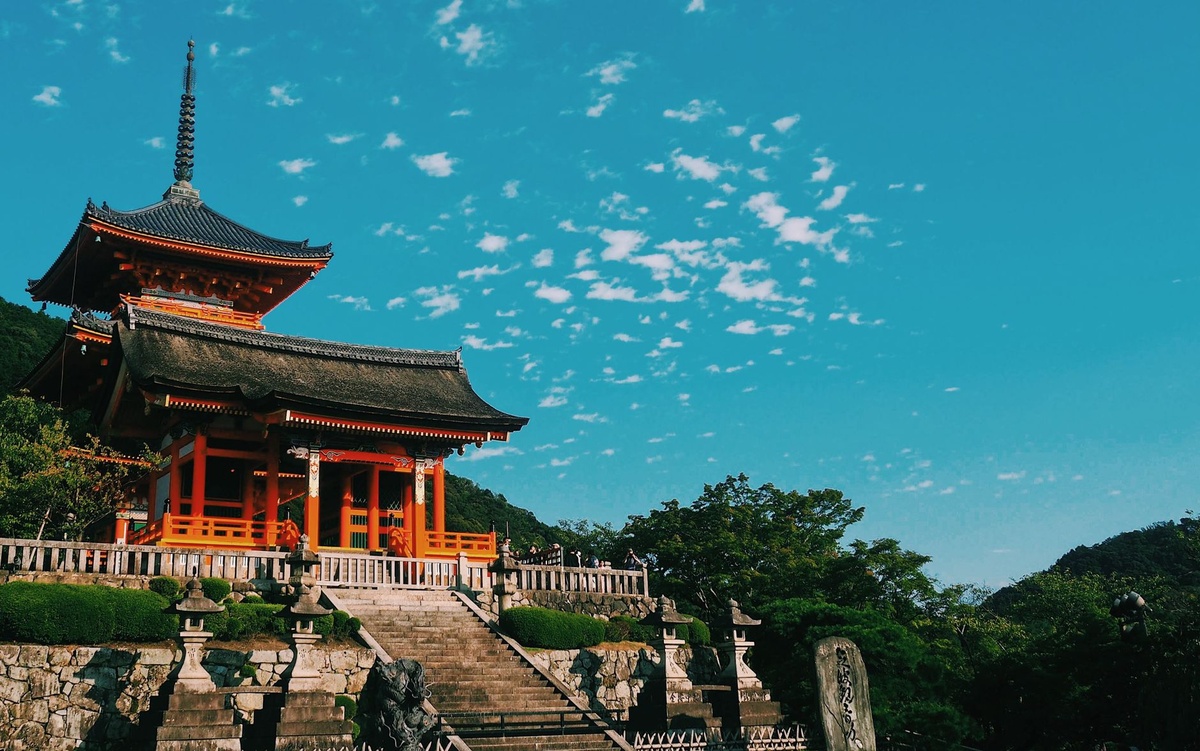
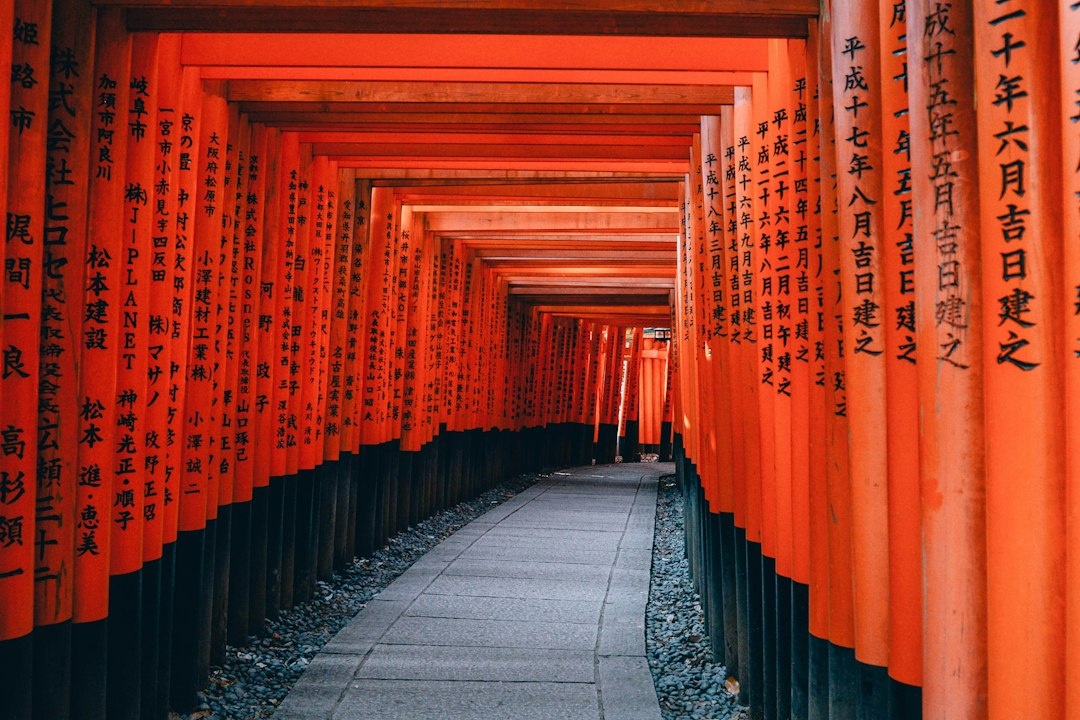
Kiyomizu-dera opens unusually early, generally 06:00–18:00, and charges ¥500 (€2.86). Those are excellent visitor-friendly numbers, but the standard daytime experience is overwhelmed by congestion on Matsubara-zaka and the approach from Gojo-zaka.
The bus costs ¥230 (€1.31), takes 20–45 minutes in traffic and leaves a 1.1 km uphill walk. Walking the approximately 3.3 km from Kyoto Station takes 45–50 minutes and eliminates the bus emissions entirely.
Skip Kiyomizu between 09:00 and 16:00. Go at 06:30, when shops are closed and the terraces remain relatively calm, then eat breakfast elsewhere rather than buying packaged snacks on the approach.
Choose the Right Temple for Your Priorities
- Choose Bishamon-do for the strongest overall balance of low emissions, low crowds and free outdoor access.
- Choose Shinnyo-do if your admission budget is under €3 and you want broad, unhurried grounds.
- Choose Enko-ji or Ruriko-in if predictable crowd capacity matters more than price.
- Choose Daigo-ji if you need a short, straightforward walk from a subway station.
- Choose Jojakko-ji, Gio-ji and Nison-in for a rail-based half-day with 5–6 km of walking.
- Choose Kodai-ji for an evening illumination, but visit after 20:00 rather than at sunset.
- Choose Kiyomizu-dera only if you can arrive around 06:30; otherwise, skip it for Bishamon-do.
A Costed Two-Day Low-Impact Foliage Plan
This itinerary prioritizes rail, subway and walking. It covers five temples without using taxis or crossing Kyoto repeatedly.
| Item | Plan | Cost, October 2026 |
|---|---|---|
| Day 1 transport | Kyoto–Yamashina return, then subway/walking for evening | About ¥650 (€3.71) |
| Bishamon-do | 09:00–10:30; paid inner area optional | ¥700 (€4.00) |
| Lunch | Sanjo Sarashina soba or similar local set | About ¥1,300 (€7.43) |
| Shinnyo-do | 14:00–15:30; grounds plus inner area | ¥500 (€2.86) |
| Day 2 transport | JR Kyoto–Saga-Arashiyama return | ¥480 (€2.74) |
| Jojakko-ji | 09:00–10:00 | ¥500 (€2.86) |
| Nison-in | 10:15–11:15 | ¥500 (€2.86) |
| Gio-ji | 11:30–12:15 | ¥300 (€1.71) |
| Lunch | Seizan Sodo vegetarian meal or simple udon | ¥1,500–¥3,500 (€8.57–€20.00) |
| Two-day total | Transport, five admissions and two lunches | ¥6,430–¥8,430 (€36.74–€48.17) |
Add approximately ¥160 (€0.91) for tea from a convenience store if you do not carry a bottle. A taxi-based version covering the same districts can easily add ¥8,000–¥12,000 (€45.71–€68.57), without solving the final pedestrian congestion.
Where to Stay and Eat Without Adding Cross-City Trips
Stay near Kyoto Station if you plan to prioritize Bishamon-do, Tofuku-ji and Arashiyama. Piece Hostel Kyoto offers practical communal facilities, while Hotel Granvia Kyoto costs more but eliminates daily station transfers; compare centrally located hotels in Kyoto before committing to a distant machiya.
For northeastern temples such as Shisen-do, Enko-ji and Manshu-in, Hotel Resol Trinity Kyoto near Kyoto Shiyakusho is a better base. A central room may cost €20 more per night but save two 40-minute bus journeys each day.
For lunch, I prefer Omen Ginkaku-ji for udon and vegetables, where sets commonly cost around ¥1,500–¥2,000 (€8.57–€11.43). Skip Nishiki Market’s disposable-skewer crawl; sit down at Mumokuteki Café near Teramachi for a plant-forward set around ¥1,500 (€8.57).
Near Arashiyama, Shigetsu inside Tenryu-ji serves shojin ryori from roughly ¥3,800 (€21.71), usually with advance booking. It costs more than takeaway snacks but provides a memorable meal on reusable tableware.
Tech Tools That Make the Visit More Efficient
Use Google Maps for live navigation but cross-check bus information with the official Kyoto City Bus and Subway guide. Google may suggest a direct bus that looks simpler but becomes 20 minutes slower in Higashiyama traffic.
Japan Transit Planner and Navitime are better for platform details and rail alternatives. Download an offline Kyoto map before leaving your hotel; reception weakens in some temple buildings and northern foothills.
An ICOCA card works on JR, subway, buses and the Eizan Railway, reducing paper-ticket waste and transfer friction. The card requires a refundable ¥500 (€2.86) deposit, while mobile ICOCA availability depends on your phone and payment card.
If your home plan lacks affordable roaming, install an eSIM before departure. Compare Airalo with Nomad, but do not buy a large package automatically: navigation and messaging often use less than 1 GB over three days.
When to Visit in Autumn 2026
October is prime foliage season in parts of Japan, but central Kyoto usually turns later than the Japanese Alps and northern Honshu. In a typical year, October 15 brings mostly green gardens; widespread city color is more likely after November 20.
For an October trip, target cooler northern areas such as Kurama, Takao or the upper approaches to Mount Hiei, where color can begin in late October. Check the Japan Weather Association’s foliage reports rather than relying on social-media posts from previous years.
The best low-crowd window is generally November 17–21 on weekdays, when color may be approaching peak but the late-November surge has not fully arrived. November 23 is Japan’s Labor Thanksgiving Day, and the surrounding period can be substantially busier.
If you want warm October weather rather than waiting for Kyoto’s maples, southern Europe can still reach around 25°C; this comparison of Madeira, Sicily and Costa del Sol in October is a useful alternative for travelers with fixed dates.
Common Mistakes That Increase Cost and Impact
- Visiting every famous temple in one day. Kiyomizu, Arashiyama and Ruriko-in sit in different sectors; linking them can mean three hours of unnecessary transit.
- Taking buses because they look direct. Kyoto Station to Saga-Arashiyama is about 17 minutes by JR versus 50 minutes or more by bus during peak foliage.
- Expecting peak leaves in mid-October. Central Kyoto is normally still predominantly green, so paying premium autumn hotel rates may not deliver premium color.
- Arriving at opening time for an illumination. Sunset queues are often longest; Kodai-ji around 20:15 is usually more comfortable than 17:30.
- Buying packaged food at every stop. Most temples have no public bins, and eating is prohibited in many garden areas.
- Blocking paths for tripod photographs. Tripods, commercial equipment and prolonged posed shoots may be restricted, particularly at Tofuku-ji and smaller gardens.
- Assuming reservations are optional. Enko-ji and Ruriko-in may impose date-specific booking rules during peak foliage.
The Verdict
Bishamon-do is Kyoto’s best overall low-impact autumn temple: rail access is efficient, the final approach is walkable, admission can be free and crowd pressure remains substantially below Kiyomizu-dera or Tofuku-ji. Shinnyo-do is the best budget alternative, while Enko-ji offers the strongest balance for travelers who prefer managed entry.
The lowest-impact strategy is not collecting all 15 temples. Choose one geographical cluster, travel by rail or subway, carry your waste out and spend longer at three gardens instead of rushing through eight.
Bookmark this ranking, confirm seasonal openings directly with each temple, and build your Kyoto days around neighborhoods rather than viral photo lists.
Frequently Asked Questions
Which Kyoto temple is least crowded during autumn?
Bishamon-do and Manshu-in are among the least congested major foliage temples, especially before 09:30 on weekdays. Shinnyo-do also distributes visitors well across free, open grounds.
When is the best time to see autumn leaves in Kyoto?
Central Kyoto usually peaks between November 20 and December 5, although weather can shift the window by a week. Late October is better for cooler northern and higher-elevation sites than for Kiyomizu-dera or Tofuku-ji.
How much do Kyoto temples cost in autumn?
Most temples in this ranking cost ¥300–¥1,000 (€1.71–€5.71) in October 2026, while some grounds are free. Ruriko-in is the expensive outlier at approximately ¥2,000 (€11.43).
Is Tofuku-ji worth visiting for autumn foliage?
Yes, but only at opening time on a weekday if crowd impact matters to you. Its rail journey produces just 0.08 kg CO₂e return from Kyoto Station, yet its bridge receives some of Kyoto’s heaviest foliage congestion.
Can I visit Kyoto’s autumn temples without using buses?
Yes. Bishamon-do, Tofuku-ji and the Arashiyama temples are easily reached by JR plus walking, while Nanzen-ji and Daigo-ji work well by subway; a two-day rail-first plan can cost under ¥1,200 (€6.86) in local transport.

About the Author: Tomáš Bzirský
Founder and editor of Distratech. Based in the Czech Republic, travelling regularly from Central Europe. Writes practical travel guides and travel-tech comparisons (eSIM, apps, airports) in six languages.