'/%3E%3Cpath%20fill='%23b2b2b2'%20d='M241%20382q0%2016%2017%2026%2017%2011%2042%2011t42-11q16-11%2017-26V269H241'/%3E%3Cpath%20fill='%239f7e00'%20d='M241%20379q0%2014%208%2023%209%209%2021%209%2014%200%2021-9%209-9%209-23V269h-59'/%3E%3Cpath%20d='M241%20339v-70h59v110q0%2014-9%2023l-6%205v-68h-15v72q-8%200-14-4v-68zm59%2040c0%2022%2015%2032%2029%2032%2021%200%2030-18%2030-32v-40h-59'/%3E%3Cpath%20fill='%239f7e00'%20d='M266%20277v5h2v12h-3v-5h2v-5h-9v5h2v5h-4v9h3v18h-5v10h34v-10h-5v-18h3v-9h-4v-5h2v-5h-9v5h2v5h-3v-12h2v-5zm42%20101q0%2010%206%2017%206%206%2015%207%2010-1%2016-7%206-7%206-17v-29h-43'/%3E%3Ccircle%20fill='%230044ad'%20cx='329.5'%20cy='372'%20r='6'/%3E%3Cellipse%20fill='%230044ad'%20cx='300'%20cy='340'%20rx='16'%20ry='21'/%3E%3C/svg%3E)
'/%3E%3C/svg%3E)


'/%3E%3C/g%3E%3Cuse%20href='%23c'%20transform='matrix(-1%200%200%201%20720%200)'/%3E%3C/svg%3E)


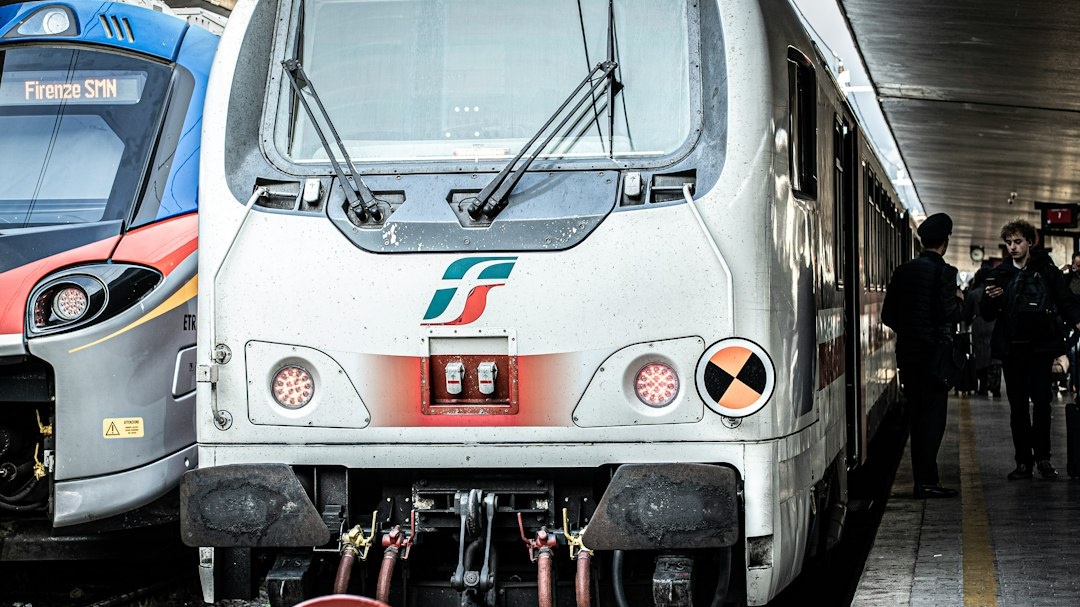
Italy’s greatest hits fit remarkably well into 10 days—provided you travel by train and resist adding “just one more” hill town. This Milan-to-Naples route covers roughly 1,007 rail kilometers, needs only seven hours of intercity travel, and produces about one-tenth of the emissions of flying the same journey.
Key Takeaways
- Book four high-speed trains early and the Milan–Naples route can cost €63.60 ($74) versus roughly €198 ($232) on flexible fares.
- The four rail journeys total about 7 hours 10 minutes, compared with 12–17 hours of airport processing and connecting flights.
- Estimated emissions are 28 kg CO₂e by train, 178 kg for a solo-driven car, and approximately 285 kg by air.
- September brings warm 24–28°C afternoons, Tuscany’s wine harvest, and lower crowds after the first school-holiday week.
- Stay near the main stations, but skip eating directly outside them—the convenience is useful; the restaurants rarely are.
Key Numbers at a Glance
The prices below use a working September 2026 exchange rate of €1=$1.17. Rail fares are representative fares displayed for Tuesday, September 15, 2026; Italian high-speed pricing is dynamic, so your exact departure may be higher.
| Metric | 10-day itinerary total |
|---|---|
| Route | Milan–Venice–Florence–Rome–Naples |
| High-speed rail distance | Approximately 1,007 km / 626 miles |
| Time aboard intercity trains | About 7 hours 10 minutes |
| Advance rail fare | €63.60 / $74 |
| Flexible rail fare | Approximately €198 / $232 |
| Estimated train emissions | 28 kg CO₂e per passenger |
| Driving distance | Approximately 1,045 km / 649 miles |
| Recommended allocation | 2 nights each in Milan, Venice, Florence and Rome; 1 night in Naples |
| Typical September weather | 24–28°C days; 15–19°C nights |
Train Fares, Travel Times and Booking Strategy
Italy’s high-speed network is the reason this itinerary works. Trenitalia’s Frecciarossa and private operator Italo both run city-center to city-center, usually with assigned seats, power sockets and usable mobile data coverage.
Book through Trenitalia or Italo, not an unidentified reseller. Trainline is convenient for comparing operators, but direct booking makes schedule changes and refunds easier.
| Route | Rail distance | Fastest typical time | Advance fare, Sept. 2026 | Flexible/base fare, Sept. 2026 |
|---|---|---|---|---|
| Milano Centrale–Venezia Santa Lucia | 267 km | 2 hr 15 min | €19.90 / $23 | €52 / $61 |
| Venezia Santa Lucia–Firenze S. M. Novella | 254 km | 2 hr 13 min | €18.90 / $22 | €48 / $56 |
| Firenze S. M. Novella–Roma Termini | 261 km | 1 hr 32 min | €14.90 / $17 | €50 / $59 |
| Roma Termini–Napoli Centrale | 225 km | 1 hr 10 min | €9.90 / $12 | €48 / $56 |
| Total | 1,007 km | 7 hr 10 min | €63.60 / $74 | €198 / $232 |
The cheapest fares usually appear between four and six months before departure and become nonrefundable or changeable only with a fee. If your flight lands that morning, do not attach a €19.90 nonrefundable train to it; buy a flexible ticket or spend the first night in your arrival city.
For the other departures, aim for trains between 9:00 and 10:30 a.m. Checkout is usually 10:00 or 11:00, and arriving around lunch lets you leave bags at the next hotel before sightseeing.
Which ticket should you choose?
- Choose the cheapest Economy or low-cost fare if your hotels and dates are fixed.
- Choose a semi-flexible fare if you may alter departure time but will not change cities.
- Choose Base or Flex after an arriving flight, especially at Milan Malpensa or Rome Fiumicino.
- Choose Italo Prima or Trenitalia Business only when the premium is under €15; the standard seats are already comfortable.
- Skip a Eurail pass for this itinerary unless it is part of a longer European trip—four advance tickets are generally cheaper, and passholder reservations still cost extra.
Train vs Flying vs Driving: Cost, Time and CO₂
Flying looks fast only if you compare scheduled air time with train time. Milan–Venice and Venice–Florence frequently require a connection or an awkward indirect routing, while every train here links central stations directly.
The emissions estimates use approximately 28 g CO₂e per passenger-kilometer for Italian electric intercity rail, 170 g per vehicle-kilometer for a medium petrol car, and short-haul economy-flight factors including non-CO₂ altitude effects. They are planning estimates, not personalized carbon audits.
| Transport for full route | Estimated Sept. 2026 cost | Practical total time | Estimated CO₂e | Main drawback |
|---|---|---|---|---|
| High-speed train | €63.60 advance; €198 flexible | 7 hr 10 min aboard; about 10 hr including station transfers | 28 kg per passenger | Cheapest fares lock you to a specific train |
| Flights and airport transfers | €280–€520 per person | 12–17 hr across four sectors | About 285 kg per passenger | Indirect routes, security queues and airport transfers |
| Rental car, solo | €520–€760 total | 11 hr 40 min driving; realistically 15+ hr | About 178 kg | ZTL fines, parking and one-way fee |
| Rental car, two people sharing | €260–€380 per person | Same 15+ hr practical time | About 89 kg per person | Still cannot use the car conveniently in historic centers |
A one-way rental typically includes €90–€150 base rental, €200–€300 one-way or city-location surcharges, around €120 fuel, €70–€85 tolls and at least €160 in parking. One accidental limited-traffic-zone violation can add €80–€100 before the rental company’s administration charge.
My verdict: take the train. Choose a car only if you replace Venice and central Florence with rural Tuscany, the Dolomites or small villages poorly served by rail.
September is excellent for that kind of alpine detour: temperatures are cooler, summer crowds have thinned, and mountain accommodation can be better value. If you have four extra days, see this detailed September Dolomites via ferrata plan; do not attempt to squeeze it into these 10 days.
The 10-Day Milan-to-Naples Itinerary
Day 1: Arrive in Milan and Walk the Historic Center
From Malpensa Airport, the Malpensa Express reaches Milano Centrale in about 51 minutes and costs €15 ($18). A taxi has a fixed fare of approximately €114 and takes 50–70 minutes, so rail wins unless four people are sharing heavy luggage.
After checking in, walk from Piazza del Duomo through Galleria Vittorio Emanuele II to Brera. Milan Cathedral is generally open daily from 8:00 a.m. to 7:00 p.m.; cathedral-plus-rooftop tickets start around €22 by stairs or €26 by lift through the official Duomo website.
Skip the restaurants inside the Galleria. Eat saffron risotto and ossobuco at Ratanà, where mains cost roughly €24–€32, or book Trippa several weeks ahead for its €16 tripe and €15 vitello tonnato.
Day 2: The Last Supper, Brera and Navigli
Reserve Leonardo da Vinci’s Last Supper as soon as tickets are released through the official ticket portal. Standard admission is about €15 plus a €2 booking fee, with timed 15-minute visits; the museum normally opens Tuesday–Sunday, 8:15 a.m.–7:00 p.m., and closes Monday.
Pair it with Castello Sforzesco, whose courtyards are free, and the Pinacoteca di Brera, generally open Tuesday–Sunday from 8:30 a.m. to 7:15 p.m. Brera admission is approximately €15, compared with €32–€60 for many guided Last Supper packages.
Finish beside the Navigli canals, but skip the giant low-quality aperitivo buffets. Order cocktails at Iter for about €12–€14 and dinner at El Brellin, where pasta dishes run €16–€22.
Day 3: Milan to Venice
Take a direct train from Milano Centrale to Venezia Santa Lucia, ideally around 9:15 a.m. The trip takes approximately 2 hours 15 minutes and starts at €19.90, versus 3 hours or more by car before parking in Mestre or Piazzale Roma.
Because Santa Lucia station opens directly onto the Grand Canal, your arrival is one of Europe’s best station exits. A single ACTV vaporetto ride costs €9.50 and lasts 75 minutes; a 48-hour pass costs €35, so the pass pays off after four journeys.
Spend the afternoon in Cannaregio and the Jewish Ghetto rather than joining the midday crush around San Marco. Have cicchetti at Cantina Aziende Agricole or Al Timon: small plates cost around €2–€4, compared with €25-plus tourist-menu mains near the Rialto Bridge.
Day 4: St. Mark’s, the Doge’s Palace and Quiet Venice
Book the first available entry for St. Mark’s Basilica, generally open Monday–Saturday from 9:30 a.m. to 5:15 p.m. and Sunday from 2:00 p.m. The basilica ticket starts around €6; the Pala d’Oro and museum cost extra through the official basilica website.
The Doge’s Palace normally opens from 9:00 a.m. to 7:00 p.m. in September, with last entry around 6:00 p.m. A standard museum ticket costs approximately €30, while the more revealing Secret Itineraries tour is usually €32–€35.
After lunch, skip a €90 daytime gondola unless it is a personal bucket-list item. Take the €2 traghetto across the Grand Canal, then walk through Dorsoduro to the Zattere and eat seafood at Osteria ai 4 Feri.
Day 5: Venice to Florence
A direct Venezia Santa Lucia–Firenze Santa Maria Novella train takes about 2 hours 13 minutes and can cost €18.90 booked early. The station is a 10-minute walk from the Duomo, eliminating the €25–€35 taxi transfer associated with Florence Airport.
Reserve Brunelleschi’s Dome before arriving. The Brunelleschi Pass costs about €30 and includes the dome, bell tower, baptistery and cathedral museum; the 463-step dome climb uses timed entry and has no elevator.
For sunset, walk to San Miniato al Monte rather than stopping in packed Piazzale Michelangelo. The extra 10-minute climb produces a quieter view for €0, compared with €18 cocktails at the central rooftop bars.
Eat at Trattoria Cammillo for ribollita and roast meats, or book Il Santo Bevitore for modern Tuscan cooking. Skip oversized bistecca portions unless sharing: Florentine steak is commonly priced by weight at €55–€75 per kilogram.
Day 6: Uffizi, Oltrarno and September Wine
The Uffizi Gallery is generally open Tuesday–Sunday, 8:15 a.m.–6:30 p.m., and closed Monday. September high-season admission is approximately €25 plus a €4 reservation fee, while early-morning slots are far calmer than 11:00 a.m. entries.
Spend the afternoon across the Arno in Santo Spirito, visiting artisan workshops rather than buying mass-produced leather near San Lorenzo. Gelato at Sbrino costs around €3.50, versus €7–€10 for photogenic mounds near the Duomo.
September overlaps Tuscany’s grape harvest, but a proper Chianti trip takes six to eight hours. On a 10-day first visit, skip the rushed half-day bus tour and book a Florence wine bar tasting at Enoteca Pitti Gola e Cantina, where tasting flights start around €25.
Day 7: Florence to Rome
Take a 9:30 a.m. train from Florence to Roma Termini. High-speed services cover the 261 km in about 1 hour 32 minutes for as little as €14.90; driving takes around three hours before traffic and parking.
Use the afternoon for the Pantheon, Piazza Navona and Trevi Fountain. Pantheon admission costs €5 and official hours are usually 9:00 a.m.–7:00 p.m.; reserve online to avoid the cash-ticket line.
Rome’s Metro and buses cost €1.50 per 100-minute ticket, compared with roughly €12–€18 for a central taxi ride. Contactless tap-to-pay works at Metro gates, but tap separately for each passenger.
For dinner, skip the laminated menus around Piazza Navona. Book Armando al Pantheon for carbonara at about €16, or try Cesare al Casaletto, reached by tram, for excellent cacio e pepe and fried starters.
Day 8: Colosseum and the Vatican
Do not schedule the Colosseum and Vatican Museums back-to-back unless you enjoy museum fatigue. Visit the Colosseum, Roman Forum and Palatine Hill in the morning, then spend late afternoon around St. Peter’s Square and Trastevere.
Standard Colosseum–Forum admission starts at €18 through the official Colosseum ticket site. September hours generally extend from around 8:30 a.m. to 7:00 p.m., though final entry is earlier.
If the Sistine Chapel is essential, reverse the day and book the Vatican Museums for 8:00 a.m. They normally open Monday–Saturday from 8:00 a.m. to 8:00 p.m.; online admission costs approximately €20 plus a €5 reservation charge.
Stay near Termini for transport rather than atmosphere, or choose Monti for better evening dining. Compare centrally located hotels in Rome, but avoid rooms directly facing Via Giolitti because street and tram noise can continue late.
Day 9: Rome to Naples
Frecciarossa and Italo trains cover Roma Termini–Napoli Centrale in about 1 hour 10 minutes, with advance fares from €9.90. Driving takes at least 2 hours 20 minutes and deposits you in some of Italy’s most stressful traffic.
Walk through Spaccanapoli, visit the Cappella Sansevero and see the Veiled Christ. Timed admission is approximately €12 plus a booking fee, and opening hours are generally 9:00 a.m.–7:00 p.m., Wednesday–Monday; Tuesday is usually closed.
For pizza, my pick is 50 Kalò, where classic pizzas cost roughly €8–€12. L’Antica Pizzeria da Michele is historic and cheap at around €6–€7, but the queue can exceed an hour—skip it if your Naples time is limited.
Day 10: Pompeii or Naples Archaeology
Choose Pompeii if the weather is dry. The Circumvesuviana train from Napoli Piazza Garibaldi to Pompei Scavi takes 35–40 minutes and costs about €3.80 each way, versus approximately €15 one way on the more comfortable Campania Express.
Pompeii usually opens from 9:00 a.m. to 7:00 p.m. in September, with final entry around 5:30 p.m. Standard admission is €20 through the official Pompeii website; allow at least four hours and carry water because shade is limited.
If temperatures approach 30°C or rain is forecast, visit Naples’ National Archaeological Museum instead. Admission is about €18, and seeing Pompeii’s mosaics indoors for three hours is more rewarding than racing around the ruins in bad weather.
Where to Stay: Station Convenience Without Station-Block Misery
September hotel pricing in Italy does not always behave like classic shoulder season. Leisure crowds drop after early September, but Milan Fashion Week, Venice events and Tuscany’s harvest can keep rooms expensive.
| City | Recommended hotel | Typical Sept. 2026 double | Station access |
|---|---|---|---|
| Milan | Hotel Berna | €165–€195 | 5-minute walk from Centrale |
| Venice | Hotel Abbazia | €180–€220 | 4-minute walk from Santa Lucia |
| Florence | Hotel Alba Palace | €150–€185 | 6-minute walk from S. M. Novella |
| Rome | Hotel Canada | €170–€210 | 9-minute walk from Termini |
| Naples | UNAHOTELS Napoli | €120–€155 | 5-minute walk from Centrale |
These prices generally exclude city tax, which varies by city and hotel category. Budget approximately €4–€10 per person per night, payable separately even when the room is prepaid.
Costed 10-Day Budget
This sample budget assumes one traveler occupying a midrange double room alone, booking the cheapest high-speed fares and eating one restaurant dinner daily. A couple sharing rooms saves roughly €735 per person.
| Expense | Solo traveler | Per person, couple sharing |
|---|---|---|
| 9 hotel nights | €1,470 | €735 |
| Four high-speed trains | €63.60 | €63.60 |
| Local transport and airport transfer | €85 | €85 |
| Food and drinks, €55 daily | €550 | €550 |
| Main attractions | €170 | €170 |
| Estimated city taxes | €58 | €58 |
| Total | €2,396.60 / $2,804 | €1,661.60 / $1,944 |
Add €200–€350 for premium dining, guided Vatican or Pompeii tours, and flexible train tickets. International airfare is excluded because prices vary drastically by departure city.
Apps and Practical Tech That Actually Help
Install both Trenitalia and Italo before departure. Save tickets to Apple Wallet or Google Wallet because station Wi-Fi is inconsistent and underground platforms can have poor reception.
- Trenitalia: Frecciarossa tickets, platform updates and regional train validation.
- Italo: Italo ticket management and delay notifications.
- Google Maps: walking routes and offline city maps.
- Citymapper: especially useful for Milan and Rome public transport.
- MooneyGo: local transit tickets in several Italian cities.
- Airalo: a practical eSIM option if your home plan charges roaming fees.
Download offline maps for all five cities while on hotel Wi-Fi. A 10 GB eSIM is usually enough for maps, messaging and ticket apps over 10 days; constant video uploads can consume that in two or three days.
Common Mistakes to Avoid
- Booking the wrong Venice station. Venezia Santa Lucia is on the islands; Venezia Mestre is on the mainland and requires another train or bus.
- Boarding a high-speed train without the correct departure. Frecciarossa and Italo tickets are train-specific, unlike flexible urban transit.
- Overpacking. A 10–12 kg carry-on is manageable; a 25 kg suitcase becomes miserable on cobbles, bridges and train steps.
- Ignoring Monday closures. The Uffizi and Last Supper close Monday, while Naples’ Cappella Sansevero commonly closes Tuesday.
- Trying to add Cinque Terre, Bologna and the Amalfi Coast. Ten days already means five hotels; extra stops turn the trip into luggage management.
- Trusting unofficial museum sellers. A €25 official ticket can become a €70 “hosted entry” with little added value.
- Renting a car for city centers. Florence, Rome and Naples have restricted ZTL areas monitored by cameras; fines can arrive months later.
Is September 2026 the Right Time?
Yes—particularly from the second week onward. Daytime temperatures are generally warm enough for outdoor dinners, but Rome and Naples can still reach 29–30°C, so book major archaeological sites for morning.
September’s advantage over July is not empty streets; Venice, Florence and Rome remain popular. The real gain is fewer family groups, more tolerable afternoons and easier restaurant reservations, while Tuscany’s grape harvest adds seasonal energy.
Avoid late September in Milan if your priority is cheap lodging, because Fashion Week can push ordinary €170 rooms above €300. In the rest of the route, Sunday-to-Thursday rooms are commonly €20–€60 cheaper than Friday and Saturday stays.
Final Verdict
This is the rare multi-city European itinerary where the lowest-carbon option is also the fastest, cheapest and least stressful. Four advance train tickets can move you from Milan to Naples for €63.60, while keeping every hotel within walking distance of the historic center.
Book the Last Supper, Uffizi, Colosseum, Vatican and Pompeii first; fit train times around those reservations, then reserve hotels with free cancellation. Save this itinerary, download the rail apps and start checking September fares four to six months before departure.
Frequently Asked Questions
How much does a 10-day Milan-to-Naples train itinerary cost?
Budget approximately €2,397 ($2,804) for a solo traveler using midrange hotels, or €1,662 ($1,944) per person for a couple sharing rooms. The four high-speed trains can cost as little as €63.60 when booked early.
How far in advance should I book Italian trains for September?
Start checking four to six months ahead, although schedules may be loaded in stages. Book cheap fixed tickets once your hotels are confirmed, but use a flexible fare after an arriving flight.
Is it better to travel around Italy by train or car?
Train is better for Milan, Venice, Florence, Rome and Naples: it takes about 7 hours 10 minutes aboard trains and emits roughly 28 kg CO₂e. A rental car needs at least 15 practical hours, costs €520–€760 and creates parking and ZTL problems.
Is September a good month for this Italy itinerary?
September is one of the best months, with typical daytime temperatures of 24–28°C, Tuscany’s wine harvest and fewer families after school resumes. Avoid Milan Fashion Week dates if you want lower hotel prices.

About the Author: Tomáš Bzirský
Founder and editor of Distratech. Based in the Czech Republic, travelling regularly from Central Europe. Writes practical travel guides and travel-tech comparisons (eSIM, apps, airports) in six languages.