'/%3E%3Cpath%20fill='%23b2b2b2'%20d='M241%20382q0%2016%2017%2026%2017%2011%2042%2011t42-11q16-11%2017-26V269H241'/%3E%3Cpath%20fill='%239f7e00'%20d='M241%20379q0%2014%208%2023%209%209%2021%209%2014%200%2021-9%209-9%209-23V269h-59'/%3E%3Cpath%20d='M241%20339v-70h59v110q0%2014-9%2023l-6%205v-68h-15v72q-8%200-14-4v-68zm59%2040c0%2022%2015%2032%2029%2032%2021%200%2030-18%2030-32v-40h-59'/%3E%3Cpath%20fill='%239f7e00'%20d='M266%20277v5h2v12h-3v-5h2v-5h-9v5h2v5h-4v9h3v18h-5v10h34v-10h-5v-18h3v-9h-4v-5h2v-5h-9v5h2v5h-3v-12h2v-5zm42%20101q0%2010%206%2017%206%206%2015%207%2010-1%2016-7%206-7%206-17v-29h-43'/%3E%3Ccircle%20fill='%230044ad'%20cx='329.5'%20cy='372'%20r='6'/%3E%3Cellipse%20fill='%230044ad'%20cx='300'%20cy='340'%20rx='16'%20ry='21'/%3E%3C/svg%3E)
'/%3E%3C/svg%3E)


'/%3E%3C/g%3E%3Cuse%20href='%23c'%20transform='matrix(-1%200%200%201%20720%200)'/%3E%3C/svg%3E)


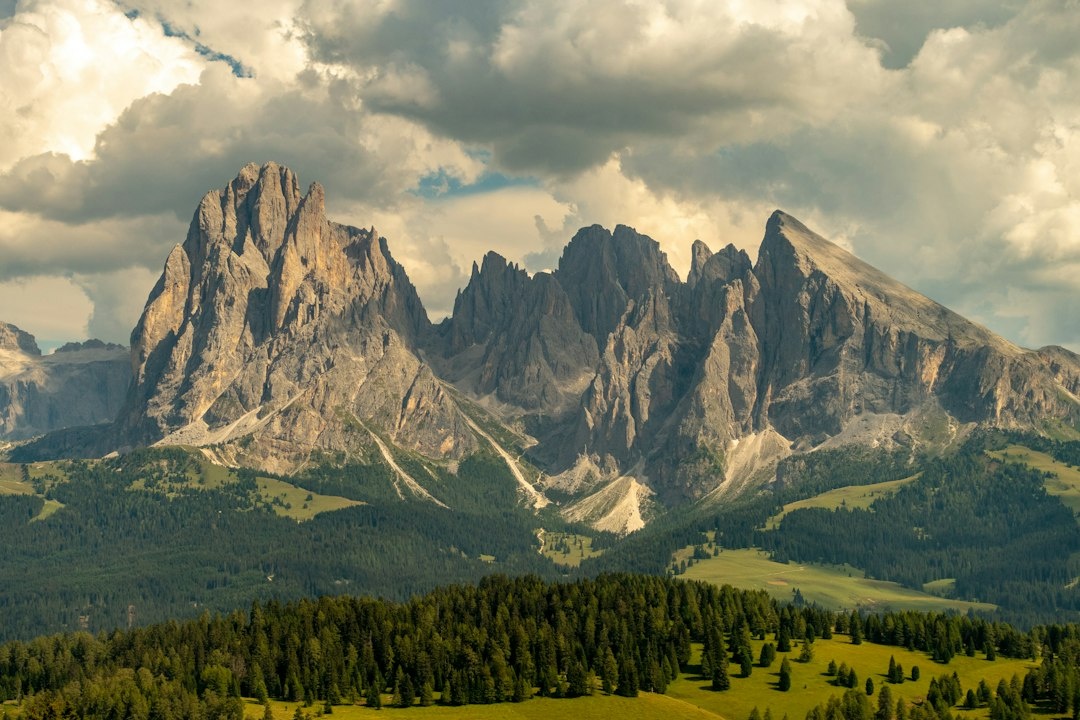
September is the Dolomites’ sweet spot: cooler climbing weather, clearer mornings, fewer families on the cables and room rates often 15–25% below August. For a couple over 60, the winning strategy is not chasing the hardest route—it is using Gran Cir and Sass de Putia to test balance, exposure and recovery before committing to a guided Grade B/C ferrata.
Key Takeaways
- Start with Gran Cir, an approximately 3.5-kilometer Grade A loop taking a cautious first-timer 3–4 hours.
- Sass de Putia is technically easy at Grade A/B but physically harder: allow 6–7 hours for roughly 13 kilometers and 950 meters of ascent.
- A private guide typically costs €430–€560 per day for two people in September 2026, often including technical equipment.
- Keep 48 hours between major ferrata days and buy insurance explicitly covering via ferrata and mountain rescue above 3,000 meters.
- A realistic seven-night trip for two costs about €2,600–€3,400, excluding flights and rental-car excess insurance.
Key Numbers at a Glance
| Item | September 2026 planning figure | Why it matters |
|---|---|---|
| Best trip window | September 5–20 | Most lifts and huts remain open, with fewer summer crowds |
| Typical valley temperature | 8–20°C | Comfortable for climbing, but summits can approach freezing |
| Sunset | About 19:45 on September 5; 19:10 on September 20 | Start long routes by 08:00 |
| Gran Cir | 3.5 km, 450 m ascent, 3–4 hours, Grade A | Best independent introduction |
| Sass de Putia | About 13 km, 950 m ascent, 6–7 hours, Grade A/B | Easy cables but substantially greater endurance demand |
| Private guide for two | €430–€560 per day | Worth paying for before a Grade B/C route |
| Ferrata kit rental | €18–€30 per person per day | Check that helmet, harness and EN 958 lanyard are included |
| Emergency number | 112 | Works throughout Italy; install the 112 Where Are U app |
Distances and timings are conservative estimates for active adults over 60 taking photographs and managing transitions carefully. A younger guidebook pace may list Gran Cir at two hours, but that is the wrong benchmark for a first ferrata.
Step 1: Decide Which Route Fits You as a Couple
Dolomites ferratas are commonly described using the Austrian A–F scale, although Italian sources may use “facile,” “media” or numbered difficulty systems. Grade A means protected walking and straightforward scrambling; B adds steeper cable sections, more arm involvement and greater exposure.
Technical grade is only half the story. Sass de Putia is no harder than A/B on its protected section, yet its 950 meters of ascent make it roughly twice as demanding as Gran Cir.
| Route | Grade | Distance / ascent | Couple-over-60 time | Best for |
|---|---|---|---|---|
| Gran Cir | A | About 3.5 km / 450 m | 3–4 hours | First exposure test and equipment practice |
| Sass de Putia normal route | A/B | About 13 km / 950 m | 6–7 hours | Fit walkers comfortable with loose terrain |
| Piccolo Cir | B/C | About 4 km / 500 m | 3.5–4.5 hours | First guided “proper” ferrata |
| Brigata Tridentina | B/C, with harder passages | About 7 km / 650 m | 5–7 hours | Confident climbers wanting ladders and a suspension bridge |
| Piz da Lech | B/C | About 5 km / 550 m from upper lift area | 4–5 hours | A scenic guided progression with lift-assisted access |
A simple decision framework
- Choose Gran Cir first if both partners can walk uphill for three hours, climb a household ladder calmly and tolerate an exposed viewpoint.
- Choose Sass de Putia second if you recently completed a 12–15-kilometer hike with at least 800 meters of ascent and recovered within 48 hours.
- Choose guided Piccolo Cir if Gran Cir felt comfortable and you want steeper rock without committing to a full endurance day.
- Choose Piz da Lech if knees are stronger uphill than downhill; lift access reduces some approach mileage, although the ferrata remains exposed.
- Choose Brigata Tridentina only if neither partner froze on exposed terrain and both can climb repeated ladders without pulling excessively on the cable.
Skip Brigata Tridentina as your first-ever ferrata. Its famous bridge looks friendly on Instagram, but the route is longer, busier and more committing than Gran Cir, with fewer comfortable places to manage fear or fatigue.
One partner’s limit becomes the couple’s limit. If one person feels steady on Grade B while the other becomes anxious on Grade A, book a guide and stay at Grade A/B rather than splitting up.
Step 2: Choose the Right September Week and Base
Early to mid-September is better than the final week. Daylight is longer, high huts are more likely to be staffed, and seasonal lifts have not started closing; by late September, a cold front can leave north-facing cables icy until noon.
Mornings commonly begin near 8–10°C in Selva di Val Gardena and may reach 18–20°C in the afternoon. At 2,500 meters, expect conditions 8–12°C colder than the valley, plus wind chill.
Where to stay
Selva di Val Gardena is the best single base for Gran Cir, Piccolo Cir and Brigata Tridentina. Browse hotels in Selva di Val Gardena, but prioritize an included South Tyrol Guest Pass, breakfast from 07:00 and free parking over a spa you may not use.
Hotel Garni Morene is a practical midrange choice, often around €155–€210 per double room with breakfast in September 2026. Hotel Continental is more comfortable and closer to Dantercepies, but typical rates of €230–€310 make sense only if you value the wellness area for recovery.
Corvara is better for Piz da Lech and for meeting Alta Badia guides. It is approximately 11 kilometers from Passo Gardena, but the drive can take 25–35 minutes; Selva to Corvara buses require about 35–50 minutes depending on the connection.
Sass de Putia is the outlier. From Selva, Passo delle Erbe is roughly 55 kilometers and 75–90 minutes by car, versus more than two hours by infrequent buses, so use a rental car or spend one night at Ütia de Börz.
What September shoulder season actually saves
A comparable Selva double room may cost €240–€350 during early August but €170–€260 in mid-September, a potential 20–30% saving. The pricing flip seen in popular US fall destinations has not erased the Dolomites’ shoulder-season advantage, although mountain-view rooms increasingly command a premium.
September is arguably the best month for most Dolomites trips, but not because everything is cheaper. Guides, cable cars and restaurant menus generally cost the same as in August; the savings come mainly from lodging, flights and avoiding an extra night caused by traffic.
Step 3: Build a Seven-Day Plan With Recovery Days
Do not schedule Gran Cir on Monday, Sass de Putia on Tuesday and Tridentina on Wednesday. Adults over 60 can be exceptionally fit, but tendon recovery and downhill muscle soreness usually lag behind cardiovascular recovery.
This plan inserts at least 48 hours between the two biggest efforts. It also preserves two weather-flex days, which is more valuable than a rigid booking when September cold fronts arrive.
- Day 1 — Arrive in Selva: Walk 3 kilometers on the Vallunga path, collect rental gear and hydrate. Keep the day below 200 meters of ascent.
- Day 2 — Skills morning: Complete a two- to three-hour guided practice session or climbing-gym refresher covering clipping, spacing and emergency lowering.
- Day 3 — Gran Cir: Start from Passo Gardena by 08:30 and allow four hours, including the summit and careful descent.
- Day 4 — Recovery: Take an easy 5-kilometer walk, use the hotel sauna briefly and avoid a “bonus” 700-meter hike.
- Day 5 — Guided Piccolo Cir or Piz da Lech: Choose according to confidence, weather and lift operation.
- Day 6 — Recovery or weather buffer: Drive to Passo delle Erbe, stay nearby and complete only a short valley walk.
- Day 7 — Sass de Putia: Begin by 07:30–08:00, carry lunch and turn back if the summit ridge is wet, icy or windy.
- Day 8 — Departure: Avoid booking a tight morning flight; descending stairs with delayed muscle soreness is unpleasant, not heroic.
If you have only four days, do Gran Cir plus one guided route and omit Sass de Putia. Two well-executed ferratas beat three routes completed while tired.
Step 4: Complete Gran Cir Safely
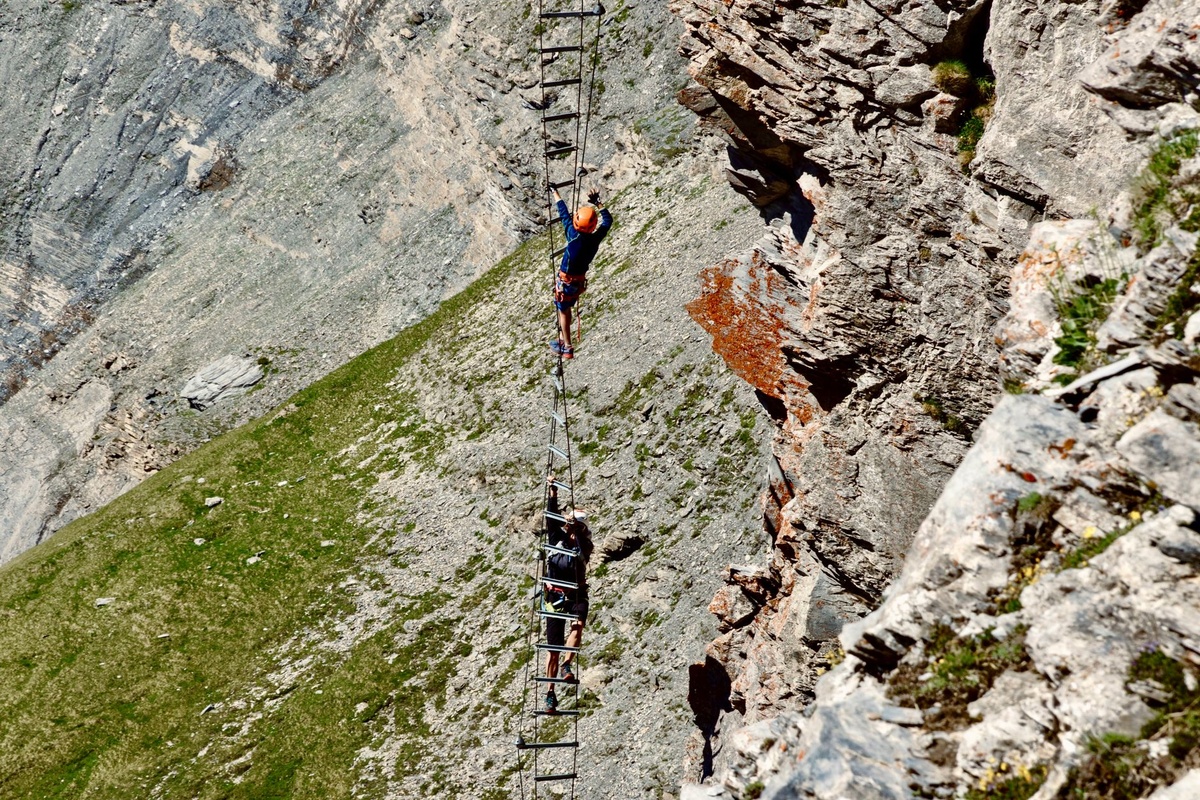
Gran Cir rises above Passo Gardena and is often described as an easy ferrata or an aided mountain path. That distinction does not reduce its exposure: the protected sections are technically simple, but a slip away from the cable could have serious consequences.
Route logistics
From Passo Gardena at approximately 2,121 meters, follow signs toward Gran Cir and the upper ski terrain. The summit sits at 2,592 meters, giving roughly 450–470 meters of total ascent depending on your exact start.
The outing is about 3.5 kilometers return and normally takes 2–2.5 hours for fast hikers. First-time couples should budget 3–4 hours, compared with 6–7 hours for Sass de Putia.
Bus 473 connects Selva with Passo Gardena in roughly 20–30 minutes during the seasonal timetable. A standard ticket is usually about €3–€5 each way, while many participating accommodations provide a complimentary Südtirol Guest Pass; a taxi is approximately €35–€50 each way.
Driving gives more flexibility but Passo Gardena parking fills quickly on sunny weekends. Allow around €8–€15 for a day, carry a card plus coins, and arrive before 08:00.
How to move on the cable
Clip both carabiners before entering protected terrain. At an anchor, move one carabiner at a time so one remains attached; never unclip both simultaneously for a photograph.
Maintain at least one cable section between partners. If the upper person falls, sharing the same section can pull the lower person off as well.
Use legs rather than hauling on the cable. Arms should provide balance, not propulsion—if forearms are burning on Gran Cir, stop and reconsider a Grade B/C route.
Descend slowly because polished limestone and loose gravel are Gran Cir’s main hazards. Trekking poles help on ordinary trail sections but must be folded and secured before cables or scrambling.
Step 5: Treat Sass de Putia as a Mountain Day, Not an Easy Ferrata
Sass de Putia, also called Peitlerkofel, reaches 2,875 meters. Its short protected section is only around Grade A/B, but the full circuit includes a long approach, a steep final climb and almost 1,000 meters of ascent.
Start from Passo delle Erbe/Würzjoch at approximately 1,987 meters. Day parking is generally around €8–€10 in September 2026, compared with €90–€140 for a return taxi from the Val Badia area and considerably more from Selva.
Recommended direction and timing
Follow the trail toward Forcella de Putia, then climb toward the saddle between Piccolo and Grande Sass de Putia. The protected summit section contains cable, exposed rock and potentially crowded passing points.
Allow 6–7 hours for approximately 13 kilometers and 950 meters of ascent. Strong hikers may finish in five hours, but that pace leaves little margin for food, route-finding or an anxious moment on the cable.
Leave by 07:30–08:00 and aim to be off the summit section by noon. September thunderstorms are less frequent than in July, but wind and rapidly lowering cloud bases are more common.
Skip the summit if rock is wet or if the freezing level has fallen near 2,800 meters overnight. Sass de Putia’s views remain excellent from the saddle, and turning around there reduces the day by roughly 200 vertical meters.
Food and water
Carry at least 1.5 liters per person in cool weather and 2 liters on a warm day. A hut may be open near the pass, but seasonal hours and rest days make self-sufficiency safer than relying on a 13:00 lunch.
For a post-hike meal, Ütia de Börz is the obvious choice for canederli, polenta and Ladin dishes; budget €18–€28 for a main course and €5–€7 for dessert. In Selva, skip generic pizza on the main road and book Restaurant Freina for dumplings, game and a quieter dining room, where dinner for two typically runs €70–€110 before wine.
Step 6: Book the Right Guide and Guided Route
A guide is not merely a person who knows the path. For first-timers, the value lies in rope backup, movement coaching, weather judgment and spotting fatigue before a nervous partner becomes stuck.
Contact the Gardena Guides for Gran Cir, Piccolo Cir or Tridentina, or the Alta Badia Guides for Piz da Lech and routes around Corvara. Book at least four to six weeks ahead for September weekends.
| Guide option | Typical September 2026 price | Duration | Comments |
|---|---|---|---|
| Private half-day for two | €300–€390 total | 3–4 hours | Ideal for skills training or Piccolo Cir |
| Private full day for two | €430–€560 total | 6–8 hours | Best for Tridentina, Piz da Lech or a flexible route choice |
| Group ferrata day | €120–€180 per person | 5–7 hours | Cheaper, but pace and route cannot be tailored as closely |
| Technical-kit supplement | €0–€30 per person | Full day | Confirm helmet, harness and lanyard in writing |
Ask for a guide certified by UIAGM/IFMGA, not simply a hiking leader. A full-day private booking costs perhaps €200 more than a group outing for two, but individualized pacing is worth that premium after 60.
Tell the office your ages, recent 10-kilometer hiking time, longest ascent in the past year, fear-of-heights history and any knee or shoulder limitations. “We are reasonably fit” is too vague to produce a good route match.
Step 7: Rent or Buy the Correct Gear
Every climber needs a certified climbing helmet, sit harness, via ferrata lanyard with energy absorber, gloves and suitable footwear. A normal climbing sling or homemade tether cannot replace an EN 958 ferrata set.
| Equipment | Rental per day, Sep. 2026 | Purchase price | Recommendation |
|---|---|---|---|
| Ferrata lanyard | €10–€15 | €85–€130 | Rent for one trip; buy if planning three or more days annually |
| Harness | €7–€10 | €55–€95 | Try it over hiking clothes before paying |
| Helmet | €6–€10 | €60–€110 | Do not use a cycling helmet |
| Complete set | €18–€30 | €200–€320 | Best choice for first-timers |
| Ferrata gloves | Rarely rented | €25–€45 | Buy your own for fit and hygiene |
Sport stores in Selva and Ortisei commonly rent sets, but reserve ahead and ask for the wearer’s weight range. Most modern absorbers cover approximately 40–120 kilograms including clothing and pack, but the label—not an online assumption—is authoritative.
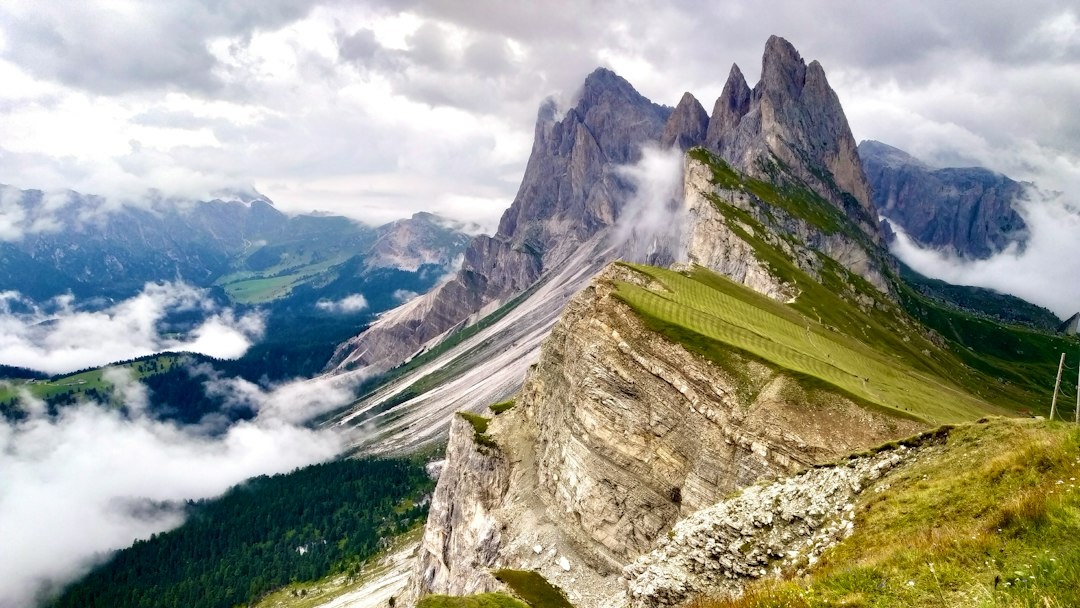
Wear stiff approach shoes or lightweight hiking boots with sticky soles. Heavy leather boots add fatigue, while soft road-running shoes give poor edging on polished limestone; an approach shoe around 350–450 grams per foot is the useful middle ground.
- Pack a waterproof shell, light insulated jacket and warm gloves even if Selva reaches 20°C.
- Carry 1.5–2 liters of water, 500–700 calories of food per person and an emergency bivy bag.
- Add a compact first-aid kit, blister dressings, sunscreen and any personal medication.
- Secure glasses and phones; do not hold a phone while clipping past anchors.
- Retire any ferrata lanyard after its energy absorber deploys, even if the fall looked minor.
Step 8: Arrange Insurance, Navigation and Emergency Tech
An EHIC or GHIC may help with medically necessary public healthcare, but it does not reliably pay for mountain rescue, helicopter evacuation or repatriation. Standard travel policies may also exclude via ferrata as “mountaineering” unless specifically listed.
Look for at least €50,000 of search-and-rescue cover, medical expenses of €1 million or more, repatriation, via ferrata by name and activity up to at least 3,000 meters. Sass de Putia reaches 2,875 meters, leaving little room under a policy capped at 2,500 meters.
Annual alpine-club rescue benefits can cost roughly €70–€120 per person, while a specialist single-trip policy for a healthy traveler aged 60–69 may cost around €55–€120 for eight days. Prices rise sharply with age and pre-existing conditions, so obtain a personalized quote rather than treating those figures as guaranteed.
Install 112 Where Are U, which can transmit your position to emergency services in supported Italian regions. Add GeoResQ for tracking and rescue coordination, plus Windy and Meteoblue to compare cloud, precipitation and freezing-level forecasts.
Download offline maps in Komoot or Outdooractive, but carry a paper Tabacco map such as sheet 07 for Alta Badia/Arabba or sheet 05 for Val Gardena and Alpe di Siusi. A phone battery can fall from 60% to nearly empty in cold wind; a 10,000mAh power bank weighing about 180–220 grams is cheap redundancy.
For long transit days, noise-cancelling headphones help without adding much pack weight; our review of travel-focused Nothing headphones covers the trade-off between audio quality and portability. Leave them at the hotel on climbing days—you need to hear partners, rockfall warnings and approaching weather.
Sample Budget for Two: Seven Nights in September 2026
| Expense | Calculation | Total |
|---|---|---|
| Midrange hotel with breakfast | 7 nights × €190 | €1,330 |
| Private guided ferrata | 1 full day for two | €500 |
| Gear rental | 2 people × 3 days × €24 | €144 |
| Rental car | 7 days × €55 | €385 |
| Fuel, tolls and parking | Trip total | €150 |
| Food beyond breakfast | €70 per day × 7 | €490 |
| Lifts and local buses | Two people | €120 |
| Specialist insurance | €85 × 2 | €170 |
| Total for two | Excluding flights | €3,289 |
A more frugal trip using guest-pass buses, a €150 room and one group ferrata can approach €2,400. A four-star hotel, automatic rental car and two private guided days can push the same week above €4,500.
Skip the expensive all-area lift pass unless you plan to ride multiple lifts every day. Gran Cir and Sass de Putia require no lift, so individual tickets or guest-pass transport usually beat a pass costing well over €100 per person.
Recovery After Each Ferrata
Eat 25–35 grams of protein within two hours, accompanied by carbohydrates and fluids. A recovery lunch of eggs, yogurt and bread works as well as a branded shake and usually costs €12–€18 rather than €5 for powder alone.
Take a 20–30-minute easy walk later that day instead of remaining completely still. Gentle movement reduces stiffness, while an aggressive two-hour “recovery hike” merely adds downhill load.
Use the next-morning stair test: descend two flights without knee pain, instability or compensating sideways. If either partner fails, replace the planned ferrata with a valley walk and reassess after another 24 hours.
A sauna may feel good, but keep it to 10–15 minutes and rehydrate afterward. Alcohol impairs sleep and hydration, so one 150-milliliter glass of Alto Adige wine is a better recovery choice than sharing a bottle.
Common First-Time Mistakes
- Trusting guidebook pace: Add 30–50% to published times until you know your speed on cables.
- Starting with Tridentina: Its Grade B/C climbing, crowds and long descent make Gran Cir a much safer first test.
- Standing too close together: Keep one cable span between climbers to prevent a fall from collecting both partners.
- Ignoring descent fitness: Sass de Putia’s cables are short, but nearly 1,000 meters of descent can punish knees for two days.
- Relying on a single weather app: Compare Meteoblue and Windy, then ask the guide office or hut about local conditions.
- Assuming every September lift runs daily: Operations can end mid-month or pause in wind, so verify the previous afternoon.
- Buying inadequate insurance: “Hiking” cover does not automatically include via ferrata, ropes or helicopter rescue.
- Pushing through relationship tension: Fear is not solved by saying “come on”; stop at a safe stance, communicate and retreat if necessary.
Final Verdict: The Best Progression for a Couple Over 60
Begin with Gran Cir, rest for a full day, then complete Piccolo Cir or Piz da Lech with a private guide. Attempt Sass de Putia only after both partners have demonstrated stable movement, good downhill recovery and comfort with exposure.
That progression costs more than tackling everything independently, but it buys better technique and a clearer understanding of your shared limits. Reserve your September lodging and guide first, keep two weather-flex days, and make the summit optional—the successful trip is the one that leaves both of you wanting another ferrata next year.
Frequently Asked Questions
Is Gran Cir suitable for a first via ferrata after 60?
Yes, provided both people are active hillwalkers and comfortable with exposed terrain. Allow 3–4 hours for its roughly 3.5 kilometers and 450 meters of ascent rather than relying on the faster two-hour guidebook time.
How difficult is the Sass de Putia via ferrata?
The protected section is only about Grade A/B, but the complete 13-kilometer route climbs roughly 950 meters and takes 6–7 hours. Endurance, loose terrain and the long descent are harder than the cable itself.
How much does a Dolomites via ferrata guide cost?
In September 2026, expect approximately €300–€390 for a private half-day or €430–€560 for a full day for two people. Group outings generally cost €120–€180 per person, sometimes including technical equipment.
Do I need special insurance for via ferrata in Italy?
Yes—choose a policy explicitly covering via ferrata, mountain rescue and helicopter evacuation to at least 3,000 meters. EHIC or GHIC coverage does not reliably pay for rescue or repatriation.
Is September a good month for via ferrata in the Dolomites?
Early to mid-September is excellent, with cooler temperatures, fewer crowds and lodging often 15–25% below August rates. Start early because daylight shortens rapidly and check for ice, cold fronts and seasonal lift closures.

About the Author: Tomáš Bzirský
Founder and editor of Distratech. Based in the Czech Republic, travelling regularly from Central Europe. Writes practical travel guides and travel-tech comparisons (eSIM, apps, airports) in six languages.