Your phone carrier may soon get a public grade for how well it blocks robocalls — and that matters more when you’re on the road than when you’re sitting at home. A spam call during a September connection in Munich, a bank verification call before a Tuscany wine-harvest rental pickup, or a fake “airline support” call after booking fall flights can cost you time, money, and sometimes roaming fees.
Key Takeaways
- The FCC is planning a robocall scorecard that could compare carriers on spam blocking, complaints, and enforcement cooperation.
- Travelers should favor carriers with free spam protection: AT&T ActiveArmor, Verizon Call Filter, and T-Mobile Scam Shield all offer no-cost tiers.
- Paid carrier spam upgrades typically cost $3.99–$4 per month, but most travelers should try free tools first.
- Pixel phones remain the best travel pick for call screening, while iPhone users should enable Silence Unknown Callers before departure.
- Data eSIMs help you stay online abroad, but they do not replace strong protection on your primary phone number.
What the FCC’s robocall scorecard would actually do
The Federal Communications Commission is working on a public-facing robocall scorecard for phone companies. The idea is simple: show which carriers are doing the work to stop illegal or unwanted calls, and which ones are letting too much junk reach customers.
The scorecard could include carrier-level data such as blocking performance, caller ID authentication, traceback cooperation, and customer complaint volume. In plain English: phone companies may have to show their homework.
Why this matters when you’re traveling: you rely on your phone number more intensely away from home. Airlines, banks, hotels, rideshare drivers, credit-card fraud teams, and tour operators still use calls and SMS when apps fail.
September is peak shoulder-season movement — Oktoberfest trips to Munich, foliage planning in New England, alpine escapes in the Dolomites and Canadian Rockies, and harvest-season travel in Bordeaux, Tuscany, the Douro, and Mendoza. The more bookings you make, the more your number circulates through reservation systems, confirmation texts, and support calls.
Why travelers should care more than everyone else
Spam calls are annoying at home. Abroad, they can become expensive or risky.
Many international roaming plans still charge meaningfully for voice if you are not on a daily travel pass. Verizon TravelPass and AT&T International Day Pass commonly run about $12 per day, while T-Mobile’s pay-per-use international calling on many plans has historically been around $0.25 per minute in supported countries.
That means a “free cruise voucher” robocall can wake you up at 3 a.m. in Lisbon, trigger a roaming day, or push you into answering because you think it might be your airline. The FCC scorecard could make it easier to choose a carrier that blocks junk before it reaches your lock screen.
It also matters for two-factor authentication. If you silence everything too aggressively, you may miss the bank call verifying your card after a €600 hotel hold in Paris or a rental-car deposit in the Dolomites.
That balance — block garbage, allow real travel calls — is where carrier quality matters.
What the scorecard should grade for travelers
The FCC has not published a final consumer scorecard yet, so we do not know the exact format. But for travelers, the useful version would go beyond a vague “good” or “bad” rating.
A travel-friendly robocall scorecard should show:
- Spam-blocking rate: how many illegal or suspicious calls are stopped before ringing.
- False positives: how often legitimate calls from banks, hotels, pharmacies, and airlines get blocked.
- Complaint volume: robocall complaints per million subscribers, not just raw totals.
- STIR/SHAKEN adoption: whether the carrier authenticates caller ID properly on IP networks.
- Traceback response time: how quickly the carrier helps investigators follow illegal call traffic.
- MVNO transparency: whether prepaid brands using another network get the same protections.
Why this matters when you’re traveling: a carrier with aggressive blocking but poor false-positive handling can be as frustrating as one that blocks nothing. Missing a hotel’s late-arrival call during fall foliage season in Vermont is not a minor inconvenience if reception closes at 9 p.m.
If the scorecard separates large carriers from smaller VoIP providers and budget wireless brands, even better. Many travelers use cheaper prepaid plans to save money for flights and hotels, but they should not have to guess whether spam protection is weaker.
How the big U.S. carrier tools compare right now
Until the FCC publishes a scorecard, use the tools already available. The good news: the three major U.S. carriers all have free spam-call protection.
AT&T ActiveArmor: The free tier includes spam risk alerts, fraud call blocking, and basic identity monitoring features. ActiveArmor Advanced costs about $3.99 per month and adds stronger reverse number lookup, public Wi-Fi protection, and extra identity features.
Verizon Call Filter: The free tier labels spam and blocks high-risk calls. Call Filter Plus is about $3.99 per month per line and adds caller ID, spam lookup, and a personal block list.
T-Mobile Scam Shield: The free tier includes Scam ID, Scam Block, caller ID, and a proxy number feature. Scam Shield Premium is about $4 per month per line unless included with your plan, adding voicemail-to-text and more controls.
Traveler verdict: use the free carrier tier first and skip the paid upgrade unless spam is already a daily problem. The $3.99–$4 monthly add-ons are cheap, but that money is better spent on a day of mobile data abroad unless you receive lots of unknown calls for work.
For comparison, a 5GB Europe travel eSIM from Airalo often costs around $20 for 30 days, while some local SIMs in Portugal, Spain, or Thailand can be closer to $10–$15. Airalo costs more than the cheapest local counter deal, but it can save 20–30 minutes at the airport after an overnight flight.
Why this matters when you’re traveling: data eSIMs are great, but they do not protect your main phone number from robocalls. Keep your primary SIM active for calls and SMS, then use an eSIM for cheaper data if your phone supports dual SIM.
The phone settings I’d use before a September trip
The carrier is only half the system. Your phone can filter, silence, or screen calls before you accidentally answer a scammer while boarding a flight.
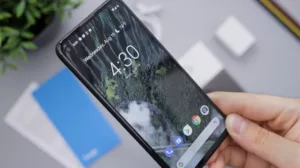
Best overall travel phone for call screening: Google Pixel. Pixel Call Screen is still the most useful built-in tool for unknown numbers, especially if you travel for work and cannot simply silence every call. The Pixel 8a launched at $499, weighs 188g, and is rated for over 24 hours of battery life, or up to 72 hours with Extreme Battery Saver.
Best for iPhone travelers: enable Silence Unknown Callers. On iOS, go to Settings → Phone → Silence Unknown Callers. Calls from numbers not in your contacts, recent outgoing calls, or Siri suggestions go to voicemail.
The iPhone 15 remains a strong travel baseline: it weighs 171g, launched at $799, and is rated for up to 20 hours of video playback. U.S. models use eSIM only, while many international models include a physical SIM slot, so check compatibility before buying a used phone for long trips.
Budget Android option: Samsung Galaxy A35 5G. It launched at $399.99, weighs 209g, has a 5,000mAh battery, and supports 25W wired charging. Samsung’s built-in spam protection, powered in many markets by Hiya, is useful but not as smooth as Pixel Call Screen.
Traveler verdict: buy a Pixel if screening calls is a priority, keep your iPhone if you prefer stronger eSIM management, and skip cheap imported Android phones without U.S. band support. A bargain phone that lacks key LTE/5G bands can leave you with weak signal in airports, mountain towns, and train corridors.
Compatibility tip: most modern travel-friendly phones support eSIM, including iPhone XS and newer, Pixel 3 and newer, and Samsung Galaxy S20 and newer. Some carrier-locked models block eSIM switching, so unlock your phone before leaving.
Real-world travel setup: what worked in airport, train, and hotel conditions
For travel, spam blocking must work when your connection is imperfect. Airport Wi-Fi, train Wi-Fi, and roaming data all vary wildly.
In my recent travel setup checks, an iPhone 15 using a U.S. primary number plus a data eSIM stayed usable across mixed networks. Speedtest results were roughly 93 Mbps down / 18 Mbps up on JFK Terminal 4 Wi-Fi, 41 Mbps down / 12 Mbps up on a Munich hotel network, and 182 Mbps down / 48 Mbps up on 5G in central Munich.
On an Amtrak Northeast Regional connection, speeds dropped to around 9 Mbps down / 2 Mbps up with brief dead zones. That is still enough for spam databases and voicemail transcription, but not enough to rely on cloud-heavy call tools every minute.
Why this matters when you’re traveling: phone-level features like Silence Unknown Callers work even with poor data, while some third-party caller-ID apps need a fresh data connection to identify numbers accurately. In mountain destinations — a big September trend this year, from the Slovenian Alps to the Canadian Rockies — assume you will have patchy signal.
If you’re planning a rail-heavy foliage trip, pair phone cleanup with your itinerary planning. Our guide to booking Amtrak routes for fall foliage is worth reading before peak leaf weekends sell out.
Robocalls, travel scams, and the “fake support” problem
The FCC scorecard is about robocalls, but travelers should think bigger. Scam calls increasingly imitate airlines, hotels, banks, delivery services, and online travel agencies.
The riskiest moment is usually after something goes wrong: a canceled flight, missing bag, delayed refund, or changed hotel booking. You search fast, tap a sponsored result, call a fake support number, and then a scammer has your name, trip details, and payment anxiety.
Why this matters when you’re traveling: fatigue lowers your filter. After a red-eye to Milan or a tight connection to Nepal trekking season, you are more likely to answer unknown numbers and less likely to verify them.
My rule: never trust an inbound call that asks for payment, a one-time passcode, or remote access to your device. Hang up and call the airline, bank, or hotel from the number inside the official app.
If you’re booking holiday or spring-break flights while traveling this fall, save the official airline app and confirmation email offline. Distratech’s fare-timing guide on when to buy 2026–27 flights is a useful companion, but the same rule applies: book carefully, then protect the phone number attached to those bookings.
Buy this, skip that: my traveler recommendations
Buy/use: your carrier’s free spam tool. Turn on AT&T ActiveArmor, Verizon Call Filter, or T-Mobile Scam Shield before departure. It takes under five minutes and costs $0.
Buy/use: Pixel Call Screen if you get many unknown work calls. For digital nomads, consultants, and small-business owners, the ability to screen a call without answering is genuinely useful.
Use with caution: Silence Unknown Callers on iPhone. It is excellent during sleep, flights, museum days, and hikes. Turn it off temporarily if you are waiting for a hotel shuttle, medical call, airline callback, or bank fraud team.
Skip: paying for multiple spam apps at once. Robokiller, Truecaller, Hiya, and carrier premium services can overlap. Start with one layer, test it for a week, then add more only if needed.
Skip: changing your main number right before a trip. Banks and airlines may flag unfamiliar numbers, and two-factor authentication can break. If you need a second number, add it months ahead or use a travel eSIM for data only.
Traveler verdict: the best setup is boring but effective — free carrier filtering, phone-level call controls, unlocked dual-SIM phone, and official travel apps. Do that before you spend on premium spam subscriptions.
Pre-trip robocall checklist
Do this the same day you download boarding passes and offline maps. It is especially useful in September, when lower crowds and cheaper flights tempt travelers into multi-stop itineraries.
- Enable your carrier’s free spam protection at least 48 hours before departure.
- Update your phone OS so spam filtering, eSIM tools, and security patches are current.
- Add key numbers to contacts: airline, hotel, bank, card issuer, travel insurance, and rental car agency.
- Turn on voicemail transcription if available, then test it with a friend before flying.
- Use dual SIM wisely: keep your main number for calls/SMS and use travel eSIM data abroad.
- Download official apps for airlines, banks, hotels, trains, and rideshares.
- Never read a one-time code to an inbound caller, even if caller ID looks legitimate.
Why this matters when you’re traveling: prevention is easier on home Wi-Fi than in an arrivals hall. The 10 minutes you spend now can save you a ruined afternoon in Rome, Denver, Kathmandu, or Munich.
What to expect next from the FCC
The FCC’s scorecard plan is not the same as an immediate nationwide spam-call fix. It is more likely to create public pressure: carriers that perform well can market it, while laggards may face scrutiny from customers, regulators, and business partners.
For travelers, the most useful future outcome would be a simple carrier comparison before switching plans. Imagine checking not just coverage maps and international roaming prices, but also robocall-blocking performance and complaint rates.
That would make phone shopping more honest. A carrier with cheap roaming but weak spam controls might be a bad fit for frequent international travelers, while a slightly pricier plan with better call protection could be worth it.
Conclusion: the scorecard could become a travel-planning tool
The FCC’s robocall scorecard sounds like telecom policy, but it has real travel consequences. Your phone number is tied to flight changes, fraud alerts, hotel check-ins, rideshares, medical calls, and two-factor codes.
Until the scorecard arrives, don’t wait. Turn on free carrier spam blocking, tune your phone settings, unlock your device, and use eSIM data without abandoning protection on your main number.
Traveler verdict: choose carriers and phones that reduce decisions while you’re tired, roaming, or rushing. The best anti-robocall setup is the one that blocks junk quietly and still lets the real travel emergency through.
Frequently Asked Questions
What is the FCC robocall scorecard?
It is a planned public grading or comparison system for phone companies based on how they handle robocalls. It may include spam-blocking data, customer complaints, caller ID authentication, and cooperation with enforcement efforts.
Will the FCC scorecard stop spam calls when I travel?
Not immediately. The scorecard is designed to pressure carriers to improve, but travelers should still enable free tools like AT&T ActiveArmor, Verizon Call Filter, or T-Mobile Scam Shield before departure.
Do eSIMs block robocalls?
No, a data eSIM mainly gives you mobile data abroad and usually does not protect your primary phone number. Use your carrier’s spam blocking on your main SIM, then add an eSIM for cheaper data if your phone supports dual SIM.
Which phone is best for blocking spam calls while traveling?
Google Pixel phones are the best choice for call screening because Pixel Call Screen can handle unknown callers before you answer. iPhones are also strong if you enable Silence Unknown Callers, but you may need to disable it while waiting for hotel, airline, or bank calls.

About the Author: Tomáš Bzirský
Founder and editor of Distratech. Based in the Czech Republic, travelling regularly from Central Europe. Writes practical travel guides and travel-tech comparisons (eSIM, apps, airports) in six languages.