'/%3E%3Cpath%20fill='%23b2b2b2'%20d='M241%20382q0%2016%2017%2026%2017%2011%2042%2011t42-11q16-11%2017-26V269H241'/%3E%3Cpath%20fill='%239f7e00'%20d='M241%20379q0%2014%208%2023%209%209%2021%209%2014%200%2021-9%209-9%209-23V269h-59'/%3E%3Cpath%20d='M241%20339v-70h59v110q0%2014-9%2023l-6%205v-68h-15v72q-8%200-14-4v-68zm59%2040c0%2022%2015%2032%2029%2032%2021%200%2030-18%2030-32v-40h-59'/%3E%3Cpath%20fill='%239f7e00'%20d='M266%20277v5h2v12h-3v-5h2v-5h-9v5h2v5h-4v9h3v18h-5v10h34v-10h-5v-18h3v-9h-4v-5h2v-5h-9v5h2v5h-3v-12h2v-5zm42%20101q0%2010%206%2017%206%206%2015%207%2010-1%2016-7%206-7%206-17v-29h-43'/%3E%3Ccircle%20fill='%230044ad'%20cx='329.5'%20cy='372'%20r='6'/%3E%3Cellipse%20fill='%230044ad'%20cx='300'%20cy='340'%20rx='16'%20ry='21'/%3E%3C/svg%3E)
'/%3E%3C/svg%3E)


'/%3E%3C/g%3E%3Cuse%20href='%23c'%20transform='matrix(-1%200%200%201%20720%200)'/%3E%3C/svg%3E)


September is shoulder-season gold in much of the world, but in Japan, Taiwan, and the Philippines it comes with a catch: warm weather, thinner tourist crowds, and cheaper long-stay rentals can overlap with peak typhoon season and active earthquake zones.
Key Takeaways
- Install local emergency apps before landing: NERV for Japan, Taiwan Weather/NCDR for Taiwan, and PHIVOLCS/PAGASA for the Philippines.
- Budget €145–€310 in September 2026 for a proper nomad safety setup: eSIM, power bank, headlamp, water, go-bag, and basic insurance.
- For housing, choose post-1981 buildings in Japan, post-2000 buildings in Taiwan, and generator-backed upper-floor units in the Philippines.
- Skip beach or riverside stays during September typhoon weeks; pick transit-rich urban bases like Tokyo, Taipei, Cebu IT Park, BGC, or Osaka.
- Keep at least €100–€200 equivalent in local cash because ATMs, card terminals, and elevator access can fail during outages.
Key Numbers at a Glance
| Item | Japan | Taiwan | Philippines |
|---|---|---|---|
| Main hazard in September | Typhoons + earthquakes | Typhoons + earthquakes | Typhoons, floods, storm surge + earthquakes |
| Emergency numbers | 119 ambulance/fire, 110 police, 118 coast guard | 119 ambulance/fire, 110 police, 112 mobile emergency | 911 national emergency, 143 Red Cross |
| Best first-time nomad base | Tokyo or Osaka | Taipei or Taichung | BGC/Makati or Cebu IT Park |
| Basic monthly eSIM, checked Sep 2026 | 10GB: about €16–€20 | 10GB: about €17–€22 | 10GB: about €18–€24 |
| Practical go-bag cost | €95–€180 | €85–€165 | €75–€150 |
| Airport-to-city benchmark | Narita to Tokyo: 60 min, €18 train vs €150 taxi | TPE to Taipei: 36 min, €4.50 MRT vs €35 taxi | NAIA to BGC: 25–90 min, €8–€18 Grab |
Prices are realistic planning estimates checked in September 2026, converted to euros for comparison. Exchange rates, storm disruptions, and holiday pricing can move them quickly.
First, Understand the September Risk Map
September is not a “don’t go” month. It is a “set yourself up properly before you get cute with island villas” month.
Japan’s typhoon season typically peaks from August to September, and the Japan Meteorological Agency tracks tropical systems several days out. Taiwan also sees its strongest typhoon risk from July through September, while the Philippines usually faces the heaviest tropical cyclone activity from July through October.
The upside is real. Flights into Tokyo, Taipei, and Manila can be 10–25% cheaper than late December, and long-stay apartments are easier to negotiate once summer families leave.
The downside is logistical. A typhoon can cancel trains in Japan 12–24 hours before landfall, close Taipei’s offices and schools for a day, or flood access roads around Manila in under two hours.
| Country | September advantage | September risk | My verdict for first-timers |
|---|---|---|---|
| Japan | Warm, fewer crowds after school holidays, reliable infrastructure | Typhoon rail suspensions; major quake potential year-round | Best overall safety infrastructure, highest costs |
| Taiwan | Excellent transit, affordable food, strong alerts | Typhoon closures, landslides outside cities | Best balance of cost, safety, and nomad convenience |
| Philippines | English widely spoken, friendly visa rhythm, lower daily costs | Flooding, power cuts, storm surge, flight disruption | Great later; tougher as a first September base |
Skip Siargao, Batanes, remote Palawan, and exposed beach bungalows in September if you are a first-time digital nomad. Do Taipei, Tokyo, Osaka, Cebu IT Park, or BGC instead.
If your work is client-facing or deadline-heavy, think like an operations manager. The same logic behind automating a nomad business so it can keep running while you travel applies here: redundancy beats vibes.
Decision Framework: Choose Japan, Taiwan, or the Philippines?
Pick your base based on infrastructure, budget, and your tolerance for disruption. The cheapest country is not always the cheapest once you add backup power, rebooked flights, and lost workdays.
Choose Japan if you want the strongest disaster systems
Japan is my top pick for nervous first-timers who can afford it. Earthquake early warnings, rail announcements, multilingual evacuation signage, and convenience-store logistics are excellent.
Tokyo is expensive, but it works. A 30-day furnished studio in eastern Tokyo or Osaka through Oakhouse, Sakura House, or Airbnb often runs €850–€1,600 in September 2026, compared with €500–€950 in Taipei and €650–€1,300 in BGC.
Skip Shinjuku party stays if sleep matters. Do Kiyosumi-Shirakawa, Ueno, Meguro, or Osaka’s Honmachi instead: calmer streets, good transit, and plenty of concrete mid-rise buildings.
Choose Taiwan if you want the best cost-safety balance
Taipei is the sweet spot. You get strong emergency alerts, excellent MRT coverage, high food safety, and furnished rentals that are usually cheaper than Tokyo by 30–45%.
Taichung is cheaper and less rainy than Taipei, but it is more car-dependent. For a first month, I would pay the extra €150–€250 and stay near Taipei MRT lines instead.
Skip mountain cabins in Jiufen, Alishan, or Hualien during active typhoon weeks. Do Da’an, Zhongshan, Songshan, Banqiao, or Taichung’s West District.
Choose the Philippines if you value English, warmth, and community
The Philippines is easy socially and hard logistically. English is widely spoken, coworking communities are friendly, and Grab is simple, but floods and power cuts are more common than in Japan or Taiwan.
For September, I would not start in a surf town unless you already know the country. Base in BGC, Makati, Ortigas, Cebu IT Park, or IT Park-adjacent Lahug, where generators and delivery logistics are better.
Skip ground-floor Airbnbs near creeks or reclamation zones. Do a 5th–12th floor apartment in a building with a generator, water tank, and 24-hour security.
Step 1: Set Up Alerts Before You Leave the Airport
Your first job is not finding ramen, bubble tea, or lechon. It is making sure your phone screams before the ground moves or the storm arrives.
Do this at the airport while you still have stable Wi-Fi. It takes 20–35 minutes, compared with losing half a day later when you are jet-lagged and trying to translate push notifications.
Japan alert setup
- NERV Disaster Prevention: Best all-around app for earthquakes, tsunami, volcanoes, rain, and typhoons. Free; premium supporter plans are around ¥250/month, about €1.50.
- Safety tips: Japan National Tourism Organization app for multilingual alerts and evacuation phrases. Free.
- NHK World Japan: Useful English-language news during typhoons. Free.
- Yahoo! Weather Japan: Great rain radar if you can navigate basic Japanese. Free.
On iPhone, enable Settings → Notifications → Emergency Alerts. On Android, turn on Wireless Emergency Alerts and keep location services active.
Tokyo Narita to central Tokyo is 60 minutes and about €18 on the Keisei Skyliner, versus 90 minutes and about €9 on the Access Express. Taxi is often €150–€220, and I would only use it if trains stop.
Taiwan alert setup
- Taiwan Weather: Official Central Weather Administration app for typhoon tracks, rain, wind, and earthquakes. Free.
- NCDR Disaster Information: National Science and Technology Center for Disaster Reduction alerts and hazard maps. Free.
- LINE: Locals use it heavily; follow city government accounts for closure notices.
- Google Maps + offline Taipei map: Download before a storm because mobile data can slow in crowded shelters.
Taipei Taoyuan Airport to Taipei Main Station takes 36–40 minutes on the Airport MRT and costs NT$160, about €4.50. A taxi takes 45–60 minutes in normal traffic and costs around NT$1,200, about €34.
If a typhoon day is declared, offices, schools, banks, and some restaurants close. 7-Eleven and FamilyMart usually stay open longer than independent cafés, but do not make convenience stores your disaster plan.
Philippines alert setup
- DOST-PHIVOLCS: Earthquake bulletins, volcano updates, and intensity reports. Free.
- PAGASA: Tropical cyclone bulletins, rainfall warnings, and storm surge updates. Free.
- HazardHunterPH: Web tool for checking flood, landslide, storm surge, and earthquake hazards by address. Free.
- Windy: Excellent storm visualization; premium is about €29.99/year.
- Grab: Not an alert app, but essential when public transport collapses during heavy rain.
NAIA to BGC is only 8–10 km, but travel time ranges from 25 minutes at 11 p.m. to 90 minutes in rain. Grab usually costs ₱500–₱1,100, about €7.50–€16.50, while a metered taxi can be cheaper but less predictable.
For mobile data, use an eSIM before landing. Airalo and Nomad both sell regional Asia plans; a 10GB/30-day country plan typically costs €16–€24 in September 2026, versus €35–€70 for airport tourist SIM counters with add-ons you probably do not need.
Step 2: Book Housing Like a Safety Inspector
Your apartment matters more than your backpack. During a serious quake or typhoon, “cute loft near the river” becomes “bad decision with exposed windows.”
The safest nomad housing is boring: mid-rise, reinforced concrete, away from flood zones, near transit, with stairs you can physically use. If the building looks Instagrammable but cannot answer basic safety questions, skip it.
Japan housing checklist
Japan’s major building-code dividing line is 1981, when the newer earthquake-resistance standard, shin-taishin, came into force. Wooden homes had further improvements around 2000.
Ask hosts: “Was the building constructed after 1981?” and “Is it reinforced concrete or steel-frame?” A post-1981 concrete apartment beats a charming old wooden machiya almost every time for a first-timer.
Use Oakhouse, Sakura House, Hmlet Japan, MetroResidences, Airbnb, and Agoda for longer stays. Oakhouse share-house rooms in Tokyo often start around ¥70,000–¥110,000/month, about €410–€650, while private studios are more commonly €900–€1,600.
Skip old wooden guesthouses in dense neighborhoods if you are staying through typhoon season. Do a 3rd–8th floor concrete apartment within 800 meters of a train station.
Taiwan housing checklist
Taiwan upgraded seismic awareness sharply after the 1999 Jiji earthquake. For first-timers, I strongly prefer buildings completed after 2000, especially in Taipei and Taichung.
Use 591.com.tw, Rent591, MyRoomAbroad, Airbnb, and Facebook groups like “Taipei Taiwan Apartment Rentals.” If you do not read Chinese, pay for a serviced apartment for the first two weeks; the €150 premium is cheaper than signing a bad lease.
A furnished Taipei room near Da’an or Zhongshan often costs NT$18,000–NT$32,000/month, about €510–€910. A private one-bedroom can run NT$35,000–NT$55,000, about €995–€1,560.
Skip basement rooms, illegal rooftop add-ons, and apartments with barred windows you cannot open. Do elevator buildings with two stairwells, visible fire extinguishers, and no obvious soft-story ground floor.
Philippines housing checklist
In the Philippines, typhoon resilience and flood exposure matter as much as earthquake design. A newer condo does not help if the street outside turns into a canal.
Before booking, check the exact address on HazardHunterPH. Avoid ground-floor units, basement parking-dependent buildings, and streets beside creeks, esteros, or low coastal roads.
Ask the host three blunt questions: “Does the generator power elevators or only lobby lights?”, “Is there a water tank?”, and “Has this street flooded in the last two years?” If they dodge the questions, book elsewhere.
BGC and Makati furnished studios often run ₱45,000–₱85,000/month, about €680–€1,285. Cebu IT Park studios are more like ₱30,000–₱60,000, about €455–€910.
| Housing choice, Sep 2026 | Typical monthly cost | Safety upside | Safety downside | Verdict |
|---|---|---|---|---|
| Tokyo post-1981 studio, 600m from station | €950–€1,600 | Excellent alerts, transit, quake standards | Higher rent, smaller space | Best if you can pay |
| Taipei post-2000 apartment near MRT | €750–€1,350 | Great transit, strong alerts, good value | Typhoon closure days | Best overall balance |
| BGC/Cebu condo with generator | €455–€1,285 | English-speaking, good nomad community | Floods, outages, traffic disruption | Good only with backup systems |
| Beach bungalow in September | €300–€900 | Pretty view | Storm surge, poor evacuation, weak internet | Skip for first month |
Step 3: Build a Go-Bag You’ll Actually Carry
A go-bag is not a prepper fantasy. It is a boring little insurance policy for the first 24 hours after evacuation, train shutdown, or a flooded street.
Keep it under 6 kg. If it is too heavy, you will leave it behind, which defeats the point.
- Water: 2 liters minimum in your room, plus a 500ml bottle in the bag.
- Power: 20,000 mAh power bank, USB-C cable, plug adapter, charged spare phone if you have one.
- Light: Headlamp, not just phone flashlight.
- Documents: Passport copy, visa page, insurance PDF, emergency contacts, local address in English and local language.
- Cash: €100–€200 equivalent in local currency, split in two places.
- Food: 1,000–1,500 calories: nuts, protein bars, instant rice, tuna pouch.
- Medical: 7 days of prescriptions, painkillers, antihistamine, electrolyte sachets, plasters.
- Weather: Packable rain jacket, dry bag, spare socks.
- Safety: Whistle, N95 masks, compact first-aid kit.
Japan’s Daiso and Don Quijote are great for cheap basics. A headlamp is around ¥1,500–¥3,000 (€9–€18), while a 20,000 mAh Anker power bank at Bic Camera is typically ¥5,000–¥8,000 (€30–€48).
In Taiwan, buy practical gear at Decathlon, Carrefour, or PX Mart. Decathlon Taiwan headlamps start around NT$299 (€8.50), while a proper rain shell is NT$1,499–NT$3,499 (€43–€100).
In the Philippines, Decathlon, Ace Hardware, and SM Department Store are easiest. A basic flashlight is ₱250–₱700 (€4–€11), but spend more on a real power bank: ₱1,800–₱3,500 (€27–€53).
| Go-bag item | Budget version | Better version | Why it matters |
|---|---|---|---|
| 20,000 mAh power bank | €25–€35 | €45–€70 Anker/Ugreen | Phone alerts die when power dies |
| Headlamp | €8–€15 | €25–€40 rechargeable | Hands-free in stairwells |
| Rain shell | €25–€45 | €70–€120 breathable | Typhoon rain defeats umbrellas |
| Water + food | €10–€18 | €25–€40 with filter | Stores empty fast before landfall |
| First-aid + meds | €15–€30 | €40–€75 with prescriptions | Clinics may close on typhoon days |
My opinion: skip the giant tactical backpack. Do a normal 20–25L daypack from Decathlon or Montbell that does not scream “foreign tourist carrying cash.”
Step 4: Buy Insurance That Covers the Boring Problems
Most nomads obsess over dramatic evacuation scenarios and forget the expensive ordinary ones: food poisoning, scooter crashes, typhoon-canceled flights, and a laptop drowned by a leaking window.
You want medical coverage first, evacuation second, gear third. Trip delay coverage is useful, but weather is often treated differently from airline-caused delays.
| Insurance option, sample checked Sep 2026 | Approx. 4-week price | Good for | Watch out |
|---|---|---|---|
| SafetyWing Nomad Insurance Essential | US$56.28 / about €52 | Budget nomads needing flexible medical cover | Read exclusions for electronics and adventure sports |
| Genki Explorer | From about €58–€75 | Medical-first coverage for long-term travelers | Not a full trip-cancellation policy |
| World Nomads Standard | About €95–€155 for 4 weeks | Activities, trip interruption, broader travel cover | Price varies heavily by residency |
| Credit-card travel insurance | €0 extra | Short trips paid on that card | Often weak for long stays and remote work gear |
If you are staying more than 30 days, do not rely only on the insurance bundled with your premium card. Many policies require round-trip tickets, home-country departure, or maximum trip lengths of 30–90 days.
For typhoon-heavy September, look for these phrases in the policy wording: “natural disaster,” “trip interruption,” “emergency medical evacuation,” “accommodation extension,” and “missed connection.”
Gear coverage is trickier. A €2,000 MacBook often requires proof of ownership, police reports within 24 hours, and may have per-item limits of €500–€1,000.
My take: buy medical-focused nomad insurance as your baseline, then protect your laptop separately with waterproof packing, cloud backups, and a local repair fund. Insurance paperwork during a blackout is not a productivity strategy.
Step 5: Plan Your Work Continuity Like a Local
Your boss or client does not care that the typhoon had a beautiful satellite spiral. They care whether the Monday deliverable lands.
Build a two-layer work plan: one for normal life, one for 48 hours of disruption. The difference is often €30–€80 in preparation versus hundreds in lost income.
Connectivity setup
Use dual connectivity: local SIM or eSIM plus apartment Wi-Fi. In Japan and Taiwan, home fiber is usually stable; in the Philippines, ask for a Speedtest screenshot taken inside the unit, not in the lobby.
Minimum remote-work speed: 25 Mbps down and 5 Mbps up for video calls. If you do client calls daily, aim for 100 Mbps down and 20 Mbps up.
In BGC and Cebu, ask whether the building has both PLDT and Globe/Converge lines. One provider plus mobile hotspot is okay; two wired options plus mobile is better.
Backup work locations with opening hours
Save three nearby work locations before a storm. One should be walkable within 1 km because taxis disappear during red rainfall warnings.
- Tokyo: FabCafe Tokyo in Shibuya is typically open 10:00–20:00; coffee about ¥600 (€3.60). Good for daytime work, not typhoon sheltering.
- Osaka: The DECK coworking near Sakaisuji-Hommachi often offers day use from about ¥2,200 (€13) and is near multiple subway lines.
- Taipei: Louisa Coffee branches usually open around 07:00–21:00; a latte is NT$75–NT$100 (€2.10–€2.85). Reliable, but crowded on rain days.
- BGC: Clock In by Ayala and Common Ground locations vary, but day passes often run ₱700–₱1,000 (€10.50–€15). Confirm generator coverage before paying.
- Cebu IT Park: The Company Cebu has coworking options and strong nomad infrastructure; day passes are often ₱600–₱900 (€9–€14).
For food during storm prep, choose boring reliability. In Tokyo, skip restaurant hunts during a typhoon approach and stock onigiri, water, and ready meals from 7-Eleven before 18:00.
In Taipei, Yong Kang Beef Noodles is excellent, usually around NT$280–NT$350 (€8–€10), but do not cross town for it during heavy rain. Eat local, charge devices, and get home before MRT crowding begins.
In BGC, Wildflour is good for a normal work brunch, but during storm warnings I prefer Marketplace by Rustan’s or Landers for practical supplies. One café latte will not help if your building pump fails.
Step 6: Know What to Do During an Earthquake
Earthquakes are fast. Your setup matters because you will not have time to Google what to do while the room is moving.
The basic rule is the same across Japan, Taiwan, and the Philippines: Drop, Cover, Hold On. Do not run outside while glass, signs, and tiles are falling.
Inside an apartment
- Drop to your hands and knees.
- Cover your head and neck under a sturdy table or beside an interior wall.
- Hold on until shaking stops.
- Turn off heat sources if safe.
- Put on shoes before walking because broken glass is common.
- Use stairs, not elevators, after shaking stops.
A high-floor Tokyo apartment may sway for 1–3 minutes during a major quake because modern buildings are designed to flex. That movement feels terrifying but is usually safer than brittle collapse.
Compare that with an old unreinforced low-rise: less sway, potentially worse structural performance. Comfort is not the same as safety.
Outside or near the coast
Move away from glass, vending machines, old walls, and overhead signs. In Japanese cities, falling exterior tiles and signs are a bigger immediate threat than the road splitting open.
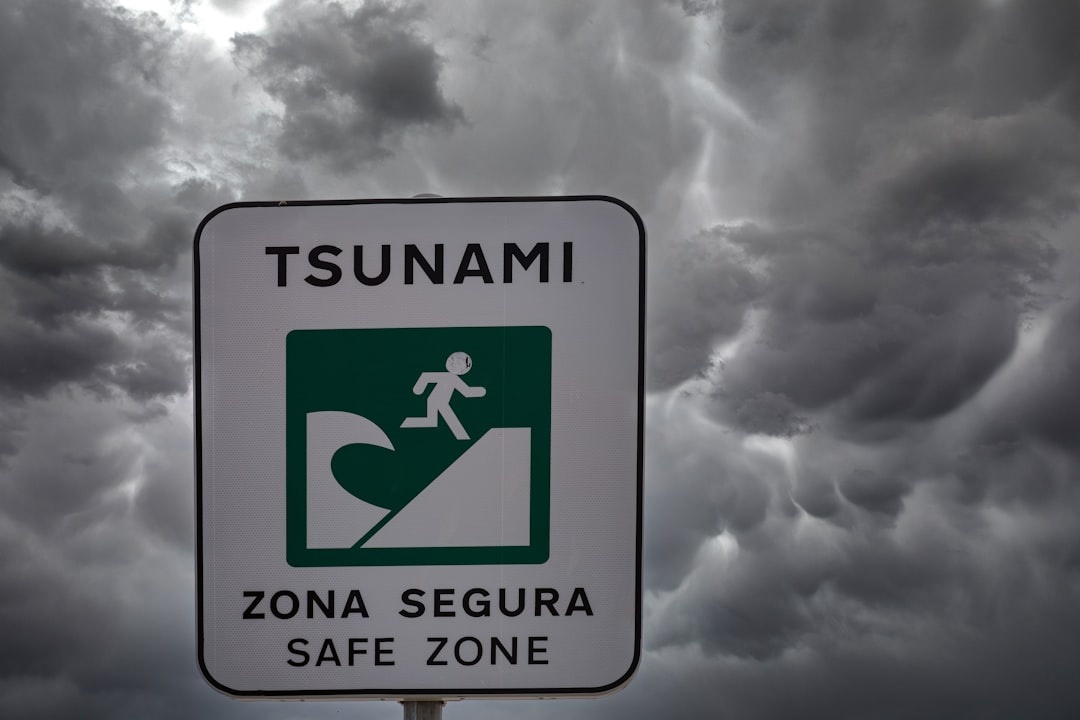
If you are near the coast and the shaking is strong or long, think tsunami. Do not wait for a perfect English alert; move to higher ground or a marked evacuation building.
As a rule of thumb, aim for at least 10 meters elevation or as far inland as local evacuation signs direct. In some flat coastal areas, vertical evacuation buildings are faster than running 1–2 km inland.
Step 7: Know What to Do Before and During a Typhoon
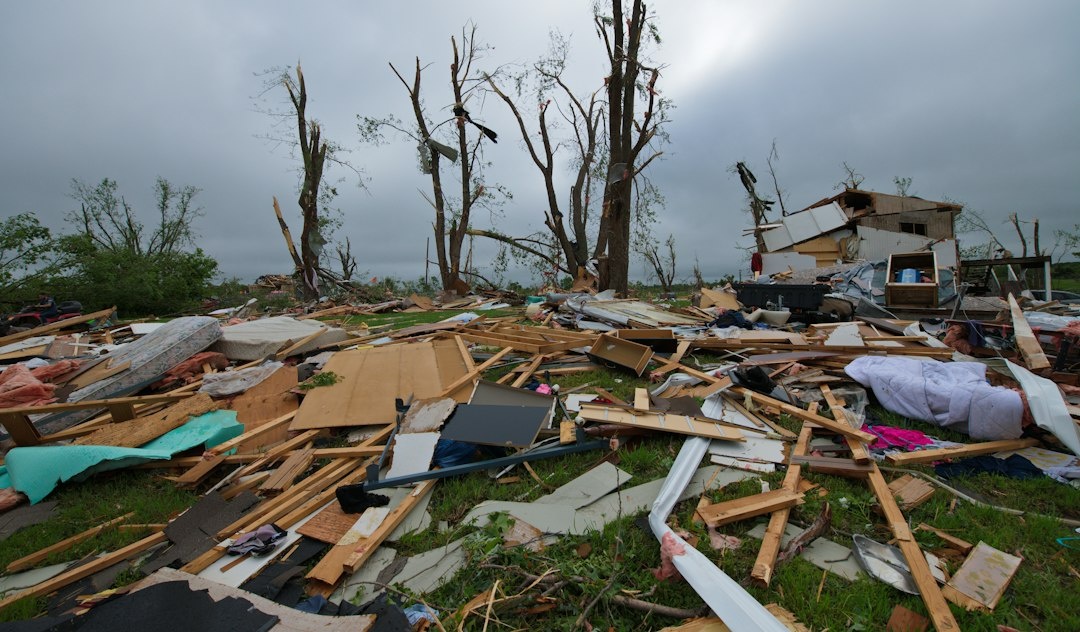
Typhoons are slower than earthquakes, which means you have no excuse for being unprepared. You usually get several days of warning and 24 hours of serious certainty.
The mistake is waiting until rain starts. By then, bottled water, bread, batteries, and taxis may already be gone.
72 hours before possible landfall
- Check official storm track twice daily.
- Confirm your building’s generator, water pump, and elevator policy.
- Move flights or trains earlier if the route matters.
- Buy water, food, medication, and cash.
- Download offline maps and insurance documents.
Japan Rail companies may announce suspensions the day before a major typhoon. A €70 train change made early beats a €180 emergency hotel near a closed station.
24 hours before landfall
Charge everything: phone, laptop, power bank, earbuds, flashlight. Fill bottles and a sink or bucket for toilet flushing if your building pump depends on electricity.
Bring balcony furniture, laundry poles, and plants inside. In a typhoon, a cheap plastic chair becomes a window-smashing missile.
In Taipei, watch for official city/county announcements about school and office closures. In Manila, treat orange/red rainfall warnings seriously even if your neighborhood looks fine at first.
During the storm
Stay away from windows. Do not film from balconies, do not walk to the seawall, and do not order delivery when riders are being told to stay home.
If water enters your unit, unplug electronics if safe and move devices to high shelves. Do not enter floodwater outside; 15 cm can hide open drains, and 30 cm can move small vehicles.
After the eye passes, winds can return from the opposite direction. That calm middle hour is not sightseeing time.
Costed Sample Setup Plan: First 72 Hours in Taipei
If I were sending a first-time digital nomad to East Asia in September 2026, I would start them in Taipei for 10–14 days before Japan or the Philippines. It is cheaper than Tokyo, more orderly than Manila in flood season, and extremely practical.
Here is a realistic first-72-hour safety setup budget.
| Item | Where to buy/book | Cost in local currency | Approx. EUR, Sep 2026 |
|---|---|---|---|
| Airport MRT to Taipei Main Station | Taoyuan Airport MRT ticket machine | NT$160 | €4.50 |
| 10GB eSIM | Airalo or Nomad | US$18–US$24 | €17–€23 |
| 3 nights serviced apartment | Agoda, Airbnb, serviced apartment site | NT$6,000–NT$10,500 | €170–€300 |
| Go-bag basics | Decathlon + Carrefour | NT$3,000–NT$5,500 | €85–€157 |
| Food and water buffer | PX Mart, Carrefour, 7-Eleven | NT$800–NT$1,500 | €23–€43 |
| Nomad medical insurance, 4 weeks | SafetyWing/Genki/World Nomads | Varies | €52–€155 |
| Coworking day pass test | CLBC, FutureWard, local coworking | NT$400–NT$800 | €11–€23 |
Total practical setup: about €362–€704 including three nights of accommodation, or €145–€381 if you exclude lodging.
That may sound like a lot until you compare it with one missed client day. If your day rate is €250, the go-bag pays for itself the first time a storm knocks out power and you still make the deadline.
Common Mistakes First-Time Nomads Make
Most disaster mistakes are not dramatic. They are tiny lazy choices stacked together.
- Booking by aesthetics: A riverside loft with old windows loses to a boring concrete building near transit.
- Ignoring the floor: Ground floors flood; very high floors can be miserable during elevator outages. Floors 3–12 are often the sweet spot.
- Using only English weather blogs: Official agencies update faster than travel forums.
- Keeping no cash: Card terminals and ATMs can fail during power cuts.
- Arriving on the last flight before a typhoon: Land 24–48 hours earlier or wait it out somewhere safer.
- Trusting “fast Wi-Fi” claims: Ask for a Speedtest screenshot with date, time, and unit location.
- Buying travel insurance after the storm is named: Once a typhoon is known, many trip-disruption benefits no longer apply.
The biggest mistake is treating Japan, Taiwan, and the Philippines as one risk category. They share the Pacific Ring of Fire, but their infrastructure, flood patterns, transport reliability, and building enforcement differ massively.
My Opinionated Base Recommendations for September 2026
If you want the easiest first month, choose Taipei. It gives you serious infrastructure, strong food culture, workable prices, and fast exits by air if a storm pattern turns annoying.
If you have more money and anxiety, choose Tokyo. You will pay more, but the disaster systems are the best of the three.
If you are set on the Philippines, choose BGC or Cebu IT Park first, then travel to islands after typhoon season calms. September is not the month to prove you can work from a bamboo hut with one router and a prayer.
For food, reward yourself after setup, not before. In Tokyo, go to Onigiri Bongo in Otsuka, usually open 11:30–22:00 with breaks and onigiri around ¥400–¥700 (€2.40–€4.20), but expect a queue.
In Taipei, Yong Kang Beef Noodles is worth it on a clear day, typically 11:00–21:00 and about €8–€10 per bowl. In Manila/BGC, Wildflour is reliable for laptop brunch, but for storm supplies Marketplace by Rustan’s is more useful.
Safety first, noodles second. That is the rule.
Final Checklist Before You Sleep on Night One
Do this before your first night in the apartment. It takes 45 minutes, which is less time than one bad taxi ride in Manila rain.
- Install country-specific alert apps and allow loud notifications.
- Save emergency numbers in your phone and on paper.
- Download offline maps for your neighborhood.
- Find two stair exits in your building.
- Check whether windows lock properly.
- Move heavy objects away from the bed.
- Put shoes, glasses, phone, and power bank within arm’s reach.
- Buy 2–4 liters of water and one day of food.
- Save your embassy/consulate contact.
- Send your local address to one trusted person.
Japan, Taiwan, and the Philippines are deeply rewarding places to work remotely, but they punish casual planning in September. Set up alerts, choose boring-safe housing, buy sensible insurance, and keep a go-bag by the door.
Do that, and you can enjoy the real upside of shoulder season: warm nights, easier bookings, fewer crowds, and the confidence that your remote-work life will not fall apart when the weather app turns red. Bookmark this checklist before your flight, and send it to the friend who still thinks “I’ll just figure it out when I land” is a plan.
Frequently Asked Questions
Is September safe for digital nomads in Japan, Taiwan, and the Philippines?
Yes, but September is peak typhoon season in all three, so you need alerts, flexible bookings, and safe housing. Japan and Taiwan are easier for first-timers; the Philippines requires more attention to flooding, generators, and flight disruption.
How much does a digital nomad safety setup cost in East Asia?
Budget about €145–€381 excluding accommodation in September 2026. That covers an eSIM, power bank, headlamp, water, food, first-aid basics, cash buffer, and basic medical insurance.
What is the best earthquake alert app for Japan?
NERV Disaster Prevention is the best all-around Japan alert app for earthquakes, tsunami, volcanic activity, heavy rain, and typhoons. Pair it with the free JNTO Safety tips app and NHK World Japan for English updates.
Where should first-time nomads stay during typhoon season in the Philippines?
Choose BGC, Makati, Ortigas, or Cebu IT Park in a condo with a generator, water tank, and upper-floor unit. Avoid beach huts, ground-floor apartments, and low-lying streets near creeks during September.
Does travel insurance cover typhoons and earthquakes?
Some policies cover medical care, evacuation, trip interruption, or extra accommodation after natural disasters, but details vary. Buy coverage before a storm is named and check wording for “natural disaster,” “emergency evacuation,” and “trip interruption.”

About the Author: Tomáš Bzirský
Founder and editor of Distratech. Based in the Czech Republic, travelling regularly from Central Europe. Writes practical travel guides and travel-tech comparisons (eSIM, apps, airports) in six languages.