'/%3E%3Cpath%20fill='%23b2b2b2'%20d='M241%20382q0%2016%2017%2026%2017%2011%2042%2011t42-11q16-11%2017-26V269H241'/%3E%3Cpath%20fill='%239f7e00'%20d='M241%20379q0%2014%208%2023%209%209%2021%209%2014%200%2021-9%209-9%209-23V269h-59'/%3E%3Cpath%20d='M241%20339v-70h59v110q0%2014-9%2023l-6%205v-68h-15v72q-8%200-14-4v-68zm59%2040c0%2022%2015%2032%2029%2032%2021%200%2030-18%2030-32v-40h-59'/%3E%3Cpath%20fill='%239f7e00'%20d='M266%20277v5h2v12h-3v-5h2v-5h-9v5h2v5h-4v9h3v18h-5v10h34v-10h-5v-18h3v-9h-4v-5h2v-5h-9v5h2v5h-3v-12h2v-5zm42%20101q0%2010%206%2017%206%206%2015%207%2010-1%2016-7%206-7%206-17v-29h-43'/%3E%3Ccircle%20fill='%230044ad'%20cx='329.5'%20cy='372'%20r='6'/%3E%3Cellipse%20fill='%230044ad'%20cx='300'%20cy='340'%20rx='16'%20ry='21'/%3E%3C/svg%3E)
'/%3E%3C/svg%3E)


'/%3E%3C/g%3E%3Cuse%20href='%23c'%20transform='matrix(-1%200%200%201%20720%200)'/%3E%3C/svg%3E)


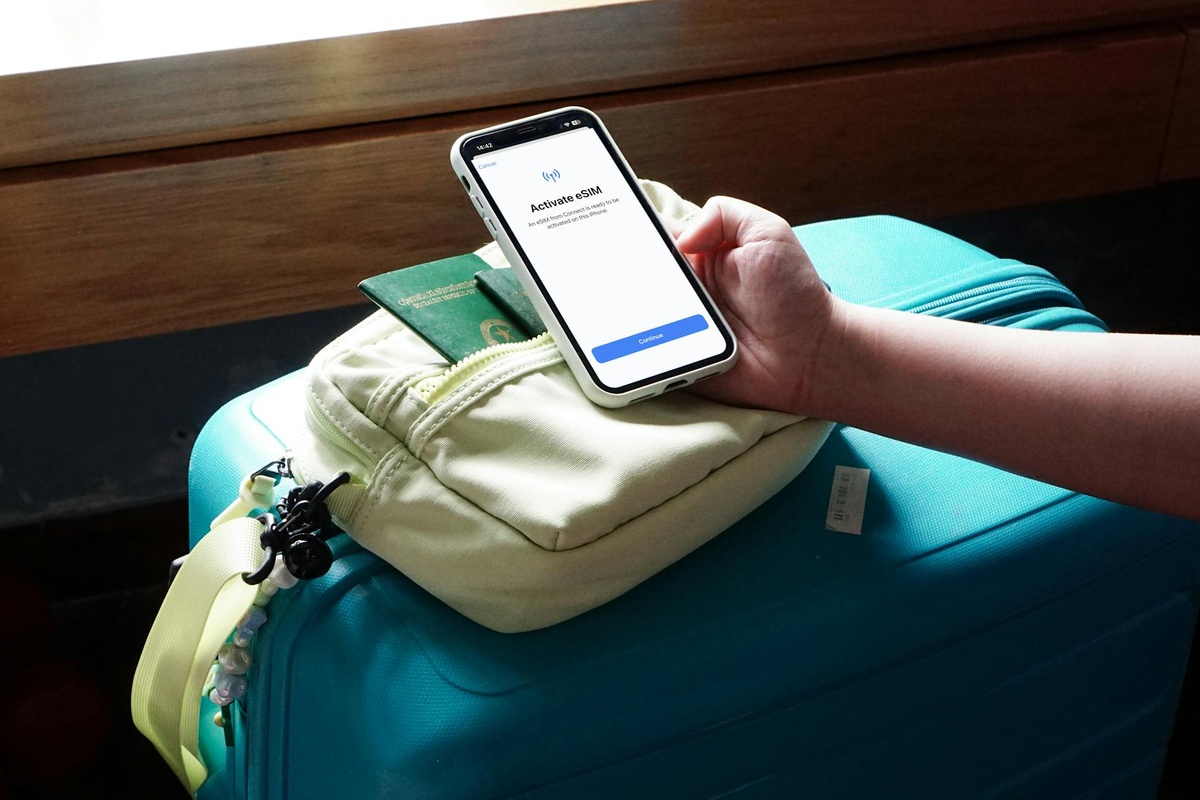
Landing at Haneda at 7:10 a.m., half-asleep and desperate for Google Maps, is not the moment you want to be fiddling with airport Wi‑Fi.
Japan in summer 2026 was exceptionally busy, and autumn is bringing another travel surge as fall colors arrive in Kyoto and Tokyo. With Sports Day on October 12, Culture Day on November 3, and Labor Thanksgiving Day on November 23, expect crowded stations and heavier mobile traffic on long weekends. Reliable mobile data isn’t optional. It’s how you navigate subway exits, reserve restaurants, translate signs, and check Shinkansen or flight delays.
I tested three of the most popular eSIMs—Airalo, Ubigi, and Holafly—over 10 days in Tokyo and Kyoto, running real-world speed tests in Shibuya, Asakusa, Arashiyama, and inside Kyoto Station. The speed results below are from the original June 2026 test trip; prices, plan details, and recommendations were refreshed on October 4, 2026.
Here’s what performed best—and what travelers should know before buying.
Key Takeaways
- Best overall value: Ubigi’s 10GB plan was listed at $17 for 30 days and produced the fastest results in our tests, including 61 Mbps in Shibuya.
- Best for an easy setup: Airalo’s 10GB plan remained around $18, with a polished app, straightforward top-ups, and reliable Tokyo and Kyoto performance.
- Best for unlimited data: Holafly offers unlimited plans by trip length, but its 10-day option was around $36.90 during our October check and remains subject to fair-use and hotspot restrictions.
- Install before arrival: Add the eSIM while you have reliable home Wi‑Fi, but wait until landing to enable the line and data roaming.
- Check your phone first: It must support eSIM and be carrier-unlocked. Most travel plans are data-only and do not include a Japanese phone number.
- Autumn travel tip: Download offline maps before visiting crowded foliage spots such as Arashiyama, Kiyomizu-dera, and Nikko, where congestion can reduce speeds.
Test Setup: Where and How I Measured Speeds
I used an unlocked iPhone 15 Pro with 5G enabled and ran Speedtest by Ookla three times per location, averaging the results. Automatic network selection was used unless otherwise noted.
Test locations:
- Shibuya Crossing (Tokyo) – peak 6 p.m. weekday
- Asakusa / Senso-ji – Saturday morning
- Kyoto Station – Sunday afternoon
- Arashiyama Bamboo Grove – weekday 9 a.m.
These figures are a real-world snapshot, not a guaranteed minimum. Your speed can differ based on the host network selected by the plan, phone model, 4G or 5G availability, network management, weather, indoor coverage, and the number of people using the same cell site.
For reference, turn-by-turn navigation generally uses relatively little data, while short-form video, cloud photo backups, video calls, and operating-system updates can consume several gigabytes quickly. A traveler focused on maps, messaging, email, and occasional social media may use 5–10GB over 10 days. Heavy video users can exceed that amount in a few days.
Airalo Japan eSIM (via KDDI / SoftBank)
Price check (October 4, 2026):
5GB (30 days): around $11.50 USD
10GB (30 days): around $18 USD
20GB (30 days): around $26 USD
Airalo’s Japan network partner can vary by plan version, and the app may show KDDI (au), SoftBank, or another supported network before checkout. Confirm the network, 5G availability, hotspot policy, and activation rules on the plan-details screen. Prices can also change with promotions, billing currency, and taxes.
Real Speed Results
| Location | Download | Upload | Ping |
|---|---|---|---|
| Shibuya | 48 Mbps | 22 Mbps | 18 ms |
| Asakusa | 41 Mbps | 19 Mbps | 21 ms |
| Kyoto Station | 38 Mbps | 17 Mbps | 24 ms |
| Arashiyama | 52 Mbps | 25 Mbps | 20 ms |
Those results were comfortably fast enough for navigation, HD video, messaging, video calls, and occasional laptop tethering. Large cloud uploads worked, but travelers should disable automatic photo backup if they want a 10GB allowance to last the entire trip.
What I Liked
– Stable 4G and 5G performance in Tokyo and Kyoto.
– User-friendly app with visible data usage and in-app top-ups.
– 30-day validity works well for longer itineraries.
– Easy to keep installed for a future top-up, depending on plan availability.
What I Didn’t
– The best-value plan is not always obvious because regional and country-specific options can overlap.
– Standard Japan plans are generally data-only, with no Japanese number for voice calls or SMS.
– Network and 5G access can differ between plan versions, so the checkout details matter.
For a 10-day Tokyo and Kyoto trip, 10GB was plenty. I used 6.8GB with daily navigation, restaurant searches, messaging, and moderate social media. Airalo remains a strong choice for travelers who prioritize a familiar app and simple top-ups, although Ubigi offered slightly better value in this comparison.
Ubigi Japan eSIM (NTT Docomo Network)
Price check (October 4, 2026):
10GB (30 days): around $17 USD
50GB (30 days): around $69 USD
Unlimited plans: available for selected durations, with pricing shown at checkout
Ubigi’s Japan service uses NTT Docomo, Japan’s largest mobile network by subscriber base. Available packages change periodically, so compare the fixed-data and unlimited-duration options in the Ubigi app instead of assuming that an older 30-day unlimited price is still offered.
Real Speed Results
| Location | Download | Upload | Ping |
|---|---|---|---|
| Shibuya | 61 Mbps | 29 Mbps | 15 ms |
| Asakusa | 45 Mbps | 20 Mbps | 19 ms |
| Kyoto Station | 43 Mbps | 18 Mbps | 23 ms |
| Arashiyama | 56 Mbps | 24 Mbps | 18 ms |
Ubigi was consistently the fastest option in this test, particularly in dense Tokyo neighborhoods. It also recorded the lowest Shibuya latency, although international routing means latency can vary even when two eSIMs use strong Japanese networks.
Where It Shined
– Fastest tested download speeds in Shibuya.
– Slightly cheaper than Airalo for 10GB during the October price check.
– NTT Docomo coverage is a useful advantage for regional rail trips and less urban destinations.
– Hotspot support makes fixed-data plans practical for occasional laptop use.
Downside
Support can be slower than an instant live-chat experience, and troubleshooting may require checking the APN or briefly toggling airplane mode. During testing, manually switching networks caused a roughly 15-minute reconnection delay, so automatic network selection is usually the better setting.
If you’re planning to work remotely from Japan, Ubigi is the strongest all-around option of the three tested. However, no travel eSIM should be your only connection for an important client call: keep hotel or coworking Wi‑Fi available as a backup.
Holafly Japan eSIM (Unlimited Data)
Price check (October 4, 2026):
5 days: around $19.90 USD
10 days: around $36.90 USD
15 days: around $50.90 USD
Holafly sells unlimited plans based on trip length. That removes the need to count every gigabyte, but “unlimited” does not necessarily mean permanently unthrottled data or unlimited hotspot use. Fair-use policies, network management, and tethering allowances may apply, so review the current plan terms before payment.
Real-World Performance
Speeds were strong early in the day during the June test, generally ranging from 35–45 Mbps. After roughly 3GB of usage in one day, observed speeds fell to around 5–8 Mbps. That was our experience rather than a published universal threshold; traffic management can be applied differently depending on the host network, location, and usage pattern.
The reduced speeds remained usable for maps, messaging, browsing, and standard-definition video, but large uploads and cloud backups took noticeably longer.
Who It’s For
– Travelers who value predictable trip-length pricing more than the lowest cost.
– Heavy phone users who do not want to monitor a fixed allowance.
– People streaming frequently on their phone, provided they accept possible fair-use slowdowns.
Who Should Skip It
If you expect to use only 5–10GB, Holafly’s higher price is difficult to justify against Airalo or Ubigi. It is also not the automatic choice for heavy laptop tethering: hotspot allowances may be more restrictive than on fixed-data plans and should be checked at checkout.
Unlimited is convenient, but most tourists using maps, messaging, translation, restaurant searches, and occasional social media will get better value from a fixed 10GB plan.
Airport SIM vs eSIM: Is It Worth Waiting?
Airport vending machines and telecom counters at Narita and Haneda remain useful for travelers with locked phones or devices that do not support eSIM. However, tourist SIM prices vary widely by data allowance and validity, and staffed counters may not be open when an early or delayed flight arrives. A physical tourist SIM with roughly 10GB can still cost around ¥4,000–¥5,000, depending on the seller and package.
Compare that to the October online prices:
- Airalo 10GB: around $18, installed before departure
- Ubigi 10GB: around $17, installed through the app
- Airport SIM: often around ¥4,000–¥5,000, plus setup time
An eSIM will usually save money and lets you connect immediately after landing. The main exceptions are travelers whose phones are carrier-locked, lack eSIM support, or need in-person setup assistance.
Better move: install your eSIM at home over Wi‑Fi, label it “Japan,” and leave it turned off until arrival. Do not delete the eSIM after installation—many QR codes can be used only once without support intervention.
Before takeoff, I also recommend checking seat loads and delays—tools like these ways to check how full your flight is can help you decide if you’ll have space to work online mid-air.
Coverage in Tokyo vs Kyoto (And Beyond)
Tokyo is straightforward for all three providers. During testing, coverage was strong across:
– Shibuya
– Shinjuku
– Asakusa
– Odaiba
Kyoto was slightly less consistent inside older buildings and narrow streets in districts such as Gion, but Airalo and Ubigi stayed above 30 Mbps at the outdoor test locations. Expect more variation inside basement restaurants, large stations, concrete hotels, tunnels, and crowded temples during autumn foliage season.
Planning day trips?
– Kyoto to Nara: Strong 4G coverage along most of the rail route, with occasional changes inside buildings or tunnels.
– Tokyo to Hakone: Brief tunnel and mountain-area dropouts are normal on all networks.
– Arashiyama Bamboo Grove: Strong service near the entrance in our test, but speeds may fall when the area is crowded.
– Tokyo to Nikko: Service is generally reliable in town and along main transport routes, with weaker coverage possible on trails and in mountain areas.
If you’re heading deep into the Japanese Alps, rural Tohoku, Hokkaido, Shikoku, or Kyushu, Ubigi’s access to NTT Docomo gives it a slight coverage advantage. No provider can guarantee continuous service on remote hiking trails, offshore islands, or through long rail tunnels, so save accommodation details and offline maps in advance.
Installation & Activation (Step-by-Step)
All three follow a similar setup process:
- Confirm that your phone supports eSIM and is carrier-unlocked.
- Purchase the plan through the provider’s app or website.
- Install the eSIM using the app, a QR code, or manual activation details.
- Label the new line “Japan” so it is easy to identify later.
- After landing, select the Japan eSIM for cellular data and enable data roaming for that line.
- Disable cellular-data switching to prevent your home SIM from using expensive roaming data.
- Toggle airplane mode or restart the phone if it does not connect within a few minutes.
Total setup time is usually 5–10 minutes. Installation and plan activation are not always the same event: some plans begin when first connected in Japan, while others can begin at installation or purchase. Read the activation policy before scanning the QR code.
If you keep your primary SIM active for calls or bank verification texts, turn off data roaming on that line. Incoming SMS may be free with your home carrier, but calls, voicemail retrieval, and outgoing messages can trigger roaming charges. WhatsApp, FaceTime, Signal, and similar services should continue working over data, although iMessage may ask you to confirm which number or email address to use.
Final Verdict: Which eSIM Should You Choose?
Best Overall Value: Ubigi
At around $17 for 10GB, Ubigi combined the lowest tested price with the fastest measured speeds and strong NTT Docomo coverage. It is the current first choice for most 7–14 day Japan itineraries.
Best for Simple Setup and Top-Ups: Airalo
Airalo remains easy to recommend for its polished app, clear usage tracking, and reliable performance. Paying roughly $1 more than Ubigi may be worthwhile if you already use Airalo or prefer its interface.
Best for Unlimited Phone Data: Holafly
Holafly offers convenience for travelers who do not want to track usage, but it costs substantially more and remains subject to fair-use and hotspot limitations. Check those terms if you plan to tether a laptop.
If I were flying to Japan tomorrow for a 10-day autumn trip, I’d choose Ubigi’s 10GB plan, install it before departure, and download offline maps as a backup. I’d choose Airalo if its app offered a better promotion or network option at checkout, and Holafly only if unlimited on-phone usage mattered more than price.
Pair it with a solid flight tracking app (I like Aviate for Android if you’re not on iOS), and you’re covered from takeoff to ramen reservations.
Japan moves fast. Your data should too.
Frequently Asked Questions
How much data do I need for a 10-day trip to Japan?
Most travelers need 5–10GB for 10 days. I used 6.8GB with daily navigation, messaging, restaurant searches, and moderate social media. Choose 15–20GB or an unlimited plan if you stream video frequently, make long video calls, tether a laptop, or automatically back up photos and videos.
Is unlimited eSIM worth it in Japan?
Usually not for a typical sightseeing trip. Holafly’s 10-day unlimited option was around $36.90 during our October 2026 check, compared with approximately $17–$18 for 10GB from Ubigi or Airalo. Unlimited can make sense for heavy phone use, but fair-use slowdowns and hotspot limits may still apply.
Which network is best in rural Japan?
Ubigi’s access to NTT Docomo gives it a slight edge for regional and rural travel. In central Tokyo and Kyoto, all three providers delivered usable service, although indoor coverage and congestion varied. Download offline maps for mountains, islands, tunnels, and remote hiking routes.
Can I use eSIM for hotspot in Japan?
Airalo and Ubigi generally support hotspot sharing on their fixed-data plans, but you should confirm the specific plan terms before purchase. Holafly’s hotspot allowance can be restricted even when phone data is advertised as unlimited. Tethering also consumes a fixed allowance much faster than normal phone use.
Will a Japan travel eSIM give me a local phone number?
Usually not. The plans compared here are primarily data-only, so use internet-based calling and messaging apps. If a hotel, restaurant, or ticket service requires a Japanese number, look for a voice-enabled local SIM or use your accommodation’s contact assistance.
When should I install and activate my Japan eSIM?
Install it at home while connected to reliable Wi‑Fi, but follow the provider’s activation policy carefully. For most plans, you should select the eSIM for mobile data and enable roaming only after landing in Japan. Keep the QR code and purchase details until the trip is over.

About the Author: Tomáš Bzirský
Founder and editor of Distratech. Based in the Czech Republic, travelling regularly from Central Europe. Writes practical travel guides and travel-tech comparisons (eSIM, apps, airports) in six languages.