'/%3E%3Cpath%20fill='%23b2b2b2'%20d='M241%20382q0%2016%2017%2026%2017%2011%2042%2011t42-11q16-11%2017-26V269H241'/%3E%3Cpath%20fill='%239f7e00'%20d='M241%20379q0%2014%208%2023%209%209%2021%209%2014%200%2021-9%209-9%209-23V269h-59'/%3E%3Cpath%20d='M241%20339v-70h59v110q0%2014-9%2023l-6%205v-68h-15v72q-8%200-14-4v-68zm59%2040c0%2022%2015%2032%2029%2032%2021%200%2030-18%2030-32v-40h-59'/%3E%3Cpath%20fill='%239f7e00'%20d='M266%20277v5h2v12h-3v-5h2v-5h-9v5h2v5h-4v9h3v18h-5v10h34v-10h-5v-18h3v-9h-4v-5h2v-5h-9v5h2v5h-3v-12h2v-5zm42%20101q0%2010%206%2017%206%206%2015%207%2010-1%2016-7%206-7%206-17v-29h-43'/%3E%3Ccircle%20fill='%230044ad'%20cx='329.5'%20cy='372'%20r='6'/%3E%3Cellipse%20fill='%230044ad'%20cx='300'%20cy='340'%20rx='16'%20ry='21'/%3E%3C/svg%3E)
'/%3E%3C/svg%3E)


'/%3E%3C/g%3E%3Cuse%20href='%23c'%20transform='matrix(-1%200%200%201%20720%200)'/%3E%3C/svg%3E)


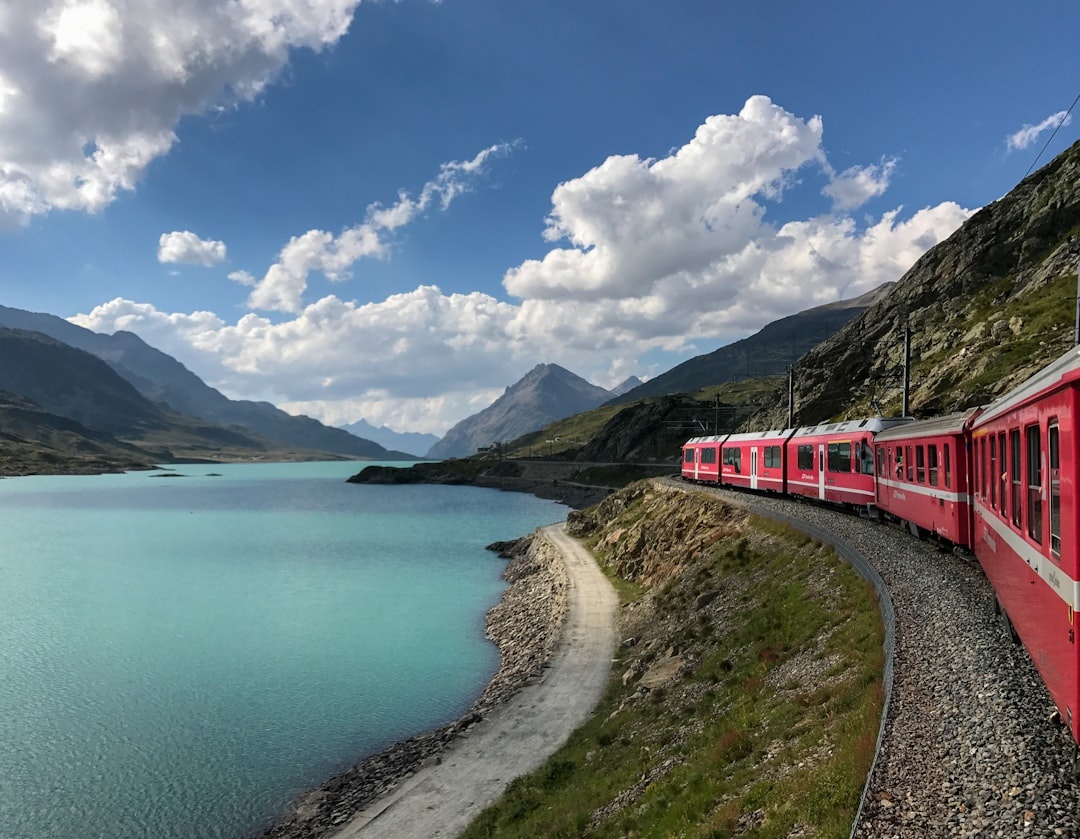
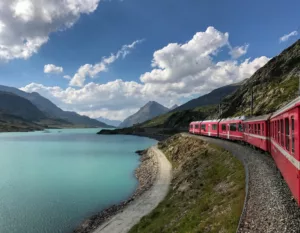
Switzerland is the rare country where not renting a car is actually the smarter move. Trains glide past turquoise lakes, up into glacier valleys, and through mountain tunnels so precisely timed it feels choreographed.
In peak July 2026 — when the Mediterranean is packed and rental cars in Italy are selling out — Switzerland’s rail network is running at full frequency. Wild swimming season is on, alpine hiking trails are snow‑free, and long daylight (sunset after 9pm) means you squeeze more into each day.
Key Takeaways
- Swiss Travel Pass (8 days): ~CHF 389 ($430) 2nd class; best for flexibility and mountain discounts.
- Saver Day Pass: from CHF 52 ($58) booked early; ideal for long scenic transfer days.
- Seat reservations are not required on most Swiss trains — exceptions: Glacier Express (~CHF 49).
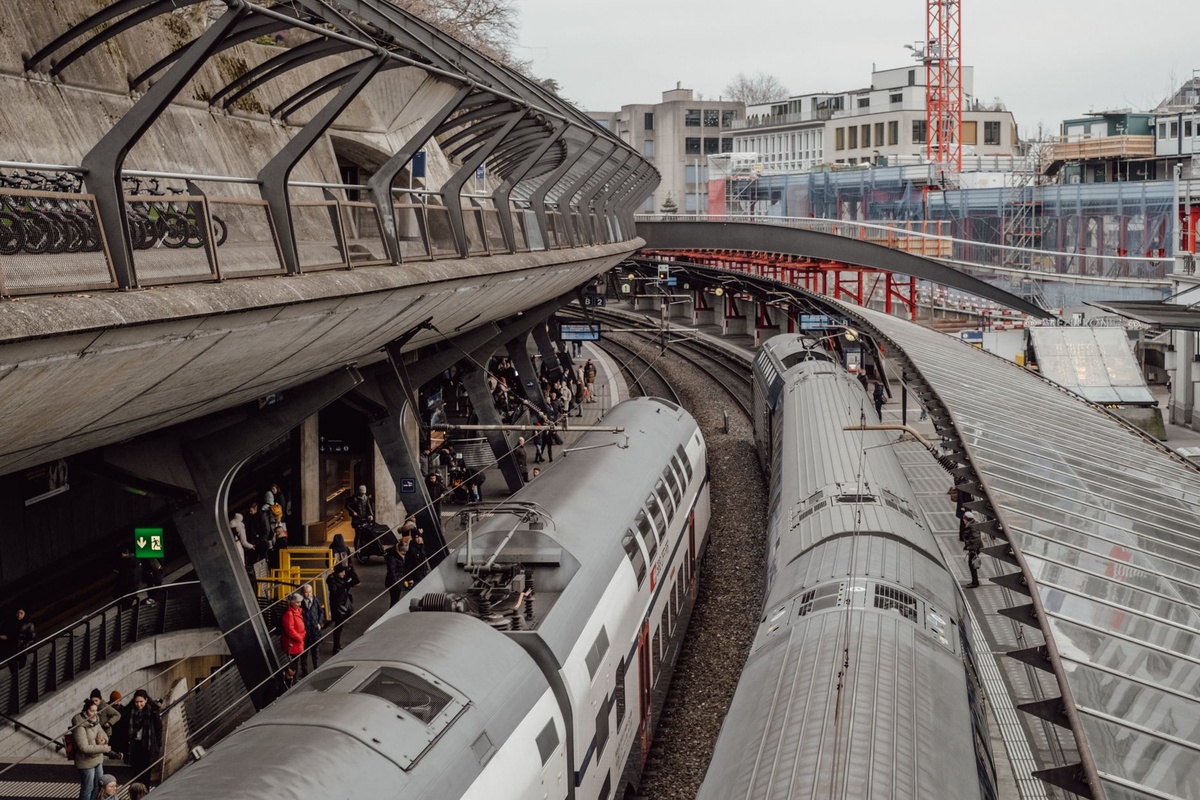
- Zurich–Lucerne: 41–50 min by train (~CHF 25 point-to-point) vs 55–70 min by car plus parking CHF 25/day.
Step 1: Swiss Travel Pass vs Saver Day Pass (2026 Prices & When Each Wins)
This is the decision that determines your budget. Everything else — routes, hotels, spontaneity — flows from it.
Option A: Swiss Travel Pass (Most Flexible)
2026 prices (2nd class):
- 3 days: ~CHF 244 ($270)
- 4 days: ~CHF 295 ($325)
- 8 days: ~CHF 389 ($430)
Includes unlimited trains, buses, boats, and free entry to 500+ museums. You also get 50% off most mountain lifts (Jungfraujoch, Titlis, Pilatus) and some fully free routes (e.g., Rigi).
Best for: first-time visitors who want zero stress and plan multiple mountain excursions.
Option B: Saver Day Pass (Cheapest If You Plan Ahead)
Available at sbb.ch, prices are dynamic.
- From CHF 52 ($58) booked 1–2 months early
- Last-minute July price: often CHF 99–129 ($110–145)
It covers the entire GA network (basically all public transport), just like the Swiss Travel Pass — but no museum perks and no built-in mountain discounts.
Best for: travelers with fixed long-distance days (e.g., Lucerne → Interlaken → Zermatt).
Quick Comparison
| Swiss Travel Pass (8 days) | Saver Day Pass | |
|---|---|---|
| Cost (2026) | CHF 389 (~$430) | CHF 52–129 per day |
| Flexibility | Unlimited days in a row | Valid one specific day |
| Museum Entry | Free (500+ museums) | Not included |
| Mountain Discounts | Usually 50% | Full price |
| Best For | Multi-stop, spontaneous trips | Budget travelers with fixed plan |
My take for 7 days: If you’re doing 2–3 mountain excursions (which you should), the 8‑day Swiss Travel Pass usually wins by CHF 100–150 in total value.
Step 2: The Perfect 7‑Day No-Car Itinerary (Peak Summer Optimized)
This route minimizes backtracking and maximizes scenic rail.
Day 1: Zurich → Lucerne (41–50 min)
Trains leave 3–4 times per hour. No reservation needed. Point-to-point ticket: ~CHF 25 ($28).
Skip staying in Zurich unless you love banking architecture. Lucerne is smaller, prettier, and lake-swimmable.
Do: Walk Chapel Bridge at sunset, swim at Ufschötti Beach (free).
Eat: Wirtshaus Galliker (since 1856) — order the Luzerner Chügelipastete (~CHF 36).
Day 2: Mount Pilatus or Rigi
Pilatus round trip: ~CHF 78 with Swiss Travel Pass discount (vs ~CHF 156 full fare).
Rigi: Often free with Swiss Travel Pass.
Pilatus is steeper and dramatic. Rigi is gentler and less crowded in July mornings. Go before 9am — by 11am tour buses arrive.
Day 3: Lucerne → Interlaken via GoldenPass (2 hrs)
This is where trains beat cars.
Train: 1h55, panoramic windows, lakes the entire way.
Car: ~1h45 driving + CHF 25–35/day parking in Interlaken.
Base yourself in Interlaken or better: Grindelwald (30 min further by train).
Day 4: Jungfrau Region (Lauterbrunnen & Mürren)
Lauterbrunnen Valley has 72 waterfalls. Train Interlaken → Lauterbrunnen: 20 min, ~CHF 7.
Cable car to Mürren (~CHF 44 one-way, 50% off with Swiss Travel Pass).
Skip Jungfraujoch unless budget isn’t a concern: ~CHF 210 full fare, ~CHF 150 with discount. It’s impressive, but Mürren hiking is better value in July.
Day 5: Interlaken → Zermatt (2h15)
One change in Visp. No reservations required.
Zermatt is car-free. That alone makes the train arrival feel cinematic.
Eat: Restaurant Schäferstube (lamb filet ~CHF 48).
Budget stay: Hotel Bahnhof from ~CHF 55 dorm / CHF 120 private.
Day 6: Gornergrat Railway
Europe’s highest open-air cog railway.
- Full price: ~CHF 132
- With Swiss Travel Pass: ~CHF 66
- Travel time: 33 minutes
Go for sunrise if skies are clear. Afternoon storms are common in July.
Day 7: Glacier Express (Optional) or Return to Zurich
Glacier Express Zermatt → Chur: 8 hours.
- Seat reservation mandatory: ~CHF 49
- Covered by Swiss Travel Pass (base fare)
Alternative: regular regional trains on the same route (no reservation, same views, faster in segments).
If flying out, Zermatt → Zurich Airport is ~3h30, CHF 120 full fare.
Seat Reservations: When You Actually Need Them
Unlike Italy or France, Swiss domestic trains don’t require reservations.
Exceptions:
- Glacier Express
- Bernina Express panoramic cars
- Some international trains (to Milan, Paris)
Regular InterCity trains? Just hop on. Even in peak July, you’ll find seats if you avoid 4–6pm commuter rush.
If you’re new to European rail booking platforms, read our breakdown of Seat61 vs Rail Europe vs Omio and dynamic pricing traps. Switzerland is simpler — book direct with SBB.
Exact 7‑Day Cost Breakdown (2026)
Mid-range traveler, 2nd class, Swiss Travel Pass.
| Item | Cost (CHF) | Cost (USD approx.) |
|---|---|---|
| Swiss Travel Pass (8 days) | 389 | 430 |
| Pilatus (discounted) | 78 | 86 |
| Gornergrat (discounted) | 66 | 73 |
| Accommodation (6 nights avg CHF 180) | 1080 | 1190 |
| Food (CHF 45/day avg) | 315 | 350 |
| Total | 1928 | ~2129 |
Budget version (hostels + Saver Day Pass strategy): possible around CHF 1300–1500 total.
Compare that to renting a car in July 2026:
- Compact car: CHF 110/day × 7 = CHF 770
- Fuel: ~CHF 2.10/liter (~$8.50/gallon)
- Parking: CHF 20–35/day in tourist towns
You’re at CHF 1000+ before driving stress. Train wins.
Scenic Routes You Shouldn’t Skip
If you love the Dolomites road-trip vibe, read our July 2026 breakdown of whether a 3-day campervan in the Dolomites is worth it. But Switzerland’s rail panoramas are smoother and less traffic-prone.
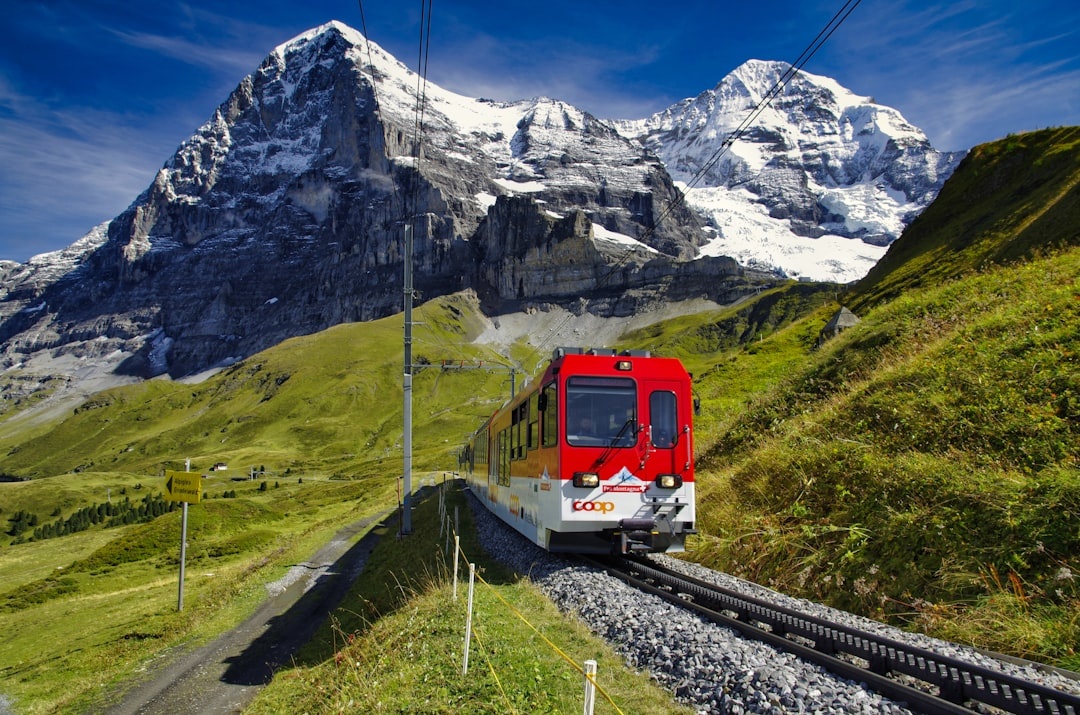
GoldenPass Line
Lucerne → Interlaken → Montreux. Lakes + vineyards. Best in morning light.
Bernina Express
Chur → Tirano (Italy). UNESCO-listed. Glacier views even in July.
Glacier Express
Slow but iconic. Honestly? Regional trains on the same route give 90% of the view for 0% reservation fee.
Apps & Tech Setup (Don’t Skip This)
Download before arrival:
- SBB Mobile — real-time platforms, mobile tickets.
- MeteoSwiss — hyper-local mountain weather.
- Google Maps offline for hiking areas.
Swiss trains have power outlets at most seats (2nd class InterCity). Bring a slim power bank — especially useful on 8-hour scenic routes.
Data tip: eSIM from Airalo or Holafly (~$20–30 for 5–10GB). Swiss roaming isn’t included in many EU plans.
When to Go (July 2026 Reality Check)
July is peak hiking season. Snow is mostly gone above 2,000m by early July 2026.
Tour de France doesn’t pass through Switzerland every year, but Alpine cycling traffic increases during July due to adjacent French stages.
Hotel prices are 20–30% higher than May or September. If flexible, late August is slightly quieter — and you can catch the Perseids meteor shower in dark Alpine valleys.
Action Checklist Before You Book
- Map your 2–3 biggest travel days (those justify a pass).
- Price mountain lifts individually.
- Check Saver Day Pass prices 60 days out.
- Book Zermatt hotels early — July weekends sell out.
- Download SBB app and save offline tickets.
Final Verdict: Swiss Travel Pass or Saver Strategy?
If this is your first Swiss trip and you want freedom to hop on boats, trains, and mountain railways without recalculating every ride — buy the 8‑day Swiss Travel Pass.
If you’re hyper-organized, traveling light, and locking in long-distance days early — mix Saver Day Passes with point-to-point mountain tickets and you’ll save CHF 100–200.
Either way, skip the car. Switzerland is one of the few countries where the train isn’t the alternative — it’s the main event.
Planning a bigger European rail summer? Pair this with our deep dive on avoiding booking mistakes across the continent and build a seamless car-free itinerary.
Für deine Unterkunft während der Zugreise durch die Schweiz: Hotels in der Schweiz ansehen und jetzt die besten Optionen sichern.
Frequently Asked Questions
How much does a 7-day Switzerland train trip cost in 2026?
Expect CHF 1,300–2,100 ($1,450–2,300) depending on accommodation level and whether you use a Swiss Travel Pass or Saver Day Pass strategy.
Is the Swiss Travel Pass worth it for 7 days?
Yes if you plan 2–3 mountain excursions and multiple long-distance routes; the 8-day pass (CHF 389) often offsets lift discounts alone.
Do you need seat reservations on Swiss trains?
No for most domestic trains. Reservations are only required for panoramic services like the Glacier Express (~CHF 49).
Is it cheaper to rent a car in Switzerland?
Usually no. A July rental averages CHF 770/week plus fuel and parking, often exceeding train pass costs — and parking in towns like Zermatt isn’t possible.

About the Author: Tomáš Bzirský
Founder and editor of Distratech. Based in the Czech Republic, travelling regularly from Central Europe. Writes practical travel guides and travel-tech comparisons (eSIM, apps, airports) in six languages.