Munich Oktoberfest is surprisingly manageable alone—if you treat it as a timed, ticketless festival rather than an all-night bar crawl. For 2026, the Wiesn runs from September 19 to October 4, when Munich is warm by day, cool after sunset, and considerably more expensive than a normal shoulder-season city break.
Key Takeaways
- Oktoberfest 2026 runs September 19–October 4; admission to the main grounds and beer tents is free.
- Bring only a bag measuring up to 20 × 15 × 10 cm with a maximum 3-liter capacity.
- A 2026 Maß of beer costs roughly €15.40–€16.20 ($18–$19), before a customary €1–€2 tip.
- Solo visitors should arrive before 11:00 on weekdays instead of trying to reserve an entire 8–10-person table.
- Use 112 for medical or fire emergencies, 110 for police, and the Safe Space for Women at the Service Center.
Key Numbers at a Glance
| Item | 2026 detail | What it means for a solo visitor |
|---|---|---|
| Festival dates | September 19–October 4, 2026 | September 22–24 and 28–30 are the calmer target dates |
| Main grounds admission | Free | You do not need an Oktoberfest entrance ticket |
| Oide Wiesn admission | About €4 ($4.65), Sep. 2026 | Quieter atmosphere and traditional tents |
| Beer price | Approximately €15.40–€16.20 ($18–$19) per 1-liter Maß, Sep. 2026 | Budget €17–€18 including tip |
| Beer strength | Usually around 5.8%–6.3% ABV | One Maß can equal roughly four US standard drinks |
| Bag limit | 3 liters; 20 × 15 × 10 cm | A small crossbody is safer than a backpack |
| Theresienwiese distance | 1.5 km southwest of Munich Hauptbahnhof | About 18–22 minutes on foot |
| Emergency numbers | 112 medical/fire; 110 police | Both work without a German SIM |
| Typical tent closing | 23:30; last beer around 22:30 | Leave by 22:00 for an easier trip home |
USD equivalents use a planning rate of €1 = $1.16 in September 2026. Card exchange rates fluctuate, and hotel prices change daily.
Step 1: Choose the Right Day and Time
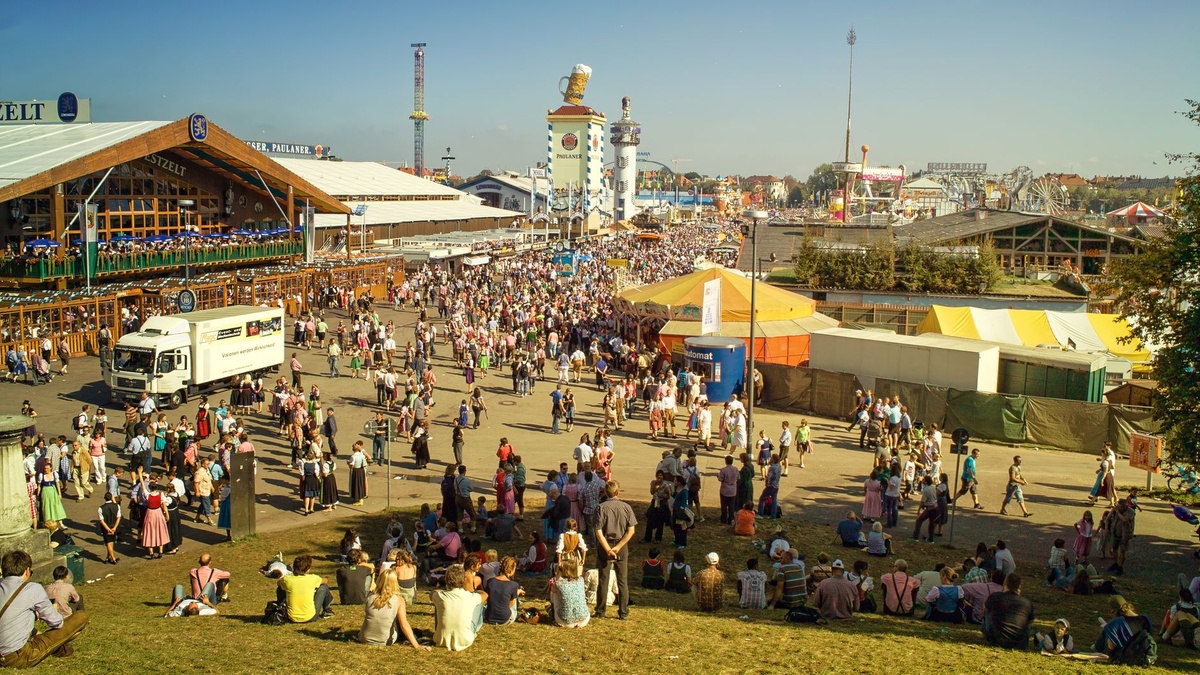
Your safest and easiest solo Oktoberfest is a weekday visit from about 10:30 to 18:00. Tuesday through Thursday offers a dramatically calmer experience than Saturday, when entrances can close temporarily and central aisles become shoulder-to-shoulder.
September is ordinarily shoulder-season gold across Europe, but Oktoberfest reverses the pricing pattern in Munich. A central room that might cost €130 ($151) on a normal September night can exceed €280 ($325) during the festival—a 115% increase.
The best 2026 dates for solo women
- Best overall: Tuesday, September 22 through Thursday, September 24.
- Second choice: Monday, September 28 through Wednesday, September 30.
- Best traditional atmosphere: Sunday morning before 12:00, especially at the Oide Wiesn.
- Avoid if possible: Opening Saturday, September 19, and the final weekend, October 2–4.
- Family-friendly window: Tuesdays, when rides and attractions traditionally offer discounted Family Day prices until early evening.
The main grounds generally operate from approximately 10:00 to 23:30 Monday–Friday and 09:00 to 23:30 on weekends. Most large tents serve beer from 10:00 on weekdays and 09:00 on weekends; on opening day, beer begins only after the mayor taps the first barrel at noon.
| Arrival window | Seat difficulty | Atmosphere | Best for |
|---|---|---|---|
| 09:30–11:00 weekday | Low | Social but controlled | First-time solo visitors |
| 11:00–15:00 weekday | Low to moderate | Lively lunch session | Meeting tablemates without heavy late-night drinking |
| 15:00–18:00 weekday | Moderate to high | Louder, more standing and singing | Confident return visitors |
| After 18:00 or Saturday | High | Very crowded | Visitors with a confirmed reservation |
My verdict: skip Saturday evening. A Wednesday lunch session gives you the brass bands, shared tables and “Ein Prosit” toasts with far less pushing at doors or pressure to keep drinking.
Step 2: Decide Whether You Need a Tent Reservation
You do not reserve general admission to Oktoberfest. Tent reservations apply to tables, normally seating eight or ten people, which is why the standard booking system works poorly for one traveler.
Reservations themselves are generally free, but tents require prepaid food-and-drink vouchers. Expect a minimum package equivalent to two Maß beers and half a roast chicken—roughly €45–€60 ($52–$70) per person in September 2026, depending on the tent and session.
How to book legitimately
Start at the official Oktoberfest tent reservation directory, which links to each tent’s own system. Reservation applications usually open between February and May, although cancellations and individual spaces can appear closer to September.
Never buy a PDF “tent ticket” from a stranger on social media. Oktoberfest admission is free, and resale packages may be invalid, overpriced or tied to an ID and voucher collection process you cannot complete.
| Option | Cost, Sep. 2026 | Planning effort | Solo suitability |
|---|---|---|---|
| Walk in before 11:00 weekday | €0 entry | Low | Excellent |
| Join an official table package | About €45–€90 ($52–$104) | Moderate | Good if the organizer is reputable |
| Reserve a full 8–10-person table | Often €450–€600 ($522–$696) in vouchers | High | Poor unless organizing a group |
| Third-party resale package | Frequently €150–€300+ ($174–$348+) | High risk | Skip it |
Large tents must retain unreserved capacity. As a practical benchmark, at least 25% of seats are commonly kept reservation-free on weekdays, while weekends have larger daytime walk-in allocations, with some space released or retained after 15:00.
Walk to the side or rear entrances instead of joining the densest queue at the front. Tell the door attendant, “Eine Person, ohne Reservierung”—one person, without a reservation—and be flexible about where you sit.
Which tent should a solo woman choose?
Choose Hacker-Festzelt for an upbeat international crowd and the famous blue-sky ceiling. It holds roughly 6,900 people inside, so one empty seat appears more often than it does in a small tent.
Choose Augustiner-Festhalle if beer quality matters most. Augustiner is served from wooden barrels, and the atmosphere is more local, but securing a walk-in seat can be harder than at Hacker.
Choose Schottenhamel if you want younger tablemates and the opening-barrel tradition. Skip it late on Friday or Saturday, when its youthful energy becomes noticeably rowdier.
Choose Oide Wiesn if personal space matters more than being in the largest party. Its approximately €4 entry fee filters out some casual bar-hoppers, and the historic rides and traditional music feel closer to an old Bavarian folk festival.
A simple decision framework
- Choose a weekday walk-in if you are comfortable asking, “Is this seat free?” and want maximum flexibility.
- Choose a vetted group table if guaranteed seating matters more than price and you want built-in company.
- Choose Oide Wiesn if you dislike standing crowds, pounding pop music or aggressive drinking.
- Choose an afternoon-only visit if this is your first major festival alone.
- Choose a hotel near Hauptbahnhof if you want several routes home rather than relying on one packed U-Bahn station.
Step 3: Pack for the Bag Rules, Security Check and September Weather
Oktoberfest’s bag rule is stricter than many concert policies: bags should have a maximum capacity of 3 liters and dimensions no larger than 20 × 15 × 10 cm. A compact zippered crossbody meets the spirit of the rule better than a daypack, even a small one.
Security may refuse glass bottles, aerosol cans, knives, scissors, large power banks, bulky umbrellas and anything considered a weapon. There are storage facilities around the grounds, but paying and queuing to store a €35 backpack is a poor start to the day.
What belongs in your 3-liter bag
- Phone with MVV and DB Navigator installed.
- Physical bank card plus €40–€60 cash stored separately.
- Passport copy or national ID; leave your passport in the hotel safe when legally appropriate.
- 10,000 mAh or smaller power bank with a short cable.
- Hotel key card without the room number written on it.
- Medication in original packaging.
- Foldable rain shell—not an aerosol or glass-packed cosmetic.
- One discreet menstrual product and a few tissues.
Daytime temperatures in late September often reach 17–20°C (63–68°F), but nights can fall below 10°C (50°F). A light wool layer and rain shell weigh less than a traditional coat and fit far more easily in the bag limit.
Wear closed shoes with grip. Sneakers are safer than €120 costume heels on beer-slick floors, and they reduce the risk of cuts from broken glass outside the grounds.
A dirndl is optional, not an admission requirement. If you wear one, buy or rent an authentic knee-length version rather than a flimsy “beer maid” costume; the latter marks you as an inexperienced visitor and is less practical in cold weather.
Step 4: Set Up Your Phone Before Entering
Mobile service can slow when more than 100,000 people are concentrated around the Wiesn. Downloading routes and saving addresses before arrival is more useful than having the fastest theoretical 5G plan.
Install MVV-App for Munich public transport and DB Navigator for regional or intercity trains. Google Maps is useful for walking, but MVV generally handles last departures, platform changes and replacement buses more accurately inside Munich.
If your phone lacks EU roaming, an eSIM from Airalo typically costs about $5–$12 for a small Germany data package. Airport roaming from a US carrier can cost $10–$12 per day, so a seven-day eSIM may be cheaper than one day of roaming.
Create a solo safety screen
Put your hotel name, street address and an emergency contact on your lock screen without displaying your room number. Activate iPhone Emergency SOS or Android Emergency SOS and test the button sequence before drinking.
Share live location with one trusted person only. Set specific check-ins—such as 14:00, 18:00 and arrival at the hotel—instead of expecting someone in another time zone to watch a moving dot continuously.
Download an offline Munich map and screenshot three routes: tent to Goetheplatz, tent to Hackerbrücke, and the station-to-hotel walk. The walking difference is small—roughly 750 meters to Goetheplatz versus 850 meters to Hackerbrücke—but having options helps when Theresienwiese station is congested.
Step 5: Use a Drink-Tracking System That Actually Works
A Maß is not “one drink.” One liter of 6% Oktoberfest beer contains about 60 ml of pure alcohol, or roughly 47 grams—close to four US standard drinks and six UK units.
The strongest rule for a woman attending alone is simple: do not let the size of the glass define your pace. Drinking half a Maß over 60–90 minutes is entirely normal, and you do not need to finish it before leaving.
The note-and-photo method
- Create a pinned note titled “Wiesn 2026.”
- Record the time when each Maß arrives.
- Take a quick photo of the fill level at each band break.
- Add every water, Radler or nonalcoholic beer.
- Set a hard departure alarm at least 30 minutes before your planned exit.
A Radler—roughly half beer and half lemon soda—usually contains around 2.5%–3% ABV, compared with approximately 6% for Festbier. A nonalcoholic beer is the better second order if you feel even mildly unsteady.
Do not rely on a consumer blood-alcohol calculator to decide whether you are safe. Body size, food, medication and pouring strength vary, and an app’s decimal estimate is not medical evidence.
Protecting your drink without becoming paranoid
Order directly from your assigned server and watch the Maß arrive. Keep it in front of you, never accept an open drink from another table, and abandon it if you return from the toilet and cannot confirm who watched it.
Beer tents are table-service environments, so random strangers should not need to “fetch you a drink.” Pay for each round as it arrives, photograph or check the price board, and tip about €1–€2 rather than leaving a large tab open.
Free drinking-water fountains are available around the festival site, while bottled water inside a tent can approach €10–€12 ($12–$14) per liter. Compare that with €0 at a fountain: use the free water points between tent sessions, provided staff allow your empty reusable container under current security rules.
Step 6: Eat Before the Second Beer
Food is not just part of the experience; it materially slows alcohol absorption. Eat before arriving and order a substantial meal with your first Maß, not after you feel light-headed.
Inside a tent, half a roast chicken generally costs €16–€19 ($19–$22), while a pretzel may cost €7–€9 ($8–$10). Outside, a sausage roll or Leberkäse sandwich often costs €6–€9, making it the better budget choice.
For a calm pre-festival meal, I prefer Augustiner Bräustuben at Landsberger Straße 19, about 1.3 km from the Wiesn. A main course commonly costs €14–€22, versus €20–€30 inside many festival tents, and you can eat without balancing a plate against singing strangers.
Skip a heavy brunch immediately beside Hauptbahnhof, where event menus can be inflated. Do breakfast at Café Marais in Westend instead; it is roughly a 15-minute walk from the grounds and gives you a quieter start before the crowds arrive.
Step 7: Know How to Leave—Including Night Trains
Your exit plan should be decided while sober. The safest default is to leave by 22:00, before the main tents close around 23:30 and thousands of visitors move toward the same platforms.
Theresienwiese station on the U4/U5 is the closest, but not always the best. Goetheplatz on the U3/U6 is about a 9–12-minute walk from the southeastern side of the grounds, while Hackerbrücke S-Bahn station is approximately 10–13 minutes from the northern side.
| Route from Oktoberfest | Distance/time | Typical cost, Sep. 2026 | Best use |
|---|---|---|---|
| Walk to Hauptbahnhof | 1.5 km; 18–22 min | €0 | Clear weather, sober and alert |
| U4/U5 from Theresienwiese | Closest station; 2–4 min walk | About €4.10 single ticket | Before the post-closing rush |
| U3/U6 from Goetheplatz | About 750 m; 9–12 min | About €4.10 | Best alternative when Theresienwiese is packed |
| S-Bahn from Hackerbrücke | About 850 m; 10–13 min | About €4.10 within Zone M | Hotels along the central S-Bahn corridor |
| Taxi to Altstadt | 2–4 km; 10–20 min | About €18–€30 | Late departure or low phone battery |
Buy and activate your local ticket before boarding. Bavaria has no general ticket gates, but inspectors issue penalties—typically around €60—for traveling without a valid ticket.
What “night train” means in Munich
Munich’s U-Bahn does not run continuously all night on most days. Friday and Saturday services operate later, while night buses and night trams fill some gaps; exact 2026 schedules should be checked in MVV-App on the day.
If you are catching an overnight or late intercity train, leave the tent at least 75 minutes before departure. Allow 20 minutes to walk to Hauptbahnhof, 15 minutes for crowd delays and 10–20 minutes to locate the platform, with the remainder as a safety buffer.
Do not book a 23:45 Nightjet and expect to stay until last call. A €90 sleeper berth is not refundable simply because the tent aisle took 20 minutes to clear.
Use official taxis from a marked rank or book through the Free Now app. Skip unmarked cars and never follow a person who says their taxi is “around the corner.”
E-scooters are a poor escape plan. German drink-driving laws can apply to scooters, and parking restrictions around the Wiesn may force you to walk several blocks before finding one anyway.
Step 8: Stay Somewhere You Can Reach Without Transfers
The cheapest room is not the safest bargain if it requires two late-night transfers. Prioritize Westend, Ludwigsvorstadt, Hauptbahnhof or Sendlinger Tor, ideally within a 20-minute walk or one direct train ride.
Hotel Metropol by Maier Privathotels, close to Hauptbahnhof, is my practical mid-range choice because it offers staffed reception and multiple routes from the festival. During Oktoberfest, expect roughly €220–€340 ($255–$394) per night, compared with about €110–€180 outside major events.
Euro Youth Hotel is better for sociable budget travelers, but dorm beds can still reach €70–€120 ($81–$139) during the festival. A private hotel room may cost only €80 more, so compare the total rather than assuming a hostel is automatically cheap.
Motel One München-Sendlinger Tor offers a more comfortable solo base, often around €240–€360 ($278–$418) during peak festival nights. Browse central hotels in Munich, then check whether reception remains staffed after your expected arrival.
Skip isolated apartment rentals on the suburban fringe unless you know Munich well. Saving €50 is not worthwhile if the journey involves a 25-minute S-Bahn ride, a missed connection and a dark 15-minute walk.
Step 9: Save Emergency Contacts and Know the Safe Space
Germany’s emergency system is straightforward: call 112 for an ambulance, fire or an urgent medical situation, and 110 for police. Both calls are free and can generally be made from a locked phone or without normal account credit.
The festival’s medical station and police operations are based around the Service Center behind the Schottenhamel tent. Locate it on the official map immediately after entering; doing this takes two minutes when sober and can save much longer when distressed.
The Safe Space for Women and Girls, operated through the “Sichere Wiesn” initiative, assists visitors who have been harassed, separated from friends, lost belongings or no longer feel safe traveling alone. Follow signs toward the Service Center/First Aid area and ask any uniformed staff member for the “Safe Space” or “Sichere Wiesn.”
If you feel suddenly more intoxicated than expected
- Stop drinking and do not leave with a stranger.
- Tell your server or security staff: “Ich brauche Hilfe”—I need help.
- Go to the medical station or Safe Space with staff assistance.
- Call 112 if symptoms are severe, including confusion, fainting, breathing difficulty or repeated vomiting.
- Preserve the drink if safely possible, but prioritize immediate medical care.
Do not worry about “making a fuss.” Medical professionals would rather assess you early than treat an avoidable emergency an hour later.
If your phone or wallet disappears, freeze cards immediately through your banking app. The festival lost-and-found office processes thousands of items; record the item’s serial number and check the official Oktoberfest lost-property guidance.
A Costed Solo Oktoberfest Day in 2026
This plan assumes a weekday visit, one paid hotel night and controlled drinking. It is more realistic than social-media budgets that omit accommodation during Munich’s most expensive fortnight.
| Expense | Budget choice | Comfortable choice |
|---|---|---|
| Central accommodation | €90 dorm bed | €280 hotel room |
| Breakfast before arrival | €10 | €18 |
| Festival admission | €0 | €4 Oide Wiesn |
| First Maß with tip | €17 | €18 |
| Half chicken or main meal | €17 | €23 |
| Second drink | €8 nonalcoholic beer | €17 Maß or Radler |
| Snack | €7 | €12 |
| Transport | €8.20 for two Zone M singles | €25 taxi |
| Contingency | €20 | €40 |
| Total | €177.20 ($206) | €437 ($507) |
Without accommodation, a sensible day costs about €87–€157 ($101–$182). Two beers instead of one add about €17, but the real financial swing is lodging: a private room can cost three times as much as a dorm.
A Safe Step-by-Step Schedule
09:00: Eat breakfast near your hotel and fill a water bottle. Check MVV disruptions, weather and your train home.
10:15: Walk to the grounds, identify the Service Center and photograph the nearest exit sign. Store no luggage; arrive only with your compliant crossbody.
10:30: Try Hacker-Festzelt or Augustiner and ask for one unreserved seat. If neither works within 25 minutes, go to Oide Wiesn rather than wasting the morning in door queues.
11:00: Order food and your first drink together. Record the time in your phone and pay when the order arrives.
12:30: Switch to water or a nonalcoholic beer. Send your first check-in and confirm your phone remains above 60% battery.
14:00: Leave the tent for a walk around the rides and quieter southern grounds. Movement and fresh air provide a more honest sobriety check than staying seated.
15:00: Decide deliberately whether to order another alcoholic drink. If your departure requires a train, stop drinking at least several hours before it.
17:30: Eat a snack and begin your return before commuter and evening festival crowds overlap. Take Goetheplatz or Hackerbrücke if Theresienwiese looks congested.
18:30: Check in from the hotel, charge your phone and review tomorrow’s transport. This daytime schedule provides six to seven hours at Oktoberfest—enough to enjoy it without gambling on the messiest closing period.
Common Solo Oktoberfest Mistakes
Arriving at 19:00 without a reservation
You may spend an hour moving between closed tent doors. Arrive before 11:00 instead; the atmosphere is already festive, and unreserved seats are easier to identify.
Treating one Maß as one normal beer
A one-liter Festbier can contain about four US standard drinks. Track alcohol content and time, not the number of glasses on the table.
Carrying a normal daypack
A 12-liter backpack is four times the allowed 3-liter capacity. Leave it at the hotel rather than depending on paid storage and another security queue.
Following the crowd to Theresienwiese station
The closest station is often the most congested. Walking 750–850 meters to Goetheplatz or Hackerbrücke can be quicker than standing in a controlled-entry queue.
Leaving cash, phone and card together
A single theft then removes every route home. Keep one physical card in an internal pocket and enough emergency cash—about €30—separate from your main wallet.
Assuming September means cheap Munich hotels
September is excellent value in much of Europe, but Oktoberfest creates the opposite effect locally. Book several months ahead with cancellation, then recheck rates; last-minute festival lodging is rarely a genuine bargain.
Being too polite to move
If tablemates become intrusive, leave immediately and tell your server or security. Losing a half-finished €16 beer is cheaper than remaining in a situation that feels wrong.
Final Verdict: Is Oktoberfest Safe for a Woman Traveling Alone?
Yes—Munich Oktoberfest can be a rewarding solo trip when you attend during the day, use official transport, track each drink and keep a preplanned exit route. The festival’s scale is an advantage: there are uniformed police, medical teams, trained security and a dedicated Safe Space on site.
The best 2026 strategy is a Tuesday-to-Thursday visit, arrival by 10:30, one or two deliberately paced drinks, and departure before the late-night surge. Save this guide offline, share your schedule with one trusted contact and book your central room before festival rates climb further.
Frequently Asked Questions
Can a woman safely go to Munich Oktoberfest alone?
Yes, particularly on a weekday between 10:00 and 18:00. Use a crossbody bag, track each drink, locate the Safe Space on arrival and leave before the 23:30 tent-closing rush.
Do solo visitors need Oktoberfest tent reservations?
No; entry is free and tents retain unreserved seating. Arrive before 11:00 Tuesday through Thursday and ask staff for one unreserved place rather than paying €450–€600 for a full table package.
How much does Oktoberfest cost for one person in 2026?
Excluding accommodation, budget approximately €87–€157 ($101–$182) for food, one or two drinks, local transport and a contingency fund. A central festival-period room can add €90 for a dorm or €220–€360 for a private hotel room.
What are the Oktoberfest emergency numbers and bag rules?
Call 112 for medical or fire emergencies and 110 for police; the women’s Safe Space is at the Service Center behind Schottenhamel. Bags are limited to 3 liters and approximately 20 × 15 × 10 cm.

About the Author: Tomáš Bzirský
Founder and editor of Distratech. Based in the Czech Republic, travelling regularly from Central Europe. Writes practical travel guides and travel-tech comparisons (eSIM, apps, airports) in six languages.