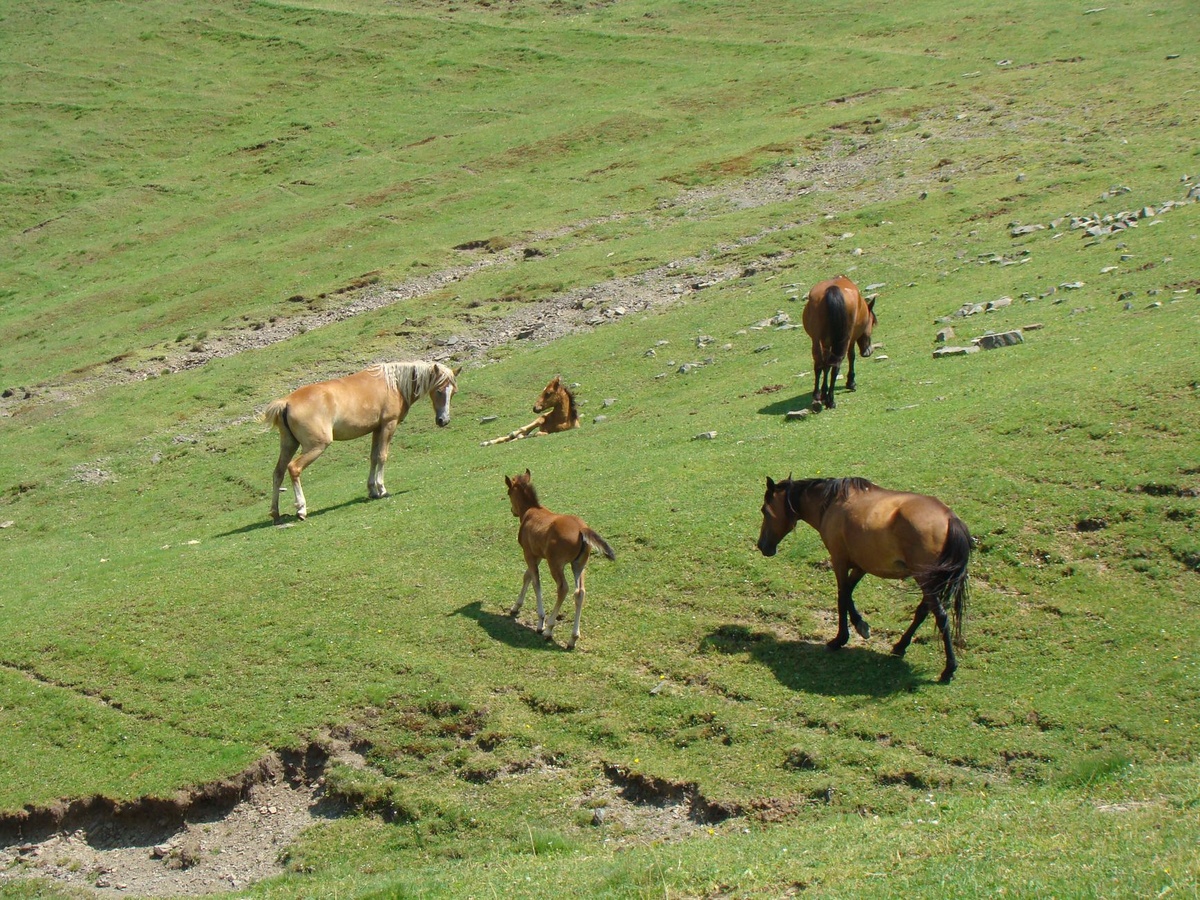
Song-Köl is already one of Central Asia’s great horse-trekking destinations, but September changes the calculation: fewer yurts, colder nights and dramatically darker skies. Time your four-day route around the new moon, book through Kochkor rather than improvising at the lake, and you can ride across empty jailoo grasslands by day and see the Milky Way above a 3,016-meter alpine lake by night.
Key Takeaways
- The best stargazing window is September 7–15, 2026, surrounding the September 11 new moon.
- A four-day private trek costs about €330–€480 per person for two riders, including horses, guide, yurts, meals and Kochkor transfers.
- Expect 18–27 km and five to seven hours in the saddle daily, crossing passes up to roughly 3,400 meters.
- Typical September nights fall to -2°C to 4°C, with snow and lows near -8°C possible after mid-month.
- Book through CBT Kochkor or a specialist operator at least two weeks ahead because many yurt camps close between September 15 and 25.
Key numbers at a glance
| Planning number | September 2026 estimate | Why it matters |
|---|---|---|
| Lake elevation | 3,016 m | Cold nights and stronger UV than in Kochkor |
| Highest pass | About 3,400 m | Snow can briefly block the route |
| Total riding distance | Approximately 82–92 km | Four days averaging 18–27 km |
| Daily riding time | 5–7 hours | Longer than the standard three-day circuit |
| September new moon | September 11, 2026 | Darkest practical stargazing window |
| Typical nighttime low | -2°C to 4°C | A comfort-rated -10°C sleeping bag is sensible |
| Private trek for two | €330–€480 per person | Includes horses, guide, meals, yurts and local transfers |
| Bishkek to Kochkor | 190 km; 3.5–5 hours | Shared transport is slower but much cheaper |
| Kochkor to Kyzart | 72 km; 1.5–2 hours | Normally arranged by the trekking operator |
Prices in this guide are September 2026 planning figures. Euro conversions use an indicative rate of €1 to US$1.15; pay locally in Kyrgyz som and confirm the exchange rate before transferring a deposit.
Step 1: Pick the right September dates and moon phase
For stargazing, September 7–15 is the sweet spot. The new moon falls on September 11, 2026, while the surrounding nights provide long dark periods without the midsummer crowds found at Song-Köl in July and August.
The September 26 full moon is beautiful but poor for faint stars. Around full moon, the illuminated landscape can be bright enough to walk between yurts without a headlamp, but the Milky Way loses much of its contrast.
| 2026 dates | Moon conditions | Stargazing verdict | September temperature risk |
|---|---|---|---|
| September 3–6 | Waning moon; darker after moonset | Good | Usually 0°C to 5°C overnight |
| September 7–15 | New moon September 11 | Best | Typically -2°C to 4°C overnight |
| September 16–21 | Increasing evening moonlight | Fair to good | Greater chance of frost and snow |
| September 22–30 | Full moon September 26 | Poor for the Milky Way | Lows can reach -5°C to -8°C |
September also sits in Kyrgyzstan’s version of the shoulder-season altitude shift: the valleys remain pleasant, but the high jailoo pastures are already moving toward winter. Song-Köl can receive snow during any month, and by late September nomadic families are dismantling camps and taking livestock downhill.
My recommendation: begin the trek on September 8, 9 or 10. You get dark skies near the lake while retaining a better chance of staffed yurts than during the final week of the month.
How to check the sky rather than guess
Use Timeanddate to reconfirm moonrise and moonset, then save the Song-Köl area in Windy before leaving Kochkor. Windy’s cloud-base and precipitation layers are more useful here than a generic phone forecast: Kochkor may be dry while snow falls 70 km away at the lake.
For stars, Stellarium Mobile offers a capable free version, while PhotoPills costs roughly €12 as of September 2026 and is better for planning Milky Way photographs. Stellarium identifies objects; PhotoPills tells a photographer where and when the Galactic Center will appear.
Step 2: Choose the correct four-day route
The best first-time route starts at Kyzart, climbs through Kilemche and Jalgyz-Karagai Pass, spends two nights around Song-Köl, then exits via Tuz-Ashuu. It has more scenery and more time under dark skies than rushing around the lake in three days.
Skip a four-day out-and-back ride from Kochkor. The flatter approach saves transfer money, but it substitutes dusty road riding for the mountain-pass experience that makes Song-Köl special.
Day 1: Kyzart to Kilemche jailoo
Distance: 20–24 km. Riding time: five to six hours. Elevation: approximately 2,200 m to 2,600 m.
Leave Kochkor around 7:30 a.m. for the 1.5- to two-hour drive to Kyzart, where the guide matches riders with horses. Most groups begin riding between 10:00 and 10:30 a.m.; starting after noon creates an unnecessary race against the early September sunset.
The first day crosses open farmland before climbing toward Kilemche’s summer pasture. Compared with Day 2’s steep pass, this is forgiving terrain and the right place to learn local reins, which are normally held in one hand.
A basic Kilemche yurt has mattresses on the floor, blankets, an outdoor squat toilet and often a washbasin rather than a shower. Expect dinner at about 7:00 p.m.; charging may be limited to a small solar battery.
Day 2: Kilemche to Song-Köl via Jalgyz-Karagai Pass
Distance: 18–22 km. Riding time: five to seven hours. Highest point: approximately 3,400 m.
This is the trek’s defining day. The ascent is steady, but the descent toward Song-Köl can be muddy, rocky and windy; walking the steepest 20–40 minutes is safer than proving something to a horse.
The lake usually appears suddenly below the pass, framed by tawny September grass and snow-dusted ridges. Reach the western or northwestern shore by mid-afternoon and request a yurt camp at least 300 meters from permanent vehicle tracks if stargazing matters.
A lakeside camp is colder than Kilemche. It is also much darker: Kochkor has shops and streetlights, while Song-Köl has virtually no fixed light pollution beyond yurt bulbs and occasional vehicle headlights.
Day 3: Song-Köl lakeshore and stargazing night
Distance: 18–25 km. Riding time: four to six hours. Elevation: mostly 3,016–3,150 m.
Ride east or south along the shore toward a second camp near Batai-Aral, Tulpar-Tash or Tuz-Ashuu, depending on weather and which September camps remain open. A point-to-point lake day is better than circling one camp because it creates a genuine journey and avoids retracing vehicle tracks.
Ask for a two-hour lunch stop rather than the usual quick tea break. Your legs will appreciate the recovery, and the open shore is ideal for photographing horses against the lake.
After dinner, allow your eyes 20 minutes without white light. Face south or southwest for the densest Milky Way star fields, and move at least 100 meters from the dining yurt—its single LED bulb can still ruin a long exposure.
Day 4: Song-Köl to Kyzart via Tuz-Ashuu
Distance: 24–27 km. Riding time: six to seven hours. Descent: roughly 1,000 meters.
The final day climbs away from the lake before a long descent toward Kyzart. It is longer than Day 1, so leave by 8:30 a.m. and keep lunch concise if you need to return to Kochkor before dark.
Expect to reach Kyzart between 3:00 and 5:00 p.m., followed by the two-hour drive to Kochkor. Do not book an evening bus to Bishkek; weather, horse changes and punctures can easily add two hours.
| Day | Route | Distance | Saddle time | Typical night |
|---|---|---|---|---|
| 1 | Kyzart–Kilemche | 20–24 km | 5–6 hours | Kilemche yurt |
| 2 | Kilemche–Jalgyz-Karagai–Song-Köl | 18–22 km | 5–7 hours | Northwest-shore yurt |
| 3 | Song-Köl lakeshore traverse | 18–25 km | 4–6 hours | South- or east-shore yurt |
| 4 | Song-Köl–Tuz-Ashuu–Kyzart | 24–27 km | 6–7 hours | Kochkor guesthouse |
Step 3: Decide between CBT, a specialist operator and independent booking
For most travelers, CBT Kochkor offers the best balance of price and local benefit. Contact Community Based Tourism through CBT Kyrgyzstan, then ask specifically for the Kochkor office and a four-day Kyzart–Kilemche–Song-Köl–Tuz-Ashuu itinerary.
Typical summer office hours are approximately 9:00 a.m.–6:00 p.m. daily, but September staffing can shrink. Send your request before arriving and reconfirm by phone or WhatsApp; online office hours are less reliable than direct confirmation in rural Kyrgyzstan.
For an English-language, pre-arranged trip with clearer online communication, compare Kyrgyz Riders and Jailoo Tourism. Packaged trips generally cost €390–€590 per person for four days, versus approximately €330–€480 booked locally for two riders.
Independent booking sounds cheaper, but it is awkward in September. Separate yurt camps may not know which neighboring family has already left the plateau, and few travelers can efficiently arrange horses, saddles, a guide and two transfers through four different contacts.
| Booking method | Price per person, Sept. 2026 | Lead time | Best for |
|---|---|---|---|
| CBT Kochkor, two riders | €330–€480 | 7–21 days | Value and community-based booking |
| Specialist online operator | €390–€590 | 14–30 days | Fixed logistics and stronger English support |
| Solo private departure | €580–€820 | 14–30 days | Flexible pace and photography |
| DIY horse and yurts | Potentially €250–€370 | Highly variable | Experienced Kyrgyz/Russian speakers only |
A clear decision framework
- Choose CBT Kochkor if you want the best price, can tolerate flexible paperwork and want more money to remain with local families.
- Choose Kyrgyz Riders or another specialist if you need prompt English communication, airport logistics or card/deposit support.
- Choose a private departure if photography is the priority; shared groups rarely wait 30 minutes for one composition.
- Choose three days instead of four if you have never ridden for more than four hours or have recurring knee, back or hip pain.
- Postpone rather than improvise if the pass receives sustained snow or the operator cannot confirm two staffed lakeside camps.
Ask whether the quoted price includes one riding horse per guest, an English-speaking guide, all meals, three yurt nights and both Kochkor–Kyzart transfers. A cheap quote often excludes the €60–€100 return vehicle or supplies only a Russian-speaking horseman.
Step 4: Book the right yurts—not just any “Song-Köl camp”
Yurt quality varies more than hotel quality in Bishkek. At the lake, a €28 community yurt may provide better food and warmer blankets than a €55 “glamping” yurt whose main advantage is an en-suite chemical toilet.
Budget camps generally charge €24–€35 per person with dinner and breakfast. More developed camps run €40–€65, while lunch or a packed picnic adds approximately €7–€12.
Confirm that the camp will remain open on your exact date. Many families start dismantling after September 15, and a listing that accepts an automated reservation is not proof that horses, food or running water will be available.
Send these questions before paying a deposit
- Is the camp staffed on all three nights of my trek?
- Are dinner, breakfast and drinking water included?
- Does the yurt have a stove, and will it be lit after dinner?
- Are blankets and mattresses supplied, or must I bring a sleeping bag?
- Is there a working toilet at each camp?
- Can batteries be charged, and is the electricity solar or generator-based?
- How far is the camp from the nearest vehicle track and outdoor lighting?
For stargazing, skip a large roadside camp with 15 yurts and tour vans. Choose a smaller camp with fewer than eight guest yurts, no generator after 10:00 p.m. and an unobstructed southern horizon.
Spend the nights before and after the trek in Kochkor. Guest House Mira and Center Guesthouse Kochkor commonly fall around €20–€35 for a private room with breakfast; browse hotels in Kochkor, but message the property directly about late check-in after Day 4.
In Kochkor, eat at Retro Cafe rather than relying on a guesthouse’s generic pasta. Budget roughly €4–€7 for lagman, manty and tea, compared with €10–€15 for a Western-style meal in Bishkek.
Step 5: Plan for below-freezing nights
Song-Köl’s 3,016-meter elevation matters more than the month printed on the calendar. A sunny September afternoon may reach 14°C, then fall below freezing within hours of sunset.
Historical patterns suggest daytime temperatures around 7°C–15°C and nighttime lows around -2°C–4°C in early to mid-September. A cold front can produce -8°C, strong wind and several centimeters of snow, especially after September 20.
A yurt stove warms the space quickly but rarely burns all night. The difference between a stove-heated evening and 4:00 a.m. can exceed 15°C, so blankets alone are not a dependable sleep system.
What to pack
- A sleeping bag comfort-rated to at least -5°C; choose -10°C if trekking after September 15.
- Thermal base layers, fleece and an insulated jacket rather than one bulky cotton sweater.
- Waterproof jacket and over-trousers; a poncho can flap around and alarm horses.
- Waterproof hiking boots with a defined heel, plus warm camp socks.
- Thin riding gloves and warmer insulated gloves for night photography.
- SPF 50 sunscreen and sunglasses; UV exposure at 3,000 meters is substantially higher than in Kochkor.
- A one-liter insulated bottle and a second one-liter bottle or hydration bladder.
- Personal medication, blister care and oral rehydration salts.
Renting a sleeping bag in Kochkor may cost about €5–€9 per day, or €20–€35 for the trek. Bring your own if you care about temperature ratings: locally rented bags may be labeled “winter” without an EN or ISO comfort rating.
Soft duffels work better than hard suitcases, but a 25–35-liter backpack is enough for four days. Leave the remainder at your Kochkor guesthouse, usually free or for approximately €1–€2 per day.
Step 6: Get from Bishkek to Kochkor and Kyzart
Kochkor is approximately 190 km from Bishkek. A shared minibus or shared taxi normally takes 3.5–5 hours and costs about 500–900 KGS, roughly €4.50–€8.50, while a private car takes around three hours and costs €65–€90 per vehicle.
Departure points in Bishkek can change as intercity routes are reorganized, so do not trust an old blog naming a particular bus bay. Ask your Bishkek hotel or CBT Kochkor to confirm the current departure point the day before.
Shared vehicles often leave when full rather than according to a strict timetable. Aim to depart Bishkek before 10:00 a.m.; a nominal noon departure can become 1:30 p.m. while the driver waits for the final seats to sell.
| Transport | Price, Sept. 2026 | Duration | Trade-off |
|---|---|---|---|
| Shared minibus/taxi, Bishkek–Kochkor | €4.50–€8.50 per person | 3.5–5 hours | Cheapest, but departures may not be fixed |
| Private car, Bishkek–Kochkor | €65–€90 per vehicle | About 3 hours | Faster and door-to-door |
| Operator transfer, Kochkor–Kyzart return | €60–€100 per vehicle | 1.5–2 hours each way | Coordinates directly with horses and guide |
| Private Bishkek–Kyzart transfer | €110–€160 per vehicle | 4.5–5.5 hours | Saves a night but creates a very long first day |
Sleep in Kochkor before the trek rather than driving directly from Bishkek to Kyzart at dawn. The extra €20–€35 buys a rested start, time to inspect equipment and a chance to resolve missing dietary or payment details.
If you like logistics-heavy independent trips, our step-by-step Kruger planning guide uses a similar rule: protect the first operational day with a nearby overnight stop instead of gambling on a long same-day transfer.
Step 7: Prepare your phone, maps and camera for offline use
Do not expect dependable mobile data around Song-Köl. Signal may appear on a ridge and disappear at camp; MegaCom and Beeline coverage in Kochkor does not imply service behind Jalgyz-Karagai Pass.
Download the Kyrgyzstan region in Organic Maps or Maps.me before leaving Bishkek. Organic Maps is free and cleaner for offline trail context, while Gaia GPS offers stronger topographic tools but costs roughly €40–€60 per year depending on the plan and region.
An eSIM helps in Bishkek and Kochkor, though it cannot manufacture coverage at the lake. Compare a regional plan from Airalo with a local MegaCom SIM; an eSIM may cost €8–€15 for several gigabytes, while a local package can be below €7 but requires shop registration.
Carry a 20,000 mAh power bank, which provides roughly three to four modern phone charges and costs about €25–€45. A 10,000 mAh bank is lighter but may not last four cold days if you also use the phone for navigation and long-exposure photography.
Stargazing photography setup
A phone with a dedicated astrophotography mode can produce a convincing result, particularly on a small tripod. For a camera, start near 14–20 mm, f/1.8–f/2.8, ISO 3200 and 10–20 seconds, then adjust to prevent star trails.
Cold drains batteries quickly. Keep spares inside your jacket and bring a red-light headlamp; red light preserves night vision far better than repeatedly switching on a 400-lumen white beam.
Save coordinates for both yurt camps, the Kyzart trailhead and Kochkor accommodation. Share the itinerary with someone off-route, but treat the guide—not your downloaded line—as the primary navigation resource when snow obscures the trail.
Step 8: Budget the trek realistically
A four-day Song-Köl trek is inexpensive compared with guided riding in the Alps, but September’s lower demand does not halve the price. Guides, horses and transfers still carry fixed costs even when yurts are quieter.
The following budget assumes two people sharing guide and vehicle costs, three yurt nights, one pre-trek and one post-trek night in Kochkor, and shared transport from Bishkek.
| Expense for one traveler | Budget estimate | Comfort estimate |
|---|---|---|
| Four-day trek package | €330 | €480 |
| Two Kochkor guesthouse nights | €40 | €70 |
| Bishkek–Kochkor return transport | €10 | €90 share of private cars |
| Kochkor meals outside trek | €18 | €35 |
| Sleeping-bag rental | €0, if bringing one | €30 |
| Tips | €25 | €45 |
| SIM, snacks and contingency | €25 | €50 |
| Total per person | €448 | €800 |
A realistic middle budget is about €575 per person, excluding international flights and Bishkek accommodation. Solo travelers should add €200–€350 because the guide and vehicle are no longer split.
A tip of €20–€35 per guest for the guide and €5–€10 per yurt household is reasonable for good service. Tips should reward service, not substitute for a properly agreed wage.
Guides, horses and safety
A local guide is essential, even if you can ride and navigate. September weather can erase trail visibility, camps can move without appearing online, and horses respond to commands and handling conventions that differ from European riding schools.
Ask for the guide’s language level, first-aid training and recent experience on the exact Kyzart route. “English-speaking guide” sometimes means basic meal and direction vocabulary; that is adequate for riding logistics but not for detailed astronomy or cultural interpretation.
Helmets are not universally supplied. Request one in writing and bring your own certified riding helmet if fit and availability matter; a climbing or cycling helmet is better than nothing, but neither is designed for identical equestrian impacts.
Travel insurance must include horse riding above 3,000 meters and emergency evacuation. A basic policy that covers hiking only below 2,500 meters may reject a Song-Köl claim.
There is no routine helicopter-rescue system comparable to the Alps. Evacuation usually begins with a horse or 4WD to a road, making conservative decisions substantially more important than shaving an hour from the schedule.
Common Song-Köl planning mistakes
Booking the full-moon week for “better night views”
A bright moon illuminates the lake but suppresses faint stars. Pick September 7–15 for the Milky Way; choose September 24–28 only if moonlit landscapes matter more than deep-sky visibility.
Assuming all yurt camps remain open through September
Some do, many do not. A four-day trek beginning September 24 has fewer backup camps than one beginning September 9, despite potentially lower prices.
Wearing jeans for six hours in the saddle
Denim seams create friction and dry slowly. Stretch hiking trousers or riding tights cost no extra if you already own them and are markedly more comfortable after 20 km.
Trying to ride immediately after arriving from Bishkek
The apparent three-hour drive can become five. Stay in Kochkor, start rested and use the afternoon to buy cash, water and missing layers.
Failing to define what “all-inclusive” means
Ask about transfers, drinking water, lunches, sleeping bags and the guide’s meals. A €300 headline price can become €420 once a vehicle and equipment rental are added.
Planning an immediate international flight after the trek
Snow, a lame horse or a delayed vehicle can shift the return by half a day. Keep one full buffer night in Bishkek before flying.
Final verdict: Is four days the right length?
Four days is the best Song-Köl format for travelers who can tolerate repeated five-hour riding days and want two serious stargazing opportunities. Three days saves roughly €70–€130, but one cloudy lake night can eliminate the astronomy portion entirely.
Book an early-to-mid-September departure, pay for an experienced local guide and prioritize a small, dark yurt camp over decorative “glamping.” Contact CBT Kochkor or a specialist operator now, request the Kyzart–Kilemche–Song-Köl–Tuz-Ashuu route in writing, and confirm every camp again 48 hours before departure.
Frequently Asked Questions
How much does a four-day Song-Köl horse trek cost?
For two travelers, expect €330–€480 per person in September 2026, including horses, a guide, three yurt nights, meals and Kochkor–Kyzart transfers. A private solo departure usually costs €580–€820.
When is the best time to visit Song-Köl for stargazing?
September 7–15, 2026 is the strongest window because the new moon falls on September 11. Early September also has more open yurt camps and a lower snow risk than the final week of the month.
How cold is Song-Köl in September?
Daytime temperatures are commonly 7°C–15°C, while nights generally fall to -2°C–4°C. Cold fronts can push temperatures to about -8°C, so bring a sleeping bag comfort-rated to at least -5°C.
Do I need horse-riding experience for Song-Köl?
Beginners can complete the route with a good guide, but four consecutive days of five to seven hours are physically demanding. If you have never ridden, arrange a practice ride first or choose the shorter three-day circuit.
Can I trek to Song-Köl without a guide?
Independent travel is possible, but it is a poor September choice because camps close, trails can disappear under snow and mobile coverage is unreliable. A guide shared by two riders adds roughly €60–€100 per person across four days and materially improves safety.

About the Author: Tomáš Bzirský
Founder and editor of Distratech. Based in the Czech Republic, travelling regularly from Central Europe. Writes practical travel guides and travel-tech comparisons (eSIM, apps, airports) in six languages.