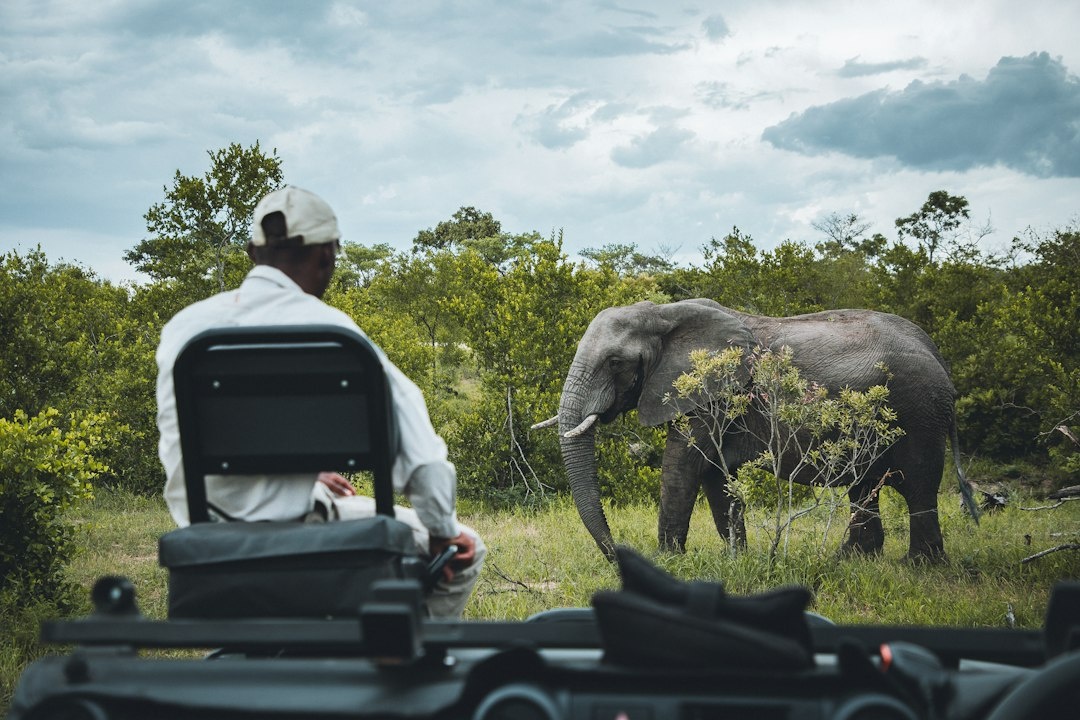
Kruger is one of the few world-class safari parks where you can rent an ordinary car, sleep behind secure camp gates and find elephants without hiring a guide. The catch is logistical: rest camps sell out months ahead, 95 kilometers can take five hours, and arriving after the gate closes can wreck the first night of your trip.
Key Takeaways
- Book Kruger rest camps through SANParks up to 11 months ahead; Lower Sabie and Satara usually disappear first.
- A practical 10-day loop from Johannesburg covers roughly 1,450–1,650 kilometers with nine nights inside the park.
- September 2026 gate hours are 06:00–18:00, and wildlife viewing is excellent in the dry, increasingly warm conditions.
- A compact SUV costs about €45–€65 per day; skip the expensive 4×4 because Kruger’s public roads are suitable for normal cars.
- Two travelers should budget approximately €2,400–€2,750 excluding international flights.
Key Numbers at a Glance
Kruger is roughly the size of Wales, but this itinerary deliberately stays in the wildlife-rich southern and central sections. Compared with racing north to Punda Maria, the loop gives you more game-drive time and roughly 700 fewer kilometers behind the wheel.
| Planning detail | 2026 figure | Why it matters |
|---|---|---|
| Route length | Approximately 1,450–1,650 km | Includes Johannesburg transfers and game-drive loops |
| Park nights | 9 nights | 1 Berg-en-Dal, 2 Lower Sabie, 3 Satara, 2 Skukuza, 1 Berg-en-Dal |
| Maximum road speed | 50 km/h paved; 40 km/h gravel | Real wildlife-viewing average is closer to 20–25 km/h |
| September gate hours | 06:00–18:00 | Be back 15 minutes early rather than risking a penalty |
| International conservation fee | R602/€29 per adult per day | Published 2025/26 tariff applicable through October 2026 |
| International couple Wild Card | Approximately R6,495/€317 | Usually cheaper than ten daily fees for two adults |
| Recommended booking lead time | 9–11 months | Especially important for Lower Sabie and school holidays |
| Fuel inside and near Kruger | About R22/€1.07 per liter | Planning rate for September 2026; prices fluctuate monthly |
Euro conversions in this guide use a planning exchange rate of €1 = R20.50 in September 2026. SANParks charges in South African rand, so check your card’s exchange rate before paying.
Step 1: Choose the Right Month and Route
September is one of Kruger’s best months. Winter’s dry conditions concentrate animals around rivers and permanent water, while daytime temperatures generally climb to 26–31°C without the oppressive humidity of midsummer.
It is shoulder season across much of southern Africa, but do not assume Kruger will be empty or heavily discounted. September wildlife conditions are better than in lush February, so popular camps can be just as difficult to book even though Johannesburg flights may be cheaper.
The decision framework
- Choose September if animal visibility, mild mornings and lower malaria risk matter more than green landscapes.
- Choose November to March if you want migratory birds, newborn impala and dramatic thunderstorms, but can tolerate 35°C heat.
- Choose the southern loop in this guide if it is your first safari and you want the best balance of big cats, short transfers and reliable facilities.
- Choose northern Kruger if rare birds, baobabs and solitude matter more than ticking off the Big Five.
- Choose private reserves if off-road tracking and luxury are priorities; expect €450–€1,200 per person nightly versus roughly €90–€130 per room in SANParks camps.
The south has heavier traffic than the far north, but animal density is considerably higher. For a first trip, skip the temptation to cover all 350 kilometers from Crocodile Bridge to Pafuri; do a focused southern-central circuit instead.
Step 2: Book the Rest Camps in the Correct Order
Use the official SANParks reservations website, not a third-party lodge marketplace. SANParks inventory normally opens about 11 months ahead, with online booking sometimes opening after other reservation channels.
Create an account before release day and search by individual camp. A “BD2” code generally indicates a two-bed bungalow, but kitchen, bathroom and perimeter position vary, so open the unit description rather than relying on the code alone.
Book these camps first
- Lower Sabie: Secure this first because river-facing bungalows and safari tents disappear quickly.
- Satara: Book next for access to Kruger’s best lion country.
- Skukuza: Large inventory makes it easier to find, but weekends still fill.
- Berg-en-Dal: Usually the easiest of the four, making it a useful first and final stop.
| Camp and unit | Typical 2025/26 rate | EUR, September 2026 | Best feature |
|---|---|---|---|
| Berg-en-Dal two-bed bungalow | From about R2,090/night | €102 | Excellent rhino country and easy Malelane Gate access |
| Lower Sabie safari tent | From about R1,815/night | €89 | Good value close to the Sabie River |
| Lower Sabie two-bed bungalow | From about R2,650/night | €129 | Prime river location; hardest booking |
| Satara two-bed bungalow | From about R2,165/night | €106 | Central position for lion and cheetah drives |
| Skukuza two-bed bungalow | From about R2,240/night | €109 | Largest shop, fuel station and restaurant choice |
Price basis: representative SANParks 2025/26 base rates viewed for planning in September 2026. Unit type, occupancy, kitchen facilities and tariff updates can alter the final amount; confirm the rand total in the SANParks booking engine before paying.
My preference is a basic bungalow with a private bathroom and kitchenette. Safari tents can save €15–€35 nightly, but paying extra for a river-facing unit at Lower Sabie is worthwhile; paying extra for a larger family cottage at Satara usually is not.
If Lower Sabie is unavailable, book Crocodile Bridge rather than abandoning the route. Crocodile Bridge to Satara is about 114 kilometers, while Pretoriuskop to Satara is closer to 150 kilometers and passes through less productive game-viewing terrain.
How to complete the reservation
- Book all nine nights under one SANParks profile where possible.
- Check whether conservation fees have been added or whether you will present a Wild Card.
- Pay online and download every confirmation PDF.
- Recheck the unit codes, arrival dates and guest names immediately.
- Review cancellation terms before changing anything; fees increase closer to arrival.
- Save confirmations offline because mobile data inside Kruger is inconsistent.
Check cancellations weekly if your preferred unit is unavailable. One night often reappears 30–60 days before arrival, whereas waiting for a perfect nine-night block can leave you with nothing.
Step 3: Rent the Right Car at Johannesburg Airport
Pick up at Johannesburg O.R. Tambo International Airport and use an established operator such as Avis, Budget, Europcar, Woodford or First Car Rental. Airport pickup is usually €5–€12 per day more than an off-airport branch, but it can save two hours and an additional taxi transfer.
| Vehicle type | Typical rate, September 2026 | Fuel use | Verdict |
|---|---|---|---|
| Economy hatchback | €28–€40/day | 5.5–6.5 L/100 km | Cheapest, but low seating makes grassland sightings harder |
| Compact automatic SUV | €45–€65/day | 7–8 L/100 km | Best choice for two people |
| Large 4×4 | €85–€130/day | 10–13 L/100 km | Unnecessary on Kruger’s public roads |
| Small camper | €70–€110/day | 9–12 L/100 km | Only worthwhile if using campsites instead of bungalows |
Choose a compact automatic SUV such as a Toyota Corolla Cross, Volkswagen T-Cross or similar. The extra 15–25 centimeters of seating height is more useful than four-wheel drive when a leopard is lying behind tall grass.
Skip the full-size 4×4. All public tourist roads on this route are paved or maintained gravel, and a 4×4 could cost €500 more over ten days while consuming roughly 60 additional liters of fuel.
Insurance details that matter
Basic rental quotes can carry an excess of R20,000–R40,000, equivalent to roughly €975–€1,950. Full excess reduction commonly adds €14–€25 per day, but check whether tires, windscreen, underbody and single-vehicle gravel-road damage remain excluded.
Photograph every panel, tire and wheel at pickup. Confirm that the spare tire, jack and wheel wrench are present; a puncture 40 kilometers from camp is more consequential than a scratched bumper.
You do not need a cross-border letter if remaining in South Africa. Drivers with licenses not printed in English should carry an International Driving Permit alongside the original license.
Step 4: Understand Gate Times and Arrival Rules
Kruger’s external gates and internal rest-camp gates follow seasonal hours. September gives you a 12-hour driving window, compared with only 11.5 hours in June and 13 hours in December.
| Month | Gate opening | Gate closing |
|---|---|---|
| January–February | 05:30 | 18:30 |
| March | 05:30 | 18:00 |
| April | 06:00 | 18:00 |
| May–July | 06:00 | 17:30 |
| August–September | 06:00 | 18:00 |
| October | 05:30 | 18:00 |
| November–December | 05:30 | 18:30 |
Confirm the current schedule on the official Kruger National Park page because operational notices can override published hours. Reception hours and gate hours are not always identical.
For this route, enter through Malelane Gate, 12 kilometers from Berg-en-Dal. It is a longer park transfer than entering at Crocodile Bridge, but the Johannesburg drive is simpler and you avoid the R538 approach to Numbi Gate, where security incidents have periodically been reported.
Do not schedule a Johannesburg arrival after 10:00 and expect to reach Berg-en-Dal comfortably. O.R. Tambo to Malelane Gate is around 390 kilometers and takes 4.5–5.5 hours without a long supermarket stop.
Late-arrival escorts may sometimes be arranged at selected gates for a fee, but availability is not guaranteed. A €65 airport hotel is cheaper than forfeiting a €102 bungalow and driving unfamiliar roads after dark.
Step 5: Follow This 10-Day Kruger Self-Drive Itinerary
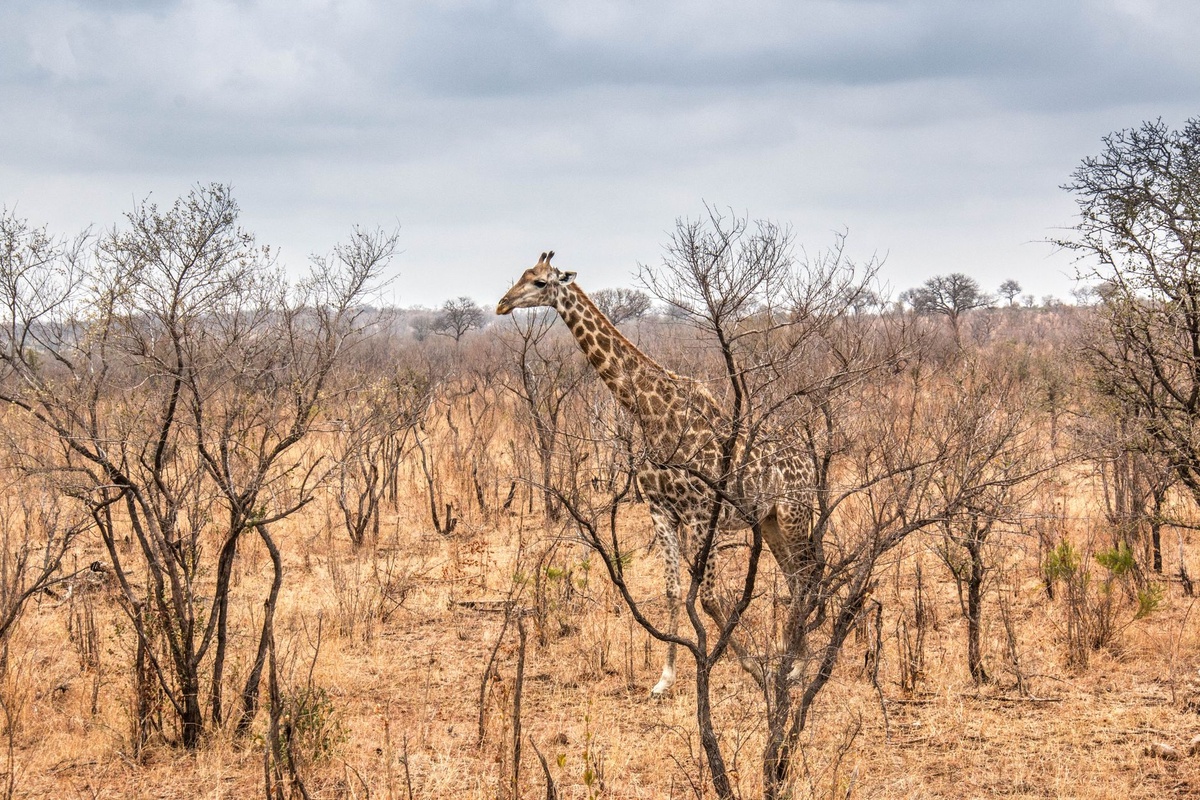
This loop uses nine park nights and returns to Johannesburg on day ten. Direct camp-to-camp distances look short, but stopping for animals turns a 95-kilometer transfer into a half-day outing.
| Day | Route | Planned distance | Realistic driving time | Night |
|---|---|---|---|---|
| 1 | Johannesburg to Malelane Gate and Berg-en-Dal | 410 km | 5.5–6.5 hours | Berg-en-Dal |
| 2 | Berg-en-Dal to Lower Sabie | 100–140 km | 4–6 hours | Lower Sabie |
| 3 | Lower Sabie river and plains loop | 65–85 km | 4–5 hours | Lower Sabie |
| 4 | Lower Sabie to Satara | 95–130 km | 4–6 hours | Satara |
| 5 | Satara eastern grassland loop | 70–100 km | 4–6 hours | Satara |
| 6 | Satara western loop and waterholes | 65–90 km | 4–5 hours | Satara |
| 7 | Satara to Skukuza | 95–150 km | 4–7 hours | Skukuza |
| 8 | Skukuza, Lake Panic and river roads | 50–80 km | 3–5 hours | Skukuza |
| 9 | Skukuza to Berg-en-Dal | 70–120 km | 3–6 hours | Berg-en-Dal |
| 10 | Berg-en-Dal to Johannesburg | 410 km | 5.5–6.5 hours | Departure |
Day 1: Johannesburg to Berg-en-Dal
Collect the car, take the N12 and N4 east, and stop at a large supermarket in Mbombela or Malelane. Groceries outside Kruger are roughly 15–25% cheaper than camp shops, with a basic two-person food shop costing about R1,200/€59.
Allow 30 minutes for entry paperwork at Malelane Gate and another 25–40 minutes for the 12-kilometer drive to camp. Check in, then use any remaining daylight on the Matjulu waterhole road rather than attempting a long loop.
Day 2: Berg-en-Dal to Lower Sabie
The direct distance is approximately 94 kilometers, but use a combination of the H3 and connecting roads depending on recent sightings and road conditions. Leave at 06:00 and plan to arrive between 12:00 and 14:00.
The Berg-en-Dal area is strong for white rhino, while the Sabie River corridor improves your odds of elephant, lion and leopard. Pack breakfast rather than waiting for the camp restaurant to open.
Day 3: Lower Sabie Loops
Drive west along the H4-1 beside the Sabie River at opening, then turn around before the route becomes a race to Skukuza. A 70-kilometer morning outing gives you more observation time than a 140-kilometer all-day dash.
Stop for brunch at Mugg & Bean overlooking the river. The view justifies a R130/€6.35 breakfast, but service can be slow; cooking at your bungalow is faster and roughly half the price.
Day 4: Lower Sabie to Satara
Take the H10 north through open grassland toward Tshokwane, then continue to Satara. This is one of the route’s best cheetah and lion sections, so budget five hours for approximately 95 direct kilometers.
Tshokwane is a better lunch stop than rushing into Satara. Watch your food closely: vervet monkeys and baboons are far quicker than first-time visitors expect.
Days 5 and 6: Satara Predator Country
Spend two full days exploring rather than changing camps again. The S100 east of Satara is famous for lions, but its reputation attracts convoys; drive it at gate opening, then use quieter alternatives later.
On day six, try the H7 toward Orpen and the Nsemani Dam area. A 75-kilometer loop at 20 km/h gives you almost four hours of observation, compared with only two hours if you drive continuously at the paved-road limit.
Book one SANParks sunset drive from Satara, typically around R460–R560/€22–€27 per person. A guided vehicle can remain out after the public gates close and uses spotlights, making nocturnal sightings possible.
Day 7: Satara to Skukuza
The paved H1-2 via Tshokwane is approximately 93 kilometers and the safest choice if you have already had several long days. If energy and road conditions allow, add selected gravel sections and cap the total at 150 kilometers.
Do not detour all the way to Olifants for lunch; that can add more than 130 kilometers to the day. Save northern Kruger for a separate trip rather than treating camps like motorway service stations.
Day 8: Skukuza and Lake Panic
Reach Lake Panic bird hide shortly after opening, before it becomes crowded. It is only about seven kilometers from Skukuza, yet you can easily spend two hours watching kingfishers, crocodiles and hippos.
For dinner, choose Cattle Baron in Skukuza for steaks around R260–R360/€13–€18. It is more polished than most park restaurants, but a self-catered braai remains cheaper: steak, vegetables and charcoal for two cost roughly R300/€15.
Day 9: Skukuza to Berg-en-Dal
The direct paved route is around 65–70 kilometers, leaving time for a final slow drive around Afsaal and the southern waterholes. Keep the afternoon light because packing, fueling and checking the next day’s road conditions take longer than expected.
Book a sunset drive here if you skipped Satara. Berg-en-Dal’s rocky habitat produces different sightings, including rhino, leopard and occasional wild dog.
Day 10: Return to Johannesburg
Leave camp at 06:00, exit Malelane and plan for at least six hours to O.R. Tambo including fuel and a short break. For an international flight, schedule departure after 19:00 or stay near the airport and fly the following morning.
A same-day 16:00 flight leaves almost no margin for roadworks, a rental-car dispute or an elephant blocking the camp road. Saving a €70 hotel night is not worth missing a long-haul flight.
Step 6: Calculate the Real 2026 Cost
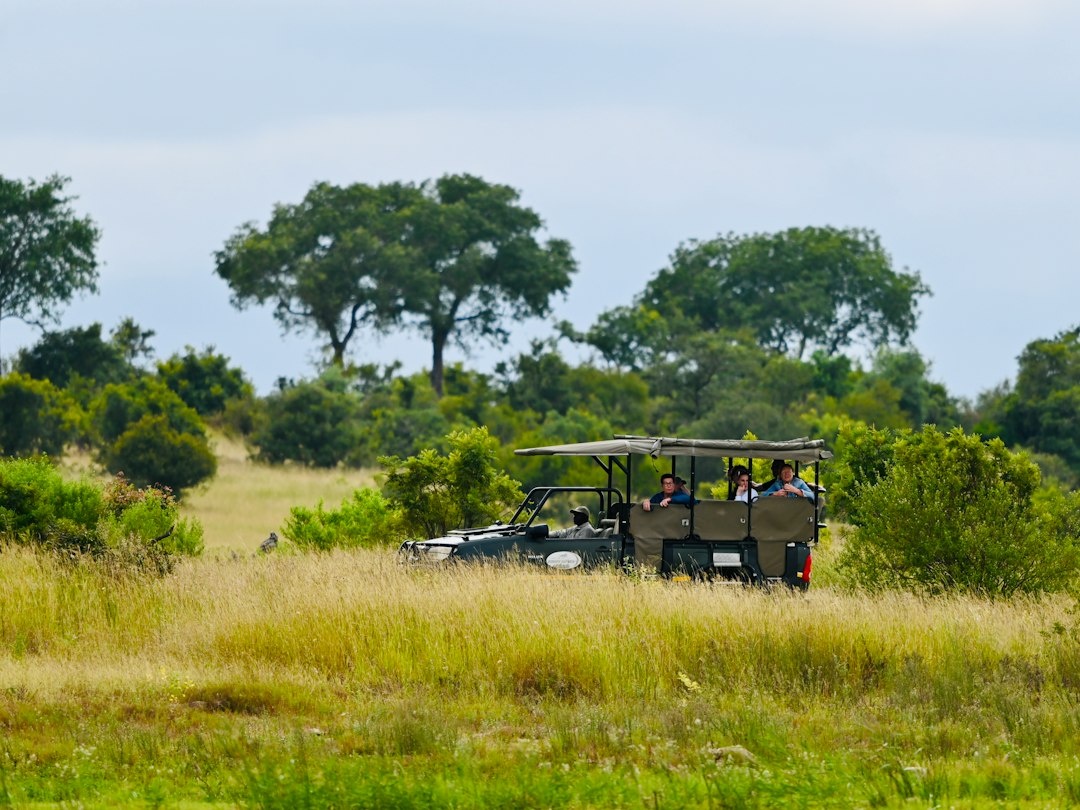
The following budget is for two adults sharing a compact SUV and basic bungalows in September 2026. It excludes international flights but includes a conservative ten fee-days of conservation access; SANParks’ checkout may calculate fees according to booked nights and reservation structure.
| Expense for two | Calculation | Estimated EUR |
|---|---|---|
| Nine rest-camp nights | Average €105 × 9 | €945 |
| Compact SUV rental | €52 × 10 days | €520 |
| Insurance upgrade | €18 × 10 days | €180 |
| Fuel | 1,550 km at 7.5 L/100 km | €125 |
| Tolls | N4 return journey | €25 |
| International couple Wild Card | Approx. R6,495 | €317 |
| Groceries and restaurant meals | €35/day average | €350 |
| Two guided drives | About €25 × 4 places | €100 |
| Contingency | Puncture, snacks, price changes | €150 |
| Total for two | Excluding flights | €2,712 |
A tighter plan with an economy car, safari tents and self-catering can fall near €2,250. A larger SUV, river-view bungalows and daily restaurant meals push the same trip beyond €3,200.
At R602/€29 per international adult per day, two adults paying ten daily fees would spend around R12,040/€587. An international couple Wild Card at approximately €317 saves about €270, although you must confirm current eligibility, validity and product pricing before purchase.
Step 7: Set Up Maps, Connectivity and Safari Tech
Google Maps is adequate for the Johannesburg transfer but not ideal for judging wildlife-drive durations. Download the region offline and carry a paper Kruger map from the gate shop for approximately R120–R180/€6–€9.
For detailed offline navigation, Tracks4Africa is more useful than relying on mobile reception. The KrugerExplorer app is also excellent for route descriptions, animal information and offline points of interest, though its one-off cost is higher than free Google Maps.
- Download offline maps before leaving Johannesburg.
- Save SANParks confirmations and Wild Card proof as PDFs and screenshots.
- Carry a dual USB car charger and a 20,000 mAh power bank.
- Use binoculars with 8x or 10x magnification; phone zoom cannot replace them.
- Keep the camera geotagging function offline to reduce battery and data use.
- Do not publish live rhino locations on sightings groups.
Vodacom generally has broader coverage than smaller networks, but dead zones remain common between camps. A South African prepaid SIM can cost roughly €10–€20 with data, compared with airport roaming packages that may exceed €8 per day.
If your Johannesburg itinerary includes a connection through Jeddah, our guide to using Saudi Arabia’s 96-hour stopover visa explains how to turn the layover into a short city break without adding a separate long-haul ticket.
Food, Fuel and Daily Safari Routine
Skukuza, Lower Sabie, Satara and Berg-en-Dal all have shops, restaurants and fuel stations, but stock and opening times vary. Outside supermarkets are cheaper and offer better produce, while camp shops are best treated as top-up points.
Fill the tank whenever it drops below half. A compact SUV may have a theoretical range above 600 kilometers, but a closed fuel station is much less stressful when you still have 250 kilometers remaining rather than 40.
A practical daily schedule
- 05:20: Wake, make coffee and pack breakfast.
- 05:50: Join the gate queue for the 06:00 September opening.
- 06:00–10:00: Main game drive while temperatures are lower.
- 10:00–15:00: Breakfast, rest, swim, shop and charge devices.
- 15:00–17:45: Short afternoon drive near camp.
- 17:45: Return before the 18:00 gate closure.
Two focused drives totaling seven hours usually beat a 12-hour marathon. You will be more attentive, use less fuel and avoid spending the hottest hours watching sleeping lions.
Common First-Time Kruger Mistakes
Driving too far each day
A 200-kilometer game drive can consume ten hours at a realistic 20 km/h average. Keep most days below 100 kilometers and stop when sightings are good rather than chasing pins from a sightings board.
Booking outside the park to save a little money
An external lodge may save €20 nightly, but repeated gate queues can cost 30–60 minutes every morning. Inside-camp guests are already positioned near wildlife at opening time, which is worth more than a slightly better hotel breakfast.
Arriving at the gate near closing time
Google’s estimate assumes normal traffic, not elephants, roadworks or entry paperwork. Build in at least 90 minutes of margin on transfer days and aim for camp 30 minutes before closure.
Buying an expensive 4×4
Ground clearance and seat height are helpful; low-range gearing is not. A €55 compact SUV provides most of the viewing advantage for roughly half the price of a €110 4×4.
Leaving food visible
Baboons can open poorly secured doors and monkeys target outdoor tables. Lock food inside the bungalow or car, and never leave fruit or bread beside an open window.
Treating a sightings app as a promise
A lion reported 25 minutes ago may have disappeared into grass before you arrive. Use reports as context, not instructions, and avoid speeding or joining dangerous roadside clusters.
Ignoring malaria precautions
Kruger is in a malaria-risk area, even though September is generally drier and lower risk than midsummer. Consult a travel-health professional, use repellent containing DEET or picaridin, and wear long sleeves around dawn and dusk.
Final Verdict: The Best First Kruger Plan
Book nine nights inside the park, rent a compact automatic SUV and concentrate on Berg-en-Dal, Lower Sabie, Satara and Skukuza. This route costs roughly €2,700 for two and delivers more useful wildlife time than an ambitious south-to-north crossing.
Start by checking Lower Sabie and Satara availability on SANParks, then build the remaining nights around those dates. Save this itinerary, download the confirmations offline and share it with your travel partner before either of you books non-refundable flights.
Frequently Asked Questions
How much does a 10-day Kruger self-drive safari cost in 2026?
Budget approximately €2,400–€2,750 for two adults sharing a compact SUV and nine SANParks rest-camp nights, excluding flights. An economy car and safari tents can reduce the total to around €2,250.
How far in advance should I book Kruger rest camps?
Book 9–11 months ahead for September, school holidays and popular camps such as Lower Sabie and Satara. If your dates are sold out, check cancellations weekly and consider Crocodile Bridge as a Lower Sabie substitute.
Do I need a 4×4 for a Kruger self-drive safari?
No. Kruger’s public tourist roads are suitable for ordinary cars, although a compact SUV’s higher seating position improves visibility; expect €45–€65 per day versus €85–€130 for a large 4×4.
What time do Kruger gates open and close in September?
In September 2026, published gate hours are 06:00–18:00. Aim to return at least 15 minutes before closing and verify temporary changes with SANParks.
Is September a good month for a Kruger safari?
Yes. September combines dry vegetation, concentrated water sources and typical daytime highs around 26–31°C, producing better visibility than the lush summer months.

About the Author: Tomáš Bzirský
Founder and editor of Distratech. Based in the Czech Republic, travelling regularly from Central Europe. Writes practical travel guides and travel-tech comparisons (eSIM, apps, airports) in six languages.