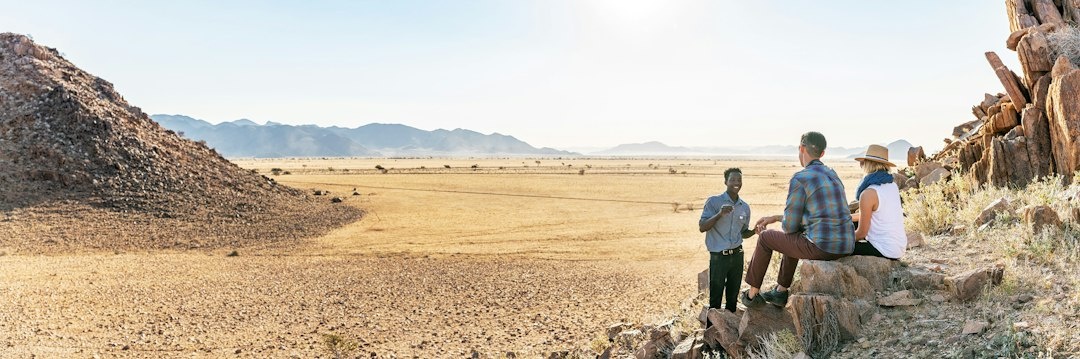
Namibia in September rewards families who can handle extremes: 32°C afternoons, 8°C dawn game drives, 300-kilometre gravel-road days and wildlife sightings that begin before breakfast. This 12-day case study follows a realistic Etosha–Damaraland–Swakopmund–Sossusvlei circuit for two adults and two children, costing approximately €6,440 before international flights.
Key Takeaways
- Allow 12 days and roughly 2,560 kilometres for Etosha, Damaraland, Swakopmund and Sossusvlei without rushing every stop.
- A lodge-based trip for two adults and two children costs about €6,440 in September 2026, excluding international flights.
- September temperatures range from approximately 8°C before sunrise to 34°C after lunch, so pack fleece layers alongside sun protection.
- Rent a high-clearance 4WD for about €125 per day with reduced excess; a 2WD saves €30–€40 daily but is less forgiving on corrugated gravel.
- Book Etosha and Sossusvlei accommodation six to nine months ahead, even though September is technically shoulder season elsewhere.
Key Numbers at a Glance
| Trip metric | Family case study | Planning note |
|---|---|---|
| Travel dates | 12 days / 11 nights in September 2026 | Dry season, excellent waterhole viewing |
| Travel party | 2 adults + children aged 8 and 11 | Under-16s enter most national parks free |
| Total distance | Approximately 2,560 km | About 1,350 km on gravel or park roads |
| Longest drive | Sossusvlei to Windhoek, 365 km | Allow 5–5.5 hours plus breaks |
| Vehicle | Toyota Fortuner-class 4WD | Approximately €125/day, September 2026 |
| Fuel used | About 315 litres | Based on 11 L/100 km plus detours |
| Typical temperatures | 8–34°C inland; 12–19°C on the coast | A 20°C daily swing is normal |
| Total family cost | €6,440 excluding flights | €146 per person per day |
All euro prices in this guide are September 2026 planning prices, converted at approximately €1 = N$20.5. Namibia’s dollar is pegged one-to-one with the South African rand, which is accepted throughout the country.
Is September Really the Best Month for This Route?
For wildlife, yes. Etosha’s natural water sources are at their driest, so elephants, giraffes, zebra and antelope concentrate around permanent waterholes instead of disappearing into summer vegetation.
September is often called shoulder season globally, but Namibia is the contrarian exception. A family room at Onguma Bush Camp can cost around €310 per night in September versus €230–€250 in wetter February, and the most useful rooms sell out months earlier.
The trade-off is temperature. Etosha commonly reaches 30–34°C between 13:00 and 16:00, while pre-dawn drives can begin at 8–12°C; Sossusvlei has a similar range, and foggy Swakopmund may struggle to reach 19°C.
Compared with July, September provides roughly 45–60 minutes more daylight and warmer swimming-pool weather. Compared with October, it is usually 2–4°C cooler and less likely to produce punishing 38°C afternoons.
The 12-Day Namibia Family Itinerary
Day 1: Arrive in Windhoek
Hosea Kutako International Airport sits approximately 45 km east of central Windhoek. The drive takes 40–50 minutes, but allow two hours to collect a vehicle, inspect the tyres and complete the rental briefing.
Stay at Avani Windhoek Hotel or a comparable central property; a family room with breakfast was approximately €145 in September 2026. Compare hotels in Windhoek, but book remote lodges directly because family-room configurations are often missing from aggregator listings.
Eat at Joe’s Beerhouse, where mains cost roughly N$190–N$320 (€9–€16) and the kitchen generally operates from midday until about 22:00. Order oryx steak rather than imported beef, but skip the oversized game-meat platters if the children are tired—they are expensive and more novelty than dinner.
Day 2: Windhoek to Otjiwa Safari Lodge
Drive 245 km in about three hours on the paved B1. This deliberately short day gives the family time to learn the vehicle before reaching Etosha’s slower park roads.
Otjiwa Safari Lodge, south of Otjiwarongo, charged around €210 for a family room with breakfast in September 2026. A late-afternoon rhino drive costs approximately €40 per adult and €20 per child, but it is optional when Etosha already dominates the itinerary.
Buying groceries in Otjiwarongo is smarter than carrying everything from Windhoek. Superspar and Checkers have better prices than lodge shops: five litres of water costs about €1.50 in town versus €3–€4 at a remote camp.
Day 3: Otjiwa to Eastern Etosha
The journey to Namutoni Gate is approximately 330 km and four hours before wildlife stops. Refuel in Tsumeb even if the gauge is above half; the next dependable choice may be inside Etosha at a higher price.
Base the family at Onguma Bush Camp, about 10 minutes outside the eastern gate. A family loft or adjoining-room arrangement costs about €310 per night including breakfast and dinner, compared with roughly €220–€270 for an NWR chalet at Namutoni.
Onguma wins on food, service and room condition. Namutoni wins if being inside the gate matters more than dinner quality, because outside guests must wait for the public gate to open around sunrise.
Day 4: Etosha’s Eastern Waterholes
Enter at opening and focus on Klein Namutoni, Chudop, Koinachas and Kalkheuwel. A 90–120 km loop can consume seven hours because the productive waterholes deserve 20–40 minutes each.
Etosha gates open at sunrise and close at sunset, with exact times posted daily. In mid-September, plan on approximately 06:30 to 18:40; arriving after closing can trigger a fine and creates unnecessary risk on wildlife-filled roads.
The best family rhythm is 06:30–11:00 in the park, lunch and a pool break, then 15:30–18:30 outside again. Six continuous midday hours produce fewer sightings than two shorter drives because temperatures exceed 30°C and animals retreat into shade.
Day 5: Cross Etosha to Okaukuejo
The direct Namutoni–Okaukuejo distance is about 140 km, but waterhole detours bring the day closer to 155 km and six or seven hours. Stop at Goas, Salvadora and Homob before continuing west.
Stay one night at Okaukuejo Resort, booked through Namibia Wildlife Resorts. A family chalet or two suitable adjoining rooms costs approximately €270 with breakfast, although room quality is inconsistent.
You stay here for the floodlit waterhole, not the hotel. After dinner, families can watch black rhino, elephants and jackals from benches a few metres from their beds; an outside lodge cannot replicate that access after park gates close.
Day 6: Okaukuejo to Twyfelfontein
Exit through Anderson Gate and drive approximately 340 km in 5.5–6 hours via Outjo and Khorixas. The paved section to Khorixas is easy; the C39 and D2612 become dusty, corrugated and slower.
Stop at Outjo Bakery for sandwiches and pastries rather than relying on the limited service stations farther west. Lunch for four is about €25 here versus €60–€80 at a lodge buffet.
Twyfelfontein Country Lodge costs around €280 per night for a family arrangement with dinner and breakfast. Its location is more valuable than luxury: driving another hour after sunset on these roads would be a poor saving.
Day 7: Damaraland Rock Art and Desert Wildlife
Visit the UNESCO-listed Twyfelfontein engravings at opening, generally 08:00–17:00, with the last guided walks departing before closing. Allow 90 minutes and carry water; the exposed sandstone becomes intensely hot by 11:00.
Admission and the required local guide together cost roughly €8–€12 per adult, with lower child rates depending on age. Tip the guide N$100–N$150 (€5–€7), particularly for a good explanation of the lion and seal engravings.
The Organ Pipes and Burnt Mountain are close, but skip the Organ Pipes if the family is tired. Do the Living Museum of the Damara instead: it costs more—around €10–€15 per person—but provides considerably more context than another 20-minute geological stop.
A lodge-run desert elephant drive is typically €75–€95 per adult and lasts four to six hours. Sightings are not guaranteed, so for four people the €250–€300 total only makes sense if desert-adapted elephants are a priority.
Day 8: Twyfelfontein to Swakopmund
The route via Uis is approximately 335 km and 5.5 hours. Gravel conditions change weekly; maintain 70–80 km/h rather than copying local drivers travelling at 100 km/h.
Stop at the Brandberg viewpoint, but do not attempt the White Lady hike on this transit day. The guided walk adds roughly three hours, turning a manageable family drive into an arrival after dark.
Book two nights at Beach Lodge Swakopmund or a central apartment for approximately €190 per night with breakfast. Coastal accommodation is cheaper than equivalent Etosha lodging, but September weekends can fill with domestic visitors.
Day 9: Swakopmund Recovery Day
After six road-heavy days, Swakopmund should be a zero-pressure reset. The air temperature may be only 16–19°C—more than 12°C cooler than Damaraland—so keep fleeces accessible rather than buried under luggage.
A half-day living-desert tour costs approximately €55–€70 per adult and €35–€45 per child. It is a better family choice than quad biking because guides reveal sidewinder snakes, geckos and chameleons rather than simply crossing dunes at speed.
Reserve dinner at The Tug, where seafood mains run N$240–N$390 (€12–€19). Book on its official website or by phone at least two days ahead; request a window table before the 18:30 sunset.
Skip Jetty 1905 if everyone is sensitive to motion—the pier can feel exposed on windy evenings. The Tug has equally dramatic Atlantic views with easier access and a broader children’s menu.
Day 10: Swakopmund to Sesriem
This is 350 km and 5.5–6 hours through Walvis Bay, Kuiseb Pass and Solitaire. There are no useful shortcuts, and the landscape deserves stops at the Tropic of Capricorn and Kuiseb Canyon viewpoints.
Refuel at Walvis Bay and again at Solitaire. The second top-up may only require 20 litres, but it protects against a closed pump or delayed fuel delivery near Sesriem.
Stay at Desert Quiver Camp, approximately €250 per night for a family chalet in September 2026. Its kitchen and barbecue lower dinner costs to around €35 for four, compared with €100–€130 at a full-service desert lodge.
Solitaire’s apple pie is famous but overrated when the coach groups arrive. Buy fuel and cold drinks, then continue; if the bakery is quiet, share one slice rather than treating it as an essential attraction.
Day 11: Sossusvlei, Deadvlei and Sesriem Canyon
Leave before dawn if your accommodation has early access, or queue at Sesriem’s public gate before sunrise. The main gate normally operates sunrise to sunset, while guests at selected accommodation inside the park can enter the dune corridor approximately one hour earlier.
Drive 60 km on paved road to the 2WD parking area, then take the final 5 km sand shuttle. A return shuttle costs approximately N$200–N$250 (€10–€12) per adult; hiring one is far cheaper than paying for a buried or damaged rental vehicle.
Walk to Deadvlei first and climb Big Daddy only if temperatures and energy permit. Big Daddy can take 90–150 minutes, whereas Dune 45 usually takes 35–60 minutes and delivers a better effort-to-view ratio for children.
Return to the lodge by midday, then visit Sesriem Canyon after 16:00. At that hour it is both cooler and quieter than the 11:00 tour-bus window.
Day 12: Sesriem to Windhoek
The return to Windhoek is approximately 365 km and 5–5.5 hours, mostly gravel until Rehoboth. Leave by 08:00 and build in at least one hour for tyre trouble or roadworks.
Do not schedule an international departure before 18:00. Better still, spend a final Windhoek night: adding €145 is cheaper than missing a €700-per-person flight because of a puncture.
Families continuing to another high-altitude September trip can compare the planning approach with this September Song-Köl horse trek guide, where cold nights and offline navigation matter just as much as they do in Namibia.
Route, Roads and Driving Times
| Leg | Distance | Realistic family time | Road surface |
|---|---|---|---|
| Windhoek–Otjiwa | 245 km | 3 hours | Paved B1 |
| Otjiwa–Etosha East | 330 km | 4–4.5 hours | Mostly paved |
| Etosha East–Okaukuejo | 155 km with detours | 6–7 hours | Gravel park roads |
| Okaukuejo–Twyfelfontein | 340 km | 5.5–6 hours | Paved plus gravel |
| Twyfelfontein–Swakopmund | 335 km | 5–5.5 hours | Mostly gravel |
| Swakopmund–Sesriem | 350 km | 5.5–6 hours | Mostly gravel |
| Sesriem–Windhoek | 365 km | 5–5.5 hours | Gravel then paved |
A navigation app may estimate Twyfelfontein–Swakopmund at 4 hours 20 minutes. With children, photo stops, roadworks and a conservative gravel speed, 5.5 hours is the honest number.
Download both Tracks4Africa and Organic Maps. Google Maps is useful in towns but sometimes suggests minor roads that save 15 kilometres on paper and cost an extra hour in reality.
4WD or 2WD: The Decision Framework
| Vehicle option | September 2026 price | Best for | Main disadvantage |
|---|---|---|---|
| Compact 2WD crossover | €80–€95/day | Budget-focused couples staying on main roads | Lower clearance and usually one spare tyre |
| Fortuner-class 4WD | €115–€135/day | Families with luggage and Damaraland plans | Higher fuel use and deposit |
| 4WD camper | €150–€210/day | Families comfortable cooking and camping | Slower, noisier and harder to pack daily |
Choose a 2WD crossover if you are staying on the B-roads, using the Sossusvlei shuttle and can change a tyre confidently. The saving is around €360–€480 over 12 days.
Choose a Fortuner-class 4WD if you have four full-size bags, want better visibility in Etosha or are driving Damaraland’s rougher side roads. This is the best fit for the case-study family.
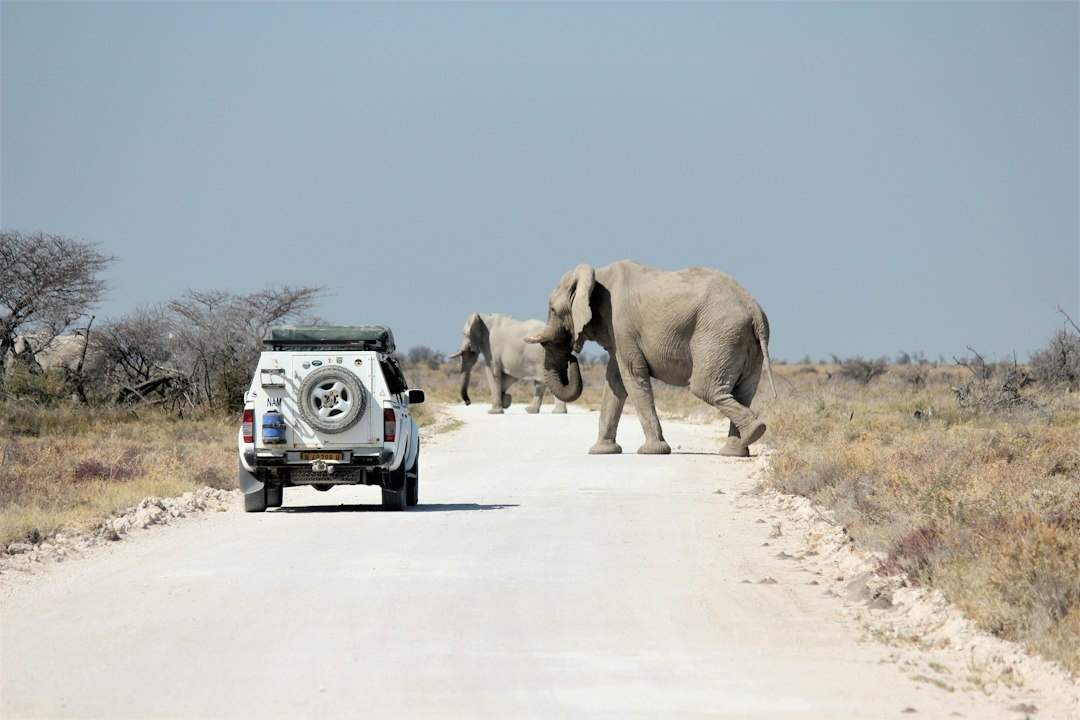
Choose a 4WD camper if camping is part of the experience, not merely a cost-cutting strategy. Campsites can save €100–€180 nightly, but setup time, cold nights and shared bathrooms make the route more tiring with younger children.
Namibia2Go, Gondwana Car Hire and Safari Car Rental are established options. Expect a €1,500–€2,000 credit-card hold even after buying reduced-excess coverage, and verify that the vehicle carries two spare tyres.
What the Wildlife Sightings Actually Looked Like
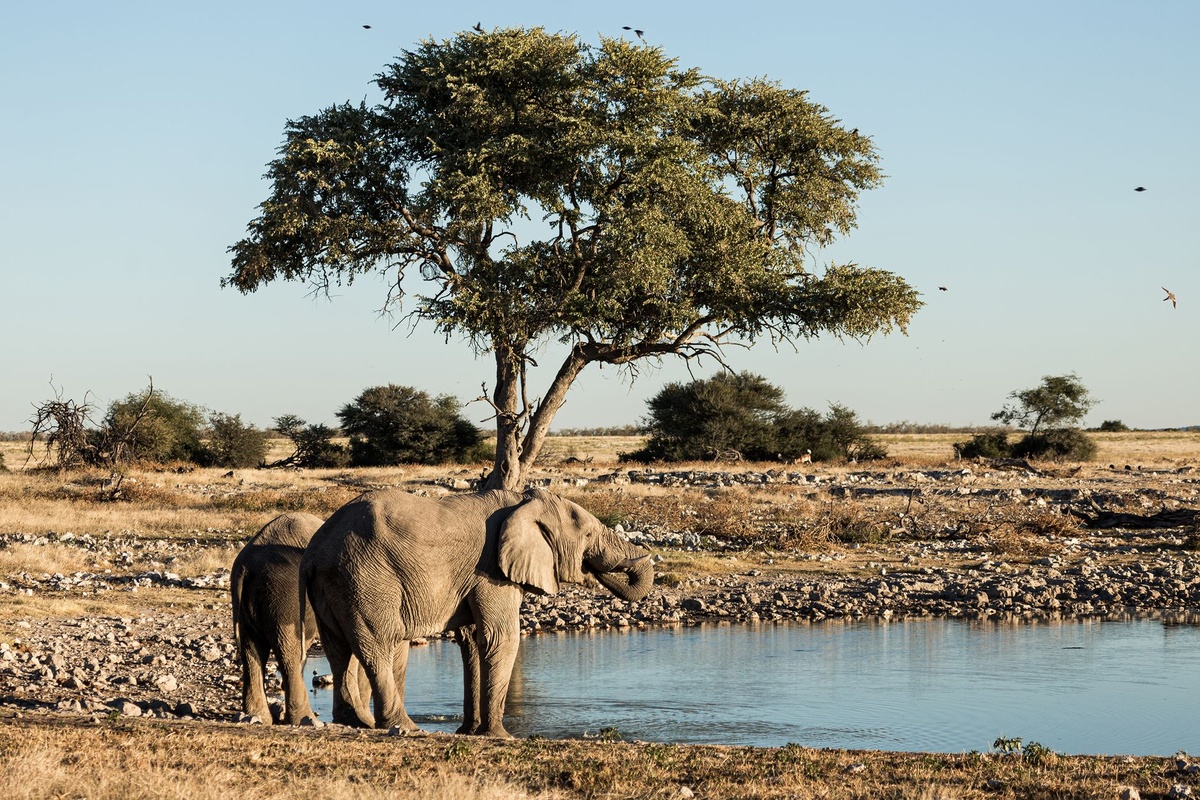
Three Etosha days produced the best variety without exhausting the children: multiple elephant herds, giraffes, zebra, wildebeest, springbok, oryx, black-backed jackals, spotted hyena and one black rhino after dark at Okaukuejo. Lions were seen once, at long distance near Salvadora.
That result is more realistic than promising the Big Five. Etosha has no buffalo, while leopards are elusive; the practical target is four or five major sightings per drive, not a checklist completed by lunch.
Eastern Etosha had more general game around Chudop and Kalkheuwel, while Okaukuejo delivered the best stationary viewing. One hour beside a productive waterhole routinely outperformed driving 40 km searching for something “better.”
- Carry binoculars for every family member; sharing one pair creates arguments precisely when a lion appears.
- Use a beanbag on the window instead of a full tripod, which is cumbersome inside a vehicle.
- Pack breakfast the night before so the family can enter when gates open.
- Keep voices low and switch off the engine at waterholes.
- Never leave the vehicle outside designated camps, toilets or fenced picnic areas.
September Heat, Cold Nights and What to Pack
The packing mistake is assuming “desert” means consistently hot. Before sunrise at Sossusvlei, a 9°C temperature plus wind through an open window can feel colder than a 3°C city morning.
| Location | Typical September dawn | Typical afternoon | What matters |
|---|---|---|---|
| Etosha | 9–13°C | 30–34°C | Fleece at dawn, strong sun after 10:00 |
| Damaraland | 10–14°C | 29–33°C | Dry heat and little shade |
| Swakopmund | 12–14°C | 16–19°C | Fog, wind and cool evenings |
| Sossusvlei | 8–12°C | 31–35°C | Large daily temperature swing |
Pack one light fleece and a windproof layer per person, not bulky winter coats. Add UPF 50 sunscreen, wide-brim hats, closed shoes for hot sand and at least five litres of emergency water per person in the car.
A soft cooler is more useful than another suitcase. Cold water and fruit cost about €10 in a supermarket but can replace a €45 lodge lunch on long driving days.
Complete Cost Breakdown for a Family of Four
| Category | September 2026 cost | What is included |
|---|---|---|
| 4WD rental | €1,500 | 12 days, reduced excess, second driver |
| Accommodation | €3,185 | 11 nights, mixed B&B and half board |
| Fuel | €335 | Approximately 315 litres |
| Food and drinks | €900 | Included lodge meals, groceries and restaurants |
| Park and heritage fees | €190 | Etosha, Namib-Naukluft and Twyfelfontein |
| Activities | €250 | Living-desert tour and Sossusvlei shuttle |
| SIM, tips and incidentals | €80 | Local data, laundry and guide tips |
| Total | €6,440 | €146 per person per day |
This is a comfortable mid-range budget, not luxury. Replacing Onguma and Twyfelfontein Country Lodge with campsites can reduce the total to approximately €4,500, while fly-in camps and private game drives can push it above €12,000.
International flights vary too widely to include. From Frankfurt, September return fares to Windhoek commonly fall around €750–€1,050 per adult; from London, expect roughly €800–€1,150 with a connection.
Connectivity, Payments and Road-Trip Technology
MTC has the broadest practical mobile footprint on this route, though long sections of Damaraland and the C14 remain offline. A visitor SIM plus several gigabytes of data generally costs €10–€20, compared with €6–€15 for an eSIM that may roam on a less useful network.
Buy the physical SIM at Windhoek airport if the MTC counter is open, but do not delay the rental pickup for an hour-long queue. Download maps, lodge confirmations and park permits before leaving Windhoek.
Save each day’s destination as coordinates rather than relying solely on place names. Remote lodges may use a postal address 30–60 km from their actual entrance.
- Tracks4Africa: best for fuel stops, gates and realistic remote-road routing.
- Organic Maps: best free offline backup.
- Windy: useful for Swakopmund fog, wind and dune conditions.
- Splitwise: useful if two households are sharing the vehicle.
- WhatsApp: the fastest way to reconfirm lodge dinners and late arrivals.
Cards work at major lodges and urban fuel stations, but carry N$2,000–N$3,000 (€98–€146) in cash for tips, small admissions and broken payment terminals. Cash is backup, not the primary method.
Common Mistakes on a Namibia Family Self-Drive
- Trusting Google’s drive times. A predicted four-hour gravel journey often becomes 5.5 hours once stops and corrugations are included.
- Driving after dark. Wildlife, unlit vehicles and invisible road edges make the time saving indefensible.
- Booking only one Etosha night. Gate procedures and long internal distances mean one night may produce less than a full day of wildlife viewing.
- Overloading each day. A rock-art walk, desert elephant drive and 300 km transfer do not belong on the same family schedule.
- Declining tyre-and-glass cover. A single damaged tyre can cost €150–€250, quickly erasing the insurance saving.
- Relying on one spare tyre. Two punctures on the same gravel section are uncommon but entirely plausible.
- Booking a departure on Day 12. A puncture or delayed rental inspection can turn a €145 hotel saving into four replacement airfares.
Final Verdict: Who Should Choose This Route?
Choose this 12-day circuit if wildlife is the priority, your children tolerate four- to six-hour drives and the family prefers lodges over daily campsite setup. It offers a strong balance: three Etosha nights, two Damaraland nights, a coastal pause and two nights near Sossusvlei.
Add three or four days if you want Waterberg, Spitzkoppe or a full desert-elephant excursion. Each addition is worthwhile, but squeezing all three into 12 days creates a road trip observed mainly through a windscreen.
Skip Damaraland only if your children strongly dislike long gravel drives. Going directly from Etosha to Swakopmund saves roughly 300 km and one driving day, but removes the route’s best rock art and most dramatic empty landscapes.
September is Namibia at its most rewarding and most competitive: superb wildlife, clear skies and cold, photogenic mornings, but peak-like lodge demand rather than global shoulder-season bargains. Reserve the vehicle and Etosha beds first, then build everything else around those fixed points.
Start by checking NWR rooms, request family configurations directly from Onguma and Twyfelfontein, and leave the final Windhoek night flexible. The route works because it respects Namibia’s scale—not because it tries to defeat it.
Frequently Asked Questions
How much does a 12-day Namibia family road trip cost?
A lodge-based trip for two adults and two children costs approximately €6,440 in September 2026, excluding international flights. Camping can lower the total to about €4,500, while luxury lodges can push it beyond €12,000.
Do you need a 4WD for Etosha and Sossusvlei?
No, the main Etosha roads and the paved Sossusvlei corridor are accessible by 2WD, with a shuttle covering the final 5 km of sand. A high-clearance 4WD is still the better family choice for luggage space, corrugations and Damaraland roads.
Is September a good time to visit Namibia with children?
Yes: wildlife gathers around Etosha’s waterholes, rainfall is minimal and daytime conditions are generally clear. Expect roughly 8–13°C at dawn and 30–35°C inland during the afternoon.
How many days do you need for Etosha, Damaraland and Sossusvlei?
Twelve days is the practical minimum for this 2,560 km circuit, including three nights around Etosha and two near Sossusvlei. Fourteen to sixteen days is better if you want extra activities or slower travel.
Is it safe to self-drive in Namibia?
Yes, provided you avoid night driving, keep gravel speeds near 70–80 km/h and carry water plus two spare tyres. Road accidents and tyre failures are more relevant risks than crime on this itinerary.

About the Author: Tomáš Bzirský
Founder and editor of Distratech. Based in the Czech Republic, travelling regularly from Central Europe. Writes practical travel guides and travel-tech comparisons (eSIM, apps, airports) in six languages.