The OnePlus 16 combines a huge 8,000mAh battery, 120W charging, a bright 240Hz display and flagship cameras for roughly $700 in China. That sounds almost perfect for long-haul flights, October treks in Nepal and aurora trips where cold weather punishes smaller batteries—but OnePlus’s retreat from the US and European phone markets makes this a complicated travel purchase.
Key Takeaways
- The OnePlus 16 starts at CNY 4,999, approximately $700 or €605 before shipping, taxes and import fees in October 2026.
- Its 8,000mAh battery delivered a reported 22 hours 10 minutes in a controlled browser test, although Distratech has not independently verified that result.
- The Chinese model lacks eSIM, US mmWave 5G and several important North American frequency bands.
- Buy it for exceptional battery life and fast charging; skip it if you need reliable warranty service, Android Auto or effortless global connectivity.
Key numbers at a glance
OnePlus launched the OnePlus 16 in China in October 2026 after ending direct consumer phone sales in the US and Europe earlier in the year. International travelers can still import one, but this is now a China-market device rather than a straightforward global flagship.
| Specification | OnePlus 16 figure | Why it matters while traveling |
|---|---|---|
| China price | CNY 4,999; about $700/€605 for 12GB/256GB, October 2026 | Import VAT and shipping can push the European cost above €760 |
| Weight | 213g | Heavy in a hiking pocket, but lighter than carrying a separate 10,000mAh power bank |
| Battery | 8,000mAh silicon-carbon | Enough capacity for navigation, translation and photography on long travel days |
| Reported browser runtime | 22 hours 10 minutes | Roughly five hours longer than many conventional flagships |
| Charging | 120W wired; 50W wireless | A short café or airport-lounge stop can restore most of the battery |
| Charging test | 0–50% in 11 minutes; 0–100% in 29 minutes | Useful when outlets are shared in hostels, trains or remote lodges |
| Display | 6.82-inch LTPO OLED, up to 240Hz | Smooth maps and gaming, but high refresh rates consume more power |
| Water protection | IP68/IP69 | Better protection around waterfalls, monsoon rain and dusty safari roads |
| SIM support | Two physical nano-SIMs; no eSIM on Chinese model | You cannot download a travel eSIM before landing |
Testing note: The battery and charging results above are launch-period controlled figures reported for the Chinese retail hardware. Distratech has not yet completed an independent multi-country test, so treat them as an indication of potential rather than a guaranteed result.
What makes the OnePlus 16 genuinely interesting?
The OnePlus 16 is not simply another annual processor update. Its combination of an 8,000mAh battery, relatively restrained 213g weight and 120W charging addresses the three phone problems travelers notice most: battery anxiety, heavy bags and insufficient time beside a power outlet.
The silicon-carbon battery is the central attraction. It stores substantially more energy than the 5,000mAh cells found in many recent flagships without turning the phone into a ruggedized brick.
That matters on an October Annapurna trek, where navigation, altitude apps and cold mornings can drain a phone rapidly. It is equally valuable during an overnight aurora excursion outside Tromsø, where sub-zero temperatures reduce usable battery capacity and charging opportunities are scarce.
OnePlus has also fitted the phone with a 6.82-inch LTPO OLED panel capable of reaching 240Hz in supported modes. The refresh rate is excessive for Google Maps or booking a train, but the panel can scale down when displaying static content to conserve power.
My advice is to leave the display on its adaptive setting. Forcing 240Hz all day sacrifices endurance for smoothness most travelers will not notice outside games.
Battery life: the strongest reason to buy it
The reported 22-hour, 10-minute browser result is the headline number, but a browser loop does not replicate a travel day. Camera use, weak rural signals, maximum outdoor brightness and GPS navigation all require more power than reading pages over stable Wi-Fi.
Based on the 8,000mAh capacity and launch-period results, a realistic heavy travel workload should fall around 13 to 16 hours of active mixed use. That workload could include two hours of offline maps, 90 minutes of photography and video, messaging, translation, boarding passes and intermittent 5G.
With lighter use, two full days away from a charger appears achievable. That is unusually useful on night trains, campervan routes and East African safari drives where USB sockets may be slow or unreliable.
The phone’s 120W charger restored 50% in 11 minutes and reached 100% in 29 minutes in the reported room-temperature test. Charging will slow when the phone is hot, so do not expect the same result on a dashboard in 30°C sunshine.
OnePlus uses proprietary SuperVOOC technology for maximum speed. A conventional USB Power Delivery charger will work, but it may not deliver the full 120W rate; packing the original charger is therefore worthwhile despite the extra bulk.
How the OnePlus 16 compares with proven flagship phones
The OnePlus 16’s Chinese price is far below recent launch prices from Apple and Samsung. The comparison becomes less dramatic after importing, but the battery advantage remains significant.
| Phone | Price and date | Weight | Battery-test result | Maximum wired charging | Travel connectivity |
|---|---|---|---|---|---|
| OnePlus 16, 12GB/256GB | CNY 4,999; about $700/€605, Oct. 2026 | 213g | 22h 10m reported browser test | 120W | Dual nano-SIM; no eSIM; incomplete US bands |
| OnePlus 13, 12GB/256GB | $899.99/€999 at global launch, Jan. 2025 | 210g | Approximately 19h 45m browser test | 80W US; 100W in supported regions | Physical SIM plus eSIM on supported global versions |
| Samsung Galaxy S25 Ultra, 256GB | $1,299.99/€1,449 at launch, Jan. 2025 | 218g | Approximately 17h 14m browser test | 45W | Broad 4G/5G, eSIM and extensive carrier support |
| Apple iPhone 16 Pro Max, 256GB | $1,199/€1,449 at launch, Sept. 2024 | 227g | Approximately 17h 17m browser test | About 30W in practice | Broad global bands; eSIM-only US model |
These battery figures come from browser-based testing rather than a single shared Distratech test run, so they are directional rather than perfectly comparable. Even with that limitation, the OnePlus 16’s capacity gives it a clear endurance advantage.
Buy the OnePlus 16 over the Galaxy S25 Ultra if battery life and charging speed matter more than official support. Buy the Samsung if you cross borders frequently and cannot risk a banking app, eSIM or mobile band failing.
Buy the global OnePlus 13 if you want the safer OnePlus experience. It has a smaller battery, but global firmware, eSIM support and established compatibility are worth more than an extra few hours to most travelers.
The import price is not really €605
CNY 4,999 converted to approximately $700 or €605 in October 2026, but currency conversion is only the beginning. A European buyer adding €30 shipping and 21% VAT would reach roughly €768 before a courier’s customs-processing fee.
The higher 16GB/512GB model costs CNY 5,499, approximately $770 or €666. The 24GB/1TB version is CNY 6,499, around $910 or €787 before import costs.
| Configuration | China price, Oct. 2026 | Approx. USD | Approx. EUR | Estimated EU landed cost* |
|---|---|---|---|---|
| 12GB/256GB | CNY 4,999 | $700 | €605 | About €768 |
| 16GB/512GB | CNY 5,499 | $770 | €666 | About €842 |
| 24GB/1TB | CNY 6,499 | $910 | €787 | About €989 |
*Example includes €30 shipping and 21% VAT but excludes currency-card fees and courier handling. Actual tax varies by country.
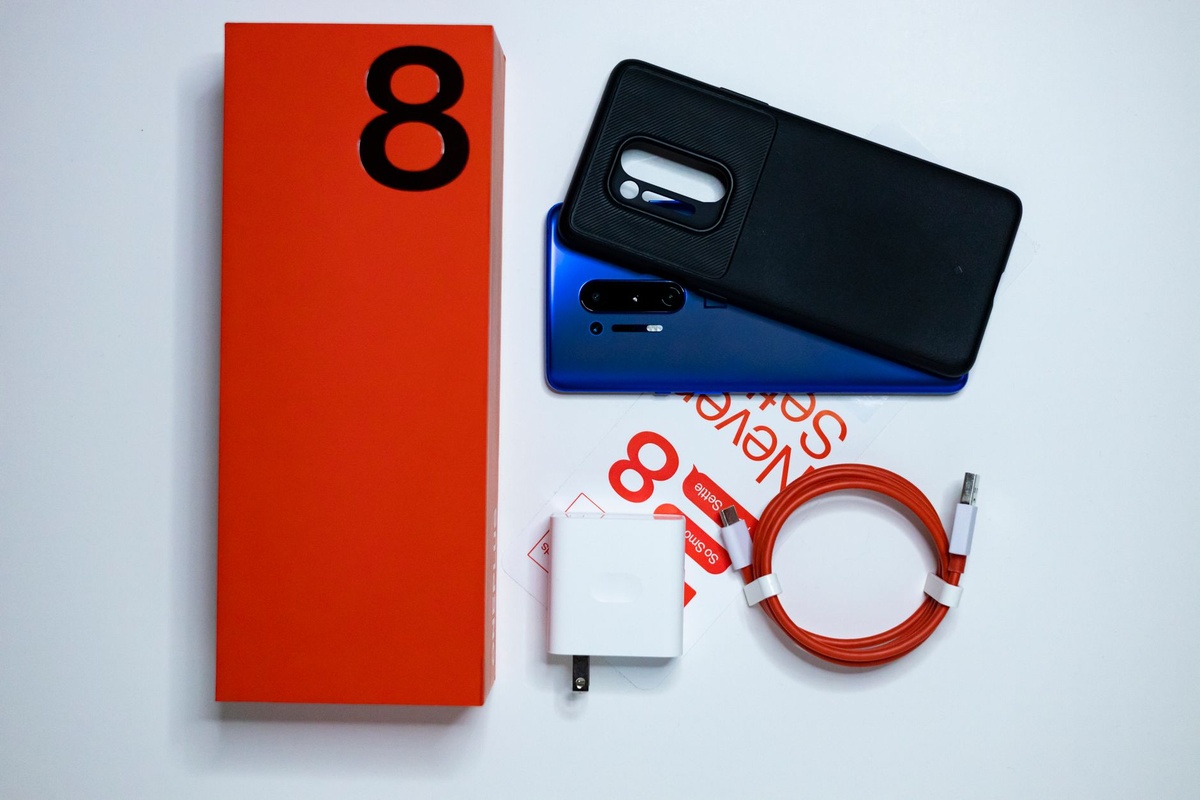
The 12GB/256GB model is the sensible purchase. Spending extra for 24GB of RAM offers no practical benefit for maps, photography, translation or remote work, while 256GB already stores thousands of photos and substantial offline video.
Connectivity is the deal-breaker for US travelers
The Chinese OnePlus 16 supports common international frequencies including LTE bands 1, 3, 5, 7, 8, 20, 28, 38, 40 and 41, plus 5G bands such as n1, n3, n28, n41, n77 and n78. That provides reasonable coverage across much of Europe and Asia.
North America is more problematic. The China model lacks several frequencies used for wide-area coverage, including LTE bands 12, 13, 66 and 71, and it does not support US mmWave bands n260 or n261.
A compatible band does not guarantee carrier approval either. AT&T and Verizon can restrict unapproved imported devices, while Wi-Fi calling and visual voicemail may not provision correctly.
This matters outside cities, not just in speed tests. A phone may show fast 5G in Manhattan but lose service on a rural New England foliage drive because it lacks the low-frequency bands used for long-range coverage.
European performance should be better, particularly on networks centered around bands 3, 7, 20, 28 and n78. It could suit an urban trip through Ljubljana or Valencia, but I would still verify the exact carrier bands before ordering—especially if accessible transport coordination depends on reliable calling. Our seven-day accessible Valencia case study shows how quickly transport logistics become dependent on a working phone.
No eSIM is a major step backward for travelers
The Chinese OnePlus 16 has two physical nano-SIM slots but no eSIM support. You cannot install a regional data package while sitting at home, nor can you instantly switch providers after crossing a border.
That means finding a kiosk, presenting identification where required and physically swapping cards. A local SIM may be cheaper, but the process can consume 20 to 45 minutes at a busy airport.
Dual physical SIMs remain useful if your home carrier still issues a card. You can keep that SIM installed for verification texts while adding a local travel SIM in the second slot.
Do not assume a future software update will add eSIM. The required secure hardware and carrier certification must also be present, and OnePlus has not positioned this Chinese model as an eSIM device.
Camera hardware looks built for travel, with one caveat
The rear system pairs a 50-megapixel main camera with a 50-megapixel ultrawide and a 50-megapixel periscope telephoto. The periscope’s optical reach is the useful part for travelers, allowing tighter architectural details, mountain layers and wildlife shots without relying entirely on digital cropping.
The IP68/IP69 rating is equally practical. October’s retreating Southeast Asian monsoon can produce spectacular waterfalls and sudden downpours, so better water resistance is more valuable than another portrait filter.
Water resistance is not permanent, however, and warranty policies normally exclude liquid damage. Use a lanyard or grippy case near waterfalls rather than treating the rating as permission to swim with the phone.
For trekking, the large battery should support extensive offline mapping and photography. On a route like Slovenia’s 24-kilometer Seven Lakes Valley hike, that reduces the need to ration photos just to preserve emergency-call capacity.
Performance and file-transfer speed
The flagship Snapdragon platform is more than fast enough for RAW photo editing, 4K video, live translation and emulation. Early sustained-load figures indicate that the phone retains around 90% of its initial graphics performance after a 20-minute stress run, with exterior temperatures around 43°C.
That matters in warm destinations because sustained navigation, video recording and mobile-data uploads can all generate heat. October Mediterranean temperatures can still approach 25°C, making thermal stability more relevant than a five-minute benchmark score.
The USB-C port supports USB 3-class data transfer rather than being limited to basic USB 2.0 speeds. A reported large-file copy reached approximately 450MB/s with a compatible cable and portable SSD, meaning a 20GB video folder could transfer in roughly 45 seconds under ideal conditions.
Do not expect that speed with the charging cable automatically. Many bundled cables prioritize charging and operate at slower USB data rates, so photographers should pack a certified 5Gbps or faster cable.
Chinese software creates avoidable friction
The OnePlus 16 ships with Chinese ColorOS rather than the global OxygenOS experience familiar to many OnePlus buyers. English is available, but regional services, preinstalled apps and notification behavior can differ.
Google Play can usually be installed, yet “Google works” is not the same as official global certification. Google Wallet, banking apps, Android Auto, location history and push notifications may behave inconsistently after updates.
Android Auto is the biggest travel concern. If you depend on a rental car’s dashboard for navigation, assume it will not work reliably unless the importer explicitly demonstrates it on the exact firmware version you are buying.
China-only features such as local voice services are also unlikely to help abroad. Conversely, some global safety tools, emergency integrations and carrier-specific services may be absent.
Choose the OnePlus 16 if… choose an alternative if…
- Choose the OnePlus 16 if you spend long days away from outlets, understand Android firmware and mainly travel through Europe or Asia.
- Choose a global OnePlus 13 if you want fast charging and strong battery life without importing Chinese firmware.
- Choose a Samsung Galaxy Ultra if broad carrier support, eSIM, service centers and reliable Android Auto matter more than charging speed.
- Choose an iPhone Pro Max if your travel setup depends on AirDrop, Apple Watch, satellite safety features and consistent worldwide accessory support.
- Skip the OnePlus 16 if you live in the US, frequently use rental cars or need your phone for two-factor authentication and business-critical calls.
The decision is geographical as much as technical. Someone based in Singapore who travels around Asia faces fewer network compromises than a remote worker driving through rural Montana.
Common mistakes when importing the OnePlus 16
- Comparing the converted price with local retail prices. Add VAT, shipping, card-conversion fees and possible warranty return costs before deciding it is a bargain.
- Checking 5G but ignoring 4G. Low-band LTE often provides the usable fallback signal on rural roads, islands and mountain routes.
- Assuming eSIM can be enabled later. The Chinese phone is a dual-physical-SIM device, not an eSIM phone waiting for a menu switch.
- Flashing global firmware immediately. An unofficial ROM can break updates, banking certification, camera processing or cellular functions.
- Leaving without the original charger. Generic USB-C charging works, but the advertised 120W speed requires compatible OnePlus charging hardware.
- Expecting local warranty service. A failed camera or display may require shipping the phone back to China at your expense.
Travelers should also download offline maps, language packs and boarding passes before departure. That is good practice with any phone, but essential when using an imported model whose carrier behavior has not been validated locally.
Pros and cons
Pros
- Exceptional 8,000mAh battery capacity
- Reported 22-hour-plus browser endurance
- 120W wired and 50W wireless charging
- Strong IP68/IP69 weather protection
- Three useful 50-megapixel rear cameras
- Competitive CNY 4,999 starting price
Cons
- No eSIM on the Chinese model
- Incomplete North American frequency support
- No official US or European retail channel
- Chinese ColorOS can complicate Google services and Android Auto
- Imported warranty claims may require international shipping
- True landed price is much higher than direct currency conversion suggests
Traveler verdict
Traveler verdict: 7/10 as an import, potentially 9/10 if a genuine global model arrives.
The OnePlus 16 is the company’s most interesting phone in years because it improves something travelers can actually use: endurance. An 8,000mAh battery and 29-minute full charge are more meaningful on the road than another AI wallpaper generator or marginal benchmark increase.
But hardware this appealing deserves global software, eSIM and dependable carrier certification. Without those elements, the phone is best treated as an enthusiast import rather than a universal travel recommendation.
Buy it if you are comfortable troubleshooting Android, primarily use European or Asian networks and value two-day battery life above warranty convenience. Skip it if you travel in North America, rely on Android Auto or cannot afford to miss a work call.
Conclusion: outstanding travel hardware trapped behind import compromises
The OnePlus 16 shows what travel-focused flagship hardware should look like in late 2026: more battery, faster charging, proper water resistance and useful telephoto reach without exceeding 220g. It is particularly compelling for trekking season in Nepal, late-monsoon waterfall trips in Southeast Asia and cold aurora nights across Iceland and Lapland.
Unfortunately, leaving the US and European markets changes the buying calculation. The safest recommendation is to wait for confirmed global availability or choose a supported OnePlus 13, Samsung Galaxy Ultra or iPhone Pro Max instead.
If you do import the OnePlus 16, buy the 12GB/256GB version, confirm every required carrier band and budget around €760—not €605—for European delivery. The battery is extraordinary; the ownership experience may not be.
Frequently Asked Questions
How much does the OnePlus 16 cost?
The OnePlus 16 starts at CNY 4,999 in China, approximately $700 or €605 in October 2026. After €30 shipping and 21% VAT, a European buyer could pay about €768 before courier fees.
Does the OnePlus 16 support eSIM?
The Chinese OnePlus 16 supports two physical nano-SIM cards but not eSIM. Travelers must buy a physical local SIM rather than downloading a travel plan before arrival.
Will the Chinese OnePlus 16 work in the US?
It may connect to some US LTE and 5G networks, but it lacks important bands including LTE 12, 13, 66 and 71, plus mmWave 5G. Carrier approval, Wi-Fi calling and rural coverage are not guaranteed.
How long does the OnePlus 16 battery last?
Its 8,000mAh battery produced a reported 22 hours 10 minutes in a controlled browser test. Heavy travel use involving GPS, cameras and mobile data should realistically provide around 13 to 16 active hours, pending independent testing.
Is the OnePlus 16 worth importing for travel?
It is worth considering for technically confident travelers who mainly visit Europe and Asia and prioritize battery life. Most US travelers should choose a globally supported phone with eSIM, complete frequency coverage and local warranty service.

About the Author: Tomáš Bzirský
Founder and editor of Distratech. Based in the Czech Republic, travelling regularly from Central Europe. Writes practical travel guides and travel-tech comparisons (eSIM, apps, airports) in six languages.