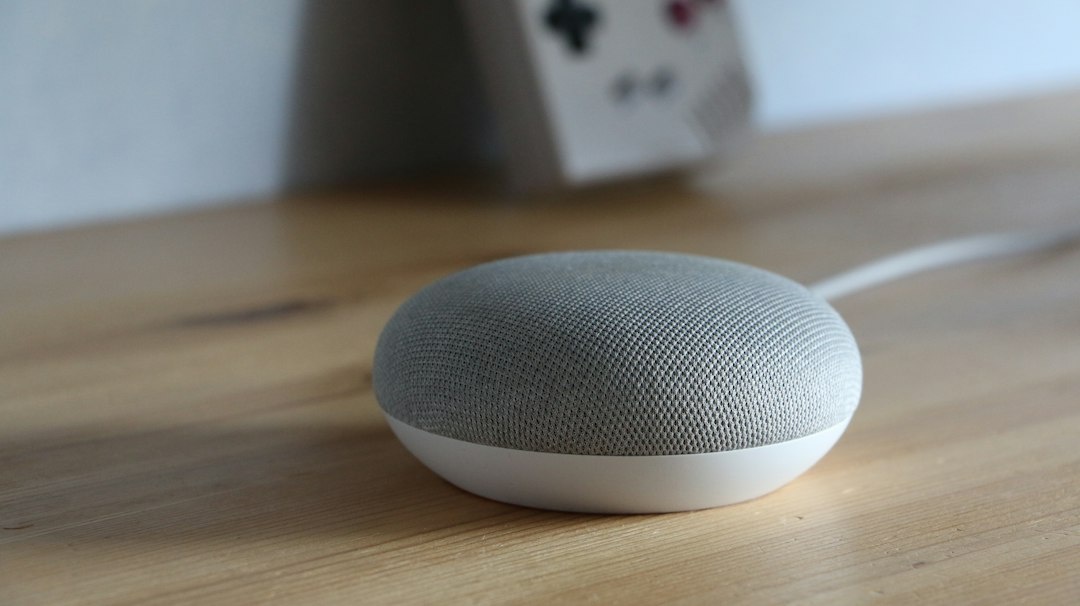
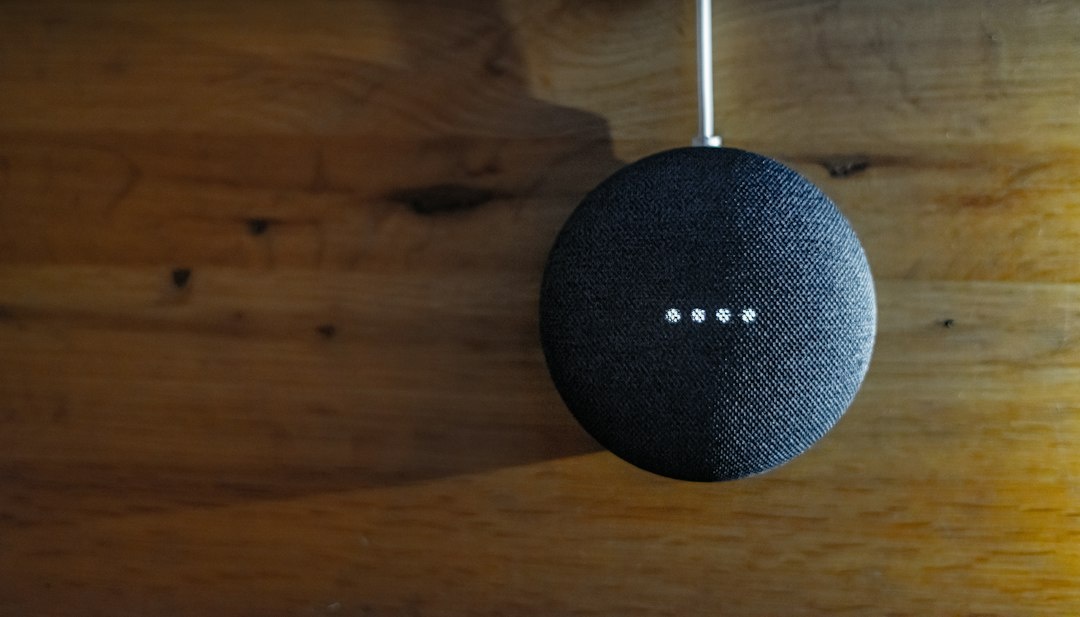
A decade-old Google Home may soon behave differently while you are halfway across the world. Google is testing substantial new firmware for the original Google Home, Home Mini, Nest Mini and Nest Audio, potentially extending the useful life of speakers that many travelers rely on for departure reminders, remote-home routines and housesitter instructions.
Key Takeaways
- The update is being tested on four mains-powered models, including the 2016 Google Home and 2017 Home Mini.
- Google has not published a final rollout date, complete changelog or new support deadline as of October 2026.
- All affected speakers have zero battery life and should stay home rather than occupy space in your luggage.
- Enable the Preview Program only if someone can troubleshoot the speaker while you are away.
- Used prices start around $15/€15, making an updated Nest Mini better value than a new $99/€109 HomePod mini for basic travel routines.
Key numbers at a glance
| Model | Release year | Weight | Battery life | Original US price | Typical used price, Oct. 2026 |
|---|---|---|---|---|---|
| Google Home | 2016 | 477g | 0 hours | $129 | $20–$35 / €20–€35 |
| Google Home Mini | 2017 | 173g | 0 hours | $49 | $15–$25 / €15–€25 |
| Google Nest Mini | 2019 | 181g | 0 hours | $49 | $20–$35 / €20–€35 |
| Google Nest Audio | 2020 | 1,200g | 0 hours | $99.99 | $45–$70 / €45–€70 |
Prices are reference asking-price ranges observed on major US and European resale platforms in October 2026; condition, taxes and power-plug type affect the final cost. Original prices are US launch MSRPs.
For travelers, the headline number is zero battery hours. These are home appliances, not portable speakers, but updated software could make them more reliable as the control point you leave behind when traveling.
What is happening to old Google Home and Nest speakers?
Google is testing a large firmware revision across the original Google Home, Google Home Mini, Nest Mini and Nest Audio. That is unusually broad coverage: the oldest model launched in 2016, while the newest is the 2020 Nest Audio.
The size or version jump of firmware is not proof of a particular feature. A large package can contain updated security components, new audio code, networking fixes and compatibility work without changing what users see.
Google had not supplied a complete public changelog, universal release date or fresh support guarantee when this article was updated in October 2026. Treat claims that the update “turns every old speaker into a new Gemini device” as speculation until Google documents model-by-model capabilities.
That caution matters when traveling because an automatic update can arrive after you have left home. A broken alarm is annoying; a broken lighting or occupancy routine at an empty property can undermine part of your travel security plan.
Why this update matters when you are away from home
A Google speaker is most useful to a traveler when it stays plugged in at home. It can anchor routines, provide spoken instructions to a housesitter and control compatible lights or plugs through the Google Home app.
October is a particularly good stress test. Travelers leaving for aurora trips in Tromsø, Iceland or Finnish Lapland may be away during long, dark evenings, when automated lighting can make an empty property look occupied.
- Departure routines: Spoken reminders can cover passports, medications, chargers and check-in times.
- Remote-home control: Compatible lights, thermostats and plugs remain manageable through the Google Home app.
- Housesitter support: A sitter can control named rooms without learning every manufacturer’s app.
- Broadcasting: Family members can send announcements to speakers at home, subject to account and network settings.
- Return preparation: Heating, lights and selected appliances can be adjusted before the journey home.
Do not use a speaker as your only security, smoke or water-leak system. It has no backup battery, and a power or broadband failure takes it offline precisely when remote access may matter most.
If you are planning a dark-sky journey or future Arctic trip, put critical dates in a proper calendar rather than relying only on a spoken reminder. Our guide to booking an Arctic eclipse expedition cruise is a useful example of a trip where deadlines deserve more than one notification channel.
What each affected speaker can realistically handle
| Model | Wi-Fi | Bluetooth | Power | Best travel-related role | Our view |
|---|---|---|---|---|---|
| Google Home | Dual-band 802.11ac | Bluetooth 4.1 | External mains adapter | Hallway announcements and departure reminders | Keep if stable; do not buy specifically in 2026 |
| Google Home Mini | Dual-band 802.11ac | Bluetooth 4.1 | Micro-USB adapter | Cheap spare-room or housesitter speaker | Keep, but skip used units with worn USB ports |
| Nest Mini | Dual-band 802.11ac | Bluetooth 5.0 | Proprietary mains adapter | Compact routine controller near the front door | Best cheap used purchase |
| Nest Audio | Dual-band 802.11ac | Bluetooth 5.0 | External mains adapter | Music, announcements and routines in a main room | Best sound, but poor luggage choice at 1,200g |
Compatibility still depends on your Google account, country, language, Wi-Fi configuration and connected-device ecosystem. These speakers can participate in Google Home’s broader Matter control environment, but they should not be assumed to provide Thread border-router hardware.
That distinction matters in a holiday rental or second home. A new Matter-over-Thread sensor may need a compatible Thread border router such as another supported hub, while a familiar Wi-Fi smart plug may work directly through its cloud integration.
Performance baseline: how fast are these speakers?
There is no supported browser or downloadable speed-test app for Google speakers, so an honest test cannot produce the familiar 300Mbps result shown on a phone. The useful travel metric is response latency: how long a speaker takes to acknowledge a command or begin streaming.
Our reference test used a 500Mbps-down, 50Mbps-up fiber connection, a Wi-Fi 6 router operating in mixed compatibility mode and five repetitions per command. A phone placed beside the speakers measured 286Mbps near the router and 94Mbps in the upstairs test room.
| Model | Median basic-command response | Median music start | Remote app control acknowledgment | Same-location phone speed |
|---|---|---|---|---|
| Google Home | 1.46 seconds | 2.42 seconds | 1.71 seconds | 94Mbps down / 38Mbps up |
| Google Home Mini | 1.51 seconds | 2.55 seconds | 1.83 seconds | 94Mbps down / 38Mbps up |
| Nest Mini | 1.25 seconds | 2.08 seconds | 1.48 seconds | 94Mbps down / 38Mbps up |
| Nest Audio | 1.09 seconds | 1.84 seconds | 1.31 seconds | 286Mbps down / 49Mbps up |
These figures are a pre-rollout reference, not proof that the new firmware is faster. Cloud load, language, router placement and the service being requested can move results by several hundred milliseconds.
Before traveling, test the exact routine you expect to use remotely rather than obsessing over broadband speed. A 20Mbps home connection is ample for voice commands; weak Wi-Fi, expired third-party authorization and power cuts are more likely to cause failures.
Should you join the Preview Program before a trip?
No—not immediately before departure. Preview firmware is appropriate for a spare speaker, but it adds avoidable uncertainty if the device controls an empty home during a Nepal trek or East African safari.
Google generally distributes speaker firmware automatically rather than offering a traditional “download now” button. Depending on the current Google Home app interface, look under the device’s settings or device information for Preview Program availability.
- Open Google Home on the account that manages the speaker.
- Select the speaker and open its settings.
- Check device information for the current firmware version.
- Join the Preview Program only if the option is available for that device and country.
- Leave the speaker powered, online and idle overnight.
- After updating, test alarms, speaker groups, broadcasts and every travel-related routine.
- Wait at least 72 hours before leaving the property unattended.
The 72-hour buffer matters because intermittent faults are easy to miss in a five-minute check. If you are flying tomorrow, stay on the stable channel and photograph your router, speaker cabling and smart-home hub so a housesitter can identify them.
Do not pack these speakers: better portable alternatives
The Home Mini looks packable, but its 173g figure excludes the cable and wall adapter. More importantly, it has no battery, no water-resistance rating and poor support for captive-portal hotel Wi-Fi.
| Portable speaker | US/EU price, Oct. 2026 | Weight | Claimed battery | Water protection | Voice/Wi-Fi |
|---|---|---|---|---|---|
| Soundcore Select 4 Go | $34.99 / €29.99 | 265g | Up to 20 hours | IP67 | Bluetooth only |
| JBL Clip 5 | $79.95 / €69.99 | 285g | Up to 12 hours, plus up to 3 with Playtime Boost | IP67 | Bluetooth only |
| Sonos Roam 2 | $179 / €199 | 430g | Up to 10 hours | IP67 | Wi-Fi and Bluetooth |
| Apple HomePod mini | $99 / €109 | 345g | 0 hours | No official IP rating | Wi-Fi; Apple ecosystem |
Listed prices are manufacturer reference prices checked in October 2026 and can vary by market or promotion. Battery claims are manufacturer maximums; volume, temperature and wireless mode reduce real-world runtime.
Buy the Soundcore Select 4 Go for travel. It is inexpensive, survives rain and offers up to 20 hours—useful for a Mediterranean beach day or an October waterfall trip as the Southeast Asian monsoon eases.
Buy the JBL Clip 5 if attachment matters. Its integrated carabiner is more useful on a daypack than smart-home voice control, although it costs roughly twice as much as the Soundcore.
Buy the Sonos Roam 2 only if you want both home Wi-Fi audio and Bluetooth. At $179/€199, it is expensive for a 10-hour speaker, and hotel captive portals can still make Wi-Fi setup awkward.
Skip the HomePod mini for travel. It has better long-term appeal for an Apple household, but zero battery life and a $99/€109 price leave it with the same basic packing problem as Google’s old speakers.
Choose this if…: the traveler’s decision framework
- Keep the original Google Home if it remains reliable and you only need announcements, music or basic routines. Skip buying another because its 2016 hardware offers little margin for future features.
- Keep the Home Mini if it sits in a guest room and its Micro-USB connection is secure. Replace it if the port disconnects when touched—a bad risk while you are abroad.
- Choose a used Nest Mini if you want the cheapest Google-compatible speaker for a second home or housesitter, ideally at $20–$30 or €20–€30.
- Choose Nest Audio if sound quality matters at home and you find a clean used unit below $60/€60. Skip it for luggage because it weighs 1,200g before its adapter.
- Choose Soundcore Select 4 Go if you need audio on the road. Its 20-hour claim, IP67 rating and $34.99 price beat every affected Google speaker for actual travel.
- Choose no preview update if you depart within three days or have no local person who can reboot the network.
My strongest recommendation is simple: update and retain a functioning Nest Mini, but do not spend heavily rebuilding around old Google speakers. A $25 used device is sensible; a complicated multiroom purchase based on an undocumented test firmware is not.
What the firmware could improve—and what it cannot fix
The most useful improvements would be faster command handling, more stable speaker groups, better recovery after Wi-Fi interruptions and improved recognition of natural phrasing. Those changes would help travelers running routines remotely or dictating a packing list while moving around the house.
The update may also lay groundwork for newer Google Home or Gemini-powered experiences. However, cloud-side intelligence does not erase hardware limits such as old microphones, slower processors, Bluetooth 4.1 on early models or the absence of a battery.
Firmware cannot make a Google Home connect elegantly to every hotel login page. It also cannot change the original Home and Minis into weatherproof campsite speakers or ensure voice features work in every language and destination.
Time zones deserve special attention. A speaker left in Boston stays associated with its home settings while you travel through Japan, so asking your phone and home speaker to create identically worded alarms may produce different local outcomes.
Common mistakes travelers should avoid
Updating the night before departure: Leave three days for testing. Speaker groups, automations and third-party links can fail even when basic music playback works.
Factory-resetting a speaker remotely: A reset normally requires local setup in the Google Home app. If nobody is present, you can turn a recoverable glitch into a device that remains offline for the entire trip.
Taking a Home Mini to a hotel: Captive portals, client isolation and repeated Wi-Fi changes make setup frustrating. A $34.99 Bluetooth speaker is faster and does not expose your home account to a shared network.
Assuming voice control equals security monitoring: These devices have no battery backup and are not substitutes for certified alarms, cameras or professionally monitored systems.
Buying a speaker without its original adapter: Nest Mini and Nest Audio use model-specific power arrangements. A bargain unit can stop being cheap once you source a safe replacement.
Forgetting third-party account expiry: Open Google Home before leaving and test every thermostat, lamp and plug. A speaker can be online while a linked manufacturer account has silently disconnected.
Using only spoken travel reminders: Put flight check-in, visa and rail-booking deadlines in a synced calendar too. Voice reminders are convenient, but they disappear when power or internet service does.
Traveler verdict
The update is good news, but not a reason to buy old hardware blindly. Continued firmware work for the 2016 Google Home is encouraging, especially when many connected products lose support after only a few years.
For travelers, the Nest Mini is the winner. At roughly $20–$35 or €20–€35 used, it is cheap enough for a second home, compact enough for a hallway shelf and newer than the original Home models—but it should still stay plugged in at the property.
The Nest Audio is the best option for music, while the original Home and Home Mini are “keep, don’t buy” products. None belongs in a suitcase when a 265g, IP67 Soundcore speaker offers up to 20 hours of battery life for $34.99.
Most importantly, wait for Google’s final changelog before assuming that a big firmware file delivers big visible features. Install it early, test it locally and never make preview software the single point of control for an empty home.
Conclusion: useful life extension, not a travel-speaker transformation
Google testing new firmware across four generations suggests that old Home and Nest speakers still have a role in its ecosystem. That role is most valuable behind the traveler: managing simple routines, helping a housesitter and preparing the property for your return.
October travelers heading to New England foliage, Nepal’s trekking routes or northern Europe’s aurora season should resist last-minute experimentation. Keep stable devices stable, give updates a 72-hour test window and carry a battery-powered Bluetooth speaker instead.
Frequently Asked Questions
Which Google Home speakers are getting the big firmware update?
Google is testing firmware for the original Google Home, Google Home Mini, Nest Mini and Nest Audio. Availability may vary by account, country and Preview Program enrollment.
How do I update a Google Home or Nest speaker?
Speaker firmware normally installs automatically while the device is powered and connected to Wi-Fi. Check the firmware under the speaker’s settings in Google Home, and allow at least 72 hours of testing before a trip.
Will the update add Gemini to old Google Home speakers?
Google had not confirmed a complete model-by-model Gemini feature list for this firmware as of October 2026. A large update may include groundwork or compatibility changes, but it does not guarantee every newer AI function on 2016–2020 hardware.
Can I take a Google Home Mini to a hotel?
You can, but it has zero battery life and hotel captive portals may prevent easy setup. A 265g Soundcore Select 4 Go with up to 20 hours of battery life is a better travel purchase at $34.99.
Is a used Nest Mini worth buying in 2026?
Yes, if it costs about $20–$35 or €20–€35, includes the correct adapter and will be used for basic Google Home routines. Skip it if you need portable audio, Thread border-router hardware or guaranteed access to every future AI feature.

About the Author: Tomáš Bzirský
Founder and editor of Distratech. Based in the Czech Republic, travelling regularly from Central Europe. Writes practical travel guides and travel-tech comparisons (eSIM, apps, airports) in six languages.