The August 12, 2026 total solar eclipse crossed East Greenland and western Iceland, creating a rare chance to watch totality from a polar expedition ship. Because it is now October 2026, these voyages have already sailed—but their prices, routes and operational choices provide an unusually useful blueprint for booking future eclipse cruises without choosing the wrong ship, cabin or “eclipse-themed” itinerary.
Key Takeaways
- Published 2026 expedition fares started around €9,500 per person for East Greenland and €11,800 for smaller premium ships.
- East Greenland offered roughly 35–45% climatological odds of limited cloud versus approximately 20–30% around western Iceland.
- Most Greenland routes required 36–48 hours of open-water sailing each way from Iceland, compared with 4–10 hours on Iceland-focused itineraries.
- A realistic all-in budget was €12,800–€16,000 per person sharing a cabin, including flights, hotels, insurance, tips and equipment.
- For any future eclipse cruise, book only an itinerary whose captain can reposition the ship on eclipse day.
Key Numbers at a Glance
| Factor | East Greenland itinerary | Western Iceland itinerary |
|---|---|---|
| Totality on August 12, 2026 | Approximately 2 min 10 sec–2 min 18 sec | Approximately 1 min in Reykjavík; close to 2 min near Snæfellsnes |
| Typical expedition length | 12–14 nights | 7–11 nights |
| Indicative cruise fare, Jan–Mar 2026 | €9,500–€15,500 per person | €8,500–€14,000 per person |
| Open-water passage | 700–900 km each way from Iceland | Usually under 250 km between protected ports |
| Climatological limited-cloud probability | About 35–45% | About 20–30% |
| Typical Zodiac landings | 5–8 planned, weather dependent | 2–5 planned, often supplemented by port calls |
| Best for | Wildlife, icebergs and expedition depth | Shorter trip, easier flights and less sea time |
Cloud figures are broad August climatology ranges, not guarantees or eclipse-day forecasts. “Limited cloud” means conditions potentially suitable for viewing at least part of the eclipse; even thin or broken cloud could have obscured totality.
First, Understand What “Booking” Means Now
The eclipse occurred on August 12, 2026, and the Arctic expedition season is now winding down. In October, East Greenland’s expedition-cruise window is effectively closed as darkness, sea ice and severe weather return, although this is the start of aurora season in Iceland.
You cannot legitimately book a 2026 eclipse departure now. Any website still presenting one as available is showing an archive, an outdated affiliate page or, potentially, a scam.
What you can do is use the 2026 voyages as a price and itinerary benchmark. That matters for future ship-based eclipses because specialist departures commonly open 18–36 months ahead and may require a 20–30% non-refundable deposit.
If you purchased a 2026 voyage but did not travel, deal directly with the operator or travel insurer. Skip social-media “cabin transfer” offers unless the cruise company confirms in writing that the booking can be reassigned; many expedition fares prohibit name changes within 120 days of departure.
Greenland vs Iceland: Which Itinerary Was Better?
Choose East Greenland for the stronger expedition
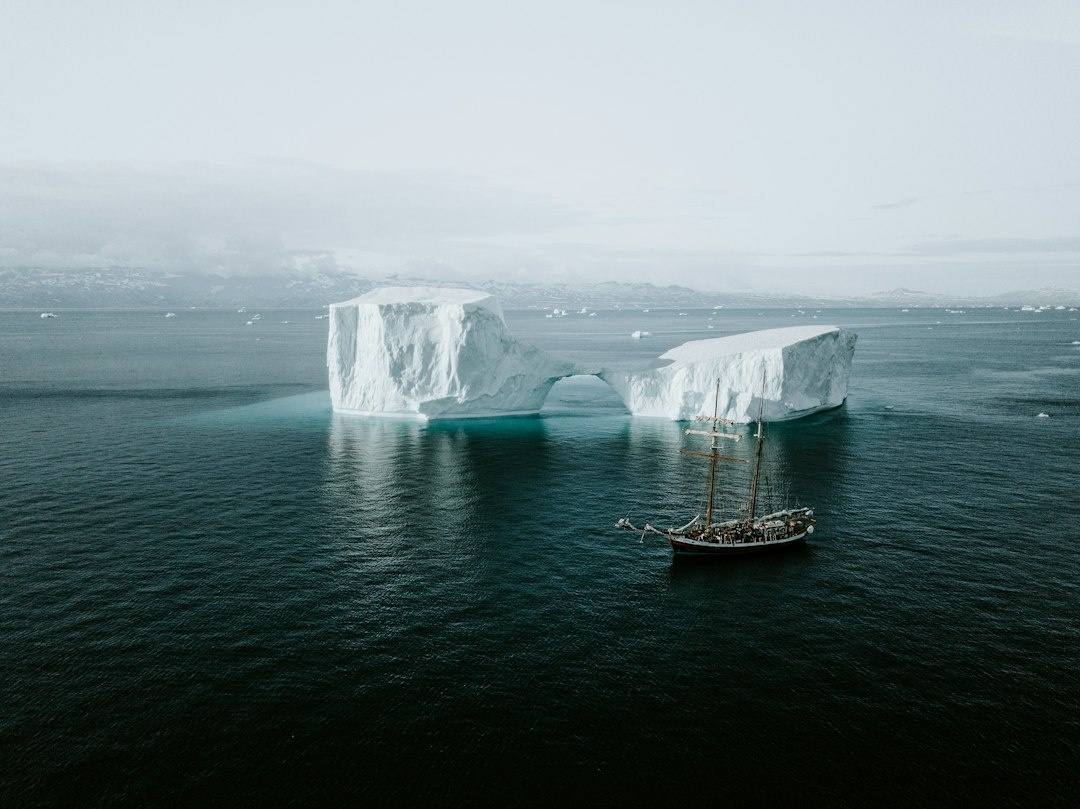
East Greenland was the better choice if the eclipse was one part of a larger Arctic trip. Scoresby Sund—also written Scoresbysund or Kangertittivaq—contains enormous iceberg-filled fjords, mountains rising more than 2,000 metres and the remote settlement of Ittoqqortoormiit.
Ships generally sailed from Reykjavík or Akureyri across the Denmark Strait, a distance of approximately 700–900 km depending on the first Greenland landfall. That meant about 36–48 hours at sea each way, versus a few hours between Icelandic ports.
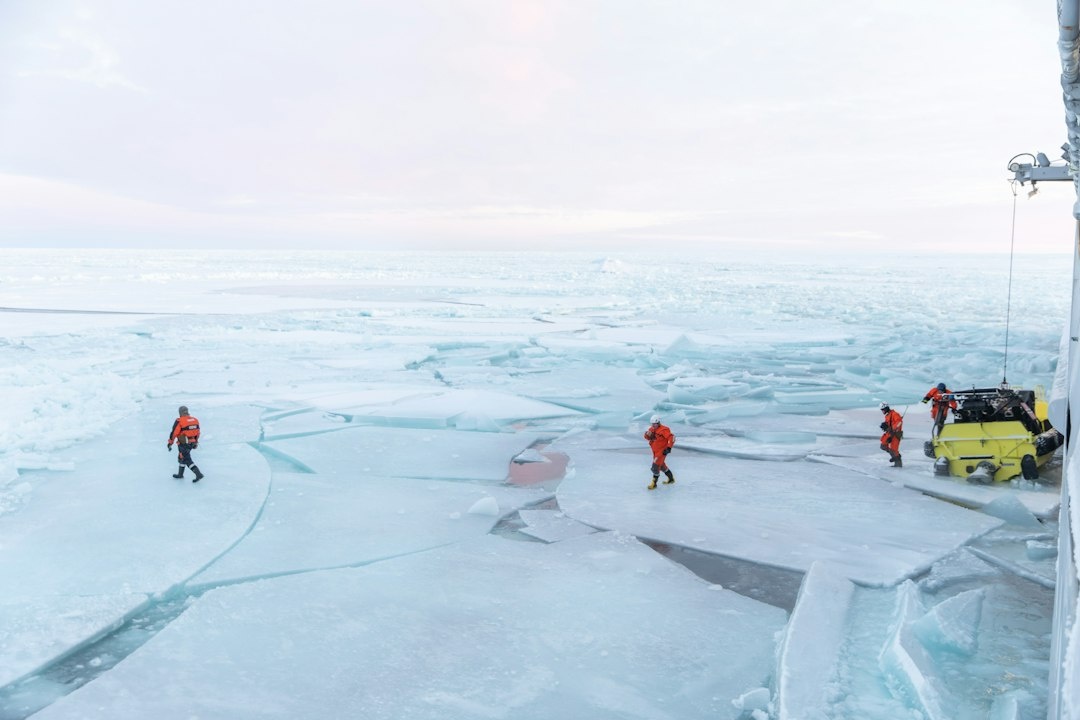
The payoff was mobility inside or near the path of totality. A capable expedition ship could adjust its position overnight, searching for breaks between coastal cloud, sea fog and larger weather systems.
Greenland was not automatically clear. Mountain-generated cloud and fog are common along the east coast in August, but the eclipse corridor provided more room to manoeuvre than the narrow western Iceland viewing zone.
Choose Iceland for easier logistics
Iceland made more sense for travelers with limited time, concerns about seasickness or a budget below €13,000. Reykjavík is connected to major European and North American hubs, while Greenland voyages often added four days of Denmark Strait crossings to the itinerary.
Keflavík International Airport is 50 km from central Reykjavík. The Flybus takes about 45 minutes and cost roughly €31 one way in August 2026, compared with €125–€160 for a private taxi taking 40–50 minutes.
The weakness was cloud. Reykjavík averages frequent overcast spells in August, and its position near the southern edge of totality produced less darkness than locations farther northwest around the Reykjanes Peninsula or Snæfellsnes.
I would have skipped a hotel-rooftop package in Reykjavík and chosen a mobile ship or land tour able to move toward Snæfellsnes. A fixed viewing site saved money, but it surrendered the biggest advantage of eclipse travel: last-minute repositioning.
The direct comparison
| Decision point | Greenland expedition | Iceland-focused voyage |
|---|---|---|
| Typical fare advertised for 2026 | €9,500–€15,500 | €8,500–€14,000 |
| Likely trip duration | 13–16 days including hotel buffer | 9–13 days including hotel buffer |
| Sea conditions | Potentially rough Denmark Strait | More time in sheltered coastal water |
| Eclipse mobility | High if positioned offshore | Moderate; constrained by coastline and ports |
| Scenery | Icebergs, tundra and huge fjords | Volcanoes, sea cliffs and fishing towns |
| Medical evacuation complexity | High; potentially 12–24+ hours to assistance | Lower near Icelandic ports and roads |
| Best traveler profile | Experienced expedition traveler | First polar cruise or shorter vacation |
What the 2026 Eclipse Cruises Actually Cost
Polar cruise pricing is difficult to compare because one operator quotes a berth-only promotional fare while another includes charter flights, hotels, park fees and gratuities. The cabin category matters just as much as the ship: an entry-level quad can cost 40% less than a balcony cabin on the same departure.
The following figures are representative published or archived lead-in prices seen during the 2026 sales cycle. They are benchmarks rather than current offers; availability, single supplements and inclusions changed repeatedly as departure dates approached.
| Operator / ship | Route style | Approx. duration | Published lead-in benchmark | Booking website |
|---|---|---|---|---|
| Oceanwide Expeditions / Hondius | Akureyri–East Greenland–Akureyri | 13–14 nights | About €10,600, Jan 2026 | oceanwide-expeditions.com |
| Poseidon Expeditions / Sea Spirit | Reykjavík–Scoresby Sund–Reykjavík | 11–12 nights | About €13,600 equivalent, Jan 2026 | poseidonexpeditions.com |
| Quark Expeditions / polar fleet | Iceland and East Greenland expedition | 12–14 nights | About €14,500 equivalent, Feb 2026 | quarkexpeditions.com |
| Premium small-ship programs | Iceland coast with eclipse positioning | 8–11 nights | €11,800–€18,000, Mar 2026 | Operator direct or specialist agency |
Prices are per person sharing the lowest available cabin and were not consistently inclusive of flights, gratuities or travel insurance. Dollar-denominated fares have been rounded to their approximate advertised euro equivalents, rather than presented as live October 2026 exchange rates.
Oceanwide generally offered the strongest expedition-to-price ratio. Sea Spirit had larger standard cabins and a more traditional small-ship feel, but you paid several thousand euros more before buying flights or insurance.
Skip any comparison based only on “from” prices. Ask for a one-page written quote showing port taxes, fuel surcharges, pre-cruise hotel nights, waterproof boots, parka, Wi-Fi, gratuities and mandatory evacuation cover.
Step-by-Step: How the Cruise Should Have Been Booked
1. Verify that totality—not a partial eclipse—was in the itinerary
An eclipse-themed cruise was not necessarily a total-eclipse cruise. The ship’s planned coordinates needed to fall inside the path of totality at approximately 16:30–17:50 UTC, depending on its position between Greenland and Iceland.
Use the interactive maps at Timeanddate and Xavier Jubier’s eclipse mapping tools to check the route. Compare coordinates, not marketing language such as “under the eclipsed sun.”
The itinerary also needed to state that the master could alter course for weather. A fixed Reykjavík berth offered close to zero meteorological flexibility; an offshore ship capable of moving 12 knots could shift roughly 130 km during an 11-hour overnight window.
2. Check the ship’s polar credentials
Look for a Polar Class rating, enclosed or partially enclosed lifeboats, an ice-experienced bridge team and membership in IAATO or AECO. A ship carrying 170 guests can generally complete landings faster than a 300-passenger vessel, assuming a similar number of Zodiacs.
Hondius carries about 170 passengers and was built for polar operations. Sea Spirit carries roughly 114 guests, providing more space per passenger but usually at a higher daily rate.
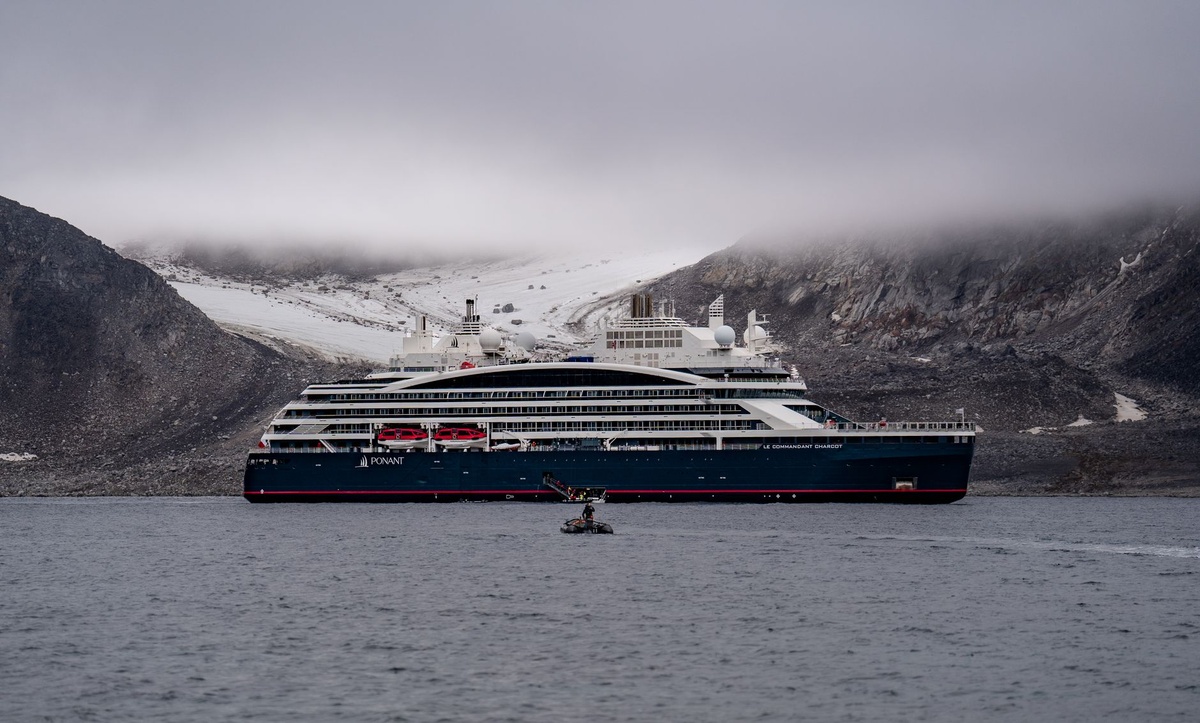
I would choose 120–180 passengers over a luxury ship carrying 250 or more. You sacrifice a larger spa and multiple restaurants, but gain quicker Zodiac rotations and better odds of everyone reaching shore.
3. Compare cabins by location, not décor
A €2,000 balcony upgrade sounds attractive until the Denmark Strait starts moving. Lower-deck, midship cabins experience less pitching and rolling than high, forward suites.
For most travelers, a twin porthole or square-window cabin was the sweet spot. You still had daylight and a private bathroom, while paying 15–35% less than for a balcony.
| Cabin type | Typical 2026 fare | Advantages | Drawbacks |
|---|---|---|---|
| Quad or triple porthole | €9,500–€11,000 | Lowest price; often lower deck | Limited storage and privacy |
| Twin porthole | €10,500–€12,800 | Stable location; good value | Smaller window and cabin |
| Twin window | €11,500–€14,000 | More light; usually larger | May sit higher above the waterline |
| Balcony cabin | €14,000–€18,500 | Private outdoor access | Higher cost; poor value in rough weather |
| Solo cabin or supplement | €14,500–€22,000 | No roommate required | Often 50–80% above shared price |
Do not assume your balcony was a safe eclipse-viewing platform. Operators commonly closed private balconies and outside decks during manoeuvres, heavy seas or when crowd control was necessary.
4. Read the Zodiac landing policy
A “Greenland cruise” could include six landings or none if weather and sea ice intervened. Expedition contracts almost always allow the captain to cancel landings without compensation when conditions are unsafe.
Ask how many Zodiacs the ship carries, how long a complete passenger rotation takes and whether all guests can go ashore simultaneously. Ten Zodiacs carrying ten passengers move 100 people per wave; six boats carrying ten passengers require three waves for a 170-person ship.
Most ships used a wet-landing procedure. You stepped from the Zodiac into several centimetres of water, making knee-high waterproof boots essential; sneakers were not an acceptable substitute.
- Use a 20–30-litre waterproof backpack rather than a shoulder bag.
- Keep camera equipment inside a roll-top dry bag while embarking.
- Wear waterproof trousers over insulated layers, not jeans.
- Clip nothing to the Zodiac unless the guide authorizes it.
- Expect landings to last 90 minutes to three hours.
5. Confirm the deposit and cancellation ladder
A typical eclipse booking required a 20–30% deposit, with the balance due 120–180 days before sailing. On a €12,000 cabin, that meant committing €2,400–€3,600 long before any useful weather forecast existed.
Cancellation penalties often jumped from the deposit amount to 50–100% of the fare. Travel insurance therefore needed to be purchased when the first non-refundable payment was made, not several months later.
Ask specifically what happens if cloud hides the eclipse. The answer is almost always that no refund applies because the cruise and expedition still operated.
6. Buy the correct insurance
Standard European travel insurance with €5 million medical coverage may still exclude polar cruising, ship-to-shore evacuation or travel north of a specified latitude. A valid policy needed to cover the entire cruise fare plus emergency evacuation from Greenland.
Specialist cover commonly cost €500–€900 for a €13,000 trip, compared with €120–€250 for an ordinary European holiday policy. That price difference was justified: an aircraft evacuation from remote East Greenland can cost tens of thousands of euros.
Verify coverage in writing for “expedition cruising,” “Zodiac landings” and Greenland. A policy that covers Iceland does not necessarily cover an uninhabited fjord hundreds of kilometres from an airport.
7. Add a two-night arrival buffer
Arriving the morning of embarkation was reckless. A missed ship in Reykjavík might be impossible to catch once it entered the Denmark Strait.
Book two pre-cruise nights and one post-cruise night. A central Reykjavík double room in August 2026 typically cost €190–€320 per night, versus €120–€190 near Keflavík Airport.
If the ship departed Akureyri, the Reykjavík–Akureyri flight took about 45 minutes and typically cost €100–€220 one way. Driving covered approximately 390 km and took five hours in good conditions, making the flight better unless you planned a separate road trip.
Viewing Probability: What the Percentages Really Meant
No reputable operator could promise clear skies. Forecast skill in the North Atlantic deteriorates quickly beyond five to seven days, while the cruise had to be booked one or two years ahead.
Long-term August climatology broadly favored East Greenland over western Iceland, but local conditions varied sharply. Offshore fog could cover a Greenland viewing site while a gap 80 km away remained clear—which is precisely why ship speed and route flexibility mattered.
| Viewing zone | Approx. limited-cloud climatological chance | Totality duration | Main weather risk |
|---|---|---|---|
| Scoresby Sund / East Greenland coast | 35–45% | About 2 min 10–18 sec | Coastal fog and mountain cloud |
| Denmark Strait | 30–40% | Roughly 2 minutes | Low marine cloud and swell |
| Snæfellsnes Peninsula | 20–30% | Approaching 2 minutes | Rapid Atlantic cloud bands |
| Reykjavík area | 20–30% | Approximately 1 minute | Cloud plus position near path edge |
These figures should not be multiplied into false precision. A claimed “42.7% chance of seeing totality” ignores ship mobility, cloud thickness and the possibility of seeing the corona through a temporary break.
Three days before the event, the expedition team should have compared ECMWF and GFS model runs in apps such as Windy and PredictWind. On eclipse morning, visible satellite imagery and onboard meteorology mattered more than monthly climate averages.
Polar Ship Technology Worth Paying For
Satellite connectivity was useful but not mission-critical. Some modern ships offered Starlink-based internet, yet high-latitude coverage, bandwidth limits and ship policies meant you should not depend on live cloud maps reaching your phone.
Download offline maps in Google Maps and Organic Maps before embarkation. Greenland mobile service is concentrated around settlements, while much of Scoresby Sund has no usable cellular signal.
For Iceland, an eSIM from Airalo could provide a cheaper data fallback than a €10-per-day roaming pass. Expect strong service around Reykjavík and major roads, versus little or no service offshore.
Bring a 20,000 mAh power bank, but check airline limits: batteries must remain in carry-on luggage and are generally capped at 100 Wh without airline approval. A 20,000 mAh unit is usually around 74 Wh.
For photography, use a certified ISO 12312-2 solar filter during all partial phases. Remove it only after an official announcement that totality has begun, then replace it before the bright photosphere reappears.
A 400 mm lens produced a much larger solar image than a phone, but the best first-time strategy was simpler: set a camera on a tripod with interval shooting and watch totality with your own eyes. Skip trying to change lenses during a two-minute event.
A Realistic 2026 Cost Breakdown
This sample budget assumes one person sharing a twin porthole cabin on a 13-night East Greenland expedition from Iceland. It uses prices typical of the January–August 2026 sales period.
| Expense | Cost per person | Notes |
|---|---|---|
| Expedition cruise | €10,600 | Twin porthole, shared |
| Return flight to Keflavík | €650 | Typical Europe connection; North America varied |
| Two pre-cruise hotel nights | €240 | Half of a €240 double room per night |
| One post-cruise hotel night | €120 | Shared double room |
| Airport and port transfers | €90 | Flybus plus taxis or local bus |
| Polar travel insurance | €650 | Trip cancellation and evacuation |
| Clothing and dry bag | €350 | Assumes parka and boots partly supplied |
| Gratuities | €260 | Approximately €20 per cruise day |
| Meals before and after cruise | €180 | Three days in Iceland |
| Connectivity and miscellaneous costs | €60 | eSIM, laundry and small purchases |
| Total | €13,200 | Per person sharing |
A balcony cabin could have pushed the same plan above €17,000. A solo traveler facing a 70% supplement might have paid €18,000–€22,000 in total.
Budget calculations should compare complete trips rather than headline products. It is the same principle used in our eight-day Swiss transport cost audit: include booking fees, positioning travel and unavoidable extras before deciding which option is cheaper.
Where to Stay and Eat Around the Sailing
In Reykjavík, Center Hotels Plaza and Hotel Reykjavík Centrum offered practical locations within walking distance of the old harbor. August doubles commonly landed around €220–€330, compared with €150–€220 for simpler guesthouses farther east.
For a pre-cruise dinner, book Messinn for pan-fried Arctic char or cod; mains were approximately €28–€38 in 2026. Skip the heavily promoted harbor “Viking” menus and eat at Icelandic Street Food instead, where soup-and-bread combinations were closer to €18–€24.
If you had an early Keflavík flight, staying near the airport beat paying for a 04:30 taxi from Reykjavík. Airport hotels were typically €120–€190, while the 50 km taxi ride could cost as much as the room.
Reykjavík’s public pools were also better value than another premium spa package. Sundhöllin generally opened around 06:30 on weekdays, and admission was approximately €10–€11, versus €75 or more for basic entry to the Blue Lagoon before transport.
Common Booking Mistakes
- Booking a partial-eclipse itinerary: Some ships sailed near the path without committing to enter totality. Check coordinates against an eclipse map.
- Choosing the biggest balcony: A lower midship cabin was cheaper and more comfortable in the Denmark Strait.
- Ignoring the ship’s repositioning speed: Twelve knots equals about 22 km/h; over ten hours that can mean a 220 km weather escape.
- Assuming every landing is guaranteed: Greenland Zodiac operations depend on wind, swell, ice and wildlife.
- Arriving one day before departure: Summer weather and aircraft shortages can turn a small Iceland delay into a missed €12,000 cruise.
- Buying ordinary insurance: The policy must explicitly cover polar expedition cruising and remote evacuation.
- Trusting cloud promises: No captain, astronomer or travel agent can guarantee an unobstructed eclipse two years ahead.
- Paying an unverified reseller: Confirm the agency with the cruise line and pay by credit card, not bank transfer or cryptocurrency.
The Decision Framework
Choose an East Greenland expedition if you want the best overall Arctic experience, can tolerate two rough sea crossings and have at least €13,000–€16,000 for the complete trip. Greenland also made the strongest sense when seeing fjords, icebergs and wildlife would still justify the cost if cloud blocked totality.
Choose an Iceland-focused itinerary if you need easier flights, a trip under two weeks or better access to medical and road infrastructure. It was also preferable for first-time cruisers worried about prolonged open-ocean sailing.
Choose a land-based Iceland plan if your ceiling is around €3,000–€5,000 and you accept lower mobility. Rent a vehicle, base yourself in western Iceland and build multiple viewing points rather than paying for a fixed Reykjavík event.
Skip the trip entirely if the eclipse is the only outcome that would make the price worthwhile. Even the most agile ship could not manufacture clear sky over the North Atlantic.
Final Verdict
For the August 12, 2026 eclipse, East Greenland was the superior expedition and probably the better meteorological bet. Iceland won on price, travel time and simplicity, but a fixed Reykjavík package was a weak substitute for a ship capable of moving more than 100 km overnight.
The smartest booking was a lower-deck twin cabin on a 120–180-passenger polar vessel, with two buffer nights in Iceland and insurance purchased alongside the deposit. Balcony prestige mattered less than ship mobility, bridge experience and enough Zodiacs to put everyone ashore efficiently.
The 2026 departure window has passed, but now is exactly when to save the fare tables, join specialist eclipse-cruise mailing lists and set alerts for future itineraries. Use this checklist before paying a deposit—and never let a glossy image of totality substitute for checking the ship’s actual coordinates.
Frequently Asked Questions
Can I still book an August 12, 2026 eclipse cruise?
No. The eclipse and associated cruises took place in August 2026, and it is now October 2026. Any page still showing availability should be treated as an archive unless the operator explicitly labels it otherwise.
How much did a Greenland eclipse cruise cost?
Entry-level shared cabins generally started around €9,500–€11,000, while window and balcony cabins ran from roughly €11,500 to €18,500. A realistic complete-trip budget was approximately €13,200 per person sharing.
Was Greenland or Iceland better for viewing the 2026 eclipse?
East Greenland had a broader estimated 35–45% limited-cloud climatological chance, compared with roughly 20–30% in western Iceland. Greenland also allowed greater offshore repositioning, but required longer and rougher sea crossings.
How long was totality in Greenland and Iceland?
Parts of East Greenland experienced approximately 2 minutes 10–18 seconds of totality. Western Iceland approached two minutes in favored locations, while Reykjavík received roughly one minute because it sat near the edge of the path.
Which polar cruise cabin is best for rough seas?
Choose a lower-deck cabin near the middle of the ship, ideally a twin porthole cabin. It typically cost 15–35% less than a balcony and experienced less pitching than high, forward accommodation.

About the Author: Tomáš Bzirský
Founder and editor of Distratech. Based in the Czech Republic, travelling regularly from Central Europe. Writes practical travel guides and travel-tech comparisons (eSIM, apps, airports) in six languages.