Switzerland’s rail system is easy; paying the right price is not. For an eight-day Zurich–Lucerne–Wengen–Zermatt trip for two, the obvious Swiss Travel Pass can cost roughly €470 more than a carefully planned Half Fare Card and Saver Day Pass combination—even after adding Jungfraujoch and Gornergrat.
Key Takeaways
- The best-value audited strategy costs about €934 for two: Half Fare Cards plus three Saver Day Passes per person.
- An eight-day second-class Swiss Travel Pass costs approximately €465 per adult in October 2026 before mountain supplements.
- The Swiss Half Fare Card costs about €127 per adult and cuts most trains, boats and mountain railways by 50%.
- Buy Saver Day Passes as soon as dates are fixed: Half Fare prices begin near €31 but rise as cheaper inventory sells.
- October brings fewer crowds and golden larches, but mountain maintenance and early snow make flexible routing valuable.
Key Numbers at a Glance
This audit uses adult, second-class prices available for October 2026 planning. Swiss tickets are charged in CHF; euro figures use the working conversion CHF1 = €1.06, rounded to the nearest euro, so your card statement may differ by 1–3%.
| Item | October 2026 price per adult | Price for two | Important limitation |
|---|---|---|---|
| 8-day Swiss Travel Pass | CHF439 / about €465 | About €931 | Only 25% off Wengen–Jungfraujoch |
| Swiss Half Fare Card, 1 month | CHF120 / about €127 | About €254 | Every journey still needs a ticket or pass |
| Saver Day Pass with Half Fare Card | From CHF29 / about €31 | From €62 per travel day | Cheapest inventory can sell out |
| Saver Day Pass without Half Fare Card | From CHF52 / about €55 | From €110 per travel day | No built-in mountain-rail discount |
| Audited route distance | About 599 km between bases | Same for both travelers | Excursion railways add roughly 125 km |
| Total mainline travel time | About 10 hours 45 minutes | Same itinerary | Excludes mountain excursions and connections |
Bottom line: choose the Swiss Travel Pass for simplicity, not for automatic savings. On this itinerary, the Half Fare Card is the financial foundation; discounted Saver Day Passes improve it on the three expensive network days.
What Each Swiss Rail Product Actually Covers
Swiss Travel Pass: convenient, broad and frequently overbought
The Swiss Travel Pass provides unlimited travel on the national rail network, most city transport, many lake boats and participating mountain routes. The eight-day second-class version is approximately CHF439 (€465) per adult for October 2026.
Lucerne’s boats, the standard railway into Wengen and regular trains to Zermatt are included. Mount Rigi is normally fully covered, while Gornergrat receives a 50% reduction and the railway above Wengen toward Jungfraujoch receives only 25% off.
That 25% Jungfraujoch discount is the trap. A Half Fare Card generally cuts the same expensive mountain journey by 50%, a difference of roughly CHF53 (€56) per person on a CHF211 ticket.
The pass does buy flexibility. Miss the 08:06 train from Lucerne? Board the 09:06 without changing a booking; regular Swiss trains do not require seat reservations.
Swiss Half Fare Card: the strongest default for this route
The tourist Swiss Half Fare Card costs approximately CHF120 (€127) and remains valid for one month. It generally reduces trains, buses, boats and mountain railways by 50%, including Jungfraujoch and Gornergrat.
The card is not itself a ticket. Before each journey, buy a half-price point-to-point ticket, a discounted Saver Day Pass or—where offered—a supersaver ticket.
For two adults, the cards cost about €254. The discount on Jungfraujoch and Gornergrat alone saves approximately €364 for two against full mountain fares, already exceeding the cost of both cards.
Saver Day Pass: the cheap product travelers buy too late
A Saver Day Pass gives unlimited travel across the General Abonnement network for one calendar day. With a Half Fare Card, second-class prices begin around CHF29 (€31); without one, they begin near CHF52 (€55).
Unlike a supersaver ticket, a Saver Day Pass is not tied to one departure. You can stop in Bern for lunch or take a later connection without invalidating it, provided the route is inside the validity network.
Prices rise in tiers as inventory disappears. A CHF29 pass can become CHF39, CHF49 or more, so waiting until arrival can add €20–€45 per person per day.
Buy through SBB.ch or SBB Mobile. For the Swiss Travel Pass and tourist Half Fare Card, compare the official SBB store with the Switzerland Travel Centre; avoid resellers charging “activation” or delivery fees.
The Eight-Day Route, Audited Journey by Journey
The model assumes two adults traveling Zurich Airport–Lucerne–Wengen–Zermatt–Zurich Airport, with Mount Rigi, Jungfraujoch, the Lauterbrunnen–Mürren loop and Gornergrat. Prices below are representative October 2026 second-class fares, rounded because mountain operators use seasonal or dynamic pricing.
| Day and journey | Distance | Typical duration | Full fare per person, Oct. 2026 | Best ticket |
|---|---|---|---|---|
| 1: Zurich Airport–Lucerne | About 68 km | 1 hr 10 min | CHF31 / €33 | Half-fare point-to-point: about €16 |
| 2: Lucerne–Rigi round trip by boat, cogwheel railway and cableway | About 65 km | 5–7 hours as an excursion | CHF117 / €124 | CHF29 / €31 Saver Day Pass with Half Fare |
| 3: Lucerne–Wengen via Interlaken Ost | About 129 km | 2 hr 45–55 min | CHF51 / €54 | Half-fare point-to-point: about €27 |
| 4: Wengen–Jungfraujoch return | About 36 km | 3 hr 30 min riding time | About CHF211 / €224 | Half Fare Card ticket: about €112 |
| 5: Wengen–Lauterbrunnen–Mürren loop | About 36 km | 3–5 hours with stops | About CHF40 / €42 | Half-fare tickets: about €21 |
| 6: Wengen–Zermatt via Visp | About 145 km | 3 hr 15–30 min | CHF101 / €107 | CHF29 / €31 Saver Day Pass with Half Fare |
| 7: Zermatt–Gornergrat return | About 18 km | 66 minutes total riding time | About CHF132 / €140 | Half Fare Card ticket: about €70 |
| 8: Zermatt–Zurich Airport | About 257 km | 3 hr 30–45 min | CHF129 / €137 | CHF29 / €31 Saver Day Pass with Half Fare |
The four transfers between overnight bases cover about 599 km720 km.
Day 1: Zurich Airport to Lucerne
Direct trains generally take about 70 minutes; some departures require one easy change at Zürich HB. Full fare is roughly CHF31 (€33), so a CHF29 Saver Day Pass is poor value once you have a Half Fare Card: the ordinary discounted fare is only about CHF15.50 (€16).
This is a classic booking mistake—buying a day pass because it sounds flexible when the day contains only one short journey. Unless you are also touring Zurich by tram and adding a lake cruise, skip the pass.
Stay near Lucerne station rather than saving €20 at an airport hotel. Hotel des Alpes is roughly five minutes from the platforms and overlooks the Reuss; rooms commonly run €190–€270 in October versus €140–€190 near the airport, but you recover almost two hours of sightseeing.
Day 2: Mount Rigi from Lucerne
Take the boat from Lucerne to Vitznau, the cogwheel railway to Rigi Kulm, then descend via Rigi Kaltbad and the cableway to Weggis. The full excursion approaches CHF117 (€124), while a CHF29 Saver Day Pass with Half Fare generally covers the network journey—a saving near €93 per person.
Boats usually begin running in the morning, while mountain railways operate through the day; exact October connections vary. Start around 08:00–09:00 and check SBB plus Rigi’s operating timetable the previous evening.
For dinner, skip the tourist menus immediately around Chapel Bridge. Walk eight minutes to Wirtshaus Galliker for rösti and veal, generally CHF28–CHF42 (€30–€45) for a main; it is traditionally closed Sunday and Monday, with lunch and dinner service on operating days.
Day 3: Lucerne to Wengen
The scenic Luzern–Interlaken Express takes about 1 hour 50 minutes to Interlaken Ost, followed by trains through Lauterbrunnen to car-free Wengen. Total journey time is approximately 2 hours 50 minutes.
The full fare is about CHF51 (€54); half fare is CHF25.50 (€27). A CHF29 Saver Day Pass saves only CHF3.50, so preserving nothing by buying it early makes the ordinary half-fare ticket the better choice.
Reservations are unnecessary on the Luzern–Interlaken Express. Sit on the right leaving Lucerne for early lake views, although the more important move is boarding 10–15 minutes early because October foliage weekends can still be busy.
Hotel Alpenrose Wengen is a better pick than an anonymous apartment high above the village: October doubles often land around €190–€260 with breakfast and station transfers. Browse hotels in Wengen, but check whether “600 meters from the station” involves a steep climb.
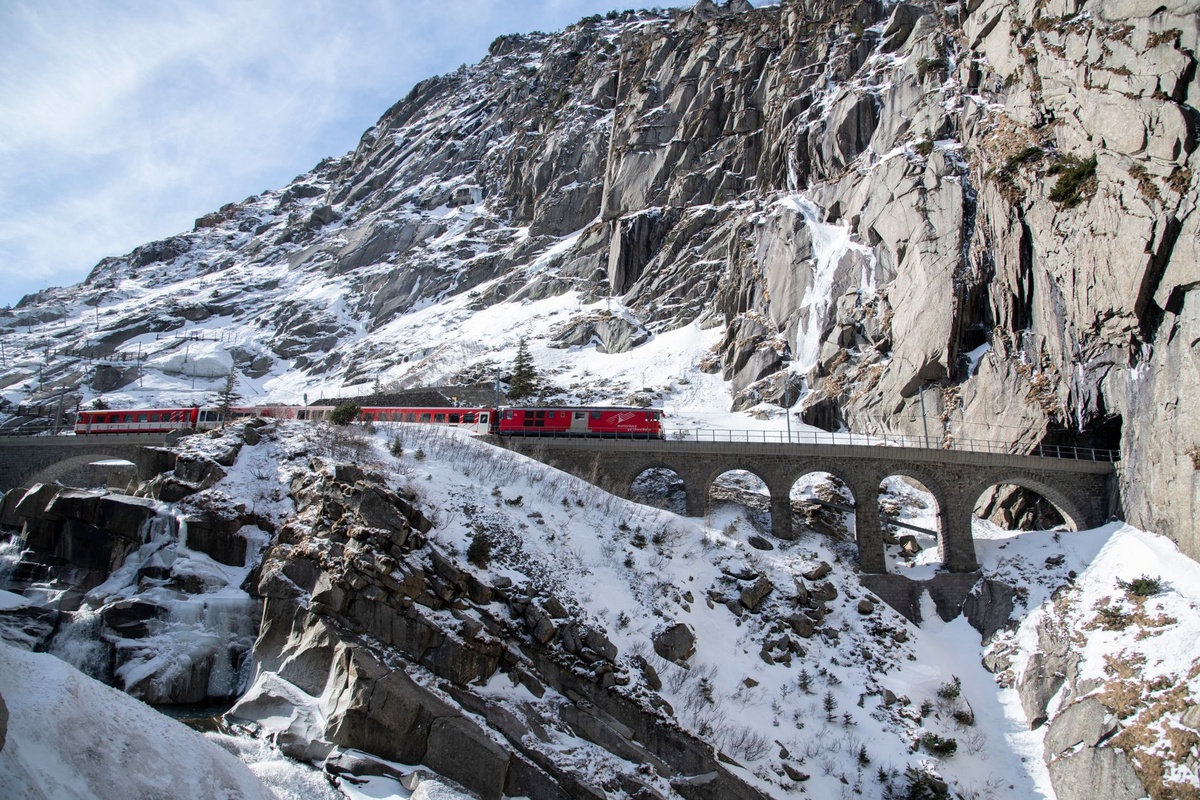
Day 4: Jungfraujoch
From Wengen, the traditional route climbs through Kleine Scheidegg and the Eiger. Allow roughly 1 hour 45 minutes each way, plus three or four hours at Jungfraujoch for the Sphinx terrace, Ice Palace and weather delays.
A representative full return fare is about CHF211 (€224). Half Fare brings it near CHF105.50 (€112), while the Swiss Travel Pass’s 25% reduction leaves approximately CHF158.25 (€168).
For two, that is a €112 penalty for relying on the Travel Pass discount instead of Half Fare. The Swiss Travel Pass covers Wengen to the edge of its included network, but the expensive mountain section remains only partially discounted.
Book through Jungfrau Railways, especially if you want a specific departure. Operations are normally year-round, but October weather changes quickly; buy after checking the 48-hour forecast unless a refundable fare is available.
Skip Jungfraujoch if the live cameras show a whiteout. Spend roughly CHF40 (€42) on the Mürren loop instead and move Jungfraujoch to the clearer day—flexibility that can be worth more than a non-refundable promotional ticket.
Day 5: Lauterbrunnen and Mürren
A practical loop runs Wengen–Lauterbrunnen, bus to Stechelberg, cableway to Mürren, then mountain railway and cableway down via Grütschalp. Budget about CHF40 (€42) full fare or CHF20 (€21) with Half Fare.
October waterfalls benefit from autumn rain, but some high-altitude lifts enter maintenance after the summer season. The Stechelberg route is a stronger backup than building the day around a single seasonal chairlift.
Eat at Hotel Oberland in Lauterbrunnen, where rösti and Alpine mains generally cost CHF24–CHF38 (€25–€40), rather than paying CHF8–CHF12 for station sandwiches twice. Verify kitchen hours because many valley restaurants close between roughly 14:00 and 17:30.
Day 6: Wengen to Zermatt
The route descends to Lauterbrunnen, continues through Interlaken and Spiez, then crosses to Visp for the final climb to Zermatt. Allow 3 hours 15 minutes to 3 hours 30 minutes, depending on connections.
Full fare is approximately CHF101 (€107), half fare CHF50.50 (€54), and an early Saver Day Pass only CHF29 (€31). That makes the pass about €23 cheaper per person than the already discounted ticket.
If you have time, stop in Spiez for two hours; lockers at the station usually cost roughly CHF5–CHF9 (€5–€10), depending on size. The Saver Day Pass allows the break, whereas a departure-specific supersaver ticket may not.
Day 7: Gornergrat
The Gornergrat Railway climbs from central Zermatt to 3,089 meters in about 33 minutes. October return fares can reach approximately CHF132 (€140), while the Half Fare Card or Swiss Travel Pass discount reduces that to about CHF66 (€70).
Gornergrat operates year-round but adjusts departures seasonally; trains commonly run from morning into late afternoon or early evening. Check Gornergrat Railway for the specific date and board an early train when the Matterhorn is more likely to be clear.
Do not buy a Saver Day Pass solely for Gornergrat: it does not replace the mountain ticket. The Half Fare Card is what generates the meaningful CHF66 saving.
For dinner, choose Du Pont for fondue, raclette and rösti at roughly CHF28–CHF42 (€30–€45) per main. Skip the Matterhorn-view restaurants where a similar fondue can exceed CHF50 before drinks.
Day 8: Zermatt to Zurich Airport
The trip takes approximately 3 hours 35 minutes with a change at Visp, sometimes another at Zürich HB. Full fare is around CHF129 (€137), versus CHF64.50 (€68) with Half Fare.
A CHF29 (€31) Saver Day Pass is the clear winner, saving about €37 per person against the half-fare ticket. Leave Zermatt at least five hours before a European flight and six before long-haul departure; one missed connection is manageable, but weather-related disruption can compound.
Full Cost Comparison for Two Travelers
The following table prices the same eight-day itinerary four ways. It excludes hotels, food and city transport already covered by the relevant rail product.
| Strategy for two adults | Base passes/cards | Additional transport | Total, Oct. 2026 | Difference from best plan |
|---|---|---|---|---|
| Full-fare point-to-point tickets | €0 | About €1,722 | €1,722 | +€788 |
| 8-day Swiss Travel Pass | About €931 | Jungfraujoch and Gornergrat: about €475 | €1,406 | +€472 |
| Half Fare Cards plus half-price tickets | About €254 | About €861 | €1,115 | +€181 |
| Half Fare Cards plus three Saver Day Passes each | About €254 | About €680 | €934 | Best audited price |
| Saver Day Pass strategy without Half Fare Cards | About €330 for three pass days | About €987 | €1,317 | +€383 |
The winning €934 model uses Saver Day Passes on the Rigi day, Wengen–Zermatt transfer and Zermatt–Zurich Airport journey. The other days use ordinary half-fare tickets, with Half Fare reductions applied to Jungfraujoch and Gornergrat.
Per-person budget behind the winning plan
- Swiss Half Fare Card: CHF120 / €127
- Zurich Airport–Lucerne: CHF15.50 / €16
- Rigi Saver Day Pass: CHF29 / €31
- Lucerne–Wengen: CHF25.50 / €27
- Jungfraujoch: CHF105.50 / €112
- Mürren loop: CHF20 / €21
- Wengen–Zermatt Saver Day Pass: CHF29 / €31
- Gornergrat: CHF66 / €70
- Zermatt–Zurich Airport Saver Day Pass: CHF29 / €31
- Total per person: about CHF440.50 / €467
For two, the working total is CHF881, or approximately €934. Even if each discounted Saver Day Pass rises from CHF29 to CHF39, the plan increases by only CHF60 (€64) for two and still beats the Swiss Travel Pass model by more than €400.
The Costliest Swiss Train Booking Mistakes
1. Buying the Swiss Travel Pass before pricing mountain railways
The pass looks comprehensive, but “included” and “discounted” are not the same. On Jungfraujoch, 25% off versus Half Fare’s 50% creates a difference of approximately €112 for two.
Do this instead: list every mountain excursion separately before comparing passes. Jungfraujoch, Gornergrat, Titlis and Glacier 3000 can change the winner.
2. Using a Saver Day Pass for every travel day
A CHF29 Saver Day Pass beats a CHF50.50 half-fare journey, but not a CHF15.50 one. On Zurich Airport–Lucerne, two day passes would cost about €62 versus €33 for two half-fare tickets.
Rule: compare the pass price with that day’s total discounted fares. Buy the day pass only when the pass is cheaper or its flexibility justifies a small premium.
3. Waiting until Switzerland to buy Saver Day Passes
Saver Day Passes use limited pricing tiers. Waiting can turn a CHF29 ticket into CHF49 or higher, adding at least CHF120 (€127) across six passes for two travelers.
Buy fixed transfer days first. Keep weather-dependent mountain tickets flexible because paying €20 more for a transfer is less painful than losing €200 to clouds at Jungfraujoch.
4. Confusing Saver Day Passes with supersaver tickets
A Saver Day Pass covers eligible transport all day; a supersaver ticket is generally tied to a route and departure. Miss the booked supersaver train and you may need a new ticket, while the day pass remains valid.
For a direct airport run, a supersaver ticket can beat CHF29. For a Wengen–Zermatt day with a Spiez stop, the Saver Day Pass is usually the smarter tool.
5. Paying for seat reservations on ordinary Swiss trains
Regular InterCity, InterRegio and regional trains generally require no reservation. Paying a third-party site €8–€20 per leg for “guaranteed booking” can waste more than €100 for two across this itinerary.
Exceptions include premium panoramic services such as the Glacier Express, where reservations are compulsory. None of the regular trains in this audit requires one.
6. Buying mountain tickets before checking live cameras
Jungfraujoch can cost more than €220 full fare and still deliver a view of dense cloud. In October, conditions may shift from clear to snowfall in hours.
Check webcams around 06:30–07:00 and compare MeteoSwiss forecasts at multiple elevations. Gornergrat at 3,089 meters can be clear while Zermatt village sits under cloud—or the reverse.
7. Ignoring foreign-card and currency conversion fees
Always pay in CHF when a terminal or website offers “guaranteed” euro conversion. Dynamic currency conversion can add 3–8%, turning a CHF881 plan into an unnecessary €30–€75 surcharge.
Use a card without foreign transaction fees and keep screenshots of QR tickets. The preparation principles in our phone-and-document emergency case study also apply here: save copies offline and on a second device.
Decision Framework: Which Pass Should You Choose?
Choose the Swiss Travel Pass if:
- You want one QR code and minimal ticket management.
- You expect frequent spontaneous city transport, lake boats and museum visits.
- Your itinerary may change daily and the convenience is worth roughly €300–€470 for two.
- You are not prioritizing expensive mountain railways where Half Fare gives a larger discount.
For this exact route, I would not choose it. The eight-day duration fits perfectly, but the itinerary’s two costliest excursions expose its weaker mountain discounts.
Choose the Half Fare Card if:
- You are visiting Jungfraujoch, Gornergrat or multiple other mountain railways.
- You are comfortable buying tickets in SBB Mobile.
- Your travel days mix cheap local trips with expensive transfers.
- You want flexibility without committing every day to a pass.
This is the safest option when dates are not finalized. Even without Saver Day Passes, it prices around €291 below the Swiss Travel Pass strategy for two.
Choose Half Fare Card plus Saver Day Passes if:
- Your long-distance dates are fixed several weeks ahead.
- You can obtain CHF29–CHF39 Saver Day Passes.
- You want stopover freedom on transfer days.
- You are willing to manage several digital tickets.
This is the audit winner: approximately €934 for two. Buy passes for Rigi, Wengen–Zermatt and Zermatt–Zurich Airport; use half-fare tickets elsewhere.
Choose Saver Day Passes without Half Fare if:
You are skipping Jungfraujoch and Gornergrat and taking several long mainline journeys. Once mountain railways enter the plan, paying full excursion fares weakens this strategy quickly.
October 2026 Timing and Technology Tips
October is shoulder season below 1,500 meters and early winter above 3,000 meters. Lucerne may see mild afternoons around 12–17°C, while Jungfraujoch can be below freezing with snow and strong wind.
Golden larches around Zermatt often intensify during October, but daylight shrinks to roughly 10.5–11.5 hours. Schedule Gornergrat and Jungfraujoch early; use valley walks and restaurants after clouds build.
- Install SBB Mobile before arrival. Save passengers with Half Fare entitlement and enable platform-change notifications.
- Download MeteoSwiss. Compare village, mid-mountain and summit forecasts rather than relying on Zurich weather.
- Screenshot every QR code. Underground platforms, tunnels and crowded trains can interrupt data access.
- Carry a 10,000mAh power bank. Navigation, cameras and cold temperatures can drain a phone before the final ticket inspection.
- Check maintenance notices nightly. October is a common period for cableway servicing between summer hiking and ski seasons.
- Use an eSIM only as backup. Swiss station Wi-Fi is not universal; a small data plan from Airalo can keep SBB and weather alerts available.
Lucerne and Zurich stations have staffed travel centers, but opening times vary by day and holiday. Digital sales operate 24 hours; mountain railway counters usually open shortly before the first departure and close around the final afternoon service.
Final Verdict
For two adults spending eight days on the Zurich–Lucerne–Wengen–Zermatt route, buy two Swiss Half Fare Cards, then add early Saver Day Passes for Mount Rigi, Wengen–Zermatt and Zermatt–Zurich Airport. Budget approximately €934 total for the audited transport plan.
The Swiss Travel Pass remains the easiest option, but ease costs about €472 extra here. Put that money toward a better Wengen room, dinner in Zermatt and a weather-flexible Jungfraujoch booking instead.
Before paying, rebuild the itinerary in SBB Mobile using your exact October dates and compare each day’s half-fare total with the current Saver Day Pass tier. Save this audit, check mountain operating notices 48 hours ahead and buy only the expensive fixed-date travel days early.
Frequently Asked Questions
Is the Swiss Travel Pass worth it for an eight-day Zurich to Zermatt trip?
Not for this specific itinerary with Jungfraujoch and Gornergrat. The Swiss Travel Pass model costs about €1,406 for two, versus approximately €934 using Half Fare Cards and selected Saver Day Passes.
Can I combine a Swiss Half Fare Card with a Saver Day Pass?
Yes. Holding the Half Fare Card lets you buy discounted Saver Day Passes starting around CHF29 (€31), subject to availability, while retaining 50% discounts on participating mountain railways.
How far ahead should I buy Swiss Saver Day Passes?
Buy as soon as fixed transfer dates are confirmed, ideally several weeks ahead. Prices start near CHF29 with Half Fare but can rise to CHF39, CHF49 or more as lower tiers sell out.
Does the Swiss Travel Pass fully cover Jungfraujoch and Gornergrat?
No. For this audit, the Travel Pass provides approximately 25% off the paid Jungfraujoch section and 50% off Gornergrat; always verify the current validity map before purchase.
Do Swiss trains from Lucerne to Wengen or Zermatt need reservations?
No reservation is normally required on these regular Swiss trains. Board with a valid ticket and sit in the correct class; compulsory reservations mainly apply to premium services such as the Glacier Express.

About the Author: Tomáš Bzirský
Founder and editor of Distratech. Based in the Czech Republic, travelling regularly from Central Europe. Writes practical travel guides and travel-tech comparisons (eSIM, apps, airports) in six languages.