'/%3E%3Cpath%20fill='%23b2b2b2'%20d='M241%20382q0%2016%2017%2026%2017%2011%2042%2011t42-11q16-11%2017-26V269H241'/%3E%3Cpath%20fill='%239f7e00'%20d='M241%20379q0%2014%208%2023%209%209%2021%209%2014%200%2021-9%209-9%209-23V269h-59'/%3E%3Cpath%20d='M241%20339v-70h59v110q0%2014-9%2023l-6%205v-68h-15v72q-8%200-14-4v-68zm59%2040c0%2022%2015%2032%2029%2032%2021%200%2030-18%2030-32v-40h-59'/%3E%3Cpath%20fill='%239f7e00'%20d='M266%20277v5h2v12h-3v-5h2v-5h-9v5h2v5h-4v9h3v18h-5v10h34v-10h-5v-18h3v-9h-4v-5h2v-5h-9v5h2v5h-3v-12h2v-5zm42%20101q0%2010%206%2017%206%206%2015%207%2010-1%2016-7%206-7%206-17v-29h-43'/%3E%3Ccircle%20fill='%230044ad'%20cx='329.5'%20cy='372'%20r='6'/%3E%3Cellipse%20fill='%230044ad'%20cx='300'%20cy='340'%20rx='16'%20ry='21'/%3E%3C/svg%3E)
'/%3E%3C/svg%3E)


'/%3E%3C/g%3E%3Cuse%20href='%23c'%20transform='matrix(-1%200%200%201%20720%200)'/%3E%3C/svg%3E)


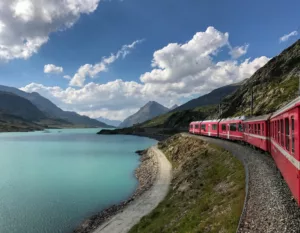
You’ve seen the photos: red train, glacier-blue lakes, dramatic Alpine viaducts. What you don’t see? The solo traveler juggling a 40L backpack in a carriage with no overhead racks, fighting window glare at 2pm, and wondering why they just paid €32 to reserve a seat on a train that’s half empty past Poschiavo.
I rode the Bernina Express in early July 2026 — peak European summer, when the Mediterranean is jammed and Switzerland is in full hiking-and-wild-swimming mode. Here’s what actually matters if you’re doing it solo.
Key Takeaways
- The Bernina Express reservation fee is €32 (summer) on top of your ticket — and often not worth it if you use regional trains.
- There’s limited luggage space in panoramic carriages; lockers in Chur cost CHF 9–12 for 24 hours.
- Midday sun (12pm–3pm) causes heavy window glare; morning departures from Chur have better light.
- Total route: 122 km, ~4 hours from Chur to Tirano, crossing 196 bridges and 55 tunnels.
1. The €32 Reservation Fee: When It’s Smart — and When It’s a Waste
In summer (May–October), the Bernina Express requires a mandatory seat reservation of €32 (CHF 36) per person — on top of your regular ticket. A full-fare 2nd class ticket from Chur to Tirano costs around CHF 66 (€68 / $72). With reservation, you’re at roughly €100 total.
If you have a Swiss Travel Pass or Interrail/Eurail, the train ticket is covered — but you still pay the €32 reservation.
Here’s the part nobody explains: you don’t need to take the Bernina Express-branded train to do the route.
Regional Trains: Same Tracks, No Reservation Fee
The regular Rhätische Bahn (RhB) regional trains run on the exact same UNESCO-listed Albula and Bernina lines. Same Landwasser Viaduct. Same Brusio spiral viaduct. Same glaciers.
Difference? No panoramic ceiling windows, and no €32 fee.
| Bernina Express | Regional Trains | |
|---|---|---|
| Reservation required | Yes – €32 | No |
| Windows | Panoramic (fixed) | Standard (some open) |
| Flexibility | Fixed train | Hop on/off |
| Total Chur–Tirano | ~4h direct | 4–4.5h (1 change) |
Solo in July? I’d argue regional trains are better. You can break the journey in Pontresina or Alp Grüm, hike for 2–3 hours (peak wildflower season), then continue. On the Express, you’re locked into your seat.
Book Express seats at rhb.ch. Regional tickets via sbb.ch.
2. Luggage Storage Gaps They Don’t Show on Instagram
The Bernina Express carriages are built for views, not backpacks.
There are no overhead luggage racks in many panoramic cars. Instead, there’s a small luggage area at the carriage ends. In peak July, that space fills fast — especially with couples hauling hard-shell suitcases.
As a solo traveler, you’ll likely wedge your bag between your legs for four hours.
What Actually Works
- 40L backpack max — anything larger becomes awkward.
- Store big luggage in Chur or St. Moritz lockers.
- Board 10–15 minutes early to claim rack space.
At Chur station, 24-hour lockers cost:
- Small: CHF 6
- Medium: CHF 9
- Large: CHF 12
Payment is by card or coins. Lockers are open 24/7, but the station’s staffed desk typically runs 6am–8pm.
Comparison: dragging a roller bag onto the train = free but stressful. Locker for CHF 9 ($10) = hands-free glacier photos and easier seat exits when people shuffle past every 20 minutes.
If you’ve read our piece on driving Scotland’s North Coast 500 as a digital nomad, the lesson is similar: scenic routes punish bulky luggage.
3. Window Glare Is Brutal in July (Here’s How to Beat It)
July means long daylight hours — sunrise around 5:30am, sunset after 9pm. Sounds ideal. It’s not.
The panoramic windows are sealed and slightly curved. Between 12pm and 3pm, direct Alpine sun creates intense glare and interior reflections. You’ll see your own face superimposed over a glacier.
Best Departure Times for Light
- Chur → Tirano morning train (around 8:30am): softer eastern light, better Landwasser shots.
- Tirano → Chur afternoon: decent light on Lago Bianco.
- Avoid midday departures if photography matters.
Pro tip: wear dark clothing. White shirts reflect strongly in glass.
Even better? On regional trains, some windows can be lowered slightly. That means zero glare and sharper photos. Panoramic windows don’t open at all.
Comparison for photographers:
| Panoramic Train | Regional Train | |
|---|---|---|
| Window opens? | No | Sometimes (partially) |
| Glare level (midday) | High | Low–Moderate |
| Ceiling views | Yes | No |
If you’re carrying a mirrorless camera, bring a rubber lens hood and press it against the glass to reduce reflections. Smartphone? Cup your hand around the lens.
4. Solo Seating Reality: You’re Not Guaranteed a Window
When booking Bernina Express seats, you can request a window — but it’s not guaranteed unless you book early (2–4 weeks ahead in July).
Peak summer load factors hover around 80–95% on popular departures, especially weekends.
If you’re solo, you’ll often be seated across from another solo traveler at a 4-seat table. Fine socially. Less ideal if you wanted uninterrupted landscape shots.
Regional trains solve this: just move seats. No assigned seating. If a better window frees up in Pontresina, switch.
It’s similar logic to choosing flexible transport in Japan — like we compared in Shinkansen vs flights vs rental cars between Tokyo and Kyoto. Flexibility often beats comfort for independent travelers.
5. Food, Wi‑Fi, and the “Scenic Train” Illusion
The Bernina Express has a minibar trolley. Expect:
- Coffee: CHF 5
- Beer: CHF 6–8
- Panini: CHF 9–12
There’s no full dining car.
Better move: buy takeaway in Chur before departure. I recommend Merz Confiserie (Bahnhofstrasse 22, 7:30am–6:30pm). A fresh sandwich is CHF 7.50 — cheaper and better than onboard options.
Wi‑Fi? Don’t count on it. There’s no dedicated onboard Wi‑Fi, and mobile signal drops frequently between Thusis and Pontresina.
Download offline Google Maps and Spotify playlists in advance. Switzerland roaming charges for non-EU travelers can hit $10–15/day.
6. Tirano in July: Stay or Bounce?
Most people end in Tirano (Italy) and immediately leave. I think that’s a mistake — but only briefly.
Tirano is hot in July (30°C / 86°F common). But it’s cheaper than St. Moritz by a mile.
Hotel comparison (July 2026 rates):
- St. Moritz 3-star: €220–300/night
- Tirano 3-star: €90–140/night
Stay at Hotel Centrale Tirano (from €110, breakfast included, 5-minute walk from station). Then wild swim at Lago di Poschiavo the next morning — far quieter than Lake Como in July.
If you’re hunting cheaper flights into Milan to start this route, tools like FlightGlitch for airline mistake fares occasionally surface sub-$400 roundtrips from the US in late summer.
So… Is the Bernina Express Worth It Solo in July?
Here’s my blunt take.
If this is your once-in-a-lifetime Switzerland trip and you want the iconic panoramic carriage experience, pay the €32. Book early, travel in the morning, pack light.
If you’re budget-conscious, traveling solo, and care about photography or flexibility — skip the branded Express and use regional trains. You’ll save €32, avoid seating rigidity, and possibly get better photos.
The tracks are the star. Not the logo on the train.
Planning a July–August Europe swing? Switzerland is at its best right now — alpine lakes swimmable, hiking trails fully open, wildflowers in bloom. But book trains and accommodation at least 2–3 weeks ahead.
If you’ve ridden the Bernina Express solo, I’d love to hear your take — panoramic glamour or regional freedom?
Frequently Asked Questions
How much does the Bernina Express cost in July?
Expect around CHF 66 (€68) for a 2nd class Chur–Tirano ticket plus a mandatory €32 reservation fee in summer, totaling roughly €100. Swiss Travel Pass holders still pay the reservation.
Is the €32 reservation fee worth it?
It’s worth it for the panoramic windows and direct service, but not essential. Regional trains run the same 122 km route without a reservation fee and offer more flexibility.
Can you bring large luggage on the Bernina Express?
Yes, but storage space is limited in panoramic cars. Large suitcases may need to go in shared end-of-car racks, so many solo travelers use station lockers in Chur (CHF 6–12 per 24 hours).
What is the best time of day for photos on the Bernina route?
Morning departures from Chur (around 8:30am) offer softer light and less glare. Midday trains between 12pm and 3pm often suffer from strong window reflections.

About the Author: Tomáš Bzirský
Founder and editor of Distratech. Based in the Czech Republic, travelling regularly from Central Europe. Writes practical travel guides and travel-tech comparisons (eSIM, apps, airports) in six languages.